Lips: Kiss the Lips that Lie follows an English au pair with hidden secrets who meets a reserved CPA, and they have an instant connection that quickly turns into a tangled web of deception. What was the inspiration for the setup of your story?
Lover’s lies and Family Secrets. I started to think about all the harmless (and not so harmless) lies lovers tell each other, and the private mythologies which armor families down through the decades. Also about the ways people know others in their lives. In real life most people don’t have plausible backstories.
Technically, LIPS grew out a desire to capture in prose style a feeling of hush or quietude. A breath caught and held. Waiting and anticipation. The Prologue introduces the nighttime silence of the big lake, then Selene’s first visit to the cottage and the exploration of various objects which reveal a kind of cloistered family history. At it heart of the novel is a love story of the resolution of opposites—Selene’s exhibitionism paired with DB’s voyeuristic tendencies.
What character did you enjoy writing for? Was there one that was more challenging to write for?
With LIPS, there was so much writing and rewriting, and adding and deleting of characters, that I became very attached to all of them. Glory and Gillian were great fun to write, and Miss Addy was a constant surprise. Of course, Selene is the key to the kingdom, and she was tricky.
Looking back, I think DB was the most difficult to write. I believe he is the most internalized and enigmatic. He is a man trapped by conditions most of which are not of his own making. He is privileged but bound hand and foot by the expectations of others. I think he deals with it by withdrawing. He feels Selene is the only one who truly sees him. It is hard to write someone who doesn’t say much.
I felt that there were a lot of great twists and turns throughout the novel. Did you plan this before writing the novel, or did the twists develop organically while writing?
Once a story gets rolling, it develops organically. All my planning occurs in my head. That approach requires a lot of backtracking and do-overs. Characters show up and then leave. Bits of backstory crop up in unexpected places. Many a day I ended up wishing I had patience for some serious planning.
What is the next book that you are working on, and when can your fans expect it to be out?
I’m currently working on a sequel to “SEREN” (working title AIX) which takes place in France, and also a fun project about 1970s Detroit called “The Vitruvian Murders” which has some witchery in it.
I hope AIX will be ready by next year. The Detroit book may or may not be ready by summer next.
“That she told him truths disguised as fiction from the outset was only one of her secrets.”
Selene Ormond, a striking English au pair, has finally met her match in Davis Beckwith—a reserved CPA and heir to his family’s prestigious firm. Their chemistry is irresistible, each sharing a taste for secrets. Yet, their romance is shadowed by Davis’s formidable mother, Miss Addy, and the messy past Selene thought she’d left behind in Britain.
As their lives intertwine, so does the web of deception holding them together. Against a backdrop of eccentric relatives, posh ex-pat friends, and vicarious liaisons, the pair must navigate betrayal, ambition, and their damaged pasts. LIPS unravels the tangled threads of family, desire, and deceit on a treacherous journey to keep love alive.
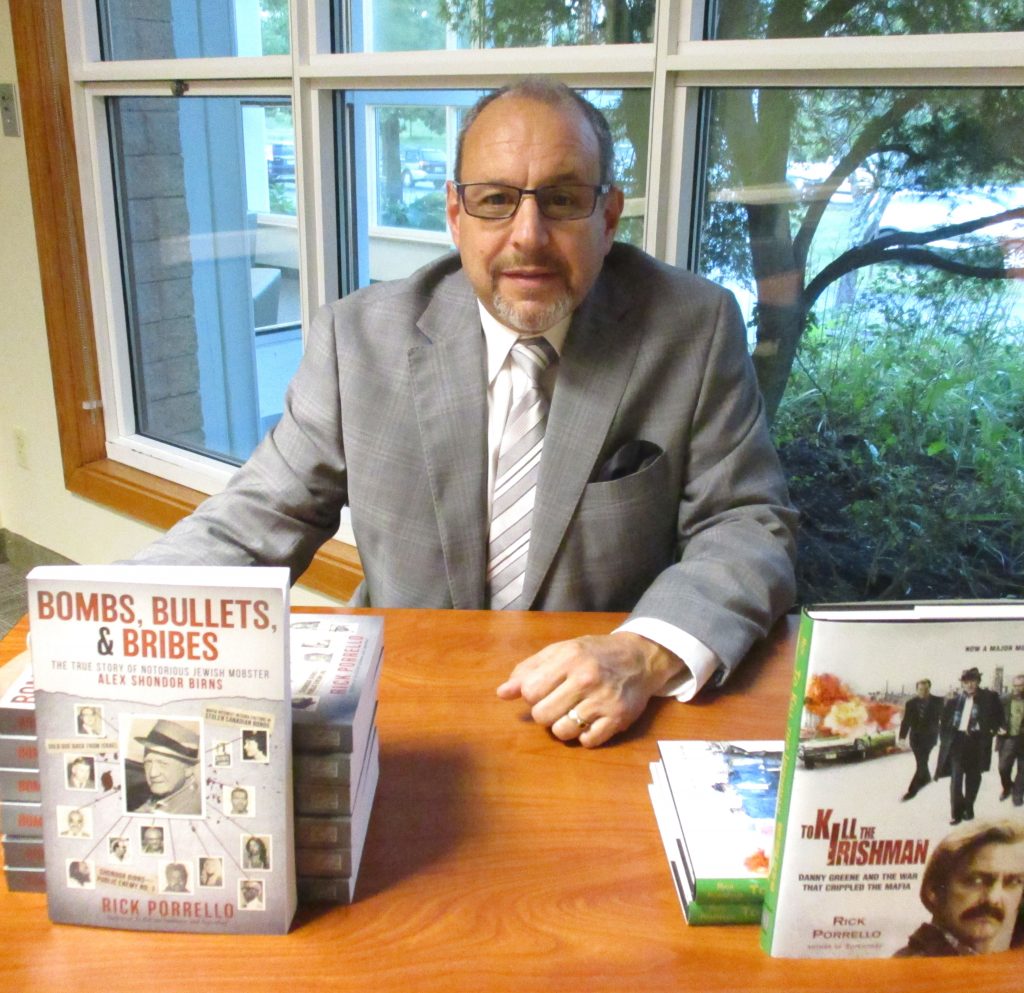
Just Play Like You Do in the Basement: Coming of Age as the Drummer for the Greatest Entertainer in the World is your memoir, sharing your journey from a basement in Cleveland Heights to the stages around the world on tour alongside Sammy Davis Jr. Why was this an important book for you to write?
It was an extraordinary experience to perform with a legendary entertainer. But because I was fairly young—just out of high school—the sense of wonder and the impact of those experiences hit me even harder than they might have if I’d been a seasoned musician in my thirties or forties. That’s why I framed the book as a coming-of-age story.
When I returned home, at least two people who heard my stories urged me to write a book. Within a few years I began taking notes, outlining, and drafting chapters. I eventually put the project aside when I became absorbed in researching my grandfather’s murder, which led to my first published book. Still, the vivid memories of traveling with Sammy Davis, Jr. and the people I worked with and friends I met, stayed with me for decades.
In 2023 I finally returned to the project in earnest. By then I understood the potential of my experiences to become not just a music story, but a powerful reflection on family, identity, and the choice between two very different dreams.
What were some ideas that were important for you to share in this book?
I can think of three or four. First, the influence of family. In my case, it was positive. I had a natural interest in jazz and the drums, but it was my father, my brother, and later my drum teacher who educated, coached, encouraged, and helped me build both talent and confidence. My father’s friendship with the great drummer Louie Bellson also provided a unique connection that shaped my style.
Second, the importance of commitment. My skill didn’t develop in a year or two—it took seven or eight years. Countless hours of practice went into learning the instrument, developing a jazz feel, mastering big band arrangements, then gaining performance experience. Often, when friends were out playing or partying, I was home working through a drum lesson or playing along with jazz albums.
Finally, I wanted to share how my journey forced me to face two competing dreams: the one my father and I shared, and the one that only I envisioned. Choosing between them ultimately set me on a path that was, in many ways, foreign to my family, a disappointment to my father, and changed the course of my life.
I appreciated the candid nature with which you told your story. What was the hardest thing for you to write about?
My memoir was a significant departure from writing books about organized crime, like To Kill the Irishman, which had become my comfort zone. The most difficult part was being honest about my vulnerabilities as young Ricky Porrello—my vulnerabilities and flaws. But I knew authenticity was essential if the story was going to resonate with readers, and that meant allowing emotional depth to come through. My editor, Cherie Rohn, helped by often asking the uncomfortable but necessary question: “How did you feel?”
I also wrestled with writing about lovemaking. The tone I envisioned for the book didn’t include explicit physical detail, yet intimacy was part of the story. I needed to convey the pull of attraction, the thrill of discovery, and the feelings of love that shaped my coming-of-age as a young man traveling the globe.
What advice do you have for aspiring memoir writers?
Remember that an autobiography and a memoir are not the same. An autobiography has a wide view—this is the story of my life. A memoir is a slice of life, however small or large, that reveals a deeper truth—what you learned or experienced about some universal theme.
In Just Play Like You Do in the Basement, my primary theme is coming-of-age. Other central ideas include family, identity, and choosing a path. At its heart, though, the story is about a boy becoming a man—set against the backdrop of a successful musical family and the extraordinary experience of touring with a legendary entertainer.
Over the decades, many aspiring authors have consulted with me. A common mistake I’ve seen is summarizing a life as a simple chronicle: this happened, then that happened, then something else happened. The episodes may be interesting, but anecdote after anecdote—without emotional depth, story threads, and a clear beginning, middle, and end—does not make a memoir. You must identify the theme or themes and be willing to tell the truth with honesty and vulnerability. With focus and commitment, you can do it!
Mercy: Tears of the Fallen follows a cast of broken warriors, seers, rebels, and rulers as they claw through violence, political upheaval, and their own personal demons. What was the inspiration for the setup of your story?
The primary questions I asked myself when setting out to write this story were:
What if Aragorn lost everything after the War for the One Ring?
And what if Sam had to kill Frodo in order to save Middle Earth?
Taking those into my story as I explored my newly crafted world helped me identify key themes and modes of that very exploration.
I find the world you created in this novel brimming with possibilities. Where did the inspiration for the setting come from, and how did it change as you were writing?
Inspiration for the setting came primarily from Elden Ring. There are so many deeply minted stories hidden in the Lands Between. And I truly wanted to create my own world with Elden Ring being a primary influence. I played a lot of World of Warcraft growing up, and so geographically as far as the continents and factions/races are concerned, one may find several similarities or at least be able to identify the inspiration there.
As far as the darkness of the setting goes though, Elden Ring has to take the biggest nod.
When creating the dynamic characters in this novel, did you have a plan for their development and traits, or did they grow organically as you were writing the story?
I had a plan for where each of the main ones started and where I wanted them to end up at the end of the four-volume epic. Other characters introduced themselves to me and I decided to explore their personalities and thoughts and mannerisms to really bring the life out of the story. Everybody is the hero of their own story—and I felt the need to put that on full display each time I entered a character’s perspective.
Is this the first book in the series? If so, when is the next book coming out, and what can your fans expect in the next story?
The next book (MERCY: ILL IS THE FATE) is slated for release on March 31st, 2026. The cover reveal is September 25th. In this second installment, fans can expect a close-out of a lot of the questions I raised in the first volume.
This being a four-volume series, books one and two serve as a single “arc” just as books three and four will serve as the second “arc” of the story. And I’m very excited to share what’s in store (Already 10,000 words into drafting the third volume). And if anybody is curious as to more of the story, I have the “Blood Rebellion” Short story and the first four chapters of Tears of the Fallen available through my newsletter on my website!
Relics of the past scattered. A hero broken. A world on the brink.
A paragon left for dead, Alevist Lightseeker sought peace—but peace had other plans. Thirty four years past, the blade he buried must rise again. As he hunts the ones who shattered his world, another exile awakens—Erevayn. A man drunk on grief and bound by blood. A minstrel must bring the two together in a war against a rising ill fate.
Viyala, a lost love, unexpectedly returns and sparks a fire in Erevayn—but will it be enough to quell his thirst for vengeance? And will the world unfolding around her offer the chance for the future she has long desired?
Salasmir, Blade of the Reckoning, must answer the call of duty once again.
Hayde and Neera, twins of the Stained, hunt for sacred artifacts for their false king. Steyvin and Ilatu must travel across the Sundered Sea in order to do the same, but for their once wise father—who holds damning secrets of his own.
The Tears awaken—and call to the broken. Two men, one path, and no Gods left to help them. Some martyrs stay dead. Others—become legend.
All She Knew follows a twelve-year-old girl who loses her mother suddenly, leaving her with chaos, confusion, and grief as she tries to navigate a new world in a new place she has no connection to. What was the inspiration for the setup of your story?
The inspiration for the story is my own. I lost my mother at a young age, and All She Knew is loosely based on my story. I didn’t have the opportunity to connect with other kids who had experienced a loss at that time. I wanted to provide a story that other children and those young at heart can relate to; to connect with the challenges the character goes through; to know they are not alone and can be ok through their journey.
What were some ideas that were important for you to personify in your characters?
I wanted to show the range of emotions Charity goes through and the different experiences she has. I wanted to show that it’s ok to laugh, cry, feel uncomfortable, angry and unsure as you go through grief. Grief isn’t linear, it has ups, downs, and sideways turns. I wanted to normalize this for children experiencing loss and different ways of navigating through it.
What were some themes that were important for you to explore in this book?
It was important for me to highlight the loneliness, sadness and confusion Charity goes through. When anyone loses a loved one, they can feel isolated and alone. For a child, those feelings are more confusing, hard to understand and work through. I wanted to connect and explore the different dynamics and struggles Charity goes through. The various ranges of her grief journey and trying to understand her new reality, who she is and will need to become after her loss. It was important for me to show all the different angles to her. I wanted the reader to connect with the character; to see themselves in what Charity is experiencing.
What is one thing that you hope readers take away from All She Knew?
I hope readers take away that they aren’t alone in their grief and they can get through it. I want readers to know, as is written in the synopsis of the book, “while tragedy can feel like a pit of turbulent emotions, resiliency and strength are always within us.”
Charity is a pre-teen girl whose life with her spontaneous, yet strict mom is great until everything she knows is stripped away. When her mom dies suddenly, she is swept into a world of chaos, confusion, and grief.
Charity’s life becomes a roller coaster. She’s lonely. She has to go through a grieving process she doesn’t understand. And in all of this she has to leave her home and move to a place she doesn’t feel connected to. It’s overwhelming. How is a young girl supposed to get through this?
In this powerful story, All She Knew looks at the human spirit to remind us of this important truth; while tragedy can feel like a pit of turbulent emotions, resiliency and strength are always within us.
A Finalist in American Book Fest 2025 American Fiction Awards which honors literary excellence.
Tim Rees’ Original Earth: Book One follows the last survivors of humanity who have, for generations, drifted through space and now, after their ship is sabotaged, are forced to land on what they now call Earth 2. What was the inspiration for the setup of your story?
What a great question! Thank you for asking it.
I live very near a beach in Wales called Freshwater West. It’s a beautiful beach and I walk on it pretty much every day. Whilst walking on this one beach in Wales, I will see the debris of humankind. Our rubbish. Manmade items that have no place in the natural world. I am constantly being shocked by what I see in this very small corner of the world and this is just one beach. I’m sure you could walk on every beach in the world and experience shock and horror at what we’ve done. And what I see is of little consequence to the bigger picture. What is the rubbish made of and where do we get the materials to make the rubbish in the first place, that’s the bigger picture. And, of course, I’m only scratching the surface here… So, to keep this short, I find myself gasping on the same question every day: imagine how beautiful this planet would be without humans?
I’m a novelist and my tools are words, so the story evolved upon the question: imagine if we were offered a new, uncontaminated planet and a fresh start, how would I, as an author, wish to see humanity move forward…?
And I wanted the main character to be an individual in perfect harmony with the natural world, so through that character I could play with scenarios and ideas about what it must feel like to be truly in harmony with nature and with all my fellow natural beings.
One of the things that stands out in your novel is the complex relationships of the survivors as they try to rebuild a life on this new planet. What aspects of the human condition do you find particularly interesting that could make for great fiction?
I like your use of the term ‘human condition’, because we live in societies where we are conditioned to live in particular patterns and aspire to particular goals. I could go on, but let’s keep this simple. On the spaceship, everyone was forced to live together in a sterile, confined space. They knew no different, so it wasn’t really a problem, that is, until they were exposed to the hope or the opportunity to explore their own dreams and aspirations. They land on a planet without any experience of how to live in the ‘real’ world. They are completely innocent, except for information and data they have with regard Original Earth. So I asked myself the question: where do these people begin to build a community into a free-thinking society? To begin to answer that question, I reflected on a passage in a previous novel I’d written called Delphian. In the novel there is this relevant passage:
For some reason his thoughts always ended up at the same questions: society and establishment; two words describing the maze of structure created to protect and enable the vast variety of people to live in apparent harmony. His mother had put it perfectly when she’d said: ‘People are different shades of colour, darling, and too often the colours clash.’ She was so right. Different shades of colour. Beautiful. Different shades of personality in a rainbow of dreams, aspirations, hopes and desires… It is we, collectively, who accept terms like human resources, for instance. It is we who put up fences labelled ideology and either stand on one side or the other and proclaim this is right and that wrong…
As an author, I’m hugely excited to explore this landscape. No spoilers, but in books two and three you see those colours naturally coming together and blending, whilst other colours clash and pull apart. I leave that very much to the characters to play out. I’m in discussion with a film producer at the moment, not for Original Earth, but another story, but he complimented me on the fact my scenes breathe. I know what he means, but I don’t create that, the characters do.
What themes were particularly important for you to explore in this book?
That’s an easy question. The damage we have done to planet Earth. The damage we have and are continuing to do to ourselves, because, whilst we poison the planet, we also poison ourselves. And the damage we have done and continue to do to the planet and all other life forms with whom we share this space has to stop, because we only have this one planet. I write fiction so can imagine exploring different worlds, but will humanity survive our collective suicide in order to really explore other worlds?
Where does the story go in the next book, and where do you see it going in the future?
Anu grows closer to Sonri and together they will explore the universe. You already see that in books two and three and in all the planets Anu visits you’ll see a reflection of humans on Earth. For instance, in book three Anu visits a planet run by a humanoid species governed by a repressive, authoritarian ideology similar to Afghanistan and the Taliban – Anu, of course, liberates the women in that society. In book four, the novel I’m currently writing, Anu returns to Original Earth about 150 years in our future. Planet Earth is unrecognisable.
I think in the back of my mind, I always had the idea I’d like Original Earth to evolve in a similar way the stories of Star Trek must have for Gene Roddenberry.
Imagine if we were offered a new, uncontaminated planet and a fresh start, how would you wish to see humanity move forward…?
Now, armed with some knowledge of the complex relationships that exist between both fauna and flora – all life with whom we share this incredible planet – what lessons have we learned?
This is a story about a new beginning…
Anu has a gift: her personal vibration is in perfect harmony with the natural world.
No Books For Benjamin? introduces young readers to a lovable little worm who lives and works at the Library of Congress and finds himself heartbroken when a mysterious illness forces libraries across the country to close. Where did the idea for this story come from?
I originally did not plan a sequel to Books For Benjamin. However, in visiting schools and talking to kids, many asked if there would be another Benjamin book, as they liked the character. The idea for this second book came during the pandemic, when so many libraries had to close their doors. I remember feeling how strange and sad it was not to have that space open, and I thought about what it would mean for someone who lived and breathed books every day. The book is my nod to librarians who personally witnessed as a teacher come up with creative ways to get real books into the hands of children. They are the real-life heroes! I thought it would be fun to have Benjamin and friends take on this role.
Do you have a favorite scene in this book? One that was especially fun to write?
It’s actually not one scene, but starts with Ginger, the ant, offering to help deliver books by flexing her muscles and declaring how strong ants are. This is followed by scenes of Whizby, the dragonfly delivering books by air, as dragonflies are super-fast fliers, and Dotty, the ladybug, contributing by landing up and down on a spray disinfectant can. I imagined writing funny scenes where there are a few hiccups with this (For example, the ant group falls like dominoes when one ant ignores “halt” because he is reading a book, one dragonfly accidentally drops his parachute of books on a dog’s head). But ultimately, the plan works. The message I hoped to impart to kids is that everyone has something to offer, no matter how small.
The artwork in your book is wonderful. Can you share with us a little about your collaboration with illustrator Uliana Barabash?
Uliana was incredible to work with. From the very beginning, she just got Benjamin—his warmth, his curiosity, and that spark of determination. We talked through ideas, but honestly, she always surprised me with details that made the illustrations feel alive. Seeing her bring Benjamin’s world to life was one of the most rewarding parts of this whole process. I just get a big smile every time I look at this purple worm she illustrated with his crazy hair and funny expressions. Kids have often thanked me for writing a story about a not-so-often-loved character, but I really know it is Uliana’s magical illustration and choice to make him purple that turned this character into a lovable one.
Can you give us a glimpse inside the next book in the Benjamin and Friends series?
Yes! In the next book, Benjamin ventures outside the library and starts to discover that stories aren’t only found in books—they’re in people, places, and even in the adventures we have. He meets some new friends who help him see the world in new ways. It’s really about friendship, resilience, and finding stories everywhere you look. I am also trying to imagine a story where Benjamin helps reluctant readers find the magic in books!
When suddenly books disappear, one little bookworm takes action in a fun, uplifting way!
Benjamin the worm loves his job at his favorite library – reading, organizing, and receiving letters from kids who share their favorite books. Yet, everything changes when a strange illness sweeps across the world. Schools close. Libraries shut their doors. And suddenly … no more books!
With the help of his clever and determined friends, Benjamin sets out on a mission to bring books back into children’s hands.
Because stories matter. And heroes come in all shapes … even squiggly ones.
Class Action: What You Don’t Know CAN Hurt You follows a third-year law student who is unexpectedly drawn into a cheating scheme, where it threatens to derail her entire academic career while trying to balance her personal life. What was the inspiration for the setup of your story?
I’ve always been intrigued by the idea that true character is exhibited when you take the high road even when there’s nobody watching. Behaving in an ethical manner and doing the right thing isn’t always convenient or expedient, but Lennon’s moral compass is unwavering. I love that about her.
What do you think were some of the defining moments in Lennon’s development?
When I first introduced 18-year-old Lennon Gallagher to readers in the 3rd book in the Miranda Quinn Legal Twist series: Miranda Fights, she was a lonely young woman with trust issues. She had been in and out of foster homes and it wasn’t until she met Attorney Miranda Quinn that she developed the confidence to pursue an education and live a life of purpose. Other defining moments were turning down an opportunity for an ‘easy A’, discovering the truth about her father and meeting restaurant mogul Nick Russo.
How do you balance story development with shocking plot twists? Or can they be the same thing?
I like to present obstacles and challenges to my characters, i.e. plot twists, to show how they respond, grow and develop over the course of the story. For Lennon, character wins out over convenience every time.
Where do you see your characters after the book ends?
Great question! The sequel to CLASS ACTION: What You Don’t Know CAN Hurt You is CLASS REUNION: Keep Your Friends CLOSER. Watch for it 10/1/26. Here’s a hint; Lennon’s up for partner at a top law firm and is planning her wedding. Everything is going great… until it’s not!
R U in? Need $ now Third year law student Lennon Gallagher’s life turns from complicated to overwhelming when she receives a message meant for someone else. The text offers an advance copy of a final exam—a guaranteed “A”—but accepting it will violate the honors code she refuses to break. When Lennon declines, the collaborators behind the cheating scheme demand her silence or they will ensure she takes the fall if necessary. Fighting for her future while balancing an internship, exams, studying for the bar, a boyfriend who no longer seems to understand her, and a mother who needs help rebuilding her life after prison, Lennon tries to handle everything alone. But when she discovers the lead plaintiff in her firm’s class action lawsuit might be the father she’s never known, it’s the final straw. She needs help.
Dying to Live takes readers on an intimate and eye-opening journey, revealing how making peace with mortality can unlock a richer, more meaningful life. Why was this an important book for you to write?
For most of my life, death has been a silent companion, something that shaped my choices more than I realized. From losing my mother when I was young to the many moments since where mortality came close, I’ve learned that it isn’t something to fear as much as it is something to learn from. Writing this book was a way of bringing those lessons forward, not only for myself but for anyone who has ever felt the weight of impermanence and wondered how to live more fully because of it.
What were some ideas that were important for you to share in this book?
I wanted to show that death is not just an end but also a mirror. It reflects back the stories we’ve been telling ourselves, the identities we cling to, and the fears we avoid. One idea that mattered to me was the practice of “dying to live,” which is about shedding old roles, patterns, and emotional baggage so that we can step into a freer, more authentic life. I also wanted to share that this work isn’t abstract philosophy. It is lived, messy, human. My stories are meant to open space for readers to look at their own lives with gentleness and courage.
How has writing Dying to Live impacted or changed your life?
The writing process forced me to sit with truths I might have preferred to leave buried. It slowed me down, made me listen more deeply to myself, and invited me to face the places I still resisted. In doing that, I found more ease, more gratitude in the everyday. By leaning into death I became more alive, more playful even. It reminded me that life is fragile, fleeting, and far too precious to postpone.
What do you hope is one thing readers take away from your story?
That it is possible to turn toward death without being consumed by it. My hope is that readers will feel less alone in their fears and more connected to the beauty of simply being here. If even one person puts the book down and feels a little lighter, a little freer to live with love and presence, then it has done its job.
What if embracing death is the key to truly living? We spend our lives avoiding the thought of death-yet its presence shapes everything we do. In Dying to Live, Andy Chaleff takes readers on an intimate and eye-opening journey, revealing how making peace with mortality can unlock a richer, more meaningful life. Blending memoir, philosophy, and deeply personal reflections, Chaleff invites us to step beyond society’s distractions and face death with curiosity rather than fear. Through poignant stories and thought-provoking questions, he helps us see that dying isn’t the end of life’s meaning-it’s where we finally begin to understand it.











 LITERARY TITAN