Category Archives: Interviews
Moral Awakening
Switch and Blue Eagle is a coming-of-age superhero novel where a young sidekick battles villains, expectations, and his father’s outdated ideals in a world that no longer sees justice in black and white. What inspired you to explore the father-son dynamic at the heart of the story?
It’s actually an element from my worldbuilding. When I first started doing this, I was inspired by the TTRPG Masks. When me and a gaming group I was part of were preparing to start a campaign in that, I looked over the basic information and saw that the ages of comic book history–the Golden Age, the Silver Age, and so on–were canon as Generations in Masks. So I decided to follow suit with in-universe Ages of Heroism. I’ve always loved the contrast between more serious, darker takes on superheroes and their lighter, more kid-friendly takes of old. So Blue Eagle and Switch ended up being the first two characters I created–along with Queen Venus and one more character that you can likely guess who it is if you read the epilogue–as a contrast between the Silver Age and the Modern Age of Comics and Heroism.
So, in my larger world, I have Silver Age characters and their values, I have Dark Age characters and their values, and I have the younger Modern Age characters trying to find their place in the world.
I know that sounds like an answer to a different question, but the father-son dynamic in this story was actually built from worldbuilding rather than character exploration, at least in the beginning. Once that foundation was built, I started asking myself, “What would people from different Ages of Heroism disagree on when it comes to superhero-ing? What differences would a superhero from each era of comics have, like Superman of the 1950s and Rob Liefeld’s Youngbloods characters in 90s Image Comics, and today’s teen heroes like Miles Morales and Kamala Khan? What complications would those differences create when the people who have those differences also have a father-son and superhero-sidekick relationship? What are some real-life, dare I say political, equivalents to those disagreements?” And this was ultimately my answer.
Jack often questions what makes someone truly “good.” How do your own views on morality shape the story?
Haha, when I was a dumb, edgy 20-something, I really hated Superman (now that I have a fully functioning frontal lobe, I’m now a huge Superman fan). I thought he was way too powerful to have good stories with suspense and stakes, but I also hated how he was essentially a paragon of perfect morality. It was like being super strong allowed him to dictate what was right and wrong. One thing I always said was that, unless a hero possesses “super-morality” as an actual superpower, they have no more credibility on morality and ethics than anyone else.
I now see Superman in a different light, but Blue Eagle represents that part of the old me that was right. That feeling that those in power—churches, pundits, corporate compliance departments—shouldn’t get to dictate what is right and wrong just because they have societal power. A conservative media influencer has no grounds to determine that trans people are immoral while saying nothing about school lunch programs being defunded; a company shouldn’t be able to say an employee having outside income is a conflict of interest while it funds destructive pipeline construction on sacred indigenous land; an elected official shouldn’t be able to say that the presence of migrants is immoral criminal behavior while they take bribes and makes laws that help their rich friends at the expense of education, healthcare, and the environment.
Switch, on the other hand, represents in his teens the moral awakening I didn’t have until my thirties. That society has a real responsibility to lift up its “lowest” and give people real chances to succeed. People don’t succeed in life on their own. We all have support from family, friends, community, and institutions. And when those systems fail people, they are left with paths in life that we would never choose for ourselves. So instead of using force to punish those we deem to be immoral, rightly or wrongly, I believe there is a duty for society at large to ensure that we all have the tools to live happy, dignified lives.
It was that moral conflict that I wanted to place at the core of Blue Eagle and Switch’s disagreements. The father-son conflict and Switch’s desire for independence aside, there is a difference regarding the moral responsibilities that come with power.
The book blends superhero action with introspective realism. Did you set out to challenge typical comic tropes from the start?
Not really. This is another thing born from worldbuilding. This is not the first story I’ve written in this universe, only the first one that I’ve published. And even before I decided to write SWITCH and Blue Eagle, the Blue Eagle Universe, as I call it, was always a superhero universe played mostly straight. It certainly plays with, satirizes, celebrates, and challenges, as you say, comic tropes as well. But it also is one played straight, meant to exist alongside the Marvel, DC, Image, Astro City, Valiant, and other shared universes.
If anything, I would say that the world this book is set in is less “What if superheroes existed in the real world?” and more “What if realistic people existed in a superhero world?”
Jasper’s subplot humanizes the villains. Was it important for you to blur the line between hero and antagonist?
Not really. Not for this book, at least. That’s because I don’t really view Jasper as an antagonist, but one of the two main characters. He just works for the bad guys. The actual antagonists of this book—other than any high-minded literary concept like “Switch’s inner struggles” or something—are the villains. Queen Venus is the primary antagonist, which is fitting as she is the primary member of the Blue Eagle Rogues Gallery.
Actually, the idea for Jasper and the broad spot he sits between the two conflicting ideological positions presented was inspired by a movie I saw from 1990. It was a very high-brow, snooty, underground arthouse film you’ve probably never heard of, called Teenage Mutant Ninja Turtles. Haha. But seriously, in that movie, there are two characters in that film whose fate is really the thematic center point of the movie, and that’s Charles and Danny Pennington. Fatherhood and family are the central themes of that film, with the Turtles and Splinter representing a nurturing and loving family and Shredder and the Foot Clan representing harshness and distance. They present two sides of it, while the Penningtons are teetering on the fence. In the end, they fall into the Turtles’ side, reuniting and beginning the process to reconcile and become closer.
Broadly speaking, Jasper is the same as the Penningtons. Switch believes in societal responsibility and rehabilitation, while Blue Eagle touts personal responsibility and tough love. Jasper’s the case study to prove one of them right and one of them wrong.
Author Links: GoodReads | BlueSky | Facebook | Website | Amazon
Switch the Blue Eaglet is the son and teen sidekick of Blue Eagle, one of Herald City’s top superheroes. But being a sidekick isn’t all glory. Switch is tired of living in his father’s shadow, tired of his strict rules, and tired of being told he’ll never be strong enough to stand on his own.
Jasper Clemens is just another faceless villain henchman. All he wants is to get out of the criminal business. But his debts to the mob keep piling up, and he’s stuck taking the riskiest jobs in order to protect his family.
When a dangerous supervillain launches her deadliest scheme yet, it’s up to Switch and Jasper to stop her. Can Switch prove to the world he’s more than just a sidekick? Does Jasper have what it takes to be a true hero?
Or is Herald City doomed?
Perfect for fans of coming-of-age superhero tales, this short novel delivers action, heart, and a fresh twist on what it really means to be a hero.
Don’t miss this adventure of SWITCH and BLUE EAGLE!
SWITCH and Blue Eagle: A Superhero Sidekick Novel is a short prequel to my main series currently under development, SWITCH and the Challengers Bravo, and the introduction to my larger superhero world of Herald City. It has two focus characters. There is Switch the Blue Eaglet, the sidekick of Blue Eagle, who deals with the self-doubt that comes with the constant criticisms he gets from his father, as well as his unreliable powers. He wants to eventually become a superhero on his own, but he feels the need to prove his worth first. And then there is Jasper Clemens, a supervillain henchman who wants to get out of the business. But his debts to the mob keep piling up, and the only way to keep his family safe is to take on more and more dangerous jobs. And in the background of all of this, Queen Venus, the archenemy of Blue Eagle and Switch, is sprouting her deadliest plan yet and the whole world might be at stake.
Trigger warnings include fantasy violence, father-son family drama, and mob debt.
Redemption

14 Hours of Saturn follows a 24-year-old woman who has just moved into her new apartment and spends a rainy Saturday revisiting her memories of growing up, her regrets, and her hopes for the future. What was the inspiration for the setup of your story?
When I wrote Afternoon Rebecca, it was on a dare that I couldn’t write a whole book about a couple out to dinner with each other. Once I succeeded at that, I was challenged once again, this time to write a book about a lady who is stuck at home all day in her apartment. While I took liberties with both challenges, they were both successful in meeting the said challenges.
Saturn’s memories are wonderful slices of life that readers can often see themselves in. Are there any emotions or memories from your own life that you put into your character’s life?
Of course. The Venus character, at least through high school, was highly influenced by my own sister. The parts about schools closing down and having to move because of trains being built were also part of my real-life experiences. I also still work with craft sticks, which is something I started when I was about six years old. Oh, and I also have broken an egg yolk while cooking them, just like Saturn did. (You were the second reviewer to mention that happening, and when I wrote that part, I figured it to be just a simple detail that would get tucked away with Teddy Behr’s superhero t-shirts and that Thanksgiving meal side dishes.)
What were some themes that were important for you to explore in this book?
Redemption. You could make mistakes, know they are mistakes while doing them, and you could also redeem yourself and be forgiven in God’s eyes.
Will there be a follow-up novel to this story?
If so, what aspects of the story will the next book cover? Yes, 5 Weeks of Saturn is already completed and is being edited right now. It picks up a week after 14 Hours of Saturn ended. We follow Saturn as she navigates her new job, learns more about her new town, and has entered into a budding relationship with furniture restoration man Janus Rings. This takes you through July 4th. More may follow, as much could be written about this character.
Author Links: GoodReads | Facebook | Amazon
Spend the day with Saturn as she reminisces about growing up in Northwest Indiana with loving, supportive, and sometimes too lenient parents, along with an overbearing big sister named Venus. Her youth was filled with craft sticks, magazine ads, a creative mind, and enough bad decisions to last her a lifetime. She reflects on this while discovering new and wonderful things about the city she now calls home. Will it be the dream she kept having, or another dead-end road for her?
This was written by the same author who wrote the Afternoon Rebecca series. It is not a part of that series, but it is in the same universe.
The Book Began As A Poem
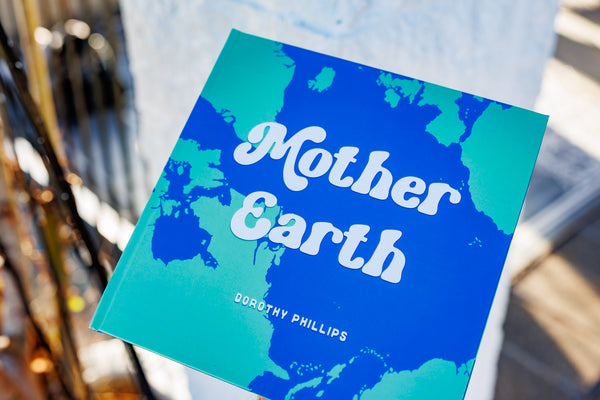
Mother Earth is a lyrical picture book that invites readers to see the planet as a living, loving being through tender, rhythmic verse and luminous art. What inspired you to personify Earth as a mother and divine artist in your poem?
The book began as a poem that I wrote for my father. He’s an artist and subsequently someone who has taught me to think outside the lines that are so often drawn for us. While I cannot give an exact reason as to why I decided to personify Earth in this book, I do think in retrospect it’s likely because in the hardest times in life it has seemed like nature has taken care of me in ways that felt sacred. You can have what feels like the very worst day of your life and the sun on your back still brings warmth and comfort! That is a gift, and a divine one in my opinion.
How did you collaborate with the illustrator to match the book’s spiritual tone visually?
I am also the illustrator for Mother Earth so that was an easy one. I knew I wanted to approach the illustrations with a more modern /pop art vibe. I liked the idea of contrasting the depth of the message with fun visuals.
What do you hope young readers will feel or think after reading Mother Earth?
I hope readers will look around and appreciate the beauty in the world and consider it a gift, to always ask questions, and have hope.
What is the next book that you are working on, and when will it be available?
I’m working on one I’m really excited about. The story is in the editing phase and I have only begun to brainstorm with illustrations! It is going to be less philosophical, and more of a fun story told from a kid’s perspective! I think it will be released for sure in 2026, so stay tuned!
The Nature of Our Existence

Have You Seen Him follows a weary public defender who discovers a missing-person ad bearing his childhood face and a stranger’s name, leading him to unravel a buried past, a vanished family, and secrets hidden by his adoptive father. What was the inspiration for the setup of your story?
Soon after we meet the book’s main character, David, he’s sifting through his mail and sees a missing child ad with his own face. The inspiration for the book is a scenario somewhat similar to that—I was sorting my mail and saw an ad for a child who went missing when he was 10. The computer-progressed image showed him at 40 years old. I thought about how this boy’s family had been searching for three decades, never giving up trying to find him. The faces haunted me. I tore it out and carried it around in my bag for a while, then sat down to write a story about it.
Was the character’s backstory something you always had, or did it develop as you were writing?
When I first began this story, I was in the process of reading The Immortal Life of Henrietta Lacks, a nonfiction book that chronicles actual events in medical science. I took a few facts from that book and created a “what if” scenario—imagining what would have happened if a number of things had played out differently than what actually occurred in the true story. The backstory developed organically from there.
Do you think there’s a single moment in everyone’s life, maybe not as traumatic, that is life-changing?
I do think that at some point in life we each come to some wise realization—about ourselves, our purpose, the nature of our existence—that deeply impacts us and points the way forward. It could be as simple as a brief encounter with a wise stranger, an event that forces us to rise to the occasion, or even a long, winding journey to trusting in our own strength. I believe we each have key moments that, in retrospect, put us on a certain path to finding out who we really are. In his quest to find his true family, amidst all the action and adventure, David deals with all of the above.
What is the next book that you are working on, and when can your fans expect it to be out?
Have You Seen Him is the first in a trilogy, so it’s back to my notebook to work on the second installment. Readers say the ending is satisfying, but I also left a few questions open, so it’s pen to page to see what happens next with these characters! The goal for this new book is fall of 2026!
Author Links: GoodReads | Website | Amazon
For David Byrdsong, life is a series of daily obligations. An attorney, he lacks both ambition and the ability to commit to a long-term relationship with his girlfriend, Gayle. Abandoned by his family at an airport when he was eleven, he learned to blunt his feelings, despite his subsequent adoption by a loving couple.
Until one day, when David discovers his own face in a missing child ad. Suddenly driven to uncover the truth about his past, he is forced to tap into his inner strength as he encounters corporate conspiracies, murdered bystanders, and distressing suspicions about the only family he’s ever really trusted. David enlists Gayle’s help—and the help of an unlikely stranger with secrets of his own—as he attempts to find his true family, whoever they are.
Thrilling, exploratory, and propulsive, Have You Seen Him is a story of lost identity, dangerous secrets, and a deeply personal pursuit of the truth.
The Moral of the Story is the Story

The Tilted Palace: Weeds of Misfortune follows a retired Green Beret haunted by Vietnam and marooned in the quiet of small-town Massachusetts, who meets a disheveled paster with whom he forms a bond as they struggle to survive. What was the inspiration for the setup of your story?
Righting the narrative around Vietnam had been simmering inside me since before I returned from that war in 1968. Discovering and writing an essence of the real story, beyond the general impression of the presumed feckless French in the French-Indochina War, got the ball rolling with Weeds of War: Those Who Bled at Dien Bien Phu, the first in the trilogy.I understand there are something over three thousand books on Vietnam, from text-like to raw and unending visceral adventure. While each may have a distinct target audience, I needed something that speaks to my neighbor, my ex-wife, and a general audience. Ingesting human interest story with historical “corrections” is what I came up with in Weeds of War, and carried forward with Irish Weeds and now The Tilted Palace.
What are some things that you find interesting about the human condition that you think make for great fiction?
Our assumptions about others — almost always wrong. Our mistaken belief in knowing what is best or not knowing, much less understanding, the entire story. The too late epiphany between characters. The “Plan B” that each of us comes up with when life goes south.
Was it important for you to deliver a moral to readers, or was it circumstantial to deliver an effective novel?
In large part, the moral of the story is the story. Imparting my truth has been the point. Being able to do so in a manner that touches the mind or the heart or the soul of the reader is, of course, an effective novel.
Where do you see your characters after the book ends?
There is potential for all of them going in different directions, either together or separately. Trinity and Jilly could easily be lesbian or bi-sexual, or seen to be, then discovered so by the communist government — oh my! Chang may be “turned” by a CIA operative — oh my! Jimmy Ray? Who knows? Perhaps a pathetic effort to replace Jezz or he may be saved by the need of the other characters to be saved by him. Or another story could begin with Jimmy Ray’s headstone and epitaph. Patrick and Thuy? They may simply die on the vine, aged and with memories that have either sustained or killed them — what could have been, perhaps. Or, Jimmy Ray’s mother could easily return to be the classic character she is in Irish Weeds. Old, yet fiery, Bess could be a main character in The Troubles of Northern Ireland, with Jimmy Ray either assisting or trying to redirect her.
What fun it all is.
Author Links: Amazon | GoodReads
The reality is strongmen with militias pressing for power, and multiple politicians and political factions with sharp elbows eyeing the Presidential Palace and affecting its balance.
Supported and directed by communism, a guerilla force called Viet Cong is recruiting and stirring things up for the government. Patrick and Thuy did not expect another war, nor to be engaged in it to the bitter end and beyond.
Now, fifteen years after it ended, that American-Vietnam War is seldom spoken of other than when an isolated veteran messes up real bad. Then Vietnam vets are referred to as “drug-crazed baby-killers.”
Jimmy Ray Crandall served years in the war. “It ain’t right,” he would grind out, revealing a hint of his trauma. Just in time he meets the dog. Her owner is a young woman with her own troubles. There is sharing, drinking, and bickering until insight begins to perform little miracles.
Can a return to Saigon be healing?
Old friends with new stories come to the fore. Regardless of it all, the war was lost years ago—no change there. Perspective on the past, however, can change a great many things.
An Entertaining Duo
Candace McFly: Undercover Spy Case #1 The Botched Beauty Pageant follows a sharp, puzzle-loving third grader who enters the town’s beauty pageant despite her fears to help her friends and solve a mystery. What was the inspiration for the setup of your story?
When I was a Writing Lab teacher about 4 years ago, I was beginning a fun Mystery Writing unit for my 3rd graders to start after just completing our state testing that spring. I was randomly brainstorming possible story ideas modeling what my students would soon be doing. Since I had a small background in pageants when I was in high school, I thought this would be a fun topic to write about. Originally, it was going to be a spoof on pageants, but it turned into something totally different.
As we got further into our unit, I developed a character sketch on my two main characters- Candace and Arnold- before I even began writing the story. My students loved them right off the bat, saying they felt they’d be friends with Candace and Arnold if they were real kids! As I wrote the first two chapters, modeling how to incorporate various writing strategies, the students LOVED the storyline and proposed a challenge to me; to turn these ideas into a book. Having always wanted to write a book but thinking it wouldn’t happen until retirement and readily accepting a challenge because I constantly asked them to take risks as writers, I accepted! I wrote the entire summer and into September, submitted to a few publishers, and the rest is history! I loved the characters of Candace and Arnold; their personalities work well together, making for an entertaining duo.
What character did you enjoy writing for? Was there one that was more challenging to write for?
That makes me so happy that you loved Candace and Arnold! I love them, too, and enjoyed writing for both equally, but in different ways. Since Candace was telling the story through her eyes, she wasn’t that difficult to write for. She helped guide me through the storyline. However, the challenge with her was to show what a strong, smart girl she is, but not come across as a know-it-all. I wanted her to be likeable and relatable, yet vulnerable and humble at the same time. As a teacher, I see a lot of personalities come through my classroom. My goal with Candace was to show what a true friend is like and make her a role model to young girls who read this book (and future books to come), and that there’s nothing wrong with being smart or having fears. Be comfortable in your own skin.
And then there’s Arnold… I knew I wanted to have a partnership where one of the characters is quirky and fun. One that people will roll their eyes at from his outlandish ideas and actions. But also, a character who rises from vulnerability and being in the shadows, to one exhibiting leadership and caring about others. Most of the time, I’d be giggling writing Arnold’s parts, or they’d bring me to tears. Arnold is a hybrid of all the quirky boys I’ve taught throughout my past 30 years and sprinkled with my imagination.
How did the mystery develop for this story? Did you plan it before writing, or did it develop organically?
As I mentioned earlier, this idea originally came from a lesson in my Writing Lab. While modeling the writing process for my students, I did indeed create a skeletal plan (a story map) of how I envisioned the story developing. But as I completed writing the first few chapters and introducing new characters, the story morphed in a totally different direction than I ever imagined.
I once read how Michael Connelly, one of my favorite mystery writers, has an initial idea for the big idea of his novel, but he then lets the story take him where it’s supposed to go, and he won’t know what that is until he gets there. I feel that’s how I am as a writer as well. I had an initial plan, but certain events I created caused a chain reaction or led to another event I never saw coming. In fact, even as I got toward the end of writing The Botched Beauty Pageant, I had no clue as to how it would end. I didn’t want to make it too obvious with the clues I’d been leaving thus far, so I had to get creative. My initial plan was nowhere near where I landed in this Live Oak journey.
Can you tell us more about what’s in store for Candace McFly and the direction of the second book?
I would be delighted to! Actually, I’ve already written the next installment in the Candace McFly, Undercover Spy series: https://a.co/d/8npwOny (Case No. 2 The Phantom of Live Oak). Candace, Arnold, and all of their Live Oak friends are back with even more adventure and crazy shenanigans, with a touch of a kid-friendly ghost story.
Currently, I am working on Case No. 3, which isn’t titled yet- I don’t create the titles until I’ve finished writing the entire book- but it is a treasure-hunt themed adventure.
Author Links: GoodReads | Facebook | Instagram | Website | Amazon
Candace is not your typical third grader–or your typical girl for that matter. She’s not into her appearance or competing in the Li’l Miss Live Oak pageant like all her friends are or the ladies in her family were. Her mama was a Li’l Miss Live Oak, her grandmother was…her great-grandmother too. But she has no interest in competing even though it’s her year to. Plus, there’s that little stage fright issue she has.
But she does love to figure out puzzles and mysteries! Her best friend, Arnold, isn’t like other boys their age either, but his quirky ways make him the perfect sidekick who always keeps things interesting.
Normally, life in a small town can be dull. But not in Live Oak. School has just ended, and Live Oak’s pageant season has just begun, along with mysterious happenings to the contestants. Candace’s friend Anna Kate swims up to Candace and Arnold at the School’s Out for Summer Soiree, requesting Candace’s help. Telling her a tale so unbelievable, Candace can’t help but be reeled in as more bizarre events keep occurring to her friends.
To truly find the culprit, Candace must make one of the toughest choices of her life–go undercover, becoming a contestant in Li’l Miss Live Oak, overcome her stage fright phobia, and catch whoever is trying to botch the beauty pageant. With Arnold by her side, anything’s possible, but will they solve it in time to crown the next Li’l Miss Live Oak?
Difference in Perspective

Conversations with My Mother tells the tender and heartbreaking story of a son watching his mother fade into dementia. What was the inspiration for the setup of your story?
I started writing the book after a weeklong stay with my mother, during which she’d been diagnosed with vascular dementia. Afraid that the mother I’d known was fast disappearing, I began visiting and calling her as often as possible. Consequently, from her initial diagnosis through her passing several years later, I periodically witnessed both firsthand and at a remove her growing disorientation and anxiety as well as her increasing bursts of candor and flights of fancy. It was this on-again, off-again exposure to the effects of her condition that led to the episodic construction of the book, whose chapters recount particular days or moments in the course of the heroine’s long and debilitating illness.
Are there any emotions or memories from your own life that you put into your character’s life?
Since Conversations With My Mother is a kind of fictionalized memoir, many of the narrator Rob’s emotions and perceptions reflect my own. From 70 to 80 percent of the book’s events are based on memories, though some were melded or otherwise modified to support its narrative and thematic development.
What were some themes that were important for you to explore in this book?
The book’s central theme is that loss is not always as complete as it might seem. Though a dementia victim’s personality may fade or shatter, fragments of it often remain, and we should do our best to recognize, respect, and cherish them, however few.
Another important theme is the disparity between a geographically distant offspring’s experience of a parent’s dementia and that of an offspring who is a caregiver and, as such, in constant contact with the parent. For example, the book’s narrator, Rob, lives several states away from his mother, so he experiences her decline only in periodic phone calls and visits, whereas his sister, Diane, her primary caregiver, experiences its consequences daily. This leads to a difference in perspective between the two, with Rob being more focused on the emotional and Diane on the practical. Rob, from his insulated remove, occasionally glosses over or sentimentalizes issues, which is easy to do from a distance, while Diane, being in the thick of caregiving, sometimes feels overwhelmed and becomes impatient, which is understandable, given the demanding, continuous nature of caregiving. Neither perspective is more valid than the other. Each is simply the result of the character’s particular circumstances.
What is the next book that you are working on, and when is that book due out?
My next book is a family saga describing the experiences of a French-Canadian immigrant woman from the dawn of the 20th century through the 1980s, contrasting her early life’s poverty and hardships with the different challenges faced by her more affluent children and grandchildren. Like Conversations with My Mother, it’s based on my family’s history, drawing on the experiences of both my maternal and paternal grandmothers. I expect it to be ready for publication sometime in 2027.
Author Links: GoodReads | Amazon
Distinguished Favorite, New Fiction, 2025 Independent Press Award
Honorable Mention, 2021 Lorian Hemingway Short Story Competition
Poetry Thrives on a Mystery

What We Hold No Longer is a collection of poems that circle around memory, aging, identity, and the haunting void that lies beneath it all. What inspired you to write this particular collection of poems?
I’ve recently become an avid reader of psychoanalyst Adam Phillips. Last year, one of his books introduced me to Jacques Lacan. Specifically, how our subconscious impacts language, and in turn, how we use language shapes desire. For a poet, what could be more delicious to explore? Ineluctably, even mentioning Lacan brings up his theories on the Void (The Thing) and religion. This, in turn, led me to Lacanian scholar Richard Boothby (Embracing the Void). Along the way, I also read a book by Phillips on our ambivalence towards transforming our lives (On Wanting to Change). Transformation is a particularly important topic at this stage of my life. What I did not anticipate in reading this book was the evocation of so many memories. As a pediatric psychoanalyst, Phillip’s description of childhood, particularly the excruciating years of adolescence, flooded me with things I’d long forgotten (eg, seeing my grandfather’s corpse at age 9, the inchoate sense of frustration, and seeking revenge on my parents’ reputation with a can of red spray paint, etc.).
Can you share a bit about your writing process? Do you have any rituals or routines when writing poetry?
I’m trying to understand my writing behavior. I appear to have a natural rhythm, whereby I’ll write a dozen poems over a month or two and then go silent for just as long. During the quiet months, I read more and pay attention to what I see and listen to: all the things popping up as thoughts and feelings. The poems “The False God’s Lullaby” and “New Year’s Day” were brief glimpses of people, just a few moments of an image that resonated deeply, and unexpectedly.
What moves me from outside triggers something poignant nesting deep inside: “The I of my other who moves silently with me” (The False God’s Lullaby). Also, I love editing. Paul Valéry once said: “A poem is never finished, only abandoned.” I think he meant you can always refine and improve a poem. I try to limit my revision window to six months. Once a poem reaches structural stability (ie, I know what I want to say and the confines to say it in), I put it away for several days or weeks at a time. It’s important to understand that during initial composition, the poem’s neural map is being built using high stores of neurotransmitters. This is how we learn. However, it also prevents us from seeing inherent weaknesses when we’re still trying to get our thoughts written down. Taking a break for days or weeks reduces neurotransmitter stores. This removes the blinders to our writing, so we can see problems more readily and find better ways to say what we’re trying to convey.
How do you approach writing about deeply personal or emotional topics?
I think it is important during initial composition to just let things rip, because that is likely to be the most truthful. However, there is a balance to be struck. I’m reminded of a phrase from the Upanishads: “The path to salvation is narrow. It is as difficult to tread as the razor’s edge.” I view confessional poetry as an attempt to achieve psychic salvation. To shy away from powerful emotions creates a sense of falsity impossible to ignore. Yet, in the passion of writing, we can also say too much. Poetry thrives on a mystery, on what is left unsaid. That’s part of the art form I’m still working on improving.
How has this poetry book changed you as a writer, or what did you learn about yourself through writing it?
I have the sense in writing What We Hold No Longer that I’m beginning to mature as a poet. I’m not sure anyone else would agree. But there was something about the Lacanian cycle of poems that shifted my writing in a way I haven’t fully grasped. At this moment, I can’t imagine writing anything more profound or better composed than those poems. Time will tell. Every book I’ve written so far has enriched my sense of self and given me a sense of being more at peace with myself. Something that had eluded me before I’d written The False God’s Lullaby.
Author Links: GoodReads | Amazon
Such topics have been the foundation of his poetry explored in his previous works and have been expanded upon in “What We Hold No Longer.” As in his other works, poems are grouped together in themes. These themes approached from a deeply psychic perspective and include: personal transformations throughout life, existential encounters with “Nothingness,” the rise of fascism, loss, and the realm of an interior life (both our conscious narratives and our river of unconsciousness). What Gedaliah refers to as “the I of my other, who moves silently with me” (The False God’s Lullaby).
The poems in this current collection maintain characteristics that reviewers of his previous works have consistently noted. That “Gedaliah seamlessly blends philosophical depth with artistic expression, offering a deeply reflective journey through identity and human complexity, striking a perfect balance intellectual exploration and emotional resonance.”



 LITERARY TITAN