Category Archives: Interviews
Manifesting the Impossible

In The Dressing Drink, you share both the memories and challenges of growing up with a mother born of high society and an absent father. Why was this an important book for you to write?
My mother passed away when I was 11, and I met my father at 14. He died when I was 15. Because I never really knew my parents, I felt it was important to explore their scrapbook, memorabilia, and the stories of personalities from show business and friends. This process was essential for me to create a mythology around them and to gain a better understanding of who they were for my mental health, especially at the age of 22.
I appreciated the candid nature with which you told your story. What was the hardest thing for you to write about?
The most challenging perspective I faced was that of a lost child. I lived a wild life, mostly in boarding schools. It never felt like I was lost; I simply moved from one situation to another, either happy or high. It wasn’t until I entered rehab that I had a conversation with my inner child, who looked up at me and said, “You tried to kill me.”
Did you learn anything about yourself while planning and writing this book?
Everything I have done in my life feels like “manifesting the impossible.” Even the journey of writing and compiling this book seemed like an unrealistic goal from the outside. Therefore, it’s a significant accomplishment to document my mother’s life, my father’s life, my family’s life, and parts of my own life. The five books that emerged from this effort are just a small glimpse into the larger story of my life.
What is one thing you hope readers take away from your experiences?
Certainly, the concept of being a survivor is about transcending survival to reach recovery. If we are honest, we are all in the process of recovery, whether we acknowledge it or not. I have been sober for 26 years and consider that borrowed time. Writing the book at 22 and publishing it at 68 is a lifelong compilation of my experiences.
Author Links: GoodReads | Facebook | Website
From the grand estates of old money to the memoir, which spans decades and explores themes of money, power, alcohol, deceit, death, war, and murder, Thomas King Flagg navigates a complex labyrinth while pulling up the roots of his family tree with all its glory and devastation.
Thomas King Flagg is the great-grandson of David Hazlitt King Jr., renowned for his significant contributions to the assembly of the Statue of Liberty. Flagg’s mother was a debutante and a radio personality who graced the cover of Cosmopolitan Magazine. At the same time, his father was a dancer and comedian who starred in several theatrical productions and some movies. He also starred on Broadway with Ethel Merman in Hello Dolly. Unfortunately, Thomas did not reconnect with his father until shortly before his death, missing out on a connection that could have profoundly influenced his life.
Once you begin reading The Dressing Drink, you won’t be able to stop until you’ve savored every last drop!
Victim and Villain
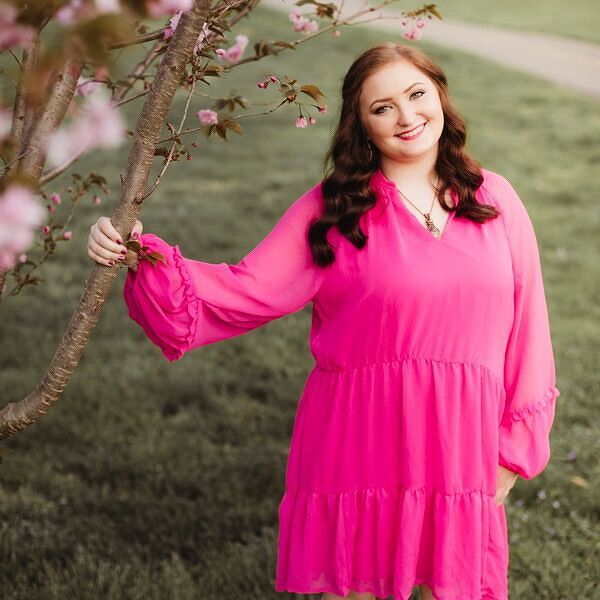
Raven follows a deeply flawed woman whose love affair leads her down a road of dangerous secrets, obsession, and self-destruction. Where did the idea for this novella come from?
Raven is one of, if not the most, intense books I’ve ever written. Delilah was first introduced in EverGreen, the first book in the EverGreen Trilogy, years ago. At that point, she was kind of a classic mean girl character. But even then, I knew that she had a troubled background. Raven is a companion novella that gives the reader some insight as to what was happening to Delilah before the events of Fallen Snow, the last book in the trilogy. It sounds a bit cliché, but sometimes my characters play a part in writing their own stories. Delilah knew what her backstory was, and she led me down the path of writing Raven.
I always take a lot of inspiration from my personal life. Raven is no exception. Abuse and sexual violence are topics that are very close to my heart. Unlike in Fallen Snow, I wanted Raven to feature an imperfect victim that was also a villain. However, I wanted to make it clear to the reader that Delilah’s actions and the way she treated others do not justify or excuse what happened to her. As the saying goes, hurt people hurt people. Like I said, I’m not necessarily trying to make the reader feel sympathy for Delilah or make them view her as less evil. At the same time, I do want to reflect that victims of abuse and sexual violence aren’t always (or even usually) perfect, and that’s completely normal. We can acknowledge that what happens to Delilah in Raven is a tragedy without revoking her status as an antagonist in the EverGreen Trilogy.
Delilah is an incredibly well-crafted character. What was your inspiration for her traits and dialogue?
I am extremely proud of being able to create a character that is as complex as Delilah. The more I wrote and planned the storyline, the more fleshed out and fascinating her character became. As I said before, she started out as your typical high school bully that took things way too far. But as I kept writing, I continued to follow her journey and realized where that ultimately led her. In Raven, we see Delilah at the lowest points in her life. Throughout the story, she thinks that her choices are acts of self-preservation, but they’re actually the opposite. She’s typically a very calculated individual, but her obsession with Silas (which I will make clear is an obsession, not real love) completely throws her off. In Silas, she’s met her match in terms of ability to manipulate. The two of them being in a relationship was never going to work, no matter how hard they tried. In a relationship, there has to be concern and respect for the other person. Neither of them had that. Her traits are those I imagine a person diagnosed with an extreme case of psychopathy, or antisocial personality disorder, would exhibit. All of her dialogue stems from that. Similarly, Silas is a malignant narcissist. Neither of them should be in a relationship, and certainly not with each other.
What do you find to be the most challenging aspect of writing a trilogy? What is the most rewarding?
The most challenging part of writing a trilogy is remembering little details. This can be something as simple as a character’s eye color, etc. The most rewarding is being able to watch them grow. I love seeing my characters transform into what is typically a better version of themselves. Obviously, that wasn’t the case for Silas or Delilah.
Can we look forward to more work from you soon? What are you currently working on?
I recently completed my first adult romance, titled Crazy For You. It’s a clean billionaire romance with an antihero MMC (main male character) and a sweet female protagonist with a heart of gold. They are actually one of my favorite couples I’ve ever written. I’ve never encountered a clean billionaire romance before, so when the story came to me, I decided it was definitely worth writing. I’m currently contemplating a sequel focusing on some of the side characters from Crazy For You and getting an idea of what that might look like. It’s definitely something I see myself writing in the future, but no promises.
Author Links: GoodReads | Facebook | Website
Delilah Banks was never the type of girl to let herself be manipulated by a man. But when she becomes involved with a tempting stranger, Silas, everything changes. Between the events of Moonlit Skies and Fallen Snow, Delilah discovers that no one is above having their heart broken. After all, we are each the hero in our own story.
Starting Over
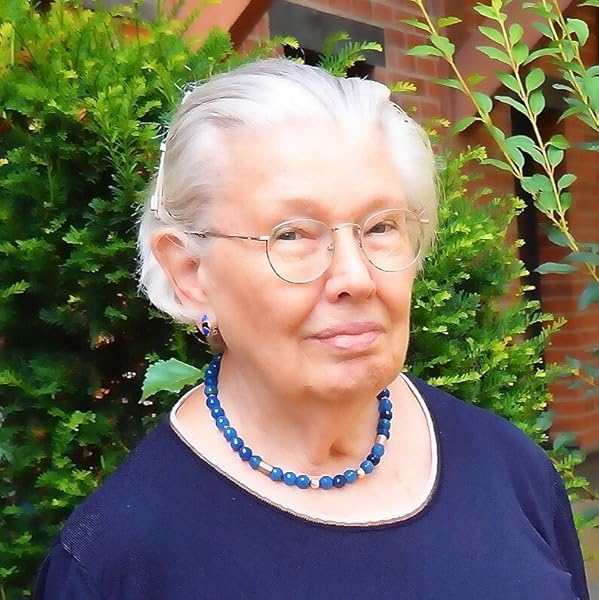
Second Chances in Brittany follows a retired professional who expected a romantic adventure in France with her husband but finds herself in a quiet battle for her own autonomy and identity. Where did the idea for this book come from?
Shortly after moving from Brussels to Brittany, I joined a group of English ex-patriates who met regularly for lunch. Their different motives for moving to Brittany were fascinating, as were their original expectations of what it would be like to live here, and their different ways of adapting (or refusing to adapt) to what they found. When driving home, I found myself working through storylines about people moving to Brittany.
What character did you enjoy writing for? Was there one that was more challenging to write for?
The two characters I most enjoy are the backbone of the series – Charles Pullen and Gérard Lemestre – but in this book they are in the background.
The most difficult character to write was Sarah herself. I wanted someone capable of planning and organising the perfect move to Brittany, but that’s a dull story on its own. I needed to create a flaw in her character to ensure that things didn’t go as planned, and settled on her adoration for a disastrous husband. Sarah wasn’t initially a sympathetic character, too business-like, too efficient, and yet stupidly deferring to James. But the more I understood her, the more she rounded out into someone worth knowing.
Did you plan the tone and direction of the novel before writing, or did it come out organically as you were writing?
The setting was planned and has never changed. But I initially wrote just to get all the stories I’d thought up interwoven into one coherent whole. That proved to need more than one book. Splitting my initial ideas into separate books entailed moving incidents to different dates and times of year. Something like arranging a large bunch of flowers between six vases!
What is the next book we can look forward to seeing from you?
The second book in the series is Pasts Present in Brittany, following a Canadian woman who moves to France and suffers too much bad luck before coming to Brittany and finding friends and Charles Pullen.
Author Links: GoodReads | X | Facebook | Website
A second honeymoon in France was supposed to save Sarah’s marriage. Instead, it changes her life forever.
Sarah Pullen arrives in the enchanting coastal town of Saint-Malo, ready to rebuild her relationship with her husband, James. With a dream penthouse, charming neighbors, and the romance of Brittany all around her, she dares to believe their love can be rekindled.
But then the cracks begin to show. Painful headaches. Lingering doubts. And finally, one devastating truth that shatters everything she thought she knew about her marriage.
Left alone in a foreign land, Sarah must summon the courage to start over. As she discovers friendship, resilience, and a hidden secret that reaches far beyond her own life, she realizes that endings can also be beginnings… and that hope has a way of finding you when you least expect it.
Second Chances in Brittany is the unforgettable first novel in Anne Morenn’s Romance in Brittany series, a poignant, uplifting story of love, betrayal, and the healing power of starting again.
Recipient of the Literary Titan’s Book Award
A Place To Escape and Explore

The Pharaoh’s Catacombs follows five misfit cats into Paris’s shadowy underground, where friendship and cleverness prove their only weapons against supernatural peril. What was the inspiration for the setup of your story?
I love ancient Egyptian history and I always knew I would write something about Egypt. But I wanted a twist. I wanted a story where the reader would search the internet to see if Rameses VIII’s mummy is even in Paris.
Each cat has such a distinct personality. Do any of them draw from people (or pets) in your own life?
This all started with my first cat (as an adult), Franky. He was a sassy fellow with fluffy pants. And since then many more have entered my life and they each have their own lives. Some are lazy. Some run the neighborhood poker game, and some collect the money from the losers of the poker games. It’s fun to create little lives for them.
How do you balance historical detail with magical storytelling without losing pace or accessibility for young readers?
My editor. He reels in my history lesson and reminds me that this is not a boring world with spreadsheets, but a place to escape to and explore.
What is the next book that you are working on, and when will it be available?
Book 3 will have the same cast of characters and a grumpy dragon that was rudely waken from his thousand-year nap. It will still have riddles, but will also have a whodunnit component to it. I plan to release it in April 2026.
Author Links: GoodReads | Facebook | Website
🐾 A new maze. A deadly secret. A race against time. ✨
Legends whisper of treasures in the Paris Catacombs, but the kittens of Caylor Academy get more than they bargained for when an ancient mummy pulls them into a dangerous game of riddles and clues.
To survive, Sheba, Buckley, Tank, and their new ally Ruby must solve puzzles carved in stone, survive traps that spring without warning, navigate eerie passageways, and face a mummy who will stop at nothing to free himself from his ghostly world. One wrong answer could mean doom—not just for them, but for the magical world itself.
Dark forces are moving fast, and one wrong choice could unravel everything like a frayed ball of yarn. 🧶⏳
Danger is closer than ever. The question is—can they solve the mystery before time runs out?
For readers who crave thrilling quests, magical riddles, and adventures with claws. 🐱✨
Paws what you’re doing and dive into this CAT-astrophically delightful sequel! 🐾
A Single Tapestry

Transcendence is a sweeping exploration of how the mind bridges science and spirit, revealing the brain as an oracle that connects intuition, dreams, and divine dialogue. What inspired you to weave neuroscience and mysticism together?
I’ve always felt that science and spirit aren’t rivals — they’re different languages describing the same mystery. Neuroscience gives us the wiring, but mysticism gives us the meaning. The inspiration came from realizing that breakthroughs in brain research — about memory, dreams, or intuition — echo things mystics have said for centuries. Writing this book was my way of drawing those threads together into a single tapestry. Since I was a child, I came to realize that in a way, people in the world around me appear in my dream world. Some people call it the astral realm or the ethers. It’s usually not for the better. I have had to learn boundaries, because they have tried to bring me down, or steal from me. Electromagnetic field (EMF) theories of mind/brain integration have been proposed to explain brain function for over seventy years. Interest in this theory continues to this day because it explains mind-brain integration and it offers a simple solution to the “binding problem” of our unified conscious experience.
Were there particular case studies or personal experiences that most convinced you of the brain’s “oracle” potential?
Yes. There are clinical cases where patients, in altered states of consciousness, reported insights or visions that later proved astonishingly accurate — like dreams predicting events or intuitions guiding survival decisions. But just as important were my own moments of deep meditation and dream recall, where the brain seemed to act less like a machine and more like a messenger. It convinced me that the brain isn’t just processing data — it’s participating in a dialogue larger than itself. From my own personal experience? In the past 15 years, I have had dreams of events that have happened. The dreams do not easily portray each future in a straightforward way. Sometimes, I might view an event from a completely different point of view, but when the event takes place, I am like, “Oh that is what that was.” So I had to study this to understand the “why” I get such visions.
The sections on dreams and prophecy are especially powerful. How do you personally practice dreamwork, and what have you learned from it?
I keep a dream journal. Writing first thing in the morning allows the symbols and emotions to stay vivid before they fade. Over time, patterns emerge — recurring images, motifs, even warnings. What I’ve learned is that dreams aren’t random static. They are coded messages from the deeper self, and sometimes from something beyond the self. They’ve taught me patience, humility, and a willingness to listen to what reason alone might dismiss.
Looking ahead, how do you imagine transhumanism and artificial intelligence reshaping our capacity for transcendence?
We’re entering an era where technology will blur the line between the natural and the artificial. AI might expand our access to knowledge, while neural interfaces could deepen our ability to map consciousness itself. But the real challenge will be ensuring that these tools don’t reduce us to data points, but rather help us reach further into the mystery of being human. My hope is that transhumanism doesn’t strip transcendence away but amplifies it — giving us new ways to experience awe, connection, and meaning.
Author Links: GoodReads
Bridging modern neurotheology with ancient wisdom traditions, Transcendence examines how prophetic dreams, intuitive cognition, and spiritual sensitivity are not anomalies but core features of the evolved human mind. Each chapter peels back layers of illusion to reveal how time, identity, memory, and perception are intertwined with sacred geometry, the aura, the gut-brain axis, and quantum possibility.
From the teachings of mystics and prophets to cutting-edge insights into magnetoreception, biofields, and heart-brain coherence, this book maps a path forward for the spiritual seeker in a digital age. It investigates technospirituality, lucid dreaming, neurodivergent sensitivity, and the destiny of the awakened soul in a rapidly shifting world.
Transcendence is not just a book—it is an invocation to reclaim your inner oracle. You will discover practices, questions, and revelations that align intuition with divine will, empowering you to walk your highest timeline with confidence and clarity.
Perfect for readers of Joe Dispenza, Carl Jung, Gregg Braden, or Michael Harner, this book is a must-read for mystics, visionaries, spiritual empaths, and anyone drawn to the sacred intelligence of the cosmos.
A Hero to Admire and Inspire

The Eye of Ebon follows a young girl who is brutalized and left to die in the snow, who is delivered a mysterious sword that has the power to change the course of her world, if she can survive. What was the inspiration for the setup of your story?
First of all, thank you for having me, and for your interest in my story, The Eye of Ebon. I greatly appreciate this opportunity to talk about my work, and to be showcased on the Literary Titan website. It is an honor.
The inspiration for the Eye of Ebon came from things I was witnessing in our culture and in the entertainment world around me. I saw strong trends towards glorifying villains, and bad things, and a falling away from valuing heroes in our daily lives. Gone was Adam West’s Batman, and Shatner’s Kirk, and here was Darth Vader and Prince Zuko. The conversation changed. People were more interested in villains, and heroes were cast aside as dull, or boring, or too ‘good’ to be interesting. The questions that floated around in the writer’s circles were no longer about the virtues of heroes, but instead about the complexity of villains, and many times it was just, ‘Is my villain cool enough?’ I wanted a story that brought the focus back to heroes, and one in which the villains were reacting to them. I wanted heroes that were admired and were inspiring to people, and I wanted villains that had no redeeming or likable qualities.
But there was more. I am a believer that for light to shine brightest, it must be pitted against the greatest dark. Samiare is in a dark world, and suffers a terrible ordeal. I knew from the beginning that I wanted to write a female character. I wanted the greater difficulty that comes with that territory. I wanted the female aspects of her character to matter, to not have her just be a man in female trappings, hitting things with her sword in a male, swashbuckling way. I wanted her to have terrible things to overcome. Samiare wrestles with anger and hate and pain through much of the story. She is physically and spiritually damaged, and has a lot to contend with. The opening scene and the ordeals she suffers carry with her throughout all the books, but are strongest in the Eye of Ebon.
Ruegette also has many things to overcome as well, there is a great sadness and regret in her, and her devotion to duty has cost her much, and may cost her more again. She is more mature than Samiare, but her journey is equally as real. My first concept of her was that she needed to be a role model that could make Samiare confident that she could follow in the ways of warriors as well. She needed to be a friend and mentor. In a world where women do not play the role of warrior, one who was living that life, and being highly successful at it, might give the spark that others could do it too. Ruegette is highly competent, and knows when to take risks. And she is just as driven as any to achieve her aims. But to make the choice that has set her on this path has come with a great cost. While it is not as front and center as Samiare and her issues, there is still much pain in Ruegette, and there is no way for her to set it right. She too takes risks of life and limb and does her duty for Tierinor, but is it what she truly wants? Or does it just end in more heartache? There is no going back for her. There is only braving the way ahead.
What were the driving ideals behind Samiare and Ruegette’s character development throughout the story?
For Samiare, I wanted her to wrestle with her feelings of anger and hate, both at her ordeal, but also at the monstrous Groll who did it. Samiare has to come to terms with a lot of change right away. And she is wielding the White Sword. It connects her to powers above—powers unlike those following the Seven Gods have ever known. Her faith and her belief carry a lot of importance, and few in the story share it with her. Samiare is asked to trust, but given little as to why she should. Yet she cannot just ignore the powers that work through her. She does believe, but can she bear it when she hates so much?
With Ruegette, I wanted to pit her devotion to duty, against that of finding love. The daring Captain Darimus travels with her, and she must work with him even though he is an agent from a foreign power—one that is supposed to be an ally to Tierinor, but is seemingly working with the Groll instead. Ruegette cannot wholly trust him, and yet…in their quest together, their feelings for each other grow. It isn’t all just foolish banter, there is something genuine behind it as well.
Ruegette is a Tagore, duty before all else is in her blood. How can she walk the line of duty to her own nation while contenting with her growing feelings towards the Marish captain? Can she survive if she must deny love to keep the Eye of Ebon safe? And what is the cost of duty when the stakes are so high?
What were some themes that were important for you to explore in this book?
There are many themes explored in the book, and in the series.
In the Eye of Ebon we see strong themes of duty and faith, as well as many others, such as overcoming, persevering, loyalty, trust, love, honor, and sacrifice. And many more themes as well. But for me, personally, I wanted the story to reflect that faith matters, and that trust in things greater than oneself is something that even the most faithful wrestle with. Samiare has a lot of faith. Some of it is just hard wired into who she is, and much more of it comes from the act to save her, and her connection to the One Who Watches Over. But she wrestles with that connection throughout the story, growing in faith and questioning trust. This is a theme the spans all five books and lives with the character for the entirety of the tale. Samiare gains somewhat of the warrior ethos over the span of the five books and that too plays a role in who she is.
Ruegette has duty first on her heart. It was bred into her by the importance of being a Tagore, and plays out over the many books as well, as she tries to come to terms with her father’s love, and his effort to do his duties as well. It shapes who she is. Ruegette wants to overcome the grip that duty has on her, but knows the gravity of events means she cannot just put it aside. She must find her own way, and make her own amends. Ruegette has great loyalty to her house and to her nation, but the lone act of rejecting her father’s plans has had a cost on both herself, and on others she loves. It cannot be so easily forgotten or forgiven. Ruegette must find some way to make peace with her demons as well.
When will book two be available? Can you give us an idea of where that book will take readers?
Book 2, The Promise of Eternity, is delayed in becoming available. I am currently working with an editor to help me provide a high quality work, and fix some of the problems it may have. And I am also waiting on the cover artist to make some changes I had asked for in the cover design. Teresa Jenellen is a wonderful artist, and I love her work. She is worth waiting for.
I am looking to have these out early in 2026, if not earlier.
Books 1-4 are all written, and book 5 is in progress. When Book 2 is released, and the rough for book 5 is written, I will be putting all my energy into getting book 3 released. Unfortunately, I have been wrestling with cancer for the last year, and I now feel it is more important to get the whole story written than to meet release date deadlines. It is important to me to complete the tale whether my cancer is cured or not. Hopefully, I can meet a schedule of one a year, or one every 18 months. The editing does take a lot of effort, and the latter books have much higher word counts.
It is my great hope that readers will enjoy them all, and stick with my tale through its darkness and grit to see its beauty as a whole.
My story has been described as, ‘What if Joan of Arc had used her sword and not her banner?’ Well, Sami is not quite Joan, but I’d like to think Joan would have admired her.
Author Links: GoodReads | Facebook | Website
Pulled into a conflict greater than nations and Gods, both Ruegette, and the girl she rescues, try to survive in a land full of threats against brutal foes that will show them no mercy. Can Samiare find the strength to overcome her torments, and can the White Sword be enough to push back the dark? –Or will a sinister creature reclaim its prize…
The Shadow is rising…
…It seeks back its eye…
…It won’t be stopped.
Yawns Are Quite Contagious
I Bet I Can Make You Yawn! follows a cute and determined sloth who asks readers to play a game with him where he will try to trick them into yawning. What was the inspiration for your story?
I am a mother and an educator. I LOVE reading books with children. I have read many books throughout my lifetime and had the opportunity to observe hundreds of children interacting with literature. I chose to make this book interactive because I love to watch kids engage in and interact with a text. It has them being a part of the text and begging to read it again.
I chose a sloth because who else can convince you to yawn but a slow moving animal that sleeps so much? Plus, who doesn’t love sloths? My illustrator, Audrey Kennedy, did an amazing job bringing Sammy to life.
What were some ideas that were important for you to share in this book?
It is important to me that kids realize reading can be fun.
I wanted the readers to feel like Sammy the sloth was playing a game with them. They also learn that yawns are quite contagious.
What scene in the book did you have the most fun writing?
The entire book was fun to write. It was quite difficult not to yawn through the entire process.
I really enjoyed creating the final scene (the final attempt of Sammy trying to get you to yawn). Even though there is no written text on this page, the illustrations effectively convey the message to evoke an emotional response. When the idea came to me, I thought it was perfect. The reaction I get when I read it to kids, reassures me of that decision.
Is this the first book in the series? If so, when is the next book coming out and what can your fans expect in the next story?
This is the first book. There is no set date on the next book coming out. My illustrator and I have tossed around some ideas about the next book, so it is a possibility.
Author Links: Amazon | GoodReads
19th-Century Politics
The Cauldron: A Struggle for Survival follows brothers deep in the throes of the Civil War, political turmoil, and personal struggles. What was the inspiration for the setup of your story?
The inspiration came from the regimental history of the unit my great-grandfather, Thomas J. Donal, served in – 128th Regiment Pennsylvania Volunteers, the “Goldstream Regiment.”
What research did you do for this novel to get it right?
I read all or part of 30 books on battles in the Civil War, 19th-century politics, and other social issues. I also read numerous online articles.
What are some things that you find interesting about the human condition that you think make for great fiction?
The condition for all of us is that we are limited. Our talent – no matter how great – is limited. All of our resources are limited. But we strive and we learn through failure. Great fiction celebrates the struggles and achievements of ordinary people dealing with extraordinary circumstances.
Can readers look forward to more work from you soon? What are you currently working on?
The Cauldron has been a four-year marathon. I have a few books waiting in the wings, but no schedule for getting them published.



 LITERARY TITAN