Category Archives: Interviews
My Own Take On Elden Ring

Mercy: Tears of the Fallen follows a cast of broken warriors, seers, rebels, and rulers as they claw through violence, political upheaval, and their own personal demons. What was the inspiration for the setup of your story?
The primary questions I asked myself when setting out to write this story were:
What if Aragorn lost everything after the War for the One Ring?
And what if Sam had to kill Frodo in order to save Middle Earth?
Taking those into my story as I explored my newly crafted world helped me identify key themes and modes of that very exploration.
I find the world you created in this novel brimming with possibilities. Where did the inspiration for the setting come from, and how did it change as you were writing?
Inspiration for the setting came primarily from Elden Ring. There are so many deeply minted stories hidden in the Lands Between. And I truly wanted to create my own world with Elden Ring being a primary influence. I played a lot of World of Warcraft growing up, and so geographically as far as the continents and factions/races are concerned, one may find several similarities or at least be able to identify the inspiration there.
As far as the darkness of the setting goes though, Elden Ring has to take the biggest nod.
When creating the dynamic characters in this novel, did you have a plan for their development and traits, or did they grow organically as you were writing the story?
I had a plan for where each of the main ones started and where I wanted them to end up at the end of the four-volume epic. Other characters introduced themselves to me and I decided to explore their personalities and thoughts and mannerisms to really bring the life out of the story. Everybody is the hero of their own story—and I felt the need to put that on full display each time I entered a character’s perspective.
Is this the first book in the series? If so, when is the next book coming out, and what can your fans expect in the next story?
The next book (MERCY: ILL IS THE FATE) is slated for release on March 31st, 2026. The cover reveal is September 25th. In this second installment, fans can expect a close-out of a lot of the questions I raised in the first volume.
This being a four-volume series, books one and two serve as a single “arc” just as books three and four will serve as the second “arc” of the story. And I’m very excited to share what’s in store (Already 10,000 words into drafting the third volume). And if anybody is curious as to more of the story, I have the “Blood Rebellion” Short story and the first four chapters of Tears of the Fallen available through my newsletter on my website!
Author Links: GoodReads | X | Instagram | Website
A paragon left for dead, Alevist Lightseeker sought peace—but peace had other plans.
Thirty four years past, the blade he buried must rise again. As he hunts the ones who shattered his world, another exile awakens—Erevayn. A man drunk on grief and bound by blood. A minstrel must bring the two together in a war against a rising ill fate.
Viyala, a lost love, unexpectedly returns and sparks a fire in Erevayn—but will it be enough to quell his thirst for vengeance? And will the world unfolding around her offer the chance for the future she has long desired?
Salasmir, Blade of the Reckoning, must answer the call of duty once again.
Hayde and Neera, twins of the Stained, hunt for sacred artifacts for their false king. Steyvin and Ilatu must travel across the Sundered Sea in order to do the same, but for their once wise father—who holds damning secrets of his own.
The Tears awaken—and call to the broken.
Two men, one path, and no Gods left to help them.
Some martyrs stay dead. Others—become legend.
Resiliency and Strength

All She Knew follows a twelve-year-old girl who loses her mother suddenly, leaving her with chaos, confusion, and grief as she tries to navigate a new world in a new place she has no connection to. What was the inspiration for the setup of your story?
The inspiration for the story is my own. I lost my mother at a young age, and All She Knew is loosely based on my story. I didn’t have the opportunity to connect with other kids who had experienced a loss at that time. I wanted to provide a story that other children and those young at heart can relate to; to connect with the challenges the character goes through; to know they are not alone and can be ok through their journey.
What were some ideas that were important for you to personify in your characters?
I wanted to show the range of emotions Charity goes through and the different experiences she has. I wanted to show that it’s ok to laugh, cry, feel uncomfortable, angry and unsure as you go through grief. Grief isn’t linear, it has ups, downs, and sideways turns. I wanted to normalize this for children experiencing loss and different ways of navigating through it.
What were some themes that were important for you to explore in this book?
It was important for me to highlight the loneliness, sadness and confusion Charity goes through. When anyone loses a loved one, they can feel isolated and alone. For a child, those feelings are more confusing, hard to understand and work through. I wanted to connect and explore the different dynamics and struggles Charity goes through. The various ranges of her grief journey and trying to understand her new reality, who she is and will need to become after her loss. It was important for me to show all the different angles to her. I wanted the reader to connect with the character; to see themselves in what Charity is experiencing.
What is one thing that you hope readers take away from All She Knew?
I hope readers take away that they aren’t alone in their grief and they can get through it. I want readers to know, as is written in the synopsis of the book, “while tragedy can feel like a pit of turbulent emotions, resiliency and strength are always within us.”
Author Links: GoodReads
Charity’s life becomes a roller coaster. She’s lonely. She has to go through a grieving process she doesn’t understand. And in all of this she has to leave her home and move to a place she doesn’t feel connected to. It’s overwhelming. How is a young girl supposed to get through this?
In this powerful story, All She Knew looks at the human spirit to remind us of this important truth; while tragedy can feel like a pit of turbulent emotions, resiliency and strength are always within us.
A Finalist in American Book Fest 2025 American Fiction Awards which honors literary excellence.
A Fresh Start For Humanity

Tim Rees’ Original Earth: Book One follows the last survivors of humanity who have, for generations, drifted through space and now, after their ship is sabotaged, are forced to land on what they now call Earth 2. What was the inspiration for the setup of your story?
What a great question! Thank you for asking it.
I live very near a beach in Wales called Freshwater West. It’s a beautiful beach and I walk on it pretty much every day. Whilst walking on this one beach in Wales, I will see the debris of humankind. Our rubbish. Manmade items that have no place in the natural world. I am constantly being shocked by what I see in this very small corner of the world and this is just one beach. I’m sure you could walk on every beach in the world and experience shock and horror at what we’ve done. And what I see is of little consequence to the bigger picture. What is the rubbish made of and where do we get the materials to make the rubbish in the first place, that’s the bigger picture. And, of course, I’m only scratching the surface here… So, to keep this short, I find myself gasping on the same question every day: imagine how beautiful this planet would be without humans?
I’m a novelist and my tools are words, so the story evolved upon the question: imagine if we were offered a new, uncontaminated planet and a fresh start, how would I, as an author, wish to see humanity move forward…?
And I wanted the main character to be an individual in perfect harmony with the natural world, so through that character I could play with scenarios and ideas about what it must feel like to be truly in harmony with nature and with all my fellow natural beings.
One of the things that stands out in your novel is the complex relationships of the survivors as they try to rebuild a life on this new planet. What aspects of the human condition do you find particularly interesting that could make for great fiction?
I like your use of the term ‘human condition’, because we live in societies where we are conditioned to live in particular patterns and aspire to particular goals. I could go on, but let’s keep this simple. On the spaceship, everyone was forced to live together in a sterile, confined space. They knew no different, so it wasn’t really a problem, that is, until they were exposed to the hope or the opportunity to explore their own dreams and aspirations. They land on a planet without any experience of how to live in the ‘real’ world. They are completely innocent, except for information and data they have with regard Original Earth. So I asked myself the question: where do these people begin to build a community into a free-thinking society? To begin to answer that question, I reflected on a passage in a previous novel I’d written called Delphian. In the novel there is this relevant passage:
For some reason his thoughts always ended up at the same questions: society and establishment; two words describing the maze of structure created to protect and enable the vast variety of people to live in apparent harmony. His mother had put it perfectly when she’d said: ‘People are different shades of colour, darling, and too often the colours clash.’ She was so right. Different shades of colour. Beautiful. Different shades of personality in a rainbow of dreams, aspirations, hopes and desires… It is we, collectively, who accept terms like human resources, for instance. It is we who put up fences labelled ideology and either stand on one side or the other and proclaim this is right and that wrong…
As an author, I’m hugely excited to explore this landscape. No spoilers, but in books two and three you see those colours naturally coming together and blending, whilst other colours clash and pull apart. I leave that very much to the characters to play out. I’m in discussion with a film producer at the moment, not for Original Earth, but another story, but he complimented me on the fact my scenes breathe. I know what he means, but I don’t create that, the characters do.
What themes were particularly important for you to explore in this book?
That’s an easy question. The damage we have done to planet Earth. The damage we have and are continuing to do to ourselves, because, whilst we poison the planet, we also poison ourselves. And the damage we have done and continue to do to the planet and all other life forms with whom we share this space has to stop, because we only have this one planet. I write fiction so can imagine exploring different worlds, but will humanity survive our collective suicide in order to really explore other worlds?
Where does the story go in the next book, and where do you see it going in the future?
Anu grows closer to Sonri and together they will explore the universe. You already see that in books two and three and in all the planets Anu visits you’ll see a reflection of humans on Earth. For instance, in book three Anu visits a planet run by a humanoid species governed by a repressive, authoritarian ideology similar to Afghanistan and the Taliban – Anu, of course, liberates the women in that society. In book four, the novel I’m currently writing, Anu returns to Original Earth about 150 years in our future. Planet Earth is unrecognisable.
I think in the back of my mind, I always had the idea I’d like Original Earth to evolve in a similar way the stories of Star Trek must have for Gene Roddenberry.
Author Links: Facebook | Instagram | Threads | TikTok
Now, armed with some knowledge of the complex relationships that exist between both fauna and flora – all life with whom we share this incredible planet – what lessons have we learned?
This is a story about a new beginning…
Anu has a gift: her personal vibration is in perfect harmony with the natural world.
Everyone Has Something To Offer

No Books For Benjamin? introduces young readers to a lovable little worm who lives and works at the Library of Congress and finds himself heartbroken when a mysterious illness forces libraries across the country to close. Where did the idea for this story come from?
I originally did not plan a sequel to Books For Benjamin. However, in visiting schools and talking to kids, many asked if there would be another Benjamin book, as they liked the character. The idea for this second book came during the pandemic, when so many libraries had to close their doors. I remember feeling how strange and sad it was not to have that space open, and I thought about what it would mean for someone who lived and breathed books every day. The book is my nod to librarians who personally witnessed as a teacher come up with creative ways to get real books into the hands of children. They are the real-life heroes! I thought it would be fun to have Benjamin and friends take on this role.
Do you have a favorite scene in this book? One that was especially fun to write?
It’s actually not one scene, but starts with Ginger, the ant, offering to help deliver books by flexing her muscles and declaring how strong ants are. This is followed by scenes of Whizby, the dragonfly delivering books by air, as dragonflies are super-fast fliers, and Dotty, the ladybug, contributing by landing up and down on a spray disinfectant can. I imagined writing funny scenes where there are a few hiccups with this (For example, the ant group falls like dominoes when one ant ignores “halt” because he is reading a book, one dragonfly accidentally drops his parachute of books on a dog’s head). But ultimately, the plan works. The message I hoped to impart to kids is that everyone has something to offer, no matter how small.
The artwork in your book is wonderful. Can you share with us a little about your collaboration with illustrator Uliana Barabash?
Uliana was incredible to work with. From the very beginning, she just got Benjamin—his warmth, his curiosity, and that spark of determination. We talked through ideas, but honestly, she always surprised me with details that made the illustrations feel alive. Seeing her bring Benjamin’s world to life was one of the most rewarding parts of this whole process. I just get a big smile every time I look at this purple worm she illustrated with his crazy hair and funny expressions. Kids have often thanked me for writing a story about a not-so-often-loved character, but I really know it is Uliana’s magical illustration and choice to make him purple that turned this character into a lovable one.
Can you give us a glimpse inside the next book in the Benjamin and Friends series?
Yes! In the next book, Benjamin ventures outside the library and starts to discover that stories aren’t only found in books—they’re in people, places, and even in the adventures we have. He meets some new friends who help him see the world in new ways. It’s really about friendship, resilience, and finding stories everywhere you look. I am also trying to imagine a story where Benjamin helps reluctant readers find the magic in books!
Author Links: GoodReads | X | Facebook | Website
Benjamin the worm loves his job at his favorite library – reading, organizing, and receiving letters from kids who share their favorite books. Yet, everything changes when a strange illness sweeps across the world. Schools close. Libraries shut their doors. And suddenly … no more books!
With the help of his clever and determined friends, Benjamin sets out on a mission to bring books back into children’s hands.
Because stories matter. And heroes come in all shapes … even squiggly ones.
My Life Fell Apart
Operation Cast Lead weaves together a soap opera storyline, the Israeli–Palestinian conflict, and your own lived experience that argues that this event was not just a war, but also part of a carefully designed narrative that played out both on TV and in real life. Why was this an important book for you to write?
My life fell apart early January of 2009, when I had my first nervous breakdown after gaining insight that there was an alternate reality behind the story on General Hospital and the romance between Sonny and Kate. Weeks later, I made the connection between the story and the war; a war codenamed “Operation Cast Lead”. It took me close to a decade to confess to my own motives and tendencies in that encounter. The tendency of having humiliating thoughts about myself and channeling those thoughts on the female character at the climax of the story and the war.
I finally confessed the truth, first to myself, and then to others, but a personal confession in a seemingly private setting did not create change or healing. My next choice was to write a memoir. It was a struggle for me to make that choice having to do with my fears of the consequences that may arise. After reconsidering once, I finally published the memoir on Substack, in 2023. But then again, war broke out in Gaza on October 7, 2023, and the situation deteriorated. It’s been the story of the universe that when a truth is about to be revealed, a crisis emerges.
A “confession” on my part, private or public, did not lead to fundamental change.
Change will emerge when accountability is pursued about this story on the soap opera and its connection to the war. The story must be investigated for its structure, theme, and dialogue and the true connection between Cast Lead and the story should be finally revealed. True change and freedom will come about when this incident in history enters the realm of public discourse.
This was the motivation for writing The Case. To call for an investigation of the story and to determine the international legal framework within which The Case may be investigated and prosecuted. The memoir was a confession, and The Case is more about accountability.
I appreciated the candid nature with which you told your story. What was the hardest thing for you to write about?
My own darkness. My interpretations of the story twisted it. So did my insincerity in relation to the female character on the soap. Confessing that to myself and to others was most difficult but then that’s the path towards freedom. Both personal freedom and freedom of others. The systems we live within imprison us with guilt, shame, and fear. The experience of writing this book was that of overcoming these feelings. It was difficult to describe the soap opera plot and my interpretations of it and there was always this concern, on my mind and during the writing of the book, to clearly explain the journey as scenes played out on General Hospital and as the story evolved. The many details in theme, dialogue, and story structure were influential in interpretation and the outcome. It was difficult to write these out as this is an incident and a case with no known precedent.
What were some ideas that were important for you to share in this book?
My journey has been the realization that we are not here to live a routine life. That our lives have an ending and that our presence at this historical juncture is a testimony to the truth of the universe. We are here to receive the truth and to proclaim it. History has evolved in the loop and limbo of a cycle but if we live this life as a “testimony” we can escape that cycle and repetition. This is the context within which Operation Cast Lead unfolded and the peculiarity that arises in reading the book is a result of the mindset that has been ingrained on the human mind. The mindset being that “this is impossible to be true”. This mindset is the default because we don’t realize we are witnesses on this part of history. That we are capable, and even responsible for, creating a breakthrough. This is one main idea behind Operation Cast Lead and its connection to the soap story and it’s one idea I was hoping to offer to the reader. Equally important is the question of the historical narrative. When the truth of Cast Lead is revealed, the path unfolds to understand the truth of other historical events and their true alternative narratives. The Israeli-Palestinian conflict is one such arena.
What is one thing that you hope readers take away from Operation Cast Lead?
Freedom is what humanity aspires to achieve but it’s elusive as personal responsibility is not always realized at important historical junctures. That’s why humanity’s fate has been a story of repetition. My hope is that the reader will realize their responsibility to ask questions about Operation Cast Lead and the “story” around it.
My Personal Journey
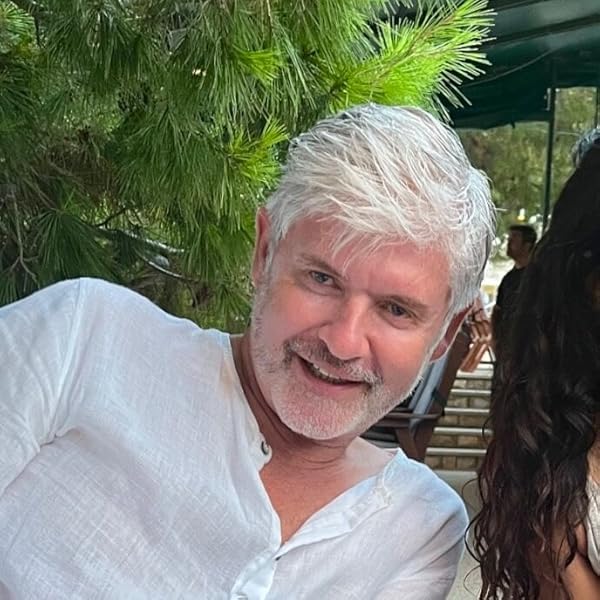
Broken Rooms follows a gifted mathematician from Sheffield who stumbles into the world of design, beauty, and wealth, and winds up searching for authenticity in a life caught between duty, desire, and dreams. What was the inspiration for the setup of your story?
It is very much a memoir of my personal journey as an adult. While I am not a mathematician, I was a classically trained pianist with a Doctorate in music. Once I completed my degree and still performing, I had 58 students and I slaved away at an existence that not only drained me, but longing for something that was inside of me. I had always been interested in design and beauty, and it was as though I had yet to break through the ceiling of who I truly am. While I had the highest degree in piano, it was only the beginning of my creative journey. The thread of experiences throughout the novel are all based on what I actually experienced while naturally embellishing on some characters, places and circumstances for the sake of colourful storytelling. But even these I had witnessed and recorded as part of my experience and wove them into the story with delight.
Are there any emotions or memories from your own life that you put into your character’s life?
Yes, the story told from Sebastian’s point of view is very much me. I related to the character for he is sort of a doppelgänger albeit English. Throughout the pages it is really me telling the story of me.
I find that authors sometimes ask themselves questions and let their characters answer them. Do you think this is true for your characters?
Yes very much so. The questions I have had about clients, colleagues, lovers and myself I answered through all the characters. As though holding up a mirror and looking at it all as the director of the play as opposed to the actors.
What is the next book that you are working on, and when will it be available?
Broken Rooms is a novel (yet only covering my life and career as an adult). My next book is an actual memoir and titled Remains of Silence : A Memoir of Breaking, Building, and Becoming. It is a raw and true telling of my childhood and upbringing in Apartheid South-Africa. I shed light on the horrors of our school system, the neglect and abuse at home, and my final departure out into the wide world where I became Sebastian, the main character of Broken Rooms. In Remains of Silence there are no fictitious characters or stories, only an honest telling of what was and how I finally changed the ingrained choreography in order to break free. The book will be released on September 15, 2025. Links will be sent to you.
Author Links: GoodReads | Amazon
Yet behind every elegant room lies fracture. From Paris salons to New York penthouses, from Marrakesh courtyards to English country estates, Sebastian’s designs reflect not only beauty but also the emptiness and longing that shape his own life.
At its center lies a restrained love story between two men—Sebastian and Duncan—that simmers in silence, distance, and restraint before finally blossoming into the promise of permanence.
Blending the sensual detail of a design memoir with the emotional pull of a love story, Broken Rooms is for readers of André Aciman’s Call Me by Your Name, Rebecca Makkai’s The Great Believers, Nicholas Sparks’s The Notebook, and Casey McQuiston’s Red, White & Royal Blue. It is a novel of reinvention, restraint, and the universal search for belonging, intimacy, and wholeness.
Intentional Choices
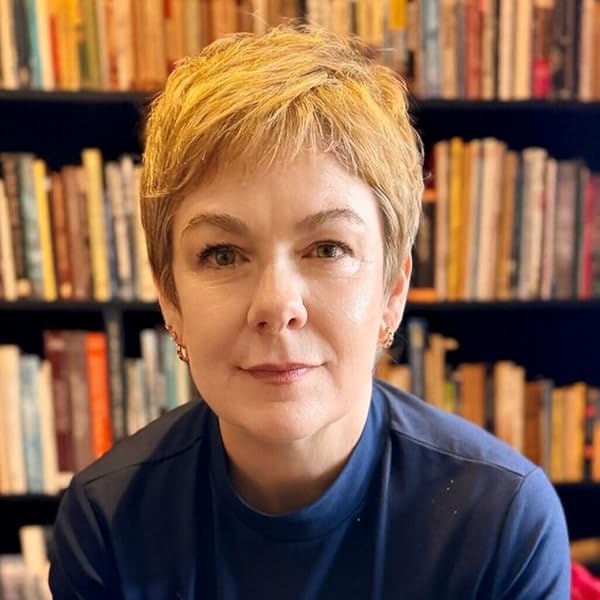
The Ten Permissions invites readers to tear up the old rulebook for what it means to “be an adult” and instead write their own permission slips by offering up ten guiding principles to help navigate a world that feels more uncertain and chaotic than the one prior generations knew. Why was this an important book for you to write?
I’ve spent my whole life helping people navigate profound change – and we’re all navigating pretty profound change right now! I wanted to take all of my learning and experience to help people better navigate this world – when the old rules no longer apply, but we’re not sure we’re allowed to write new ones. My message? We are allowed! In fact, we have to – we have to update how we operate in order to thrive in these fluid times.
What were some ideas that were important for you to share in this book?
I’d say my message around self-permission comprises three ideas: firstly, agency – we need to claim our own agency, to make intentional choices that serve us and suit this moment. Second, adaptability, we need to design much more adaptive life paths in a world where change is now a constant. And thirdly, personal authority or self-authoring – we’ve got to back ourselves, to give ourselves permission to make choices that fit life today rather than defaulting to what’s always been done.
What advice do you have for those who want to redefine their future but are afraid of taking that first step to make meaningful changes?
Start small! Start on a Saturday. Start with things that are low risk or low consequence. You don’t have to blow up your life in order to start making meaningful changes. Think in terms of how you manage your days before you think about how you manage your years.
What is one thing that you hope readers take away from The Ten Permissions?
It’s OK if your life doesn’t look or feel the way you expect/ed it to – whether you’re 24, 44, or 64! – You’re navigating adult life during seriously disruptive times. So give yourself permission to do your life differently – it might not look like your parents’ life, and that’s more than OK.
Author Links: GoodReads | Facebook | Website | Amazon
We need a new approach to being an adult in the 21st century. The old formulas for success no longer add up. Yesterday’s rules no longer apply. The world has transformed, but our internalized operating systems haven’t kept pace. It’s easy to feel overwhelmed and anxious, unsure of what life path you’re allowed to take and what choices you’re supposed to make.
It’s time to give yourself permission to step confidently into this fluid world—to design a life that takes advantage of today’s opportunities rather than defaulting to yesterday’s expectations. The Ten Permissions offers ten specific ways to let go of outdated ways of operating and
• adopt a diverse, adaptive approach to your career;
• redefine the metrics of success and security in a volatile world;
• build the capabilities to remain relevant and responsive amidst nonstop change.
As a global change facilitator and international aid veteran, Jillian Reilly offers bold, counterintuitive advice to help you thrive in a world that shows no sign of slowing down—and to imagine the kind of future you want to be a part of creating.
Television Addiction
Last Episode follows a married couple drifting apart, wrapped in petty arguments, television addictions, missed connections, and quiet despair. What was the inspiration for the setup of your story?
As a teenager, I was addicted to television for several months. It wasn’t until I watched a documentary about how much of an average person’s life is spent in front of the TV that I became frightened I might waste my own life. I managed to grow out of it. However, in most families the television is like another “household member.” Personally, I know several people who, after work, sit down in front of the TV and spend their entire day that way. In my book, I wanted to show that this is an addiction just like any other, yet it is not publicly highlighted and is rather trivialized.
What was your writing process to ensure you captured the essence of the characters?
I wrote the book in 2015 and found it by chance many years later, in my “drawer archives.” I was skeptical about it at first, but after reading it I decided it deserves to be published. At that time, I created characters through the process of visualization.
I found this novel to be a cutting piece of satire. What is one thing that you hope readers take away from your novella?
Sometimes we allow external things, people, or activities to influence our relationships with others. The worst is when this applies to those closest to us. If a few people turn off the TV, set aside extra work, and start spending more time together, then the mission can be considered accomplished. I also believe that raising awareness about television addiction, which affects a large part of society, requires opening a discussion. In my view, it is a waste of life—but of course, everyone will always find one way or another to waste their time.
What is the next story that you’re writing, and when will it be published?
I am finishing writing the novella Suicides Club, which is based on a screenplay I wrote that has won awards. I plan to publish it this year. In addition, there are several other “forgotten” projects lying in my archives, and it is possible that one of them will also be published soon.
Author Links: GoodReads | X (Twitter) | Facebook | Website | Amazon
Mark thought his marriage was stable—until Ilona fell for a TV series. What starts as a shared evening ritual spirals into jealousy, obsession, and a comic unraveling of domestic life. Last Episode is a sharp, satirical novella about emotional distance, digital distraction, and what happens when the credits roll on love.
In this digital age, emotional connections can easily drift apart, and Mark is about to find out the hard way that turning off the screen is often more challenging than it seems. As Ilona’s fixation deepens, Mark’s insecurities bubble to the surface, and the lines between reality and fiction blur amidst their heartfelt struggles.
Discover how this novella will leave you reflecting on relationships while bringing laughter to the chaos of modern love:
• Navigate the pitfalls of emotional distance in your own relationships
• Understand the powerful influence of digital distractions
• Explore the nuances of jealousy and trust in a humorous light
• Gain insights into the complex dynamics of marriage and intimacy
“Last Episode” is perfect for anyone who loves a comedic yet insightful critique of romance in our tech-driven world.
Don’t miss out on this tale—grab your copy today and see how love can outlast the final credits!



 LITERARY TITAN