Blog Archives
From Pain to Reflection to Action

No Filter: From Skateboard Kid to Entrepreneur shares your story about growing up in an abusive home, joining the Army at 19, and after living through combat, trauma, and broken relationships, before turning your pain into purpose. Why was this an important book for you to write?
No Filter was the book I couldn’t keep inside any longer. For decades I carried pain — from an abusive childhood, from what I saw and did in combat, from the way I failed as a husband and father — and it was eating me alive.
This wasn’t just a “next book project.” This was my line in the sand. When I came back from Phoenix, Arizona, after attending a book award event where I felt invisible and out of place, I had an awakening. I realized I could either keep playing nice and hiding behind polite words, or I could tear the mask off and tell the truth, even if it made people uncomfortable.
That’s why No Filter is written the way it is — blunt, messy, unpolished. Thomas Anderson said in his review that it feels “alive and immediate,” like I’m sitting across from the reader, telling it straight. That was intentional. I wanted people to feel like they’re in the room with me, hearing my story unfiltered, hearing the pain in my voice, and watching me fight my way through it.
I didn’t write No Filter to be liked — I wrote it to be heard. Because survival means nothing if you stay silent about what almost killed you.
What were some ideas that were important for you to share in this book?
This book was built on three core pillars: truth, accountability, and hope.
Truth was the foundation. The world is flooded with filters and fake perfection — I wanted the opposite. That’s why No Filter is unapologetically raw. As Thomas Anderson wrote in his review, the “short bursts of thought, the blunt admissions, the cursing when softer words won’t do” make the story feel alive and immediate. I wanted readers to feel like I was sitting across from them, looking them in the eye, telling them what really happened.
Accountability was the second pillar. I’m not just telling my story as a victim — I’m standing trial in front of every reader. I’ve hurt people I loved, including my daughter, and by letting her write the first entry, I opened this memoir by facing my own guilt and her forgiveness head-on.
And finally, hope is what carries the book through the darkness. The stories are painful, yes, but I wanted readers to see the redemption too. I wanted them to feel that even if they’ve been broken, they can still rebuild.
No Filter was never about telling a pretty story — it was about building a platform readers can stand on when life knocks them down. These three pillars hold that platform up.
What was the most challenging part of writing your memoir, and what was the most rewarding?
The most challenging part wasn’t the writing — it was tearing open wounds I’d tried to keep buried for decades. No Filter forced me to relive nights I tried to drink myself numb, the deployments that left ghosts in my head, the years I watched my daughter grow up from a distance because I was too broken to be there.
But it was also physically challenging. I live with severe tremors in my left hand, a lasting effect from years of medication prescribed through the VA. I can’t sit at a keyboard and type like most writers. I don’t use AI, and I don’t hire ghostwriters. Every single word of this memoir came from my own raw voice — recorded into my phone, turned into notes, and shaped into this book. That’s why, as Thomas Anderson wrote in his review, it feels “alive and immediate.” It literally is me, speaking directly to the reader.
The most rewarding part was turning that pain into something that could help someone else survive. When a reader tells me my words made them put the gun down, pour out the bottle, or call their kid after years of silence — that’s when I know No Filter has done its job.
I fought my past, my trauma, and even my own body to get these words out — and if they give just one person the strength to stay alive one more day, then every second of that fight was worth it.
What do you hope is one thing readers take away from your story?
I want readers to finish No Filter with one truth burning in their chest: you are not alone — but you can’t keep hiding from yourself.
That’s why the cover is black and white. It’s not an accident — it’s a statement. That cover is the darkness I was in. It shows me slouched, looking like the weight of the world is crushing me. Then you turn to the back and see the only color image in the entire book — a hint that there’s light on the other side if you’re willing to walk through the darkness.
When readers turn that last page, I don’t just want them to close the book. I want them to put it down, stand up, walk into their bathroom or bedroom, and stare into their own mirror. I want them to ask themselves: “Have I been living as the real me? Or have I been hiding this whole time?”
Because that’s what No Filter is — a confrontation. It’s not just my story. It’s an invitation for readers to strip away their own filters and face the person staring back at them.
And when they scan the QR code on the back cover, I want them to realize this book is just one piece of a bigger mission — The Mirror, The Broken Mirror, and now No Filter. It’s a trilogy designed to move readers from pain to reflection to action.
If just one reader closes No Filter, looks in the mirror, and says, “I’ve been hiding long enough — it’s time to face my life head-on,” then I’ve done what I came here to do. This book isn’t just a memoir — it’s a mirror, and it dares you to look.
What happens when the kid on the skateboard grows up, trades wheels for boots, and finds himself on the frontlines of war, fatherhood, and mental health?
William A. Stephens Jr. takes you on a no-holds-barred journey through the highs and lows of a life lived at full throttle.
This book doesn’t ask for sympathy — it demands honesty. No Filter is the third installment in William’s powerful trilogy that began with The Mirror and The Broken Mirror.
Here, he dives even deeper, peeling back the final layers to reveal a man who has been broken, rebuilt, and refuses to stay silent.
It’s about facing the demons that haunted him after the battlefield. It’s about the toll of PTSD, the pain of fractured relationships, and the unrelenting fight to keep going — not just for himself, but for the ones he loves and the community he serves.
If you’ve ever wondered what resilience really looks like, this book is your answer.
🔥 What You’ll Discover Inside:
• 🛹 Childhood on the Edge – From the streets to the skate park, where rebellion and resilience were born.
• 🎖 Life in Uniform – A front-row seat to deployments, leadership, and the toll that service takes on the soul.
• 💔 The Breaking Point – PTSD, loss, and family struggles laid bare with brutal honesty.
• 🧠 Mental Health Uncensored – No sugarcoating. Just real talk about trauma, therapy, and survival.
• 💼 Entrepreneurship with Purpose – How 1821 Productions became a platform to give “Voice to the Voiceless.”
• 🎃 The Final Chapter – Why No Filter is dropping on Halloween 2025, and what it means to confront your demons.
💡 Why This Book Matters:
• ✅ Perfect for readers who crave real, unfiltered storytelling.
• ✅ A lifeline for veterans, survivors, and anyone navigating their own mental health battle.
• ✅ Proof that you can lose it all, fight back, and still build something bigger than yourself.
⭐ Reader Takeaways:
• 🌌 Hope in the darkness.
• 💥 Courage to speak your truth.
• 🔑 Permission to build your own legacy.
🎯 Ideal For:
• 📚 Fans of military memoirs & survivor stories
• 🎙 Advocates of mental health & PTSD awareness
• 🚀 Dreamers & doers chasing purpose
The Lie That Changed Everything: The Memoir of a Little Rascal
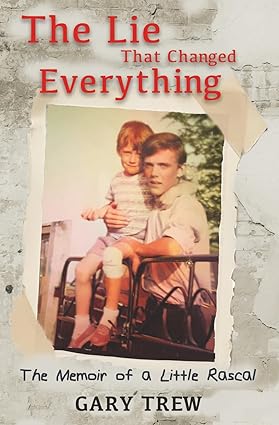

From the first page, Gary Trew makes it clear this is no sugarcoated stroll down memory lane. The Lie That Changed Everything is a memoir that blends sharp humor, biting honesty, and painful recollections into a story that feels both chaotic and deeply human. Trew recounts his early years with a mix of wit and grit, pulling readers through family dysfunction, childhood scrapes, and the bruising aftermath of being raised in a world where love often arrived tangled in trauma. It’s a tale of survival told with an irreverent laugh, even as it shines a light on moments of loneliness, rejection, and heartbreak.
I was taken in almost immediately by Trew’s voice. His writing has a rhythm that swings between wild comedy and gut-punch sadness, and that constant shift kept me hooked. Some chapters had me laughing at his absurd family stories, while others had me pausing to let the weight of what he endured sink in. The mix is unusual, but it works. He doesn’t let the pain take over, and he doesn’t let the jokes cheapen the truth either. At times, I found myself frustrated with the sheer cruelty he describes, but then he’d toss in a line of dark humor, and it felt like sitting in a pub listening to a mate tell a story he can only tell because he survived it.
There were moments where the writing felt a little jagged, but that roughness actually added to the authenticity. It made me feel like I was being trusted with unpolished truths rather than a neatly packaged memoir. I also found myself admiring his willingness to talk about shame, resentment, and fear without dressing them up. His honesty struck me as both brave and disarming. The book reminded me that family histories are rarely tidy, and sometimes the best way to survive them is to laugh at the madness and keep moving forward.
By the time I reached the final chapters, I felt both drained and strangely uplifted. This isn’t a book for someone who wants a gentle or inspirational memoir. It’s for people who appreciate raw honesty, gallows humor, and the messy beauty of a life that didn’t follow the script. If you’ve ever grown up feeling like the odd one out, or if you’re drawn to stories that reveal both the scars and the resilience of childhood, this book will resonate.
Pages: 278 | ASIN : B0FGKN1M47

No Filter: From Skateboard Kid to Entrepreneur

No Filter tells the story of a man who grew up in a home marked by abuse, found escape in skateboarding, entered the Army at 19, and lived through combat, trauma, and broken relationships before turning his pain into purpose. Author William Stephens lays out his journey with raw honesty. He doesn’t hold back on the violence he witnessed as a child, the battles he fought overseas, or the mistakes he made as a father and husband. Woven through it all is the growth of his platform, 1821 Productions, a community built on giving voice to those who feel unheard.
The writing itself isn’t polished or pretty, and that’s what makes it powerful. The short bursts of thought, the blunt admissions, the cursing when softer words won’t do. It all feels alive and immediate. I could hear his voice in every sentence, like he was sitting across from me, telling it straight. Sometimes the stories are hard to read because of the pain inside them, but that rawness makes them believable. It’s the opposite of a filtered memoir. At times, I felt frustrated with the choices he made, especially in how he treated his family, yet I also felt the weight of the demons he carried. That mix of honesty and imperfection made me respect the story even more.
What also stood out was the message underneath the chaos. Stephens isn’t asking for pity; he’s asking people to listen, to learn, and to keep going. His thoughts on credibility, leadership, and authorship resonated with a kind of tough love I didn’t expect. He’s not telling readers how to be successful. He’s warning them about the traps, the scammers, and the fake promises that he himself fell for. I could feel his hope that others might avoid the same scars. That blend of hard lessons and encouragement gave the book a surprising warmth, even when the stories got dark.
I’d recommend No Filter to anyone who values real, unvarnished storytelling. It’s not for readers looking for smooth prose or neatly tied-up endings. This is for people who want the truth, spoken in a voice that shakes but doesn’t quit. Veterans, struggling parents, survivors of abuse, and even aspiring writers will find something here to hold onto. It’s a tough book, but it’s also a hopeful one, and I’m glad I read it.
Pages: 80 | ASIN : B0FNZ89LND
Stand Up Speak Up: How Survivors Created a Movement to End Sexual Violence

This book is both a painful personal account and an inspiring call to action. Author Tim Lennon begins by recounting his own childhood trauma as a survivor of clergy abuse, a story that unfolds with heartbreaking honesty. From that foundation, he traces the rise of a global movement of survivors who have turned silence into strength and pain into activism. Through detailed chapters, Lennon chronicles the efforts of individuals and organizations that have worked tirelessly to expose abuse, support victims, challenge institutional cover-ups, and push for justice around the world.
What struck me most was the rawness of Lennon’s writing. His emotions come through in every line. Rage, grief, confusion, and ultimately, a fierce determination. He walks us through his journey from a silent, broken child to a relentless advocate and leader. The writing has a rough-edged clarity. It’s not polished like a memoir written for mass market appeal, but that’s exactly why it hits so hard. You feel like he’s speaking directly to you, almost like you’re sitting in a church basement at a support meeting, hearing someone finally say out loud the things no one else will.
The book is packed with stories, statistics, names of organizations, and powerful examples of systemic failure across nearly every major institution like churches, sports teams, the military, Hollywood, schools, and government. It’s an ambitious, wide-reaching work that paints a clear picture of just how deeply rooted the problem is. Lennon doesn’t shy away from the scale or complexity of it all. Instead, he leans in, showing us the full scope so we understand that this isn’t about one bad actor or one broken system. It’s everywhere. And that’s what makes the book so powerful. It’s not meant to make you feel comfortable, it’s meant to wake you up.
I’d recommend Stand Up Speak Up to anyone who cares about social justice, survivor advocacy, or institutional reform. It’s especially powerful for survivors who might be looking for a sense of connection or hope. It’s not always an easy read, but it’s an important one. Lennon’s voice is not only personal, it’s political, unflinching, and urgently needed. This book is a torch passed from one survivor to another. If you’re ready for it, it will light something in you.
Living Love of Christ
El Gran Intercambio (The Great Exchange) is a powerful autobiographical account of your life, vividly chronicling your spiritual, emotional, and personal journey from childhood trauma, abusive relationships, false religious systems, to divine healing and restoration. Why was this an important book for you to write?
This book was deeply important for me to write because it gave voice to years of silence. For so long, I carried pain that I didn’t know how to release—and writing became both a mirror and a doorway. I wanted to create a space where others who have faced similar wounds could feel seen, understood, and ultimately, offered hope. El Gran Intercambio is not just my story—it’s an invitation to anyone who has ever felt lost, broken, or deceived to experience true freedom through God’s healing power.
What were some ideas that were important for you to share in this book?
One key idea was the difference between religion and relationship. I had lived much of my life trying to perform for acceptance—by people, systems, and even God. I wanted to show that healing comes not from following rules, but from encountering the real, living love of Christ. I also wanted to address the generational impact of trauma, the dangers of spiritual manipulation, and the beautiful reality that we are not defined by our past—we are transformed by grace.
What was the most challenging part of writing your memoir, and what was the most rewarding?
The most challenging part was revisiting the darkest moments of my life. Writing about abuse, loss, and spiritual deception required deep emotional courage, and there were times I had to step away and allow myself to grieve again. But the most rewarding part was realizing that every page—every painful memory—had purpose. Knowing that my story could serve as a lifeline for someone else made it all worth it. Healing for me came not just through writing, but through the act of sharing.
What do you hope is one thing readers take away from your story?
I hope readers walk away with this truth: You are not alone, and you are not beyond restoration. No matter how far gone life may feel, there is a divine exchange waiting for you—your pain for His peace, your shame for His grace, your ashes for His beauty. Healing is possible. Freedom is real. And God has not forgotten you.
Author Links: GoodReads | Facebook | Amazon
Este libro relata la vida de la autora y su lucha contra la soledad y las falsas comunidades de la iglesia. Criada por sus abuelos sin el amor de Dios, luchó por encontrar amor y conexión. Esto la llevó a Estados Unidos, donde buscó la religión para encontrar la paz. Sin embargo, los sistemas religiosos con frecuencia la alejaron de Dios. A través de sectas, falsos profetas y charlatanes, la autora enfrentó numerosos engaños y manipulaciones, pero, finalmente, encontró el camino de vuelta a casa, como el hijo pródigo, a los brazos de Dios. El relato honesto de su vida inspirará a los lectores a superar sus propias dificultades con un corazón abierto y un compromiso con Cristo.
Unspoken


Unspoken is a deeply personal and emotionally raw autobiographical novel that follows the harrowing journey of two boys, Williams and Tega, who suffer and survive sexual abuse. Told through alternating narratives, the book plunges into the terrifying silence many male victims are forced to live with, capturing the confusion, betrayal, and eventual resilience that arise in the aftermath of trauma. At its core, this is a story about reclaiming power, finding one’s voice, and pushing back against a society that often ignores or mocks male victims of abuse.
Emecheta writes with a kind of honesty that cuts to the bone. He tells it like it is. I found myself angry, gutted, even ashamed at times, not at the victims, but at the adults who failed them and at the systems that let abusers slip through unnoticed. The storytelling isn’t polished in a literary sense, but it’s blisteringly authentic. The language is raw and emotional, which works in its favor. His use of direct narration, flashbacks, and interior dialogue brings you so close to the trauma that you almost want to look away, but you can’t.
Healing isn’t linear, and trauma tends to loop, not walk a straight line. What the book lacks in polish, it makes up for in courage. There’s nothing easy or neat here, and it doesn’t try to give false closure. The characters don’t get perfect justice, and the parents don’t suddenly transform into loving, attentive caregivers. It felt real, and maybe that’s why it hurt and helped so much.
But what I really appreciated was that this book didn’t just stay in the trauma. It showed the fight to break free. The courage it took to speak. The relief of being believed. And the stumbling, uneven path toward healing. It made me cry, yes, but it also made me hopeful. Emecheta’s honesty is unflinching, but his compassion is just as powerful. The story doesn’t just expose the abuse. It shines a light on what it means to reclaim yourself after being broken.
Pages: 98 | ISBN : 978776291X
Speaking For Those Who Do Not Feel Safe

No Ordinary Love follows several women whose stories reveal the terror and trauma of domestic abuse. Why was this an important book for you to write?
Because it’s my story—and the story of countless other women around the world. Despite how widespread intimate partner violence is, it continues to be treated as though it’s rare or private. It’s an epidemic. As long as that remains true, more stories need to be told. I was inspired by the women who spoke up before I found the strength to do the same. Now, I’m speaking for those who may not yet feel safe enough to share their truths.
I appreciated the candid nature with which you told this moving story. What was the hardest thing for you to write about?
The hardest part wasn’t the writing itself—I had already survived the events. In fact, the process of writing was profoundly therapeutic. What was most difficult was transitioning from that healing space into the often retraumatizing demands of publishing—critiques, edits, legal reviews, marketing, promotion. Writing gave me back my voice, my truth, my agency. But sharing it exposed me to judgment, disbelief, and the need to prove my experiences.
What was especially painful was the fact that I had to fictionalize elements of my own life story—not to protect myself, but to protect the identity of my abuser. After being silenced for over two decades, I finally found the courage to speak out. Yet, I still had to call my memoir “fictionalized” when it’s 98% truth, with only minor changes made to shield the person who harmed me. That’s harder than I can express in 100,000 words.
What is one misconception you believe many people have regarding the aftermath of domestic abuse?
That the abuse ends when you leave. It doesn’t. What I wanted to highlight most in No Ordinary Love is the aftermath—the long shadow trauma casts, the lingering triggers, and the decades it can take to fully disentangle yourself from the psychological grip of abuse. Healing is not linear. It is life-long.
What is one thing you hope your readers take away from No Ordinary Love?
I hope it inspires honest, necessary conversations—about the subtle and insidious nature of coercive control, how it undermines autonomy, the long-term psychological impact of chronic abuse, and the intersection of trauma, mental health, and systemic failure. Most of all, I want to illuminate the barriers survivors face in their search for safety, support, and validation.
No Ordinary Love
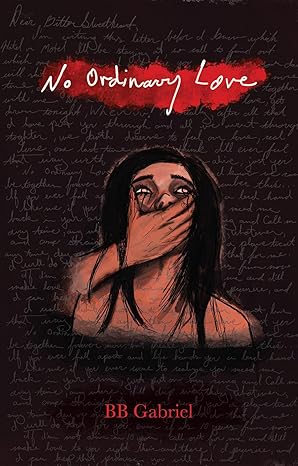
No Ordinary Love, by BB Gabriel, is a searing memoir that threads together the lives of several women grappling with the many faces of intimate partner violence. Through a braided narrative—alternating between Gabbi, Alex, Katee, and others—the book unveils the terror, trauma, and tangled aftermath of abuse while illuminating slivers of healing and resilience. This story stomps, screams, and weeps across the pages, detailing coercion, fear, childhood confusion, and adult reckoning. Told in raw vignettes and memory-soaked prose, it is not just one survivor’s story—it’s a collective mirror for far too many.
Reading No Ordinary Love shook me. There were moments I wanted to put it down and moments I couldn’t look away. The writing, often poetic and stark, pulled me close enough to feel the fear and the fresh heartbreak. Gabriel doesn’t romanticize trauma, and that’s what makes her voice trustworthy. She doesn’t craft her pain into tidy scenes or polished resolutions. Her story spills over in waves—sometimes chaotic, sometimes controlled—and always relatable. The structure, with its shifting timelines and perspectives, felt disorienting at times, but maybe that’s the point. Trauma is disorienting. This book doesn’t offer clarity; it offers truth.
I admired the way Gabriel let silence linger in her writing. Some chapters stopped short, leaving me breathless, the same way trauma interrupts a life. And yet, she also knows when to lean in—when to take us all the way through a panic attack, a memory, a phone call no one wants to make. This book isn’t just about surviving abuse. It’s about what comes after—the guilt, the longing, the ghosts that live in your muscles. And somehow, it’s also about love. Love between sisters. Love that fights back. Love that rebuilds.
I’d recommend No Ordinary Love to anyone willing to confront the brutal honesty of what abuse looks like behind closed doors—and what it takes to speak it aloud. It’s a gut punch for survivors, advocates, and even bystanders who have wondered, “Why doesn’t she just leave?” This book is for those who stayed. For those who left. And for those who still carry the weight of it all.
Pages: 381 | ASIN : B0DRZ5Z51X




 LITERARY TITAN