Blog Archives
My Love of Languages

English Upgrade is a practical grammar workbook that helps Spanish-speaking learners recognize persistent mistakes, understand why they happen, and communicate in more natural, precise English. What inspired you to create this book?
My students! My love of languages and passion for empowering others brought me to the ESL field. A lack of good resources compelled me to write English Upgrade (¡Para Hispanohablantes!). I set out to create a potent and effective tool for Spanish-speaking English learners and their teachers, and I’ve done just that. I hope to one day create a similar guide for native speakers of Haitian Creole, Bahasa Indonesia, and other languages.
How did you decide which grammar problems and language patterns to include in the sixty-one lessons?
I hold a BA in the Spanish language, studied at the Autónoma of Guadalajara, Mexico, and spent years interfacing with native Spanish speakers in bilingual customer service roles before becoming an English as a Second Language teacher. This mixture of experiences has given me unique insight on the most consistent and predictable mistakes that native Spanish speakers make and why they make them. The list is not exhaustive, but I tried to include the grammar structures, vocabulary, and pronunciation challenges that have the greatest impact on learners’ ability to communicate effectively.
What makes direct comparison between Spanish and English especially effective for language learners?
With a side-by-side, red/green, ❌/✔️ format, readers get an effective and easy-to-understand visual. This structure makes English Upgrade accessible, even to beginner and intermediate learners.
How would you recommend that independent learners and teachers use the book differently?
There’s no wrong way to use this book. (But please don’t use it as kindling! 😊) It can be used as a classroom textbook, read from cover to cover, or independent learners can use it as a quick reference guide. The index at the back of the book makes it easy for readers to find the grammar point, vocabulary, pronunciation pattern, and idiomatic or fixed expressions they’re looking for. The book is intended to be written and highlighted in and includes a lined Notes section ideal for independent study. I wrote it for you; please make it your own!
Author Links: GoodReads | Facebook | Website
Award-winning bilingual author and seasoned English as a Second Language teacher, Maria L. Hinders, presents English Upgrade: The Advanced Learner’s Guide to the Most Common English Language Errors: (¡Para Hispanohablantes!). Hinders has compiled over 170 of the most common and predictable English language errors made by native Spanish speakers and, in English Upgrade, addresses each of them with concise and easy-to-understand explanations. English Upgrade is a practical guide that’s geared toward advanced learners, but with its simplistic X/Check format, beginners will find it useful, too. English Upgrade features 51 chapters comprising 171 error corrections, hundreds of examples, over 100 idioms and fixed expressions, and over 500 practice questions. Upgrade your English today!
English Upgrade: The Advanced Learner’s Guide to the Most Common English Language Errors (¡Para Hispanohablantes!)


English Upgrade is a practical English grammar workbook created specifically for Spanish-speaking learners. Rather than organizing the material around broad grammar categories alone, the book focuses on the mistakes that tend to follow learners into real conversations, emails, classrooms, and workplaces. Its sixty-one lessons cover false cognates, troublesome verb pairs, prepositions, phrasal verbs, pronouns, verb patterns, question forms, reported speech, pronunciation, and other details that often separate understandable English from natural-sounding English.
The most effective part of this ESL reference guide is its direct comparison of English and Spanish. Each section identifies the source of a common error, explains the English pattern in accessible language, and follows it with practical examples. The contrast makes rules easier to remember because readers can see why a sentence that feels logical in Spanish may need a different structure in English. The book’s tone is encouraging and teacherly, and it doesn’t bury useful guidance under academic terminology.
As a language-learning book, it’s designed for active use. Short explanations are paired with fill-in-the-blank exercises and answer keys, while idioms, phrasal verbs, footnotes, pronunciation guidance, and reference sections add value beyond the core lessons. Readers can move through it in order or treat it as an English usage guide when a particular question comes up. That flexibility makes it useful both for independent learners and for teachers who need focused material for lessons, tutoring sessions, or review.
What gives English Upgrade its personality is the author’s clear familiarity with the habits of Spanish-speaking students. The examples feel drawn from actual teaching experience, and the lessons repeatedly address the small choices that can make English sound more fluent and precise. Advanced learners will get the most from its detailed corrections, though the simple format also gives motivated intermediate students a comfortable entry point. It’s a practical, thoughtfully organized English grammar guide that readers can study, mark up, revisit, and keep nearby as their confidence grows.
Pages: 181 | ASIN: B0GGHQMLWZ

Creciendo Juntas: Narrativas de Empoderamiento de las Mujeres
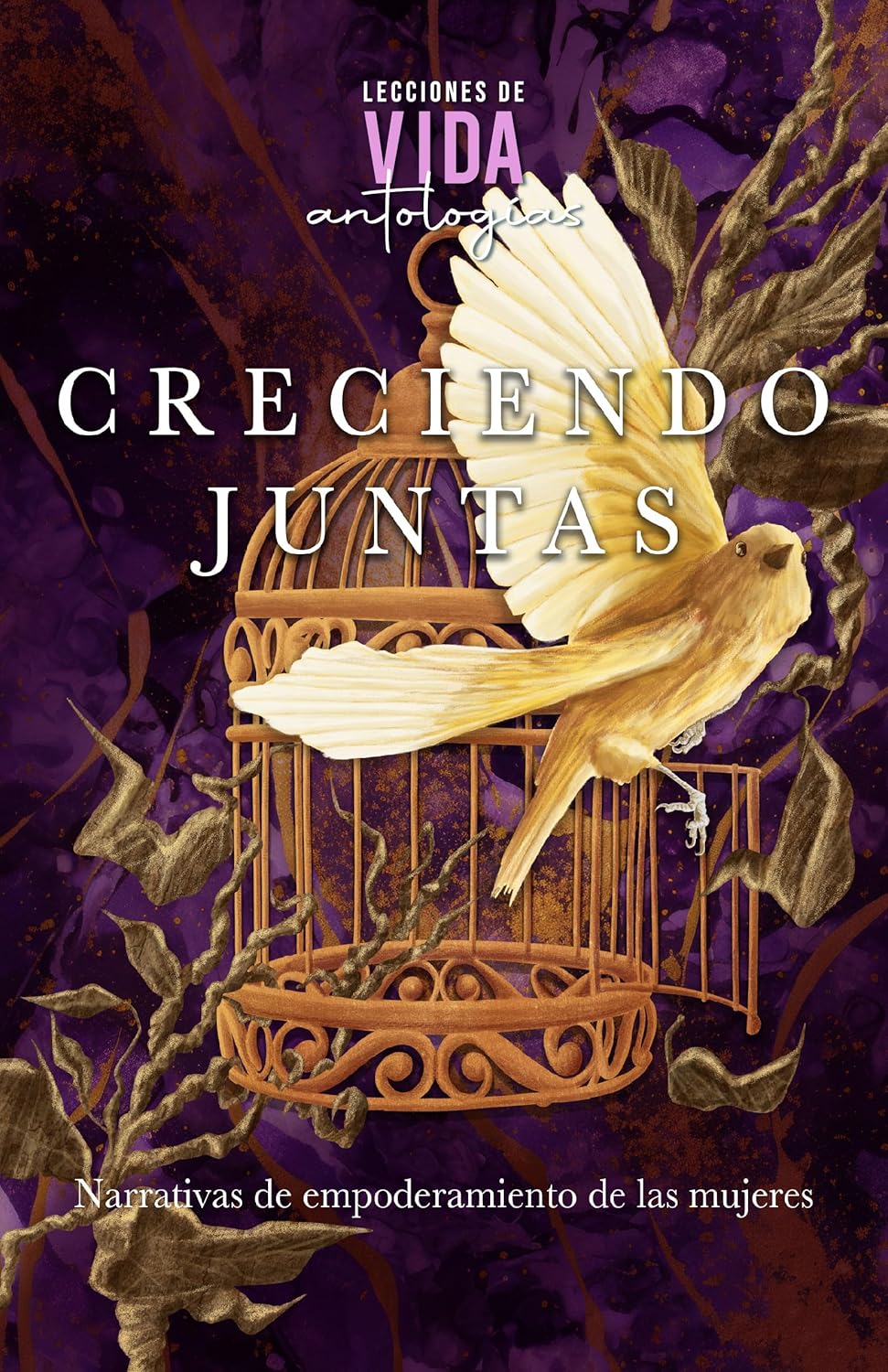
Leí Creciendo Juntas y me encontré con una antología que une las voces de quince mujeres que exploran sus luchas, sus pérdidas, sus revelaciones y la forma en que reconstruyen sus mundos. Desde duelos profundos hasta despertares personales, cada autora narra su vida con una honestidad que no se esconde y con una fuerza que se siente desde el prólogo, donde se plantea que estas historias son pequeñas revoluciones que parten de lo cotidiano y avanzan hasta el alma misma.
Mientras avanzaba, sentí que el libro me hablaba desde muchos lugares a la vez. Hay textos que duelen y otros que despiertan una chispa de esperanza que llega cuando menos lo esperas. Me sorprendió la forma tan sencilla en la que varias autoras expresan emociones complejas. Nada se siente disfrazado. Todo es directo y sin ruido. A veces la vulnerabilidad me golpeó de lleno y tuve que detenerme porque una idea se quedaba dando vueltas en mi mente. Otras veces solté una sonrisa porque reconocí en sus palabras la terquedad de seguir adelante a pesar de todo.
También me gustó cómo cambia el ritmo entre historias. Unas hablan con suavidad. Otras cortan como si todavía ardiera la herida que cuentan. Esa mezcla crea una lectura que no se puede vivir de forma plana. Me llevó de la mano por caminos inesperados y me hizo pensar en las veces que yo también he tenido que romper algo en mí para poder construir algo nuevo. No todo me identificó, claro, pero sí sentí respeto por cada historia que se compartió con tanta apertura. El libro no pretende complacer ni adornar. Más bien se siente como un espacio donde la verdad tiene permiso de ocupar todo el cuarto.
Al terminarlo pensé en quién podría disfrutarlo más. Creo que sería ideal para mujeres que atraviesan cambios grandes y buscan un espejo donde verse sin filtros. También para quienes disfrutan de historias reales que no siguen un molde y que nacen desde el deseo de entender la propia vida. Yo lo recomendaría sin dudarlo. Es un libro que acompaña, que sacude y que, de alguna forma, invita a crecer con calma y con valentía.
Pages: 211 | ASIN : B0DHV7MT4L
Secretos De Familia


Secretos de familia by Diego Uribe is a dark and atmospheric thriller that begins with the brutal murder of Emilia Blume, a young woman found dead in her bed with a knife in her heart. The novel unfolds through the investigation led by Inspectora Benatar, who digs into the twisted secrets of the Blume family and the eerie village of Fénix, where superstition, religion, and silence suffocate the truth. What starts as a crime story turns into a psychological puzzle, exploring guilt, repression, and the thin line between love and cruelty. Every chapter drags you deeper into a web of lies and trauma that sticks to your skin.
I have to say, the writing pulled me in right away. The opening scene hit me hard. The author knows how to play with tension, silence, and imagery. The prose feels cinematic, almost like you’re standing in the cold hallways of that cursed house. Sometimes it gets dense with description, but it works. The pacing shifts a lot, slow burns followed by quick bursts of violence, but that uneven rhythm fits the story. It mirrors the confusion of the characters. I found myself anxious, even a little angry, at how the family hid behind politeness and religion while something monstrous was rotting inside their home.
What really got to me were the ideas under the surface. This isn’t just about a murder. It’s about control, silence, and what people will do to keep appearances intact. The women in the story, Emilia, her mother, her sister, and even Benatar, carry a kind of pain that feels too real. There’s also this heavy sense of destiny, as if everyone in that village is trapped by something bigger than them. At times it made me uncomfortable, but that’s a good sign. The author doesn’t let you rest easy. You end up questioning morality, religion, and the price of loyalty.
Secretos de familia is a grim, emotional ride that’s not afraid to stare into the dark corners of the human soul. It’s the kind of book you finish and then sit in silence for a while. I’d recommend it to readers who love crime fiction with real psychological depth, people who like stories that mess with your comfort zone and make you think about the things families hide behind closed doors.
Pages: 343
Living Love of Christ

El Gran Intercambio (The Great Exchange) is a powerful autobiographical account of your life, vividly chronicling your spiritual, emotional, and personal journey from childhood trauma, abusive relationships, false religious systems, to divine healing and restoration. Why was this an important book for you to write?
This book was deeply important for me to write because it gave voice to years of silence. For so long, I carried pain that I didn’t know how to release—and writing became both a mirror and a doorway. I wanted to create a space where others who have faced similar wounds could feel seen, understood, and ultimately, offered hope. El Gran Intercambio is not just my story—it’s an invitation to anyone who has ever felt lost, broken, or deceived to experience true freedom through God’s healing power.
What were some ideas that were important for you to share in this book?
One key idea was the difference between religion and relationship. I had lived much of my life trying to perform for acceptance—by people, systems, and even God. I wanted to show that healing comes not from following rules, but from encountering the real, living love of Christ. I also wanted to address the generational impact of trauma, the dangers of spiritual manipulation, and the beautiful reality that we are not defined by our past—we are transformed by grace.
What was the most challenging part of writing your memoir, and what was the most rewarding?
The most challenging part was revisiting the darkest moments of my life. Writing about abuse, loss, and spiritual deception required deep emotional courage, and there were times I had to step away and allow myself to grieve again. But the most rewarding part was realizing that every page—every painful memory—had purpose. Knowing that my story could serve as a lifeline for someone else made it all worth it. Healing for me came not just through writing, but through the act of sharing.
What do you hope is one thing readers take away from your story?
I hope readers walk away with this truth: You are not alone, and you are not beyond restoration. No matter how far gone life may feel, there is a divine exchange waiting for you—your pain for His peace, your shame for His grace, your ashes for His beauty. Healing is possible. Freedom is real. And God has not forgotten you.
Author Links: GoodReads | Facebook | Amazon
Este libro relata la vida de la autora y su lucha contra la soledad y las falsas comunidades de la iglesia. Criada por sus abuelos sin el amor de Dios, luchó por encontrar amor y conexión. Esto la llevó a Estados Unidos, donde buscó la religión para encontrar la paz. Sin embargo, los sistemas religiosos con frecuencia la alejaron de Dios. A través de sectas, falsos profetas y charlatanes, la autora enfrentó numerosos engaños y manipulaciones, pero, finalmente, encontró el camino de vuelta a casa, como el hijo pródigo, a los brazos de Dios. El relato honesto de su vida inspirará a los lectores a superar sus propias dificultades con un corazón abierto y un compromiso con Cristo.
Everyone Has A Story

Otro accidente en Asturias follows the owner of a local surf school who discovers the human remains on the beach. What was the inspiration for the setup of your story?
I’ve traveled extensively in Spain and the north coast of the country is a relatively undiscovered marvel, from the Basque Country to Galicia. The people, the food (!), the beaches, the cultures (they are all unique) and the landscape helped me come up with the idea for a trilogy whose second book is Otro accidente en Asturias. The first is set in the Basque Country and is called Un detective accidental en Donostia.
Michael does not just fall into a mystery but a journey of self-discovery. What are some things that you find interesting about the human condition that you think make for great fiction?
I believe everyone has a story to be told, whether it’s about themselves or something that occurs to them. The universality of the human experience, even though circumstances differ, drives great fiction.
One thing that stands out in your novel is the level of detail in the scenery. Readers are drawn in and can easily imagine themselves in Gijón. Why choose this place and time for the setting of the story?
Because Gijón is AWESOME! Also because there is a strong surf culture there as well as tremendous cuisine and, of course, cider. You can’t help but fall in love with it all.
What is the next book that you are working on, and when will it be available?
I’m currently working on the third book of the trilogy which is based in Galicia.
Otro Accidente En Asturias

Michael Featherstone’s Otro accidente en Asturias transporta a los lectores al pueblo costero de Gijón, España, a través de los ojos del protagonista Michael, quien dirige una escuela local de surf. La narrativa comienza con una detallada descripción de las interacciones diarias de Michael, utilizando su integración en Gijón como telón de fondo para un misterio más amplio que se desarrolla, desencadenado por el inquietante descubrimiento de restos humanos en la playa.
Featherstone es hábil en entrelazar las costumbres y ritmos diarios de Gijón en la trama, convirtiendo observaciones culturales ligeras en un examen suspenso de las corrientes más oscuras del pueblo. Su ritmo hábil y su meticulosa atención al detalle, especialmente en sus retratos de los personajes locales y las dinámicas sociales, aseguran una transición sin fisuras de una vida comunitaria tranquila a un misterio tenso y cautivador. La cultura local de surf y las relaciones comunitarias no solo enriquecen la historia, sino que también otorgan autenticidad y profundidad a los eventos que se desarrollan.
La prosa es lúcida y atractiva, manteniendo un fino equilibrio entre la ambientación inmersiva y el movimiento narrativo dinámico. A medida que las tensiones se intensifican, el desarrollo personal y las reflexiones de Michael se entrelazan en el núcleo del misterio, culminando en un clímax que es tanto emocionante como narrativamente satisfactorio. Los personajes secundarios realzan la trama, cada uno contribuyendo al entorno social y cultural de Gijón y avanzando en el misterio central.
La novela de Featherstone va más allá de simplemente desentrañar el suspense; se adentra en temas introspectivos de identidad, pertenencia y resiliencia. Otro accidente en Asturias es una novela meticulosamente elaborada que entrelaza la profundidad cultural con el suspense, atrayendo a los lectores que disfrutan de narrativas que reflejan las complejidades de la vida a través de un lente de suspense.
Pages: 250 | ASIN : B0CY5N997Z
Great for Bilingual Families
Chato, the Puppy-Cat follows a homeless puppy who is adopted by a loving woman who thinks he is a cat, and he is afraid to show her he is a dog. What was the inspiration for your story?
The story presented itself in my head one day, as if it wanted to be told. It wasn’t until later that I realized it came from childhood experiences, and from watching both children and adults around me having to conform and behave in ways that went against their grain.
Chato struggles with wanting to belong and with showing his true self out of fear of being accepted. Was there anything from your own life that you put into this emotional story?
I was born with a vision disability which affects various aspects of my life, and I often had to conform to fit in and not inconvenience others. I had a lot of trouble in school because I couldn’t see the board or read small print. The bright lights indoors and sunlight outdoors blinded me so recess and gym class were torture.
Also, I can’t see color. I debated about doing the illustrations as pencil sketches or ask someone to help me with the colors. I was told that black and white would limit the commercial appeal of the book, but I had to think of my brave main character, Chato. What would he do? And I knew I had to stay true to myself.
What were some educational aspects that were important for you to include in this children’s book?
Going back to the previous questions, I think it is good for kids to see that they are not alone if they feel different. Also, it might be educational for them to learn about how someone can still think the world is a beautiful place without color vision.
As a language teacher, however, I love rhythm and rhyme and I believe it can help kids (and adults) learn and remember things. It helps them learn how words with the same sounds can have different spellings, and can also engage them while being read to; predicting the next words based on their sounds. The fact that the book is bilingual English/Spanish makes it great for bilingual families or for children learning one language or the other.
What is the next book you are working on, and when will it be available?
I have just finished a collection of short stories for adults and a few more picture books, one of which helps kids learn to tell time. I hope they will be available soon!
Author Links: GoodReads | LinkedIn | Todostuslibros

Tú eres un perro, pero todo el mundo piensa que eres un gato. ¿Qué haces? Una fábula animalista sobre el derecho natural a la personalidad propia.
You are a dog, but everyone thinks you are a cat. What are you doing? An animalistic fable about the natural right to one’s own personality.


