Blog Archives
Defy Stereotypes

Dementia Man is your memoir, sharing your story of cognitive decline, receiving the diagnosis of early-stage Alzheimer’s, and your blunt observations on a broken medical system and call for change. Why was it important for you to share your story?
I wanted to share an authentic voice—I do have Alzheimer’s—that can help others imagine living a meaningful life with this disease. Some voices and organizations promote suicide. Many individuals lose heart and fold into themselves. I want to be a model of what might be possible, defy stereotypes, and encourage us all to strive to help find a cure to this disease. Maybe, just maybe, there is something about any one of us with a diagnosis that might help find the cure just a little sooner!
What were some ideas that were important for you to share in this book?
First, if there is anyone in your family history who has had Alzheimer’s, you should find out whether you carry a genetic marker called ApoE4. It increases your risk, and finding out early allows you to pursue medications and lifestyle changes that can help.
Second, be careful. Frauds and scams abound around this disease. There is no cure. Hard stop. Many excellent U.S. government and state government resources are available on safe, effective approaches to slowing decline and getting help.
Third, I provide a list of a growing number of patient-led organizations that offer support, community, and guidance to help you and your family navigate this stage of life with dignity, purpose—and yes, even some joy.
What was the most challenging part of writing your memoir, and what was the most rewarding?
So many challenges… it’s hard to pick. Yes, the challenge of memory impairment and writing means I need some help, and I use a writing coach. It is frustrating. There is also the emotional impact of imagining the late stages. The most rewarding thing is the impact it has had on others and on myself. The responses shared with me by readers are humbling—not about my writing, but about insights gained and the hope instilled as they, or a family member, move forward.
What is one thing that you hope readers take away from Dementia Man: An Existential Journey: Choosing Life and Finding Meaning with Alzheimer’s?
The one thing is that it is possible to engage with purpose, love, and joy in life with this disease. You are NOT alone; there is a world out there of help and support. You can become the best version of yourself with Alzheimer’s that the world has ever seen. I have tried to include many resources—things I didn’t even know existed—that are available almost everywhere. Just one small example: I didn’t know that 211 existed, a phone number people can call to locate essential community services.
Author Links: GoodReads | X (Twitter) | Facebook | Website | Amazon
After decades as a tireless advocate for justice and social change, Samuel A. Simon faces the most personal fight of his life: the slow, undeniable progression of cognitive decline. When the diagnosis of Alzheimer’s disease comes, he refuses to fade quietly.
Based on his award-winning play Dementia Man, this deeply personal memoir invites readers into Simon’s “existential journey”—a story told with candor, courage, and an unflinching look at a broken medical system. As he revisits pivotal moments from his past and navigates the daily challenges of neurocognitive disease, Simon offers an intimate portrait of a man determined to shape his own future, even as the disease seeks to define it.
Both moving and urgently important, Dementia Man is changing the conversation about Alzheimer’s in America. It’s a story of hope and defiance that challenges us all to imagine a future of dignity, connection, and purpose for the millions living with cognitive decline.
The Domino Effect
Finding Sutton’s Choice follows a young writer who confronts old memories when she returns home to face her father’s declining health and deal with the family’s struggling newspaper. What was the inspiration for the setup of your story?
I’ve witnessed so many loved ones impacted by Alzheimer’s disease—beloved mentors, friends, friends’ parents or spouses, and even one of my own family members who has shown early signs of dementia. As I researched the topic, it became more and more important to weave a plot that unobtrusively but positively raises awareness of the disease and provides caregivers with a relatable story. As a past journalist of a family-owned Pittsburgh publication, I was drawn to the idea of incorporating a community newspaper. Setting the story in Lakeside Chautauqua, the very real place where I live, also allowed me to offer a snapshot of a closeknit, small Ohio town, not unlike the farming community where I grew up in Coshocton County, Ohio.
Which character in the novel do you feel you relate to more and why?
I have all the feels for Charlotte, as complicated (and sometimes annoying) as she may be. She’s a very, very distant version of myself… an insecure, immature, dutiful but damaged, sometimes angry, and inherently messy version. But aren’t we all a little messy when we’re 10? 20? Older? It takes time to work out the kinks. Charlotte holds onto old hurts far too long, but for good reason. As is seen through her memories, her childhood was complex. I can relate to that. I killed some personal demons in the writing of this book, and, like Charlotte, I’ve grown into a more self-aware human during the process.
Now, if you were to ask me what character I aspire to be, that would be The Surly Sturgeon’s barkeeper, Bea, who is a Boss Lady and completely unconcerned with what others may think. My new motto? Be like Bea.
What were some themes that were important for you to explore in this book?
Finding Sutton’s Choice explores complicated parent-child relationships, failing mental health, forgiveness, and the domino effect family choices have on who we become.
I am fascinated by how our perceptions of the past can shade and shape our future. Note that I say “perceptions.” Our personal histories are only as factual and reliable as our memories of those moments in time. And, though we are a product of our past, our future is what we make it. We can choose a new path to produce different outcomes. As my character Chuck Sutton would say, “It’s the final inning that really matters.”
Can we look forward to more work from you soon? What are you currently working on?
In the past six years, I’ve completed multiple first drafts during National Novel Writing Month in November. Though I’ve got a healthy stack of potential projects, I’m currently editing a sequel to Finding Sutton’s Choice. The follow-up, tentatively titled Sutton’s Second Chance, is set 15 years in the future. You can expect a few of the same quirky characters and many new ones, all living their best (but equally messy) lives in the little Lake Erie town of Lakeside, Ohio. Additionally, I’ve been working on personal essays about my lake life. I hope to bundle them for future publication.
Author Links: GoodReads | X | Facebook | BlueSky | Instagram | Website | LinkedIn
Chuck Sutton-newspaper editor, retired baseball player, and the town’s most beloved celebrity-is thought to have Alzheimer’s disease. The community newspaper is also on the verge of closure, and a childhood friend holds a decade-long grudge. Despite all this, there is Lakeside. The quaint waterfront community, flush with ivy-covered cottages and vintage charm, hasn’t changed even as everything else in Charlotte’s life has shifted. She intends to stay only long enough to get her father’s affairs in order.
But, to reconcile her past and unearth family secrets, Charlotte must reconnect with Chuck through his Alzheimer’s diagnosis and reevaluate her own misconceptions about growing up in the small Ohio town that still holds her heart.
Finding Sutton’s Choice
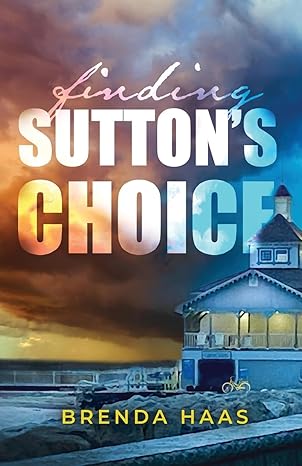

In Finding Sutton’s Choice, Brenda Haas delivers a heartfelt and layered story about Charlotte Sutton, a young writer who returns to her quaint hometown of Lakeside, Ohio, after ten years away. A mysterious voicemail and concerns about her estranged father’s health, possibly Alzheimer’s, bring her back to a place she swore she’d left behind. As Charlotte steps into the chaos of her father’s declining memory, a struggling family newspaper, and a surprise half-sibling, she’s forced to confront old wounds, unspoken truths, and what it really means to go home again.
This book hit me square in the chest. Haas writes with an intimacy that doesn’t just paint a picture, it lets you walk the streets of Lakeside with Charlotte. Her prose is straightforward, not showy, but rich with emotion and charm. The dialogue felt natural and real, and the pacing kept me invested. I especially loved the way memory and identity were woven through the story without beating me over the head. And Charlotte, who is blunt, flawed, and sharp, was someone I could root for even when she was a mess.
Some of the characters leaned on small-town tropes. Still, Haas balanced it with enough surprises and emotional weight to make those moments work. What really stuck with me was the raw honesty about family. The father-daughter dynamic wasn’t whitewashed, and the complicated layers of resentment, love, and misunderstanding rang painfully true. Watching Charlotte navigate a relationship with a father who might not remember her, and then discovering a brother who took her place, was heartbreaking in the best way.
Finding Sutton’s Choice is a beautiful story about forgiveness, second chances, and finding home in unexpected places. If you’ve ever wrestled with family messes or avoided going back to the town that raised you, you’ll enjoy this one. I’d recommend it to readers who enjoy emotionally driven fiction with depth, especially fans of Ann Patchett or Elizabeth Berg.
Pages: 310 | ISBN : 978-1645382386

Keep Hope & Embrace Resilience
In I Didn’t See It Coming, you share with readers both the highs and lows of your journey dealing with your husband’s diagnosis of Lewy Body Dementia and the hope you found on the other side. Why was this an important book for you to write?
The reason was two-fold: It was written to help others find the answers to dealing with Lewy body dementia in one place, and at the same time, it was cathartic for me to share my life as a caregiver beginning at the age of 10.
I appreciate the candid nature with which you tell your story. What was the most difficult thing for you to write about?
When I was going through the caregiving experience for my beloved husband Nicky Zann, I would keep a monthly log for the doctors so that everyone understood how this disease was progressing and what it was doing to our lives. When the journey ended, I never thought that I would ever go back to those notes. In transcribing them for the book and further adding a commentary on the emotional changes in a relationship each month, I found myself typing with tears streaming down my face as I relived the journey.
What is one misconception you feel many people may have regarding caring for loved ones with dementia?
The biggest misconception in my opinion is that your loved one is “out of it” and doesn’t understand what’s happening. I contend that, while not always able to respond, your loved one does understand and appreciates the loving touch, the kind tone or voice, and the words ‘I love you.’
What is one thing you hope readers take away from your experiences?
You are NOT ALONE on your journey; please keep hope and embrace resilience!
Author Website
I Didn’t See It Coming

In I Didn’t See It Coming, Mary Lou Falcone shares her life journey. This memoir narrates how she navigated love, loss, and Lewy Body Dementia (LBD). From caring for her speech-impaired father at 10 to becoming the main support for her husband Nicky Zann, who had LBD, Mary Lou’s story is filled with not only highs and lows but also hope and laughter. The book offers practical insights into dealing with LBD, and it includes thoughts from friends and family. It’s a stirring story of how Mary Lou faced tough times and found strength amid life’s challenges.
This page-turner unveils pivotal moments in the life of the author. What Falcone has so adeptly achieved with this book is subtlety transitioning the story from a captivating coming-of-age story to an insightful guide on how to care for a loved one with Lewy Body Dementia. This is dexterously done to blend with the exploration of her romantic life over the years. Yet, the alternation between perspectives from the author and other individuals with their own accounts never felt out of place.
No truer statement than this captured in the book describes I Didn’t See It Coming better than “The pendulum swings; it just doesn’t make any local stops.” Mary Lou Falcone’s life has been one of pendulum swings. Motion is dampened every now and then by good fortune, luck, laughter, love, and difficult times. Yet, an unmistakable take-home from all of them is Falcone’s great strength of character.
Falcone’s ability to couple storytelling with insightful observations makes this book not only a literary gem but also a mirror reflecting the complexities of debilitating diseases such as dementia. The art illustrations by Nicky Zann, Falcone’s now-late husband, add a visual layer to the entire journey. I Didn’t See It Coming by Mary Lou Falcone is a poignant exploration of what patience and love can achieve in a world of pendulums that don’t stop swinging.
Pages: 304 | ISBN : 978-1734526899
Protecting Mama: Surviving the Legal Guardianship Swamp
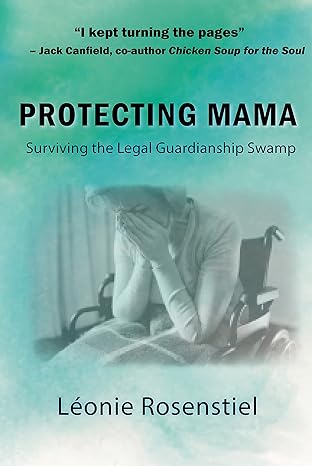
Léonie Rosenstiel’s Protecting Mama: Surviving the Legal Guardianship Swamp is a poignant exploration of love, loss, and the relentless pursuit of justice. When her mother falls victim to the ravages of Alzheimer’s disease, Léonie faces an arduous battle against a complex and often opaque legal system. A court-appointed guardian, shrouded in secrecy, becomes a formidable barrier between Léonie and her mother’s wishes. At the heart of this compelling narrative is the profound bond between a daughter and her mother. Léonie’s unwavering determination to honor her mother’s desire to share their story highlights their unbreakable connection. As she navigates a maze of legal and ethical challenges, the author provides a candid look at the devastating impact of Alzheimer’s on families.
Beyond the personal tragedy, the book serves as a scathing critique of the guardianship system. Rosenstiel exposes a framework often more focused on control and financial gain than on the well-being of its wards. This critique extends to the hospitality industry, where vulnerable individuals and their families can become targets of exploitation. Through Léonie’s experiences, readers gain valuable insights into the importance of financial planning and meticulous record-keeping. These practical lessons are crucial for safeguarding the future of loved ones and underscore the necessity for compassionate care and companionship for the elderly. Protecting Mama is a powerful story of resilience and the human spirit. Léonie’s tenacity in challenging the status quo is truly inspirational. The book provides a significant perspective on a complex issue that affects countless families.
I highly recommend Protecting Mama to anyone seeking a deeper understanding of the challenges faced by families with elderly members, the intricacies of the legal system, and the importance of advocating for those who cannot advocate for themselves. While the narrative is intense at times, it is essential reading for anyone interested in elder care, legal reform, and the human condition.
Pages: 481 | ASIN : B09MV3XMMB
The Songbird and The Sunshine
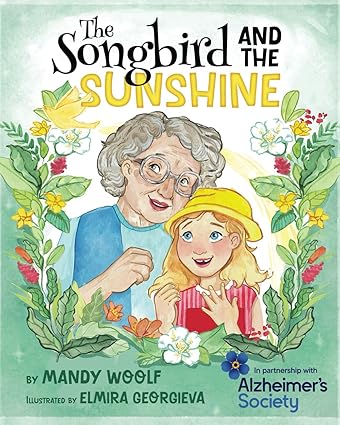
The Songbird and the Sunshine is a sweet and heartwarming tale that captures the strength of family ties against the backdrop of dementia’s bittersweet reality. Amy, a young girl with a voice as radiant as a songbird’s melody, shares an unbreakable bond with her grandma, who is the light of her life. As dementia casts a shadow over her grandma’s memories, Amy’s songs shift from simple tunes to a lifeline that keeps their love alive. However, when Amy loses her voice, she faces a new challenge: finding another way to stay connected as her grandma’s memories continue to slip away.
Mandy Woolf handles the subject of dementia with a deft and sensitive touch. She crafts a narrative that is both educational and deeply moving for young readers. The story delves into the emotional world of a girl confronting the complexities of her grandma’s illness. Amy’s journey, moving from singing to exploring other means of connection, strikes a powerful chord. It highlights the enduring power of love and the need to adapt in the face of life’s difficult changes, no matter how challenging they may be. The writing in this book is straightforward yet deeply evocative, perfectly capturing the story’s poignant essence. Woolf paints vivid images of Amy’s bright voice and her grandma’s soothing warmth, creating a lasting emotional impact. The illustrations further enhance the story, visually echoing the love between Amy and her grandma, which is something that will resonate deeply with many readers. As an added bonus, Woolf provides a fun memory game at the end of the story.
The Songbird and the Sunshine is a beautiful and impactful book, especially for those affected by dementia. It tells a story of love, loss, and the creation of new connections when the old ones fade. I strongly recommend this book to families, educators, and anyone seeking a gentle yet powerful way to discuss dementia with children. This book shines as a beacon of hope, highlighting the enduring strength of family bonds, even in life’s most challenging moments.
Pages: 32 | ISBN : 1923020633
My Life Raft
It Was Her New York is more than a memoir; it is an exploration of family dynamics and self-discovery in a city that influences all who reside in it. Why was this an important book for you to write?
I and my sister were suddenly caring for a suddenly frail parent. My life changed on a dime. My plans to live abroad with my then-partner and the writing and documentary work that I was doing were all derailed. The city I had always felt “normal” in became more and more unrecognizable. At the same time, my parent, Florence was basically disappearing into dementia. Yet in that chaos, Florence kept surprising me with expressions that were so her and my city kept reminding me that I was still home. Those moments became a life-line to my well-being. The documenting of a pretty tough process kept me connected and sane and working my storytelling muscles. It also comforted me and offered me daily opportunities of giving gratitude-something that cannot be underestimated when going through challenges. Simply put, it was my life raft.
What were some ideas that were important for you to share in this book?
HOME and LOVE and FAMILY are present in each and every person who is in HER NEW YORK: all the LGBTQ grandparents and parents who could never tell their families who they really loved; all our co-workers; all the people who keep our cities running; all the immigrants or refugees who come to NY and other cities seeking safety and a chance at a good life; all the caregivers – both relatives and home attendants – who go through their daily tasks in silence and invisibility. We are surrounded by their stories and, in the case of Florence’s Ex-Lover, secrets. I wonder often what the family of the Ex-Lover – the woman who loved Florence all her life – would think if they found out about their mother/grandmother/great-grandmother and her life-long heartbreak. I wonder if she truly had to hide her heart. I think if people who decry immigration would meet Mr. Godslove, they would be struck as I was by his kindness and goodness. I wonder if people ever stop and give thanks for all the bus drivers, subway workers and delivery people in their city. Yes, this book is specifically about New York City and a queer woman. But it is about a lot more; our cities and homes and relatives and neighbors and all their stories.
I appreciated the candid nature with which you told your story. What was the hardest thing for you to write about?
I wondered if it was the piece I wrote on the evening of the morning Florence died. But it wasn’t – that was an offering of gratitude (except for that one awful EMS person). The hardest thing to write was THE AUTHOR’S NOTE: WHAT A DIFFERENCE THE YEARS MAKE. It was there I had to splay out the regret I felt that last day with Florence and finally say goodbye to my past and the imperfect journey I took her to her final days.
What is one thing you hope readers take away from your story?
There was a parade chant from the Pride March many years ago – “2, 4, 6, 8, how do you know your grandma/grandpa/any relative is straight”. You don’t. We slap words onto people that become their definition, rather than getting to know who they really are. So what I hope this book does is welcome readers’ hearts to grow bigger, their curiosity to expand and their respect to deepen for the people they think they know, for the people they judge as “immoral” or “wrong” and for the people they have never met but fear.
Author Links: GoodReads | Twitter | Facebook | Website
In this engaging new collection of personal essays and full-color photographs, Moed tells true stories of caring for her mother Florence, a broke, Julliard-trained pianist who stumbles into dementia on the Lower East Side. This funny, poignant memoir asks questions both familiar and touching: “What happened to the neighborhood?” and “What happened to my mom?”
It Was Her New York is for anyone who has ever experienced the aging of a parent, the gentrification of a neighborhood, or the unexpected discovery of stifled love and hidden sexuality.



 LITERARY TITAN