Blog Archives
Brought My Ideas To Life

Omnis 1: Beginnings follows a family in Argentina who move to the US and have to deal with intolerance and prejudiced people they encounter at school. What was the inspiration for the setup of your story?
Although the characters and the storyline are fictitious, I drew freely from my own experiences growing up and those of my three children. I set the story in Argentina and the U.S. to ensure authenticity, because that is what I know, having been born and raised in Argentina by parents from the U.S., and having made several moves between the two countries. There are two girls and two boys so that four different cases could be explored. I also wanted both female and male superheroes. The problems the siblings face with their move and at school are very similar to situations that we have been through ourselves but are also faced by children everywhere. Regardless of his or her background, every reader will have been at the giving or receiving end of these scenarios and can identify with the feelings and problems arising from the pandemic.
The art in this book is fantastic. What was the art collaboration process like with illustrator Sabrina Bedford?
I am incredibly fortunate, because, beside being a gifted illustrator, Sabrina Bedford is my niece. She did the artwork for my previous books, which consist of the front and back covers of four books and ten illustrations for King of the Hill (ten biographical stories from my father’s childhood during the Great Depression). It was wonderful working with her, because there was so much freedom of communication. I described the scenes I wanted and she delivered, sometimes with exactly what I asked for and often with improvements. I started out with tables containing columns for English, Spanish and scene descriptions. Sabrina set up a detailed spreadsheet with room for comments and questions from both of us. As the story and dialogue evolved, she made thumbnail sketches for approval and then fleshed them out. She was incredibly intuitive about what I wanted and brought my ideas to life.
What were some themes that were important for you to explore in this book?
The Omnnis’ superpower reflects the main theme. Empathizing with others, regardless of race, ethnicity, language, culture or social status, and acting on that empathy overcomes the barriers that separate people and fuel rejection and aggression. Some of the sub-themes I wanted to bring out are an appreciation of cultural and linguistic diversity, the advantages of bilingualism, the power of positivity, and the importance of family and friendship.
Can you tell us more about where the story and characters go after book one?
Without giving too much away, the second volume will revolve around veterans, PTSD and service dogs, while the third volume will tackle a natural disaster, both with plenty of Omni involvement, of course.
Author Links: Website | Twitter | Facebook
In mid-pandemic, the Martins move from one continent to another, and the four siblings face challenges and obstacles, especially at their new school. See them receive very unexpected help and undergo an amazing transformation.
Una experiencia gráfica bicultural y bilingüe.
En plena pandemia, los Martin cambian de continente, y los cuatro hermanos enfrentan desafíos y obstáculos, especialmente en su nueva escuela. Acompáñalos mientras reciben la ayuda menos pensada y se transforman sorprendentemente.
Success Comes In Many Different Forms

The Golden Ticket is a memoir told from the perspective of answering college essay prompts. This approach ties into your background and career path, presenting your story in a unique fashion. Why was it important to tell your story?
I wrote The Golden Ticket because I wanted to address the disconnect—chasm, really— between my professional life and my home life.
At work, I counseled students on how to tell their best story and to gain admission to some of the most selective colleges in the world; at home, my husband and I were struggling to raise three children with developmental delays, depression, anxiety, and learning differences.
In Palo Alto, where we live, everyone talks about getting into college (and not just any college, but the good kind), which doesn’t leave much room for conversations about kids who aren’t ready for college, or don’t want to go, or might be struggling with challenges that go beyond deciding which top 20 school they’ll apply to.
In telling both parts of my story, I wanted to provide a larger context for what Frank Bruni calls “Yale or jail” thinking about success—and to open a broader conversation about what it means to be successful or to lead a meaningful life. Not every success story ends with the name of a prestigious college on the back of a late-model luxury car.
I appreciated the candid nature with which you told your story. What was the hardest thing for you to write about?
By far the most difficult thing was describing the struggles each of my children faced. There is nothing more painful than being a parent and feeling powerless to address the challenges your children are facing. Revisiting those moments was agonizing, but I also felt strongly that chronicling what we went through as a family would help other families feel recognized and less alone.
What is one piece of advice someone gave you that changed your life?
One of my improv teachers often told me to “say the thing.” I have a tendency to tiptoe around whatever my character’s motivation or thinking might be, and he always encouraged me to just blurt it out. I now have a ring engraved with the words “say the thing” as a reminder.
What is one thing you hope readers take away from your story?
That success comes in many different forms at different stages of your life—and that there is, in fact, no golden ticket.
Author Links: GoodReads | Twitter | Facebook | Website
Irena is a Russian Jewish immigrant, a PhD in comparative literature, a former Stanford admissions officer, and a private college counselor in Palo Alto, California—a city where everyone has to be good at something and where success often means the name of a prestigious college on the back of a late-model luxury car. But as Irena works with some of the most ambitious, tightly wound students in the world, she struggles to keep her own family from unraveling, and that sharp-edged divide lies at the heart of her memoir.
The Golden Ticket is narrated using a form Irena knows best: college application essay prompts. In her responses, Irena weaves together personal history, sharp social commentary, and the lessons of literature ranging from The Odyssey to Charlie and the Chocolate Factory. Her memoir asks difficult questions—What exactly do parents mean when they say they want the best for their children? What happens when the best of intentions result in unexpected consequences?—and envisions a broader, more generous view of what it means to succeed.
This New Life Stage

The Happiness Habits Transformation: Second Edition is a self-help book that teaches readers how to change their daily routine in order to find more happiness in their lives. Why was this an important book for you to write?
I know from my own experience and from speaking with many, many women, that our daily routines are often based on what everyone else needs. I also know that even if we recognise something has to change, as I did, it’s difficult to carve out time for ourselves in between our responsibilities. So I wanted to share the simple and practical 8-step path I used to intentionally create a routine with habits that are proven to boost our everyday happiness. It was also important to me to show, in this new edition, how I’ve adapted these ‘happiness habits’ that continue to support me through perimenopause, in the hope that it helps other women who might be in the same place, navigating the shifting priorities and challenging changes that happen in our bodies and minds as we enter this new life stage.
I appreciated the candid nature with which you told your story. What was the hardest thing for you to write about?
The backstory in chapter two and parts of the new chapter about my perimenopause journey were both challenging to write. They both reveal times in my life when I felt emotionally raw and broken and reliving them brought back a lot of the emotional issues I experienced. I had to take a step back from time to time, but I knew that I wasn’t alone in experiencing a traumatic birth experience, having to close my business, or feeling lost and confused during perimenopause and the hope that it would help others who had similar experiences to move forward was a powerful motivator to complete these parts of the book.
What is one piece of advice someone gave you that changed your life?
One of the best pieces of advice I’ve heard came from life coach Brendan Burchard who said “if I was to look at your calendar, would I see what’s most important to you on it?” I never forgot that advice and use my calendar strategically to prioritise what matters most to me, blocking out time specifically for my biggest goals rather than just writing things down in a list.
What is one thing you hope readers take away from your book?
That it’s ok to take time out for ourselves and that the habits which make up our daily routines CAN make us happier if we’re intentional about choosing the ones that serve us – habits that allow us time to focus on US, release us from the habit of negativity, boost our self-esteem and help us plan out and live our biggest, most exciting dreams!
Author Links: GoodReads | Twitter | Website
So often our routine is based on what everyone else needs. Our work and family life fill our days up to the brim and we squeeze in what we can for ourselves in between. And, if we’re totally honest, in the dim hours when the truth seeps out between the cracks, we realise we might have lost ourselves a little along the way.
In The Happiness Habits Transformation, former life coach Michelle Reeves urges us to take a time-out (without feeling guilty about it) to rebuild our daily routine into one that serves us – one habit at a time.
Through her personal experience of depression and how she rebuilt her life through a combination of 8 simple happiness habits, you’ll discover how you can create a simple routine with time to focus on YOU, release yourself from the habit of negativity, boost your self-esteem and dream and plan out your biggest, scariest and most exciting goals.
You’ll learn:The power of each of the 8 Happiness Habits and how they can impact your life – backed up by easy-to-understand research studies
Two terrific tools to boost your positivity in minutes
How to use habit strategy to create a simple daily routine from the habits that fits your life and ensure they become habits and not just another resolution you’ll eventually quit
How others have woven the habits into their lives and how they’ve benefited with real-life case studies
*New for the second edition*: Michelle explains how these habits continue to support her as she navigates a new season of her life through perimenopause and beyond, and shares success stories from others who have woven the habits into their own routines.
Filled with real-life examples, the encouragement and guidance of this book will not only help you transform the way you live your life each day but also allow you to take these habits on board to forever change your life for the better.
Start your Happiness Habits Transformation today – scroll to the top of the page and select the BUY NOW or ADD TO BASKET button.
Some Mysterious ‘Muse’
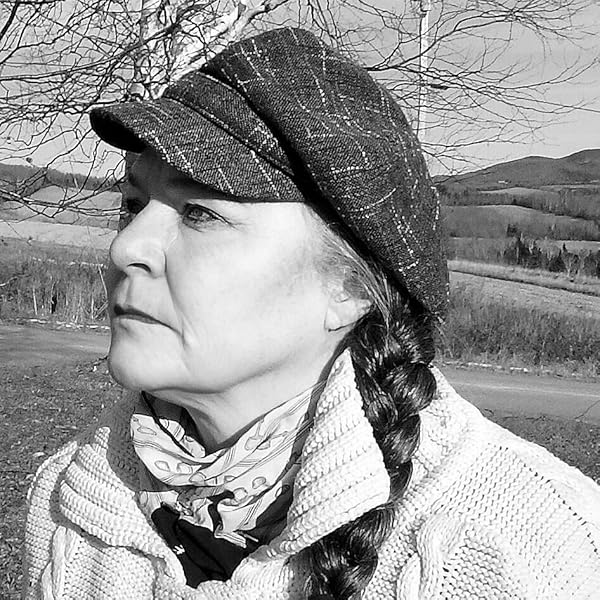
Just a Stalemate follows a woman traveling to visit her godson, who winds up helping out in a murder investigation. What was the inspiration for the setup of your story?
The first book in this series Just A STILL LIFE, (really the last, as the rest are all prequels) was first drafted by my grandmother more than 75 years ago. So P.J., the elderly godmother in 2023’s Maxy-Award Runner-Up for Mystery/Crime Just A STALE MATE is loosely based on that grandmother who loved to travel, but was equally as happy as a homebody typing her manuscripts. And the place she’d called ‘home’ her entire life was either in the village of Straffordville, Ontario (Sandytown in the book), or on a country estate just 2 miles outside the village. Grandma really understood the often close-minded vision and gossip-mongering of villages like this, and as I grew up with her, experiencing the same village, I decided I wanted to set the second whodunnit novel right there. There are lots of interesting things about that area as well: it was famous as tobacco country but on the shores of Lake Erie, which is practically like growing up near an ocean; it has a lot of railway history and I grew up overlooking the train trestle bridge which features greatly; it isn’t far from many Canadian early innovations and inventors, also mentioned in the book, and which many might assume to be wholly American.
With so many interesting characters in this novel, who was your favorite character to write for and why?
While I write many diverse characters into my plays and novels and thus delve into research and have sensitivity editors from most marginalized communities, the development of the Cowan family sprang from a childhood pal, my ‘twin’ (we were born together, our parents already great friends) and seemed to take on a life of its own. Without giving too much away, my ‘twin’ had asked to be a central character and since I like anagrams and wordplay as clues and red-herrings, her name and the fictionalized background of the Cowan family came to mean a lot to me, and to the plot. And as I’m (dis)Abled, I wanted to make one of the family members representative of that particular group, too.
However, I love creating who D.I. Philip Steele’s partner will be in each book. In ‘Still Life’, it was a former Black journalist turned cop, who likes spouting literary quotes, but usually gets them humorously wrong. In ‘Stale Mate’, it’s Trevor, a member of the LGBTQ community who is afraid to come out as, in 1969 Ontario, he’d surely have been fired from his position. In the third in the series, which is set in the Yukon in 1967, Phil’s partner is a female Inuit based on a fine superwoman I met when I lived there in the 1980s.
When you first sat down to write this story, did you know where you were going, or did the twists come as you were writing?
I really have to laugh when I get asked this. Because Just A STILL LIFE took 75 years to see the light of day, with many versions and drafts having crossed the ocean and the continent several times with me in the form of hard-copy manuscripts and copious notes, it’s unbelievable that its award-winning sequel/prequel took only a matter of weeks to write and revise to what Literary Titan has called “a polished and sharply-written novel”, and to be published hot on the heels of the first novel, (again by Black Rose Writing of Castroville, Texas). I’ve always struggled and labored a great deal over all my works, whether short or long; many have been decades in development. We’ve all heard authors and playwrights say ‘it just wrote itself’, and I’ve always thought that was ridiculous. But quite honestly, Just A STALE MATE had some mysterious ‘Muse’ writing through me. Perhaps it was my grandmother, dead 30 years now. She likes to keep her hand in, I guess.
What is the next book that you are working on and when will it be available?
One of my book groups was organized through International Thriller Writers, and the very experienced best-selling authors in that group are encouraging me to work on another Yukon-based manuscript which I’ve had in my writing trunk for decades. It’s called ‘No Fair Game’ — I’ve had to add prefixes to all my original two-word/double-meaning titles now; as I’ve waited so long on them, there are countless others out there with the same name — and it’s more a suspense/adventure yarn than a mystery. Then I’ve got a full-length two-act historical musical called Rough Notes in development that’s had a professional workshopping of it last autumn and needs to keep going forward. So these two projects (as well as promotions/tours, etc. for everything else!) are taking up a lot of my time. While the general plot and characters for the third book in the JUST (e)STATE mysteries are in my head, I don’t know when I’ll be able to actually start bringing them ‘to life’. Or, since it’s a murder mystery – ‘to death’ !
Author Links: GoodReads | Twitter | Facebook | linktr.ee/J.Ivanel
But when her godson, homicide consultant Inspector Philip Steele, and his mother Lary, who is now running their family farm, the “JUST (e)STATE”, as one of the first therapeutic riding schools in North America, ask P.J. to help with the investigation of a young man who fell to his death from a railway trestle, she is happy to oblige.
The many suspects, from as far as Yorkshire, who are staying at the rural retreat outside Sandytown all seem to have a motive. Or, at least a secret. And what of the constant Dickens references behind which they all hide? Will Phil and P.J., along with Detective Trevor Ames (closeting a secret of his own), be able to ‘unearth’ the killer? Or, is what’s buried on the retreat’s property destined to remain there forever?
Our Own Imperfect Journeys

Boy Wander: A Coming of Age Memoir is your story about growing up in a difficult childhood home and struggling with your own identity through your teen years and into adulthood. Why was it important to share your story?
Confronting tumultuous and sometimes shameful aspects of my adolescence has been cathartic if not therapeutic. And to do so through writing enabled me to delve deeper into my thoughts and feelings at specific moments which in turn have shed light on how I turned out to be the person I am today. I also wanted to memorialize a blessed upbringing thanks to loving parents who gave their children the gift of growing up in different cultures. To this day, stories abound of young people’s struggles to come to grips with their true selves. Perhaps my path could help someone and their loved ones navigate such terrain.
I appreciated the candid nature with which you told your story. What was the hardest thing for you to write about?
Keeping secrets is a part of how we operate as humans even at an early age. I had been carrying so many of them for such a long time. Reliving my anguish of desiring what seemed taboo whilst not wanting to disappoint those around me proved to be some of the more challenging aspects of this narrative. My goal with Boy Wander was to be completely honest with readers.
What is one piece of advice someone gave you that changed your life?
My father said to keep a journal throughout college and even later as I embarked on my global marketing career. I was not disciplined about making entries though there was an undeniable energy whenever I scribed how my day went and what I felt. It undoubtedly fueled wanting to tell my story when I was ready to do so. I dedicated Boy Wander to my father (and mother). It’s sort of the journal he was hoping I would have, at least the first of three I believe I have in me.
What is one thing you hope readers take away from your story?
We’ve all wandered within our own imperfect journeys. Every one of them unique. Each of them matters.
Author Links: GoodReads | Twitter | Facebook | Website
Boy Wonder by Day. Boy Toy by Night.
A child TV personality from a prominent Filipino family and the son of an accomplished academic, Jobert Abueva was a high achiever at his all-boys Catholic international school in Tokyo, Japan. Whatever Jobert did, he had to be the best, racking up achievements. He was a favorite among his fellow students, who elected him three times to the Student Council as class president, vice president, and president. Jobert was a triple all-star winner on the brain bowl interschool academic competition, debate, and speech teams, as well as a varsity track hero. He wrote for the school newspaper and yearbook and performed in school plays. A golden boy who could do no wrong. But Jobert had a secret nobody could know. After school, he led a clandestine existence turning tricks with foreign male guests at Tokyo’s world-renowned Imperial Hotel. So it’s not surprising that he had to be the best and was handsomely paid for it. More exciting and better pay than waiting tables. A BMOC (Big Man on Campus), he juggled dual identities of boy wonder and boy toy, sure that if exposed, he would be shunned by his friends and devastate all who groomed him for greatness.
Boy Wander is an intimate coming-of-age portrait of the author’s sexuality as seen through the eyes of a child of the 1960s and 70s and a teenager before the advent of AIDS and finally as a young man arriving in America. From Manila, Kathmandu, Bangkok, and Tokyo to New York, Chicago, and San Francisco, the author navigates denial and acceptance, erotic and unconditional love, transience, and transnationalism. Even as the world has become more accepting over the decades, this book’s present-day relevance provides inspiration to those struggling to reconcile family values and societal expectations with being true to themselves.
Understanding The Humanity Of Humans

This book helps readers understand the workings of the human body as a series of interdependent physiological relationships. What was the idea, or spark, that first set off the need to write The Embodied Mind?
In 1981, in my book The Secret Life of the Unborn Child, I hypothesized that there were two memory systems. The first was the cortical system in the brain that we are all familiar with. The other functioned on a cellular level and began to operate at conception. At the time of writing The Secret Life of the Unborn Child, the research did not exist to support what was then a binary theory of memory.
In The Embodied Mind I provide an overview of current evidence-based research in many areas of science that, collectively, validates a unified theory of memory.
What sparked my determination to write this book was that I read about a 44-year-old French man who in July 2007 visited a hospital complaining of a mild weakness in his left leg. The resulting scans of his head led scientists to question our long held biological perspective on the nature of consciousness – because, despite living a relatively normal life, this patient was missing 90% of his brain.So, I asked myself – how is this possible?
What were some ideas that were important for you to share in this book?
Scientific emphasis on the brain has been baked into our culture for millennia. The Western world even before the Greek civilization, has been patriarchal, giving rise to a hierarchical social structure. The same vertical system has been unconsciously adopted in medicine. Doctors and scientists think of this system as strictly one way, mostly top-down, rarely bottom up. The latter is usually perceived as negative, as when you have a duodenal ulcer or a heart attack. Add to this the Church’s jaundiced view of the genitalia and you hesitate to spend too much time contemplating your lower chakras.
My book is a journey into the fully embodied nature of mental life, reviewing the cutting-edge science showing how the body responds to and encodes experience into its structure and function; how our feelings, thoughts, and memories are shaped by physiological functions beyond those of our head-encased brain.
It is the existence in our bodies of an interconnected, unified, multilevel, homeostatic, cellular memory system that allows us to be fully functional human beings with an Embodied Mind and not just an enskulled mind.
Materialism and reductionism are science’s Tweedledum and Tweedledee. The Embodied Mind challenges the prevailing concept of reductionism and emphasizes the need for a more holistic and spiritual approach to understanding the humanity of humans.
How much research did you undertake for this book and how much time did it take to put it all together?
I spent 7 years reading and making notes of 5,000 plus bookstand scientific papers.
What were some goals you set for yourself as a writer in this book?
Replacing the enskulled mind with the Embodied Mind and Everything is Connected
We understand the workings of the human body as a series of interdependent physiological relationships: muscle interacts with bone as the heart responds to hormones secreted by the brain, all the way down to the inner workings of every cell. To make an organism function, no one component can work alone. In light of this, why is it that the accepted understanding that the physical phenomenon of the mind is attributed only to the brain?
In The Embodied Mind, internationally renowned psychiatrist Dr. Thomas R. Verny sets out to redefine our concept of the mind and consciousness. He brilliantly compiles new research that points to the mind’s ties to every part of the body.
The Embodied Mind collects disparate findings in physiology, genetics, and quantum physics in order to illustrate the mounting evidence that somatic cells, not just neural cells, store memory, inform genetic coding, and adapt to environmental changes—all behaviors that contribute to the mind and consciousness. Cellular memory, Verny shows, is not just an abstraction, but a well-documented scientific fact that will shift our understanding of memory.
Verny describes single-celled organisms with no brains demonstrating memory, and points to the remarkable case of a French man who, despite having a brain just a fraction of the typical size, leads a normal life with a family and a job. The Embodied Mind shows how intelligence and consciousness—traits traditionally attributed to the brain alone—also permate our entire being. Bodily cells and tissues use the same molecular mechanisms for memory as our brain, making our mind more fluid and adaptable than we could have ever imaged.
Speak Truth To Power
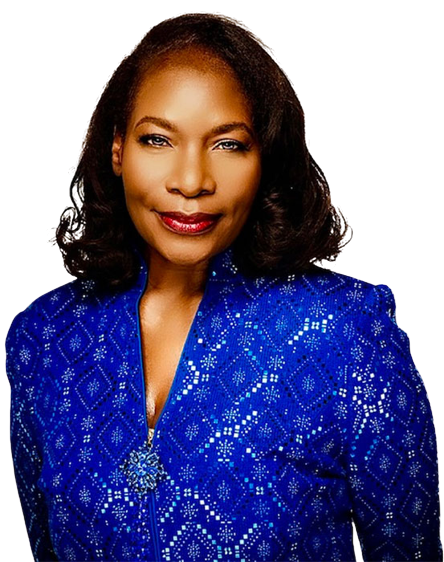
Naked Truth shares your story, without holding back, about dealing with racism and discrimination in the workforce and what you did to fight against it. Why was this an important book for you to write?
Naked Truth was an important book for me to write because racism and discrimination continue to persist in many organizations, despite efforts to address them. Racism and discrimination not only harm individuals who are targeted, but they also create a toxic work environment that can negatively impact productivity, employee morale and wellbeing, and the success of the organization. Moreover, Naked Truth has allowed me to speak truth to power in a meaningful way.
In my view, addressing racism and discrimination in the workplace requires a multifaceted approach that includes education, training, policy development, and cultural change. Furthermore, my book can help with providing a platform for individuals to share their experiences and perspectives on these issues, amplifying voices that are often marginalized or silenced. By sharing stories of discrimination, racism, and the strategies used to overcome them, my book can inspire and empower others to act and create positive change in their own workplaces. Ultimately, Naked Truth may play a critical role in building awareness, promoting understanding, and driving progress towards a more just and equitable society.
I appreciated the candid nature with which you told your story. What was the hardest thing for you to write about?
The hardest thing for me to write about was recounting the firsthand experiences, the pain, trauma, grief, and the uncomfortable conversations about privilege, power, and inequality encountered at the Department of Labor (DOL). It was difficult to articulate the depth of these experiences in a way that is both sensitive and impactful. Never in my wildest imagination did I ever foresee myself engaging in such an undertaking.
What were some ideas that were important for you to share in this book?
Some of the ideas that were important for me to share in Naked Truth is first to connect with readers by showing I am personable and retable. Second, to bring awareness to discrimination and racism that exist in the workplace and to advocate for change. Finally, I wanted to motivate, inspire, and empower others to take actions and speak up when experiencing these despicable acts.
What is one thing you hope readers take away from your story?
One thing I hope readers take away from my story is, never be afraid to speak truth to power to affect change. There are others waiting to hear your story!
Author Links: GoodReads | Twitter | Facebook | Website
These Are Wild Thing’s Tales To Tell
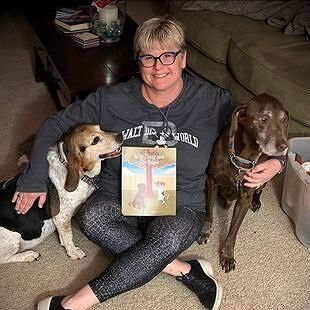
Wild Thing and The Bagel shares your family’s story about adopting two dogs and the challenges that people may face when rescuing an animal. What inspired you to share your story?
Wild Thing was 13 when I started the book a couple of years ago. His favorite human has always been Brady. When Brady went off to college, Wild Thing went through a horrible depression, missing his best friend so much. We had talked about getting another canine companion, but always wondered how Wild Thing would handle sharing his humans. We made the leap that first summer of Covid, when everything was just re-opening. The Bagel immediately made her way into our hearts and became friends immediately with Wild Thing. Wild Thing had always provided us with entertainment and tales to tell ever since the day we brought him home 14 years ago. When The Bagel joined the family, the stories more than doubled. I knew then I needed to put their stories in writing—and every single story in the book has happened. As Wild Thing is getting older, I knew putting this book together would be my little ‘love note’ to him.
One thing I loved about this children’s book is that it is told from the perspective of Wild Thing. Why did you choose to tell the story from his perspective rather than your own voice?
These are Wild Thing’s tales to tell…and for anyone who has had pets, you know you can just tell when they are ’telling’ you about their day or about the other family pets’ antics. Getting these stories out to everyone needed to be told from Wild Thing’s point of view to give it authenticity.
What were some educational aspects that were important for you to include in this children’s book?
I hope children, and adults, see the love and bond between humans and pets, and that rescue pets are simply awesome. And, who knows, it might give someone the little push they need to make that leap to rescue a pet. My purpose was to write the book so that kids of all ages could enjoy the stories.
Are you working on more stories about Wild Thing and The Bagel?
Wild Thing and The Bagel give me new stories everyday—so, there is plenty of material. My hope is to be able to put some of them into another book…or to possibly do a theme book (such as a holiday book or a book about different adventures).
Author Links: Facebook | Instagram | YouTube



 LITERARY TITAN