Blog Archives
I Wanted To Re-imagine His World

Still Waters follows a man who wakes up with no memory of his family and must navigate the challenges of starting a new life while grappling with the traumas of his past. What was the inspiration for the setup of your story?
The inspiration for the setup of this story was actually a scene from Ava DuVernay’s limited series When They See Us (2019). For those that don’t know, When They See Us (2019) tells the story of the Central Park Five — five young Black and brown boys who were accused of brutally assaulting a jogger in New York City in 1989. All of the boys were convicted between six and twelve years. Throughout their trials they maintained their innocence. Later their sentences were vacated once the true (and lone) assailant admitted to the crime in 2002. Ultimately, there is a scene when Korey Wise (played by Jharrel Jerome) is locked in solitary confinement, and he begins to daydream about what if he decided not to go to the park with his friends that day. How differently his life would’ve turned out. When his daydream ends, he is back in prison, alone. I wanted to do something similar with a case that involved another Black teenager — and that was the case of George Stinney, Jr., the youngest American to be executed in the United States at 14-years-old. I wanted to re-imagine his world, and give him a different reality, if only briefly.
George is an interesting and well-developed character. What were some driving ideals behind your character’s development?
Admittedly, it was a bit difficult writing George’s character because I am writing about a young teenager, who is in the body of an adult. When you’re young, you’re naturally very curious and so I think it was important for me to make George curious about the world around him — and try to grasp what was happening to him. He is being forced to mature quicker than he would probably like to, like many Black children in the U.S., and so I think it was important to capture both his innocence and budding adulthood.
What themes were important for you to explore in this book?
It was important for me to explore how Black adults in the U.S. are often treated like children, and Black children are often treated like adults — and where these two ideals meet in this novel. George’s children are attacked for being children, in one scene in the book because they are expected to present much older. They are given less leniency than other children. Ultimately, George is being treated as an adult by the state of South Carolina when he is sentenced to death. So this was something that was important for me to explore.
What is the next book you are working on and when will it be available?
I do not currently have a book in the works, but am thinking of turning Still Waters into a screenplay so stay tuned for more news on that front!
Author Links: GoodReads | Twitter | Website
As he struggles to let go of what was and hold onto what is—and, more importantly, what can be—traumas, past and present, dare to carry George back to a world he desperately wants to escape.
Rooted in a dark, and important, history, Still Waters is an emotionally gripping story of love and loss that will keep you on the edge of your seat until the very end.
An Encouraging Angel

Naomi’s Journey Into The Light follows a young woman, Naomi Larson, on a journey into faith and how it not only affects her life, but the lives of others. What was the inspiration for this story?
Actual events out of my own life provided the spark that led to this book. One such event occurred when I was only seven years old. Being diagnosed with polio, a deadly disease in the 1950s, the doctors delivered their dire prediction: I would only live two to three more years. While in the hospital I met my very own Sister Mary, just as in my book, who became an encouraging angel for me. Through prayer and faith, I’m still alive almost seventy years later. That ordeal in 1953 changed my life and later led to me to writing inspirational novels.
What is one piece of advice someone gave you that you will never forget?
My deeply religious grandmother advised me to never lose your faith in God and follow the path He lays out for you. I took that to heart. Something I’ve discovered on that path is that good books are truly mirrors of the soul of the authors.
How did writing Naomi’s Journey Into The Light affect you?
It’s been a humbling experience. Every day as I wrote this book, I felt connected to God on several levels as the story just flowed out of me. All through this process I was fully aware of the spiritual energy guiding me.
What do you hope readers will take away from your book?
To be open to the inspirational message that reaches into the heart throughout this story. To come to know how much God can be beautifully involved in our lives if we let Him in.
Author Links: Amazon | GoodReads
Naomi Larson is about to enter the year that changed her life. Returning to her home town after many years, she encounters an old building that turns out to be a place of miracles. She is drawn into a world of meaningful dreams, life-changing visions and a guardian angel.
Reminiscent of the story of Tiny Tim in A Christmas Carol and elements of It’s a Wonderful Life, Naomi’s journey becomes a soul stirring account as she discovers the Light of the World and just how much God is involved in our lives, if we let Him. Within the pages of this visionary novel you will discover an inspiring narrative that reaches into your heart.
Keep That Internal Happiness Flowing
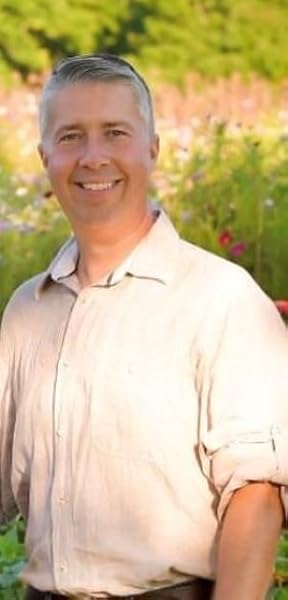
Oliver the Oyster and the Cheerless Clam follows a sad clam who moves into the harbor and learns how to find happiness from her new friends. What was the inspiration for the setup of your story?
It is my personal belief that children today face many more challenges than we ever did growing up. With that being said, I find that it is very easy for them to allow unfair situations in life to take a negative hold of their thoughts and emotions. As such, I wanted to write a story that provided children not just an opportunity on how to overcome those hurdles, but also to encourage them to live every single day full of happiness and joy just as God intended us to.
Clara struggles with her past and the disappointment she has had in life and learns how to find joy again. What were some driving ideals behind your character’s development?
It was my hope and prayer that children will be able to identify with a challenge faced by any one of the characters. Whether it be a medical condition, a bad test score in school, a feeling of not being included, every challenge or unfair situation is one that all of us at some point in our lives have faced. However, the key is how the character was able to put aside the situation and keep that internal happiness flowing.
What were some themes that were important for you to explore in this book?
I truly just wanted children to understand we are the ones who decided if we will live our lives full of happiness. We all go through unfair situations, but those situations are not the boss of our happiness, we are.
What is the next book in the Oliver the Oyster series that you are working on and when will it be available?
“Oliver the Oyster and the Lost Lab” is the next book in the series that I am planning on releasing this coming November. Here’s a little teaser. While Oliver and his friends are enjoying another beautiful early morning sunrise on their beach, a lost silver Labrador comes running down the sand and falls down exhausted before them. With the help of his friends Cathy the crab, Miriah the mermaid, and Clara the clam, Oliver the oyster goes on a fun-filled adventure to help reunite Mac the lab with his family.
Author Links: Instagram | Website
Through out this story, children will also learn lots of fun seaside facts that they will be able to share with their family and friends.
What Better Backdrop For A Crime
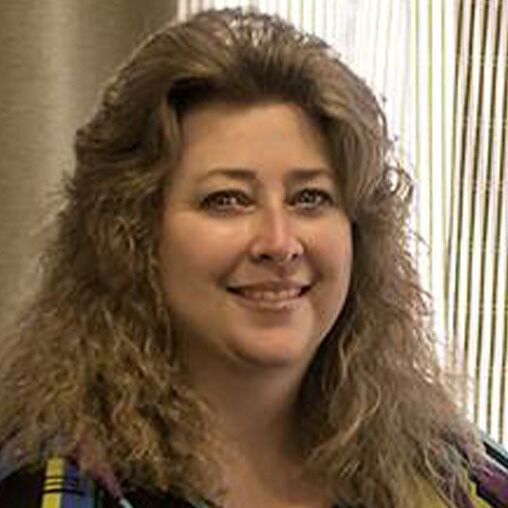
Lethal Connections follows a homicide detective who is investigating a series of deaths with the only connection being money and power. What was the inspiration for the setup of your story?
One of our authors, Erik Shein, is a herpetologist and has always been fascinated with poisonous reptiles. He has his own snake collection. Melissa Davis and I both enjoy writing dark paranormal, tinged with a little humor. We thought it would be fun to team up and put together a crime thriller with a dark, paranormal feel. We chose the New Orleans area for the backdrop because let’s face it, everyone is fascinated with New Orleans with its dark history, myths and legends. What better backdrop for a crime novel?
What was the collaborative process of working with the other authors on this novel?
We’ve been doing this for a while. We’ve been writing as a team since 2016. We started the process by first throwing ideas back and forth at each other. Once we decided where the story would take us, we did a lot of research to ensure our facts were right, and the writing process began. As I said before, we’ve been doing this for a while now. With a writing team, it keeps writer’s block at bay.
Crime fiction is a new genre for us and presented a few new challenges to us as writers. You would be surprised at what you could do when you challenge yourself. I have to say that it was a fun collaboration, and we plan to do more.
How did the mystery develop for this story? Did you plan it before writing or did it develop organically?
The mystery of the story was developed by a lot of plotting! Most of the stories I personally write myself usually develop organically. I let the muse guide me. However, with this one, we plotted it step by step and scene by scene. Since this was a new genre for us, we wanted to make sure that the story flowed and that no steps were missed in solving this mystery.
Will this novel be the start of a series or are you working on a different story?
Yes, this novel is the start of a series. We’ve already been discussing how the next story will begin. The only thing left to do is to pick our poison. LOL Seriously, though, we have about ten different ideas percolating. Not sure right now if it’ll be ten more books, but two or three more books for sure.
Author Links: GoodReads | Facebook | Instagram | Website
Sergeant Lance Knight has a pile of unsolved homicide cases on his desk. On the surface, none seem to be connected. The victims are all men with money or power. An investment banker, a lawyer, and a local politician. They don’t socially run in the same circles. Lance can’t find a connection.
Working closely with coroner Gina Goodwin, Lance and Gina discover a pattern. Three unrelated things the bodies all have in common—a string of lethal connections. Is it just a coincidence, or is it something more?
Things heat up when Lance realizes he’s getting close to finding the killer, and everything spirals out of control. Can he piece it together before it’s too late?
This Felt Personal

The Vision Prelude follows a young warrior who sets out to gain a different life than the one of war and strife he was raised in. What was the inspiration for the setup of your story?
This story was inspired by my obsession with the Vinland Saga. In that story, Thorfinn strives to find what his father called “Vinland”, a mystical and untouched land where there is no slavery or war. On top of that, he wants to get to these lands without using coercion, war, or duplicity. In much the same way, this is Sir Longavian’s mission when arriving on the shores of Sebel. Jingseh, the continent in the east, has been plagued with war since before he was born. It is the time of peace that the noble knight tries his best to go further out into the world than his father ever did. Pinus is also not a conqueror by any means. Even though he has his darker moments, at his core he strives to never trample upon the weak.
Pinus wants more than the world he grew up in and sets out to sea in hopes of finding a better life. What were some driving ideals behind your character’s development?
For me this felt personal. It’s the simple idea of expanding your worldview and experiences beyond what your parents did. I think many parents would agree the whole goal of their guidance is to ultimately give their children a better life and even greater opportunities than they had for themselves. Pinus was given that gift at a terrible price, and now he is trying to fulfill that dream one step at a time. The problems arise when he runs into obstacles like lack of funds, the wrath of mother nature, and of course the very people of Sebel themselves.
What were some themes that were important for you to explore in this book?
For one thing, I really wanted to explore Jingseh, the land of the Forest People. Their culture is an odd blend of nature-oriented mindfulness while at the same time focusing on European-style medieval caste systems. Pinus finds himself at the top of that system, and must accept both its gifts and its curses. At the same time, I also wanted to explore the horror of wars and close mindedness. As the Asum of Allusea said quite poignantly, when the elite of Jingseh weren’t fighting the Ankar people, they were fighting amongst themselves. Part of her reason to accept Pinus was an effort to not follow the isolationist mentality of her forebears.
Where does the next book in the series take the characters?
The next book, The Demon Seed, will be quite a ride for readers. A hundred cycles later, Pinus has not only established a thriving trade-based relationship with Sebel, but he’s also come to rear a family of his own. Despite the joy, there is smoke on the horizon. Old hates never die, and worse still, certain individuals from within and outside threaten to tear apart the amity between the world’s nations. Greed and war rear their ugly heads and Pinus must do everything in his power to stop it. The story will be available first on Kindle Vella before being released as a paperback and ebook in December of this year. Readers should prepare for a wild ride with any new characters, breathtaking new worlds, and exhilarating action!
Author Links: GoodReads | Twitter | Facebook | Website
This collected edition includes extras for readers, including:
Detailed maps of the world!
Character illustrations!
Multiple previews!
Destinies clash in the novella The Vision Prelude. Previously published as Law of Sacrilege [Episodes 1-10] on Kindle Vella.
On Their Adventure Home
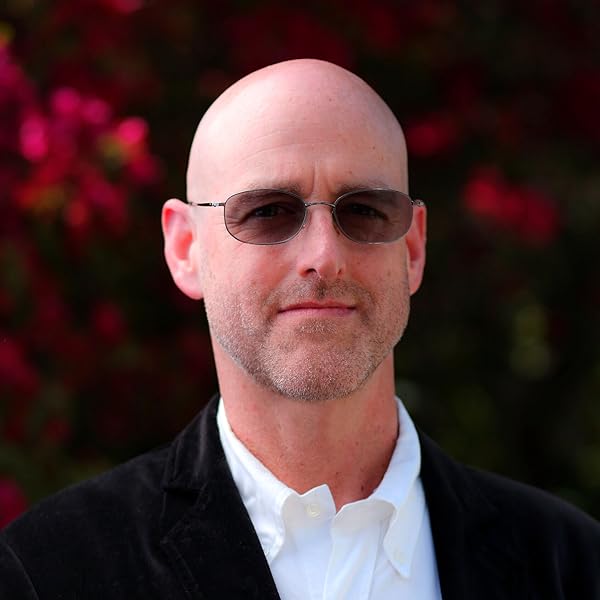
Firefly: Let There Be Light follows a young firefly who performs a daredevil stunt and has it go horribly wrong. What was the inspiration for the setup of your story?
One of the many reasons I love writing fiction is that, once a character is established in my mind, the character takes the story from there. Of course, I plan parts of the plot, and the characters comply, but often, they act in my imagination and I just write it all down, especially when it comes to dialogue. In the case of the inciting incident of the story, I knew that it was protagonist Flash’s reckless nature that should be the cause of the shakeup of his (and his friend’s) world. And from there, I just thought, what would a wily firefly do when he’s out on an errand for his father? I won’t spoil the story with the details, but the Flash in my imagination was eager to be especially irresponsible in his pursuit of thrills and to impress his friends. Also, one of my favorite books is The Adventures of Huckleberry Finn, in which a boy and his friend travel far from their home. I thought it would be interesting to do the opposite in Firefly—take the characters far away and then follow them on their adventure home.
Flash thinks he knows it all but quickly learns there is much about life he doesn’t know. What were some driving ideals behind your character’s development?
If Flash was a human, he’d be a twelve or thirteen-year-old boy, and that is the time of life when boys and girls start thinking more like an adult than like a child. When we’re that age, we start to “feel” that we understand life, and our knowledge of life is indeed growing rapidly at that time, but it turns out that we all still have much to learn—especially when it comes to self-restraint and responsibility. Flash is that character—he thinks he’s ready to take on the world. He can fly. He can emit flight. He is, in fact, quite clever. But a cocky firefly, much like an over-confident human, will find that the world is a little more complicated, and less forgiving, than he expected.
What were some themes that were important for you to explore in this book?
I think there is a tendency today to downplay courage as a virtue because that quality is often found in people who are like Flash—those who are unafraid to speak their mind, those who are risk-taking adventurers whose behavior sometimes crosses over into recklessness. This story proposes the idea that courage is indeed a virtue, and people should not abandon their courageous spirit to rid themselves of their risk-taking or reckless nature—instead, they should learn to harness their power, use their boldness responsibly, and be courageous, not in reckless abandon but to serve and help others in need. The overarching theme of the book is that the deepest love is not an emotional reaction that gives a person a sense of excitement, but it is sacrificial service of others—our family, friends, and community.
Will this novel be the start of a series or are you working on a different story?
I wrote Firefly: Let There Be Light to be a standalone story, but also to be an origin story for Flash and his band of misfits. I do plan to use this origin story as a launching point for a more episodic series called The Misadventures of Flash and the Misfits. These will be shorter books with a feel similar to episodes of a TV show, as opposed to the more feature film-feel of Firefly: Let There Be Light. Each book will have Flash and his friends encountering a mystery or challenge in Temple Hollow and using their unusual collection of talents (and quirks) to comically approach the problem. Book 1 is underway with a seven book series being the ultimate plan.
Author Links: GoodReads | Twitter | Facebook | Website
Firefly Flash just gained the ability to illuminate and fly, and it’s gone to his head. He flits around his hometown of Temple Hollow avoiding work and finding mischief.
When his latest daredevil stunt spirals out of control, he lands himself and his two friends far from home in a dangerous desert in Texas. Meanwhile, Temple Hollow is captured by a goon-squad of tyrannical dragonflies—and that’s Flash’s fault, too.
After a mysterious encounter in the desert, Flash inspires a ragtag band of Misfits to join him on his mission to return home. The Misfits encounter trouble at every turn, yet these challenges are nothing compared to the epic battle awaiting them back in Temple Hollow.
Packed with comedy, action, and insights for children of all ages, this middle grade adventure is the perfect chapter book for independent, family, and classroom reading.
Read Firefly today—and see the Light!
The Eternal Hope Of An Author

To See God follows a Jewish family who, despite being separated by distance and religious beliefs, find a way to bond. What was the inspiration for the setup of your story?
The novel is a sequel to The Flight of the Veil, the book in which the Greek Orthodox nun, Sister Theodora, is reunited with her older brother, Dr. Nicky Covo, after they were separated for 47 years by the Holocaust. The shock of their unexpected reunion – of Nicky, who believed his entire family died at Auschwitz after he’d left their family home to hide, and of his baby sister, then named Kal, who has no recollection for that long period of having been born into a Jewish family – puts all the characters in motion, and that’s where the prior novel ends. In particular, Sister Theodora has begun to recall her Jewish roots, including Talmudic stories taught to her by their father. So my principal motivation in writing To See God was to learn what happened next to these characters, whom I have grown to love over the 13 years I’ve been writing about them.
What is one thing you hope readers take away from your story?
A desire to read the book again and to share it with their friends. Beyond that – the eternal hope of an author that he has created a compelling reading experience – I would be pleased if readers took from the story a renewed sense of the importance of family. That’s why I have intertwined so many other family sub-plots into the story of Nicky and Theodora. These include the relationship of Nicky’s adult son and daughter, Max and Kayla, who live together; that of Kayla and August, her son’s father, who struggle through a Family Court custody fight; that of Nicky and Helen, who must decide in their senior years whether to marry; and most importantly that of Theodora and Jackie, her grandnephew, whose religious beliefs seem inextricably in conflict – but maybe not.
What were some themes that were important for you to explore in this book?
I’ve already mentioned family, but equally important is the importance of faith to many of the characters in this book. And that presents its own set of conflicts, one of the most interesting of which, in my opinion, is the divergence between orthodox beliefs and new religious experiences not endorsed by orthodoxy. A central character is Abbess Fevronia, the leader of Sister Theodora’s monastery and someone who must try to bridge the growing gap between Greek Orthodox Christianity and what Sister Theodora – who has undoubtedly experienced miracles and might one day be deemed a saint – claims is a message from God. But religious conflicts surround others in the novel as well, e.g., Nicky, an atheist, and Helen, a deeply religious Jew.
What is the next book that you are working on and when will it be available?
I’ve started a fourth book of this series, tentatively named Forgiveness, which would be a sequel to To See God. But I teach writing at American University during the fall and spring semesters, and I find it difficult to make much progress in my own writing when I’m more involved with my students’ lives and their writing. This coming summer I hope to complete a first draft of the novel, and then we’ll see where it goes from there. With luck, Forgiveness would be available in about two years.
Author Links: GoodReads | Amazon | Website
Sister Theodora, a devout Greek Orthodox nun who was born Jewish and saved from the Holocaust by the Virgin Mary, has a vision from God telling her that her Black seven-year-old grandnephew in America is the Second Coming of Jesus.
Theodora must travel to America, convinced she has a Divine mission to help young Jackie Covo-being raised in an Orthodox Jewish family-recognize who he really is.
The Soul-Seeker Collection

Embrace is the next book in your poetry collection and is based on the mantra of the eastern part of the world’s take on spirituality and exploring gratitude. Why was this an important collection to write?
Embrace is part of a three-book collection of poetry called the Soul-Seeker Collection. All three books showcased an evolution of my personal process of awakening. Book one, Embody, was about getting to know myself at a physical, emotional, and spiritual level. Book two, Embrace, was about me accepting myself for who I am, understanding that the only permanence is change. Thus, Embrace is about cycles, ebbs and flows, and our evolving lives. Finally, Embolden, Book three in the collection, was about understanding that we’re connected to one another and to the universe. Poetry is a form of self-expression and self-discovery, and it was important for me to share this in hopes that others will experience a similar journey.
What was one of the hardest parts of Embrace for you to write?
When I was writing the poems for Embrace, I still hadn’t accepted that I was a poet. I hadn’t endeavored to write poetry, always considering myself a novelist. Poetry came to me, all of a sudden, in the midst of the recent lockdowns. The hardest part for me, ironically, was embracing that I was a poet and thus allowing the free flow of creativity to take shape while writing Embrace.
What experience in your life has had the biggest impact on your writing?
My health. I feel that our bodies speak to us, and they have a deeper message of healing, if we are willing to listen. Yes, we suffer through ailments and illnesses, but these are usually tied to our spiritual and emotional selves, and thus, when we go through something physical, there is an emotional and spiritual experience. I have written about my healing journey in a lot of my poetry.
What will the next book in that series be about and when will it be published?
The third and final book in the Soul-Seeker Collection, Embolden, was published in May, 2022. It was about our connection with all that is around us. I am working on another poetry series called “Journeys.” The first book should be published later this year. This series will be about how we evolve through different aspects of our lives.
Author Links: GoodReads | Twitter | Facebook | Website



 LITERARY TITAN