Blog Archives
Their Own Version Of This Journey

Going Dry: My Path to Overcoming Habitual Drinking shares your emotional story about your commitment to not drinking in order to improve your quality of life. Why was this an important book for you to write?
When I was about 10 months in to this journey and reviewing my journal from the start, it dawned on me that my story was not unique. The core of what I was going through was something that I was sure many could relate to. It was also a resource that I could have used in my weakest moments. I decided to share my vulnerabilities and struggles for the benefit of the reader and hoping that I could inspire them to get started on their own version of this journey.
What were some ideas that were important for you to share in this book?
It was important for me to share that the toxic habits and routines that carry us can be reprogrammed, the expectations of our social circles can be controlled and that the way we were brought up does not have to be the way we live our lives.
What is a common misconception you feel people have about alcohol addiction?
I think it is a common belief that addiction can easily be switched off. Like any other addictive substance, it isnt that simple to stop using and unless we change our habits and routines, we will struggle with removing it from our lives.
What do you hope is one thing readers take away from your story?
I hope that the readers will feel inspired. To take whatever part of my story that resonates with them the most and apply it to their own life. It doesn’t have to be drinking. Any toxic habit or routine can be adjusted using some of the techniques that I learned about and used in my journey.
Author Links: Facebook | Website
When COVID-19 shut down Canada and countries worldwide, Sean Robinson experienced a dark year. His drinking habit was one constant he could continue in an otherwise pandemic-disrupted routine. But at the beginning of 2021, he decided to make a change.
In Going Dry: My Path to Overcoming Habitual Drinking, Sean tells his story of choosing, one day and one month at a time, to carve a new lifestyle for himself. Despite growing up in a home where drinking was a normal part of life and being surrounded by constant social pressure to drink, Sean surprised himself and those around him.
His story provides inspiration and strategies for eliminating bad habits and replacing them with a more positive outlook and approach to life. Going Dry is a testament that anyone can change, and it’s worth the effort.
GET YOUR COPY TODAY!
Honor The Poet Within Me

Arc of the Poet tells your story from adolescence into adulthood documenting the moments that impacted your creative journey. Why was this an important book for you to write?
Words have always been magical for me. In this book, I’ve written about how my mom challenged me to use my knack for wordplay to make my mark on the world. I have been aiming to make words count ever since.
Building on my achievements in business and as an author, I have been very fortunate to be able to help a lot of rising entrepreneurs and luminaries set themselves apart and succeed. Still, along the way, I have not done much to honor the poet within me who has been hard at it for decades. Arriving at a place where life had gotten especially sweet, I finally figured out how I could tell my story and highlight my poetry in a way that might make it interesting for others to read.
I appreciated the candid nature with which you told your story. What was the hardest thing for you to write about?
While I have experienced some challenges in life, they pale compared to what many others face every day. That said, together with my family, we all experienced a real-life nightmare back in 1991 when my larger-than-life big brother Scott experienced a spinal cord injury. This is obviously something very heavy, and over the years, I have seen how this subject tends to turn most people away. The day-to-day reality of paralysis is undoubtedly harrowing. Nonetheless, facing those difficulties has brought out the absolute best in my brother, my mom, my wife, and an army of others. Every day, my brother is an amazing inspiration to all who know him. In this book, it was essential for me to tell my version of his story. Our fates have been intertwined throughout my life, and they always will be.
What is one piece of advice someone gave you that changed your life?
As it relates to the experiences of writing and publishing this book, this and your other questions have me thinking about one of the amazing people we only met because of Scott’s injury. Named Gaye Henderson, she was a mother with an adult son who also was a quadriplegic. As I wrote in the book, she and my mother formed a very close friendship and had prolific intercontinental correspondence over many years. There is an experimental piece of mine entitled ‘Wordworth’ published in this book, which I submitted to literary publications far and wide, with zero luck. My mom shared it with Gaye at one point, and Gaye responded by writing me a wonderful letter (also shared in the book) making a very big deal over it, and encouraging me to persevere in sharing it with others. Going back to your first question, her encouragement gave my inner poet new life. Without it, this book probably would not exist.
What do you hope is one thing readers take away from your story?
To me, every person is an entire universe. When I was thinking about who might be willing to spend time with my manuscript before it was published and provide an endorsement, I dug deep and reached out to quite a few people who have brightened my life at key times over the years. Their words appearing in the books are among the most meaningful gifts I have ever received. With this in mind, I hope readers will be inspired to write, to share those efforts with others, and to experience similar gifts through these activities. Also, despite not being in close contact with my high school drama teacher Leslie “Jinx” Caulfield in recent times, his impact on my life has always felt very special. When I asked him to write the book’s foreword, he came through magnificently. He deftly called out a very important takeaway for me, and it’s my great honor to share his words here.
“There is even a wonderful exercise for budding and advanced poets and writers,” he writes. “Roger calls it Ramble. Kerouac talks about life on the road and leaving friends behind for new adventures. He describes this experience as looking in the rear view mirror as he pulls away and everyone getting smaller and smaller until they disappear and it’s time to look forward again. Ramble is a bit like that and Roger’s writings remind me that life is temporary as are all things – and details become more beautiful and profound when viewed through the eyes of a poet.”
Author Links: GoodReads | Twitter | Facebook | Website
The “What If” Game All Writers Play

Return to Hardscrabble Road picks up where Hardscrabble Road left off and delves deeper into Roger’s growth from a tormented boy to a determined young man at the crossroads of everything he loves and fears. What was the inspiration for the setup of your story?
Hardscrabble Road was born from a 10-year oral history project, during which I interviewed my former father-in-law and his two older brothers about their violent, unsettling childhoods during the Great Depression and war years with a psychotic bootlegger for a father and a mother who had no interest in raising her kids. Theirs were childhoods that would’ve killed most of us, but they not only survived and escaped into the military but then thrived as adults. All three were remarkable men and were extraordinarily resourceful children as well, so I collected their stories and used them as the inspiration for what has become my bestselling novel, Hardscrabble Road, which outsells all my other books combined and probably will continue to do so for all time. Many readers over the years have requested a sequel, which I resisted at first–preferring to write mysteries, thrillers, and other genres–but eventually I found myself missing the rambunctious MacLeod family and decided to pick up right where Hardscrabble Road left off. I used a couple stories from the oral history project that I couldn’t fit into the first book as my stepping-off point and then embarked on the “what if” game all writers play to decide on the rest of the plot.
Roger “Bud” Macleod and his two brothers are intriguing and well-developed characters. What were some driving ideals behind your character’s development?
When I began my first draft of Hardscrabble Road, the three boys were based very closely on the actual men who inspired the book, but as I continued to write about them, their fictional guises took shape more concretely, until the only similarities between Roger, Chet, and Jay and the three men I interviewed were purely coincidental. The longer an author writes about a given character’s thoughts, dialog, and actions, the more they come to life in the author’s mind and on the page. For Return to Hardscrabble Road, I reread the first book to remind myself about their styles of speaking, favorite expressions, and attitudes, and then I built on them. It was like revisiting old friends and discovering new facets of them as they were now coming into their own as young men.
What were some themes that were important for you to explore in this book?
I wanted to explore how the scars my characters developed in their youth–due to the trauma they experienced–would be revealed in their behaviors as young men who now have agency and can act on their impulses and desires. For example, Roger struggles with giving in to violent reactions when faced with bullies and threats to his family. I also wanted to explore forgiveness, family loyalties, and the urge to “fix” others’ problems. All of these issues drive the plot in different ways and lead to Roger’s growth and maturation.
What is the next book that you are working on and when will it be available?
I’ve started a sequel that brings back the heroine of my amateur-sleuth murder mystery Aftermath and the heroine of my kidnap thriller Watch What You Say, putting them together (against their will, at first) and sending them on a new adventure. I’m hoping to pull in characters–and descendants of characters–from my other novels. If Marvel can do that, so can I! I’m a ponderously slow, perfectionistic writer, so the as-yet-untitled sequel won’t come out for a couple years. Meanwhile, though, fans of the Hardscrabble Road books have lots of other novels of mine to explore. Rest assured, characters from all of them will get a mention or perhaps a cameo in the new book.
Author Links: GoodReads | Twitter | Facebook | Website
home of their youth, on emergency leave from the military after the
murder of their reviled father. Instead of having the festive reunion they’d planned
with Mama and their sister, the three soldiers are flung into a series of violent
confrontations with old and new rivals plus double trouble: Papa’s siblings. In their
way, Harvey and Rutha MacLeod are even more brutal than Papa, hellbent on
claiming the legacy they believe he left for them and willing to run over anybody
in their way. Picking up where the critically acclaimed Hardscrabble Road left off, Return to
Hardscrabble Road delves even deeper into Roger’s growth from tormented boy to
determined young man at the crossroads of everything he loves and fears. This
time, he doesn’t merely have to survive—he must save his whole misbegotten
family without sacrificing his soul.

Deeper Into The Hawaiian Language
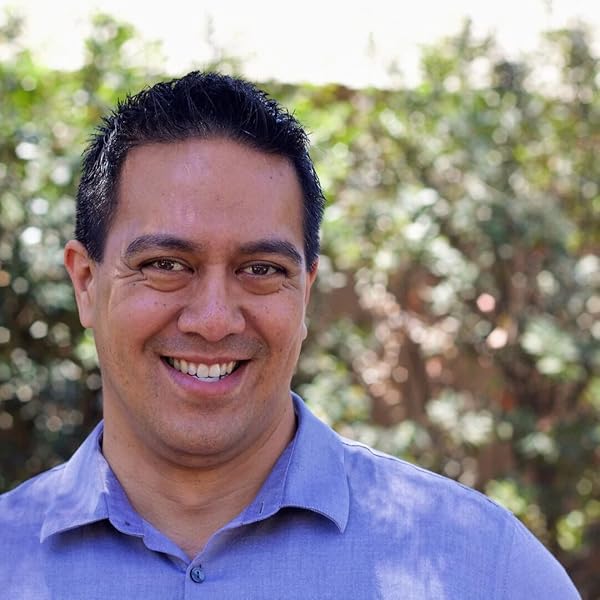
Mahalo Does Not Mean Trash follows a family who shares Hawaii’s culture and traditions with a relative who is visiting from California. What was the inspiration for your story?
Born and raised in the middle of the Pacific Ocean on the island of Oahu, my ancestors go back to the kings and queens of Hawai’i. After moving to California when my children were 1, 3 and 5 years old, I saw that my children weren’t learning their culture, their lineage and their language. As a father I needed to teach my children about their rich culture and the best way was through stories. This was a story I told them when they were still toddlers with each of them as the main characters. Who best to teach them this important cultural word and value than their grandparents who possess so much wisdom and love that needs to be passed down before they pass on.
What were some ideas that were important for you to share in this book?
Although this is a story focused on Mahalo (gratitude), you will find the other two most important Hawaiian words/values weaved throughout: Aloha (love) and Ohana (family). We wanted to take the reader(s) deeper into the Hawaiian language so that people can get a better understanding of what makes Hawaii so special. Understanding the true meaning of gratitude by breaking down the word MAHALO, we hope that you will gain a new appreciation for the power of gratitude. It’s our hope and prayer that this book will bring a new level of kindness and gratitude around the world.
What were some educational aspects that were important for you to include in this children’s book?
We wanted to use Pupu and Papa as the “teacher(s)” because most times parents are busy trying to teach their children reading, writing and arithmatic so they can do well in school, whereas grandparents can be a conduit for the “important” learning and loving that is so needed in this world we live in: be kind, be grateful, be a good person and leave things, people and places better than when you found them or they found you.
Thanks” or “thank you” is one of the most used phrases in our language and often times used out of habit without any thought. Because of this, the typical response to “thanks” is also usually thrown out without thought or consideration with phrases like, “no problem”, “any time” or “it was nothing”. By being haphazard about our response, we diminish the importance of the person’s gratitude. As we see in the book, when someone says “Mahalo” they are acknowledging your divine breath. Knowning the meaning of Mahalo should make you think twice about how you respond next time.
What is the next book that you are working on and when will it be available?
This is the first of three children’s books in our MAHALOHANA series that talks about the three greatest words in the Hawaiian Language: Mahalo, Aloha and Ohana. As we said earilier, this was one of the stories that I told my children when they were younger and now they feel it’s was time for us to share it with the world. The next book on Aloha (love) will be ready by February and the final children’s book on Ohana (family) will be available right before summer.
Author Links: GoodReads | Twitter | Website
Discover the significance of Mahalo, the sacred Hawaiian word for thanks, through the perspectives of three remarkable young authors!
Hiwa and Keao are introduced to their relative from California. Although his interpretation of ‘Mahalo’ is incorrect, it gets them to ponder the word’s meaning, and it will do the same for you!
This award winning children’s book is a heartwarming story about gratitude and the true meaning of this treasured Hawaiian tradition taught by pupu (grandma) to her mo’opuna (grandchildren).
Within this beautiful Hawaii book for kids and above, you will find:
✔Three Adorable Main Characters: Learning about their culture and how to be better human beings
✔Written By: AJ Paki Perkins and his three talented teenage children
✔Inspired by: Author’s Home State of Hawaii and its hospitable Culture
Learn Thankfulness with the Beauty of Aloha Islands
Interesting knowledge, amazing penmanship, and a fun-filled storyline to educate your kids and bond with them at the same time.
The kindness book for kids, ‘Mahalo Does Not Mean Trash,’ is here to be a source of both education and entertainment for your little ones. It is an inspiring story, brimming with the marvels of beautiful Hawaiian culture. In the Aloha state, Mahalo means ‘thank you,’ and using it is a wonderful way to demonstrate to your kids on how to show appreciation towards friends and loved ones.
Kindness, Compassion, and Connection to the Ancestors
‘Mahalo Does Not Mean Trash’ is not just any book for 4-year-olds. It is a recipe for kindness to be instilled upon growing minds.
You don’t even need to have ties to the Hawaiian culture to fall in love with this kid’s book about Hawaii. The uplifting message within, intertwined with a strong connection to ancestors and pure culture, will appeal to readers of every background or age.
Who knows? You could even pick up a few new Hawaiian words too!
A Priceless Literary Treasure and Token of Appreciation
An inspirational book for kids, written with care to distribute affection, with some hidden lessons for both young and old.
Great Birthday, Christmas, and Thanksgiving gifts for kids, if you are looking for something special this holiday season. This gratitude gift will definitely bring some aloha spirit into any home or classroom!
Learn About the Culture of the Gorgeous Aloha Islands
A fantastic opportunity to educate your children more about Hawaii!
This thanksgiving book for children delivers a beautiful narrative while also exposing youngsters to the Hawaiian language. If you’re planning a trip to Hawaii, it is an ideal read on the airplane, hotel room, or beach.
MORE ABOUT THE BOOK
Perks Publishing, LLC, was founded and is owned by the three siblings (ages 13, 15, and 17) who created the book with their father. The foreword is written by Lee Brower of ‘The Secret’ who talks about the Gratitude Rock.
He Then Spun A Tale Of Hidden Gold

White Sands Gold revolves around treasure, an ancient relic, and a mysterious group of guardians. What was the inspiration for the original and fascinating idea at the center of the book?
Inspiration came from a conversation with a friend of mine, who said, “I’ve got the idea for your next book.” He then spun a tale of hidden gold—thousands and thousands of bars underneath a mountain north of Las Cruces, New Mexico. He’d been exploring the area for years.
Me: “How’d this gold supposedly get there?”
Him: “No one knows for sure, but there are several different theories.”
Me: “When was this supposed to have happened?”
Him: “No one knows that, either, but legend says the gold’s been there a long time.”
Me: “How come no one’s found it?”
Him: “Folklore says someone did, and that fella brought some of the bars up in the 1930s. But he met an…untimely…death. No one’s seen anything since.”
Me: “Who shot him and why?”
Him: “Good question.”
So I went home and did an online search. When page after page about the fabled treasure popped up, I added a few twists, like a mysterious religious relic that’s also been there for centuries, conjured up a shadowy group of guardians, crafted some of my favorite characters, and had my next western mystery, White Sands Gold, set in New Mexico Territory, 1890. The novel has won three awards to date.
Why choose this place and time for the setting of the story?
The legend of gold bars revolves around Victorio Peak, north of Las Cruces. And I always set my western mysteries in late 19th Century America, a time in our history that fascinates me.
What kind of research did you do for this novel to ensure you captured the essence of the story’s theme?
That was some of the most fun. There are so many references to this legend online, and I enjoyed picking my way through them. I also visited the area to get an idea of what the land looked like. The land would not support ranching today, but 150 years ago it was fertile enough that it supported herds of cattle.
Looks like the legend may never be solved, either, as the Army has expanded White Sands Missile Range to include Victorio, so today’s would-be treasure hunters will have to try to dodge the Government.
What is the next book that you are working on and when will it be available?
My editor at The Wild Rose Press has my next story now. Fireflies at Dusk, my first non-western, is a coming-of-age tale about a young man’s struggles, set just prior to and during the Civil War. A budding romance and a pacifist thread add compelling twists.
Author Links: GoodReads | Twitter | Facebook | Website
In a hidden cavern, a treasure trove of gold sits alongside an ancient relic.
To find her treasure-hunting brother, Lottie Durham enlists the help of an easygoing lawman. When a mysterious woman known only as Ma asks her to join the relic’s guardians, Lottie’s world spins. Should she take on this solemn obligation?
Twill, leader of the mysterious guardians, has sworn a vow to protect the centuries-old religious relic. Regrets bedevil him and his dedication to his oath is repeatedly tested. If he breaks his promise, he’ll fail Ma, the one person he’s never wanted to let down.
Will a looming raid by a band of determined killers be the end of the guardians, the gold, and the relic?
Dig, Then Dig Some More
They Stole the Packers! Film at Six! follows a rookie reporter who is plunged into the fast-paced world of old-fashioned news reporting when the Green Bay Packers are sold. What was the inspiration for the setup of your story?
Dismay at the constant splatter of dis- and mis- information. Back 30 to 50 years ago the media (mainstream, not the National Enquirer), worked hard to get the facts right. They had their failures, but most of the time the quality of info was good. Today, you no longer need a transmitter tower, a bank of printing presses or a news team to disseminate information. Any joker with a keyboard can do it.
So, the job of quality control has shifted from the senders of information, to the receivers. Thankfully, high schools are beginning to teach “news literacy,” sussing out doctored photos and conspiracy theories.
I imagine my readers visualizing a backdrop while paging through the book – a blurry panoramic of today’s social media and cable news. Against this backdrop pops out the good practices of reporters and editors in the 1970s, who did the quality control on information for us. This book gently suggests quality control on today’s fizz of information – is now the work we have to do on our own.
Terry Lawton is an interesting character. What were some driving ideals behind your character’s development?
Work hard, work smart. Dig, then dig some more. Have the discipline to always tell both sides of the story. Try to tell stories that help people.
What were some themes that were important for you to explore in this book?
Never take things at face value. Always challenge your assumptions about an event, and look at it from different angles. If there are misunderstandings, work to set the record straight.
Even if you spent a lot of time creating a news story, and burned a lot of film . . . throw it in the trash bin if it ends up untrue or hurtful. Resist the temptation to broadcast something entertaining, like name-calling, even if it would help ratings. Throw it in the bin.
What is the next book that you are working on and when will it be available?
A theological science fiction, due in late 2023, after which I will be placed on a rocket sled to hell.
Author Links: Amazon | Website
Crawling inside the story is an “old school” journalist, who shows how news was done before it got dropped into a blur of Internet memes and conspiracy theories.
In this lively historical fiction, Terry Lawton produces TV news using 1970s methodology – before cell phones, before the Internet and before “trolling.”
The young reporter investigates the worst nightmare of Green Bay – the sale of the Green Bay Packers and the team’s move out of the city. In this novel, he meets the colorful characters of northern Wisconsin, weeding out the weirdness, trying to get his stories right. A nostalgic and playful look at the more careful information process of the early 1970s – an era before the “fast food” offerings of conspiracy and disinformation on social media.
So Many Incredible Stories

Sleeping With Lions: A Year in Tanzania shares your experiences in East Africa and your personal journey to rediscover who you are. Why was this an important book for you to write?
I love a good story, and there were so many incredible stories that I experienced during the year I lived in Tanzania. I wanted to share these experiences for many reasons—for example, to dispel misconceptions back home about what a year in Tanzania was actually like for me. More than anything, this is a valentine to my friends and family in Tanzania, especially the four Tanzanian priests who invited me to live with them. It is a unique love story centered on brotherly love. It was also important to write this book to celebrate Tanzanian thought, philosophy, culture and language. It was such a joyful, contemplative, and rich experience filled with wonderful people. I wanted to acknowledge and honor an incredible year in a beautiful place where I was surrounded by love, profound thought, natural wonders, and the best friends anyone could ever have. I wanted to share something optimistic and positive.
I appreciated the candid nature with which you told your story. What was the hardest thing for you to write about?
First of all, thank you. When I first started writing about these experiences, it was as a diary, so that is probably why it is so candid. Writing about my personal journey was the easy part; trying to capture the beauty and atmosphere of Tanzania was probably the hardest part. It is like when people share photos and say “this photo does not do the subject justice.” There is a reason Tanzania is such a popular adventure travel destination with Zanzibar, Mount Kilimanjaro, and The Serengeti Desert, but it is also so much more than that. The hardest part of writing about my year in Tanzania was truly capturing the beauty of the landscape, the culture, the languages, and the history. As happy as I am with the book, I still know that my writing did not do the country, or my friends there, justice.
What is one piece of advice someone gave you that changed your life?
It is funny because the one piece of advice that changed my life came from my mom who is not one to generally offer advice, and I am not one who is generally inclined to take it. Many years ago, noticing how I was struggling as a young, first-time mom and trying to still pursue my own dreams, she said: “You can do all the things you want in life, just not all at the same time.” It was one of the few times I have taken advice from anyone, but I am glad I did. She encouraged me to recognize different seasons in life and to prioritize my time. She added that the school where I taught could always replace me but my daughters could not. Although the culture around me was telling me I could “do it all,” my mom modified that by adding “…just not all at once.” She also repeatedly emphasized how quickly children grow up, something that is hard to recognize in the exhausting early years. Because of this, I prioritized early motherhood and my daughters. My mom was right: these years flew by, and I was able to continue with a career I love and reconnect with my own dreams later on. I hope this book reflects the appreciation for the seasons of life and this loving advice from my mom.
What do you hope is one thing readers take away from your story?
The one takeaway I hope readers will take to heart is to reconsider the cultural stereotypes and misconceptions about places in Africa like Tanzania. I hope readers come away with an enhanced understanding about the culture, history, and wonder of Tanzania. More than anything, I hope the voices of my Tanzanian friends and colleagues that I have tried to capture here will be amplified and show readers that there is a lot to learn from the Tanzanian way of life.
Author Links: GoodReads | Amazon
Living with four priests in Bukoba, Tanzania on the western shores of Lake Victoria, the author teaches at a small college and works closely alongside her research partner, a Kenyan linguist and poet. Throughout her year in Tanzania, she establishes new friendships and also travels throughout the country, visiting places like Kilwa, the Serengeti Desert and Zanzibar.
In this true story, Lee Anne McIlroy celebrates the rich cultural, historical, natural, and linguistic landscapes of Tanzania while reflecting on her own life, exploring what it means to be a mother, a woman, and most importantly, a human being in the modern world.



 LITERARY TITAN