Blog Archives
SET FREE


The existence of God is a subject that has been, and likely always will be, the focus of ongoing debate. It’s a question that neither logic nor evidence can definitively answer, leaving room for endless discussion. Yet, attempting to persuade someone of either side often proves fruitless. Belief in God, for many, is rooted not in rational argument but in a profound, immovable conviction. It’s these true believers who often navigate life with a clarity and purpose that those without a connection to the divine may find elusive.
In SET FREE, Sharon Crick explores this very idea through her deeply personal and inspiring journey. As both author and protagonist, she opens up about the many trials she has faced, while also sharing the story of her husband, Brian, a central figure in her life for over forty years. Crick recounts Brian’s turbulent upbringing in apartheid-era South Africa, where he battled addiction, spent time in a reformatory, and had run-ins with violent gangs. Her own experiences, though different, have been equally fraught with challenges. While one might attribute their meeting to mere chance, Crick makes it clear that she sees their union as divinely orchestrated.
Though a relatively short read, SET FREE is filled with emotional depth. Crick’s story, and that of her husband, resonate with themes of redemption, faith, and resilience. The love they share and their unwavering connection to a higher power are the anchors that have guided them through life’s many hardships. Even for those who don’t share their beliefs, the narrative offers something universally relatable: the power of love, commitment, and the search for meaning.
In the end, Sharon Crick’s memoir transcends the boundaries of faith. A truly compelling story, as this one proves to be, speaks to readers regardless of their spiritual inclinations. SET FREE is one such tale—heartfelt, sincere, and undeniably moving.
Pages: 146 | ISBN : 978-1923087323

Shadows of Our Past

Revisiting the Depths shares with readers your story of self-discovery, healing, and transformation when, after thirty years, you take a chance to overcome your fears and start diving again. Why was this an important book for you to write?
Revisiting the Depths isn’t just a story about diving; it’s a journey back to the core of who I am. After three decades, I chose to confront the fears that had held me captive for so long. It was a chance to reclaim a part of myself I thought I had lost forever. This book is my way of understanding that healing is a journey, not a destination. I wrote it as a reminder—to myself and to others—that it’s never too late to confront the shadows of our past, find peace, and connect more deeply with our true selves. Writing this book was an act of courage, but above all, it was an act of love—love for oneself, love for others, and love for the natural world that sustains us all.
What was the hardest thing for you to write about?
The hardest part of writing Revisiting the Depths was reliving a harrowing memory from my PADI Open Water Certification, where I knelt fifty feet underwater, stripped of my equipment, feeling vulnerable and isolated in the vast emptiness of the sea. Confronting the sensation of being utterly alone, with no instructor in sight, I had to face my deepest fears and admit my vulnerability. This raw honesty, though painful, was liberating. By acknowledging my fears, I began to disarm them, each sentence a step towards reclaiming a lost part of myself. Through this painful process, I discovered a deeper strength, transforming fear into a powerful force for healing and self-discovery.
What were some ideas that were important for you to share in this book?
There were several ideas I felt compelled to share. First, fear is not something to be ashamed of; it’s a universal experience, and while it can be paralyzing, we have the choice to let it propel us forward. Facing fear requires patience, compassion, and courage.
Second, I emphasized self-discovery, showing that embracing change is essential for personal growth. Life constantly changes, and so do we. By being open to these changes, we allow ourselves to grow and evolve.
Third, I highlighted the healing power of nature, particularly the ocean, where I found a sense of clarity and peace. Our natural environment is not merely a setting we move through; it is a living, breathing entity that nurtures and sustains us, providing a deep sense of calm and perspective. We have a responsibility to protect this environment, not only for ourselves, but for future generations. In doing so, we honor the intricate web of life that connects us all, ensuring that nature’s healing and wisdom continue to enrich us, and that its beauty remains for us and our future generations to marvel at.
What do you hope is one thing readers take away from your story?
My wish for readers of Revisiting the Depths is that they find a companion in their own journeys. I aim to offer them a sense of connection and understanding, letting them know they are not alone in facing fear, uncertainty, and personal growth. Through the experiences and lessons shared in the book, I aspire to bring them comfort, encouragement, and a renewed sense of strength. I hope readers will walk away with the belief that they, too, can overcome their challenges and discover the peace and fulfillment that comes from embracing life’s depths, both the beautiful and the difficult.
Author Links: GoodReads | Website | Amazon
Dive into Revisiting the Depths, where an award-winning memoir meets self-help in a powerful narrative of healing and personal transformation. This inspiring journey delves deep into the heart of fear and struggle, leading to resilience, peace, and self-discovery.
In Revisiting the Depths: Overcoming Fear and Finding Peace – A Journey of Transformation, award-winning author Amy Tan takes readers on an extraordinary journey of self-discovery, healing, and transformation. After a harrowing first dive experience leaves Amy paralyzed by fear and anxiety, she spends decades avoiding the ocean that once captivated her. Thirty years later, driven by a yearning to conquer her past and reconnect with the underwater world, Amy faces her deepest fears head-on. What begins as a quest to rediscover her passion for diving quickly becomes a profound journey of personal growth and healing.
Set against the breathtaking backdrop of Tioman Island, this award-winning memoir chronicles Amy’s emotional and spiritual journey as she navigates the underwater world. With vivid descriptions and heartfelt reflections, Amy shares her experiences of overcoming personal obstacles, finding solace in nature, and reconnecting with her true self.
Guided by her compassionate divemaster, Sebastian, and supported by her loving husband, Amy learns to trust herself and embrace vulnerability. Each dive becomes a metaphor for life’s challenges, offering lessons in resilience, courage, and the beauty of stepping out of one’s comfort zone.
Revisiting the Depths is more than a memoir; it is a testament to the transformative power of nature and the enduring strength of the human spirit. Amy’s story will inspire readers to confront their fears, seek peace in the natural world, and embark on their own journeys of self-discovery and healing.
Join Amy Tan on this unforgettable journey beneath the waves. Dive into Revisiting the Depths: Overcoming Fear and Finding Peace – A Journey of Transformation today and discover the profound lessons that await in the depths of the ocean.
Freeing Teresa: A True Story about My Sister and Me (Audiobook)
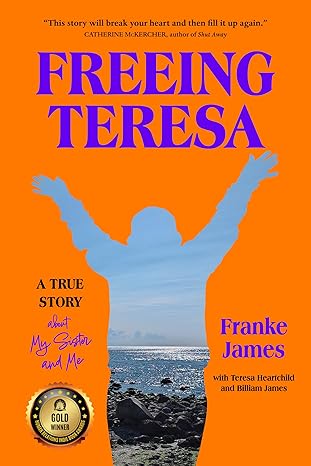
What would you do to defend your youngest sister or brother? This was the case with Teresa Heartchild and her loved ones. The fate of Teresa, a woman with Down Syndrome, is at the heart of her sister Franke James’ moving audiobook Freeing Teresa: A True Story About My Sister and Me. The rights of the disabled, the fight to preserve personal freedoms, and James’ determination to provide a fulfilling life are at the core of this exceptional memoir.
As an audiobook, Freeing Teresa ranks among the most unique in that it utilizes multiple narrators throughout. With a full cast of 13 actors, two of whom have Down Syndrome, this audiobook offers listeners an authentic experience worthy of multiple listens. Having a different narrator for each family member creates smooth transitions within dialogues and allows readers to more readily visualize scenes. James’ cast of actors helps emphasize some of the most harrowing times in the family’s life, breathing life into a story much less impactful with a single narrator.
Franke James does what many people are afraid to do–she stands strong in the face of every obstacle thrown her way as she tries desperately to do what is best for both her sister and her elderly father. When their futures hang in the balance and her siblings’ ideas of long-term care don’t meet Teresa’s needs and their parents’ wishes, she uses every tool at her disposal to ensure Teresa’s life will be filled with opportunity and growth for years to come.
The experience James shares in her incredibly detailed and heartfelt memoir is one from which countless families can benefit. Her focus on personal freedoms is a theme throughout the audiobook, and she makes it clear to listeners that they have options when it comes to the care of their loved ones. I more than appreciate James’ openness and her willingness to share the most vulnerable and painful time in her life with readers.
I am giving Freeing Teresa: A True Story About My Sister and Me, by Franke James, Teresa Heartchild, and Billiam James, a resounding 5 out of 5 stars. Readers looking for a touching memoir that offers invaluable advice on seeking long-term care and planning appropriately for the future will be hard-pressed to find a more lovingly written and thoughtful resource. I highly recommend this work of heart to anyone with a parent, sibling, or child who will ultimately face a portion of their lifetime without their family by their side.
Pages: 346 | ASIN : B0CJWXVFP3
GenX at Its Best

Be Good, Stay Strong, Love, Dad: A GenX Dad in a Digital World is a collection of heartfelt letters from a father to his sons as they venture into adulthood, sharing life lessons, personal anecdotes, and your reflections from the perspective of growing up as GenX. Why was this an important book for you to write?
Hi folks, it’s the author here. So, a guy in the back is asking why this was an important book for me to write. Lemme address this real quick.
Sir, the truth is, I never intended my personal letters to my boys to become a book. I’m a quiet guy. I had aspired once to be a writer, but that lacked practicality and this stuff was personal. Plus, I had a real job that actually paid real money to go to.
I guess a little background is in order here. The male role models in my formative years were old school. By that, I mean “Pipe down and rub some salt on it” old school. These guys had seen a lot and knew even more. And they never talked about it. Why? Men. That’s why. Loose lips sink ships.
Men in those days didn’t give advice. They paused, leaned back on some very old and scary species of industrial machinery, wiped their hands on a red rag cold with kerosine, considered your issue, and gave not advice but instruction. You didn’t get a politically correct filtered monolog. You just got instruction, and you only got that if you had the balls to approach their grumpy hides in the first place. Sometimes, if you were lucky, you got a backstory.
What’s that? You’d like an example, sir? Only if the group agrees. Folks?
Ok. Here’s a witnessed illustration of young GenX in the workplace. First off, everybody had a nickname, a lot of us had industrial jobs, the school of hard knocks was a thing…
So, Slop thinks he’s come up with a nifty hack to limit his exposure to free-flowing carcinogens during a machine cleaning process. He approaches the foreman Big Puddin’ to tout his idea. Big Puddin’ throws his machine into neutral, grabs his rag, cleans his ear, and hollers across the shop floor.
“Yo Jungle! Juuunnngle! Yo! You remember the time when Smokeshow cleaned the Chief’s ink system with a paintbrush? Well, Slopper here……he wants to try the same thing!”
“Yeah, Pud. I remember ol’ Smokeshow. He was a pisser! We still got his thumb hanging next to the dartboard. Quack found it a few days after the paintbrush trick.”
That’s how we learned.
Now back to business.
GenX was the last generation to have their global outlook, work ethic, and communities forged by prior generations who built and fought for what we have today with their brains and bare hands. These folks never felt like they were owed anything. They built their lives and families and their communities. They fought to protect and grow them in security.
Those lessons are being lost to time and it scares me what is forming our kids these days.
I wanted to translate some of that hard-won knowledge to my boys who, while exposed to plenty, still needed reminding of what was necessary to be a safe, productive, and viable citizen in a world softening before our very eyes and letters were my vehicle.
It turns out my letters documented 2 young people, on their own, each forging a novel path to their own concepts of happiness and success. Using old-school skills. Today, I see people struggling for a purpose let alone a path toward a goal. If this book might provide that path, that’s what makes this book important.
Thank you for the question.
What were some ideas that were important for you to share in this book?
Oh geeze, I mean the book is full of ideas of all sorts; good, nice, funny, highly questionable, downright bad. Suffice it to say that more hard topics, life cheats and uncensored boy humor are highlighted than Granny can shake her stick at. Everyone will likely walk away with something different but helpful in the game.
Allow me to pull a direct quote from a letter to my son while he was away at the military academy.
“I didn’t raise you guys to be victims, sad do-nuthins, or mean-spirited dicks. I raised you to be nice, smart, happy, and helpful.”
I was lucky. They listened. They worked hard. They won. If I could relay the information that hopefully had a hand in making the lives of my boys happy and productive to new generations of parents and kids in general……why not? That’s the idea anyway. The above sounds a little pompous so let me set the bar here. The information in this book making these kids happier was not mystical, cosmic truths, but things like not getting your ass splashed in a Port-o-Jon. GenX at its best. Don’t expect nonsense.
What was the most challenging part of writing your book, and what was the most rewarding?
Holy cow, the guy in back has a lot on his mind. Sir, you asked about the most challenging and rewarding aspects of the book. Let’s start with this.
The reason men don’t talk is the fact that words have repercussions beyond our limited sight. And we’ve all been bit. We wanna be careful. That was the challenge. Honesty is a stone bastard, and I knew releasing this book would be sad to some and flammable to others. More importantly, could there be any future repercussions for my family and friends? In this algorithm, did the downside outweigh any potential benefit? It almost did.
I decided to give my boys and my spouse complete autonomy of deletion, 90 days to read it and consider things from their future perspective. At the end of the process, very little was touched. I would release the book and stand in the face of any blow-back negative or positive and weather the results. Like a man. After all, I gotta believe love and humor will always win the day.
Rewards? Hell, I’ve already won. I hope to see laughter and nods of understanding when others read the book.
Can I get a glass of water?
What do you hope is one thing readers take away from your story?
Let’s make this the final report. The lumbago’s acting up sitting in this church chair under these lights.
One thing, huh. Well, you’ll see in the book that GenX has many talents in many areas. Cutting to the chase is one of them. There’s a final bullet in my personal Code. It’s a couple lines from a letter I sent to Mike away on a deployment, they read.
“It’s easy to be alone and sad. In fact, it doesn’t take any work at all to be a victim. It takes work to be a productive citizen.”
This was a lesson learned and practiced by my kids to their personal benefit and the benefit of their communities. If I can have a new generation of kids learn how not to get their keisters splashed in a Porta Potti? Well, that’s my hope.
Thank you all for your attention.
Now does somebody have a winch to get me outta this chair?
Author Links: GoodReads | Facebook | Amazon
Are you lucky enough to be born between 1965 and 1980? You know who you are. The MTV Generation, The Free-Range Generation, The Forgotten Generation. The last generation to have lived without an email address, a cell phone or a script.
Welcome Generation X!
We were the last generation of undocumented fun. We remember it very well. How? The scars remind us. GenX learned about life early and usually the hard way. GenX is resilient, brilliant, broken, and beautiful. We’re also supremely efficient, scary observant, and quietly calculating. We know at least a dozen places where they will never, ever find you. We know things that our kids and their kids need to know but no one today has the balls to tell them.
Born of personal letters from a GenX father to his sons arrives Be Good, Stay Strong, Love, Dad. This compendium of letters, lyrics and stories relays the lessons learned in our GenX environment and provides valuable information necessary for a smoother ride through life. These are lessons delivered in the hilarious reflection of 2 boys growing up. Be prepared for irreverent life precepts, candid reflection, bold stances, potty humor, and a whole bunch of cusswords. This is GenX. This is Fatherhood. Don’t say you weren’t warned.
Living with Trauma, Finding the Light Again

In her memoir Living with Trauma, Finding the Light Again, M. Struemph courageously recounts her life’s journey, the highs, the lows, and the deeply unsettling. After dedicating 32 years of service to the U.S. military, a career spent protecting others, Struemph was tragically unprepared for the danger that lurked within the very institution she served. Her memoir sheds a stark light on the pervasive issue of sexual abuse in the military, a hidden scourge that thrives in the shadows. Struemph’s story is not only a testament to her own resilience but also a call to action for addressing the trauma, fear, and silence that often surrounds these heinous acts.
Beginning at her retirement party, Struemph pours her heart into every page, vividly capturing her mixed emotions. We feel her sense of relief at closing one chapter of her life but also her deep anguish as memories of her predator and the abuse she endured resurface. The narrative is powerfully personal, and each chapter is carefully crafted to draw readers into her world. Though we may not know her personally, Struemph’s writing fosters an intimacy that makes us feel like trusted confidants entrusted with her deepest truths. The book also offers a sobering look at the latest statistics on sexual assault within the U.S. military. The numbers reveal a disturbing rise in cases, with women, in particular, bearing the brunt of these assaults. Although male soldiers are also affected, it is female service members who are most often targeted. These revelations are both unsurprising and devastating, forcing readers to confront the painful reality of systemic abuse. As someone unfamiliar with this issue before reading Struemph’s account, I found myself questioning what other injustices remain hidden behind institutional walls, and who will step up to fight for the victims. I deeply admire Struemph for her bravery in sharing her story, especially under her real name, despite initial fears. Her courage is a beacon of hope for others who may be suffering in silence. For anyone who has experienced trauma, Struemph’s message is clear: you are not alone, and healing is possible. Though trauma can weigh heavily on us, it does not define us—we have the strength to reclaim our lives and find joy again.
I highly recommend this memoir, Living with Trauma, Finding the Light Again, to those seeking a deeper understanding of the realities of sexual abuse in the military, as well as to survivors of assault. However, for those who have experienced similar trauma, be mindful that parts of this book may be triggering. Struemph’s story is not an easy read, but it is an essential one, shedding light on a dark corner of our world that too often remains unseen.
Pages: 404 | ASIN : B0D6WJ2W6P
How to Rewrite Our Lives
Willower: Rewriting Life After Unimaginable Loss is a heartfelt memoir that delves into the complexities of loss, grief, and resilience, sharing the emotional journey surrounding the tragic death of your son and the toll this unimaginable loss takes on you and the family. Why was this an important book for you to write?
Writing this book was something I needed to do to stay connected to Sam and keep his memory alive. And, writing was a necessary distraction for me, which I later learned. For hours at a time, while concentrating on writing how I was processing and reshaping my loss and grief I was finding some relief from it. I know it seems counterintuitive to write about loss and grief as a way of escaping it, but I came to realize that’s what I was doing. Day after day, year after year, trying to grasp reality, searching for answers and meaning—even if I had to construct my own, creating and crafting this book, then finishing and publishing it is what gave me a focus, a purpose, a reason to live.
What were some ideas that were important for you to share in this book?
One idea was that grieving the death of your child and relearning to live without them, is an unpredictable and lifelong readjustment process.
Another key idea I wanted to get across was that eventually, in time, you do learn to live with the weight of your loss.
But I think the most important idea I wanted to share was that as we migrate through our grief, all we can do is learn how to rewrite our lives and reimagine our stories, the ones we tell ourselves so that we can keep going. As Sam told me in my book’s last chapter: “Imagine the rest, Mommy. And remember, the letters are magic.”
What was the most challenging part of writing your memoir and what was the most rewarding?
The most challenging part of writing this memoir was learning how to write—and then how to write a memoir. After five years of work, I’d sent my “finished draft” to an editor who told me it was a good “first draft.” I was devastated, but learned so much from that experience. I kept at it, the rewriting. Like I said earlier, focusing on this book, on finishing it, is what gave me a purpose, a reason to live. Eleven years later, after taking writing classes, working with a writing coach, and hiring an editor again, my “finished draft” turned out to be my “final draft.”
The most rewarding part of writing this memoir was the magic I experienced while writing the dialogue with Sam. For anyone who’s grieving, I’d recommend—after enough time has passed, and you feel up to it—writing dialogue, a back-and-forth, with your deceased loved one.
What do you hope is one thing readers take away from your story?
After experiencing my story, I hope the reader feels more hopeful and less alone in their grief.
Author Links: GoodReads | Facebook | Website | Amazon
On April 30, 2007, Deanna Kassenoff experienced a parent’s worst nightmare when her nine-year-old son, Sam, collapsed on the playground at school and died from sudden cardiac arrest. Drowning in grief, considering ways to end her own life, Deanna was faced with a choice: give up or rewrite her story, one with a different ending.
A Finalist in the 18th Annual National Indie Excellence® Awards, Willower is a book about using the power of story and imagination to survive the unimaginable. It is the story of a bereaved mother’s urgent quest to find a way to stay connected with her beautiful boy.
Deanna Kassenoff’s memoir takes us into an unfathomable world of the most profound and permanently disorienting experiences: the sudden death of a child. Determined to find meaning in the details of her son’s life, Deanna shows us how it is sometimes our lunacy that pulls us through grief back to living again. Written with stunning honesty, intensity, and eloquence, Willower is an unforgettable and heartbreaking demonstration of the endurance it takes to grieve and the courage it takes to live. This thoughtful and lyrical narrative will change you and stay with you forever.
We use the words widow, widower, and orphan, but there is no word in our vocabulary that identifies the bereaved parent. So, Deanna coined the term willower®. From the words willow, a weeping tree that symbolizes deep mourning; and willpower, that creative source within that provides the superhuman strength and determination it takes to continue on—despite unimaginable loss.
How We Tell the Story

Landed: A yogi’s memoir in pieces & poses is a deeply personal exploration of identity, culture, and the search for belonging. Why was this an important book for you to write?
I’ve been writing about identity, culture, home, and the search for belonging for years. It was as if I was obsessed or possessed. I wrote in longform narrative, personal essay, compression, flash, circular structure, acrostic, prose poem, you name it. Writing it in full, in book-length form, helped get it out of my system. To see my way to the finish line. To take the final steps in my journey from point A to point B and to move on, beyond.
What were some ideas that were important for you to share in this book?
Shortly after returning to Israel in 2011, I began a blog called Open to Israel for my yoga students, family, and friends in the US, Jewish and not Jewish. I wrote about celebrating the holidays, about sending my son to the army, about voting in my first election, about navigating the bureaucracy. I wanted to show what life was like here in this tiny, complicated, misunderstood country. The more I wrote, the more I sensed my mission: to show life in Israel for people who don’t know or understand its complexities, its history, its importance, and its presence. To show, as Martha Engber writes in her review of my book, the lightness, darkness, and in between rainbow colors.
In addition, I write about change and choice, freedom, and selfhood. There is so much we cannot control in the world, but we do control how we tell the story.
What was the most challenging part of writing your memoir and what was the most rewarding?
Hands down, the structure was the most challenging part of this book. The story of my seven-year journey written in seven long sections—in present, past, and [yoga] poses—was obvious because seven is significant in both yoga and Judaism. I chose to tell the narrative in present tense and through poses but jumped back in time, in the past tense (indicated with year and place), thematically. Between each of the seven-year sections is a short scene about learning the seven chakras or spiritual energy channels in yoga, beginning from the root/pelvis and ending at the crown of the head, as learned in class with my first teacher, Rodney Yee, in Oakland, California circa 1996. I was convinced the structure could be the death of the manuscript and wasn’t sure how to revamp it.
After Vine Leaves Press sent me an offer of publication, I felt understood, seen, and validated. That seemingly convoluted structure was redeemed. My greatest reward. It worked.
What do you hope is one thing readers take away from your story?
Decades ago, when working in Paris and immersing myself in French, I learned the idiomatic expression “être bien dans sa peau,” literally translated as to be comfortable in one’s skin. At some point in my intense, new relationship with a Frenchman, I lost my sense of self. Only 23, I lost my way, my voice, my identity. And from that point on, I no longer felt comfortable in my own skin.
Home is a given for many people. But for me, it felt shaky. My one takeaway for readers is how important it is to stay true to yourself, your core, your home.
On a side note, I want to share that in today’s world—a completely different one from when I started writing about Israel—I sign my emails with “The region where I live is fragile. Please treat my words with care.” Thank you for reading my work.
Author Links: GoodReads | Facebook | Website | Amazon
American-born Jennifer traces her journey—both on and off the yoga mat—reckoning with her adopted country (Israel), midlife hormones (merciless), cross-cultural marriage (to a Frenchman) and their imminent empty nest (a mixed blessing), eventually realizing the words her yoga teachers had been offering for the past twenty-three years: root down into the ground and stay true to yourself. Finally, she understands that home is about who you are, not where you live. Written in experimental chapterettes, Landed spans seven years (and then some), each punctuated with chakra wisdom from nationally-acclaimed Rodney Yee, her first teacher.
Freeing Teresa: A True Story about My Sister and Me

Freeing Teresa: A True Story About My Sister and Me by Franke James is a powerful and deeply emotional account of familial conflict and the fight for autonomy. Franke James, a lifelong environmental activist, channels her compassion and determination into a new, more personal battle—one that involves her beloved sister, Teresa. Teresa, who has Down’s Syndrome, is placed in a facility for end-of-life care by their siblings, despite her protests. Against her will, she finds herself confined, her freedom stripped away. Franke, standing as her sole advocate, must now confront not only her own family but also the medical system and law enforcement, all of whom seem complicit in keeping Teresa imprisoned. Together, the sisters must face overwhelming odds if Teresa is ever to reclaim her independence.
This true account, written in a gripping narrative style, tells the story of love, loyalty, and resistance in the face of injustice. At its core, Freeing Teresa is about the bond between two sisters—Franke, fiercely protective, and Teresa, determined to live life on her own terms. Their relationship is touching, genuine, and filled with heart, making the story all the more compelling. However, this is also a deeply unsettling tale, as Franke exposes the cold indifference of their other siblings, who seem intent on ignoring Teresa’s wishes, viewing her condition as justification for stripping away her autonomy.
The book highlights the troubling ease with which authority figures—police, medical professionals, and caregivers—dismiss the desires of individuals with disabilities. Teresa’s battle for the right to live in a way that reflects her own choices becomes a larger critique of a system that too often prioritizes convenience over compassion. With her siblings’ tacit approval, these authorities confine Teresa, ignoring her pleas. James deftly draws readers into Teresa’s frustration and despair, making it easy to empathize with her plight. It’s a sobering reflection on how those with disabilities can be silenced and marginalized, even by those who should be their closest protectors.
What sets Freeing Teresa apart is its emotional intensity. Family disputes are never easy, but the stakes here feel especially high. The cruelty Teresa endures is heart-wrenching, and the story doesn’t shy away from exploring the complexities of sibling relationships. Yet, amidst the darkness, the love between Franke and Teresa shines brightly. This bond is the heart of the book, offering hope and resilience even in the face of adversity.
Freeing Teresa is a testament to the power of love and advocacy. Teresa’s fight for freedom is Franke’s fight, too, and through their shared journey, readers are reminded of the importance of standing up for those whose voices are too often drowned out.
Pages: 344 | ISBN: 1999406109



 LITERARY TITAN