Blog Archives
Bombs, Bacon, and Bankruptcy: The Art of Crisis Leadership


Henry J. Evans’s Bombs, Bacon, and Bankruptcy is a practical guide to leading when events are moving quickly, reliable information is scarce, and people’s emotions are running high. Evans draws on more than two decades of national security work, executive coaching, and business consulting to explain how crisis leadership differs from everyday management. His central idea is straightforward: effective leaders prepare before trouble arrives, steady themselves when it does, and help their teams make the best possible decisions with the information available. The result is a book that feels less like a leadership lecture and more like a candid conversation with someone who’s spent years working through complicated, high-pressure situations.
The book gets much of its energy from three extended case studies. “Bombs” follows the long effort to combat improvised explosive devices in Iraq and Afghanistan. “Bacon” examines how a grocery chain kept employees working, shelves stocked, and long-term improvements moving during the COVID-19 pandemic. “Bankruptcy” tells the painful story of a manufacturing company that collapsed after its founder’s sudden death and his grieving widow’s decision to take control. Together, these stories give the book an unusually broad range. Evans can move from counterterrorism technology to supermarket logistics to a family business in financial distress without losing sight of the same basic questions: Who should make the decision? What needs attention first? How do you keep fear, ego, and old habits from taking over?
Evans is adept at turning complicated leadership problems into memorable tools. He explains how to ground yourself before calming a team, distinguish between incubating and acute threats, combine analytical intelligence with human intuition, narrow priorities, and decide when to keep following a plan or change course. His advice on accountability and emotional safety is one of the book’s strongest sections because he treats them as complementary rather than competing values. People need to feel safe enough to deliver bad news, but they also need to own their commitments and results. The line “Your job as a crisis leader isn’t to make the right decision; it’s to guide the team to the best possible decision based on the information you have at that time” neatly captures the book’s practical and humane approach.
The conversational style makes the material approachable, although Evans occasionally revisits an idea after it has already landed, and some of the branded frameworks can make the later chapters feel more like a leadership workshop than a continuous narrative. Still, the repetition usually serves a purpose: these are concepts meant to be recalled when clear thinking is difficult. Evans’s strongest message is that crisis leadership is a learned practice, not a rare talent reserved for generals, CEOs, or superheroes. His counterterrorism team’s mantra, “Give the bad guys a bad day, every day,” is memorable because it turns an enormous mission into a focused daily task. That same emphasis on taking the next useful action makes Bombs, Bacon, and Bankruptcy a grounded, engaging book for anyone responsible for helping people move through uncertainty.
Pages: 256 | ISBN : 978-1637749906

A Regulation Pathway

The C.L.A.R.I.F.Y. System offers a practical framework to pause, reset, and lead with intention instead of urgency. The seven principles move in a deliberate sequence. How did you determine that order, and how do they build on one another?
The order wasn’t random and it was determined through real-life patterns.
I began to notice that people weren’t struggling because they lacked capability… they were struggling because they were responding out of sequence.
- They were trying to focus before they had clarity.
- They were trying to act before they had regulated.
- They were trying to lead without first listening.
So I built the framework in the order that actually works under pressure:
- Clarity grounds you in truth
- Listen slows you down enough to receive, not react
- Adjust creates flexibility instead of rigidity
- Reset gives you permission to recalibrate instead of spiral
- Integrity aligns your internal and external response
- Focus directs your energy where it actually matters
- Yield teaches you to release control, old habits, old mindsets, and trust the process.
Each step is dependent on the one before it.
You can’t sustainably focus if you haven’t reset.
You can’t operate in integrity if you haven’t adjusted your perspective.
And you can’t yield if you’ve never slowed down enough to listen.
That’s why I say this isn’t just a mindset framework; it’s a regulation pathway.
It teaches you how to move from impulse → to intention… every single time.
How do you distinguish between being busy and being effective?
Busy is movement.
Effective is alignment.
A lot of people are exhausted not because they’re doing too much but because they’re doing too much of what doesn’t actually matter.
Busy looks like:
- Constant urgency
- Reacting to everything
- Saying yes without clarity
- Measuring effort instead of outcomes
Effective looks like:
- Intentional decision-making
- Clear priorities
- Regulated responses
- Alignment between actions and desired outcomes
The key difference is this:
Busy people react to pressure.
Effective people regulate through it.
That’s why in The C.L.A.R.I.F.Y. System™, we don’t start with productivity; we start with awareness and regulation.
Because when you learn how to pause and process before you respond, you stop wasting energy on things that were never yours to carry in the first place.
How do you define integrity in a workplace context?
Integrity in the workplace is alignment between what you say, what you do, and the impact you create.
It’s not just about having good intentions or saying the right things in the moment. It’s about consistently following through, taking ownership, and ensuring that your actions reflect the standards you claim to uphold.
In a real-world work environment, integrity shows up in how you communicate, how you handle pressure, and how you respond when things don’t go as planned. It’s easy to operate in integrity when everything is smooth, but true integrity is revealed when there’s tension, deadlines, or competing priorities.
For me, integrity also means accountability without defensiveness. Being willing to acknowledge gaps, correct course, and move forward with intention.
At its core, workplace integrity builds trust, and trust is what drives collaboration, performance, and long-term success. Without it, even the best strategies fall apart.
So integrity isn’t a soft skill—it’s a strategic advantage.
What is the first shift you hope a reader makes after finishing the book?
The first shift is this:
From reacting automatically or irrationally… to responding intentionally.
Recognize. Regulate. Respond with intention.
That’s it.
Because once that shift happens, everything else changes.
I don’t expect readers to master all seven principles overnight.
But I do want them to pause differently.
To catch themselves in a moment and think:
- “What am I actually responding to right now?”
- “Is this pressure… or is this perception?”
- “Do I need to react or do I need to regulate first?”
That awareness alone is powerful.
Because the moment you interrupt your automatic response… you create space for a better one.
And that’s where true transformation begins.
Not in perfection.
Not in having all the answers.
But in choosing—moment by moment—to respond with intention.
Author Links: GoodReads | Facebook | Website | Amazon
But the way we respond inside them often is.
Miscommunication, burnout, and reactive decision-making don’t come from a lack of effort, they come from unclear thinking under pressure. In fast-paced environments, productivity suffers not because people aren’t capable, but because clarity, alignment, and intention are lost in the rush to perform.
The C.L.A.R.I.F.Y. System™ is a practical mindset framework designed to help individuals, leaders, and organizations pause, regulate, and respond with intention rather than reaction. Built around seven core principles — Clarity, Listen, Adjust, Reset, Integrity, Focus, and Yield — this system offers a structured approach to navigating complexity, strengthening communication, and restoring trust.
Rather than asking people to work harder, this framework helps teams work clearer and perform stronger. By removing friction, improving decision-making, and addressing the root causes of misalignment, The C.L.A.R.I.F.Y. System supports sustainable performance without sacrificing well-being.
Inside this book, you’ll learn how to:
• Recognize when pressure is driving reactive behavior
• Pause and reset before decisions escalate into dysfunction
• Strengthen communication without blame or defensiveness
• Release outdated habits that quietly undermine performance
• Lead yourself — and others — with clarity, focus, and integrity
Each principle is grounded in real-world application, making this book both reflective and practical. Readers are guided to reassess patterns, shift perspective, and apply the framework immediately in their work and leadership environments.
Designed for professionals across industries, The C.L.A.R.I.F.Y. System™ serves as a resource for:
• Leaders navigating complexity and change
• Teams seeking alignment and healthier dynamics
• Individuals ready to respond with intention instead of reaction
This is not a quick fix.
It’s a mindset shift — one that turns pressure into precision, and effort into meaningful progress.
The C.L.A.R.I.F.Y. System: A Mindset Framework for Healing the Workplace & Elevating Productivity

The C.L.A.R.I.F.Y. System is a workplace mindset book that tries to turn inner steadiness into outer effectiveness. Shae Pratcher structures it around seven linked practices, from Clarity and Listen through Adjust, Reset, Integrity, Focus, and Yield, and threads those ideas through an ongoing workplace narrative involving Jordan and Alex, two figures navigating lateness, strained check-ins, missed deadlines, brittle trust, scattered priorities, and finally the release of old habits and needless process. What I found most central is the book’s insistence that productivity usually breaks down before the spreadsheet ever shows it, in the small psychic moments where urgency outruns thought, fear distorts listening, or teams keep carrying procedures that no longer deserve the weight placed on them.
The book is not cynical about work, which is rarer than it should be, but it isn’t naively cheerful either. Pratcher keeps returning to the idea that a bad moment doesn’t have to become a bad day, and that struck me as both simple and honestly earned. I liked the recurring “Mindset Moments” for that reason. They give the book a human pulse. The sections on Reset and Integrity landed especially well for me. The image of Alex realizing that the words were technically right but the impact still felt diminishing is a sharp, recognizable truth about modern workplace speech, where people can hide behind intent and call it leadership. And the focus chapter, with Jordan feeling busy but not effective, names a particular kind of contemporary exhaustion with painful accuracy. I didn’t feel preached at there. I felt seen.
The book is earnest, polished, and structured well. Pratcher has a gift for compression. Lines like the notion that reaction feels efficient while reset is effective, or that focus removes waste rather than work, have the clean snap of phrases shaped to be remembered. The aviation frame and the lesson architecture give the book momentum, and the repeated Jordan and Alex scenario helps keep the ideas from floating off into abstraction. I admired the clarity of thought. The book doesn’t merely say “be better at work.” It argues, with consistency, that culture is built through ordinary responses, that boundaries are part of care rather than a retreat from it, and that yielding outdated beliefs or inherited processes may be the most mature move a team can make.
I found The C.L.A.R.I.F.Y. System thoughtful, sincere, and more grounded than a lot of workplace literature that talks endlessly about performance while barely acknowledging the emotional weather people are working inside. What it offers is a calm, usable vocabulary for people who are tired of chaos masquerading as professionalism. I’d recommend it most to managers, HR leaders, team leads, and individual contributors who are capable and conscientious but feel worn down by reactive cultures, fuzzy expectations, or the low-grade fatigue of carrying too much for too long. In the end, I came away feeling that the book’s greatest strength is its steady belief that clearer thinking can make work not just more productive, but more humane.
Pages: 120 | ASIN : B0GKT88P7R
Sustained Courage

The Price of Nice lays out a sharp argument that our cultural obsession with being “nice” keeps us stuck in cycles of false comfort and stalled progress that preserves the status quo at home, in workplaces, and across society. What is the Think–Feel–Do–Revisit framework, and how does it help people break the cycle of niceness?
The Think–Feel–Do–Revisit framework was born out of my work in behavioral communications, not theory for theory’s sake, but years of studying how people actually change.
In my professional work, we borrow heavily from sociology, psychology, and behavioral science to answer very practical questions: What do people believe? What do they feel? Who do they trust? And how does that shape what they will do, and keep doing? We know that behavior doesn’t change just because information is correct or presented. It changes when beliefs and emotions are addressed first.
What clicked for me is that those same tools apply individually, especially when it comes to niceness.
When people stay “nice” in moments that require courage, it’s rarely because they don’t know better. It’s because of what they’re thinking, often unconscious stories about risk or belonging, and what they’re feeling, fear, obligation, loyalty, or discomfort. Those two things quietly determine what they do, usually nothing, and then the cycle repeats.
This framework helps interrupt that pattern. It gives people a way to name what’s happening internally before defaulting to silence. By revisiting the outcome, they build awareness and agency over time. That’s how mindset shifts stick. Not through one brave moment, but through understanding and practicing behavior change on purpose.
What were some ideas that were important for you to share in this book?
One of the most important ideas I wanted to name is that niceness is not neutral.
Growing up and throughout my career, I was praised for being “easy,” “gracious,” and “not difficult.” But I realized those compliments often came up just as I was quietly absorbing harm. Niceness became a way for the system to stay comfortable while I paid the price.
I also wanted to challenge the idea that courage has to look loud or reckless. In the book, I introduce the idea of nerve as sustained courage. Not the big speech once, but the daily practice of choosing yourself, again and again, even when there’s pushback.
And finally, I wanted to make it clear that this isn’t about becoming harsh or cruel. It’s about replacing performative niceness with intentional kindness, the kind that takes action, tells the truth, and is willing to disrupt.
What is one thing you hope readers take away from The Price of Nice?
I hope readers walk away knowing that the discomfort they feel isn’t a personal failing. It’s often a signal that they’re outgrowing the rules they were given.
So many people, especially women and people of color, think they’re broken because being “nice” isn’t working anymore. What I want them to see is that their instincts are intact. They’re just bumping up against systems that rely on their silence.
If readers take away one thing, I hope it’s this: You’re not required to be palatable to be powerful. And choosing nerve doesn’t make you dangerous. It makes you daring.
Author Links: GoodReads | Website | LinkedIn | YouTube | Instagram | TikTok | Bluesky | Amazon
“What’s wrong with nice?!” A simple and powerful question. It demands we interrogate the unspoken rules that shape our lives, often without our realizing it.
“It costs nothing to be nice!” What a travesty of logic. Niceness is not free—it comes at a steep price. It’s a velvet glove over an iron fist, stifling dissent, prioritizing comfort over progress, and conditioning us to accept the status quo. Niceness is one of the most insidious social constructs, keeping us compliant, silent, and complicit in inequity. If we don’t question it, we stay exactly where power wants us—agreeable, easy to manage, and stuck.
The Price of Nice is about breaking free. Amira Barger deconstructs our cultural obsession with niceness, exposes its hidden costs, and offers a practical framework for real change. With sharp analysis and personal insight, she helps readers disrupt the narratives that keep them stuck and reclaim their power.
Guided by four dimensions rooted in social psychology—think, feel, do, revisit—this book offers immediate, adaptable practices for creating change. Because breaking free isn’t only what you know—it’s what you do next.
If you’re tired of “good enough,” this book will challenge you, change you, and call you to more.
Our Unfinished Selves

The Courage Gap explores fear and courage, walking readers through five steps to help them shift their focus, rewrite the stories they tell themselves, regulate fear, step into discomfort, and learn from the moments when things fall apart. Why was this an important book for you to write?
Because I’ve watched too many capable people—including myself—stay stuck in the space between knowing and doing. This wasn’t because we lacked the ability to take action but because our fear kept us stuck in place, distorting the risk-magnifying the danger of acting, minimizing the cost of staying put, and shrinking our courage to step forward and back ourselves fully.
Over 25 years coaching many diverse people across the world to meet their challenges and navigate change, I’ve heard countless versions of the same story: “I knew what I needed to do, but I couldn’t bring myself to do it.” The woman in the soul-draining job. The parent avoiding a hard conversation. The person with a dream who keeps finding reasons to wait.
What struck me wasn’t that people feel fear—we all do—but how often they mistake its source. They think they’re being prudent when they’re actually protecting their identity in some way, avoiding disapproval, or clinging to what’s familiar because it feels safer and less confronting than making a change.
Finally, I wrote this book because often we end up suffering more over time from not taking the brave action we know we should be taking than by risking what we fear. That suffering shows up in many forms – ongoing tension and hurt in relationships, the quiet ache of unfulfilled potential, roads not taken, words left unsaid. Right now, when everything feels uncertain, that gap has never been wider. This book offers a practical step-by-step path to move through it.
How did you come up with your five-step process for helping people reprogram their patterns of thought and behavior that are self-sabotaging?
By distilling a lot of research and insights from broad spheres as well as watching what actually worked—not just with clients, but in my own life when fear and doubt have grown really loud or when I’ve come to a moment and hesitated for fear of being ‘exposed’ as not wholly worthy of sufficient in some way. The five steps are a synthesis of research, and experience, and observing people who consistently lead brave and meaningful lives.
The people who closed their courage gap followed a pattern: They shifted focus from worst-case scenarios to what becomes impossible if they don’t act. They chose the mindset they would operate from, rewriting their stories—recognizing narratives about risk were often inherited or outdated. They regulated fear instead of waiting for it to disappear (it never does). They braved awkward moments we are wired to steer away from, and stepped into discomfort incrementally through small acts of bravery. And they learned from setbacks, seeing them as information rather than proof they shouldn’t have tried and made some semblance of peace with the fact that they are innately fallible and a ‘work in progress.’ As I wrote in the book, extending grace and compassion inward, forgiving our ‘unfinished selves’ is a foundational act of courage that can be profoundly transformative.
It’s not linear—it’s messy. But the sequence matters because you can’t regulate fear you haven’t acknowledged, and you can’t step into discomfort if you haven’t challenged the story that discomfort equals danger.
How can implementing the ideas in your book help shape better leaders and encourage growth?
The book helps anyone—leaders, parents, people in transition—close the gap between who they are and who they’re capable of becoming.
As I wrote in the book, sharing a story of my childhood on my parents’ farm, “Growth and comfort can’t ride the same horse.” That is, growth doesn’t happen without exertion or discomfort. It happens when you speak up with a shaky voice. When you try something new, knowing you might fail. When you have the difficult conversation instead of letting resentment build.
The book helps people distinguish between real dangers and magnified fears. Your brain evolved to overreact to threats, which kept ancestors alive, but now makes a tough conversation feel as dangerous as a physical threat. It makes starting something new feel riskier than staying in a situation that’s slowly diminishing you.
When you recognize that fear of judgment isn’t actual danger, or that doubt isn’t incompetence, you can take action despite fear rather than waiting for it to disappear.
For anyone leading—a team, a family, their own life—this matters because people become what they’re willing to confront. Those who act despite fear create environments where others feel permission to do the same. That permission to be imperfect while stepping forward? That’s how everyone grows.
What is one thing that you hope readers take away from your book?
That not only can anyone become a braver version of themselves, but that courage isn’t the absence of fear—it’s choosing to act while fear tags along.
Most people wait to feel brave before acting. But courage doesn’t work that way. You don’t eliminate fear; you change your relationship to it. You learn to distinguish between real dangers and magnified fears.
The shift I want readers to make:
When you ask “What’s the risk?” also ask “What’s the cost if I don’t act?”
That reframe—from “What could go wrong?” to “What will definitely go wrong if I don’t?”—unlocks stalled decisions, avoided conversations, deferred dreams.
I want readers to finish with a quiet push toward things they usually avoid. Not because fear disappeared, but because they realize staying stuck hurts more than stepping forward. The courage they think they lack isn’t something you’re born with—it’s something you build, one uncomfortable step at a time.
If readers take even one brave action they’ve been avoiding, that changes something fundamental. Not just for them, but for everyone who would benefit from them showing up more authentically and backing themselves more boldly – toward their bold goals but also in meeting their biggest challenges too. We all have them.
Author Links: GoodReads | Amazon
Fear creates the gap. Courage closes it.
This powerful guide from the bestselling author of You’ve Got This! cuts through the hype to connect the ‘why’ of courage to the ‘how’ of courage. Drawing on cutting-edge research woven together with stories that compel head andheart, The Courage Gap will help you bridge the think/do gap between what you’ve been doing and what you can do; between where you are and where you want to be—in your career, relationships, leadership, and life.
Distilling theory and hard-won wisdom spanning from Margie’s childhood in rural Australia to her decades of living around the world and coaching ‘insecure overachievers’ in Fortune 500 organizations, Margie shares a powerful 5-step roadmap to reprogram the self-protective patterns of thought and behavior that sabotage success to bring your bravest self to your biggest challenges and boldest vision.
At a time when courage seems in short supply, in a culture continually stoking insecurity and anxiety, this book will transform your deepest fears into a catalyst for your highest growth and the greatest good.
Applying the five steps will:
Ignite passion and unlock the potential fear holds dormant
Rewrite the scripts that have kept you stuck, stressed, and living too safely
Reset your ‘nervous’ system and embody courage in critical moments
Transform discomfort as a cue to step forward and expand your bandwidth for bold action
Reset your relationship to failure and make peace with the part of you that wimps out
For leaders, The Courage Gap provides a guide to operationalize and scale the courage mindset across your team and organization to deepen trust, dismantle silos, foster innovation, accelerate learning, and unleash collective courage toward a more secure and rewarding future.
The Art of Thinking Critically with Clarity for Optimal Health: Your Longevity Is Determined by How You Think!


The Art of Thinking Critically with Clarity for Optimal Health focuses on sharpening our thinking when it comes to our health. Author Jerome Puryear takes a practical approach, breaking down complex concepts into simple lessons on weighing choices, sorting through misinformation, and making decisions with both heart and reason. He explores ways biases cloud our judgment, how logic strengthens choices, and the tools like emotional intelligence and metacognition that can shape healthier outcomes. What makes it stick is the way he ties everything back to real life, choosing a doctor, weighing treatment options, or simply trying not to drown in endless health information.
Reading it, I felt both challenged and reassured. I appreciated Puryear’s clarity, never hiding behind jargon. Some parts felt a bit heavy with lists and frameworks, almost like a textbook, but that structure also made it easy to digest.
What really stood out for me was his honesty about how messy decision-making can be. He didn’t promise that critical thinking is a magic fix. Instead, he demonstrates that this is a skill we stumble through and build over time. That gave me a sense of relief. I felt less pressure to “get it right” every time. The sections on misinformation and bias also hit close to home for me. I caught myself thinking of moments where I’d trusted a headline or gone with my gut, only to regret it later.
I’d recommend The Art of Thinking Critically with Clarity for Optimal Health to anyone who feels overwhelmed by health choices or just wants to think more clearly day to day. It’s especially useful for people who prefer having a toolkit they can actually use, not just theory. If you want a guide that balances practical advice with a thoughtful framework, this is an essential read.
The Energetic Investor: Nurturing Mind, Body & Investment Mastery for Lasting Prosperity
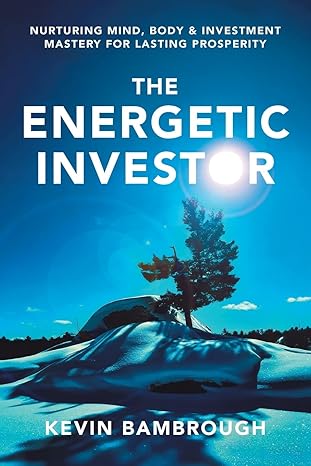
The Energetic Investor is Kevin Bambrough’s deeply personal and unconventional guide to mastering wealth, health, and mindset. Blending memoir with self-help and investment strategy, the book is structured into three sections: Discover, Diagnose, and Deploy. It begins with a gripping and emotional account of a traumatic event that catalyzed Bambrough’s transformation. From there, he explores how burnout, biology, trauma, and ingrained behaviors sabotage our ability to thrive, not just financially, but mentally and physically. By treating the body like a complex investment portfolio and focusing on energy management at the cellular level, Bambrough challenges readers to align mind, body, and money for lasting prosperity.
What struck me immediately was how raw and real this book felt. It’s not some cookie-cutter investment guide sprinkled with generic life advice. Bambrough doesn’t hold back—he dives headfirst into his personal struggles with addiction, loss, and burnout. That honesty gives his ideas serious weight. His writing veers from high-intensity financial breakdowns to soul-searching reflections, which makes for an unexpected and powerful rhythm. I appreciated that he didn’t talk down to the reader or sugarcoat the truth. Whether he’s discussing dopamine hijacks by modern marketing or the role of trauma in our financial decisions, he keeps things direct, urgent, and human.
The book jumps across biology, psychology, economics, and life philosophy without much handholding. At times, it feels like drinking from a firehose of insight, anecdotes, and science-backed strategies. But oddly enough, I liked that. It kept me on my toes. The passion behind his words is undeniable. He’s not just giving advice, he’s living the transformation he preaches. His investment insights, especially his contrarian thinking and analysis of herd behavior, are gold for any investor who’s tired of shallow market noise. But it’s the blend of personal healing and financial intelligence that makes this book stand out.
The Energetic Investor isn’t for the faint of heart or someone looking for a tidy ten-step plan to get rich. It’s for those who are ready to do some soul-digging and gut-checking. If you’re a driven professional, a burned-out entrepreneur, or someone chasing success but feeling stuck, this book might just knock the wind out of you—and then teach you how to breathe again.
Pages: 236 | ASIN : B0F6D3T26Z

A Global Icon

Edward de Bono: Love Laterally is a biography that paints a vivid and layered portrait of the man who coined and championed the concept of lateral thinking. What inspired you to tell Edward de Bono’s story?
It is a zeitgeist story. It was a timely and important story to tell. We need to teach our children how to think not what to think in schools – and this book explains why and how. It’s more than a biography. Edward de Bono led the world of thinking for over half a century, encouraging people to think about their thinking. His ideas and views are even more relevant now than they were in the 1960s when he started to write the first of his sixty-six books. He resisted autobiography and biography because he didn’t want to get in the way of his ideas. He did not want to become the focus of attention, and journalists frustrated him, as he believed they (largely) focus on human angles, gimmicks, and attack, and often quoted him out of context. This is a shame as his ideas, as many of those I interviewed over the seven years, worked in real-world scenarios and made a lot of people very rich, both in their professional and personal lives.
He lived life to the full and was a global icon before it became relatively easy to be so, thanks to the internet. He dominated the world of ‘thinking’ and encouraged people to think about their thinking for over half a century. And he left behind him some very strong feelings. I knew him for the last ten years of his life, and I felt his passion for introducing lateral thinking lessons into schools was even more timely now that it was when he first suggested the idea back in the sixties. That is why I launched the book at the House of Lords, in front of distinguished guests, including Lord Bilimoria, Sir Anthony Seldon, Lord Woolley, Huw Levinson, Baroness Helena Kennedy as well as others interested in the thinking process, including Dr Alison Wood of Cambridge University and founder of Changemakers, Karen Chetwynd CEO Montessori Global, Nicola Tyler, who worked with Edward for years, advertising guru Dave Trott, and Dr Tara Swart who has written about the thinking process in her best-selling book as well.
What were some ideas that were important for you to share in this book?
Edward resisted a biography and autobiography as he didn’t want to get in the way of his ideas. He was a charismatic man, who was able to hold the attention of schoolchildren, and CEOs, politicians, and creatives alike. He achieved so much in his life, his bibliography is a chapter in its own right, but when I asked him how he wished to be remembered he replied ‘as a writer, and for doing good’. As Baroness Helena Kennedy states in the excellent foreword, he was a visionary, who’s ideas have yet to be fully appreciated.
Did you find anything in your research of this story that surprised you?
So many things. Some trivial, others more significant.
For example, I didn’t know during the sixties, he was at one point the most travelled person (by air) on the planet (with BA at least) and that you are told by BA when you have clocked up enough air miles.
There were also so many people from diverse backgrounds I didn’t realise who had been influenced by his ideas. Fashion icon, Sir Paul Smith, is a huge fan, and so is author and illustrator Shaun Tan, as are the Eurythmics (who thanked him on the cover of their Sweet Dreams album), and I only discovered this in the process of researching the book.
I also noted how many reports differed in the number of books he had written. Edward himself wasn’t sure, but I referred to his family and they said ‘sixty-six’.
What is one thing that you hope readers take away from Edward de Bono: Love Laterally?
I would like them to buy one of his books – perhaps a couple – which will make them think about their thinking. Everyone has a favourite that relates to their way of thinking, or the people they work with. Mine was the 1990 ‘I am Right You are Wrong’ which clearly identifies why critical thinking, argument, confrontation, and ego, get in the way of identifying solutions and lead to and encourage conflict, while lateral thinking encourages connection, collaboration, and communication as a way to identify solutions. Edward explains how and makes it fun and playful.
Author Links: GoodReads | Instagram | X (Twitter) | Facebook | Sarah Tucker | Website | Amazon
Adored by advertising agencies, misunderstood by the media, and mistrusted by academia, De Bono became a household name dominating the field of creative thinking for half a century.
With contributions from de Bono’s former wife, Josephine de Bono, Sir Tony Blair and many others who knew de Bono – plus rare photographs from his family.


