Blog Archives
So You Want To Be A Ballet Dancer


I found Linda Soules’s So You Want To Be A Ballet Dancer to be a thoughtful and refreshingly honest introduction to the world children step into each time they come to ballet class. This illustrated guide doesn’t present ballet as a simple dream of tutus, applause, and effortless grace. Instead, it begins where real training begins: at the barre, with repetition, discipline, alignment, and patience. For young readers ages 10 to 14, Soules explains ballet in a way that is clear and inviting without hiding how demanding the art form truly is.
What impressed me most was the book’s respect for the dancer’s body. Soules explains concepts such as turnout, pointe work, flexibility, strength, stamina, and injury prevention with enough detail to help children understand that ballet dancers are artists and athletes. I especially appreciated the attention given to tools of the trade, from pointe shoes and rosin to mirrors and the dancer’s own muscles. Young dancers often see the finished product on stage, but this book helps them understand the years of conditioning, correction, and quiet effort behind every polished performance.
The book also captures something ballet teachers teach in every class: technique alone is not enough. Soules explores musicality, emotional expression, stage presence, and the mental resilience needed to perform under pressure. She also introduces readers to the many people who make ballet possible, including choreographers, directors, physical therapists, and fellow dancers. The sections on ballet history, from the court of Louis XIV to modern stages around the world, help students see that each plié and pirouette belongs to a much larger artistic tradition that continues to evolve.
So You Want To Be A Ballet Dancer is an excellent starter guide for children who are curious about ballet, whether they are brand-new beginners or already dreaming of performing in productions like The Nutcracker. Soules’s tone is encouraging but realistic, which is exactly what young dancers need. She shows that ballet welcomes dedication, curiosity, and artistry, while also making clear that it requires hard work, sacrifice, and perseverance. I would gladly recommend this book to ballet students and their families because it gives children a fuller understanding of ballet as a language of movement, discipline, beauty, and storytelling.
Pages: 38 | ISBN : 978-1972766354

The Unvarnished Truth

So You Want To Be An Actor is a guide for young readers that explores the real craft behind acting, showing how performers build characters, handle auditions, survive rejection, and turn imagination into truthful performance. Why did you feel it was important not to romanticize the profession?
Because children know when a book is performing for them instead of speaking to them, and the moment they sense it, they stop trusting you. My whole approach to this series is to meet a child eye to eye, and you cannot do that while hiding the hard parts of a calling behind a curtain of sparkle.
Acting in particular is romanticized to the point of distortion. Kids see red carpets and assume that is the job. The job is auditioning, hearing no, preparing fully again, hearing no again, and walking into the next room anyway. If a young reader is drawn to this work, they deserve to know that rejection is a permanent feature of the profession — not a phase to push through.
I want to be clear that this honesty is not meant to discourage. Quite the opposite. Telling a child the unvarnished truth about a calling is the highest form of respect I can offer them. It says: I think you can handle this, and I think you deserve to choose with your eyes open. The children this book is for are not fragile. They are exploring ideas that at some point will become important decisions. And a decision made on the basis of the real thing is sturdier than a decision made on the basis of the polished version. When a child learns about the auditions, the rejections, the years of training, the financial uncertainty — and still leans forward, still wants in — that is one of the most important pieces of information a young person can have about themselves. It tells them the pull is coming from somewhere real. That is the seed of a vocation, not a daydream.
I also believe the wonder of acting becomes more powerful, not less, when you set it next to the work. The standing ovation matters more when you understand what it costs.
You introduce major acting ideas, such as Stanislavski and Method acting, in a very accessible way. What challenges did simplifying those concepts pose without losing their meaning?
The hardest part of simplifying was deciding what must survive the compression. A children’s book has no room for a full tour of Stanislavski, Strasberg, Meisner, Adler, and the century of debate among their inheritors. So the question I kept asking was: if I can only carry a few things across the bridge, which ones cannot be left behind?
Three felt non-negotiable. First, that acting is a craft with technique, not a mysterious gift bestowed on the chosen few, which means it can be studied, practiced, and improved like any other skill. Second, that the great teachers were after truthful behavior, not the performance of big emotion; the kid who tries to summon real tears at 12 and feels broken when it doesn’t work needs to know that manufactured feeling was never the point, and their acting potential is not measurable by whether they can cry on command. And third, that there is more than one legitimate path into the work, and a young actor gets to find the approach that fits them rather than forcing themselves into the one the movies made famous.
Everything else — the lineages, the disputes, the technical vocabulary — I let go. The way through was to keep language plain and anchor every abstract idea in something a child can already feel. What does my character want? What are they afraid of? Those questions open the door to serious craft without requiring a 10-year-old to learn Russian, pick a specific school of thought, or cry on demand to prove they belong.
The book covers stage, screen, voice work, and physical theater. How did you decide how much depth to give each path, and which surprised you most when you researched its specific demands?
I gave stage and screen the most room because that is often where young readers first imagine themselves. But I wanted voice acting and physical performance to feel equally serious, because they are — and because a kid whose strengths lie there shouldn’t finish the book thinking they’ve only seen the side door.
The biggest surprise to me was Frank Welker. He is the highest-grossing actor in film history, but most readers have never heard his name. He’s earned around $8 billion at the box office, spent an entire career built inside a sound booth, and yet enjoys total anonymity at the grocery store. That single fact reframes what an acting career can be.
The other surprise was just how different stage and screen acting really are. They look like the same craft from the outside, but working actors will tell you they aren’t. The camera reads micro-expressions that the back row of a theater will never see. The stage demands a voice that fills a room the camera would find embarrassing.
You write that acting builds confidence, empathy, observation, imagination, and the courage to try something new. Which of those benefits do you think is most underrated and most useful outside the theater?
Really, all of the above, but if I had to narrow it down, I think listening is most underrated and underemphasized. Real listening — the kind actors mean when they say it. Most of us aren’t listening to the people in front of us; we’re waiting for our turn to speak, rehearsing our next line while theirs is still being said. Actors are trained to truly receive what the other person gives them and let it change what happens next. That is a skill very few professions teach directly, and almost every relationship needs.
Empathy gets the headlines, and rightly so. But empathy without listening is just imagination running in a private room. A child who learns to actually take in another person’s words, body, and silence — and respond to what is really there instead of what they expected — has been given a tool that will serve them in every friendship, every classroom, every argument with someone they love.
Author Links: GoodReads | Website | Amazon
So You Want To Be An Actor pulls back the curtain on one of the oldest and most demanding performing arts careers on earth — not the red-carpet fantasy, but the real one. Written for young readers ages 10 to 14, this illustrated nonfiction guide takes kids and tweens inside the rehearsal rooms, audition halls, and theater stages where actors learn their craft from the ground up. It’s honest, specific, and built for the curious mind that wants to know what this profession actually looks like before the applause starts.
Inside these pages, young actors and aspiring performers will discover how real training works — the voice and movement exercises that turn a body into an expressive instrument, the script analysis that reveals what a character is truly saying beneath the words, and the drama techniques that let a performer live truthfully in someone else’s circumstances. From stage to screen to voice work to physical theater, this book covers the full range of the acting world and what each path demands.
But this isn’t just a guide to technique. It’s a book about resilience. Actors face rejection not as a rare setback but as the daily texture of a working life. Young readers will learn how performers build the emotional strength to audition again and again, how they prepare scenes and monologues with discipline and imagination, and why the people who stay in this profession say that when a performance truly lands — when the room goes still and something shifts — nothing else comes close.
Whether your child has been cast in every school play since second grade or is quietly reading every part in every story they encounter, this book meets them where they are. It doesn’t talk down. It doesn’t oversimplify. It treats kids as capable of understanding the real demands of a career in acting — the physical, vocal, and psychological work that sits behind every performance that looks effortless.
Comedy or drama, stage or screen, the greatest performance anyone has ever seen began with someone who was willing to go somewhere true. For the young performer ready to find out if that someone might be them.
Ages 10 to 14. Illustrated nonfiction for kids who take their dreams seriously.
So You Want To Be An Animator

So You Want To Be An Animator is a fun, colorful, and surprisingly detailed look at what it really means to work in animation. Written for kids ages 10–14, this illustrated nonfiction book goes way beyond “animators draw cartoons” and shows readers how much patience, skill, teamwork, and imagination are involved in bringing a character to life. From hand-drawn animation and flipbooks to 3D computer animation, character rigging, storyboarding, and digital tools, the book gives young readers a clear picture of the many steps between a sketch in a notebook and a finished scene on screen.
One of the best things about this book is how honest it is. Soules doesn’t make animation sound easy or magical. She explains the actual craft behind it, including timing, squash and stretch, anticipation, follow-through, and the careful observation of how things move in the real world. In the section labeled The Hardest Parts of the Job the author states, “Animation is extraordinarily time-consuming… a single second of fully drawn animation needs twenty-four separate drawings.” I didn’t consider this even as an adult. Kids who love drawing will likely find themselves looking at movement in a whole new way after reading this.
The book also does a great job showing that animation is a team effort. Animators work with directors, writers, sound designers, riggers, and many other artists to build a world that feels seamless to the audience. I appreciated that the book talks about the hard parts too, like the long hours of practice, the technical learning, and the patience it takes to create even a few seconds of finished animation. The exercises, glossary, suggested websites, organizations, and further reading make it feel practical, not just inspirational.
So You Want To Be An Animator is an encouraging and informative book for creative kids, especially those who are always sketching in the margins or pausing animated movies to study how characters move. It’s easy to understand without talking down to readers, and it’s interesting enough that adults may learn a few things too. I would highly recommend it to parents, teachers, and young artists who want a realistic but exciting look at animation as both an art form and a possible career.
Pages: 38 | ASIN : B0H1LHQWTL
So You Want To Be A Crime Scene Investigator
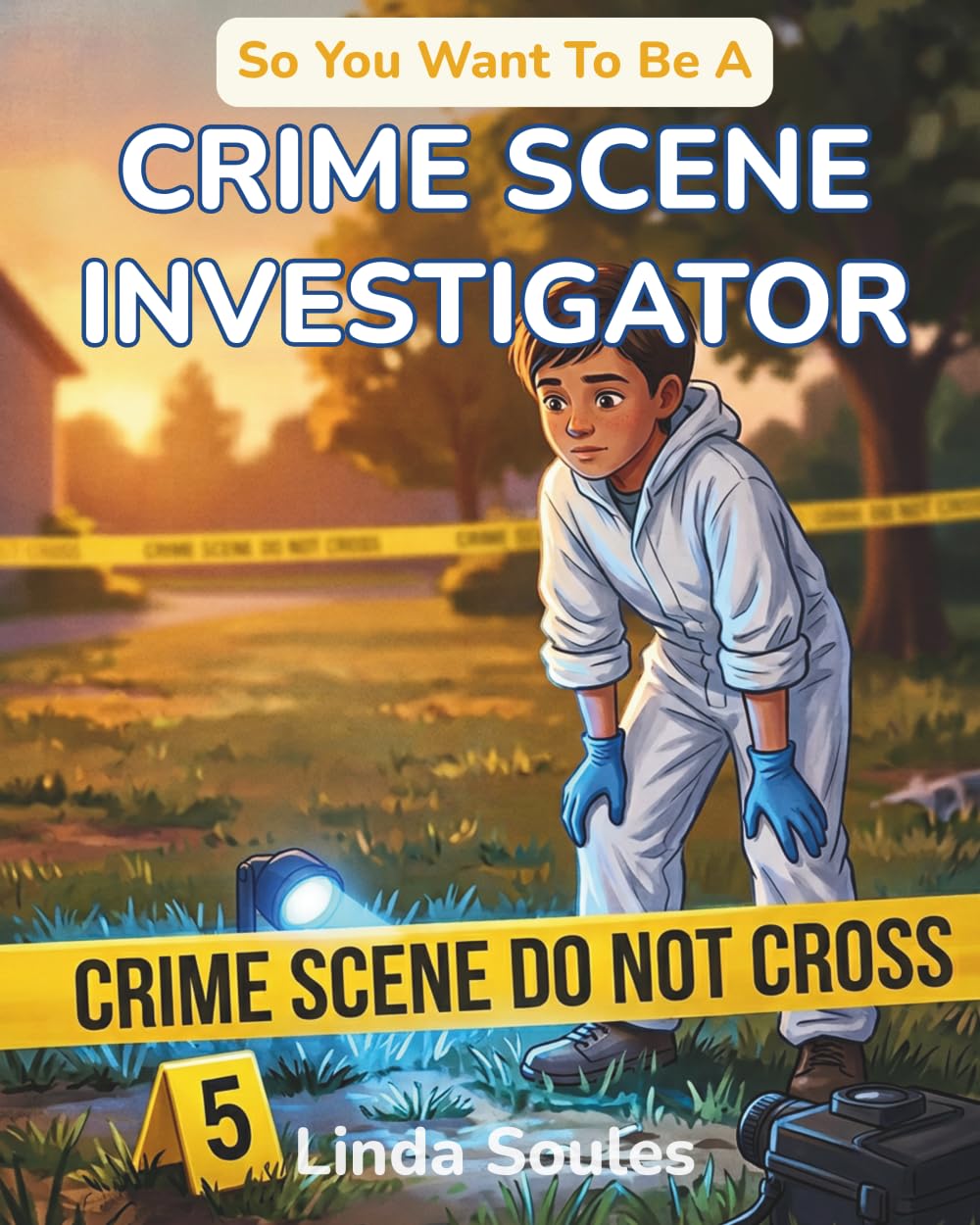
So You Want To Be A Crime Scene Investigator, by Linda Soules, is a fascinating and kid-friendly guide for young readers who are curious about forensic science and what crime scene investigators actually do. Instead of giving kids the flashy TV version of CSI work, this book explains the real job in a clear and honest way. Readers learn about photographing crime scenes, collecting fingerprints and samples, documenting evidence, protecting the chain of custody, and making sure everything is handled carefully enough to hold up in court.
What makes this kids’ book especially interesting is how well it connects science to real life. DNA analysis, fingerprint examination, trace evidence, bloodstain patterns, and lab work are all explained in a way that feels easy to understand without being boring or watered down. The book also shows that crime scene investigation is not just about finding clues. It takes patience, focus, teamwork, critical thinking, and the ability to stay calm when the pressure is high.
The detailed illustrations and fun facts add a lot to the reading experience. They make the information more engaging and give young readers something to look at and really imagine the job. I also liked that the book talks about different kinds of forensic work, the history of forensic science, and even the emotional side of the job. The book states, “Crime scenes are places where something bad has happened…” That honesty helps kids get a fuller picture of the career, including both the exciting parts and the serious responsibilities.
This is a great choice for children who are interested in science or future careers in crime scene investigation. It’s organized, informative, encouraging, and has extra resources that help kids keep learning after they finish the book. So You Want To Be A Crime Scene Investigator is not only useful for young readers but also enjoyable for adults who like learning about forensic science in a simple and engaging way.
Pages: 38 | ISBN : 978-1972766293
Unity and Teamwork
Part career guide, part science lesson, So You Want To Be A Firefighter turns fire behavior, rescue tools, and emergency response into something fascinating and accessible. What were you most determined not to leave out, and what did you most want to show beyond the fire truck?
The 75%. More than three-quarters of the calls a modern firefighter responds to aren’t fires at all. They’re heart attacks, broken bones, seizures, car accidents, floods, chemical spills, the woman down on the kitchen floor, the kid trapped in a wrecked car. If a young reader closed the book thinking “firefighter” means “person who sprays water on flames,” I’d have failed them. Today’s firefighter is an emergency responder in the broadest sense, and the truck on the cover is just the most visible part of a much larger promise.
In addition to including some of the science, the other thing I wouldn’t budge on was the station as a home. The cooking together, arguing over who does the dishes, the 24-hour shifts, the bond that retired firefighters describe missing more than any rescue. Children imagine the dramatic parts on their own. What they don’t see is the long, ordinary middle — the trust built over thousands of shared dinners that makes the unity and teamwork in dangerous moments possible. That trust is the real engineering of a fire crew, even though it’s much quieter than the siren.
The inclusion of historical figures like Molly Williams and references to 9/11 give the book a wider sense of firefighting history and sacrifice. Why did you feel those stories mattered for this audience?
Because firefighting history is a story about who gets to be a hero — and for a long time, the answer was narrower than it should have been. Molly Williams was an enslaved Black woman in New York City who, in the blizzard of 1818, dragged a fire engine through snow when the male firefighters were too sick to respond. She did the job they were paid to do and got none of the recognition they received. She was never officially acknowledged in her own time.
History has corrected that, and a child who reads about her closes the book understanding something true: the people who have always shown up include people whose names were left out of the old books on purpose.
The 343 firefighters on 9/11 belong to a different conversation, but the same lesson. Children today were not alive when that happened. They know it as a date on a wall somewhere. Telling them, plainly, that 343 people ran into those towers while everyone else was running out gives them something solid to hold onto about what human beings are capable of when the moment asks everything of them. I trust kids with that. I think they’re hungrier for that kind of truth than we give them credit for.
I liked that the book offers readers practical ways to start preparing now through fitness, volunteering, and taking on responsibilities. What inspired you to make the book so action-oriented?
Two things. First, kids ages 8-14 are at exactly the age where the gap between “I want to” and “I can start” feels the most discouraging part of dreaming about a career. We tell children to follow their passions, and we mean it well, but the encouragement lands flat without doors they can actually walk through today. So I wanted every reader to close the book with at least one thing they could do this week — and ideally a few more they could pick up over the months ahead.
There’s also an indirect benefit to taking action early that I wanted to honor. Most children will change their minds about what they want to be many times, and that’s exactly as it should be. The habits built while chasing one dream — discipline, service, showing up, paying attention — travel beautifully to the next dream, and the one after that. A child who volunteered at the animal shelter at ten because she wanted to be a veterinarian will carry something from those Saturdays into whatever calling actually claims her. Action turns a dream into a practice, and the practice outlasts any single version of the dream.
Second, and more fundamentally, I wanted parents and teachers reading over the child’s shoulder to have something to do together. “Make a fire escape plan for your home — seriously, tonight” is in there because real firefighters will tell you it’s the single most important thing a family can do. That sentence has nothing to do with becoming a firefighter someday. It has to do with not dying in a house fire next month. If the book convinces one family to walk through their house this weekend and pick a meeting spot in the yard, the book has already earned its place on the shelf, regardless of what the reader grows up to be.
Aspirational and practical aren’t opposites. I aim for these books to be both at once.
Your So You Want To Be A… series consistently treats kids like capable thinkers rather than passive learners. Why is that philosophy important to your work?
Because the way you write to a child is the way you tell them what you think they’re capable of, and they’re listening for that signal even when the words are about something else. A book pitched slightly above where a child stands is an invitation. A book pitched slightly below is a ceiling — and children sense the difference within a page or two. Give them the harder vocabulary, the surprising fact, the genuine complexity, and most will rise to meet it, and feel taller for having done so.
My North Star for this whole series has been a single question: what would I want to hand a curious child? Not a child whose curiosity I plan to manage, but a child whose curiosity I trust to lead somewhere good if I give it real material to chew on. That means the surprising facts, the hard parts of the job, the historical wrong that wasn’t righted in its time. It’s important to provide tools to understand new concepts presented, and sometimes, younger kids will only pick up a piece of it the first time around, but the reach itself is part of what makes the reading worth doing.
Underneath all of this is a permission slip I am trying to slide across the table: you are allowed to take yourself seriously. Your questions are real questions. Your interests are real interests. You don’t have to wait until some later age to be a thinking person — you already are one, and here is a book that proceeds on that assumption.
There is also something subtly political in it, though I don’t say it that way to kids. We live in an era that markets to children constantly and listens to them rarely. A book that meets a child eye to eye is doing something small but real against that tide. It’s saying: you are a person whose attention is worth earning, not capturing. If a child closes one of these books and feels — even without naming it — that someone took them seriously for 38 pages, that’s the experience I’m trying to give. Everything else follows from there.
Author Links: GoodReads | Website | Amazon
So You Want To Be A Firefighter is a career exploration guide for kids ages 10 to 14 who want the truth about one of the world’s most respected and demanding professions. No sugarcoating. No shortcuts. Just an honest, richly illustrated look at what firefighters do, how they train, and what drives them to keep showing up when the stakes couldn’t be higher.
Inside, you’ll discover what a real firefighter’s day looks like from dawn to well past midnight. Morning drills and equipment checks. The science of fire behavior — how flames move, how buildings fail, and why understanding both can save lives. Emergency medical response, hazardous materials training, and rescue techniques practiced again and again until they become second nature. This isn’t a surface-level overview. It’s the kind of deep, detailed look that treats young readers like the capable, curious people they are.
You’ll also learn about the tools and technology firefighters depend on, from thermal imaging cameras to the sixty-plus pounds of protective gear they wear into every blaze. You’ll meet some of the legendary figures who shaped the history of firefighting and see how the profession has transformed over centuries into one of the most technically skilled jobs in public safety.
But gear and gadgets are only part of the story. This book digs into the human side of the fire service — the physical and psychological demands that test every firefighter, the trust forged between crew members who share meals, quarters, and life-or-death moments, and the deep sense of purpose that keeps veterans coming back shift after shift. It explores why this career calls to certain people and what that pull actually means.
Most importantly, it shows kids what they can start doing right now to explore whether firefighting might be part of their future. Fitness benchmarks. Volunteer opportunities. The mindset and habits that set future first responders apart long before they ever set foot in an academy.
So You Want To Be A Firefighter is the book for every young person who wants more than a daydream — who wants a real, unflinching look at what it means to answer the call. Because the fire doesn’t wait, and neither does the kind of kid who’s ready to discover what they’re made of.
Ages 10 to 14. Nonfiction. Careers and Professions. Illustrated.
So You Want To Be A Vaccine Developer (Immunologist)

As a parent, I’m always looking for books that can take a big, complicated topic and make it feel exciting instead of overwhelming. So You Want To Be A Vaccine Developer does exactly that. This children’s book introduces readers to immunology, vaccine science, and medical research in a way that feels smart, honest, and accessible. It explains how vaccines help the immune system learn to recognize dangerous germs before they cause illness, using clear examples of memory cells, antibodies, and the body’s natural defenses. The book trusts young readers to handle real science and gives them the tools to understand it.
So You Want To Be A Vaccine Developer shows the actual work behind vaccine development. Young readers learn that vaccines don’t simply appear overnight. They come from years of careful research, antigen design, lab testing, clinical trials, data analysis, manufacturing, regulatory review, and global distribution. The book also introduces the many people involved in this process, including immunologists, virologists, statisticians, structural biologists, manufacturing scientists, and public health experts. I loved how this broadens a child’s view of science careers because not everyone thinks of this specific career path. And after COVID, I think it should be at the top of career lists.
This book shows that discovery is not just one person in a lab coat having a sudden idea, It’s teamwork, patience, problem-solving, and responsibility. The layout is student-friendly as well and reminds me of the “Who Is” style books that many kids already enjoy. Sections like “A Day in the Life,” the best and hardest parts of the job, surprising facts, career paths, and the glossary make the information easy to revisit and discuss. The bold scientific terms are helpful for building vocabulary, and the many illustrations add color and clarity to complex ideas like immune responses, ELISA testing, clinical trials, and lab work. I can see this book being especially useful for upper elementary and middle-grade readers who are curious about biology, medicine, or how scientists help protect communities.
What I liked most is the encouraging tone. The book connects science to real life by showing that the greatest reward of vaccine work is often invisible: the sickness that never happens, the outbreak that never spreads, and the child who stays healthy. It also handles vaccine development with a thoughtful and balanced approach. So You Want To Be A Vaccine Developer is informative, inspiring, and full of respect for young readers. I would gladly recommend it to curious students ages 10 to 14, and even younger children could enjoy it as a read-aloud introduction to scientific thinking.
Pages: 38 | ISBN : 978-1972766415
So You Want To Be A Treasure Hunter (Archaeologist)

So You Want To Be A Treasure Hunter is a fun and enchanting guide for any curious kids who have ever picked up an old coin, a strange rock, or a broken piece of pottery and wondered, “Who left this here?” Aimed at readers ages 10–14, the book takes the exciting idea of treasure hunting and turns it into something even better: real archaeology. Instead of focusing on movie-style traps, secret tombs, and piles of gold, Soules shows readers that the true treasure is the story behind an object and what it can teach us about people who lived long ago.
One of the best things about this book is how clearly it explains the science behind archaeology without making it feel boring or complicated. Readers learn about tools and methods like ground-penetrating radar, LIDAR, magnetometry, stratigraphy, dating methods, conservation, and lab analysis. That may sound like a lot, but the writing keeps things easy to follow and exciting. The book shows how archaeologists figure out where to dig, how they carefully record what they find, and why even a tiny pottery shard can be just as important as something shiny or expensive.
I liked how the book explains the difference between archaeology and looting. Soules makes it clear that digging up an object without understanding where it came from can destroy part of its story forever. The book shows that context matters more than the artifact itself, which is a powerful lesson for young readers. It also highlights the teamwork involved in archaeology, from field crews and scientists to conservators and local communities, helping readers understand that major discoveries are rarely made by one person working alone.
So You Want To Be A Treasure Hunter (Archaeologist) is an inspiring and smart book for kids who love history, mysteries, ancient civilizations, and hands-on discovery. It respects its young audience by giving them real information about the hard work, patience, and responsibility that archaeology requires, while still keeping the sense of wonder alive. This is a great read for any child who dreams of uncovering the past and wants to know what it really takes to find the stories buried beneath our feet.
Pages: 38 | ASIN : B0GZHKQ7VK
So You Want To Be A Deep Sea Diver
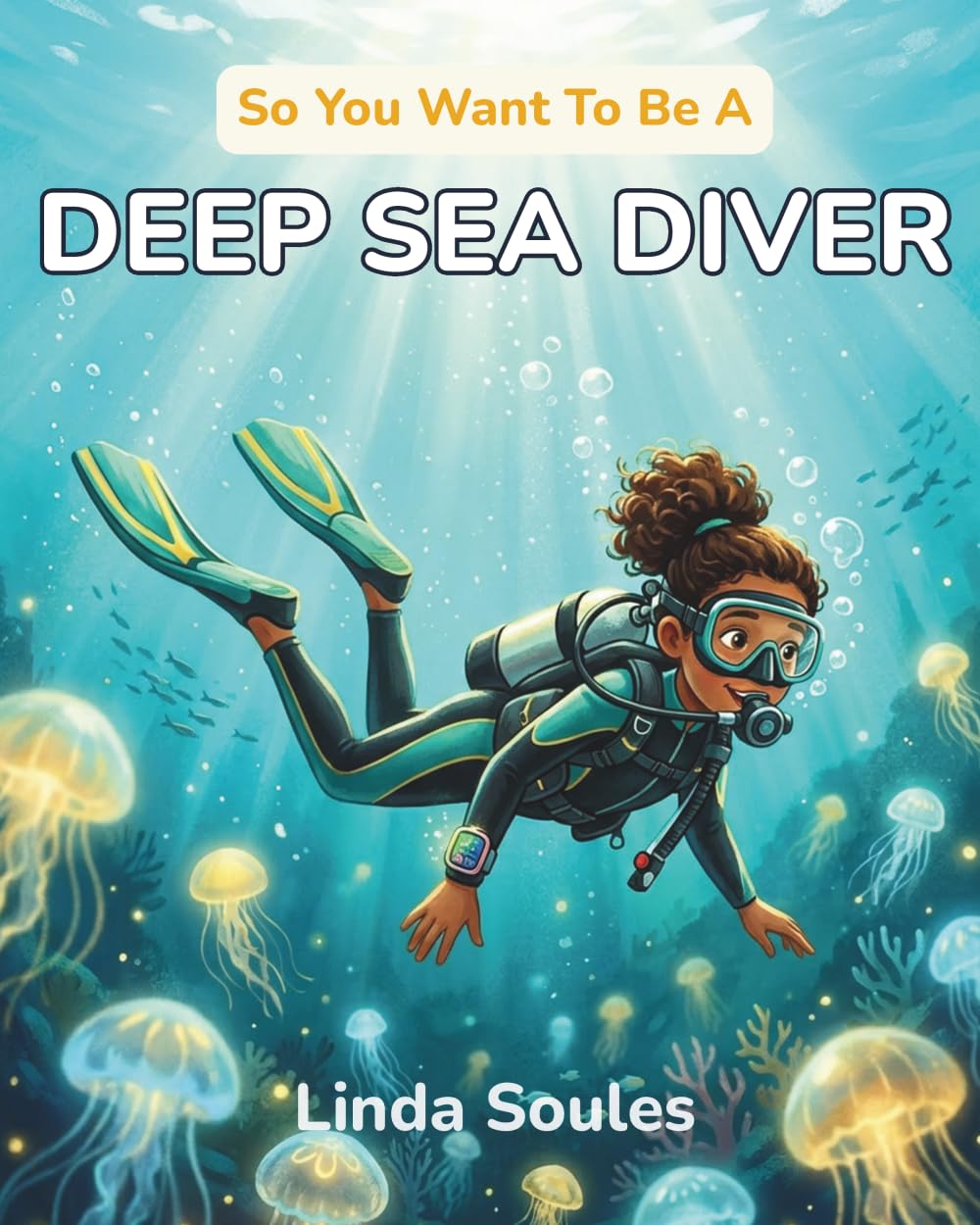
So You Want To Be A Deep Sea Diver is the kind of children’s book that makes you realize there is so much more to a job than what you see on the surface. Written for young readers around ages 9–14, this illustrated guide takes kids deep into the world of professional diving, from the first spark of ocean curiosity to the intense training, science, teamwork, and bravery needed to work far below the waves. I think it does a great job showing that deep-sea diving is an adventure and a serious career that takes discipline, focus, and a lot of knowledge.
I loved how much real information it includes without making the topic feel overwhelming. Readers learn about pressure, decompression, gas mixtures, saturation diving, underwater welding, shipwreck archaeology, cave exploration, and even what happens to the human body underwater. It explains complex ideas in a way that feels clear and exciting, while still respecting how dangerous and demanding this job can be. The glossary, career details, and real-world examples make it useful for reports, career day, or any child who is curious about ocean work.
The illustrations are another big highlight. They bring the deep ocean, the gear, and the divers’ work to life, especially for kids who are visual learners. The book also covers the people behind every dive, like supervisors, standby divers, medical technicians, deck crews, and scientists waiting topside. That teamwork element makes the profession feel even more real. I even learned something as an adult. I didn’t know that being in the deep sea “actually changes how your brain works, in ways scientists are still studying.”
This is an engaging, detailed, and surprisingly fun read, even for adults. You don’t have to want to become a deep-sea diver to enjoy it, because there is so much to learn about the ocean, science, history, and the hidden jobs that keep parts of the modern world running. This would be a great gift for a sea-loving kid, a useful classroom book, or a strong addition to a career exploration series. Linda Soules makes deep-sea diving feel mysterious, challenging, and possible, and that is exactly what makes the book so appealing.
Pages: 38 | ISBN : 978-1972766316


