Blog Archives
Deception’s Edge
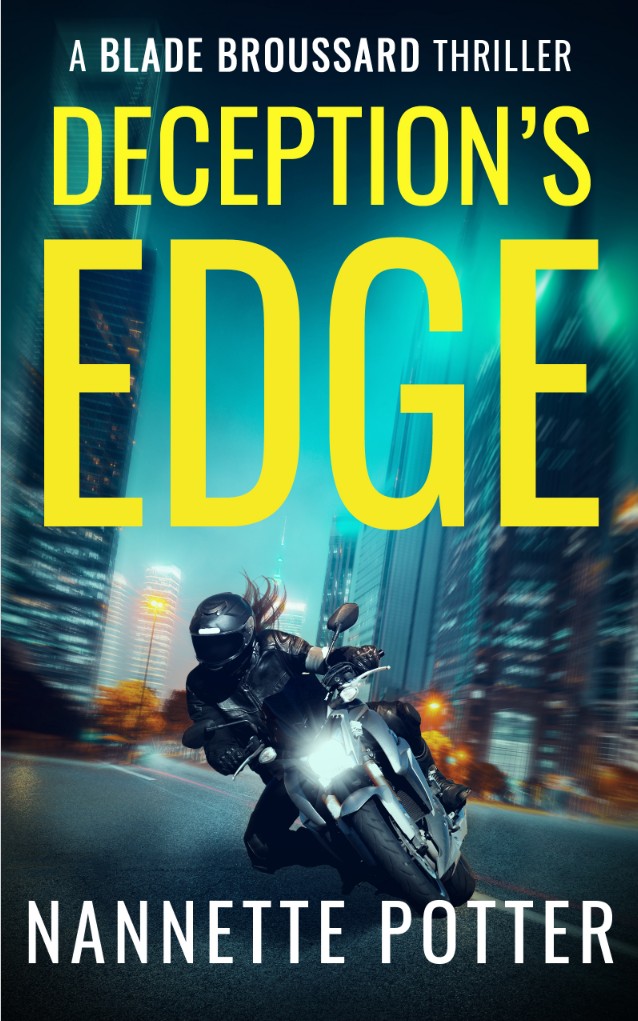

From the very first chapter, Deception’s Edge plunges you into a world that fuses action, espionage, faith, and deep personal trauma into a globe-spanning narrative. The story follows Blade Broussard, a knife-throwing performer with a haunted past, and a covert brotherhood known as the Soldati di Cristo, as they navigate an escalating series of violent confrontations and spiritual reckonings. Across cities like New Orleans, Rome, and Pyongyang, Potter weaves together a story that pits characters against ruthless regimes, their own inner demons, and a ticking clock that adds weight to every decision.
I found myself torn in the best possible way while reading this book. On one hand, the writing is brisk, full of punchy dialogue and vivid action that reads like a cinematic thriller. On the other hand, there are deeply reflective moments, grief, redemption, and hard-won faith that give the story emotional muscle. What impressed me most was Potter’s ability to bring out the complexity in her characters. Blade isn’t just a revenge-driven protagonist; she’s deeply flawed, grieving, sometimes reckless, but always inching toward growth. And Chase, who starts out as a bit of a mystery, becomes a steady heartbeat in the chaos, a man whose convictions give the plot real weight. Potter doesn’t just throw her characters into wild situations; she lets them break, rebuild, and wrestle with truth.
With a cast this large and subplots this layered, I sometimes struggled to keep track of shifting motivations, especially across the international set pieces. The story juggled many threads, action, espionage, faith-based conflict, and interpersonal drama. But I can’t deny that even when the plot got tangled, the emotional stakes stayed strong. The writing has heart, and that matters more to me than perfect pacing.
Deception’s Edge surprised me. It’s not just another thriller. It’s part Jason Bourne, part missionary story, part personal redemption arc. I’d recommend it to anyone who enjoys high-octane action with soul. It’s especially a good fit for readers who appreciate stories that ask hard questions about faith, forgiveness, and how we move forward when everything’s been taken from us. If you want a thriller with grit and grace, give this one a shot.
This Book Scared Me
By Dawn’s Early Light follows a forensic pathologist and her assistant as they try desperately to make sense of the utter wasteland in which they have found themselves stranded. What was the inspiration for the setup of your story?
This is an interesting story. I have a summer house in the Adirondack mountains and there is a story or urban legend (don’t know which), there was a CIA black site in the town of Indian Lakes. Rather than tell you the story, you should read it for yourself: Indian Lake Project. I mixed that in with research I did on radiation. There are items that are naturally radioactive: kitty litter, bananas, Brazilian nuts, and a few other items. I mixed it all up and the book was born. I will tell you this book scared me when I was writing it because it could really happen. Also, a couple of months ago, there was a story in the news about a man preparing to plant a bomb under the NYSE. One thing I do is research topics heavily and I am frightened the book I spent a year writing was coming true!
What is it about dystopian fiction that intrigues you?
I am shocked at all the ways humanity can die. This is probably the only genre that doesn’t need a bad guy! It could be a weather phenomenon, earthquake, asteroid, you name it!
What’s the most difficult thing about writing characters who exist in a world so different from our own?
Actually, in most dystopian books, generally, everything starts out normal. I try to get all of my science research on point as much as possible. The one thing I do enjoy in my books is giving the message of hope. Regardless of how life changes, everyone on earth has hopes and dreams. In my books, I relay the message of hope.
Can fans look forward to seeing more releases from you soon? What are you currently working on?
I’ve since released Seismic Eruptions. That has been doing well on Amazon. My latest work that will be coming out in the next two weeks is Utopia. This is the first book of a trilogy about the first manned mission to Mars. I had such a great time learning about what the astronauts go through! This was the most fun book I wrote and it’s also the largest! Book 1 turned out to be 850 pages, but I pared it down to 600 pages. I want to bring it down to around 400 words.
Author Links: GoodReads | X (Twitter) | Facebook | Website | Amazon
With lives hanging by a thread and panic spreading, Sasha and Jake uncover a chilling truth: a shadowy cabal orchestrates the devastation, with their sights set on total annihilation. As they untangle the web of deceit, the sinister figure of Mustafa looms, his hand at the helm of destruction beneath the New York Stock Exchange’s crumbling foundations.
Racing against time and against those who profit from chaos, Sasha must confront the darkness threatening to consume her country. Each step forward is a step deeper into a world where allegiances shift like sand, and trust is a rare commodity. Will Sasha and Jake uncover the forces that threaten to destroy America, or will the darkness swallow them whole before dawn breaks again?
Multidimensional and Relatable

Imber centers around a young woman whose family is dedicated to sustainable living as she finds herself drawn into the mystery surrounding the fate of Earth and the limits of science. Where did the idea for this novel come from?
For as long as I can remember, I have been drawn to wildlife and wild places – not necessarily in a clinical way, although I do enjoy learning about nature, but more often as feelings of deep affection and awe. The initial spark for Imber grew out of the idea that humanity has a profound connection with nature. I wanted to explore what might happen in a dystopian future where that connection is strained to a breaking point.
How do you capture the thoughts and emotions of a character like Violet?
Violet is a complex protagonist. While she has many admirable qualities, she is far from flawless. It was important to me that Violet be multidimensional and relatable. In the first moments of Imber, Violet is brooding and somber. She’s reading depressing poetry on a day when she is already sad. Although she is self-aware enough to stop, I love that the first time we meet her is in a moment of self-sabotage. When capturing Violet’s thoughts and emotions, I was careful to shine a light on both her strengths and weaknesses. And because she is highly intelligent and analytical, her inner life must reflect that as well. So, overall, I would say that characters like Violet require a layered approach that befits the complexity of their thoughts and feelings. Violet was challenging to write – but tons of fun, too.
Is there any moral or idea you hope readers take away from Imber?
One of the fascinating things about reading is that people can take away very different things from the same book. They might have dissimilar interpretations of the plot or characters, or certain aspects of the story might resonate differently with them. As an author, I think it’s exciting that my work can have a life of its own in that way. Nevertheless, there are themes in Imber that I hold dear: humanity’s responsibility as shepherds of the earth; the power of hope; courage and perseverance in the face of injustice; and the beauty of found family, to name a few.
What is the next book that you are working on, and when will it be available?
I would love to write a sequel to Imber. I have roughly outlined the story, but I haven’t started to write it in earnest yet. I am working hard to help Imber find an audience. If there is interest, I would be thrilled to continue this tale!
Author Links: Goodreads | X (Twitter) | Website | Amazon
The remnants of humanity are living in hiding, making the best of their circumstances while searching for a new celestial home. Just when salvation seems imminent, four strangers discover they have an unusual, inexplicable link—one that pitches them headlong into high adventure and intrigue.
Totally unprepared, the four must navigate shocking obstacles and trust unexpected allies as they race against the clock to unravel a chain of unsettling revelations that could impact the fate of the world.
The government has been concealing important facts about humankind’s promising hereafter. Will the efforts of a farmer, a hacker, a businessman, and an academic be enough to overcome impossible odds and expose the truth before it’s too late?
Imber
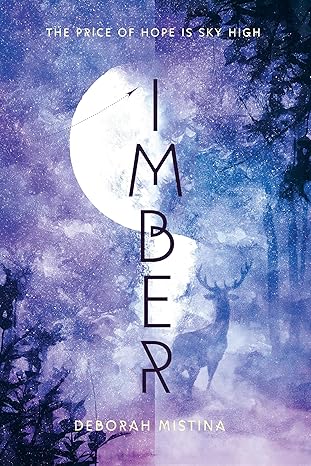
Deborah Mistina’s Imber is a speculative, soul-stirring tale set in a future where nature is both fragile and sacred. The novel follows Violet Murphy, a young woman devoted to her family’s farm and their legacy of sustainable, organic living amid a crumbling world. As the government’s strange motives begin to unravel, Violet is pulled into a deepening mystery that questions everything, from the fate of the Earth to the limits of science and memory. At once a dystopian adventure and an emotional meditation on grief and hope, Imber crafts a world that’s both fantastical and deeply familiar.
I enjoyed Mistina’s writing style. It’s poetic, even when it’s subtle. Take the opening pages where Violet feeds her horse Firestorm while mourning her lost parents. The imagery is soft and painful: “They broke like porcelain on the jagged rocks below, where the sea writhed with furious waves…”. Mistina doesn’t just write; she paints with words. She lets grief sit beside beauty. The prose made me feel something in every paragraph, like each sentence had its own pulse.
Then there’s the story itself, which is clever and unexpected. When Violet is summoned to present her work at the Science Bureau, things turn dark fast. The seemingly harmless coffee offered to her becomes a sinister turning point. “It was excessively bitter and altogether unsavory,” she says—a perfect metaphor for what comes next. That whole interrogation scene was haunting. It wasn’t just suspenseful, it was invasive and raw. The way Mistina writes Violet’s spiraling consciousness during that sequence made me uncomfortable, in the best way. I couldn’t stop reading, even though I wanted to yell at Violet to run.
But maybe the most surprising part of Imber was how it made me care so deeply about more than one character. Jack Collins, who shows up in a later chapter, is someone I didn’t expect to love. He’s a hunter mourning his father, caught in a storm of his own. At one point, he’s trying to shoot a deer but ends up crying in the rain because he suddenly feels the deer’s fear. Sounds absurd, but the way Mistina handles it is gentle and strange and real. I felt his grief. I felt his confusion. That’s powerful writing.
By the time I finished the book, I felt a little haunted, a little hopeful, and completely wrecked in the best way. Imber isn’t just a sci-fi story or a survival tale. It’s a quiet rebellion against numbness. It reminds us what it means to feel deeply, to protect fiercely, and to listen—even when it’s hard. I’d recommend this book to anyone who loves stories about resilience, about the intersection of science and emotion, and about what it means to fight for what you love. It’s perfect for fans of Station Eleven or The Overstory, or really anyone who needs to be reminded that the Earth, and our hearts, are worth saving.
Pages: 315 | ASIN : B0DV3V8L5K

By Dawn’s Early Light


By Dawn’s Early Light opens with a shipping container marked with harmless cargo—kitty litter, hazelnuts, and bananas—and spirals into a jaw-dropping apocalyptic thriller. A nuclear attack levels America’s major cities in a matter of minutes, and from there, chaos reigns. Through the eyes of Jack, Mohammad, Sasha, and Jake, readers are dragged into a gritty, horrifying world where society crumbles fast and quietly, and the line between survival and humanity fades just as quickly.
Jenny Ahmed’s writing is intense. The buildup in the prologue is deceptively calm: Jack’s container pickup feels routine, almost boring until this gnawing unease sets in. That feeling never really leaves. Mohammad’s moment with the button, the memory of his daughter Leila, and his final “Forgive me, Leila” just gutted me. It’s brutal, heartbreaking, and somehow still grounded in something deeply human. The whole detonation scene was visceral. Every paragraph punches you in the gut with imagery so vivid it borders on cinematic.
But what really surprised me was how the tone shifts post-blast. The pacing slows down a bit and becomes almost eerily quiet, just like the abandoned cities Sasha and Jake find themselves in. The creeping dread of walking through empty buildings, the discovery of the almost zombie-like infected people, the weird stillness of Albany—that got under my skin. Sasha’s logical, methodical background as an FBI forensic pathologist clashes beautifully with the utter irrationality of what’s unfolding. The horror isn’t just in the destruction, it’s in what’s left behind. Ahmed makes the reader sit with the silence, the unknown, the rot. It’s not just about surviving; it’s about understanding what kind of world you’re surviving in now.
By Dawn’s Early Light isn’t simply a disaster novel. It’s about fear, helplessness, and the slow unraveling of reality. The writing is raw, the characters feel like real people making terrible decisions under impossible pressure, and the tension never lets go. I’d recommend this sci-fi book to fans of post-apocalyptic thrillers, especially those who like The Road or Station Eleven but want a little more fire.
Pages: 229 | ASIN : B0DPLKXNYY
By Dawn’s Early Light
Jenny Ahmed’s By Dawn’s Early Light is a gut-wrenching thriller that throws readers headfirst into a world unraveling at the seams. It begins with a seemingly routine shipment at the Port of New York, just another night, another job, and another cargo manifest listing the mundane: kitty litter, hazelnuts, and bananas. But beneath that everyday veneer, something sinister lurks. As the story unfolds, the stakes skyrocket in a terrifyingly plausible doomsday scenario. A nuclear attack on American soil shatters life as we know it, leaving behind a silent, scorched wasteland where the rules of survival have changed. What follows is a gripping tale of chaos, fear, and the desperate fight to understand what happened and, more importantly, what comes next.
What struck me first was the sheer weight of the opening chapters. The eerie calm before the storm and the quiet tension as Jack picks up an unassuming shipment build an undeniable sense of dread. Ahmed’s writing is visceral, immediate, and cinematic. She doesn’t just tell you that something is wrong; she makes you feel it, in the tightening grip of Jack’s paranoia, in the silence that feels too thick, in the way shadows seem to stretch just a little too long. The moment of impact, when the bombs detonate, is nothing short of breathtaking. The descriptions are brutal: New York reduced to ash, people vaporized in an instant, the sheer force of destruction wiping away lives like they were never there. It’s horrifying, yet impossible to look away.
Beyond the spectacle of destruction, the book shines in its portrayal of human resilience, or lack thereof. Take Mohammad, a character whose inner turmoil is as gripping as the apocalypse itself. His finger hovers over a button, the weight of an entire country’s fate pressing down on his trembling hand. He’s not a villain in the traditional sense. He’s a man consumed by forces bigger than himself, trapped in a web of manipulation, fear, and a desperate, misplaced sense of duty. His final moments before he presses that button are some of the most chilling in the book, not because of what he does, but because of how painfully real his thought process feels. His story isn’t just about terrorism; it’s about desperation, coercion, and the terrifying ease with which someone can be turned into a weapon.
Then there’s Sasha and Jake, two people thrown into a world where nothing makes sense anymore. Their journey through the ruins of a dead city is filled with haunting imagery, the sky an unnatural shade of orange, the streets eerily silent, entire cities wiped clean of life. But what makes their story compelling isn’t just the horror; it’s the uncertainty. They don’t know what’s happening. The world they knew is gone, and all they can do is run, searching for answers, for safety, for something that feels real again. The tension is persistent, especially when they encounter the sheriff, sick, hollow-eyed, and barely human. The realization that this isn’t just about bombs, but about something far worse, hits like a gut punch.
If there’s one thing this book does masterfully, it’s keeping the reader on edge. Every time you think you understand the scope of the disaster, Ahmed pulls the rug out from under you. It’s not just New York. It’s not just Washington. It’s everywhere. The slow, horrifying realization that civilization as we know it has ended seeps into every page. And then there’s the creeping horror of what comes next—the people left behind, the sickness, the way death lingers in the air. The world doesn’t just collapse in fire; it unravels, leaving behind something unfamiliar, something wrong. And yet, in the middle of all this destruction, the question remains: who did this? And why?
By Dawn’s Early Light is not for the faint of heart. It’s raw, relentless, and deeply unsettling. But it’s also one of those books that sticks with you long after you’ve turned the last page. If you’re a fan of apocalyptic thrillers with a razor-sharp edge—think The Road meets Tom Clancy—this one’s for you. Just be prepared: it doesn’t pull its punches. And once you step into this world, you won’t come out the same.
Pages: 229 | ASIN : B0DPLKXNYY
Bad Pharma

Bad Pharma is a medical thriller that dives into the murky waters of the pharmaceutical industry. It tells the story of Nora O’Connell, a savvy pharmaceutical professional, and Siddhartha Kumar, a meticulous medical monitor, as they navigate the ethical quagmire of Big Pharma’s relentless drive for profit. The story intertwines corporate ambition, personal stakes, and moral dilemmas, shedding light on the sometimes disastrous consequences of prioritizing business over patient safety.
One thing I loved about this book is its rich and complex characters. Nora’s razor-sharp wit and unrelenting ambition make her a captivating protagonist, but it’s her internal struggle with corporate ethics that truly resonates. Take her confrontation with Sid in Chapter 4—her fiery accusations and Sid’s calculated calmness highlight the human element in a soulless corporate environment. Sid, too, is a standout character. Haunted by the ghost of Bonifidia, a past pharmaceutical disaster, he’s the moral compass of the story. His dogged determination to analyze RSVIX data properly, despite mounting pressure, had me rooting for him even when his methods bordered on maddeningly slow.
The writing itself is vivid and engaging, but at times, it teeters on over-explaining. The passages detailing the clinical trial process, while necessary, occasionally bogged down the pace. That said, I appreciated the clarity in these sections, particularly when Sid outlines the risks associated with cutting corners in vaccine trials. The authors don’t just present the science—they make you feel the weight of the decisions being made. For instance, the description of Keturah’s hospitalization in Chapter 6 was gut-wrenching. It made the stakes of the BREATHE trial painfully real.
I also found the tension between Nora and Sid compelling. The workplace banter was a welcome reprieve from the darker themes, providing a balance that kept the narrative from feeling too heavy. The authors’ ability to blend sharp commentary on the pharmaceutical industry with human connection is a testament to their skill.
Bad Pharma is a moral inquiry wrapped in an engaging narrative. I would highly recommend it to anyone intrigued by the intersection of science, ethics, and corporate drama. Whether you’re a healthcare professional, a corporate worker, or simply a fan of thought-provoking conspiracy thrillers, this book will make you question how much we’re willing to compromise in the name of progress.
Pages: 365 | ASIN : B0DPSWQMXK
I Knew I Had My Story

The Scotland Project follows an investigative journalist who finds himself knee-deep in conspiracies when he examines the mystery behind a terrorist attack in 2005 London. What was the inspiration for the setup of your story?
Failure was my inspiration. I had made three previous attempts to write a novel and couldn’t get over the hump. All three were very different. With The Scotland Project, I decided to create a world I knew more about. I was determined to make the characters believable and the plot equally so. I started to look for threads to pull and came across the alleged fifth bomber of the London attacks in 2005. There was actually a person arrested years later but what happened to that person is a mystery. When I researched that, I knew I had my story.
Which character in your book do you feel you relate to most?
There is a little bit of me in Mathieu James and probably a little bit of me in Conan MacGregor. This was another change I made approaching this fourth attempt – the characters are all composites of people I know who do the things they do in the book, with certain liberties taken of course.
What draws you to write espionage thrillers?
I grew up reading everything. As a teen, I was drawn to westerns by Louis L’Amour and Zane Grey and thrillers by Tom Clancy. I loved getting lost in their worlds. Later, I started reading John le Carre, Ian Fleming, and others. Being a child of the late 70s/early 80s, the Cold War was very real. Spy stories were in the newspapers and on the evening news. It was captivating. But I’ve also written a literary fiction book called The Sunflower Widows which should be out next year as well. I’m drawn to great stories, interesting characters, and dynamic locations.
What is next for main character Mathieu James? Is there a follow-up novel in the works?
In order to answer these questions, I’m taking a short break from writing the second in the Mathieu James series. So yes, there will be another in 2025, and if you read The Scotland Project, you’ll find the clues on where the story may go!
Author Links: GoodReads | Instagram | Threads | Website | Amazon
A decade later, a chilling clue surfaces, linking this hidden mastermind to the devastating 2015 Paris attacks. Driven by an unquenchable thirst for justice, James plunges into a high-stakes, covert investigation that spans continents. Joined by fearless colleague Ana-Marie Poulin and seasoned MI5 veteran Conan MacGregor, he races against time to unravel a conspiracy determined to strike again.
From the sun-drenched streets of Los Angeles to the corridors of Amsterdam’s airport, the shadowy alleys of Paris to the cobblestone streets under Edinburgh’s imposing castle, James navigates an unraveling mystery destined for mass destruction. With each heart-pounding step, the line between his dual identities blurs, and the stakes skyrocket. A ruthless terror mastermind with seemingly unlimited resources closes in, forcing James to confront not only external threats but his own deep-seated demons.
As Scotland teeters on the brink of chaos and the body count rises, James faces an impossible choice: Will he finally unmask the evil that shattered his world, or will his relentless pursuit lead him into a trap from which there’s no escape?
In this pulse-pounding international thriller, time is running out, trust is a luxury, and the truth might be the deadliest weapon of all. Perfect for fans of Vince Flynn and Jack Carr.



 LITERARY TITAN