Blog Archives
The Marigold Bridge


The Marigold Bridge, by Arien Skye, is a young adult paranormal fantasy with mystery, romance, and thriller elements woven through it. The story follows Araceli, a wealthy young woman in San Miguel de Allende, whose life collapses after her father is presumed dead and a dangerous family takes control of her home. As El Día de los Muertos opens the veil between the living and the dead, Araceli must use the spiritual gifts she has resisted to uncover the truth, protect her family, and decide what kind of person she wants to become.
What I appreciated most was how the book lets Araceli begin in a place that is not especially noble. She is spoiled, image-conscious, and used to comfort, but Skye does not flatten her into a cliché. Her fall from privilege is sharp and sometimes messy, but that mess is what makes her interesting. I liked watching her grief change her. Not magically. Not cleanly. It comes through anger, fear, pride, stubborn hope, and the slow realization that power is not the same thing as status.
The story really works when it leans into atmosphere and family. The marigolds, candles, food, perfume oils, ancestral voices, and festival scenes give the book a vivid texture without pulling it away from the plot. I also liked the author’s choice to make Araceli’s gift feel both sacred and inconvenient. The story is big and dramatic with villains who can feel almost operatic and plot turns that move fast. But for this genre, that heightened energy mostly works. It gives the book the feel of a supernatural telenovela mixed with a coming-of-age mystery, and I mean that as a compliment.
I would recommend The Marigold Bridge to readers who enjoy YA paranormal fantasy with strong family stakes, a touch of romance, and a heroine who has to be humbled before she can become brave. It will especially appeal to readers who like stories about ancestral magic, hidden corruption, revenge, and healing after loss. The book is emotional, stylish, and sincere, with enough suspense to keep the pages turning and enough heart to make Araceli’s journey matter.
Pages: 322 | ASIN : B0GX2XVJZQ

Fate of an Angel


Fate of an Angel, by Barb Jones, is a dark, prophecy-driven supernatural novel that throws Zaraquel, Marcus, Amber, Chloe, and their allies into a widening war against the Tall Dark Man. Set partly in Hawaii and threaded with bloodlines, gods, witches, vampires, angels, ancestral memory, and the dangerous arithmetic of sacrifice, the book centers on Zaraquel’s struggle to keep her light while forces around her try to bend her into something useful, broken, or doomed. It is Book Two in The Dark Prophecy Series and very much a continuation of the larger Blood Prophecy world.
I was struck by how much this book wants the supernatural to feel inherited rather than decorative. Magic here is not just sparkle or spectacle; it is obligation, old debt, family damage, and the residue of choices made long before the present characters were born. The Hawaiian setting gives the story a charged atmosphere, especially in the prologue, where myth, violence, and memory knot together before the modern plot begins. Jones is at her best when she lets dread seep into ordinary rooms: a cup of tea, a cottage floor, a museum case, a child who will not cry. Those moments have a sharp, uncanny pressure.
Marcus’s love for Zaraquel is fierce, but not clean. Zaraquel’s light is precious, but not invulnerable. Amber’s power carries history with it. Even victory feels provisional, as if every rescue has a shadow folded inside it. At times, the sheer breadth of characters, lore, and prophecy can feel dense for a newcomer, and I think this is not the ideal entry point for readers who want a standalone fantasy. But for readers already invested in the saga, that abundance becomes part of the appeal: the book feels crowded with consequence, like a storm system gathering over several bloodlines at once.
I would recommend Fate of an Angel to readers who enjoy dark fantasy, paranormal fantasy, supernatural thriller, vampire fiction, and mythic horror with a strong serial arc. Fans of Anne Rice’s The Vampire Chronicles may recognize a similar appetite for immortal grief, family entanglement, and beautiful damnation, though Jones pushes harder into prophecy and ensemble warfare. Fate of an Angel is a tense and emotionally charged installment about family, loyalty, and the cost of holding on when darkness keeps closing in.
Pages: 304 | ASIN : B0CYGPHS4Z
Bondwitch: Hybrid

Hybrid, book two in Chelsey M. Ortega’s Bondwitch series, is a paranormal fantasy romance about two sisters, Marianna and Annamaria Lyons, trying to find safety, family, and a place in a magical world that keeps redefining them. The book brings together witches, vampires, shifters, familiars, coven politics, arranged betrothals, old grief, and new romance, all while centering the sisters’ bond as they arrive in Concordia and face the consequences of Marianna’s transformation into a vampire and Annamaria’s role in the Lyons succession.
I liked how Ortega cares about the emotional cost of belonging. Marianna’s story, especially, has that ache of wanting to be accepted while knowing the room has already decided what you are. The early scenes in Concordia make that clear right away. She is welcomed, inspected, pitied, and judged almost in the same breath. I also liked how the book uses its genre elements without letting them sit there as decoration. Vampirism isn’t just cool teeth and night air. Witch politics are not just pretty spells. Shifters are not just muscle and mystery. The supernatural pieces carry real social weight, and that gives the paranormal fantasy side of the novel a stronger pulse.
There is a lot happening: family secrets, romantic tension, coven leadership, vampire ethics, magical law, trauma recovery, and threats still waiting in the shadows. Sometimes that abundance is fun, like opening a drawer full of strange, glittering objects. Still, Ortega’s choices kept me curious. I appreciated that Annamaria is allowed to be angry, messy, and blunt, while Marianna often moves through the story with a softer kind of fear and hope. Their differences make the sister relationship feel lived-in. I also found Libby frustrating in a productive way. She isn’t simply a villain, but she is absolutely someone whose love comes wrapped in control, tradition, and prejudice. That tension gives the book some of its best bite.
Bondwitch: Hybrid will work best for readers who enjoy character-driven paranormal fantasy romance with family drama at its center. I would recommend it to someone who likes witches, vampires, shifters, complicated sister bonds, magical communities, and romance threaded through larger questions about choice and identity. It’s dramatic, emotional, and busy in a way that suits its world. Readers who enjoy supernatural stories with heart, tension, and a strong “found and fought-for belonging” theme will probably have the best time with it.
Pages: 350 | ASIN : B0GP23FLMY
A Tale for the Shadows
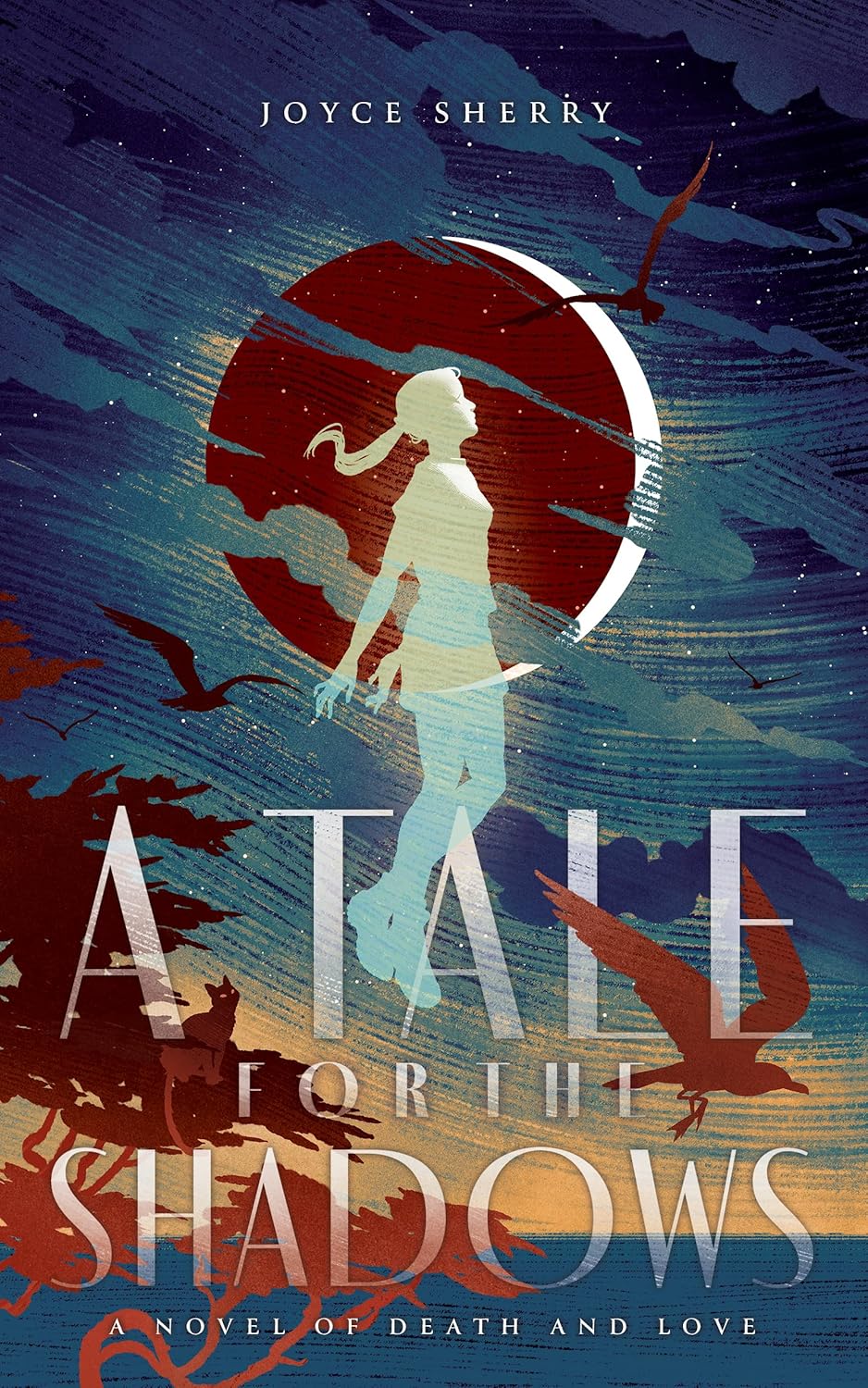
A Tale for the Shadows is a paranormal fantasy novel with a strong gothic streak and a surprisingly tender emotional core. It begins with murder, which sounds blunt because the book is blunt about it: Sarah Sommers is killed by her husband, becomes a ghost, and from there the story opens outward into something larger about grief, loneliness, survival, and connection. As her ghostly life unfolds, she becomes Senka and crosses paths with Silas, a hunted vampire, while another thread follows Finn, a sick teenage boy in a hospital, listening night by night to a story that may be doing more than simply entertaining him. It is a book about death and love, just as the subtitle promises, but it is also about what keeps a person, or spirit, moving when they have every reason to stop.
Author Joyce Sherry writes in a way that feels intimate without getting precious, and that is not easy to pull off in fantasy. The book has ghosts, vampires, ancient rules, and real danger, but the language keeps bringing everything back to feeling. A cabin smells wrong. A hospital room feels long after visiting hours. Loneliness sits in the air. That grounded quality made the supernatural parts easier to trust. I also liked the author’s choice to frame the novel through storytelling itself. The repeated sense that stories “want” to be told gives the book a self-aware quality, but it never turns smug. It feels more like someone sitting across from you and saying, let me tell you what happened, and meaning it.
I found myself especially drawn to the way Sherry handles character. Senka could have been written as pure vengeance, Silas as pure brooding, and Finn as the sentimental heart of the book. None of them stay that flat. Senka grows into someone more thoughtful and more brave. Silas has the old-world vampire sadness you expect from the genre, but he is not just a dark silhouette in a doorway. He is wounded, weary, funny in flashes, and very human in the ways that matter. Finn, meanwhile, gives the novel an anchor. His scenes keep the book honest. They stop it from drifting too far into mood for mood’s sake. I also appreciated that the novel takes its big ideas seriously without dressing them up in heavy language. It asks what love looks like after betrayal, whether pain has to define a life, and what it means to keep choosing existence. Big questions. Quietly asked.
I would recommend A Tale for the Shadows most strongly to readers who like paranormal fantasy, gothic romance, and character-driven supernatural fiction that cares as much about emotional healing as it does about eerie atmosphere or mythic stakes. It will appeal to people who enjoy vampire and ghost stories but want something softer around the edges and more reflective at heart. I came away thinking this book understands that darkness is only interesting if there is some light pressing against it. That balance is what gives it its pull. It is thoughtful, strange, and sincere, and for the right reader, that combination will feel like being led into the dark by someone who knows exactly where they are going.
Pages: 292 | ASIN : B0FBYTKMSB
Lycan Lineage

Lycan Lineage, by Dorianne Ashe, begins as a high-school love story and then sheds its skin fast: June, a cautious senior counting down to graduation, is attacked in a park by a police officer who turns out to be a werewolf, only to learn that she herself belongs to an ancient lycan bloodline. From there, the book widens from local panic to hidden councils, hunter ancestry, supernatural politics, and a deeper reckoning with lineage, desire, and power. It starts with lockers, gossip, and band rehearsal, then opens into a paranormal world with old hierarchies and older wounds.
I enjoyed this book most when it trusted its feral pulse. The early attack sequence has real momentum, and June’s voice carries a jittery, intimate urgency that makes the danger feel close to the skin rather than merely cinematic. I also liked the way the novel lets adolescence and monstrosity overlap instead of treating them as separate tracks: hunger, embarrassment, attraction, secrecy, self-invention, all of it gets folded into the werewolf mythology. That overlap gives the book its best voltage. Even when the prose leans melodramatic, it often does so with conviction, and conviction counts for a great deal in a paranormal romance. There is something unabashedly moon-drunk about the whole enterprise, and I mean that as praise.
Ashe’s writing is strongest in propulsion and mood. At times, the dialogue states emotion rather than letting it smolder, and some turns in the mythology arrive in a rush, taking June from shock to destiny quickly. But even there, I found myself pulled along by the author’s willingness to go full tilt: secret councils, bloodlines, hunters, Egypt, betrayal, desire, war. The novel does not nibble; it lunges. And while I wanted a bit more polish in places, I never had the bored, beige feeling that plagues so much genre fiction. This book wants to entertain you.
I’d hand Lycan Lineage to readers who like paranormal romance, urban fantasy, werewolf fiction, supernatural coming-of-age, and romantic fantasy with a strong first-person heroine and a taste for danger. Fans of Stephenie Meyer’s Twilight will recognize the charged human-monster attraction, though this novel is wilder, pulpier, and less interested in chasteness than in appetite. Lycan Lineage is messy in the way a storm is messy, loud, darkly glittering, and hard to look away from.
Pages: 307 | ASIN : B0GNCD1Q6Z
The Admiral’s Gamble

The Admiral’s Gamble unfolds like a cinematic naval epic mixed with the intrigue of a sci-fi thriller. It follows Admiral James Harrington, a decorated officer at the end of his long career, who stumbles upon a mysterious device capable of altering time. The story begins at his retirement party and spirals into a tense, emotional journey through duty, destiny, and moral conflict. What starts as a quiet reflection on legacy turns into a race against fate, as Harrington must decide whether to sacrifice everything he knows to prevent a future catastrophe.
Reading this book felt like stepping into an old-school war movie that suddenly turns futuristic. The writing is vivid and grounded in military realism, yet it slides seamlessly into moments of eerie wonder. Author Nick Malara writes with a strong sense of rhythm; his scenes move with a cinematic flow that keeps the tension alive even in the quiet moments. A few pages linger long on scenery when the story’s emotional punch could have carried itself. But the heart of the book, the internal struggle of a man torn between heroism and self-preservation, shines bright and feels honest.
I found myself really drawn to Harrington as a character. He’s gruff, tired, and haunted by the weight of command. The dialogue feels old-school and clipped, full of restraint, like the man himself. Yet beneath that hardened shell is a depth of conscience that makes him compelling. The time-travel element, though wild, serves more as a mirror for his soul than a trick of plot. It forces him, and the reader, to ask: what’s the cost of doing the right thing when it erases the life you’ve built? There were moments that hit hard, moments that made me pause and think about sacrifice, legacy, and the strange way duty can both define and destroy a person.
I’d recommend The Admiral’s Gamble to readers who like military fiction with a twist of science fiction, or stories about aging heroes facing their past. It’s ideal for people who enjoy introspection mixed with high-stakes action. The story’s emotional weight and moral questions make it worth the ride. If you like tales that mix grit, heart, and a touch of the unknown, this one’s a good bet.
Pages: 178 | ASIN : B0FH77C97Z

Foretold in the Scriptures

The Manifestation of Evil follows a young girl whose seemingly ordinary life in Ankara slowly unravels under the weight of sinister visions, haunting figures, and a destiny tied to forces beyond her understanding. What was the inspiration for the setup of your story?
The inspiration for the setup for my story would have to be Genesis 3:15 in the Bible, where it says how God will put an enmity between you and the woman and between your offspring and hers; he will crush your head, and you will strike his heel, and that verse was actually prophetic because it deals with the messiah, Jesus Christ, and the spiritual war. In my fictional book, I wanted Asya, a young Turkish girl who lives a normal life, to be visited by celestial beings to herald the birth of her firstborn child, who will change the world and her status as a chosen vessel. But she will be unaware of the type of celestial beings talking to her and the implications of what is being said to her. Just like the Virgin Mary in the Bible, who comes from a religious background, I wanted Asya to come from a religious background as well. Asya has no idea that the child she will give birth to is the antichrist, which was foretold in the scriptures.
What were some of the trials that you felt were important to highlight Asya’s development?
When it came to Asya’s development in the book, Asya went through betrayal and sexual abuse from a family relative, which was an awful thing, and that shaped her life to a certain extent, where she became an overachiever. Now, in my fictional book, I wanted to explore the background of the key players and characters in my book, especially their upbringing and events that will shape their lives, like the Russian president, Igor Alexander, who is an ultra nationalist and has a very dangerous antisemitic ideology.
What were some themes that were important for you to explore in this book?
The purpose of this fictional series is to make people aware of the times we are living in and to think about eternity because, truth be told, we live in a messed-up world. All you have to do is turn your TV on, and you will hear of wars and rumors of wars, and earthquakes in diverse places. People are losing their minds, and there is economic instability, uncertainty, and inflation. It does not take a scholar or a genius to know something is off with this world we live in, and it is full of evil.
Is this the first book in the series? If so, when is the next book coming out, and what can your fans expect in the next story?
The Birth of the Antichrist: The Manifestation of Evil, Part 1 is part of a series. The second book, His Arrival, will be out in January of 2026. This first book deals with all the events and circumstances that will lead to the birth of the antichrist, the man of sin.
Author Links: GoodReads | LinkedIn | X (Twitter) | Instagram | Amazon
The Ruinous Curse: The Hunt for Alesta

The Hunt for Alesta kicks off Mark K. McClain’s “The Ruinous Curse” series with the story of Barrett, a prince caught between duty, prophecy, and personal longing. As his kingdom teeters on the edge of war, Barrett discovers not only that magic might live inside him, but also that he’s at the heart of a much larger destiny. Alongside loyal friends Zanora, Gaia, and Unger, he battles dark forces, navigates hidden tunnels and magic festivals, and must decide whether to wield ancient power or follow a simpler path. The book weaves friendship, fear, and growing up into a quest full of danger and mythic weight.
What stood out most to me was how deeply human Barrett felt. He’s not some perfect hero. He hesitates, he doubts, and he fumbles through his feelings for Zanora like any teenager would. That made his story so much more relatable. The magic and world-building had a classic fantasy feel, but the dialogue kept it fresh. There’s a bit of whimsy here, like talking doors, cheeky magical creatures, and floating gossip orbs, but it’s grounded by the looming threat of war and the emotional weight of loss. McClain isn’t afraid to slow down for a tender moment or dive into darker territory.
The setup took a while, and while I enjoyed the time with the characters, I found myself itching for the real stakes to kick in. Still, once the action started, especially with the chase through Ashton and the reveal of Barrett’s power, I was hooked. There’s also a lot of prophecy talk, which can get a little heavy-handed, but it didn’t stop me from caring about the choices Barrett had to make. McClain manages to keep the story from veering into cliché by injecting heart into every turn, even when the tropes feel familiar.
The Hunt for Alesta is a heartfelt and imaginative coming-of-age story wrapped in the trappings of high fantasy. I’d recommend it to younger readers who loved the early Percy Jackson books or fans of coming-of-age tales in magical worlds like Eragon or the Earthsea Cycle. It’s for those who want magic with emotion, action with meaning, and friendships that feel real. It spins a tale worth following, and I’m excited to see where Barrett’s story goes next.
Pages: 301 | ASIN : B0B4V5BMLG


