Blog Archives
Integrity, Optimism, and Empathy

Odyssey Moscow is a riveting and brutally honest memoir that chronicles your harrowing arrest and imprisonment in Russia following a business dispute gone dangerously political. Why was this an important book for you to write?
Writing Odyssey Moscow was cathartic. After living through such an intense and surreal ordeal—being unjustly arrested, imprisoned, and isolated—I needed to make sense of what happened, both for myself and for those closest to me. It became especially important to me that my children, when they’re older, could read this and understand the values I tried to live by: integrity, optimism, and empathy, even under impossible circumstances. It was also my way of honoring the people who helped me survive—my family, my friends, and the men of Cell 604. Their decency and courage in the darkest of times deserve to be remembered.
How did you balance the need to be honest and authentic with the need to protect your privacy and that of others in your memoir?
I wanted to be candid and transparent, because I felt a responsibility to tell the truth—not just about what happened to me, but about the broader system that enabled it. At the same time, I was deeply aware of the risks others faced. In some cases, I deliberately anonymized details, not to obscure the truth, but to protect individuals who didn’t choose to be part of this story. Honesty and concern for the safety of others had to go hand in hand.
What was the most challenging part of writing your memoir, and what was the most rewarding?
The hardest part was reliving it. Each chapter forced me back into the fear, confusion, and emotional strain of those months. There were times I considered putting the project aside entirely. But what kept me going was the encouragement I received from those I trust—especially my wife, Julia, who not only supported me throughout my imprisonment, but later helped shape the book with wisdom and clarity. The most rewarding part? Without a doubt, it’s knowing that this story might offer others courage. If someone going through a crisis reads Odyssey Moscow and finds even a sliver of hope, or a reason to stay true to their values, then it’s all been worth it.
What do you hope is one thing readers take away from your story?
If there’s one thing I hope people take away, it’s that even while Russia’s regime and justice system should be condemned, we should have sympathy and admiration for average Russian people. They are the main victims of that system. The courage and resilience of my cellmates was inspiring, but the courage of other Russians who stood up for me and helped me to obtain freedom is also something for which I’m deeply grateful.
Author Website
Zero Knowledge
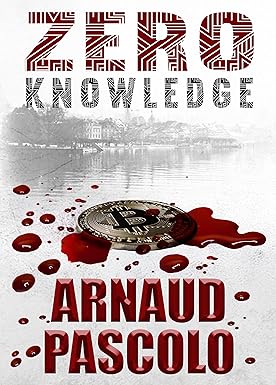

Zero Knowledge is a gripping novel that blends human drama with cyber intrigue in the heart of Switzerland’s “Crypto Valley.” It begins with a deeply emotional story about Duan Ripa losing his wife, Mina, to cancer, and shifts into a fast-paced mystery surrounding the sudden death of Luc Starck, a controversial crypto entrepreneur. As the novel unfolds, a diverse cast—from grieving widows to obsessed bloggers—gets entangled in a web of secrets, danger, and betrayal, all orbiting the high-stakes world of cryptocurrency. The backdrop of sleek Swiss towns and the raw emotions of loss, desperation, and ambition are ever-present, driving a story that feels both personal and wildly unpredictable.
Pascolo’s writing is clean and crisp, with a real knack for emotional depth. The way he painted Duan and Mina’s final moments was heartbreakingly real. I found myself needing a break to gather my thoughts. On the flip side, the novel’s pivot into a more thriller-like, corporate conspiracy felt abrupt to me. While the second half is certainly exciting, it sometimes lost the intimacy that made the early chapters so powerful. Still, Pascolo’s portrayal of the fragile, flawed humanity in every character kept me hooked, even when the plot zigzagged faster than I expected.
What really stood out to me was how relatable Pascolo made grief, greed, and hope feel, despite all the high-tech talk of Bitcoin wallets and cyber heists. The dialogue never felt stuffy or overworked, and the characters, even minor ones, popped off the page with quirks and contradictions that felt so real. Pascolo clearly put a lot of thought into explaining the crypto concepts, and while it added depth and realism to the story, it sometimes made me slow down and really absorb the world he was building.
I would wholeheartedly recommend Zero Knowledge to readers who enjoy a mix of emotional storytelling and smart, high-stakes mysteries. If you like novels where love and loss crash headfirst into dark secrets and tech intrigue, this one’s for you. It’s a wild ride, sometimes heartbreaking, sometimes thrilling, but always full of heart. Just make sure you’re ready to have your emotions pulled all over the place.
Pages: 335 | ASIN : B0F4PPGMZV

What Does Normal Look Like?

The Art Collector’s Wife follows a grandmother and survivor of Auschwitz raising her seventeen-year-old granddaughter, who is desperate to know the truth about her parents, while her grandmother struggles to deal with her grief from the past.
What were some themes that were important for you to explore in this book?
One of the main themes I explored in my book was the idea of what it’s like for a family to survive a world-wide tragedy and somehow come out intact on the other side. What does that new normal look like and how does a young survivor find the old nearly-erased story of her family while writing a new story for herself at the same time? The theme of feeling “othered” as a minority living in a dominant culture was also an intrinsic theme and informed the main characters’ point of view throughout. This is the idea that as a minority you don’t quite fit into the dominant culture but you must strive to assimilate nonetheless, even as you feel the pull of your own culture and identity calling and often coming into conflict with the majority’s influence.
What were some goals you set for yourself as a writer in this book?
I wanted to construct the sound structure of a thriller, but one with a literary voice and a historical context in which the characters were lively and three dimensional, flawed but mostly lovable. I wanted the story to have high stakes and the tension to be palpable and taut with nothing extraneous to the central tension.
What is the next book that you are working on and when can your fans expect it to be out?
I am working on writing a reincarnation crime thriller with aspects of magical realism in four sections, each one of the four elements. It’s in the early rough draft stage and will take at least up to 12 months to finish.
Author Links: GoodReads | Facebook | Instagram | Website
Odyssey Moscow: One American’s Journey from Russia Optimist to Prisoner of the State
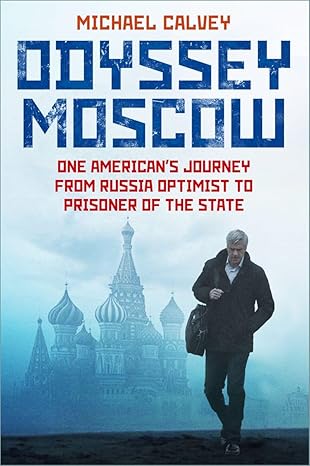
Michael Calvey’s Odyssey Moscow is a riveting and brutally honest memoir that chronicles his harrowing arrest and imprisonment in Russia following a business dispute gone dangerously political. Framed around his 2019 detention on charges of fraud, Calvey recounts the Kafkaesque nightmare of navigating the Russian criminal justice system with gripping detail and a surprising amount of grace. Part prison diary, part corporate thriller, and part philosophical reflection, the book explores power, corruption, and survival with uncommon vulnerability.
Calvey doesn’t hide behind business-speak or self-pity. From the first pages, where he’s ripped from his Moscow apartment by FSB agents, his voice is calm but charged with disbelief and raw emotion. I found myself holding my breath as he described his first night in a cramped cell, trying to keep it together while one cellmate shows off his biceps and the other does endless push-ups. The contrast between Calvey’s former life—Loro Piana shirt, Harvard degree—and the grimness of Matrosskaya Tishina is jarring, and he never once lets us forget how surreal and dehumanizing that shift is.
The book’s real power, though, comes from the way Calvey makes space for others. He doesn’t just tell his story; he lets in the lives of Sasha, Ildar, Dmitry, and others—cellmates, guards, lawyers—each rendered with empathy, even humor. I found myself unexpectedly moved by his relationship with Sasha, a streetwise repeat offender who gifts him molasses cookies and prison wisdom. Even when he’s describing psychological warfare—like the endless sirens and the lights that never shut off—Calvey never descends into bitterness. There’s real introspection here. He wonders what it means to have championed Russia for decades, only to be betrayed by the very system he believed in.
Still, there are moments that made me fume. The scene in the courtroom where the Vostochny Bank security chief films Calvey, giggling as if it were a show, is infuriating. Even more galling is how the Russian court system appears as a hollow formality—the “glass cage,” the parade of character witnesses, the judge who seems moved but ultimately rubber-stamps the FSB’s orders. Yet Calvey keeps his cool. He channels his rage into logic, into planning, into fighting back—not with violence, but with integrity and relentless clarity. That was inspiring.
In the end, Odyssey Moscow isn’t just about one man’s legal battle—it’s about holding onto your values when everything around you crumbles. Calvey never pretends to be perfect. He admits to fear, to pain, to moments of despair. But he also shows us resilience in the most literal sense. I finished the book feeling humbled, a little shaken, but also strangely hopeful. This book is for anyone who enjoys true stories about endurance, justice, and moral courage.
Pages: 291 | ASIN : B0DY5PR2ZM
Moonrise

Moonrise is a dark, winding tale that starts off as a corporate retreat and spirals into a visceral horror-thriller packed with strange rituals, power games, and a literal beast lurking in the woods. At its center is Anthony Montgomery, a weary mid-level employee who’s forced to navigate a world where loyalty tests involve taxidermied wolf paws and a monstrous creature might just be real. The book straddles the line between corporate satire and supernatural horror, and the way it flips from mundane work-life nonsense to full-on blood and snow makes for one thrilling ride.
Claiborne starts things off slow, with Anthony being the perfect jaded everyman, reluctantly sipping wine at an awkward office retreat. Then suddenly, we’re howling under the moon with a taxidermy paw full of wine and being told to drink up like it’s a frat party hosted by Satan. The scene with Mr. Morgan and the “Omega” ritual was unhinged. And I loved it. The writing here is sharp and cinematic, capturing that uneasy tension between corporate absurdity and primal chaos. It’s weird, but in the best way.
But it’s not just the gore and weirdness that kept me hooked. The characters—especially Anthony—are written with surprising depth. His interactions with Luna, his sense of duty to his girlfriend Sidney, and that internal battle between temptation and loyalty felt real. And then that scene in the woods? Where Anthony sees the creature for the first time? Pure horror movie magic. The tension was unbearable, and I was genuinely sweating. Claiborne describes the creature in such vivid detail. Anthony’s injury, the adrenaline, the decision to play dead—all of it was so well done.
There were a few moments that felt a bit over the top. Some of the hospital scenes ran a little long, and a few of the jokes didn’t quite match the tone of the rest of the book. There’s also a lot of internal monologue—some lines hit just right while other didn’t. But honestly, that added to the charm in a weird way. It gave Anthony this raw, messy humanity. He’s not a hero. He’s just a dude trying not to die and maybe score a promotion, which somehow makes him more relatable. I won’t spoil the ending, but let’s just say it leaves enough questions dangling to make me suspicious of every CEO with a vineyard.
Moonrise is for fans of offbeat horror, black comedy, and corporate satire. If you like your monsters bloody and your protagonists flawed, this book is for you. It’s not for the faint of heart or anyone looking for a polished, buttoned-up read. But if you’re in the mood for something different—something wild, creepy, and a little unhinged—pick this up.
Pages: 267 | ASIN: B0CLYXKZGZ
The Art Collector’s Wife
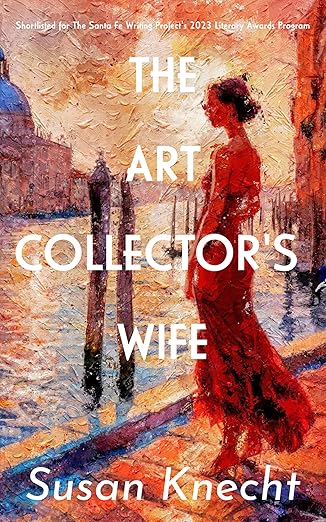

Susan Knecht’s The Art Collector’s Wife is an emotionally rich, time-skipping novel that weaves together post-war trauma, intergenerational secrets, art-world intrigue, and the sharp edges of teenage rebellion. It starts in the horror of Auschwitz, then unfolds decades later in sun-drenched Venice, following the fractured legacy of one family—particularly the women who survived and the granddaughter determined to uncover the past. It’s part historical drama, part coming-of-age, with a steady undercurrent of longing.
The prologue, set on the day Auschwitz was liberated, is devastating and lyrical—just brutal and beautiful all at once. Lila, the mother, trying to keep her friend and a pregnant girl alive, while praying for a glimpse of her son Leo, had me breathless. Knecht doesn’t hold back, and the imagery stuck with me long after I closed the book.
Then we shift to 1960s Venice, and things change gears in a really compelling way. Now we’re with Isabel, Lila’s teenage granddaughter, who’s navigating Catholic school, first love, and the weight of secrets no one will talk about. Isabel is such a great character—sharp, moody, defiant. I loved her scenes with Antonia, her chain-smoking bestie who has all the bad ideas and a heart of gold. When Isabel steals the ruby rosary and starts skipping school to flirt with Niccolo (who is equal parts charming and sketchy), the tension crackles. You can feel her aching for answers about her father and mother, and the way Knecht slowly drops hints about their story is fantastic.
But what really got me was the emotional layering. Knecht has a way of showing how grief and silence pass through generations like DNA. Lila is wrapped so tightly in control and shame, you feel her unraveling even when she says almost nothing. There’s a haunting scene at the cemetery where Isabel confronts her grandmother about her parents—Isabel demands answers, and Lila can’t speak. That silence? It screams. And Miriam, the family friend who carries so much of the emotional glue, is a favorite. She’s got this old-Hollywood flair, but also such deep loyalty and sadness. I kind of wanted a whole book just about her.
I loved this book. It’s heavy but worth it. The prose is poetic without being precious, the story moves through decades without losing momentum, and the characters feel real, flawed, and alive. If you’re into multi-generational family sagas, WWII fiction with a heart, or just crave a book that will grab you by the collar, The Art Collector’s Wife is for you.
Pages: 257 | ASIN : B0F38R8KBV
The Light of Faded Stars

The Light of Faded Stars is a detective novel, but it’s also a sprawling, introspective meditation on memory, mortality, and the quiet devastation of time. The story follows Jack Willington, a retired detective on his deathbed, as he reflects on his final, unsolved case—the brutal murder of a young woman named Evie MacMurrough. With the help of his eccentric, bookish partner Marcel, Jack recounts not only the details of the investigation but also the philosophical undercurrents that haunted both men as they waded through the shadows of humanity and themselves.
I was floored by how the book balanced grit with poetry. The crime scene where Evie is found is brutal, but not gratuitous. It’s haunting. And the prose reads like noir. The first-person voice has this almost cinematic texture—world-weary, vulnerable, even funny in that grim detective kind of way.
What really pulled me in, though, was the relationship between Jack and Marcel. Marcel is the type of character you both want to strangle and protect at all costs. He’s maddeningly intellectual, forever quoting French authors and waxing philosophical about death and dreams. But there’s a tenderness underneath, a haunted soul just trying to hold it together. The scene where Jack catches him hiding in his office, surrounded by French literature and cold coffee, was weirdly beautiful.
Another thing I really appreciated is how the city becomes its own character. Fog City, as they call it, is sad, damp, and falling apart. But the descriptions are lush and honest. There’s a passage during a drive where Jack describes the industrial buildings exhaling smoke and the morning sun fighting through the fog like it’s battling to be seen. It’s so rare to see a city rendered with such gritty affection. It’s not romanticized, but it’s not dismissed either.
Jack’s memory wanders. But it fits the voice. He’s dying. He’s reflecting. It’s messy because life is messy. Some readers might get impatient, but if you lean into the detours—into the tangents about dreams, wars, childhood, guilt—they’ll reward you with insight.
The Light of Faded Stars isn’t just a mystery. It’s a story about the damage we carry and the traces we leave. It’s for anyone who’s ever looked back and wondered what it all meant. I’d recommend it to readers who loved The Road by Cormac McCarthy, or those who like their crime novels with a side of existential dread and a dash of heart.
Pages: 206 | ASIN : B0DM97NLH7
The Killing Kind

The Killing Kind is a gritty, high-octane crime thriller that throws you headfirst into the darkest corners of humanity. Set in a bleak Australian city plagued by a string of grotesque abductions and murders, the story follows Detective Sergeant Paul Anderson, a worn-down, whiskey-soaked investigator trying to hold himself and the case together. When Catherine Elliott, a missing woman thought to be dead, reemerges traumatized but alive, a twisted network of abuse, trauma, and corruption begins to unravel. As Paul navigates his crumbling personal life and the mounting pressure from the public and media, the reader is dragged into a murky world where no one escapes clean.
The opening scene with Catherine crawling away from her captors was raw and horrifying. Hamilton doesn’t ease you in. He grabs you by the collar and throws you into it. The prose is punchy, blunt, and sometimes brutally descriptive. The prologue alone had me clenching my jaw. And while it can be over-the-top in its violence, there’s an authenticity in how the characters respond to their trauma. Paul, in particular, is a fascinating mess. His scenes with Billie—the young bar owner who offers him comfort, and then some, walk a strange line between vulnerable and morally muddy, and I couldn’t look away. The contrast between his broken-down soul and her unexpected tenderness made those scenes oddly tender and uncomfortable all at once.
Just when you’re in the thick of a serious plot twist, Hamilton slaps you with a sharp turn into explicit territory. Still, the character work redeems it. Sharon’s chapter, where she wakes up bruised, broken, and unsure of what happened the night before, was honestly one of the most harrowing depictions of domestic abuse I’ve read. And then there’s Danielle Wise, a detective digging through old social media records, who adds this whole layer of procedural nerdiness that I enjoyed. Her backstory with Bridget was refreshingly open and real, it gave me a break from all the pain without feeling like filler.
I recommend The Killing Kind. This book isn’t shy. It’s for people who can stomach the dark stuff and appreciate characters that feel real even when they’re doing ugly things. If you’re into thrillers that flirt with noir, crime procedurals with grit, and stories where the city feels like a character in itself, you’ll want this on your shelf.
Pages: 266 | ASIN : B0DZPFX5D9



 LITERARY TITAN