Blog Archives
Creating A Safe Space

Sista, Can You Feel a Brother’s Pain? is a compassionate, faith-centered exploration of the silent wounds men carry, revealing how childhood trauma shapes identity, relationships, and faith, while offering a biblical path toward healing, accountability, and restoration.
The phrase “Men hurt. Men hide. Men hope.” feels central. What do you think most people misunderstand about men’s emotional lives?
I believe one of the greatest misunderstandings about men’s emotional lives is the assumption that silence means absence of feeling. Many people interpret a man’s quietness as strength, indifference, or emotional unavailability, when in reality it is often protection learned behavior shaped by expectation, culture, and survival.
Men are often taught early that vulnerability is risky. So instead of expressing pain openly, they internalize it. They carry disappointment, fear, rejection, and pressure privately, believing their role is to endure rather than reveal. When men hide, it is rarely because they do not feel it is because they feel deeply and may not feel safe enough to express it.
The phrase “Men hurt. Men hide. Men hope.” captures a truth that is often overlooked: beneath guarded emotions is hope. The hope to be understood without judgment, respected without performance, and loved without conditions tied to strength alone.
What many misunderstand is that men are not emotionless; they are often emotionally unpracticed in environments that welcome honesty. When given permission to be human instead of merely strong, many men show remarkable depth, tenderness, and resilience.
Understanding men emotionally begins not by asking them to feel more, but by creating spaces where they no longer have to hide what they already feel.
Were there particular stories or patterns that stayed with you?
Yes, many stories stayed with me over the years they are, in fact, what prompted me to write the book. While the circumstances differed, the patterns were often the same. The actions that caused the trauma were similar, even though the faces of the victims changed. And in many cases, the outcomes were heartbreakingly alike.
Many men carried unspoken pain, living under the pressure to appear strong while quietly struggling within. Their hurt often revealed itself not through words, but through distance, anger, overworking, or withdrawal rather than open conversation. Beneath those behaviors, however, was a deep desire to be seen, respected, and truly understood.
One pattern I noticed repeatedly was silence not because men lacked words, but because they lacked safe spaces to speak them. Creating an environment where men felt heard and valued made all the difference. That safe space is exactly what the MITE (Men in Transformation Education) Program provided: a place where men could begin to release what they had long carried in silence and start the journey toward healing and transformation.
How can women better support the men in their lives after reading it?
Understand the power of being present without pressure; love him without trying to manage the process. Here are 5 ways women can walk alongside a man in silence and still genuinely support him, with wisdom, compassion, and strength.
1. Offer Presence, Not Pressure – recognize that sometimes the most healing words are unspoken.
- Sit with him.
- Stay emotionally available.
- Let him know you’re there without asking him to perform vulnerability.
Biblical wisdom:
“The Lord is near to the brokenhearted…” Psalm 34:18
Support looks like: “You don’t have to talk for me to stay.”
2. Create Safety Through Consistency – His silence is rooted in pain and he’s waiting to see if your love is temporary.
- Be steady, not reactive.
- Don’t withdraw just because he’s quiet.
- Let your consistency preach louder than questions.
Biblical wisdom:
“Love bears all things, believes all things, hopes all things, endures all things.” — 1 Corinthians 13:7
Safety says: “I’m not leaving because this is uncomfortable.”
3. Affirm His Worth Without Demanding Disclosure – Many men fear being seen as “less than” if they speak.
- Speak life into who he is not what he shares.
- Affirm his strength, character, and value apart from his story.
Biblical wisdom:
“Death and life are in the power of the tongue…” Proverbs 18:21
Support sounds like: “You matter even in your quietness.”
4. Respect His Timing While Holding Healthy Boundaries Walking alongside doesn’t mean disappearing yourself.
- You can honor his silence and still be honest about your needs. “Me Time” some say self care is important for you
- Support does not require self-neglect.
Biblical wisdom:
“To everything there is a season” Ecclesiastes 3:1
Wisdom balance: Compassion without self-abandonment.
5. Cover Him in Prayer, Not Control – Prayer reaches places conversation cannot.
- Pray for healing, not forced revelation.
- Ask God to do what only God can do.
Biblical wisdom:
“Cast all your anxiety on Him because He cares for you.” 1 Peter 5:7
Spiritual support says: “God is working even when I can’t see it.”
Pearls of Wisdom for Women supporting or walking along with someone in silence is not passive, it’s active trust.
But remember: You are a companion, not a counselor; a supporter, not a savior.
And for men: Be Silent No More. Silence may have kept you alive but love, safety, and God’s grace can lead you toward healing. Give yourself permission to be healed.
Sista, Can You Feel A Brother’s Pain?


Sista, Can You Feel a Brother’s Pain? is a deeply compassionate and spiritually grounded exploration of the hidden wounds many men carry from childhood into adulthood. The book weaves Scripture, lived experience, and the author’s years of ministry with incarcerated men into a guide that explains how unhealed trauma shapes identity, relationships, faith, and emotional expression. The heart of the message is clear and powerful. Men hurt. Men hide. Men hope. The chapters walk through silence, shame, verbal wounds, abandonment, generational cycles, and the long reach of emotional, physical, and sexual abuse. At the center of it all is God’s restorative love and the author’s call for understanding, accountability, and healing.
I kept pausing while reading because the writing lands with a kind of emotional weight that really resonated with me. The tone is warm and firm at the same time. I appreciated the way she confronts harsh truths without making the reader feel attacked. I found myself thinking about how many men really do move through life with silence wrapped around their pain like armor. The emotional rawness, the stories of boys treated like grown men, the confusion, the shame, the longing for safety. All of it stirred something in me. The simplicity of the language actually made the message sharper. Nothing felt dressed up. Nothing felt distant. It felt like someone sitting across from me telling the truth that everybody knows, but nobody says.
The chapters on emotional and verbal abuse spoke to me personally. The idea that a man can be well built on the outside but crushed on the inside felt painfully accurate. The writing made me think about how often we misinterpret withdrawal as arrogance or indifference. There is a lot of grace in these pages. A lot of patience. A lot of spiritual encouragement. At the same time, the author does not excuse harmful behavior. She keeps accountability right there on the table. I like that balance. It made the message feel honest. The prayers and reflection questions added a gentle rhythm that slowed me down and made me sit with what I had just read. I noticed how often the book circles back to hope. Even in the darkest chapters, there is this steady reminder that God sees what happened, knows what still hurts, and invites healing anyway.
I walked away moved and encouraged. I would recommend this book to women who want to understand the emotional landscape of the men in their lives, to men who are tired of pretending they are fine, and to anyone involved in pastoral care, counseling, or community leadership. It is also a meaningful read for people who simply want to love better and communicate with more understanding. The book feels like a bridge between worlds that rarely speak to each other. It shines a light on wounds that deserve attention, compassion, and truth so real healing can begin.
Pages: 78 | ASIN : B0GMLN6NJ3

One Day at a Time-A Daily Journey with Jesus


Jesus remains one of the most polarizing and influential figures in history, revered by billions and central to countless historical and religious texts. To practicing Christians, he is the ultimate source of light, mystery, and blessing, a guiding presence whose teachings shape their daily lives. Yet, in the chaos of modern life, it’s all too easy to lose sight of his teachings. One Day at a Time: A Daily Journey with Jesus by Lillie Dunbar offers a thoughtful and practical reminder of what it means to live intentionally with Christ at the center of one’s heart and mind.
Dunbar’s book is designed for practicing Christians who seek to deepen their faith and live out the core principles of their belief. For believers, this book serves as both a guide and a call to action, urging them to align their daily lives with the values and teachings of Jesus.
The structure of the book is simple yet profound. Dunbar encourages readers to embark on a 31-day journey of reflection, devotion, and mindful living. Each day serves as an opportunity to examine Jesus’ teachings and consider how to apply them practically. The goal is not just personal growth but a ripple effect of positivity, where living according to Christ’s example influences and uplifts others as well.
This is no small task. In an age where many profess Christianity while neglecting its foundational principles, Dunbar’s invitation is both timely and ambitious. The writing itself is clean, introspective, and meditative qualities that lend the book a tone reminiscent of devotional literature or even a modern spiritual guide.
Dunbar’s clarity of thought and depth of conviction shine through on every page. She writes with sincerity and purpose, offering readers a glimpse into her own connection with Jesus and inviting them to foster a similar relationship. For those seeking to grow closer to Christ and to live with intention and faith, this book is an excellent companion.
One Day at a Time is more than a guidebook; it’s a gentle yet firm nudge toward living a life of purpose rooted in the teachings of Jesus and infused with grace. Dunbar’s work is a heartfelt offering to those willing to listen and act.
Pages: 105 | ASIN : B0DPL3MP2P

Broken and Redeemed
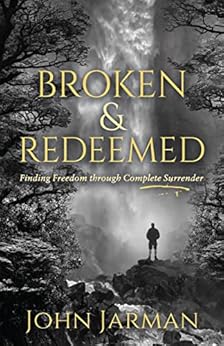
Broken and Redeemed by John Jarman tells his story of redemption. Jarman wasn’t always a spiritual person and initially wasn’t even convinced that he would want to write a book about his story. But, after seven years of trying and delaying, he finally shared his story about how he was once broken and then found redemption when he was ready for it. The title Broken and Redeemed came to Jarman one day in his prayers. It means to highlight how we all are broken, and then once we are ready to come home, we are redeemed.
I really liked this honest book because of the level of self-awareness and humbleness depicted. The author constantly reminds the reader that he, too, is just another flawed and broken human being and not a pastor. This makes the author more relatable and removes the feeling of alienation that people feel in their darkest times. At the end of each chapter, readers will find a set of “Reflection or Discussion” questions that encourage them to actively engage with the book. The author does not want to just share his story; instead, he wants to help readers take steps to find their own redemption.
The overall format of the book is well written with multiple styles. It is interspersed with various quotes, poems, images and formatted with headings and bullet points. This helps keep the reader’s interest and makes the book easier to grasp while still maintaining the conversational and personal tone of the book.
Broken and Redeemed would be an excellent book for those looking for a simple spiritual read. The Christian perspective will be inspiring to those who identify as part of the Christian faith. It is also a short memoir for those that enjoy reading about others’ personal transformations.
Pages: 187 | ASIN : B09TS8MM3T


