Blog Archives
My Heritage, My Pride


My Heritage, My Pride by Manmohan Sadana is a thoughtful and personal collection of spiritual poetry, cultural essays, historical reflections, and short fiction celebrating India’s extraordinary religious and literary heritage. Drawing from Hindu mythology, Sikh history, Sufi mysticism, and centuries of philosophical thought, Sadana explores the beliefs and traditions that have shaped generations. The book moves comfortably between ancient scriptures and contemporary life, examining how timeless teachings can still guide our understanding of leadership, relationships, compassion, and personal responsibility. Its combination of Indian spiritual literature, mythology, and cultural heritage makes for an engaging exploration of faith and identity. Throughout the collection, Sadana’s admiration for his cultural roots is unmistakable, and his enthusiasm encourages readers to consider how inherited wisdom continues to influence everyday decisions. There’s a genuine sense of affection running through these pages, giving the book the warmth of someone sharing stories and ideas that have held special meaning throughout his life.
Essays about Guru Nanak’s companion Bhai Mardana, the mystical poetry of Bulleh Shah, and the spiritual traditions of Kashmir offer fascinating perspectives on devotion, equality, and religious harmony. His discussion of Christian carols, Sikh Shabad Kirtan, and Sufi ghazals is particularly interesting, showing how music creates emotional connections across different faiths. Hindu mythology also occupies a central place, with explorations of Lord Rama, Lord Jagannath, Goddess Siddhidatri, and the philosophical significance of Shiva’s Tandav. Sadana often connects these traditions to modern concerns, including ethical leadership, environmental responsibility, and social justice. His reflections on lessons from the Ramayana and Bhagavad Gita in corporate settings are an especially distinctive touch. These connections give the book a practical dimension, inviting readers to recognize the continuing relevance of ancient Indian philosophy in today’s world.
Sadana’s spiritual poetry frequently uses vivid natural imagery, rhythmic language, and an almost prayerful sense of wonder. Pieces such as “Baba Buddha,” “The 13th Spiral,” and “When the Preserver Walked Through Time” revisit familiar spiritual and mythological figures through questions of courage, duty, mortality, and moral choice. His portrayals of characters from the Mahabharata, including Duryodhan, Yuyutsu, Urvi, and Hidimbi, encourage readers to consider different emotional and ethical perspectives within these enduring narratives. The collection also includes intimate writing about family, love, and belonging. “Welcome Rachel Bani” is especially tender, celebrating a newborn child while reflecting on the inheritance of traditions across generations and continents. Meanwhile, the story “Sargi” brings cultural customs into the intimate world of marriage and companionship. Sadana’s style is expressive and earnest, sometimes richly embellished, with recurring images of light, rivers, flowers, and sacred music creating a recognizable poetic voice.
What makes My Heritage, My Pride memorable is its consistent belief that cultural heritage becomes meaningful through the values people carry into their lives. Across its spiritual essays, historical discussions, mythology-inspired poetry, and contemporary storytelling, Sadana returns to compassion, humility, integrity, and the importance of respecting different religious traditions. His treatment of Sikhism, Hindu philosophy, and Sufi spirituality reveals a sincere interest in the common human desire for understanding and connection. Readers interested in Indian mythology books, South Asian cultural history, spiritual poetry collections, and religious philosophy will find plenty to appreciate here. The book’s wide-ranging structure also makes it suitable for reading a chapter at a time, allowing individual subjects and reflections to settle before moving to the next. Above all, Sadana’s collection feels like an invitation to celebrate where we come from, reflect on what our traditions teach us, and discover how the wisdom of earlier generations can remain a living part of the present.
Pages: 256 | ASIN : B0HJJL9YKT

La Llorona: The Awakening

La Llorona: The Awakening is a grief novel wrapped in folklore, family drama, and psychological suspense. Mary Romasanta builds the story around Ruth and Mi-Ra, two women tied together by love for the same family and divided by old wounds, cultural expectations, and the kind of pride that keeps people from saying what they actually mean. From the preface’s plain statement, “Grief is an unwelcome guest,” the book tells you exactly where it’s headed: into the rooms grief takes over, and into the strange things people start to hear, see, and believe when loss has nowhere else to go.
What makes the book compelling is the way it treats the supernatural as both literal and emotional. La Llorona and Mul Gwishin aren’t just spooky figures hovering around the edges of the plot. They’re part of how the book thinks about sorrow, motherhood, guilt, and inheritance. Water shows up again and again as danger, memory, temptation, and purification. The scares work best when they feel intimate, like a drip in the dark or a voice calling from just beyond what a character can prove.
The heart of the novel is really Ruth and Mi-Ra’s relationship. Their early scenes are sharp with resentment, especially around family traditions, fertility, food, and John’s attention. Mi-Ra can be cruel, but the book spends enough time inside her grief that she becomes more than a difficult mother-in-law. Ruth, meanwhile, has her own guardedness and ambition, yet she keeps choosing care when bitterness would be easier.
The pacing is intense, especially after John’s death shifts the book from a tense family gathering into a story about survival after devastation. Romasanta leans into big emotions, and the prose often has a cinematic, high-pressure quality: kitchens feel like battlefields, bathrooms become haunted spaces, and ordinary objects take on unbearable meaning.
La Llorona: The Awakening is an emotionally driven novel about how grief can isolate people, distort them, and still leave room for connection. It’s part ghost story, part family reckoning, and part meditation on the stories cultures use to explain pain. Its strongest moments come when folklore and domestic realism overlap, letting a haunted house, a strained marriage, a mother’s envy, and a grandmother’s longing all feel connected. The book stays with the question of whether sorrow will pull its characters under or teach them how to reach for one another.
Pages: 272 | ASIN : B0DQLXJB83

Fly Stone, Fly
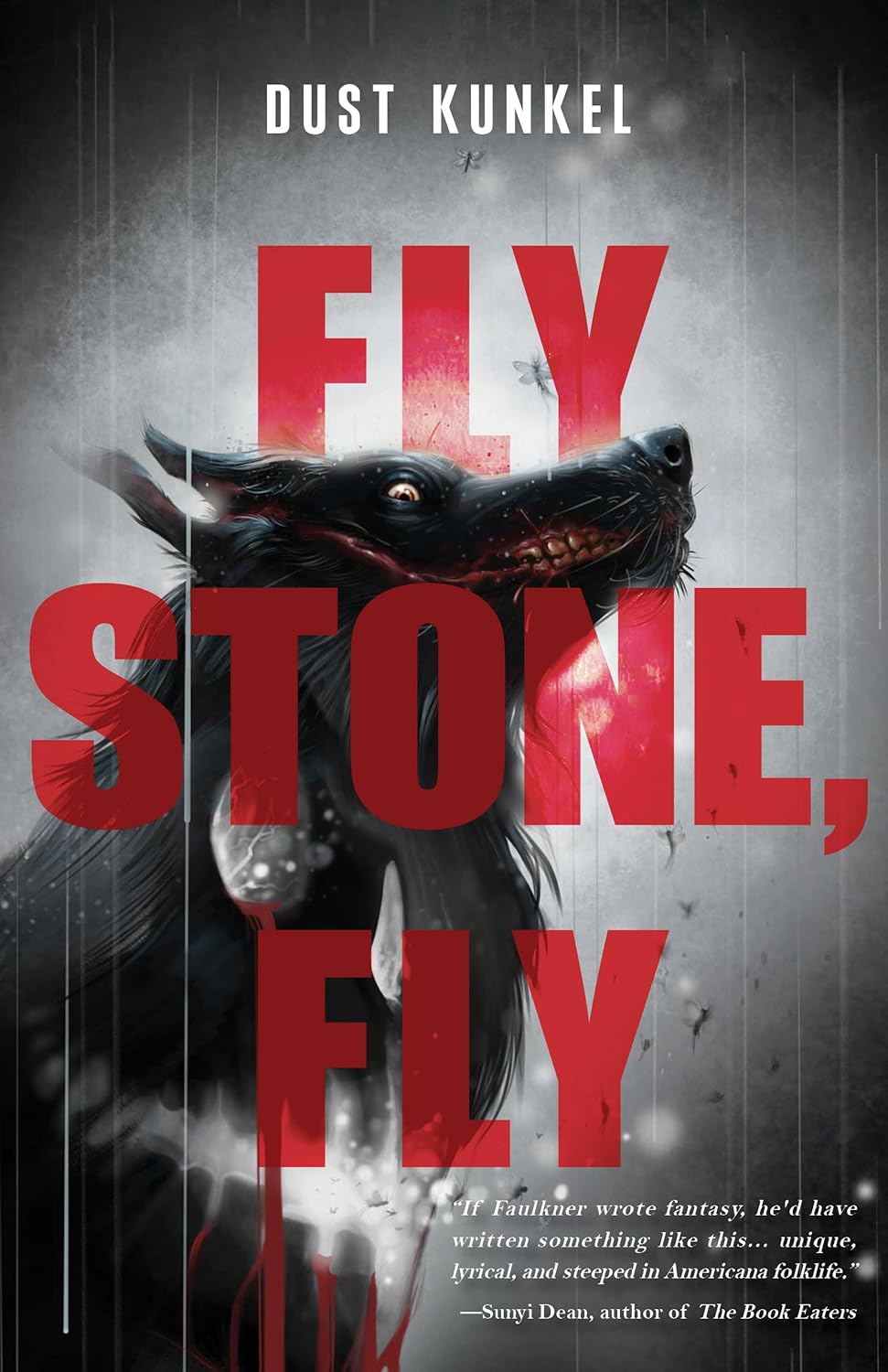
Fly Stone, Fly by Dust Kunkel is a feral, river-haunted dark fantasy about Clayton Bergmann, a boy left alone in the Idaho wilderness after his parents disappear, who grows into grief, prophecy, and revenge with a foul-mouthed dog named Dammit, a Shakespeare-soaked mind, and a family curse snapping at his heels. The story moves from survival tale to Western Gothic blood-feud, with Big Jim looming as both villain and nightmare, and with stoneflies, river water, old stories, and bad dogs carrying more meaning than they first seem to bear.
I admired how strange this book is willing to be. Its voice has burrs on it: funny, wounded, profane, lyrical, and sometimes gloriously overgrown. Clayton narrates like someone trying to lash a broken raft together while already in the rapids, and that urgency gives the novel its pulse. The Shakespeare references could have felt ornamental, but here, they’re weighty, private, and handled often. The book’s best passages do not merely describe wilderness; they make the canyon feel sentient, accusatory, almost liturgical.
What I enjoyed most was the book’s refusal to sand down pain into easy nobility. Clayton’s loneliness is not pretty. His friendships are not tidy. Dammit, Lina, MK, and the rest feel carved from contradictions: loyal and dangerous, comic and damaged, ridiculous and mythic. The novel’s maximal style asks for patience; it can wander and double back. But that excess is also part of its charm.
The target audience is readers who want dark fantasy, Western Gothic, revenge fantasy, mythic coming-of-age, and literary fantasy with a rough comic streak. Readers who like Neil Gaiman’s myth-in-the-modern-world sensibility or Stephen King’s gift for giving childhood terror a local address will find something kin here they enjoy, though Kunkel’s voice is more backwoods-baroque and river-drunk.
Pages: 498 | ASIN : B0DTDDG3T8
Bloodless We Go Buried: An Earth Mother Horror

Bloodless We Go Buried unfolds as an Earth Mother horror story that blends myth, ancestral memory, and a feeling of something old waking beneath the everyday world. The book moves through dreamlike scenes where the natural world feels alive and watchful. Its language carries a poetic rhythm, and the Proto Celtic threading through the chapters adds a strange and ancient pulse. The story works like a long walk through dark woods where every shadow seems to breathe, and where the characters find themselves caught between fear, kinship, and something that feels like a summons from the deep past.
The voice of the book has this raw and intimate quality that made me feel like I had stepped into someone’s private ritual. The writing style is bold and emotional. It plays around with language in ways that sometimes made me pause and reread, not because it was confusing but because it felt like I had stumbled into a hidden doorway. I liked that the horror leans more toward mood and spirit than monsters. It creeps instead of jumps. Every time I thought I knew where the story was going it would slide sideways and make me rethink what I thought I understood about the characters and the land.
At times, the prose leans into its own intensity, and I found myself both loving it and wanting to come up for air. Some passages feel almost like a personal journal or a field notebook. That mix made the book feel alive. I appreciated that the author was not afraid to be weird or tender or blunt. There is humor tucked between the shadows, too. A kind of self-awareness that kept me grounded while the story tried to lift me into stranger places.
In the end, I walked away feeling stirred and a little haunted. I would recommend Bloodless We Go Buried to readers who enjoy literary horror, mythic fiction, poetic language, and stories that feel more like a dream you carry with you afterward. If you like books that make you slow down and sink in, this one might be exactly what you are looking for.
Pages: 324 | ASIN : B0F463PNKY
Self-Discovery

The Dryad’s Crown follows an orphaned wood nymph raised in a corrupt city and trained to be an assassin who finds a way to escape her violent past, only to be pulled back by a tragic death and seek revenge. What was the inspiration for the setup of your story?
As a kid, I loved epic fantasy, and I loved superhero stories. I was a huge Marvel Comics nerd. Still am! Originally, The Dryad’s Crown came to me from the perspective of the husband and him discovering that his wife had this whole past and an alter ego. She had these amazing powers. But as I was thinking about it, I decided to tell the story from the perspective of the wife and daughter. Yes, there’s still the alter ego aspect, but it became a larger story about self-discovery and healing. As a novelist, I can make my canvas as large as I want it to be. So, I became interested in telling a massive multi-generational saga about the fey and the gods living among us.
I find the world you created in this novel brimming with possibilities. Where did the inspiration for the setting come from, and how did it change as you were writing?
I spent about a year working on just the setting before I started writing the story. I wanted to create a fantasy world that felt immediately recognizable and required little explanation. Like Middle Earth, Westeros, the Continent, or the Six Duchies, the continent of Amon in Efre Ousel is all vaguely medieval and vaguely European. I’m not inventing anything new. Efre Ousel is a medieval world. Few of the comforts we associate with a more modern age exist. Nobles from coastal cities would have access to books, finer clothes, spices, and herbal medicine, but it’s an extravagance not available to everyone. No printing presses—only patient scribes with a quill and an inkpot. To me, it. came down to one guiding statement: “There are more secrets, wonders, and mysteries contained within these four continents and the seas between them than could be explored in several lifetimes.” I wanted a setting where I would never run out of stories to tell.
The goal was then to share rich details and nuance from the setting over the course of the first novel, to explore the history, mythology, and cosmology of this place. I wanted to delight readers with all the unique customs, common phrases, and distinctive art. My favorite part about a fantasy setting is when it has a “lived-in” quality. Not something that was invented, but explored. I can turn any corner, and I know there will be something there.
The setting didn’t change as I was writing. It was already fairly locked in. It just expanded as our characters traveled out from their home.
What were some themes that were important for you to explore in this book?
In The Dryad’s Crown, I wrote about family, self-discovery, healing, mercy, love, and much more. But as I understand theme, I think it’s the reader’s responsibility to decide what the themes are, i.e., what is being said about those subjects. You don’t want the author making declarations about such things, but they’re usually wrong. Maybe The Dryad’s Crown isn’t saying anything? I hope it is, but I’ll leave it to the reader. I will say this: Maricel’s story arc is one of my favorites, moving from being fairly helpless to quite capable and self-reliant. I think there’s something there. I also love Timon’s story. He’s a priest who hid away in his temple, and by the end, he understands his true calling. If you’re looking for themes, I think the “minor characters” also have a lot to say.
Where does the story go in the next book, and where do you see it going in the future?
The next book, War of the Hounds, is a novella interlude that tells the story of Bren Caius during the war. It’s based on Shakespeare’s Henry V. War of the Hounds is already published and available. People can download the ebook for free from my website. (Link below.) However, I’m currently writing the second novel in the main series. The Summer Sword should be available next year.
I gave some hints toward the end of The Dryad’s Crown about where the story was going. We find out about a promise made between a god and the Fey Court. That will have some repercussions. We also learn more about Mendal Caius and his ambitions. In The Summer Sword, we lose some important people. New characters are introduced, but don’t expect everyone to make it to the end. The Dryad’s Crown is fairly self-contained as a story. But once you get into The Summer Sword, we’re cutting the brake lines and going full speed. Jump out at your own risk!
Author Links: GoodReads | Facebook | Website | Amazon
Only one fae can keep them from waking.
Silbrey is an orphaned wood nymph, taken from her forest home and raised in the corrupt city of Penderyn. The fae child grows up unaware of who she is, what she can do, and the calling of her kind.
Under the control of a cruel guildmaster, Silbrey is trained as an assassin. As an adult, she escapes her violent past to start a new life and a family. But a tragic death brings her back to the familiar cobbled streets to seek revenge.
This dark path leads Silbrey to uncover an even darker secret: An ancient evil will wake the titans and break the world. Silbrey must travel with her daughter across a war-torn land to defeat that evil.
What begins as a fairy tale transforms into a multi-generational epic fantasy about love and loss—and a woman with a strange connection to nature.
The Dryad’s Crown is an emotional, coming-of-age fantasy debut. The first volume in a gritty saga, set in the immersive world of Efre Ousel.
Booklife describes the story as “a fantasy unlike any other.”
Darke Realms: One Tough Temporary She Alpha (Arcana 2)


Michele L. Sayre’s Darke Realms – One Tough Temporary She Alpha drops you into a world where supernatural beings, werewolf politics, and the remnants of a brutal war collide. The book follows Leiry Matthis, a reluctant alpha, forced back to her pack after the death of her rogue mate and father. The stakes are high. Her son is in danger, a self-proclaimed Rogue Alpha King is on the rise, and she has no patience for anyone trying to control her fate. With power struggles, deep emotional wounds, and a fierce determination to protect her own, Leiry embodies the grit and resilience that define Sayre’s heroines.
One of the strongest aspects of this book is its protagonist. Leiry is not your typical heroine. She’s hardened by loss, unapologetically strong, and yet emotionally vulnerable in moments that make her feel incredibly real. From the first chapter, where she steps back onto the packlands she once fled, the weight of her past is palpable. The author does a great job balancing her toughness with raw emotional depth, like when she recalls her mate’s death during the Arcana-Kabaltz War. The trauma is still fresh, and Sayre doesn’t shy away from showing how that grief shapes Leiry’s choices.
The world-building in this book is layered with supernatural history, werewolf customs, and high-stakes politics. Sayre weaves in elements of mythology and war lore, making the conflict feel bigger than just a personal struggle. It’s about survival, legacy, and the balance between light and dark. The concept of the Arcana, beings of light who oppose the Kabaltz, agents of darkness, adds an epic scope to the story. The inclusion of treaties, sacred burial rites, and pack dynamics makes the world feel lived-in, though at times, the sheer amount of detail can slow things down. Still, it’s a rich setting that fantasy lovers will appreciate.
There are moments where the pacing slows, particularly in the middle of the book. Some sections take their time delving into exposition, especially when exploring the mythology and history of this world. While these details add depth and intrigue, they occasionally pause the action. Similarly, some dialogue leans into exposition, particularly when characters reflect on past events. However, Sayre’s snappy writing style and Leiry’s sharp inner monologue keep the story engaging, ensuring the book moves forward in an enjoyable way.
Darke Realms – One Tough Temporary She Alpha (Arcana 2) is a gripping read for fans of supernatural fantasy, particularly those who enjoy strong female leads and intricate world-building. If you love stories with werewolves, war-torn pasts, and heroines who don’t take crap from anyone, this book will be right up your alley.
Pages: 542 | ASIN : B0DXKH34D2
Pennsylvania Fireside Tales Volume 2
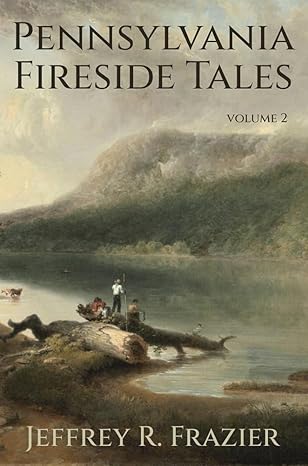
Pennsylvania Fireside Tales Volume 2 by Jeffrey R. Frazier is a delightful anthology that captures the heart and soul of Pennsylvania, a state often considered America’s heartland. From the historic streets of Philadelphia to the steel-forging foundries of Pittsburgh, Pennsylvania has long been a place of rugged beauty and enduring tradition. The people who have lived here, and continue to do so, carry with them a rich heritage of stories—tales from a simpler time when life moved at a gentler pace, yet held lessons just as meaningful. This collection of folk tales, the second in Frazier’s series, evokes the spirit of classic American storytellers like Mark Twain and Washington Irving. The tales are imbued with the no-nonsense, hardworking ethos of Pennsylvanians, but also reveal their whimsical and imaginative nature. The state’s rugged landscape serves as the perfect backdrop for these inventive and fascinating stories, many of which were likely spun around a crackling hearth on a cold winter’s night.
Within these pages, readers will encounter a vivid tapestry of banshees, ghosts, and folksy wisdom, all set against the backdrop of Pennsylvania’s bucolic countryside. Frazier skillfully brings to life the hardy souls who form the backbone of this region—blue-collar workers who take pride in an honest day’s work, and whose stories are as enduring as the land they till. The evocative descriptions make it easy to imagine the smell of woodsmoke rising from cookfires and the distant howl of a farmyard dog. One of the standout tales in this collection is the bloodcurdling Haunts of the Highway, which will leave readers on the edge of their seats. Like Twain at his best, Frazier has a gift for creating characters that are both lovable and deeply human. Even in the midst of improbable events, the goodness and decency of these characters shine through, reminding us of the enduring power of simple virtues.
In a world that often seems to have lost its sense of wonder, Pennsylvania Fireside Tales Volume 2 is a refreshing reminder of the magic that still exists in the stories passed down through generations. Frazier’s collection not only entertains but also rekindles a sense of wonder, bringing these timeless tales vividly to life.
Pages: 200 | ASIN : B0D2S12CR5
Rejuvenating Uncertain Futures on Earth

Phoenix Saga: A Modern Epic in Prose: Peace on Earth Protocol rejuvenates ancient stories, infusing them with contemporary relevance that deeply resonates with today’s readers. What was the inspiration for the original and fascinating idea at the center of the book?
I, We appreciate the re-framing for this first challenging question!
Core conceptions and resonance originate with the birth of my first-born daughter, Raegan, in June 2020 and a simple promise spoken unto a Universe. What occurs next feels impossible – even still. Perhaps, it’s best for Jean to offer Her words, as it relates:
Il avait été a la peine, c’etait bien raison qu’il fut a l’honneur
In earnest, this work has been less about rejuvenating ancient stories than rejuvenating uncertain futures on Earth — essential works here and now!
Evolutions in Phoenix Saga: A Modern Epic in Pro Sé developed quickly across the Summer months of 2023 ahead of my Vows, as Peace on Earth Protocol came together with pure Vison & Guidance from Archangel Auriel & Saynt Jean d’Arc — amongst many Others. Jean required work on Phoenix Saga: A Modern Epic in Pro Sé be completed within two years once my former employer absolved a significant burden of responsibility by “eliminating my position.” With my consent, Our Work flows, naturally –
We, I discuss “inspiration” in an interview with IndieReader ahead of our first publication in 2023. Not much has changed — “Inspiration” remains a strange human word.
A link to that interview may be found here
What were some themes that were important for you to explore in this book?
An essential, primary focus for Phoenix Saga: A Modern Epic in Pro Sé be Peace on Earth – and pragmatic implementations within fundamentally plural biological systems for a 22nd century and beyond.
What experience in your life has had the biggest impact on your writing?
With certainty, my Voices – not a single word of Phoenix Saga: A Modern Epic in Pro Sé could be written, absent Jean’ Love and Auriel’ Pyres.
When will book two be available? Can you give us an idea of where that book will take readers?
Phoenix Saga: A Modern Epic in Prose: Peace on Earth Protocol at its core is a retelling of an Ancient Babylonian Epic of Creation, which carefully and lovingly integrates 5,000-years of religious semiotics into a unifying call for behavior-biased progress toward Peace on Earth.
We invite readers from all walks of life to engage in a spiritual revolution sparking creative endeavors, which provide families we never live to see with ancestors to love, a Celestial Wish, thorough documentation, and evidence that unity, hope and love connect beyond and across generations as we build Paradises together –
Book Two publishes on August 2, 2024 as a gift to my first-born son, Emrys, for his second birthday. Work on a supporting audiobook is underway!
Author Links: GoodReads | Moxfield | Website
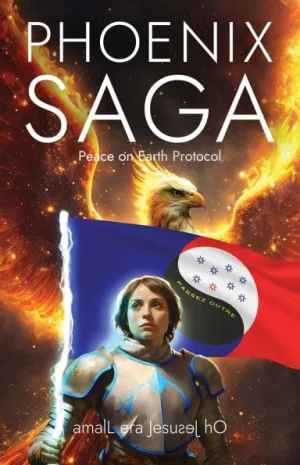
Awakening long-dormant altruistic possibilities begins with a leap of faith rooted in primal and innovative semiotic paradigms. Phoenix Saga: A Modern Epic in Pro Sé emerges as a modern mythos for Peace on Earth, safeguarding possibilities across a boundless, beautiful Multiverse!
A second book in a Phoenix Saga trilogy offers transfigurations of ancient Babylonian stone tablets, called Enūma Elis. Divinity reselling Mythos for God of Creation & Primordial Chaos Dragon-recast to last. Adventures across generations begin anew within a simple framing:
Where did God go? She Ariseth!


