Blog Archives
SECRET SEEDS
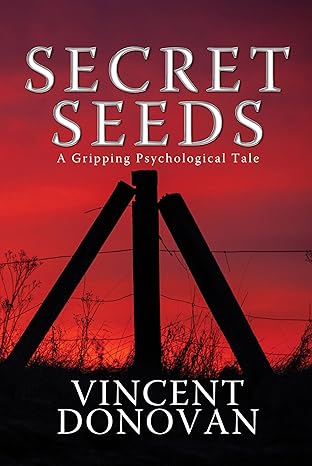

The story follows Olivia, a young girl trapped in an abusive home, and her mother Gabrielle as they try to break free from the cruel grip of Papa Dale. What begins with the vivid image of a turquoise Pontiac Catalina soon unfolds into a tale of survival, fear, and hope. Olivia’s journey takes her from the suffocating confines of her stepfather’s “ghost ship” of a house into the uncertain world of strangers who promise safety but hint at danger of a different kind. Layered with family secrets, cult-like communities, and the constant threat of violence, the book dives into how trauma shapes identity and resilience.
I found myself pulled in by the writing style. It’s raw and conversational, sometimes almost like listening in on someone’s thoughts. That made it easy to connect with Olivia’s fear, frustration, and flashes of defiance. Some passages struck me hard, especially the descriptions of the trunk punishments and Gabrielle’s quiet, desperate planning. At times, though, the prose felt heavy, almost overcrowded with metaphors and similes. It worked to show the chaos in Olivia’s head, but occasionally I wished for a cleaner line so the power of the moment could breathe.
The story doesn’t flinch from showing how abuse warps everyday life, how escape is messy and uncertain, and how hope is often a fragile thread. I felt angry at Gabrielle for sending Olivia away with a stranger, yet I also understood the impossible bind she was in. That conflict left me unsettled, but that’s what makes the story stick. It’s not neat or easy, and that felt real. I also appreciated how Donovan balanced darkness with small glimpses of beauty, like the hawk overhead or the fleeting memory of a father’s smile.
I’d recommend Secret Seeds to readers who are drawn to psychological dramas with a strong emotional punch. If you’re interested in stories about survival, family trauma, or the fine line between trust and betrayal, this book will keep you turning pages. It’s not a light read, but it is a gripping one.
Pages: 297 | ASIN : B0DYWRR98D

Lasting Impacts
Buckaloo follows a couple opening a dog training academy and preparing for their wedding, who are navigating past traumas, the complexities of relationships, and the chaos of planning two major life events at the same time. What was the inspiration for the setup of your story?
When people find each other and choose to marry, they come with baggage from past relationships. Sometimes one partner is an open book, and the other holds close to their secrets. The story explores what happens when trust builds enough to share every truth. It’s about a couple with a relationship that can withstand whatever comes their way. That kind of maturity takes work but pays dividends. Offering two major life events, each with challenges, allows the reader to embrace the couple and cheer for their successes.
What were some of the emotional and moral guidelines you followed when developing your characters?
Early on, the reader learns that Bill is a “still waters run deep” kind of guy. His concern, respect, and acceptance of others have clearly been a long learning curve. Once inside his cadre, he’d give you anything. It took a long time to let Harley inside. Harley’s charisma brings people together. As an introvert, she has longed for a village to call on. In the novel, she realizes that her friends and family village was her doing. She shows love and acceptance to everyone in her ever-growing circle, watching as each one embraces their talent. Harley aches when things don’t go the way her friends or family might want. Central to Harley’s circle are dog lovers, with many dog owners in her crew. Harley wants others to have the close, respectful relationship she has with Gemma. The reader learns that her maturity has grown from several challenges, and we find she can still struggle over life’s triggers.
What were some themes that were important for you to explore in this book?
Weaved throughout the novel are four key themes. The first of these is that mid-life relationships are essential. The people in these relationships can help your life flourish, even if they haven’t been lifelong friends. Another theme conveyed in the work focuses on the human-canine relationship and how deep those relationships can become, with love, respect, and training. Another theme is how momentous life events can happen in planned and unplanned ways, and what matters is how you react. The other theme is how we humans form communities or villages, and especially how those have lasting impacts on our lives in large and small ways.
Will there be a follow-up novel to this story? If so, what aspects of the story will the next book cover?
Another novel with many of these characters and several new ones is planned. There will be continued focus on Bill and Harley, and their dogs Gemma, Blackjack, and their newest, Coda. Now that a few friends have become neighbors, there will be more focus on them, as well as the dog training academy. Additionally, Harley and Gemma are sure to find themselves assisting on a trail adventure.
Author Links: GoodReads | Facebook | Website | Amazon
Throughout Harley and Gemma’s adventures, they have made friends in states as far east as Washington, D.C. and as far west as Oregon. Those friends and more have assisted Harley and her fiancé, Bill Harris, with their engagement and in their home designing and ranch developing endeavors. Those same friends gather once more to assist Harley and Bill with the academy opening. Since the friends have travelled far once again, Harley and Bill have agreed to have the academy opening one weekend with the wedding taking place the following weekend.
Before the events can happen, Harley and Gemma are called away for another dangerous adventure where Harley’s and Gemma’s skills are required. Before and between the life-changing events, friends and family arrive with their dogs, their own imperfect relationships, and their areas of expertise to help Harley and Bill. The story of Buckaloo revolves around excellent food, enjoyable conversation, especially those taking place at the fire pit, and dreams that might come true, though likely in unexpected ways.
Hurricane, twelve dogs, a training academy, glamping tents, and a black-clad stranger intertwine in this story of middle-aged friendships.
Parental Love and Support

Orphans of the Living tells the story of a family’s complicated history spanning from 1920s Mississippi through decades of poverty and social change. What inspired you to write this novel?
The novel is based on my mother’s own family, of which I knew little. But things in the past have a habit of invading us today, and the more I researched, the more I realized my mother’s lived experiences influenced my life, and my children’s lives, in ways I had not understood. Yes, this is a novel, but the skeleton, the bones of the story, are real. It is a hell of a story, and I wanted to dig deeper into it.
Can you share with us a little about the research that went into putting this book together?
I really had three sources. Here’s how they came into play, for instance, in my grandfather’s sojourn in Mexico. I had the bits and pieces my mother gave to me in her life, between bouts of addiction and mental illness, such as “My father went to Mexico to grow bananas.” I explored the vast trove of information and connection at Ancestry.com and Newspapers.com, such as records of my grandfather’s trip to San Francisco, where he took a steamer to Mexico, and a manifest for a ship that brought him and his bananas to Galveston. And the third piece was how I followed what I learned from Ancestry.com and Newspapers.com. For example, I spent a lot of time learning how bananas were grown and raised in the tropics, and how United Fruit, then one of the largest corporations in the world — owned by men from the American South — employed Jim Crow tactics to control their labor force in Central and South America. Weaving all these sources together was an act of imagination and conjecture, and that’s why it’s a novel, not non-fiction.
What were some themes that were important for you to explore in this book?
So much about this era, and these people felt so current to me: the multi-generational impact of poverty, racism, inequality, sexism; the experiences of people who were at the margins, lacking education, perhaps confused about their gender or sexual orientation, long before there was any general knowledge of these issues; the impact of Western expansion and “manifest destiny” on how average Americans in the west thought about land and success; the importance of parental love and support.
What is the next book that you are working on, and when will it be available?
I have completed a memoir that is in many ways a sequel to Orphans of the Living. She Writes Press will publish it in spring 2027. And I’m way deep into writing a third book, another novel, a near-future political thriller.
Author Links: GoodReads | Threads | Instagram | Facebook | Website | Amazon
In the shadow of the Great Depression and Jim Crow south of the 1930s, an impoverished white family escapes—with the help of Black sharecroppers—from a vengeful Mississippi plantation overseer intent on lynching them. Arriving in California to start a new life, Barney and Lula Stovall are haunted by the past, the children they’ve left behind, and the daughter they cannot love or protect.
Orphans of the Living follows the peripatetic life of the Stovall family, woven from four parallel stories: Barney and Lula Stovall, and two of their nine children, Glen and Nora Mae.
Their California sojourn—from their hardscrabble dairy farm, to the brig at the San Francisco Presidio, to the building of the Golden Gate Bridge—lead them on paths toward each other and forgiveness. But redemption doesn’t come to them all.
Orphans of the Living: A Novel
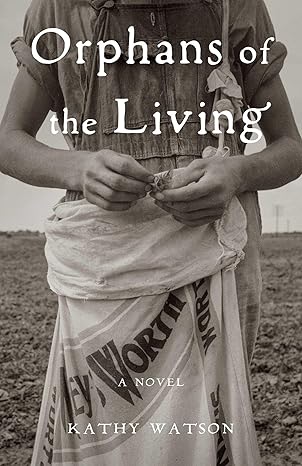
Orphans of the Living is a novel steeped in generational trauma, racial violence, and the slow unraveling of the American dream. Kathy Watson tells the story of Lula Stovall and her tangled family history, spanning from a Mississippi plantation in the 1920s through decades of poverty, migration, and social change. Lula, a white sharecropper’s wife, becomes both victim and agent in a life defined by loss and desperation. The novel, inspired by Watson’s own family, shifts between perspectives and decades, revealing how choices, often forced, sometimes chosen, echo through generations. It is part historical fiction, part personal reckoning, layered with the grit of real events and imagined truths.
Watson’s writing hits like a storm. The language is raw, unvarnished, and aching with honesty. The prose feels lived-in, like the old quilts and wood stoves that fill her characters’ homes. The pain is immediate and unrelenting. Lula’s desperate act with a piece of fencing wire early in the book stunned me. Not just because of what happened, but because of how real it felt. Watson doesn’t write for comfort. She writes to bear witness. There were moments when I had to put the book down and walk away, not because I didn’t want to keep going, but because it hurt too much to stay in the scene. That kind of writing is rare.
But it’s not just the writing that stuck with me. It’s the ambition of the book. Watson dives deep into race, class, history, and motherhood, often all at once. She gives space to the Black characters in Lula’s orbit, making sure they aren’t just there to prop up a white story. Violet Byrd, especially, is a force. Her presence radiates power and calm in a world built to crush her. The author makes the brave decision to include racist language and brutal events for historical accuracy. Nothing in this book is simple. No character is purely good or purely bad. Everyone is just trying to survive.
Orphans of the Living is not just a story about one woman’s brutal life. It’s about inheritance. What we’re given, what we pass on, and what we bury. I respected the story deeply. It’s a hard, unblinking book that left me gutted, moved, and wide awake. I’d recommend this book to readers who aren’t afraid of discomfort. If you’re drawn to stories like Jesmyn Ward’s Salvage the Bones or Toni Morrison’s The Bluest Eye, this will resonate. It’s a hard read, emotionally, but one worth sticking with. Anyone interested in Southern history, generational trauma, or the quiet violence of poverty should read this.
Pages: 352 | ISBN : 978-1647429782

Buckaloo
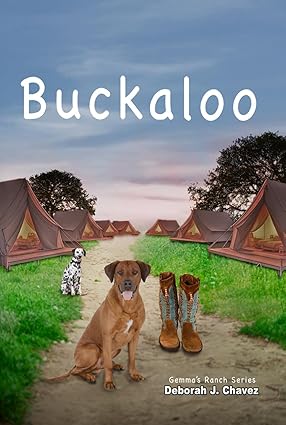

Deborah J. Chavez’s Buckaloo is a warm and engaging novel that blends everyday joys and personal healing with a deep love for dogs and community. Set in the rolling foothills of Santa Barbara, the book follows Harley Fremont and her partner Bill as they open a dog training academy and prepare for their wedding. Alongside their dogs Gemma and Blackjack, they navigate past traumas, the complexities of relationships, and the chaos of planning two major life events. The story balances quiet domestic moments with emotional depth, creating a gentle but moving narrative about love, resilience, and second chances.
The story is unhurried, comforting, and full of small surprises. I loved the writing style. It was easygoing and heartfelt without being sentimental. Chavez has a gift for capturing the way dogs enrich our lives, and she writes with the kind of affection that makes you feel like you’re in the story. The dialogue is realistic and often funny, and I appreciated the strong sense of place. The natural beauty of California’s chaparral landscape is described with a soft reverence that made me want to lace up my hiking boots and head out with a dog of my own. Harley and Bill’s relationship, too, is a mature love story. It’s built not on drama, but on trust, compassion, and the shared work of building something together.
The pacing is slow, and there were chapters where the plot gave way to long descriptions of logistics, guest accommodations, shirt logos, and tent arrangements that could have been trimmed without losing the warmth of the story. But I didn’t mind too much. There’s a slice-of-life charm to it, like listening to a friend tell you about their big plans over coffee. The emotional core, Bill’s tragic past, Harley’s quiet strength, and the community that forms around them, kept me engaged. And the dogs are the beating heart of this book. Gemma especially is written with so much love and personality, she almost feels like a co-narrator.
Buckaloo is a cozy and heartfelt read that would appeal to dog lovers, fans of small-town fiction, and anyone who enjoys stories about real people trying to do good in the world. If you’re looking for something gentle, affirming, and full of canine charm, this one’s for you.
Pages: 287 | ASIN : B0FG3FGHJ2
All Sorrows Can Be Born
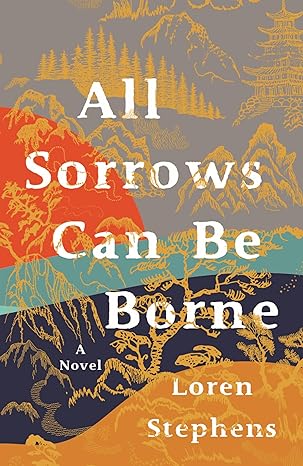
Loren Stephens’ All Sorrows Can Be Borne is a poignant historical novel that threads love, grief, and cultural displacement into a deeply personal story. At the heart of the book is Noriko, a Hiroshima survivor, who must make the unimaginable decision to send her young son across the ocean to be raised by relatives in America. The story unfolds as both a tribute and an excavation of memory, of war, loss, and survival, told with a haunting, lyrical voice.
The opening chapter is profoundly affecting. The scene at the airport, in which Noriko and her husband Ichiro part ways with their young son Hisashi, is rendered with quiet intensity. It is not overwrought or sentimental; instead, it is measured and heartbreakingly restrained. The emotional impact lies in the understated details, Hisashi’s carefully chosen outfit, the heart-shaped box containing his umbilical cord, Noriko’s silent anguish as she tries to maintain composure. Stephens allows the emotion to unfold subtly, never forcing it, and this delicate control makes the moment all the more powerful.
One of the novel’s most compelling achievements is how it interweaves personal tragedy with the broader scope of historical trauma. Noriko’s recollections of surviving the Hiroshima bombing are not presented merely as historical context; they form the emotional core of her character. The stark imagery of black rain falling from the sky, scorched bodies in the streets, and a city in ruins conveys a haunting sense of devastation. Yet amid this bleakness, there are glimmers of resilience. Her father’s remark that her scarred forehead might one day be seen as a mark of uniqueness offers a moment of unexpected tenderness and wisdom.
Equally striking is the novel’s psychological complexity, particularly in the relationship between Noriko and Ichiro. Ichiro is a difficult figure, physically ailing, emotionally withdrawn, often sharp and unkind, yet Stephens renders him with empathy. His fear, frustration, and shame are palpable. A particularly heartbreaking moment occurs when he tells their son, Hisashi, that they will follow him to America on the next flight, a deliberate untruth meant to ease the child’s separation. It is a quiet betrayal, but one born of desperation. Later, Noriko’s acknowledgment of her own complicity, when she admits, “neither of us deserved him,” is devastating in its candor. It captures the depth of her remorse and the inescapable weight of their decision.
I’d recommend All Sorrows Can Be Borne to anyone who loves character-driven stories with emotional weight. It’s especially powerful if you’re drawn to historical fiction that isn’t about battles, but about what happens after. This book is for people who want to feel something real and lasting, something that lingers. It is not an emotionally light read, but it is unquestionably worthwhile.
Pages: 449 | ASIN : B0DV2X44K8
The Pale Flesh of Wood

Elizabeth A. Tucker’s The Pale Flesh of Wood is a beautifully tangled family saga rooted in grief, memory, and the slow bend of time. Set across multiple generations, the novel follows the Hawkins family through snapshots of their lives spanning from the 1930s to the 1980s. Centered around a California oak tree, literal and metaphorical, it’s a story about growing up under heavy legacies, about love that wounds and heals in equal measure, and about the things we inherit even when no one speaks them aloud.
The writing is lush and poetic without being precious. Tucker knows how to set a mood and trap you in it. Her dad’s joking charm cracks in places, revealing a man stitched together by war, trauma, and ego. This isn’t just a story about a family. It’s about what’s left unsaid between parents and kids and how silence grows teeth.
The structure threw me at first, it jumps through decades and voices, but once I leaned into it, I was hooked. I liked that Tucker didn’t feel the need to hold my hand. In Chapter Two, young Charles, Lyla’s father as a boy, lies under that same tree, imagining himself fossilized after being slapped by his own mother. He watches a roly-poly bug curl up tight and wishes he could do the same. That image wrecked me. It’s a subtle but gutting way to show how generational pain rolls downhill, gaining speed like that tire Lyla’s dad sends her down in later chapters. And when she crashes, he just lights a cigarette and says, “Whoopsie poopsie.” I wanted to throw the book across the room.
Still, what surprised me most was how much tenderness lives in these characters. Even the broken ones. Especially the broken ones. Pops, the quiet grandfather, reads baseball stats to baby Daniel. Lyla’s grandmother, fierce and frigid at first, softens in fragments. And Lyla herself, oh man, I rooted for that girl with everything I had.
I’d recommend this book to readers who loved The Sound and the Fury or Marilynne Robinson’s Housekeeping, folks who appreciate moody, intimate stories that don’t rush their reveals. It’s not a quick read. It’s not meant to be. This is a sit-on-the-porch-and-let-it-sink-in kind of novel. One that lingers. One that matters.
Pages: 320 | ASIN : B0D6V72BL7
My Home Country
The Dream Lives On follows a man fleeing with his children and mother from Ukraine to the US to seek refuge, who falls in love with a successful woman searching for meaning in her life. What was the inspiration for the setup of your story?
When the war began in Ukraine, it came as a tremendous shock for me. I moved to the United States from Ukraine back in 2005, but I still feel a very strong connection to my home country. I used to visit Ukraine every year. Many of my friends and relatives still live in Kyiv and I am in touch with them regularly. I was completely devastated and extremely worried about everyone when the war started. Unfortunately, the situation has not improved since the war began. Ukrainian residents still suffer from missile and drone attacks daily-just last night there was a deadly air attack that injured and killed people, as well as damaged some buildings. This is a nightmare with which we are forced to live since 2022.
Given all this background, it was only natural for me to start writing a fiction novel that takes place during the first months of the war. This is what was on my mind the whole time.
While all the characters of the novel are fictional, the events are not. As the Russian army started approaching, Ukrainians needed to make a choice of either staying or leaving Ukraine. This was not an easy choice…The characters in my novel took different routes and outcomes were quite different. Not everyone survived, unfortunately. You’ll need to read the book to know how things worked out for them.
As to the romance between the main characters, Viktor and Teresa, I wasn’t originally planning on that. But this idea came to my mind as I was progressing through the book. I thought that both Viktor and Teresa were wonderful people who faced a lot of adversity (for very different reasons). They deserved to find their happiness in the end. And happiness for me means being with a person who loves you, respects you, and truly understands you. It does not involve money, power, or other similar things.
What are some things that you find interesting about the human condition that you think make for great fiction?
For me, the most interesting ones are growth and development. Throughout their lives, people have new experiences, they learn, they adapt, they evolve and hopefully become better people in the end. In my current novel, characters learn to live in completely new circumstances. Their world essentially comes crashing down, but they remain true to their values. They help each other and build a new future. It might be quite different from the one they expected originally, but they learn to live in it. The most important thing in life is staying true to your values, no matter what happens.
What was one scene in the novel that you felt captured the morals and message you were trying to deliver to readers?
There are multiple scenes in my novel which capture the essence of war and tremendous hardships faced by civilians, especially small children. I tried to watch as many documentaries as possible to give an accurate account of what happened. Some of the most critical scenes are those that depict the damp bomb shelter in which adults, children and their pets gather; the Yurchenko family’s miraculous escape from the town of Irpin under the Russian missiles, and the crowded train platform where thousands of frightened people wait for a scarce train to Warsaw.
What is the next book that you’re working on, and when can your fans expect it?
I have two books in the works.
One of them is the sequel to The Dream Lives On, which would complete the trilogy. There are still some unanswered questions remaining. First, we still need to know why Solomon left his home country of Tanzania and moved to Ukraine. What prompted him? Did something bad happen to him back home? We also need to know what happened to Solomon’s sister, Gloria. Does she still live in Tanzania, or did she move away? What did her life turn out like? I know some answers already, but not all, so more work remains to be done.
The second book I’m writing is a novel inspired by the expat life in Uzbekistan. For the last two years, I’ve been living in Uzbekistan together with my family due to my job (I work in international development). I never imagined in my wildest dreams that I would be living in Central Asia, but sometimes life takes you to the most unexpected places. I must say it’s been a very interesting experience which I would very much like to reflect in a new fiction novel. I already have a few chapters written and I hope to finish the book before I leave my posting in Uzbekistan.
Author Links: GoodReads | Instagram | Website | Amazon
All he is looking for is a refuge for his family; falling in love is the last thing he expects on the other side of the Atlantic. What’s more, he would have never guessed that his journey could help his relatives connect the dots in a decades-old family mystery.
Teresa Jameson, a top executive in an international company, has lived for sixteen years in a seemingly happy marriage. Or maybe she just closed her eyes too often and refused to face the reality?
As ample cracks start to show, she needs to dig deep into her soul. Will she look away just one more time, or give the new relationship a chance to flourish?


 LITERARY TITAN