Blog Archives
Finding a Family and Love

Searching for Zen follows a young boy from Earth who is given a divine destiny and the chance to impact civilization if he confronts humanity’s dark side and discovers the meaning of love. What was the inspiration for the setup of your story?
A long time ago, I lost someone and decided to drive across Canada alone. I felt like my life was all but over. I felt like I had wasted all my potential and listened to Beck’s Sea Change for the first 20 hours. After a while, I needed to change my mindset, so I decided to tell myself a story to help change my mindset. I needed to remind myself what I felt was most important. The story, of course, has changed a lot in the past 20 years.
Zen goes through many changes and challenges, shaping who he becomes. A lot of time was spent crafting the character traits in this novel. What was the most important factor for you to get right in your characters?
I was hoping you feel him being lost. So all his powers and potential are not what is really important, but finding a family and love was what was most important. Maybe just me, but I think it’s finding those connections that really matter in life.
What were some themes that were important for you to explore in this book?
I feel like the current situation of our world is darker than it has been since I’ve been alive, and many feel lost. I just wanted to be a small voice to remind people what is important.
Will there be a follow-up novel to this story? If so, what aspects of the story will the next book cover?
I have 6 other stories or books, but I do have a plan for 2 more books for Zen. The next might be Zen headed to the spiritual realm and look into that. I don’t see my story as a spiritual one really, but I do think faith is important. I like leaving that open to interpretation, but I was trying to blend a more modern take on fantasy religion or faith.
Author Links: GoodReads | Twitter | Facebook | Website | Amazon
Our story begins on Earth, but an Earth with a past steeped in fantasy, myths, and legends. From humble beginnings, a boy is given a divine destiny, a chance to make his mark on human civilization, but he must embark upon a life-changing journey. Our hero struggles to understand what he has been given and what to do with it, losing himself in doubt and loneliness as he confronts the dark side of humanity.
Coming of age, Zen finds strength in himself, builds a family from a motley collection of strangers, and discovers love. His newfound friends help him open up, learn to trust others, and eventually understand his reason for fighting. The trials he faces throughout his quest amplify as his power increases, and he even sparks the ire of those in the spirit realm, who doubt any human can wield such power successfully.
As Zen grapples with the weight of his purpose and the sacrifices it demands, he learns that the true power lies not in his abilities alone, but in the bonds of love, friendship, and the resilience of the human spirit.
An Element of Tragedy

Birth Management Water follows a couple as they navigate the denial of their right to parenthood in an oppressive regime, embarking on a quest for autonomy amidst a society that tightly regulates birth. What was the inspiration for the setup of your story?
With the whole debacle of abortion rights in the US in recent times, I thought to myself, “What might the opposite of banning abortion or the right to choose abortion look like?” I came up with “banning birth or the right to choose to give birth,” which is what we find is the situation in BMW. I also feel very strongly about the squeeze put on the middle class in recent years (in the US but also elsewhere in the West), and I found that these issues fit together well, so we have leading characters who are educated and articulate but who are middling earners saddled with debt for something that’s not really paying off the way it should.
Jane and Jacob are intriguing and well-developed characters. What were some driving ideals behind your character’s development?
Jane and Jacob have different economic origins, and they meet in the middle. They meet in school, which is a great equalizer – an intended provider of opportunity – and their relationship grows from there, but they are never able to reconcile their foundational differences but not because it is inherently impossible. Rather, it is because society makes it impossible for them. Opportunity isn’t enough. Their economic and family situation is made untenable by political policy. Further, Jane’s father, Huy, who largely guides Jane’s mother’s views as well, never accepts Jacob although no one in the text can understand poverty and the struggle for social mobility quite like Huy. Instead, in Huy’s eyes, Jacob thumbs his nose at what he should do to provide for Jane – seek money first and everything else second. Huy sees Jacob as irresponsible. Jacob’s and Huy’s contrasting ideals – despite them being of similarly humble origins – drive an immovable wedge between these two men who would otherwise likely have the strongest shared understanding of struggle of any two characters in the novel. They are also the two people who care about Jane the most, so she has to manage both sides of their conflict, which becomes a burden she is, perhaps, justified to shed. To his last breath, Jacob never stops fighting for Jane even though by the end it becomes clear that it is probably no longer the right thing to do. They share ideals, but Jane and Jacob never quite share circumstances except for the denial of their right to have children.
Jane was brought up to do the “right thing,” but what is right is too individual to determine for another – this also speaks to the law that denies Jane and Jacob the right to have a child. Huy is never able to accept that the “right thing” might not be exactly what he thinks it is, and so he is never able to support Jane, so I would say there is an element of tragedy in that the disintegration of Jane and Jacob’s relationship is foretold by Huy’s rigid concept of the pursuit of success, which he only even begins to realize at the very end of the last chapter. Moreover, it happens that Huy’s views are largely supported by the legislation that blocks unsanctioned births. Although we don’t directly see that this is the case, he probably loves that Jane and Jacob can’t have a baby. Ultimately, “good girl” Jane can only find relief in a relationship entirely separate from anything in her past life – one that must help her forget her disappointment and also satisfy her physical needs because physicality with Jacob becomes analogous to pointlessness, to absurdity. Therefore, the only way for her to find relief for herself is to betray pretty much everything to which she had ever devoted herself, and she almost has no choice.
What were some themes that were important for you to explore in this book?
Early on, I realized I was speaking to the question “what is right?” or “what is the right thing to do?” in this novel. The answer, I think, is that there is often not a clear right path. That isn’t to say there is never a clear path – I think there sometimes is. However, when too many people are too rigid concerning too many things, especially enormously important things such as child-bearing, things are unlikely to go well.
Obviously, in conjunction with the childbirth motif, I wanted to explore choice. Who gets to choose? Why? Why can’t everyone have the same power of choice? Choice becomes a class conflict in BMW, which, as I mentioned earlier, squeezes the middle class, which, in my opinion, is the wrong direction for any country, fictional or real. I mean – what do we really think is going to happen if people such as teachers and social workers are made to inhabit a de facto economic underclass?
When and where will Birth Management Water be available?
I wish I had a good answer for this one. I am a new author – this is my first extended piece of fiction. BMW is not yet published (although it is copyrighted), but I hope that won’t be the case a year from now. If I’m not swept off my feet by an eager publisher or agent (ha!) at some point in 2024 while I’m entering every contest I can that accepts unpublished manuscripts, I suppose I might self-publish – perhaps using Amazon – but I really don’t know right now. As soon as I do, I’ll let the world know!
The Heir of the Dynasty
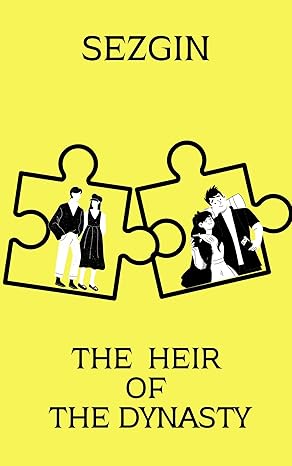

The Heir of the Dynasty, by Sezgin, weaves a tale of familial intricacies, tradition, and the pursuit of succession within an ancient lineage. Set against the backdrop of the Reinburg family’s ancestral castle, the narrative unfolds with an enigmatic allure, drawing readers into a world brimming with secrets and the weight of age-old responsibilities.
The author’s adeptness in storytelling is evident through rich descriptions and meticulous attention to detail, crafting a tapestry of complex family dynamics and societal expectations. Within the walls of the Reinburgs’ castle, every room resonates with echoes of the past and whispers of the future, immersing readers in a realm where tradition and modernity collide. Dialogue crackles with tension and emotion, providing insight into the inner conflicts and desires of the characters. As the plot unfurls, intrigue and suspense abound as Mrs. Reinburg orchestrates a reality show to determine the worthy successor among their grandchildren.
Themes of power, privilege, and the enduring impact of past decisions are deftly explored, enriching the narrative with layers of depth and complexity. The climax of the story resonates with poignancy and introspection as Mr. and Mrs. Reinburg confront their regrets and seek redemption in the twilight of their lives. The emotional depth of the conclusion lingers, prompting contemplation on the bonds of family and the enduring legacy we leave behind.
The Heir of the Dynasty is a masterfully crafted saga that seamlessly blends drama, mystery, and familial dynamics. With its compelling narrative and evocative prose, it promises to enthrall readers from start to finish, leaving a lasting impression on those who embark on its journey.
Pages: 149 | ASIN : B0CWY8B1KN

Family: In Search of Genuine Belonging

Family: In Search of Genuine Belonging, by Paul Dunion, EdD, is a thought-provoking exploration into the myriad ways children relate to their families, offering a profound look at family dynamics. This book delves into the psychological and spiritual aspects of maturing into adulthood, focusing on the transformative journey and underscoring the importance of personal development in positively impacting society.
Dr. Dunion begins the book with a set of intriguing questions related to security, belonging, and love. These are designed to be reflective touchpoints for readers as they delve deeper into the text, encouraging a thoughtful examination of how family relationships shape one’s interaction with the world. The text navigates various family structures and dynamics, such as “The Enmeshed Family” or “Too Much Family,” “An Estranged Family” or “Not Enough Family,” “The Looking Good Family,” and “The Shame-Based Family.” This exploration offers a comprehensive understanding of key family aspects like communication, problem-solving, decision-making, and boundary-setting. It also touches on the more nuanced themes of affection, learning, and authority within family units.
Echoing the sentiments of Virginia Satir, Dr. Dunion posits the family as a microcosm of society. He argues that global change is rooted in the transformation of familial relationships and structures. By examining elements such as power dynamics, intimacy, autonomy, trust, and communication, the book extends its relevance beyond family to include societal interactions. For readers with an interest in psychology and spirituality, this non-fiction work stands out for its clarity and accessibility. Dr. Dunion’s rigorous research and structured approach, combined with thoughtful quotations and compelling metaphors, enrich the reading experience.
Family: In Search of Genuine Belonging not only engages and enlightens but also offers pragmatic tools for personal development and healing. It is a recommended read for those grappling with family dynamics or seeking deeper insights into the intricacies of life.
Pages: 228 | ASIN : B0CW6H1JYW

Complexity, Unpredictability, and Even Absurdity

One Mad Year: An Aussie Bloke’s Tale follows a father from Australia as he experiences his mundane life and the quirks of modern parenthood. What inspired the setup of your story?
A few people who have read my book One Mad Year have said how surprised they were that everyday life could be written to be so funny, absurd, and dramatic. Sure, there are no submarines or helicopters in the novel, but it can be no less dramatic in its impact on the reader. Irony and humour can be found, I’m sure, in most people’s lives once they tell their story. It’s never mundane as there are frights, delights, and challenges that present in unexpected ways. It’s the quirks, idiosyncrasies, and vulnerabilities of a man who was once someone’s mate at school, who then co-created a family, where he now has a role as husband and father and yet he retains his mateships. He finds himself with young children who have their own identities and opinions and a wife who may not always agree with the way he thinks or acts. Throw in some male naivete, some typical male pride, and the expectations of him from his wife and there’s plenty of story available in his and most people’s lives. His love for his wife and family underpins all his efforts whether they succeed or not. Sure, some of the things that happened to Steve Smith are crazy, but they are certainly not unique to his story. It’s even more entertaining when those situations he finds himself in are often of his own making.
Steve Smith is a man that many people will be able to relate to. Are there any emotions or memories from your own life that you put into your character’s life?
Yes, many. I’m a husband and father of two girls (now in their ‘30s). Like most Australian men, I have ‘old mates’ and ‘new mates.’ The ‘old mates’ are those who I went to school or university with. Those men know me best and remain an influence on me and my family relationships. They offer an opportunity to revert in age when I meet up with them, and those who have read the book will identify with that statement. There are many more influences from my own life in the book. Of course, some husbands have experienced the incredulity that one of his most excellent ideas is met with rejection and even ridicule by his wife. His vision of how things should be done may even go through a review and approval process by his wife and sometimes his children. Yes, that’s somewhat familiar to the author.
What were some themes that were important for you to explore in this book?
One of the key themes (and it belongs to the main character in the book), is that, inside a marriage and a family, best intentions by the dad or husband are no guarantee of favourable outcomes. Further, while the husband-and-wife, partners, or parents in a family form a well-defined unit, interactions with neighbours, friends, workmates, and a myriad of other people, bring complexity, unpredictability, and even absurdity and hilarity. When two people come together to create a family, their pasts can present in strange and unexpected ways. Men and women can also see things differently and when they are husband-and-wife, friction is a probable eventuality. I wanted to bring through the book an authenticity about Australian family life and the impact the Australian environment has on our people; how they behave and the risks we take in daily life.
I also wanted to authentically depict mateship as we know it in Australia. I hope my readers will deem that delivered.
I fervently wanted to avoid Australian cliche in my book, and I am delighted that the Literary Titan reviewer noted my effort in that.
What is the next book that you are working on, and when will it be available?
My Editor encouraged me to start on the next book as the second of a series, and I’m well into it. It will be a fictionalised story about me and my (Aussie) family’s assignment in the United States. It may be another year before the first draft is complete.
Author Links: GoodReads | Facebook | Website | Amazon
One Mad Year is Mike Lathouras’s hilarious debut that delivers a generous dose of laughter, tears, and recognisable domestic madness.
It’s a rollicking ride through a year in the life of one very tested, very entertaining Aussie dad!
Where the Heart Lives: A Milford-Haven Novel

Mara Purl’s Where the Heart Lives, the second installment in the Milford-Haven Series, offers a delightful continuation of the narrative established in the series’ first book. This novel primarily centers around the protagonist, Miranda Jones, as she embarks on a journey of self-discovery, both personally and as an artist.
Where the Heart Lives allows readers to delve deeper into the lives of the series’ characters, fostering a sense of intimacy and connection, particularly with Miranda. Purl’s narrative artfully navigates an ensemble of characters, enriching the story with diverse subplots like Delmar Johnson’s investigation into Christine Christian’s disappearance. These engaging narratives complement Miranda’s journey and bring a dynamic contrast to the central focus of her character development.
Purl skillfully captures the essence of her characters’ internal thoughts and observations and enriches the narrative throughout by integrating these engaging elements into the storytelling. I found Delmar Johnson’s perspective as a cop adds a layer of intrigue, and I feel that weaving his observations directly into the narrative could offer an even more immersive experience for the reader. (The author does give Johnson’s perspective in the related novella, What the Soul Suspects.) The novel’s strength lies in its well-crafted narrative and the compelling subplot involving Deputy Johnson’s investigation.
Where the Heart Lives is a charming and well-composed story, inviting readers to engage more deeply with its cast of relatable characters. The book succeeds in bringing together various elements of its characters’ lives and offers readers a welcome addition to what promises to be a compelling series.
Pages: 307 | ASIN : B08DF9HDCY
Learning Through Experiences

How Boys Learn is a collection of short stories that expose the challenges faced by boys from diverse backgrounds and their journeys into adulthood. What inspired you to write this collection?
Each story in the collection is at least loosely based on some sort of experience from my own life. I was interested in a key learning I had in those situations and how I could turn it into a story.
For example, the last story, “A Boy’s School,” is about a boy who gets in a car accident and is comatose throughout the school year. I had a very bad car accident my senior year of high school, but I was back in school two days later. So clearly, the story I wrote is a lot more dramatic than the real-life event. But I remember coming back to school and being appalled by how much love I received from my classmates. So it was that feeling of love that I wanted to evoke in the story, especially in a small all-boys high school where you otherwise have the students jockeying for social position over one another through mean jokes, homophobia, and what have you.
I originally wrote these stories for my senior thesis in college, and I thought it was appropriate to edit and publish them now, many years later, because of all the generalizations and assumptions we make about boys and men and how this negative message they are receiving is actually backfiring and radicalizing them. Boys need to see that there are many ways to be a man without sacrificing what it means to be masculine.
Is there anything from your own life you put into the characters in your stories?
Each story is based on some real-life event, and some more so than others. For example, “This Is the Story That I Wrote For This Week” is inspired by creative writing classes I took in college. The protagonist of that story is essentially me as a college student. I think self-deprecation is often effective, and the reality is that I was not always the most mature person back then. I made generalizations about others. What I think is interesting in that story is that the generalizations are not necessarily even wrong, they are just counter-productive for the protagonist in achieving his outcome of writing fiction that appeals to a broad audience. All of this to say, the learning is about being solutions-oriented.
What were some themes that were important for you to explore in this book?
I think the most important theme is that the boys in the story learn through their own experiences. We have this fixation these days on being virtuous and telling everyone what is right or wrong. That almost never works. People love to adopt their own ideas. And the best way to come to your own idea is to live or experience something that makes you believe what you believe. An example of this would be in the story “Kicking Stones,” where the white narrator talks about how he learned about racism by watching how his black friends were treated. That is a lot more powerful for him to see and witness than for someone on a college campus with a sign telling him what to believe.
Can readers look forward to more from you in the near future?
Yes! This was my second book, but the first work of fiction.
Kirchick’s collection captures diverse experiences: from a conflicted teenage wrestler in rural Pennsylvania to a postwar society designed to curb “bad ideas,” and a doctor’s encounters with family and an unusual patient. Love is the overarching theme, whether it’s the characters’ connections with others or their pursuit of self-love.
Originally penned in 2010 under the guidance of esteemed author Edmund White at Princeton University, these tales have been refined for a wider audience. Kirchick’s aim is to impart lessons on struggle, humanity, and discovering love in unexpected corners. How Boys Learn invites readers to explore the complexities of growing up and finding love amid life’s challenges.



 LITERARY TITAN