Blog Archives
The Haunted Executioner
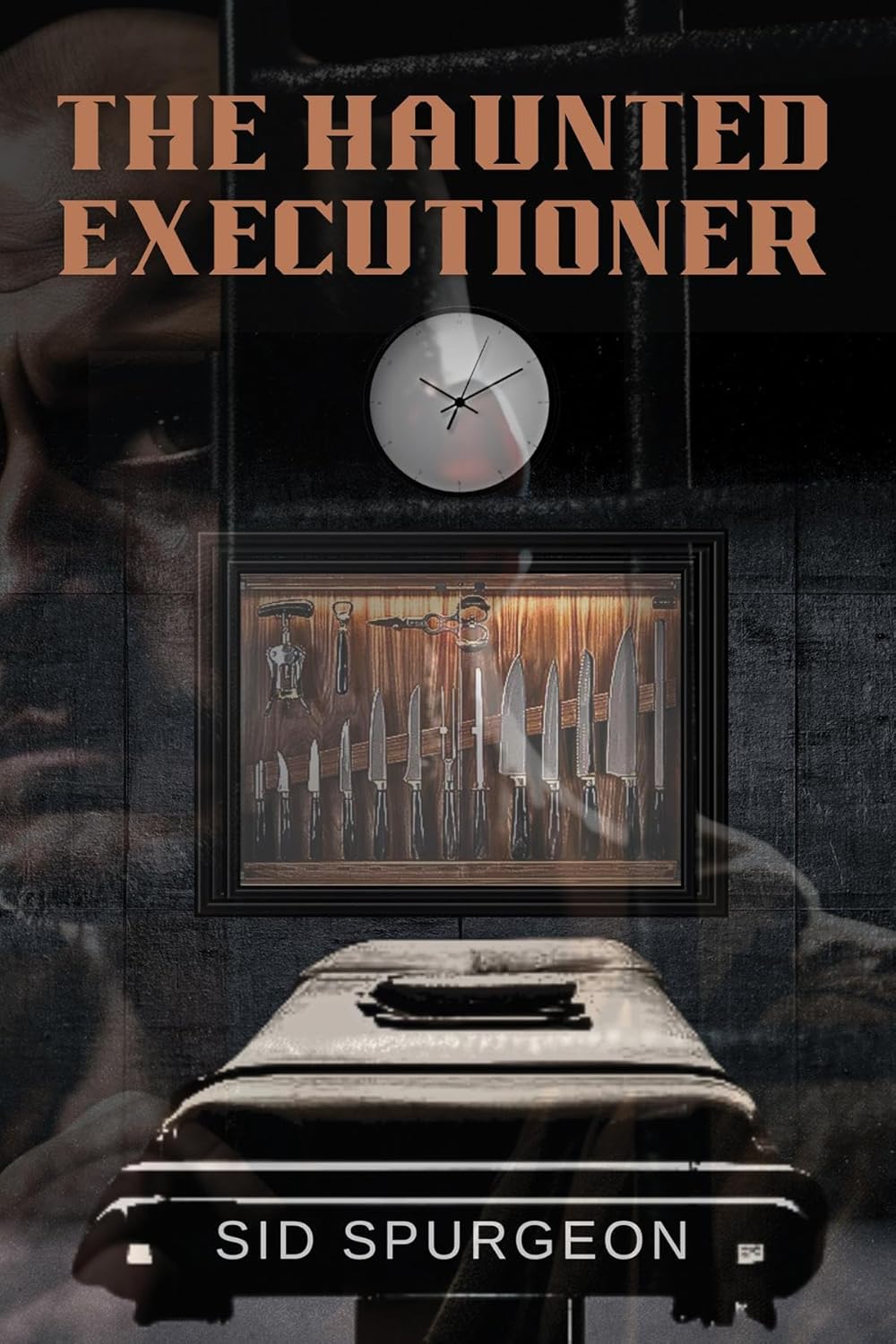

Sid Spurgeon’s The Haunted Executioner delivers a hard-hitting dystopian satire dressed up in gallows humor and brutal honesty. Set in a near-future America where capital punishment is not only legalized nationwide but fetishized and televised, the novel dives deep into the dark heart of a society drunk on vengeance. Through the story of Cecil LeBeeau, a reluctant and deeply damaged state executioner, Spurgeon unspools a twisted tale of justice gone off the rails, laying bare the social, political, and psychological rot that feeds it. It’s a mix of speculative fiction and political polemic, told with a blunt voice and barbed wit.
I found the writing raw and unfiltered. The prose often reads like someone ranting over beers after watching too much cable news, but somehow that works. There’s a rhythm to the chaos, and while the dialogue can feel like caricature at times, the ideas behind the words cut deep. Spurgeon’s disdain for American culture’s obsession with punishment, violence, and spectacle is unmissable and unrelenting. And yet, beneath the cynicism, there’s a weird tenderness for the broken people caught in the middle of it all. The chapters that dig into Cecil’s unraveling psyche—his self-loathing, his numbed soul, his need to be punished himself—are some of the book’s strongest moments. The horror isn’t supernatural; it’s systemic, societal, and deeply personal.
The book isn’t subtle. At all. It’s angry, loud, and long-winded in parts. Some passages lean more into a manifesto than a novel, with pages of political commentary, mass shooting statistics, and imagined congressional debates. These sections drive the point home and add weight and urgency to the book’s message. The intensity of the commentary, though heavy, feels like a bold choice that gives the reader space to reflect. The passion behind the words is undeniable, and it deepens the impact of the story as a whole. Still, I can’t deny that I was gripped—disturbed, unsettled, even sickened, but never bored.
The Haunted Executioner is for readers who like their fiction fierce, unpolished, and full of fire. It’s not an easy read—it’s messy and morally murky—but that’s the point. If you’re someone who’s ever shouted at your TV during a news segment or questioned how close we are to the edge, this book will speak to you.
Pages: 440 | ASIN: B0DLQYCDHZ

Last Altar Boy
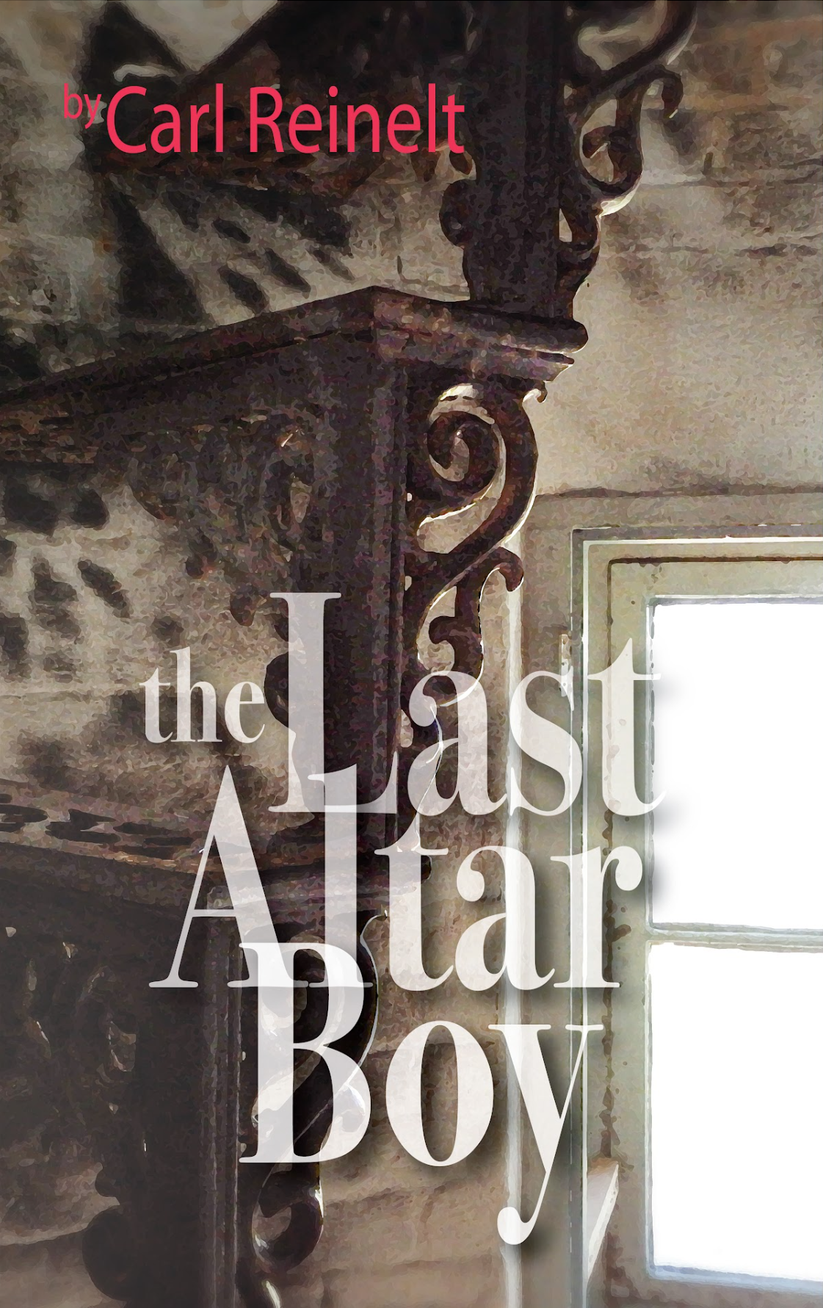
Carl Reinelt’s The Last Altar Boy is a genre-blending novel that weaves together grief, addiction, spirituality, and historical memory. The story follows Charlie Houden, a man on a haunting road trip from Texas to Michigan to carry out a mysterious plan involving the ashes of his daughter. Along the way, he confronts demons both real and imagined, relives past traumas, and finds unexpected moments of grace. The narrative slips seamlessly between timelines, voices, and even the spiritual realm, grounding Charlie’s personal journey within a broader meditation on generational pain and redemption. We get glimpses of American history, the harrowing account of the 1881 Michigan fire and the forced relocation of Native peoples, all echoing the central theme: what do we do with the suffering we inherit?
Reinelt has a gift for capturing the internal disarray of someone at the end of their rope, yet his prose remains grounded and sharp. Charlie is messy, stubborn, and endearing in that deeply flawed way that real people are. The dialogue is snappy and real, the dreams are terrifying and surreal, and the flashbacks carry the weight of memory like bruises. There’s a scene in a decrepit Arkansas motel that plays out like something from a psychological horror film, and I found myself tensing up like I was watching it on screen. And then, in the next chapter, he’ll drop you into a quiet sunrise on Lake Huron and let the stillness do its work. The book is honest, reflective, and aching. It meanders in places, sure, but so does grief. And Charlie’s road trip is less about a destination and more about the slow crawl toward any kind of peace.
What surprised me most was how the book balances pain and beauty without flinching from either. There’s trauma here, lots of it. Loss of a child, addiction, estrangement, inherited guilt. But Reinelt doesn’t drown in it. He gives Charlie these tender moments of human contact: the kindness of a stranger, a well-timed joke with his partner Mia, a newspaper from a girl who might not be entirely of this world. Those moments hit harder than any grand revelation. Reinelt also doesn’t force a neat ending, and I appreciate that. Life rarely gives us one. Instead, Charlie’s journey offers something quieter: the chance to keep walking, even when your legs are shaking. That resonated with me more than I expected it to.
The Last Altar Boy is for anyone who’s ever carried around guilt like a stone in their pocket. It’s for people grappling with grief that doesn’t go away just because the world keeps spinning. I’d recommend it to fans of Cormac McCarthy, T.S. Eliot, or even folks who enjoy quiet, lyrical indie films. But more than anything, I’d recommend it to people who are trying to make sense of their pain.
Pages: 320 | ISBN: 978-1-7362149-5-4
Hummingbird Moonrise, Book 3 of Murder, Tea, and Crystals Trilogy
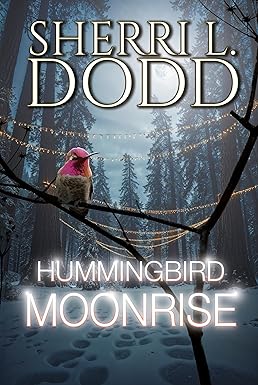
Hummingbird Moonrise opens with a historical bang with a hauntingly dark and emotional prologue set in 1940s California. It traces the grim consequences of a man’s violent choices, the echoes of which reverberate through five generations. We’re introduced to a family curse born from vengeance and sustained by ritual, tragedy, and an unshakeable belief in the power of dark magick. From there, the story weaves between timelines, following Arista Kelly, a modern-day woman grappling with supernatural inheritance, witchcraft, and an old stone tablet that may seal her family’s fate. Part cozy mystery, part witchy thriller, it blends murder, magic, family trauma, and healing in a way that’s both suspenseful and tender.
What struck me most about Dodd’s writing was the way she mingles the everyday with the mystical. One minute, characters are sipping tea or feeding stray cats; the next, they’re channeling spirits or breaking into homes to investigate arcane symbols. I appreciated the humor that peeked through, especially Auntie, whose wit and warmth anchor many of the darker moments. The voices feel distinct, the pacing surprisingly tight despite the multi-generational sprawl, and the dialogue sings with emotional truth. The way Dodd writes female relationships—particularly between Arista and her Aunt—is just beautiful. There’s a lived-in realness to their bond that made me care about what happened to them far more than I expected from a story with spells and curses.
The shifts in tone—moving between drama, horror, humor, and a touch of paranormal whimsy—were bold and creative. A few sections leaned more into exposition, which briefly slowed the momentum. The supernatural elements are intriguing and imaginative, and the atmosphere was rich, the stakes personal, and the themes like grief, redemption, and inherited pain rang true. Dodd clearly cares deeply about these characters, and that care spills onto the page.
I was moved. Not just by the tragic past that hangs over the Kelly family, but by the hope that emerges through Arista’s strength. This is a book for those who like their witch stories intimate, their mysteries character-driven, and their fiction laced with emotion and weirdness in equal measure. If you enjoy Alice Hoffman’s Practical Magic, but wish it had a bit more grit and ghost stories, Hummingbird Moonrise might just be your cup of tea. Or maybe your crystal-infused moon water. Either way, it’s worth the read.
Pages: 304 | ASIN : B0FB5QV948
Of Love and Peace
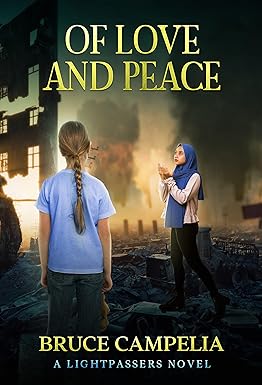
Of Love & Peace is a heartfelt and fast-paced novella that continues the story from the Light Passers Chronicles series, weaving a powerful tale of friendship, spiritual strength, and hope amid the ongoing Israeli-Palestinian conflict. Set primarily in Gaza and Jerusalem, the book follows young characters like Liyah, Esty, and Ahmad—teenagers from opposing sides of the conflict—who work together, sometimes mystically, to resist violence and spread compassion. Through shifting perspectives and emotional journeys, Campelia blends fantasy with the grim realities of war, anchored in a deep desire for healing and peace in one of the world’s most fraught regions.
Campelia doesn’t write from a distance—this feels lived-in and relatable. You can sense his pain, especially in the preface and author’s note. He lays bare his admiration for caregivers and his disdain for cruelty, threading these values through his young characters. The writing style is direct and intimate, sometimes lyrical, often urgent. The dialogue feels natural, even when it’s brushing up against heavy ideas like generational trauma, betrayal, and moral courage. There’s an aching truth in Liyah’s disillusionment and Esty’s fierce love for her friend Hanna, especially as both girls struggle to find light in the darkness. At times, the mystical elements—like the being Ooray—felt a bit out of place, but they also served as a poetic escape, a needed counterbalance to the brutal real-world setting.
There were moments when the pace raced ahead. Events can happen suddenly, characters jump into danger or revelations, and then the story resets. It gave the book an episodic feel, which occasionally pulled me out of the emotional core. Still, there’s something refreshingly honest about this book. It doesn’t pretend to have easy answers, and it never demonizes one side or another. Instead, Campelia calls out extremists, regardless of background, and invites readers to imagine a world where love and peace aren’t slogans but real, hard-won possibilities.
I would recommend Of Love & Peace to anyone who wants a story with heart, especially young adult readers or educators who are looking for literature that humanizes the Israeli-Palestinian conflict. If you’re drawn to novels that mix grit with grace, or if you believe that stories can be weapons for peace, this one’s for you. It won’t fix the world, but it might make you believe we still have a shot at something better.
Pages: 236 | ASIN : B0D84DKQ44

Nanite Evolution

Nanite Evolution is a gritty and high-octane sci-fi novel that drops readers into a corrupt and hyper-commercialized galaxy where power, technology, and greed intersect with deadly consequences. The story revolves around the Dunk family empire, their ruthless expansionist goals, and the chaotic chain of events triggered by an advanced jump-drive yacht, corporate infighting, and a botched space collision. Through layered plots involving bodyguards, covert agents, advanced nanotechnology, and a bleakly humorous take on corporate culture, the novel unfolds with tension, dark satire, and surprising depth.
The writing grabbed me right from the start with its snappy dialogue and unexpected Australian lingo—Captain Nguyen’s “koala on a pogo stick” quips gave me a chuckle in a bleak universe. The pacing can be wild—one moment you’re neck-deep in political posturing, the next you’re in zero-g blood and guts. But that’s also part of the book’s charm. The characters, especially Oscar and Shamika, stand out against a sea of egotistical executives and sociopaths. Oscar, the underestimated tech guy, feels like the moral heart in a world devoid of one. The writing has a raw and unfiltered edge that adds flavor. It’s not polished in a classic literary sense, but it has a pulse. And I appreciate that.
Some parts left me feeling twisted up inside. The dehumanizing way the Dunks talk about women—and people in general—is unsettling. It’s effective, yes, but it made me loathe these characters with a real gut-level reaction. Blayden is one of the most despicable characters I’ve read in a while, and that’s saying something. The darkness in this story is brutal, but it feels earned. Murphy doesn’t shy away from exploring how unchecked power warps people. I found myself needing breaks just to breathe. But then again, isn’t that the mark of a powerful story?
Nanite Evolution is sharp, intense, and totally uncompromising. It’s a bold take on futuristic dystopia with a biting sense of humor and a grim view of what humanity could become when profit trumps decency. I’d recommend this to fans of The Expanse, cyberpunk thrillers, or anyone who loves character-driven sci-fi with a heavy dose of social commentary. If you like your sci-fi raw, real, and a little bit savage, this one’s worth the ride.
Pages: 400 | ASIN : B0DXTJGV5B
Diamonds in Auschwitz
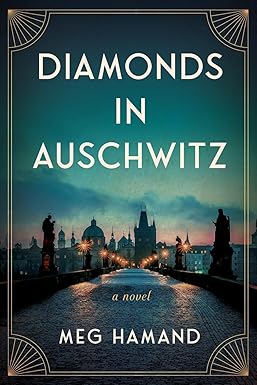
Diamonds in Auschwitz by Meg Hamand is a gut-wrenching novel set during World War II, centered on Rachael, a Jewish woman struggling to survive the brutal realities of Auschwitz, and Samual, a man trying to build a future in a Prague crumbling under Nazi occupation. Their stories orbit a ring, an engagement ring found buried in the mud, a small glittering symbol of hope, memory, and devastating loss. Through vivid, often painful prose, Hamand paints a picture of resilience, shattered dreams, and the stubborn pulse of humanity in the darkest places.
The writing in this book just grabbed me by the heart right from the first page. Hamand’s descriptions of Rachael clawing through mud, finding what she thinks is just a rock, only to later discover it’s a diamond ring, hit me like a punch to the chest. It’s not just the horror of her surroundings; it’s the tiny spark of something beautiful refusing to be snuffed out. Hamand’s style is sharp but full of heart. No flowery nonsense, no wasted words. I found myself rereading sentences like, “Grief had replaced the marrow of her bones,” because they felt true. You can almost feel the mud in your hands, the cold in your bones, the ache that never quite goes away.
One aspect that particularly struck me was Hamand’s ability to use small, carefully chosen details to convey a much larger emotional impact. Like when Rachael keeps the ring dirty on purpose, leaving a bit of mud on it because it reminds her of her daughter Catarina’s brown eyes. That killed me. It’s such a small thing, but it shows how survival isn’t always about food and shelter; it’s about finding reasons to still feel something when everything around you tells you not to. Samual’s chapters brought a different kind of heartbreak. Watching him risk everything to buy that ring for Hanna, then seeing the city he loved crumble into silence and hatred, felt like watching someone lose their home inch by inch, day by day. I was rooting for him, even knowing full well how history tends to end for characters like him.
There were moments when the book was honestly hard to read. Not because the writing dragged, but because Hamand doesn’t flinch away from showing what Auschwitz really was: a machine for killing hope just as much as it killed people. Scenes like Rachael debating whether to throw herself into the electrified fence, or the eerie way she describes the fog she imagines to block out her surroundings, hit me harder than any graphic violence could have. This book hurts, but it’s the kind of hurt that feels important. Like you’re being trusted to sit with someone else’s pain instead of being shielded from it.
Diamonds in Auschwitz isn’t just a story about survival; it’s a story about memory. About the tiny, stubborn things people hold onto when everything else has been taken from them. I would absolutely recommend this book to anyone who loves deeply emotional historical fiction, or who wants a story that punches you in the gut but leaves you grateful for having felt it. Fans of Kristin Hannah’s The Nightingale or Anthony Doerr’s All the Light We Cannot See will feel right at home, though “home” might not be the right word when you’re sobbing into a crumpled tissue at midnight.
Pages: 340 | ASIN : B0DXH3GMWW
What I Did After I Died
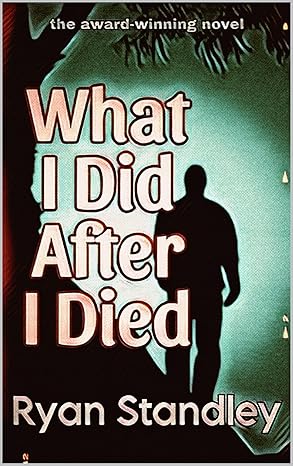
Ryan Standley’s What I Did After I Died offers a fresh and imaginative take on the afterlife through the eyes of Kevin, a man unaware of his own death. When Kevin stumbles upon a clue leading to a crashed plane filled with gold, he enlists his family in an unconventional treasure hunt. Their journey is packed with humor, adventure, and heartfelt moments, making the story both entertaining and deeply touching.
The narrative captures an intriguing premise—what would you do if you didn’t know you were dead? Kevin’s obliviousness adds a layer of comedy to the tale, while the treasure hunt serves as a backdrop for exploring family dynamics. The family’s antics, mishaps, and clever teamwork are not only amusing but also showcase their deep bonds.
Standley excels at weaving humor into heartfelt moments, creating a story that’s as emotionally resonant as it is entertaining. Despite its brevity, the story delivers a satisfying experience. The fast-paced plot keeps readers engaged from start to finish, even though some sections feel a bit rushed. However, this pacing adds to the book’s charm, making it easy to dive in and lose yourself in Kevin’s afterlife escapades.
For anyone who enjoys treasure hunts, quirky adventures, or a quick and delightful read, What I Did After I Died is a great choice. Standley’s blend of humor, warmth, and clever storytelling ensures a memorable experience. I recommend this book and eagerly look forward to reading more from the author.
Pages: 126 | ASIN : B0FD4VR557
A Unique Spin
Stolen Histories follows two best friends working to sabotage corrupt institutions who find themselves in a high-stakes heist involving dragons, haunted landscapes, and the looming power of the imperialist Empire. What was the inspiration for the setup of your story?
The first thing I ask when I’m writing something is, ‘Would I enjoy reading this?’ All the situations my characters end up in—from the heists, dragons, and hauntings—are things I love reading about. My biggest inspirations are other stories, like Six of Crows or The Adventures of Amina al-Sirafi, along with looking at my characters and asking, ‘What kind of trouble can I get them into?’
I find the world you created in this novel brimming with possibilities. Where did the inspiration for the setting come from, and how did it change as you were writing?
My inspiration for the world of Avalon came a long time ago—I thought it would be interesting to have a world where magic is the norm, and not having magic is considered the old wives’ tale. A lot has come from that single idea. I wanted to create my own magic system and world setting while also not being so confusing that no one can follow what’s going on. This is how I ended up with Singers, Scribes, and the like. Initially, I thought of doing a D&D-inspired world, or bringing in gods/creatures that already exist in stories, but ended up discarding that for a unique spin of my own. Now, I have Nightbloods, Sun Eaters, and whatnot. There’s so much worldbuilding I’ve done that the first book doesn’t even touch, so I’m excited to continue the series!
What were some themes that were important for you to explore in this book?
Bigger themes like imperialism, colonialism, and rebellion were important to me since they will be explored throughout the whole series. But on a character level, themes like identity, grief, belonging, ambition, and family really bring the whole book forward. Each character has their own journey to go on, and I try to do that justice.
Is this the first book in the series? If so, when is the next book coming out, and what can your fans expect in the next story?
This is the first book! Stolen Histories is the start of a six-book series, The Infinite Night Saga, and while I’m not sure when the second book will be finished, it is well on the way. I’m sure it will be done sometime next year, which is exciting for me to think about. What fans can expect is more heists, found family, and struggles against a power-hungry empire!
Author Links: GoodReads | Bluesky | Website | Amazon
A girl in over her head is after a stolen artifact, two master thieves are leading a crew to reclaim lost treasures, and their team is anything but ordinary-some of them shouldn’t even exist. With shaky loyalties, dangerous magic, and an empire tightening its grip, their plan is held together by luck and desperation. They might just pull it off… if the world-or they-don’t tear them apart first.
In this story about secrets, family, and good old-fashioned heists, a ruthless empire hoards stolen history, and a daring crew is reckless enough to take it back. But in a game where power is everything and disaster is inevitable, the difference between a successful job and a fatal mistake might come down to who’s willing to risk it all.



 LITERARY TITAN