Blog Archives
Imber
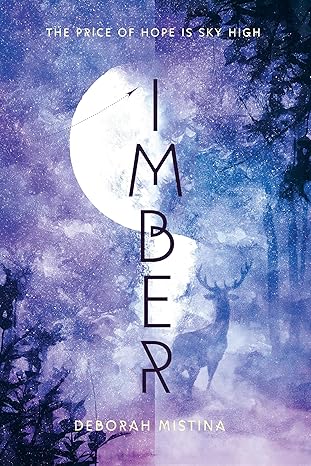

Deborah Mistina’s Imber is a speculative, soul-stirring tale set in a future where nature is both fragile and sacred. The novel follows Violet Murphy, a young woman devoted to her family’s farm and their legacy of sustainable, organic living amid a crumbling world. As the government’s strange motives begin to unravel, Violet is pulled into a deepening mystery that questions everything, from the fate of the Earth to the limits of science and memory. At once a dystopian adventure and an emotional meditation on grief and hope, Imber crafts a world that’s both fantastical and deeply familiar.
I enjoyed Mistina’s writing style. It’s poetic, even when it’s subtle. Take the opening pages where Violet feeds her horse Firestorm while mourning her lost parents. The imagery is soft and painful: “They broke like porcelain on the jagged rocks below, where the sea writhed with furious waves…”. Mistina doesn’t just write; she paints with words. She lets grief sit beside beauty. The prose made me feel something in every paragraph, like each sentence had its own pulse.
Then there’s the story itself, which is clever and unexpected. When Violet is summoned to present her work at the Science Bureau, things turn dark fast. The seemingly harmless coffee offered to her becomes a sinister turning point. “It was excessively bitter and altogether unsavory,” she says—a perfect metaphor for what comes next. That whole interrogation scene was haunting. It wasn’t just suspenseful, it was invasive and raw. The way Mistina writes Violet’s spiraling consciousness during that sequence made me uncomfortable, in the best way. I couldn’t stop reading, even though I wanted to yell at Violet to run.
But maybe the most surprising part of Imber was how it made me care so deeply about more than one character. Jack Collins, who shows up in a later chapter, is someone I didn’t expect to love. He’s a hunter mourning his father, caught in a storm of his own. At one point, he’s trying to shoot a deer but ends up crying in the rain because he suddenly feels the deer’s fear. Sounds absurd, but the way Mistina handles it is gentle and strange and real. I felt his grief. I felt his confusion. That’s powerful writing.
By the time I finished the book, I felt a little haunted, a little hopeful, and completely wrecked in the best way. Imber isn’t just a sci-fi story or a survival tale. It’s a quiet rebellion against numbness. It reminds us what it means to feel deeply, to protect fiercely, and to listen—even when it’s hard. I’d recommend this book to anyone who loves stories about resilience, about the intersection of science and emotion, and about what it means to fight for what you love. It’s perfect for fans of Station Eleven or The Overstory, or really anyone who needs to be reminded that the Earth, and our hearts, are worth saving.
Pages: 315 | ASIN : B0DV3V8L5K

Dylan Dover: Orion’s Quest

Dylan Dover: Orion’s Quest is the second book in a fantastical middle-grade series that continues the story of Dylan, a twelve-year-old warlock who finds himself part of an ancient prophecy tied to the fate of an immortal realm. In this sequel, Dylan and his twin Remy, along with their friend Thea and newly found sibling Seth, try to uncover the mystery of their origins and the powerful forces seeking to control them. It’s a high-stakes magical adventure filled with secret societies, time rifts, magical creatures, and the looming threat of a vampire named Baltazar who’s bent on domination. The story blends the mundane human world with a richly imagined supernatural dimension, making for a fast-paced and emotionally engaging ride.
What I liked was the smooth way Lynne Howard mixes heart and suspense. The opening chapter had me hooked—Reus trembling in front of Baltazar, trapped in a cage, hopeless, and yet somehow clinging to the idea of redemption. It’s grim, but not overly dark. Howard knows her audience. Her writing walks that fine line between magical fantasy and grounded emotion.
Howard also shines in how she handles character dynamics. Dylan, Remy, Seth, and Thea each have distinct voices and believable relationships. One of my favorite parts was when the kids return to Dylan’s old neighborhood.
There’s a lot of dialogue unpacking backstory and prophecy details. It doesn’t drag exactly, but I found myself wanting more action or surprises in those parts. That said, the scene where the kids build an invisible cabin in the forest was very cool. Also, Dylan conjuring up a warm coat and diamond-studded boots for his cat was adorable and imaginative. I loved how the magic was practical, emotional, and at times, pretty funny too.
Dylan Dover: Orion’s Quest is a blast. It’s clever, warm, and packed with both heart and high fantasy. It’s perfect for middle-grade readers who love Percy Jackson, Harry Potter, or Keeper of the Lost Cities. I’d even recommend it to grown-up fantasy fans looking for something sweet, mysterious, and a little nostalgic. If you like magical prophecies, talking animals, and the power of found family, this one’s for you.
Pages: 336 | ISBN : 978-1916966673
Failure of Relationships and Medicine

The Soul’s Awakening follows a reserved, chronically ill woman who chooses medically assisted death to escape her suffering, and instead of finding peace, she is hurled into a series of metaphysical realms examining her own psyche and human experience. What was the inspiration for the setup of your story?
I wanted to write a trilogy about death, life after death, and life after life after death (as N.T. Wright calls the Resurrection). I was asking myself, given our current knowledge of theoretical physics, cosmology, near-death experiences, terminal lucidity, and so on — and thinking on Revelation and the Zoroastrian Gathas — what would life after death and the Resurrection actually be like? I wanted to start book one with my main character’s death but didn’t know how she would die. As I thought on it and researched background information, the main character came to me, with her double name and personality and soul family. But I still didn’t know how she’d die.
Then one day she told me — in the way characters often drive the narrative — that she would be dying via MAiD, Medical Assistance in Dying. I was not happy. I didn’t want to get into that. Even though I have strong opinions on how it’s a failure of relationships and medicine, I find it emotionally distressing. But my character Charlotte Elisabeth insisted. And so I reluctantly agreed and read up on the technical aspects as much as I could tolerate.
The metaphysical realms were inspired by the Gospel of Mary. In reading this gospel in the Nag Hammadi and comparing it to the four gospels of the New Testament, I realized it agrees with them, reflects the culture of the time, and provides a compelling foundation for what happens after death. Near-death experiences that I’d read about and watched documentaries on also provided inspiration.
What are some things that you find interesting about the human condition that you think make for great fiction?
Ever since I was a teen, I’ve wondered why people do the things that they do. That’s why I chose psychology as my specialty in university. But fiction lets you break the boundaries of accepted wisdom, dig into diverse disciplines, and explore. I find myself drawn to tragedies created by irrational fear, self-centredness, resistance to change, justifying abandonment, fear of others knowing our core selves, the superficiality of modern friendship, “blood is thicker than water” myth, the 2D perception of life is only material, the arrogance that youth know better than older generations while at the same time insisting life experience counts as valuable as learned knowledge, free will and God, and death and grief. As much as romance is popular — for good reason! — I also think we haven’t yet tapped true intimacy.
What were some themes that were important for you to explore in this book?
This book began with me writing a play on the Resurrection, based on a close reading of the four gospel accounts. I’d gotten fed up with the focus on the Passion Play when the main point of Easter is Jesus’s rising not his death. Shouldn’t the theme be life not death? I discovered aspects of the gospels’ accounts I hadn’t noticed before, which got me curious.
I wanted to explore what dying actually is — as much as current research and various scriptures tell us — and what happens after we die beyond the usual popular story tropes. And then dig into what it means to be immortal. I don’t believe we’ll get bored and end up yawning, “Been there, done that,” nor that it’ll be all harps and roses and stress-free. We’re a curious species who thrive on exploring. Our brains and minds have incredible untapped potential. I believe that the brain and mind are not the same and wanted to work that out. In addition, N.T. Wright pointed out aspects of the resurrected Jesus that gave me pause to think on what kind of beings we are and will become.
Putting these together, I asked myself: What would life really be like after death? What are we meant to accomplish as a person before we die? What is the nature of existence? What does euthanasia reflect about ourselves and a society that declares it good? Can we ever fully live when we close off parts of ourselves to others? What is Hell and the journey to Heaven like? What is death?
When will book two be available? Can you give us an idea of where that book will take readers?
I’m aiming for book two to be out at the end of 2025. It’ll relate to Charlotte Elisabeth’s next phase of her Soul Track: reconciliation.
Of course, Charlotte Elisabeth resists! After all, how can a spirit reconcile with a material human being still physically alive on Earth who can’t perceive spirits? I explore how.
After passing through the Barrier, she tries to run away from this unexpected challenge. But she encounters new characters on their own Soul Tracks who befriend her and the Lion’s family who’s out for revenge. She learns a bit more about the mysterious man we see in book one. When Charlotte Elisabeth realizes she has to reconcile with not only her immediate family but also harmed animals and unknown ancestors, she attends Heaven School to learn how to exist in her new form and survive on Earth before being sent back to either succeed in reconciling or start on the path to second death.
Author Links: GoodReads | Bluesky | Website | Amazon
The Soul’s Awakening, by Shireen Anne Jeejeebhoy is a deeply moving journey through life, death, and the realms beyond.
Charlotte Elisabeth has chosen to end her suffering through euthanasia, only to awaken in an unfamiliar, soul-stirring space—caught between life and death in the Earth-Heaven Interdimensional Expanse. Disoriented and disillusioned, she is confronted by the horrifying realization that death is not the escape she expected.
In this strange new realm, Charlotte must face the Distortans—mysterious, otherworldly beings that challenge her very essence with unrelenting, probing questions.
As she is pushed to confront her past, her choices, and her deepest fears, Charlotte’s survival depends on her ability to embrace the truth of who she is, and to answer the questions that hold her prisoner.
The Soul’s Awakening, book one of a metaphysical trilogy, is an exploration of self-discovery, spiritual transformation, and the quest for redemption. With rich philosophical themes and a compelling narrative, this spiritual fantasy will captivate fans of religious fiction, spiritual journeys, and thought-provoking fantasy.
Can Charlotte find peace and acceptance, or will she remain forever lost in the endless questions of the afterlife?
Are you ready to face the unknown? Dive in now.
One-Man Minority Opinion

In Dissenting Opinion, a federal judge manages to hide his liberal beliefs in order to secure a seat on the Supreme Court. What was the inspiration for the setup of your story?
In The West Wing episode “The Supremes,” one of the characters remarks that the Court is at its best when justices dissent and passionately argue the law. “Who writes the extraordinary dissent? The one-man minority opinion whose time hasn’t come…” For me, this was a powerful scene, a powerful episode. I imagined a Court where there was one lone justice who disagreed with the majority, and from that Dissenting Opinion was born.
What kind of research was required in order to put this novel together?
I tried to stay away from anything that was too technical about the workings of the Supreme Court; I relied heavily on my memory of government and economics from high school and simple internet searches.
Do you have a favorite scene in this book? One that was especially enjoyable to craft?
As a fan of political and legal fiction, I thoroughly enjoyed the whole book, but I think my favorite scene to write was the television interview where I borrowed a quote from The West Wing. Jason is in the television studio and is asked if he thinks he should practice some tolerance toward those who disagree with him and he replies “As long as Justice Reynolds remains intolerant toward women, Black people, gay people, poor people, immigrants and the First and Fourteenth amendments, I will remain intolerant toward him.” Jaws drop, the studio goes silent. I love it.
What is the next book that you are working on, and when will it be available?
I’m working on a psychological thriller, that I hope to have done later this year. It’s about an overworked psychiatrist who begins noticing patterns between his patients, and as he explores these patterns he finds that he is putting himself at risk. As he gets closer to the truth, his own world starts to unravel and he discovers that perception is fragile, reality is shifting and the truth is more terrifying than madness itself.
Author Links: GoodReads | Facebook | Website | Amazon
A Lack of Closure

Born of Bombs and Bullets follows a prison psychologist who relocates to Belfast following a brutal murder only to find himself deep within unrest tied to the IRA. What was the inspiration for the setup of your story?
While visiting Belfast, Northern Ireland, a few years ago, I took a political history tour to learn about The Troubles. Although that 30-year conflict supposedly ended with the Good Friday peace agreement in 1998, signs of lingering tension between the Catholic and Protestant communities were everywhere, especially in West Belfast.
Massive peace walls separated the two communities. I saw dozens of murals commemorating attacks and the people who died on both sides—ever-present reminders of the horror and grief and trauma that lasted an entire generation. There were even IRA stickers on street signs warning people not to cooperate with the police. I wondered what it’s like to live with that sort of constant strain. Afterward, when I started reading daily news reports from Belfast, I sensed a lack of closure on both sides of the conflict that haunts people today.
Imaginary characters began to form in my mind, and soon I gave them life through words—with a bit of history mixed in for context. To maintain objectivity, though, I decided to write the story through the eyes of an American psychologist. But first I needed to get him to Belfast, so that murder in the first chapter served as a catalyst.
What kind of research went into putting this book together?
A lot! But first, let me say the characters and the story are entirely fictional. Still, I knew from the beginning I wanted readers—especially here in the States, where The Troubles are less understood—to walk away with an accurate understanding of historical events. So I read countless histories and old press accounts, studied period photographs, and watched a lot of documentaries about The Troubles.
They have different car models and candy brands, for example, in the UK, so I had to research those details, too, to make the descriptions as authentic as possible. I also subscribed to Belfast news media and read the current daily headlines for a couple of years—that really helped me grasp the lingering effects of The Troubles.
At the same time, I wanted to acknowledge the psychological impact of such a prolonged and pervasive conflict. So I researched Northern Ireland’s modern behavioral health trends and reflected those themes in the characters. The descriptions of combat equipment and tactics—then and now—are as accurate as I could make them, as well. I really wanted the story to feel genuine, even though it’s entirely made up.
The hardest part, though, as an American, was trying to master the Northern Irish idioms and accents in the dialogue! I watched a lot of Northern Irish movies and television to get a handle on that—and I apologize now for any times I got it wrong! I’m sure a few “Americanisms” slipped past me.
What elements do you feel are essential for creating a successful thriller?
For me, it boils down to tension, plot twists, and pacing. Conflict between the characters—and of course, setbacks—generates the tension. An ever-present sense of danger fuels it, too.
And plot twists keep the reader guessing and therefore engaged. But above all, in my opinion, the pacing has to be right. The action needs to move forward consistently at a good clip to keep the reader’s attention. Personally, I’m a big fan of short chapters with fewer words per page to promote a feeling of urgency.
Can we look forward to seeing a follow-up to Born of Bombs and Bullets soon? Where will it take readers?
Absolutely! There will be several more books in the series, but I don’t anticipate the next one until late 2026. My niche is travel-inspired thrillers, so the setting will be another country with a fascinating history. I’m presently choosing among Spain, Argentina, and Chile. Maybe your readers can help me decide?!
Author Links: GoodReads | Facebook | Website | Amazon
Psychologist Aaron Thornton is riddled with self-doubt after failing to stop a tragic incident at the American prison where he works. So when his wife, Claire, receives a job offer in her native Belfast, Northern Ireland, he sees a chance to start over by treating hardened criminals in Northern Ireland’s judicial system.
But Thornton’s work soon entangles him in the aftermath of ‘The Troubles,’ a brutal conflict that rocked Belfast for over thirty years. Charged with overseeing the release of the Irish Republican Army’s deadliest bomb maker, Thornton reignites smoldering feuds that threaten to consume him and his family in the flames of political violence.
Alongside a broad cast of characters who reflect the many facets and shifting allegiances of The Troubles, Thornton fights to heal long-standing hatred and prevent another tragedy. But can he save himself?
In the spirit of John le Carré and Graham Greene, writer David A. Dummer has created an everyman hero for our time, and with Born of Bombs and Bullets, a political thriller for the ages.
The Cost of Reconciliation

The Dog Roses: Resolution follows twin sisters who rule the land with tyranny and chaos, causing their parents to send in their twin brothers to restore order to the land. What was the inspiration for the setup of your story?
In Book 1: The Dog Roses, the sisters, Danu and Brighid, overcame many physical, spiritual and supernatural barriers and scaled the heights of success. They were hailed as heroes by the people. Their weakness or vulnerability was their personalities. Could they adjust from battle queens to reigning in peaceful times? The answer was no. They had not learned to develop harmonies or that their abilities could augment and reinforce each other. Thus, the strap line became “Sisters squabble. Queens go to war.” The kingdom was torn in two as each queen fought for ascendency. Their personalities dictated the path each would take. Still, do not judge them too harshly. They were human and subject to human frailties and passions. The Dog Roses: Resolution poses the questions: Can the twins be reconciled? What will be the cost? And are they prepared to pay that cost?
The supporting characters in this novel, I felt, were intriguing and well developed. Who was your favorite character to write for?
I will cheat here and say two characters were my favorite for very different reasons. First, Aoife: we first came across an exuberant Aoife as a seven year-old watching Danu and Brighid’s arrival on warships in Eriu. At that time I based Aoife’s personality on my granddaughter, Sasha, whose optimistic outlook and bravery in the face of challenging health issues is a shining light to all who meet her. No matter what was thrown at them Aoife and Sasha refused to let it crush them. The difficulty, however, came in Book 2: The Dog Roses: Resolution when I had to envisage Aoife/Sasha as a fierce eighteen year-old warrior determined to bring justice to evildoers. I think I managed to advance both their personalities quite successfully. That said, I will only truly know in five years when Sasha is at an age to read my books!
The other character is the whore and assassin, Tisiphone. We first came across Tisiphone in Conall V: Retribution. At fifteen, she was a whore working the harbour districts of Massalia (Marseille). Even at that age, Tisiphone was an accomplished spy and assassin who enthralled men with her beauty. In Conall V, I left Tisiphone bleeding out in a back alley of Massalia after defending herself against another assassin but left the reader to judge whether she had died. In the end, I just could not let her go and she appears in The Dog Roses: Resolution as much more complex character, although still an assassin and still a whore!
Are you a fan of the Fantasy genre? What books do you think most influenced your work?
I don’t read as much as I should! Yes, I enjoy fantasy, mostly urban or historical and I’m always in search of a good steampunk novel. Angie Barton is a good friend and I really enjoy her Gothic horror/vampire novels. As to influences, prior to writing historical fantasy I was an avid reader of historical fiction, especially the works of Bernard Cornwell or Conn Iggulden. I’m also a fan of of Jim Butcher’s Dresden Files. That said, I also read westerns, science fiction and detective novels.
Where do you see your characters after the book ends?
I have been asked this question at several recent author book signings. The honest answer is “I don’t know.” It certainly is possible that The Dog Roses Series will have a third book, probably located in Southern France (Gaul) because Danu and Brighid and their children return “home” to Conall and Morrigan in the closing chapter. It is quite possible that they will join with the characters of The Blood Queen Chronicles who are also homesick for their friends. One intriguing scenario was recently posed to me by a reader who said, since many of the characters were supernatural, then how would they react to being in the 21st Century!
That said, I am already working on my next potential series of at least five books: The Tuatha De Chronicles. The manuscript of Book 1: Dragons, Demons & Demigods has gone through structural editing and will be submitted to my copy editor at the end of the summer. The book will cross historical fantasy with urban fantasy.
Author Links: GoodReads | X | Facebook | Instagram | Website
Sisters squabble. Queens go to war.
Ten summers ago, victory brought peace and prosperity to Southern Ériu. Danu and Brighid were celebrated as heroes and saviours. The queens scaled the heights, and there was only one way to go.
One twin became overbearing, the other resentful. Pride dug a pit filled with blackthorns between them. They became tyrants, and the kingdom was sundered. The people were left bitter, divided and afraid, and the lush farmlands fell barren. Stripped of their powers, the Dog Roses were no more. Each blamed the other, and neither took responsibility.
Angry parents gave the twins’ brothers an army and tasked them to bring law to the kingdom. An embittered veteran and a beautiful assassin accompany them. Whose gold is in the assassin’s pouch, and what are her orders?
In the Halls of the Aes Sídhe, Draighean is chastised and commanded to return to her wards. “Guide them, support them, or kill them. Just finish what you started.”
An evil philosophy grows, and another army gathers. Can the sisters be reconciled? The people need the Dog Roses, but can they forgive them? Yet, do Danu and Brighid want the responsibility? Do they want their powers returned? Being normal is very tempting.
The Dog Roses: Resolution contains scenes of sex, violence, and language appropriate to the historical period (400 B.C.) and locations in which the story is set. It is not recommended for those under 14 without parental consent.
Breakwater Bay

Breakwater Bay throws you headfirst into an old-school, high-stakes adventure with plenty of attitude and grit. It kicks off with a mysterious body found in the trunk of a stolen Camaro, and then quickly pulls back the curtain to reveal a tangled backstory involving a globe-trotting investigative reporter, shady characters, hidden agendas, and some very sketchy rescue missions. The story shifts between Lake Erie and far-flung places like Madagascar and Somalia, where a journalist named Emerson Moore finds himself (once again) in way over his head. Alongside his buddy, the rough-and-ready Mad Dog Adams, Moore takes on everything from Somali pirates to drunken Brits with questionable motives.
Honestly, one of the first things that grabbed me was the pacing. Bob Adamov wastes zero time—Chapter 1 has a dead body in a trunk. And just a few pages later, we’re in Madagascar watching Moore and Adams get dragged into a so-called “rescue” mission that sounds more like a barroom tall tale than something you’d actually sign up for. The dialogue between characters—especially the dry, sarcastic banter between Moore and Adams—is a real treat.
Now, don’t get me wrong—this book is a total popcorn read. But what makes it rise above the average thriller is Adamov’s knack for creating vivid settings. He doesn’t bog it down with flowery prose—he just drops you in and lets the mood soak into your skin. That said, the story does flirt with chaos at times. When Moore and Adams agree to help a washed-up British reporter rescue a supposedly kidnapped teen, I couldn’t decide if I should roll my eyes or buckle up. Turns out, it was both. The whole setup was a con, but that twist made me laugh more than groan.
Gordy, the Brit. He’s infuriating. He lies, manipulates, and nearly gets everyone killed in Mogadishu. I wanted to throw him overboard right alongside Adams, who threatens just that at least twice. Still, I gotta admit, Gordy adds a touch of tragic comedy to the whole ride. The dude’s a mess, and maybe that’s the point. His wild, unreliable energy keeps things unpredictable, even if you spend half the book yelling at him in your head.
Breakwater Bay is one of those books you read for the ride. It’s for people who like their thrillers with exotic backdrops, lots of action, a sprinkle of absurdity, and characters who feel like your uncle’s crazy fishing buddies. It’s part mystery, part buddy comedy, part “what-could-possibly-go-wrong?” travelogue. If you’re a fan of Clive Cussler, or if you just want to kick back and follow a fast-talking reporter into mayhem, this one’s got your name on it.
Pages: 288 | ASIN : B0F2GG7LJ8
The Matrix Opal: A Dystopian Science Fiction Novel


Stella Atrium’s The Matrix Opal, the first entry in The Duchy Wars series, is a sweeping, character-driven dystopian science fiction novel steeped in tribal politics, cultural legacy, and the struggle for identity and power. At the story’s heart is Bybiis, a beastmaster whose talents have made her a target in a volatile landscape of duchies, magic, and militarism. Her brutal imprisonment and eventual escape catalyze a layered tale of resistance, recovery, and reckoning, with a sprawling cast of warriors, mystics, and manipulators orbiting her journey. The novel weaves perspectives from various narrators and even animals, creating a chorus of voices that echo across deserts, forests, and stone cities.
What struck me first—and stayed with me—was the vivid, tactile writing. Atrium doesn’t shy away from discomfort. The scene of Bybiis’ public display, when she’s stripped and revealed to be covered in intricate, painful tattoos, is both horrifying and mesmerizing. It’s raw and unflinching. I found myself wincing, but I couldn’t look away. It reminded me why speculative fiction matters: to mirror, stretch, and expose real-world cruelty under the guise of the fantastic. Atrium’s prose, at times poetic—like the whispered verses that open Part One—flows easily into guttural pain and sharp political commentary. It’s a jarring but effective blend.
I was also drawn to Ariseng, a young girl from the whispering people, whose intelligence and defiance steal the show. Her ritual scene with the matrix opal is spellbinding. She is forced to reveal her back, tattooed with ward-imbued newts, and when the opal flares against her skin, it’s a spiritual moment turned performance—both mystical and sad. I admired her sharp tongue and sharper mind. There’s something powerful about watching a scrawny, wild-haired teen go toe-to-toe with seasoned warriors and win their respect.
Still, the book isn’t all blood and fire. There’s heart here, too. Kelly, a pregnant poet and friend to Bybiis, anchors the emotional thread with her unwavering loyalty. The pacing sometimes lagged with dense dialogue or too many side characters, but I appreciated the attempt to build an entire world—with politics, language quirks, and social codes that felt lived in. The glossary at the end was a lifesaver. This isn’t a book that hands everything to you; you earn it, slowly, like learning to walk a new land in borrowed boots.
The Matrix Opal is a bold, weird, and fiercely original novel. It’s not for the faint of heart or the impatient reader. But if you crave complex women, layered politics, and prose that hums with tension and poetry, this book will grip you. I’d recommend it to fans of The Broken Earth trilogy, or anyone tired of predictable sci-fi fare.
Pages: 510 | ASIN : B0F3PQDH8D



 LITERARY TITAN