Blog Archives
Talisman: Subterfuge
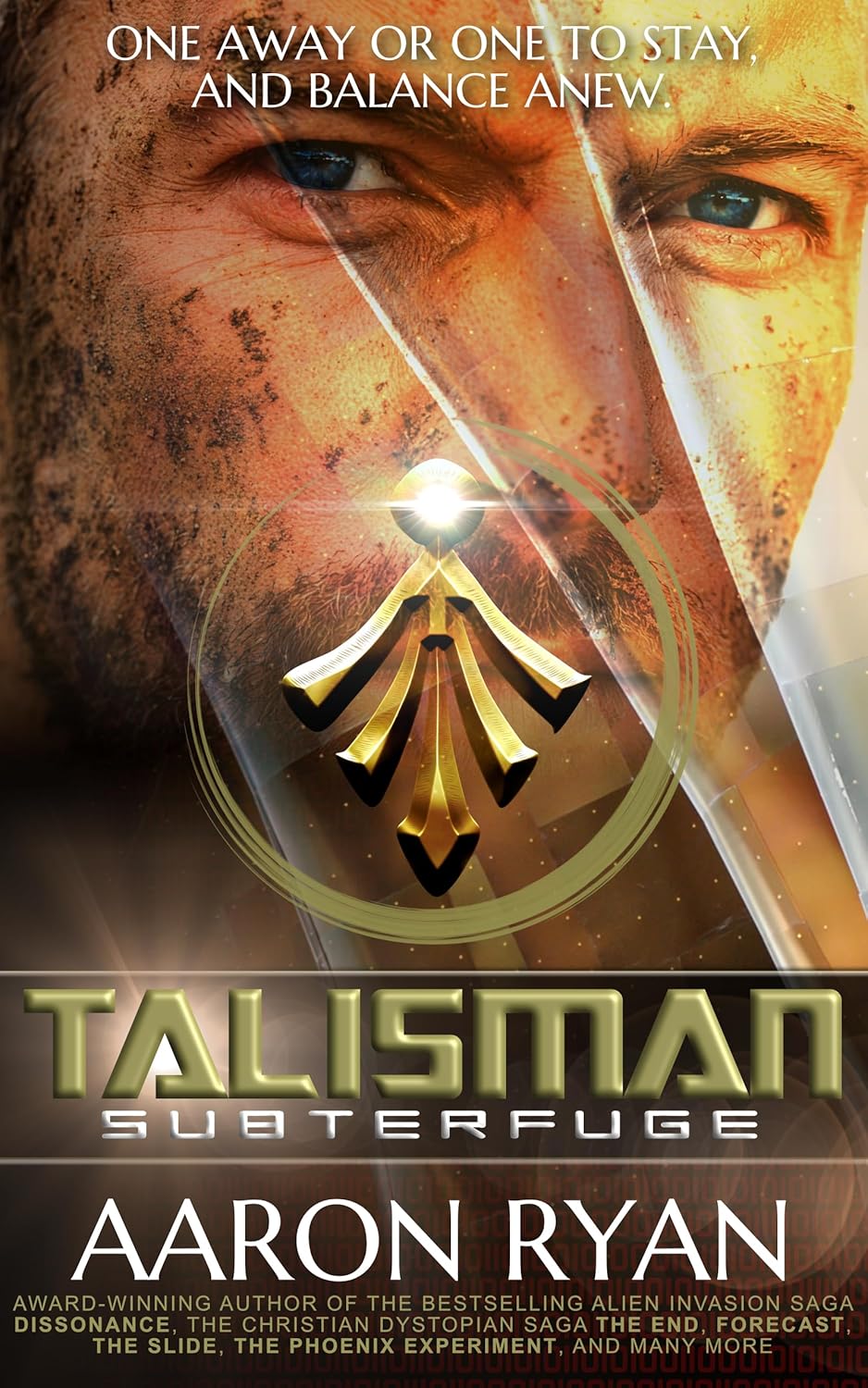

Aaron Ryan’s Talisman: Subterfuge kicks off with a hero who is anything but heroic. Liam “Foxy” Mayfield is a celebrated veteran from a past alien war, but he’s a total wreck. His wife, Janine, was killed by a stray alien, and he’s completely shattered. He’s estranged from his sons and his father-in-law, who just happens to be the President. Then, some mysterious cosmic power called the Aeterium Axis shows up. They give him a crazy deal. He has to save one thousand human lives. If he pulls it off, they’ll bring his wife back from the dead. So Liam accepts, and he becomes this secret vigilante known as “The Talisman,” using new superpowers like teleportation and foresight to save people. It’s not all straightforward, though. A dark, twisted version of himself called The Zorander is hunting him. Plus, a reporter who looks identical to his dead wife is getting dangerously close to the truth.
The writing is fast, it’s raw, and it’s full of emotion. I really felt Liam’s grief. It was heavy, and it made his decision to take this impossible deal feel completely real. I mean, who wouldn’t take that chance? The core idea of “balance” was fascinating. Liam is out there saving lives, which is great, but he’s also killing the bad guys without a second thought to do it. It really makes you wonder. Is he still a hero? Or is he just a desperate man who will do anything to get his wife back? I found myself rooting for him, even when his actions were pretty questionable.
The plot is just non-stop. One minute Liam is saving a wedding party from a landslide, and the next he’s in a brutal, supernatural fight. And then the government, the very people he helped save in the last war, turns on him. Talk about a rough week. I was genuinely angry for him. The author, Aaron Ryan, just keeps piling on the pressure, and it makes for a story you can’t put down. It felt like a dark, gritty comic book. I also liked getting the different viewpoints. We get inside the reporter’s head, and we even see the world through the villain’s eyes. The Zorander is a really spooky dude, and his chapters were intense.
I’d absolutely recommend this book. It’s an emotional rollercoaster. If you loved the author’s Dissonance series, this is a no-brainer. You’ll love seeing Foxy again. If you’re new to this world, that’s fine too. The book does a great job of giving you the backstory you need. This is the perfect read for anyone who likes their sci-fi fast, full of action, and packed with a whole lot of heart.
Pages: 320 | ASIN: B0FV8PL7ZG

Messenger of the Reaper: Part 2
Messenger of the Reaper: Book 2 jumps right into the chaos of Paul Greer’s strange and dangerous life. The story follows him as he takes on brutal jobs, uncovers dark secrets, and wrestles with the eerie presence of James Crum, the Reaper himself. The book blends revenge, the supernatural, and gritty crime drama. It moves fast, takes sharp turns, and never really lets up. There is a constant sense that something worse is coming, and Paul is the only one who can stand in its way, even if it costs him everything.
I felt pulled along by the sheer wildness of it. The writing is straightforward, sometimes blunt, and it gives the whole thing a raw, rough edge. I liked that feeling. It matched Paul’s world. Dangerous. Dirty. Lonely. The ideas about fate and the weight of violence hit harder than I expected. Every time Paul slipped into that cold other self, I found myself tensing up. The book made me uneasy in a way that felt intentional. It wanted me to sit in the dark with him. And I did.
Sometimes the story moved so fast that I had to catch my breath. But honestly, that frantic pacing also made it feel real. Life doesn’t wait, especially not in Paul’s line of work. The supernatural pieces were some of my favorites. Grim and strange, and presented in this matter-of-fact voice that made them weirdly believable. The mix of everyday grit and mystical danger gave the book a flavor that stuck with me after I put it down.
I walked away feeling like I had ridden shotgun through someone’s personal hell, watching him claw his way from one threat to another with nothing but stubborn will keeping him upright. If you like high-tension stories with revenge, supernatural twists, and a main character who is always one step from losing himself completely, this book is a solid pick. It’s gritty. It’s strange. And it’s definitely a book worth picking up.
Pages: 138
The Art of Quilting

My Sister’s Quilt is a collection of interwoven stories where generations of women, connected through quilts and memory, discover how love, loss, and legacy are sewn into every stitch of their lives. What first inspired you to connect quilting with storytelling and memory?
Quilts have been in my life since I was a child, from my grandmother to my sister, who is a quilter. I spent time in the Amish community, where women still gather together to finish quilts by hand.
Each story feels both distinct and interconnected. How did you approach structuring the collection to maintain that balance?
The book had to be connected story to story and quilt to quilt to make the book work. I have to admit it was not an easy thing to accomplish, and I spent a lot of time with rewrites to make the book and stories flow for the reader.
What were some themes that were important for you to explore in this book?
I want to show the readers how far back the art of quilting could be found, how quilts were used in the Underground Railroad. Quilting tells a story; it is art, and its beauty is unbelievable. If you own a quilt, you hold history.
The book spans different time periods. Was there one era that was particularly meaningful or challenging to write?
Each time period was meaningful, and it was so much fun to tell a story, including a piece of history often ignored or forgotten.
Author Links: GoodReads | X (Twitter) | Instagram | Website | Amazon
My Sister’s Quilt: A Collection of Short Stories presents quilts as silent witnesses to history, identity, and resilience. Each story is stitched with meaning-threading together lives across generations and continents.
From a quilt that crosses oceans to return to a woman who had forgotten it existed, to coded patterns aiding the Underground Railroad, these stories span eras of struggle and strength. Some pieces honor those who never returned from war. Others raise awareness through the artistry of AIDS memorial quilts or share quiet lessons passed down by grandmothers. A young entrepreneur reimagines quilting with a gothic twist, while a devoted sister supports her famous author sibling from the background.
My Sister’s Quilt is a moving tribute to love, loss, and the unbreakable threads that bind us-where the past and present live in every stitch, and history still speaks. In every square, a story unfolds. In every quilt, a legacy lives on.
Third Quarter Moon: Matters of the Heart

Third Quarter Moon: Matters of the Heart is a warm, raw, and intimate walk through memories, grief, healing, love, and self-rediscovery. Simone moves through vignettes of childhood, family bonds, romantic entanglements, heartbreak, and renewal. The book weaves poetry, reflection, and storytelling into a journey about shedding what hurts, holding on to what heals, and learning to see oneself with new eyes.
As I read, I felt myself sinking into her honesty. The writing hit me in a tender way, almost like sitting with a friend who tells the truth even when it stings. Her memories of growing up in PG County swing from funny to painful in a blink. It caught me off guard every time. The flow of her poems made me pause often. Some lines felt like they were tugging at old wounds I didn’t know I still carried. I loved how she talked about love without sugarcoating it. She let it be messy, beautiful, and heavy all at once. That kind of vulnerability pulled me in and kept me there.
What really stuck with me was the rhythm of her voice. It’s soft and fierce at the same time. She opens doors to her inner world and lets the reader wander around, touch things, break things, feel things. Some pieces felt calm and earthy. Others felt jagged and hot. I found myself nodding, laughing, then swallowing a lump in my throat. Her metaphors about gardening, shedding, and becoming gave me this strange mix of peace and restlessness. I admired how she trusted the reader enough to leave some pages quiet and unexplained. It made the experience feel real.
I walked away feeling like this book is perfect for readers who crave emotional truth and aren’t afraid to sit with their own reflections for a while. If someone loves poetry that feels personal and unfiltered, or stories that sound like they were pulled straight from a heart learning to beat again, this book will land beautifully for them. It’s a gentle companion for anyone growing, grieving, or grounding themselves again.
Pages: 62 | ASINL: B0FLB1PVKL
Hope

Terra Tamers: Alpha follows a teenager living in a city adrift at sea whose brother is kidnapped by a flock of Holo birds, and he will do whatever it takes to rescue him. What was the inspiration for the setup of your story?
The inspiration for the setup of my story was the idea of two brothers surviving a post-apocalyptic world. At first I was thinking kind of a science fantasy direction and leaned more into possible future technology instead.
In many contemporary coming-of-age fiction novels, authors often add their own life experiences to the story. Are there any bits of you in this story?
I’d say the tone of the book, the themes of pursuing hope in a decaying world are the parts of me that bleed through the pages. That and my love of video games.
What were some themes that were important for you to explore in this book?
The most important theme to me in Terra Tamers: Alpha was hope. Without it, there’s no point in continuing to live. I see the death of hope as the greatest poison affecting our modern world. People feel so powerless, and the world is so obviously broken, that now we struggle to even address the obvious issues we see in our communities because people feel hopeless, like nothing they do matters. So why bother? More fun themes were what the future of artificial intelligence could look like, how video games might interact with reality, and friendship.
Where does the story go in the next book, and where do you see it going in the future?
The story will follow Matt and Oakley into exile as they chase the evil AI Gaia. Expect new friends and foes, more creatures and game mechanics, and a greater exploration of a post-apocalyptic American landscape!
Author Links: Newletter | Website | GoodReads | Bookbub | X | Facebook | Instagram | Amazon | Pateron
– YA appropriate story (think 12 and older). Does have mild violence.
– First Person POV from male MC
– World Building (Post-apocalyptic), game design
– Monster taming and battles
– Short chapters, fast pace. Note the eBook is closer to 300 pages.
– Light LitRPG elements (I am working on a TTRPG system for Terra Tamers). Takes time to show up.
– No cursing unless you count H-E- double hockey sticks.
– Grayscale creature illustrations in the back!
I think fans of Digimon, Code Lyoko, Monster Tamer Academy, Maximum Ride, .hack//SIGN and similar stories which blend gaming, science fiction and compelling characters will enjoy Terra Tamers: Alpha!
Searching For Meaning

White Jasmines follows a woman facing a profound personal crisis who engages in direct conversations with God, sending her on a deeply introspective journey confronting love, faith, and identity. What was the inspiration for your story?
The inspiration for White Jasmines came from a period in my life when the inner world felt louder than the outer one. I was watching how people, including myself, search for meaning when they feel lost—how we try to speak to something larger than ourselves when the usual language of life stops making sense.
I became fascinated with that private space where doubt, faith, love, and identity collide. The idea of a woman in crisis having a direct conversation with God allowed me to explore those questions with honesty and vulnerability. It wasn’t sparked by a single event, but by a long stretch of introspection, memories that resurfaced unexpectedly, and the desire to understand how we rebuild ourselves after being broken open.
The story grew from that silence, that questioning, and the need to give shape to emotions that often go unnamed. It became a novel before I realized it—almost like the dialogue had been waiting for someone to write it down.
Are there any emotions or memories from your own life that you put into your character’s life?
Yes, there are emotions and memories from my own life woven into the character’s journey, though never in a literal or autobiographical way. I drew from moments when I felt untethered, when life asked questions I wasn’t ready to answer. Those private experiences—grief, uncertainty, the search for meaning, the ache of longing—helped me understand her inner landscape more honestly.
Some memories, even small ones, left echoes that shaped how she thinks and feels. The way she notices silence, the way she questions love, the way she rebuilds her faith—those elements grew from my own reflections during challenging periods.
While the character is not me, the emotional truth behind her struggles and transformations is deeply personal. I used those memories as a compass, guiding me toward a story that felt authentic rather than imagined from a distance.
What were some themes that were important for you to explore in this book?
Several themes guided the heart of White Jasmines. I was drawn to the tension between faith and doubt—how both can coexist inside one person, and how questioning can sometimes be its own form of belief. The book also explores the fragility of identity, especially when life forces us to confront the parts of ourselves we try to avoid.
Love, in all its complicated forms, was another essential theme. Not just romantic love, but the quieter forms: self-love, forgiveness, and love that persists even after disappointment.
And finally, I wanted to explore transformation—the slow, often painful process of breaking and rebuilding. The 40-day dialogue with God became a way to examine how someone can return to themselves with new clarity after facing the hardest truths.
Those themes together naturally, creating a story that sits at the intersection of introspection, spirituality, and emotional honesty.
What is one thing you hope readers take away from White Jasmines?
If readers take one thing from White Jasmines, I hope it’s the understanding that their inner struggles are not a sign of failure but a passageway to gaining deeper self-awareness. The book invites readers to sit with their doubts, heartbreaks, and questions without rushing to hide or fix them.
I want readers to feel that even in moments of loneliness or confusion, there is meaning to be found—sometimes quietly, sometimes unexpectedly. If the story gives someone a little more compassion for their own journey or reminds them that transformation often starts in the most uncertain places, then it has achieved what I hoped for.
As her days become part of a greater spiritual plan, her ordinary experiences take on new meaning and significance. She reflects deeply on her daily life, imagining God present in her moments and narrating her philosophical perspectives on life, death, and love. Through her narratives, she intertwines philosophy and poetry, questioning love and creation in search of understanding, even regarding the Lord of the Universe. She engages in deep, intimate dialogues with God, inviting Him into a profound challenge while liberating herself from her pain and sorrow. In turn, God grants her life new meaning by revealing His presence in the beauty of nature. By recounting her memories, she frees herself from her previous world and enters a new realm within herself, which she expresses poetically. The book consists of an introduction followed by forty days of narration, telling the story of a Sufi in love who liberates herself from her past and enters a world of light and inner peace, envisioned for the reader in a dream-like manner.
Those Alien Skies

Those Alien Skies is a sharp and imaginative collection of three novellas that dive into the vast unknown of space and the strange corners of the human mind. Each story, The Hunt for Elias Weber, Few and Far Between, and Battle Lines, is a window into a galaxy thick with mystery, alien worlds, and the stubborn will of people trying to find meaning in chaos. The tales follow the aftermath of Graham’s Milijun series, exploring how humans and aliens intertwine, clash, and sometimes find common ground across unimaginable distances. It’s part science fiction, part reflection on what drives us to explore, to fight, and to survive.
I enjoyed this book more than I expected. The writing is crisp and easy to fall into. There’s no heavy technobabble or confusing jargon, just vivid storytelling that pulls you along. Graham’s imagination is wild, but he keeps his worlds grounded in emotions like grief, loyalty, guilt, and curiosity. Elias Weber, one of the central figures, feels real in his flaws and his desperation. His moral decay is slow and chilling, and I found myself both frustrated by him and oddly sympathetic. Graham balances those shades of humanity so well. Sometimes the pacing dips a little, and a few scenes run long, but the payoff always comes. There’s a rhythm to his storytelling that feels cinematic, yet somehow deeply personal.
What really got me, though, was the heart behind the words. This isn’t just about aliens and spaceships. It’s about what happens when belief and doubt collide. It’s about the need for redemption in a universe that doesn’t seem to care. I felt that in every page. Some parts made me stop and think about the way we treat truth, how easily we bend it to suit ourselves. There’s a subtle sadness that lingers underneath all the adventure, like a quiet hum of loss and hope mixed together. And when Graham lets his characters breathe, when he slows things down and lets them wrestle with their fears, that’s when his writing shines the most.
I’d recommend Those Alien Skies to readers who love thoughtful science fiction but don’t want to get buried in technical detail. It’s perfect for anyone who likes their space stories with a touch of philosophy and a pulse of real emotion. If you’ve read the Milijun trilogy, this feels like coming home; if you haven’t, it stands well enough on its own. It’s a book that makes you think and feel at the same time, and that’s a rare thing these days.
Pages: 347 | ASIN: B0FRG7VK6P
The Moaning Lisa
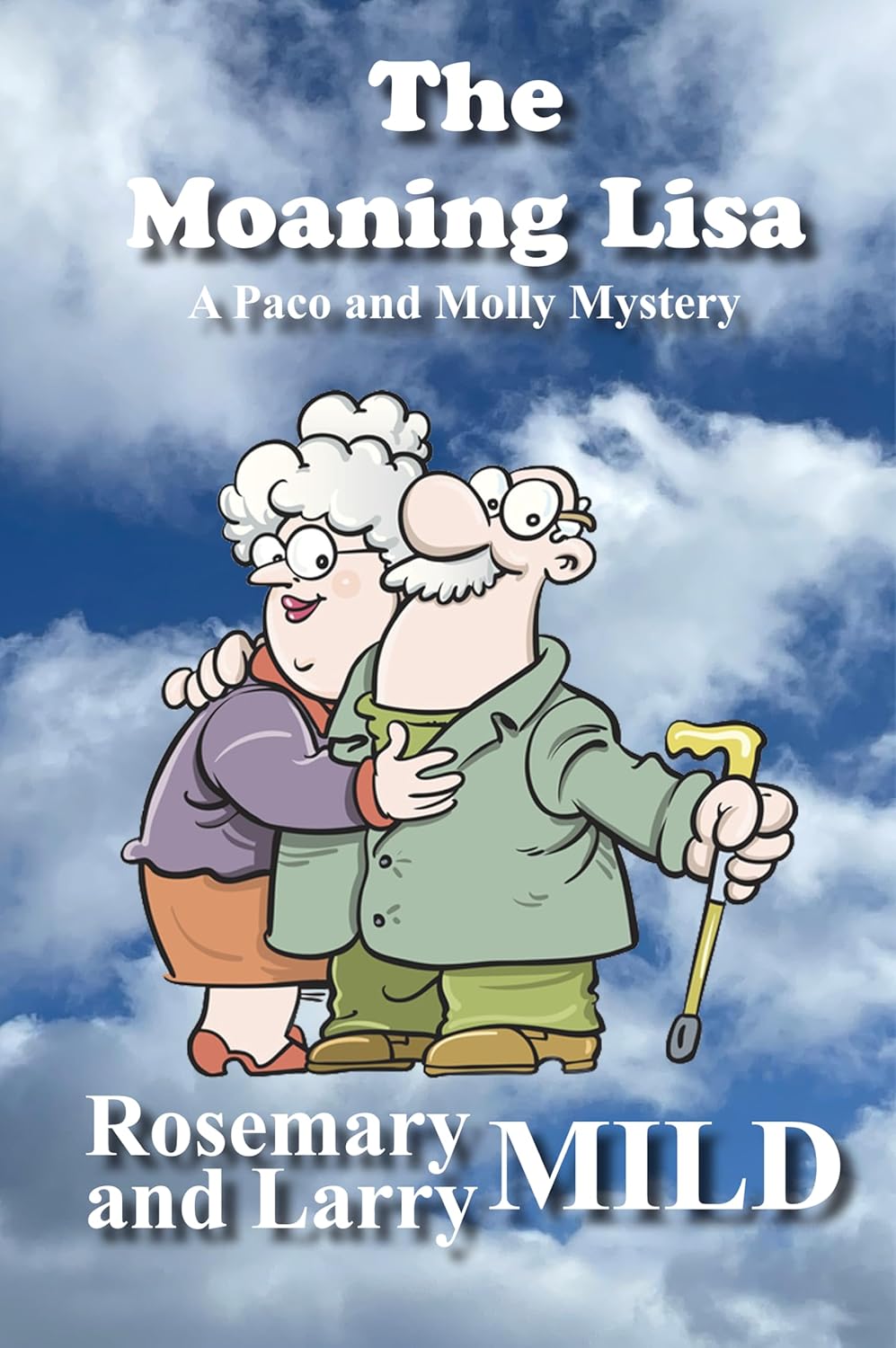

The Moaning Lisa follows Paco and Molly LeSoto, an older married pair of sleuths who land in the middle of a disturbing mystery inside the Gilded Gates assisted living community. A missing resident. Strange moans in the night. A stone turret that hides something far worse than dust and spiders. The story builds piece by piece as Paco and Molly tug at each loose thread until the whole place starts to unravel around them. It is a classic cozy mystery with a darker edge, tied together by the couple’s warmth, humor, and stubborn grit.
I felt surprisingly swept up in the tone of the book. The writing moves with an easy rhythm that let me sink into the world without thinking too hard about it. Sometimes the dialogue cracked me up with its little quirks, especially Molly’s playful mangling of words. Other times, the tension tightened just enough to make me pause. The setting also hit me in a way I did not expect. There is something both comforting and spooky about an assisted living home that tries very hard to look polished while hiding secrets in back stairwells. I found myself rooting for Paco and Molly, not just because they are skilled, but because they feel so relatable, creaky knees and all.
There were moments when the plot leaned into familiar mystery beats, and I caught myself predicting turns before they landed. Still, I did not mind much. The charm of the story is not in shocking twists. It is in how the characters bounce off one another and how their age actually shapes the plot, rather than sitting in the background. I liked that. It made the danger feel different. Slower. Closer. The book also has a gentle emotional core. It touches on loneliness, trust, and the strange little worlds older adults create around themselves. That part stuck with me more than I expected.
I would recommend The Moaning Lisa to readers who enjoy light mysteries with heart. It is especially good for fans of amateur sleuth stories, cozy mysteries with an eerie twist, or tales featuring older protagonists who still have fire in them. If you want something that feels warm but still gives you a few chills, this book will hit the spot.
Pages: 234 | ASIN : B0FJ4WVHYQ



 LITERARY TITAN