Blog Archives
Inspired By the Void

Rise of the Phantom follows two divine feline protectors who, while visiting the mortal world, discover a supernatural force wreaking havoc on the towns and causing mass destruction. What was the inspiration for the setup of your story?
The idea first came from bedtime stories my dad used to tell me. I loved the idea of a world filled with magical creatures and guardians who protect it. As an avid reader, I also wanted to read books like the stories I had been told, but I couldn’t find any like them. Inspired by the void, I decided to create the world I wanted to visit. My mother was a huge part of helping me brainstorm this world and its depth over the last three years.
Rise of the Phantom features some very interesting characters who have their flaws but are still likable. How do you go about creating characters for your story?
I had general personality ideas for each character, but I quickly discovered that at some point, they begin to write their own story. They take on a life of their own, and as an author, you merely reflect how those characters react and go about their world more than creating it yourself. Some characters, such as Birch, suddenly come into the story and don’t leave like you thought they would.
What were some themes that were important for you to explore in this book?
Humor as armor, friendship, courage, and forgiveness were all really important to me. The story has serious moments, but I wanted to show that laughter and kindness can still exist even in dark times. The characters use humor and connection to get through pain, which I think makes them stronger and more human (even though most of them aren’t technically human). Tierra’s character really developed the humor as armor trope, and I feel it’s an aspect that isn’t always explored for its depth as much as it could be. I’ve found that there’s equal depth for characters who use this trope as an emotional safeguard as characters who are blatantly unhappy and miserable, or quiet and keep to themselves.
Is this the first book in the series? If so, when is the next book coming out, and what can your fans expect in the next story?
Yes, this is book one in a series of six books. Book 2, titled Guardians of Felina: The Lost Lair, is set to launch in December 2026, with each new book coming out every December. The Lost Lair goes deeper into the Guardians’ world and shows how the Phantom’s influence is spreading. Readers can expect bigger adventures, new characters, and more discoveries about the Guardians’ pasts—and how they’ll have to work together to face what’s coming next. And yes – readers are finally introduced to the Phantom.
Author Links: Facebook | Website
Before they can deliver their warning, the fire encircles the village, and glitching Beasts emerge, wreaking havoc. The Beasts vanish as mysteriously as they appeared, leaving behind injuries and a cryptic message: “You are now under the command of the Phantom.” Determined to act, Alada and Tierra set off to warn other villages, accompanied by Birch, an unassuming mortal unaware of their divine nature.
The journey takes them through the perilous Lost Labyrinth, where Birch becomes separated and must confront illusions and deceptive voices. With the help of an unlikely ally, and the bitter tree Gnarla, Birch learns the labyrinth’s secret: stop wishing and find strength within. Reunited with Alada and Tierra, they press on to Birch’s hometown, Stone Creek. There, Birch reveals the village’s tragic secret-its residents, including his family, are spirits in denial of their deaths. Despite the eerie setting, Birch reconnects with his father, rekindling lost bonds.
Next, the trio hurries to TierraTown, a village devoted entirely to celebrating Tierra. While Tierra revels in the attention, Alada uncovers a brewing rebellion among the villagers. Chaos erupts as traitors unleash a trap and glitching Beasts attack once more, setting the forest ablaze. Alada saves the town in her full goddess form, but the experience leaves Tierra shaken. Tierra resolves to stay and help rebuild, renaming the village to symbolize her newfound sense of responsibility.
Alada and Birch continue to the Pyrite Peaks, using Levi Lifts to traverse the mountainous terrain. In her domain’s technologically advanced Nya Network, Alada meets with the Nya council to discuss the growing threat of the Phantom. Tierra arrives to support the urgency of their warnings. After rallying the Nyas, the trio sets off again, this time toward Lotus Bay, home of Guardian Coral.
Passing over the Moto Desert, they encounter a group of fleeing Aras, Guardian Ember’s subjects, who reveal that he has abandoned them. Beasts now roam the desert unchecked. The Aras seek refuge in Coral’s domain while the trio head off to find Coral herself. Upon arrival at the bay, the trio finds it eerily deserted-until a mysterious voice calls out, “Don’t ask her, ask me!”
Birch stands out as a fervent advocate for justice, initially a mere citizen who refuses to accept divine complacency. His persistent moral outrage and readiness to act lend the story immediacy; readers will cheer as he challenges immortals to live up to their titles.
Alada’s journey is more contemplative-an immortal Guardian who realizes that omniscience is not the same as omnipresence. She grapples with the limits of her power and influence, growing humbler and more accessible as she dares to admit that she needs allies and cannot save everyone alone.
Tierra’s arc may be the most poignant: from a carefree lover of festivals to a guilt-stricken protector desperate to atone for past negligence, her transformation is a testament to how catastrophic events and honest self-reflection can stir even the most self-indulgent soul into greater purpose.
A Responsibility To Speak Out

Witness in the Dust tells the story of Haiti during its years of crisis, blending vivid storytelling with historical detail, as it follows ordinary families and aid workers as they fight to survive storms, floods, political collapse, and disease. Where did the idea for this novel come from, and how did it develop over time?
As an African American woman and a staunch advocate for justice, I am deeply aware of the challenges faced by people striving for a better life. I have lived through and observed the civil rights movement in the U.S. My observation of the events reveals that the pendulum of justice has swung significantly over the years. Historically, some policies have been more accepting of differences than others. Recently, however, Haiti has been specifically excluded for numerous reasons. The approach to foreign policy regarding Haiti has been harsh and inflexible. The way Haiti is treated exemplifies blatant discrimination at its highest level. I felt I had a responsibility to speak out.
The novel is set during a time when Haitians experienced the wrath of nature and the collapse of political order. Although the Haitian people are resilient, many sought better opportunities, such as those promised by the ideals of the U.S. Declaration of Independence. They were turned away at the border, thereby removing the possibility of asylum. Immigration policy fluctuated between temporary protective status and deportation under several administrations. The situation came to a head, and under the Trump administration, the promises of democracy for a nation of immigrants became null and void.
Celine, the main character of Witness in the Dust, decides to defy the odds and legally enter the U.S. Over time, she becomes eligible for U.S. citizenship, satisfying nearly all the requirements. Through her community groups and her church, she receives support from and contributes to the well-being of other immigrant communities along her journey. By the end of the novel, however, she becomes sharply aware of several contradictions in how people are treated. At one point, she struggles with whether to apply for naturalization. She begins a critical examination of the principles on which the nation was founded. That’s when Celine takes a step back to evaluate the democracy she has considered pledging allegiance to.
What are some things that you find interesting about the human condition that you think make for great fiction?
I find that, although people are made in the spiritual image of God (Imago Dei), their human nature and actions lean toward greed, pride, lust, and other sins of the flesh.
What were some themes that were important for you to explore in this book?
The book explores themes of equality, justice, democracy, citizenship, and the unkept promises of sanctuary for people yearning to breathe free.
What is one thing that you hope readers take away from Witness in the Dust?
I want readers to open their eyes and witness, under harsh lighting, the injustices of a lopsided immigration policy. I encourage readers to examine critically the premise on which America was built. I want them to understand that sometimes in America, “we the people” does not give consideration to- the “least of these.”
The Song of Hadariah


The Song of Hadariah follows Carrie Eisen, a seventeen-year-old caught between the ordinary pressures of finishing high school and the extraordinary call of magic. When she encounters a talking fox named Adom, her world is turned upside down. Alongside her two best friends, she’s drawn into Hadariah, a realm where music and spirit are one, and darkness has silenced its heart. Together, the girls set out to retrieve enchanted violin strings stolen by the demon king Asmodeus, hoping to restore harmony to a dying world. What starts as a whimsical fantasy quickly becomes a story about friendship, belief, and courage.
Reading this book felt like stepping back into the kind of story I would’ve loved as a teenager. The writing is vivid and heartfelt, full of warmth and charm. Goldenberg’s voice has this nostalgic rhythm to it. It moves like a bedtime story told by someone who truly believes in the power of magic. Sometimes the pacing slows a little, especially in the early chapters, but once the girls enter Hadariah, the world blossoms with texture and wonder. I liked how the author blended Jewish folklore with classic fantasy elements; it made the story feel both familiar and fresh. The dialogue among the girls felt genuine too, full of the easy banter and affection that comes from years of friendship. Their bond grounded the magic, made it feel real.
There were moments when I wanted to see a little more from the story’s darker side. Asmodeus, for instance, comes across as more symbolic than menacing, and the conflict feels gentler than I expected. But the real struggle isn’t only against a demon, it’s about growing up and finding the courage to believe when the world makes it hard to do so. I loved how Carrie wrestled with doubt and faith, logic and wonder. It reminded me that magic isn’t always about spells or creatures, it’s about trust, bravery, and the invisible threads between people. And that hit home for me.
The Song of Hadariah is a lovely, thoughtful fantasy that captures the ache of adolescence and the pull of imagination. It’s ideal for readers who miss the sincerity of early young adult fantasy, those who grew up on Narnia, Inkheart, or His Dark Materials, and still look at the world hoping to find a hidden doorway somewhere.
Pages: 212 | ASIN : B0FR2MLTMR

SWITCH and Blue Eagle: A Superhero Sidekick Novel

Switch and Blue Eagle tells the story of Jack Dufraine, a teenage sidekick known as Switch, and his father David, the legendary superhero Blue Eagle. Together, they protect Herald City from villains like Blizz Kid, Queen Venus, and the eerie Poster Boy. Beneath the flashy battles and high-speed heroics lies a story about legacy, pressure, and the uneasy relationship between generations. Jack struggles to live up to his father’s impossible expectations while questioning the morality of their world, a world that seems to see justice in black and white. The novel blends comic-book action with genuine emotional conflict, making it more than a simple superhero tale.
Author Joseph Safdia’s writing is clear and visual, almost cinematic, and I could picture every fight scene as if it were on a big screen. But what really grabbed me wasn’t the action. It was Jack’s internal struggle. He wants to be a hero in his own way, to think rather than just punch. His dad, though, is stuck in an older mindset, all muscle and certainty. That tension hit home for me. It reminded me of those times when your elders just don’t get what the world feels like now. Safdia captures that gap perfectly. Still, the dialogue sometimes felt a bit heavy, almost like it came from a comic book bubble. It worked in places, but I wanted a bit more subtlety.
What stuck with me most were the small human moments. Jasper, one of the criminals, trying to save his family from the mob, it made me rethink the idea of “villains.” Safdia doesn’t just show the shiny side of heroism. He looks at the cracks in it. The book asks what makes someone good or bad, and whether society even gives people the same chances to choose. Those questions stayed with me. Sometimes leans into comic-style melodrama, but it’s sincere, and that sincerity carries it.
I’d recommend Switch and Blue Eagle to readers who love superhero stories but want something deeper than capes and catchphrases. It’s for those who like action that also makes you think, and who appreciate a bit of heart beneath the heroics. Teen readers will see themselves in Jack’s doubts, and adults might see a bit of their own reflection in Blue Eagle’s rigid worldview. It’s an entertaining, heartfelt story that mixes the thrill of superpowers with the pain of growing up.
Pages: 351 | ASIN: B0FS2718R1

Sitnalta


Sitnalta tells the story of a young princess trapped in a kingdom ruled by cruelty and fear. From her birth, Sitnalta’s life is shadowed by her father’s tyranny and the tragic death of her mother. As she grows up, she becomes restless, yearning for freedom beyond the walls of her father’s cold castle. The novel follows her journey from captivity to self-discovery, blending elements of fairy tale, adventure, and moral reflection. The book opens with heartbreak and ends with a quiet defiance that feels earned. It’s a story about courage, kindness, and the stubbornness it takes to be yourself when the world insists otherwise.
Reading Sitnalta pulled me in more deeply than I expected. The writing is vivid and easy to fall into. The author paints scenes with the kind of care that makes the air in the story feel real. The story moves between light and dark with an unhurried rhythm. I found myself frustrated at times, mostly because I cared so much. Sitnalta’s innocence, her stubborn streak, her quiet bravery, they resonated with me. Some of the dialogue feels old-fashioned, but that suits the fairy-tale tone. What surprised me most was how layered the “villain” felt. King Supmylo is monstrous, yes, but there’s something broken beneath his cruelty. That complexity made the story more relatable than I expected.
There’s sadness in nearly every chapter, but it’s the kind that lingers gently instead of crushing you. Sitnalta’s world feels unfair, and yet she carries herself with grace and wit. Her friendship with Najort, the kind-hearted troll, was my favorite part. It’s strange and tender, filled with quiet understanding. The writing in those scenes feels softer, almost glowing. I caught myself smiling at moments that shouldn’t have been happy but somehow were. The author doesn’t overcomplicate things. The prose feels clean and honest. You can sense that it was written with love, not just for the story but for what stories can do, for how they let us hope.
I’d recommend Sitnalta to anyone who loves stories about courage, compassion, and freedom. It’s not just a tale for young readers; it’s for anyone who’s ever felt trapped by the life they were born into. It’s a book that made me think about kindness in a world that often rewards cruelty, and about how sometimes, the bravest thing we can do is walk away and begin again.
Pages: 204 | ASIN : B0FWFBQMG3
Adrenaline Rush: Pain Games
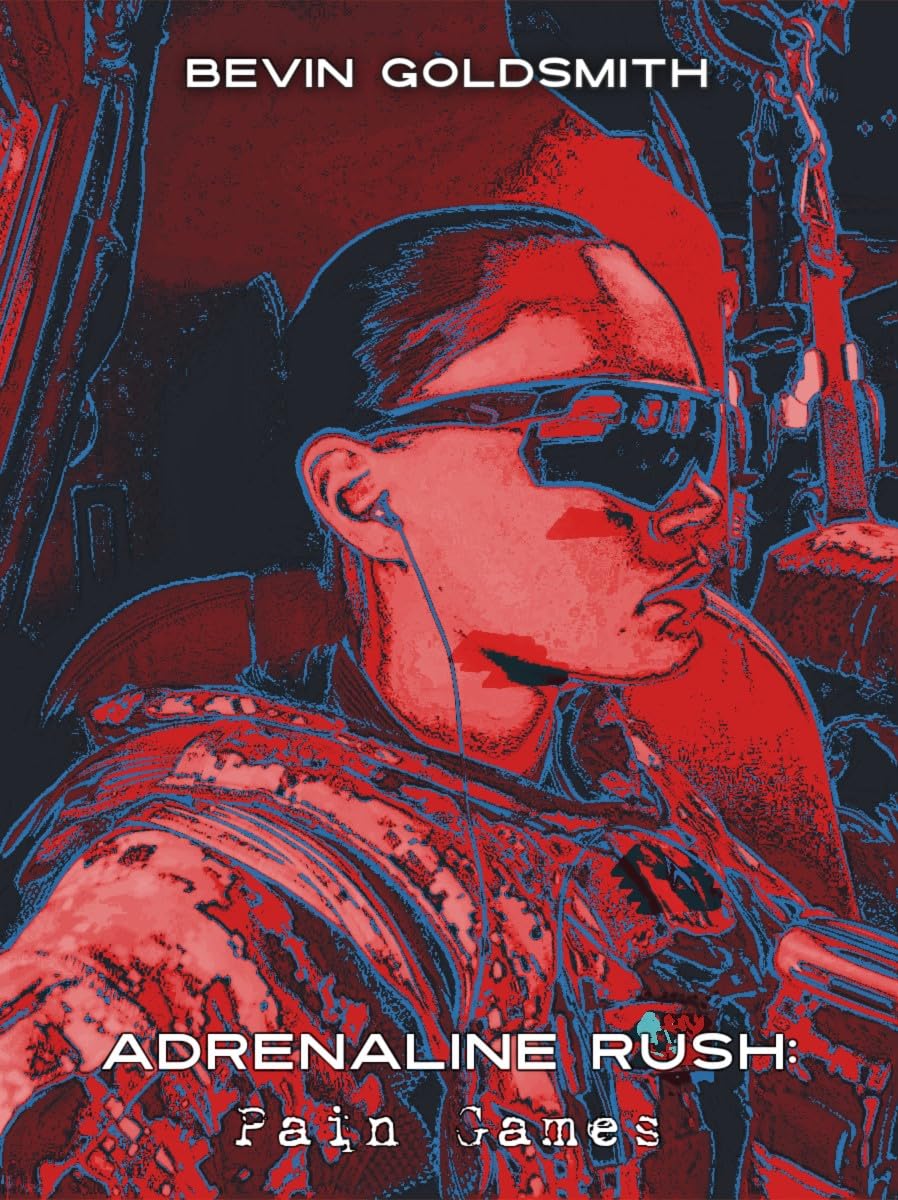
Pain Games follows Katelyn Ann Molsin, a soldier whose journey from enlistment through boot camp to deployment in Iraq captures the brutality, the absurdity, and the dark humor of military life. It starts with her raw initiation at Fort Leonard Wood, then dives deep into the reality of operating with a Female Engagement Team, where she works alongside Special Forces to gather intel in war zones. Through high-stakes missions, cultural clashes, and moments of biting wit, the story paints a picture of someone forged in chaos and driven by grit, yet haunted by personal demons and complicated relationships.
I found myself pulled into the writing almost immediately. The voice is sharp, irreverent, and brutally honest. Author Bevin Goldsmith doesn’t sugarcoat the military experience, nor does she drown it in jargon that would bore a civilian reader. The details are vivid, sometimes uncomfortably so, but they give a real sense of what it means to “embrace the suck.” I loved the rhythm of the narration. It swings from gut-punch descriptions of combat to sarcastic banter that made me laugh out loud. At times, the humor felt like a survival tool, a way of cutting through the suffocating tension, and I appreciated that balance.
On the flip side, the book made me feel uneasy, which I think is part of its point. The moral gray areas, the way trauma shapes behavior, and the constant clash between personal vulnerability and professional toughness left me unsettled, but in a thought-provoking way. I didn’t always like Katelyn. She can be harsh, even reckless. But I believed her, and I cared what happened to her. The relationships, especially with her comrades and with Alex, are messy and real. There were times I wanted to shake her for her choices, but then I’d catch myself realizing that was exactly the kind of complexity that made her human.
This book left me both drained and energized. Drained because of the heavy truths about war and the toll it takes, energized because of the sheer drive and fire in the protagonist’s voice. I’d recommend Adrenaline Rush: Pain Games to anyone who enjoys gritty military fiction, especially readers who appreciate flawed but fierce characters. It’s for people who want to feel the weight of combat, the sting of loss, and the rush of adrenaline right alongside the people who live it.
Pages: 141 | ASIN : B0CTHTDBQ7
Childhood’s Hour: The Lost Desert
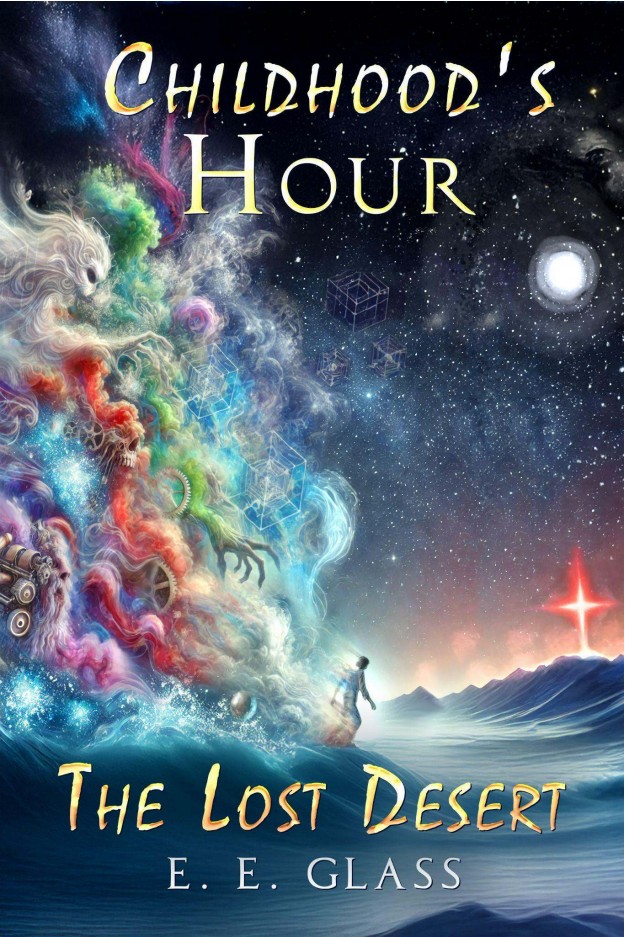
The Lost Desert unfolds like a fever dream. It tells the story of a man named Loste who escapes from a strange mist called the Fray and wanders into a dazzling desert of blue glass. He meets Nadhez, a wild, furred man who travels with a fierce, intelligent creature named Chihiti. The story drifts between hallucination and revelation, full of alien landscapes, glowing moons, and fragments of scripture that hint at a shattered world. Every page glimmers with dense imagery, where survival feels like both punishment and rebirth. It’s a story about memory, loneliness, and the fragile border between madness and faith.
I’ll be honest, this book messed with my head in a good way. Glass writes with the kind of poetic precision that makes you reread sentences just to taste them again. The prose is thick and alive, like breathing through incense smoke. At times I felt lost, much like Loste himself, drifting through scenes that seemed too vivid to be real. Yet, that confusion felt intentional. It put me right inside the character’s fractured mind. The dialogue between Loste and Nadhez was raw and strange but full of quiet heart. There’s something relatable in the way they stumble toward trust, both suspicious and starved for connection. And the imagery, my god, the imagery lingers. Every creature, every shimmer of sand feels carved from light and sorrow.
But this book isn’t easy. It asks patience. It doesn’t care if you understand everything. There were moments where I felt overwhelmed by the world-building, where the sacred words and mythic passages blurred into noise. Still, I never wanted to stop. The rhythm of the writing hooked me. It’s haunting and weirdly beautiful, like a dream you can’t shake off even when you wake. I felt equal parts awe and unease, that quiet tension between wonder and dread. It reminded me how fragile sanity can be when beauty becomes too much to bear.
I’d recommend The Lost Desert to readers who crave atmosphere more than clarity. If you like stories that make you feel rather than explain, that drown you in imagery and leave you gasping for air, this one’s for you. It’s not a comfort read. It’s a plunge into the surreal, but it rewards anyone willing to surrender to it. Lovers of dark fantasy, strange worlds, and lyrical writing will find something unforgettable here.
Pages: 550
The Countess and the Spatula
The Countess and the Spatula is a whimsical, oddball fairy tale that tumbles through aristocratic kitchens, magic-laced crumpets, and absurd courtship. The story follows Fredegonde, Countess of Bellise, a disheveled noblewoman who finds solace in baking after her husband’s death. Her peaceful life of flour and philosophy is upended by Claudio Arrigoni, a melodramatic opera singer who won’t stop proposing marriage. Between the countess’s eccentric habits, a meddlesome staff, a scheming neighbor, and the mysterious “Spatula of Power,” the book becomes a delicious blend of satire, fantasy, and farce.
Reading this story felt like stepping into a dream where logic takes the day off. The writing dances between the silly and the profound, and I loved that contrast. Elizabeth Austin writes with the kind of precision that makes nonsense sound perfectly reasonable. I laughed at the countess’s solemn devotion to crumpets and her tendency to quote Aristotle at moments of chaos. Still, beneath the humor runs a tender current: the loneliness of aging, the need for purpose, and the comfort of small rituals. I found myself rooting for this scatterbrained heroine who keeps her dignity even when the world tilts toward absurdity.
The book lingers over conversations and kitchen scenes. Yet I can’t really complain, because those detours, the gossiping servants, the absurd dialogue, the odd bits of theology, create the book’s strange magic. It’s like sitting by a fire while someone spins a story that refuses to behave. The language sparkles without showing off, and every page smells faintly of butter and mischief. I liked how the story never tried to be grand or sentimental. It’s clever without being cold, and funny without cruelty.
I’d recommend The Countess and the Spatula to readers who like their humor dry and their fairy tales a little crooked. It’s perfect for anyone who enjoys P. G. Wodehouse, G. K. Chesterton, or a bit of magical realism with a side of tea. This isn’t a book for those who want action or romance that makes sense; it’s for people who like to watch chaos unfold politely. I finished it smiling, craving crumpets, and oddly comforted by the idea that common sense might just be the most magical thing of all.
Pages: 361 | ASIN : B0FPDNFGH4



 LITERARY TITAN