Blog Archives
Honesty and Exploitation

Mortal Vengeance: A Grim Tale is an origin story that frames the development of a Dominican folklore figure born of a Jesuit-run Academy’s cruel character- building discipline. What was the inspiration for the setup of your story?
The direct inspiration came from a beta reader I used to work with. She deeply enjoyed Mortal Vengeance, but she pointed out that certain elements felt underdeveloped—particularly the lore surrounding the Grim Cojuelo, the psychological drivers behind key characters, and the extent of Profesora Lourdes’ cruelty. Her critique lingered with me, and she was right. There were emotional and mythological layers I had only hinted at.
I also knew I hadn’t fully examined what pushed Marcos, right from Chapter 1 of the original novel, to declare that “the old hag has to pay.” That line carries weight. I owed readers the institutional and psychological conditions that made such a statement inevitable.
The setting itself is personal. I attended an all-boys Jesuit school for twelve years. While my experiences were not identical to those of my characters, the cadence of the speeches, the moral framing, and the rhetoric of “character formation” delivered by figures like Padre Ángel, Padre Ignacio, and Profesor Malagón are drawn directly from memory. The language of discipline. The idea that suffering builds virtue. The subtle humiliation disguised as moral instruction. That framework became fertile ground for psychological horror. A Grim Tale became a space to explore the Grim Cojuelo’s birth not as a monster, but as the consequence of repression and cruelty.
What is the most challenging aspect of writing a psychological thriller? The most rewarding?
The hardest part is control.
With Mortal Vengeance: A Grim Tale, I was navigating heavy subject matter—grooming, institutional abuse, suicide, and psychological collapse. The challenge was not whether to go dark. The story demanded darkness. The challenge was how to confront it responsibly. There is a thin line between honesty and exploitation.
When addressing suicide, for example, I had to think carefully about what to depict and what to withhold. The aim was to portray the emotional and systemic forces pushing a character toward that edge without turning the narrative into spectacle—or instruction. That balance—showing the consequences of corruption, violence, and humiliation without veering into sensationalism or “torture porn”—was difficult, but essential.
Tonal balance was another challenge. The original Mortal Vengeance functions as a slasher/whodunnit. A Grim Tale is pure psychological horror. There is no mystery engine asking “who did it?” If readers come from the main novel, they already know how this ends. Suspense had to emerge from inevitability. The question becomes not what will happen, but how it becomes unavoidable. Ensuring readers care about the journey rather than the destination was crucial.
Then there are the rules of horror itself. How much do you explain when the Grim Cojuelo appears? Is it supernatural? Psychological? Symbolic? How does Julian interpret what he sees? How does the world respond? Balancing that supernatural-psychological axis without tipping too far in either direction required restraint. Over-explain, and the horror collapses. Under-explain, and coherence dissolves.
The most rewarding aspect is precision.
While I’m not aiming for a Shyamalan-style twist, there is a final reveal—a reframing—that has been quietly telegraphed throughout the novel. Every clue is there for readers willing to pay attention. When they reach that final moment and realize it was always in front of them, that recognition is deeply satisfying.
Psychological horror works best when the reader feels implicated in the discovery. When that happens—when the realization feels earned rather than imposed—that’s the reward.
Obviously, you took great care in describing the settings throughout your story. How do you strike a balance between perfecting the mood in your thriller and developing the plot?
You have to paint a picture. If the reader can’t see it, they won’t feel it. And in psychological horror, feeling is everything.
It’s often said that “an image is worth a thousand words.” I believe that’s true—but the reverse should also hold: “a thousand words must paint a clear image.” Description isn’t decoration—it’s infrastructure. In a psychological thriller, the inner world and the outer world are constantly mirroring each other. The setting isn’t just where things happen; it’s how things are perceived. If a character is unraveling, the environment should feel unstable. If the institution is corrupt, the architecture should feel imposing, suffocating, immaculate in a way that hides rot.
In A Grim Tale, the surroundings—especially Excelsior Academy—had to function as a character. Many readers may not be familiar with the Dominican Republic beyond resort postcards. I wanted the setting to feel lived-in, specific, textured. The marble, the crucifixes, the stained glass, the speeches about virtue—those details aren’t aesthetic indulgence. They establish atmosphere, yes, but they also drive the plot because they shape the characters’ psychology. The institution becomes the pressure cooker.
The key is that mood must serve movement. If a scene doesn’t deepen tension or push a character closer to transformation, it doesn’t belong.
And transformation is crucial. Horror isn’t about the final form—it’s about the process. The unsettling part isn’t the monster fully realized; it’s watching the fracture happen in slow motion. It’s seeing the body, the mind, the belief system crack and reform. If readers don’t feel that breaking point—if they don’t sense the dread building inside the character—then the plot reveal won’t matter.
So the balance comes from intention. Atmosphere isn’t separate from the plot. It is plot. When done correctly, every description tightens the noose a little further.
If it doesn’t, it’s just pretty writing. And pretty writing has no business in horror unless it’s hiding something.
What is the next book you are working on, and when will it be available?
I’m currently about 80% through the first draft of the sequel to Mortal Vengeance. It’s titled Mortal Vengeance II: To Reel or Not Too Real? — and no, that’s not a typo. The novel continues the slasher framework established in Book 1, but this time it leans harder into satire. It’s slightly less oppressive in tone than A Grim Tale, but not lighter in stakes. This installment examines media, performance, and the blurred line between spectacle and truth. The horror remains — it simply evolves.
At the end of Mortal Vengeance, a character drops a seemingly casual hint that longtime readers will recognize as more significant than it appears. In A Grim Tale, I subtly expand on that thread. Without giving too much away, let’s just say a piece of fruit becomes symbolically important. Returning readers will understand. New readers will soon enough. It’s a genre blend, and yes, it’s a risk. But this series has always interrogated power structures — this time, it asks what happens when violence, trauma, and justice become content.
As for timing, I’m aiming to complete the draft soon, followed by revisions. If all goes according to plan, readers won’t have to wait long, perhaps fall of 2026.
At the same time, I’m developing a children’s series titled IMALIVE. And while that may seem like a sharp contrast, thematically it isn’t.
If Mortal Vengeance explores what happens when institutions silence young people, IMALIVE is about empowering children to believe their voices matter.
The project began as something deeply personal. When my eldest nephew turned eight, he asked me to write him a story as a birthday gift. That request became a larger idea. The core message is simple: imagination is powerful, but agency is transformative. Children can dream, yes — but they can also build, create, and shape their world.
So while one series dissects the consequences of repression, the other celebrates possibility.
They may look different on the surface. At their core, they’re both about power — and who gets to claim it.
Author Links: GoodReads | Facebook | Website | Alejandro Torres | Amazon
Mortal Vengeance: A Grim Tale is a queer psychological slasher thriller set in an elite Catholic academy in Santo Domingo, where money, faith, and reputation always come first—and students like Julián Díaz are disposable.
Julián is a scholarship kid in a world of ski trips, private drivers, and last names that open doors. His parents have bet everything on Excelsior Academy, certain that if he keeps his head down and excels, he’ll escape poverty and make their sacrifice worth it. Instead, he becomes a convenient target: a vicious math teacher obsessed with breaking “weak” students, priests more interested in image than souls, and rich classmates who treat him as both mascot and threat. Under that pressure, Julián begins to **dissociate**. When reality becomes unbearable, his mind slips sideways into nightmarish visions of the Grim Cojuelo, a horned figure from Dominican folklore that stalks the school’s halls, churches, and dreams with a scythe and a mirror full of other people’s sins.
Around him, other students are fighting their own battles. Lucía, a razor-sharp debate star, can dismantle any argument but can’t quite untangle her feelings for the boys circling her: Alex, her brilliant, morally outraged debate partner, and Enrique, the charming golden boy whose courtly manners hide something colder underneath. Fernando, a popular athlete with a soft center, is falling for Julián in a place where the wrong kiss could destroy both of them. Behind classroom doors and church altars, girls like Melissa endure “perfect” boyfriends who leave bruises where sweaters and makeup can cover them.
When a Christmas show erupts into a brutal act of dating violence in the school parking lot, the moment is caught on shaky phone cameras and explodes across social media. Overnight, Excelsior’s glossy façade cracks. Parents demand answers, the administration scrambles to control the narrative, and students learn in real time how easily the truth can be edited, weaponized, or buried. In whispered conversations, secret group chats, and late-night plotting sessions, Lucía, Alex, Fernando and the others begin to question whether playing by the school’s rules has ever protected anyone but the powerful.
As the year spirals, Julián’s dissociative episodes fuse with the legend of the Grim Cojuelo until he can no longer tell where his trauma ends and the monster begins. The Cojuelo doesn’t hunt at random; it hunts the people who have built careers, reputations, and fortunes on other people’s pain.
Blending dark humor, queer romance, and slow-burn dread, Mortal Vengeance: A Grim Tale explores class rage, religious hypocrisy, gendered violence, and how institutions teach kids to either disappear… or become something frightening enough that no one can ignore them. When the Grim Cojuelo finally steps out of legend and into the headlines, the question isn’t who the killer is—it’s how many people helped create him.
The Wizard’s Apprentice
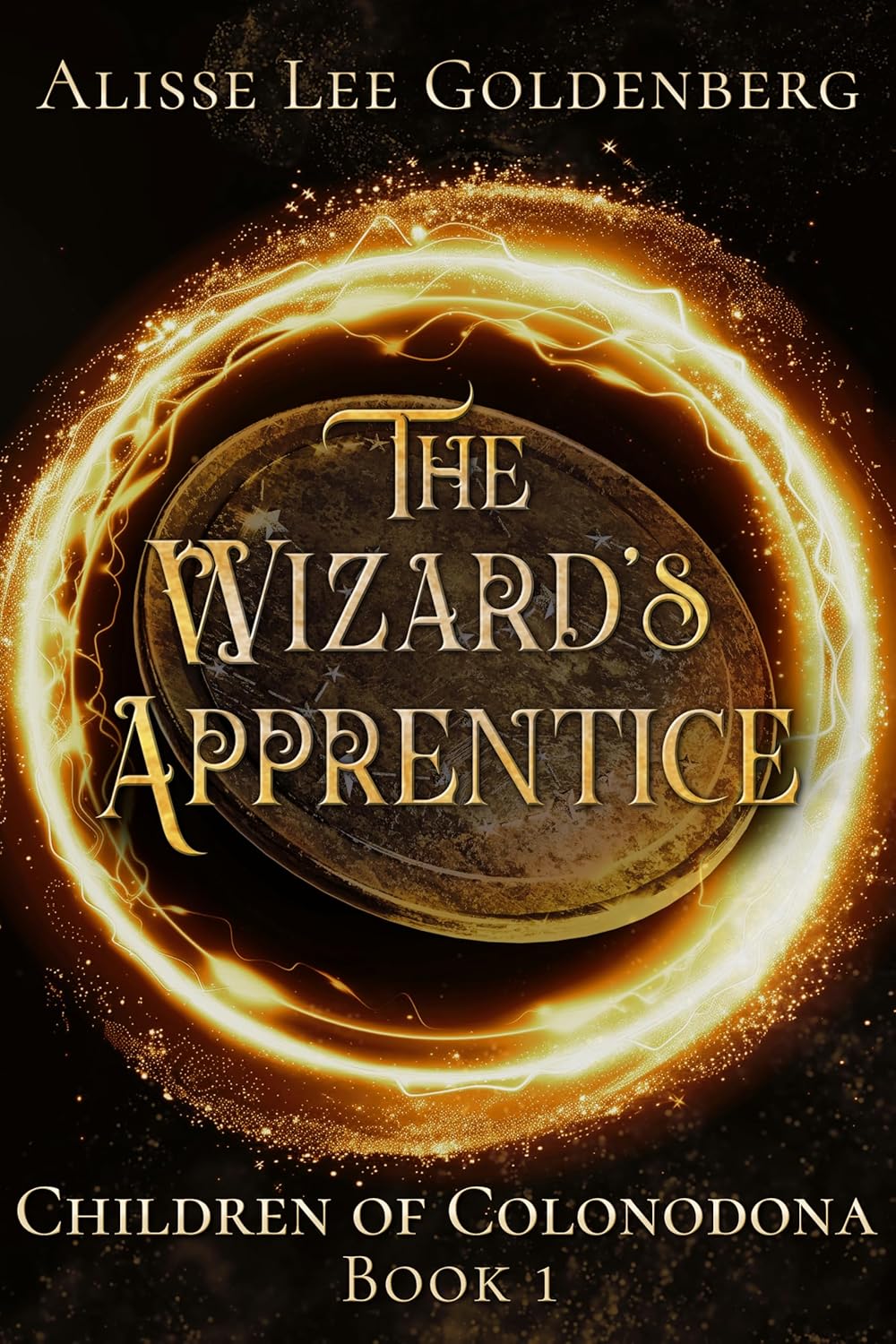

The Wizard’s Apprentice follows sixteen-year-old Prince Lucas of Colonodona as he studies magic with the sharp-tongued wizard Kralc and tries to live up to a heavy family legacy. Night after night, he relives a vision of his kingdom burning, a dream that feels far too real, while a mysterious girl named Lettie walks into the royal orchard claiming to search for her missing father and quickly wins the trust of Princess Audrina and Lucas himself. As the bond between this royal family and their guest deepens, secrets from past generations come to the surface, Kralc’s own hidden history matters more than anyone expected, and Lucas has to face the question that sits under every lesson and every nightmare. Is he the cause of the disaster he sees, or the one person who can stop it.
As a reading experience, I had a good time with this book. I liked the way the story keeps circling back to small, domestic moments in the castle, like breakfasts, walks in the orchard, and quiet scenes in Sitnalta’s salon, then lets those moments crack open into bigger tensions. The character work is the biggest strength for me. Lucas reads like a very believable teen boy, hungry for praise, prickly about being treated like a child, heart first and brain later. Kralc is gruff and very funny in that “I hate feelings, now drink this potion” way, and I enjoyed every scene where his care slips through his bad attitude. Audrina’s mix of entitlement, kindness, and cluelessness feels honest, and her attraction to Lettie has a real spark to it without ever being turned into a joke. The writing itself is clean and very readable. The author likes straightforward descriptions and clear dialogue, and that kept the pages moving. I felt the middle of the book slow a little because Lucas repeats the same pattern of doubt and defensiveness, and Lettie’s coyness about the truth goes on a bit long, yet I still turned the pages because I wanted to see this family finally sit down and tell each other everything.
The nightmare that opens the book is not just a spooky hook, it turns into a question about fate and choice, about what it means to see a terrible future and then decide how you will live with that knowledge. Lucas’ fear that he will be the one who burns his own home felt very raw to me, especially in a world where he has real power and no full control over it. The book also plays with class in a simple, clear way. Lettie carries the anger and shame of growing up poor and illegitimate, and when she walks into this kind, shining royal family it’s easy to see why she wants both love and payback. The story is also about legacy. Kralc’s bond with the dead Learsi and the magic coin that holds pieces of all three of them gives the ending a quiet, emotional punch. Their little conversation in the green field, and her message to Sitnalta, gave me that warm ache you get when a fantasy story lets its ghosts speak with love instead of just horror.
I would recommend The Wizard’s Apprentice to readers who enjoy classic, character-driven fantasy with a strong family focus and a light, hopeful tone. It feels right for teen readers who are ready for themes of grief, guilt, and complicated loyalty, and also for adults who grew up on older school series and want something familiar yet emotionally honest. The Wizard’s Apprentice reads a bit like Harry Potter and the Sorcerer’s Stone, with a young hero learning magic and facing a dark destiny, but it trades the bustling school setting for a more intimate focus on royal family drama and personal legacy. If you like training sequences, prickly mentors, messy siblings, and magic that always has a cost, this is a solid pick.
Pages: 290 | ASIN : B0GMK611PR

Art is for Everyone

The Mermelf: A Fable for Our Times follows a wingless, tailless blue mermelf that falls from the stars into the enchanted world of Merbay, whose awakening sparks a resistance on Earth where imagination is outlawed. What was the original spark for Xiu?
In my book, an idea from 1803 is a living presence: ..” The Idea / breathed two sighs, one of relief and one/ of a shortcut onto a dusty and / forgotten shelf of Cranny’s mind.” In the book, I see ideas as living things looking for someone to manifest them. Xiu comes from Cygnus. Throughout history, the stars of Cygnus were seen as a point of origin and return for the human soul. Many ancient sites -including the Pyramids of Giza, and various European megaliths (Newgrange) -are claimed to align with the stars of Cygnus, particularly the star Deneb. This ancient reverence may have been based on an understanding that high-energy cosmic rays that influenced life on Earth may have originated from the binary star system Cygnus X-3. In the March 2006 edition of Astronomy Now, the British anthropological writer Denis Montgomery argues in favour of a connection between cosmic ray activity and the relatively sudden transitions in human behaviour patterns around 35,000 BP. Gwythian’s relatively dark, coastal location provides excellent viewing opportunities, especially for locating the star Deneb. I was on holidays in Gwythian, Cornwall when I dreamed of a blue mermelf coming to Merbay astride her fireflier. The depth of the ocean I had swam in earlier, the blue of the sky, Virginia Woolf’s lighthouse on the horizon, the shape of Cygnus in the night sky, and the fantasy novels strewn over the coverlet of the sofa in the little tin hut I was renting from the enigmatic Queenie all coalesced. I think many fantasy writers are inspired by myths, as we see ourselves as heirs to ancient folklore. Tolkien drew heavily from Norse and Anglo-Saxon mythology, and I am often inspired by both myth and answering a ‘what if’ in the context of scientific logic. But my mind is most open when it is in a dremang state. Dream as it meets with the what-if of characters who become lifelong companions. It took some time to find Xiu’s name, arriving as it did when I eventually wrote the line: ‘Cygnus catches dreamers with her daughters’. When something is outlawed, it goes outside the norms of a given place and time. My own life had followed a trajectory that did not include accepting the received wisdoms of status: I holidayed in Cornwall every year as a balm against liaising through prejudice in my work as a Community Worker. The systems and structures that uphold a world of insiders and outsiders is one that needed imaginative repsonses to navigate. Imagination is one of the tools that we as human beings have at our disposal to make this world a fairer and more equitable one for everyone, including Nature and the inhabitants of all our imaginary worlds too, so my dreams brought me a blue mermelf from the Cygnian constellation to help my readers and me see another way.
Your prose is lyrical and rhythmic. Do you write with sound in mind first, or image?
What a lovely question. I tend to experience sound and image arriving together rather than separately. I’m very conscious of rhythm and cadence as I write-the movement of a line, the weight of a syllable, the way phrasing carries emotion-but at the same time, I’m seeing the moment visually. For me, metre and image coalesce; the music of the line often shapes the image, and the image in turn suggests its own pace and tone. I’m also led strongly by character. Once I’ve a sense of who is present in a scene, their emotional life begins to guide the language, the rhythm, and even the imagery that emerges. It often feels less like I am constructing the moment and more like I am listening and watching my characters move, speak, and perceive the worlds in which they find themselves. And the language follows those impulses. The sound, the image, and the characters all work together to carry the story forward or backward, as Time is not linear.
The book feels timely in its warning about forgetting what makes us human. What concerns were you exploring?
That is another excellent question. I believe that art is for all of us, not for the privileged few. To that end, I have always tried to bring poetry into the community, sometimes on a voluntary basis, sometimes more formally, as in the Japanese Poetry Workbook: Master Haiku, Tanka, Renku, Haibun & more with prompts and exercises I just self-published on Amazon Kindle. Imagination is coralled by so many gatekeepers, sometimes financially but more often by draconian groups such as The Nomenclature. The idea behind the Nomenclature grew partly from looking at how regimes built on fear try to control not only other people’s actions but their inner lives. I was thinking about periods in history where imagination, books, and independent thought were treated as dangerous, and how conformity was treated as dangerous. I was also thinking about periods that particularly outlawed imagination for girls, as my lead characters are female. Throughout history, women’s access to imagination and creative expression has often been constrained, especially during times of authoritarian control: Fascist Europe, the Middle Ages, the Victorian era and the early twentieth centuryto name a few. Sauron and his legions in Middle-earth,, Imagination, fantasy, and creativity and anomaly have always intertwined with how we see and interpret Nature, and how we construct real and imaginary worlds. Many of the fantastical worlds that women writers have imagined have been a blend of imagination, science, and social critique, whether the eerie landscapes of Mary Shelley’s Frankenstein or the cultural worlds in Le Guin. The anomalies in my book reflect a long history in which society has often restricted imagination, particularly for anyone or anything that is different, and very often it is the female who carries the brunt of this censure. Imagination thrives in freedom, and I have tried to show in my book that Imagination remains both necessary and revolutionary, and how the wider society, no matter what that society is or in which timeframe it exists, has still never solved the problem of fearing it. That is, until the mermelves and those marked with a blue birthmark. Beacons of hope in this, our Age of the Machine.
If imagination is a star, as the book suggests, what happens when people stop looking up?
When we stop looking up, we become our shadow selves, and the world becomes a shadow of what it could and can be. The light that guides creativity, curiosity, and hope begins to fade. Life becomes smaller, meaner, confined to what can be quantitatively measured, confined to GDP. Not that the small and the tiny are not larger than life in The Mermelf. It is all a question of perception.
Author Links: Facebook | X | Instagram | Website
The Mermelf: A Fable for Our Times

The Mermelf is a quirky and dreamlike fable that mixes myth, science fiction, folklore, and a bit of social warning all in one sweep. The story follows Xiu, a strange blue mermelf who arrives in the world of Merbay without wings or a tail, and whose journey collides with talking mice, Firefliers, portals, lost histories, and a future Earth ruled by the grim Nomenclature. The book moves between worlds, between tones, and between forms of storytelling. Sometimes it reads like an old myth whispered around a fire. Sometimes it shifts into a stark dystopian diary. The result feels like a tapestry woven from many voices, each calling out to imagination and memory at once.
Reading it, I found myself pulled in two directions. One part of me loved how bold the writing is. Hines leans into lyrical language with no hesitation. The book feels alive with rhythm. Sentences tumble and twist, and I could sense the author having fun with the sound of words. That energy kept me turning pages. I also liked how the characters, even the smallest ones, carry little sparks of mischief and hope. At times, some scenes jump so quickly that I had to pause just to understand where I had landed. But I did enjoyed the ambition.
I really liked the ideas behind the story. The way it plays with truth, imagination, and the consequences of forgetting what makes us human felt surprisingly timely. The Nomenclature sections in particular gave me a jolt. They are bleak and sharp, and they contrast wildly with the warm magic of Merbay. I liked that contrast. I also liked how the book keeps nudging the reader to stay curious and playful and brave. I did find the structure a bit chaotic. Threads drift in and out. Characters vanish and return. The story behaves like a dream, which is beautiful and frustrating at the same time. But I admired how it kept reaching for something big.
I’d recommend The Mermelf to readers who enjoy mythic stories that do not follow straight lines. It is perfect for imaginative kids, for adults who want to reconnect with their inner child, and for anyone who likes books that surprise them at every turn. It asks you to lean into wonder. If you are willing to do that, you will find a strange and heartfelt tale full of charm, courage, and wild invention.
Pages: 80 | ASIN : B0D3T6NNH6
The Song of War


The Song of War brings the Dybbuk Scrolls Trilogy to a breathless finale. The story opens with Asmodeus rallying his monstrous army and stepping out of the shadows to wage open war. Carrie, Mikhail, Lindsay, Rebecca, Emilia, and Ferne are pulled straight into danger as the conflict breaks across their worlds like a storm tide. Weddings, dreams of the Angel of Death, burning theatres, massed armies at the palace gates, and the chaos of a full-scale magical invasion all collide in a story that moves fast and hits hard. The book pushes every character to their breaking point, and it never stops reminding you that the cost of this war will be steep.
Reading this one felt different from the first two. I felt that there was a heaviness hanging over everything, and it’s hard not to feel that weight with Carrie. Her fear, her guilt, her frantic hope that she can keep the people she loves alive made me tense in a way I didn’t expect. The writing leans into emotion without getting flowery. Scenes swing from warm and funny to terrifying in a heartbeat. The wedding was especially emotional for me. It was sweet and soft and full of love. Then the dread crept in. Then the drums started. Then the world fell apart. I felt that shift in my gut.
The battles are messy and personal and frightening. Characters panic, stumble, run, freeze, and sometimes find a burst of courage they didn’t know they had. The story doesn’t pretend everyone suddenly becomes a warrior. It shows fear for what it is. It also shows love and loyalty in a raw way. Emilia’s struggle to reconcile her lineage with her future, Mikhail’s desperation to save his father, Lindsay’s reckless bravery, and Carrie’s mix of fear, anger, and determination gave the whole book a steady emotional heartbeat.
By the time I reached the end, I felt wrung out but satisfied. This book doesn’t hold back. It gives the trilogy a strong, emotional finish that feels earned. If you like fantasy stories where magic mixes with real-world problems, or if you enjoy character-driven adventures filled with danger, heartbreak, and stubborn hope, this is a series worth picking up. The Song of War is especially fitting for readers who love finales that swing big and don’t shy away from loss or triumph.
Pages: 217 | ASIN : B0FR2RBDDS

The Song of Vengeance

The Song of Vengeance picks up right where the first Dybbuk Scrolls adventure left off and wastes no time throwing Carrie back into danger. The book follows her struggle with loneliness at university, the eerie disappearance of her two closest friends, and the creeping feeling that something magical and malicious is once again closing in. When the dybbuks return with a new plan for revenge, Carrie is pushed back into Hadariah and into another fight she never asked for. The story blends modern life and fantasy in a way that feels quick and tense, and the mystery of what happened to her friends drives the plot with a steady pull.
I was rooting for Carrie in a very personal way. Her stress, her self-doubt, her frustration when no one believes her, all of it hit with surprising force. The writing is clean, direct, and often emotional in a quiet way. There were moments when I felt that knot of worry she carries, especially when the people around her begin forgetting Lindsay and Rebecca as if they never existed. That idea is simple, but it’s creepy, and the book leans into it with confidence. The dialogue feels natural, and the scenes that shift from the normal world into the magical one have a dreamy snap to them that I really enjoyed.
I also liked how the book digs into friendship. The bond between Carrie and her friends is the heart of the story, and even when the plot slows down, that emotional thread pulls everything forward. I do think some moments move a little quickly, especially when new characters show up or when the story jumps between worlds, but the emotional beats are strong enough that I didn’t mind much. The fantasy elements feel familiar, yet the author gives them a warm, human frame. Carrie is not a hero because she’s chosen, she’s a hero because she’s stubborn and loyal and scared, but moving anyway. That made the story feel real to me, even when magic was swirling everywhere.
If you’re a fan of series like Percy Jackson, The Mortal Instruments, or The School for Good and Evil, The Song of Vengeance will feel like a fresh but familiar ride. It blends ordinary life with creeping magic in a way that scratches the same itch as those stories, and it leans hard into friendship and courage just like they do. The world of Hadariah has its own rhythm, its own rules, and its own emotional pull, and readers who enjoy character-driven fantasy with real heart will settle into it easily. If you like your adventures tense but personal and your heroes a little messy and human, this is a great next read.
Pages: 271 | ASIN : B0FR2QTN4C
Believable Dark Fantasy

The Siren’s Daughter follows a young, spirited girl, drawn irresistibly to the sea, who finds a mysterious conch shell that lures her away from her family. What inspired you to retell this story in this manner?
I was working on another project, making cultural heritage cards. When researching CHamoru legends, I found that the Marianas had their own sea siren lore. Because of my Latino heritage, I know that “sirena” is Spanish for “siren.” While “Sirena” is a beautiful name, I started wondering if maybe the legend wasn’t actually about a girl named Sirena, but was a warning based on what happened to a girl claimed by a siren. A Spanish word for a warning instantly placed the story in Spanish colonial times, and I imagined that it was a priest who wrote the warning and did not care to keep the girl’s name. The details of the rest of the story just fell into place as I imagined it more. I really liked the whole premise of a siren claiming the girl as her own, and the details being lost to time because of colonial control. I liked it more and more as I kept developing the story.
What were some themes that were important for you to explore in this book?
The legend of Sirena is a Guam legend, but I wanted to make it more of a general CHamoru legend by integrating it with siren lore in the other Mariana Islands.
As with my other works, I want to share CHamoru heritage with readers everywhere. In The Siren’s Daughter, I saw an opportunity to share with audiences another part of CHamoru history – Spanish colonization. I wanted to mention the wars against the Spanish. I also wanted to mention the loss of spiritual and traditional knowledge because the Spanish killed off traditional healers.
What were some goals you set for yourself as a writer in this book?
My main goal was to create a believable dark fantasy that shares CHamoru heritage with readers. I wanted to give a glimpse of life under Spanish rule. But to be honest, I really liked the story that I had imagined, and I was excited to write it.
What story are you currently in the middle of writing?
I am currently working on Books 2 and 3 of what I am calling The Yo’Åmte Trilogy. The Makana’s Legacy is Book 1. I like the outlines that I have, and I wish I had the time to devote to these stories. These next two books will actually bring up topics that even many CHamorus might not have thought about. Because these stories delve deeper into the role of Yo’Åmte (traditional healers) in CHamoru society, I will be consulting with an expert on the topic of Yo’Åmte to help me stay accurate and respectful in my portrayal of Yo’Åmte.
Author Links: GoodReads | Facebook | Instagram | Website | Amazon
After the wars, Hagåtña fell hushed. Tasi – restless and bright – slipped to the reef where a siren waited with a black opal conch. At home, her mother’s patience frayed; her grandmother warned that spirits were listening. One bitter outburst became a curse, and the sea answered.
Sailors spoke of a girl in the foam. Priests spread a warning about la sirena – the siren. The word traveled farther than the truth – until it swallowed the girl’s name.
The Siren’s Daughter is a haunting CHamoru retelling set just after the Spanish-Chamorro wars: a tale of mothers and daughters, desire and duty, and what the ocean keeps while history erases.
Includes a traditional telling of the Sirena legend and an Author’s Note.
The Siren’s Daughter

The Siren’s Daughter is a haunting retelling of the CHamoru legend of Sirena, set in the turbulent period of Spanish colonization in Guam. It follows young Tasi, a spirited girl drawn irresistibly to the sea, her mother Marisol, burdened by loss and duty, and her grandmother Benita, who clings to the old ways. The story blends folklore with history, showing how faith, colonization, and myth intertwine. As Tasi’s fascination with the ocean deepens, a mysterious conch shell and a spectral sea woman lure her away from her family and into the depths, transforming the familiar legend into something darker and more tragic. By the end, what was once a story of disobedience becomes one about possession, inheritance, and the ocean’s unrelenting claim on those who love it too much.
Author M K Aleja’s writing is steady and clear, then suddenly crashing with emotion. The rhythm is almost hypnotic, and I found myself swept along, just like Tasi. The dialogue feels natural, the imagery rich but never overdone. The story’s pacing has the quiet patience of an island tide, moving slow in places but always purposeful. What struck me most was how Aleja breathed life into the CHamoru world, its language, spirituality, and pain under Spanish rule. The historical setting isn’t just a backdrop; it’s a living force pressing on every choice the characters make. It reminded me that legends aren’t made in peace, they’re born from suffering, from people trying to make sense of what they’ve lost.
This is an emotionally stirring novel. There’s a deep sadness running through it, a mother’s guilt and a child’s longing wrapped in superstition and love. I kept thinking about how easily a wish, spoken in anger, can turn into a curse. The siren scenes are chilling yet beautiful, a strange blend of horror and tenderness that left me uneasy in the best way. I loved how the book questioned the version of history we inherit, how the colonizers’ telling of events erases the truth beneath them. By the time I reached the end, I didn’t just see Tasi as a victim; I saw her as a symbol of something older than the Church or the Empire, something that refuses to be forgotten.
I’d recommend The Siren’s Daughter to readers who love stories that feel ancient yet new, mythic yet human. It’s perfect for those who enjoy folklore with teeth and heart, fans of writers like Silvia Moreno-Garcia or Neil Gaiman will find much to love here. It’s a story that is equal parts sorrow and wonder.
Pages: 52 | ASIN : B0FSF9P6LD


