Blog Archives
Far-Reaching Impacts

The Pattern Maker follows a former astronaut now working at NASA’s Johnson Space Center whose colleagues claim they were passengers in a driverless SUV accident leading him to investigate more unsettling occurrences. What was the inspiration for the setup of your story?
I have had a fascination with simulation theory for a long time, especially the work of philosophers, such as Rene Descartes and Nick Bostrom, and from watching shows like Ghost in the Shell and The Matrix. I knew I wanted to base a series of novels on this possibility but I needed another story element to cause a high-stakes thriller plot. This introduced the Pattern Maker because of course, there would be someone who would want to take advantage of changing the world to suit their plans. This book opens with how those changes may look to us as they are happening. I also needed some events that were going to make the fact that we live in a simulation believable to the characters.
I found the science in the novel to be well-developed. What kind of research did you do to make sure you got it all right?
I follow a lot of sites and feeds that cover the latest scientific discoveries and thinking, and this information triggers ideas about how I could bring them together in a plausible way. I then build in extra layers to develop the thriller aspect of the book. To ensure that the science I’m using, and the way I’m twisting it, could work, I refer to the work that researchers have kindly shared in formal papers and scientific journals.
What were some themes that were important for you to explore in this book?
The premise of the whole series is that nature will repair itself, with a strong leaning toward Gaia theory, which suggests that the planet is self-regulating to sustain life. And, the more humans attempt to “fix” things, the worse they get. I also wanted to explore the idea of how rapidly we can now make changes to systems, at massive speeds, that can have such far-reaching impacts to all lifeforms.
Where does the story go in the next book and where do you see it going in the future?
The main plotline of the series is that by accessing and changing the simulation code, the Pattern Maker has introduced the Year 2038 problem. In a simplified nutshell, the year 2038 problem is a bug that may impact the way some computer systems store and represent time values from January 19, 2038, as they will run out of space to store dates. This could cause the computer to malfunction or stop working, or the calculation could overflow causing the system to think the date has looped and is back at the original start date of 1 January 1970, or the system could go into underflow and make the time value negative, and the system would think it was 13 December 1901. When we’re talking about computer systems, this is something that can (and is currently being) addressed. But when it happens to the simulation that we live in and are an integral part of there’s a range of extinction-level outcomes that could occur. To stop any of these disasters, the team attempts to make changes to the code but they need to somehow test their work. Using a new method of quantum time travel, Sam undertakes missions to throw his consciousness forward to the year 2040 to see if they have been successful. But a lot can happen in 18 years – not just to the world but to Sam’s life. And the Pattern Maker didn’t bow out gracefully, leaving a series of cipher blossoms, which bloom within the simulation code at the worst moments.
Author Links: GoodReads | Amazon
Its code has been breached.
Will a cyber zealot destroy our world?
The Pattern Maker is erasing their enemies by deleting their code. But this increase in data is moving the simulation toward a gravitational singularity when it will crush itself.
The only clues discovered by NASA and Homeland Security lead to the Sámi people of the Arctic. Their ancient understanding of physics may help stop the simulation overloading, while a realistic environment is developed to test reversing the changes.
Can they use an existing test model for this purpose?
Or will the Pattern Maker stop them in a deadly code battle?
The ancient role of Weaver introduces another person who can change the simulation but she can do it with her mind. Can the government task force build an alliance with her or do they have another enemy to defeat?
If you dig science fiction where reality is made surreal as it intersects with theoretical physics, this book is for you.
Author’s note:
Some readers have found this book to be quite a dense read due to its complexity. This is from hard science fiction themes, a non-linear narrative, and multiple points of view that deliver various pieces of the puzzle at different times.
If you don’t enjoy these elements of story-telling, you might want to give this book a miss.
Whatever you decide, happy reading to you!
The Senescence Sentence: A Short Novel
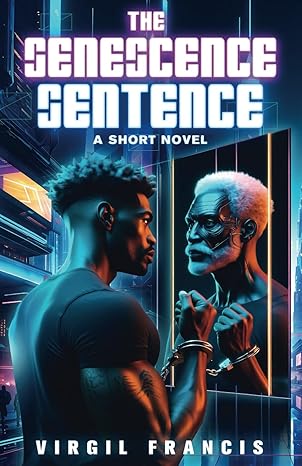

The Senescence Sentence, by Virgil Francis, is a compelling blend of futuristic science and philosophical tension, centered on Frances, a nanotechnology scientist navigating an increasingly dystopian world where technology and corporate ambition blur moral boundaries. Frances grapples with the allure and danger of technological advancements, especially as his work places him at odds with powerful organizations and impacts his family life intensely. His struggle with ethical limits, corporate pressure, and personal responsibility create a narrative that feels at once suspenseful and introspective.
The writing strikes a unique balance between technical immersion and emotional depth, though at times, the level of detail around futuristic technology can feel overwhelming. The detailed descriptions, like the “holographic 4D model” and Frances’ advanced “NanoShots,” allow readers to visualize this futuristic world. Francis does a fantastic job using relationships to ground the story’s intensity. Frances’ bond with his daughter, Gege, and wife, Naomi, brings warmth and stakes to his otherwise clinical, tech-driven world. These relationships are crucial to understanding Frances’ internal conflict, making him feel real and vulnerable. The complexity of his friendship with Fray, a business partner driven by ambition, further enhances the story’s themes, showing Frances’ struggle between corporate allure and ethical boundaries.
One of my favorite aspects of the book is how it raises philosophical questions about technological advancement. The story poses the question: How far should science go before it encroaches on our humanity? When Frances resists unethical partnerships, the narrative invites readers to consider their own moral lines. The moral dilemma Frances faces, especially against the backdrop of companies like NanoDawn, keeps the reader wondering if anyone can stay principled in a world dominated by corporate giants. The novel encourages self-reflection, making it more than just a futuristic thriller.
The Senescence Sentence is a great fit for readers interested in science fiction that explores the ethical dimensions of tech advancements. Fans of Black Mirror-esque tales who enjoy introspective, morally complex narratives will find this book thought-provoking. It’s a bold, reflective story that pulls readers into a world of intense moral and technological exploration.
Pages: 268 | ASIN : B0DDTTFS3F

The Pattern Maker

The Pattern Maker is a science fiction thriller set in 2024, primarily revolving around Commander Sam Perry, a former astronaut now working at NASA’s Johnson Space Center. The novel kicks off with a mysterious car accident involving Perry’s colleagues, who claim they were passengers in a driverless SUV. This puzzling event triggers a series of increasingly bizarre and unsettling occurrences. As Perry investigates, he uncovers a deeper conspiracy suggesting reality itself is a simulation manipulated by a shadowy figure known as the “Pattern Maker.” The book weaves science, technology, and philosophical speculation into a gripping story about the nature of existence and free will.
I found the writing to be sharp and engaging, with a lot of emotional intensity coming from Sam Perry’s inner monologues. The story’s pacing is fast, and the mix of technical NASA details with the eerie supernatural elements creates a unique blend of realism and sci-fi. Perry’s frustration as he navigates this convoluted reality felt authentic, especially when the surreal events started pushing him to the brink. In particular, the scene where he watches footage of a driver’s skeletal hand gripping a steering wheel is haunting, sticking in my mind long after I read it. I appreciated how the book didn’t rush through its central mystery but let the tension build as Perry pieced everything together.
Perry is the reluctant hero, drawn into a conspiracy beyond his control, and Kate Martin, one of his colleagues, serves to mostly introduce the central mystery. However, the mystery surrounding the “Pattern Maker” kept me hooked, especially as it became clear that this entity was erasing people from existence. The scene where Perry learns about his role in this cosmic manipulation sent chills down my spine. There’s something genuinely terrifying about the idea that reality can be undone like lines of code.
The Pattern Maker is a thought-provoking and eerie thriller that will appeal to fans of speculative fiction and those interested in the intersection of science and philosophy. While the book’s dense plot and technical details might not be for everyone, its suspense and exploration of reality’s fragility make it a compelling read. I’d recommend this to anyone who enjoys shows like Black Mirror or books like Philip K. Dick’s Do Androids Dream of Electric Sheep? If you love to question the nature of existence while being entertained by a gripping mystery, this one’s for you.
Pages: 293 | ASIN : B0DFTKJS7Q
Our Shared Human Condition
Keyholes follows two brothers who have a strained relationship grappling with an ethical dilemma when they stumble upon a portal to another world. Where did the idea for this novel come from?
I have a deep love of both science and our shared human condition. As a hard science fiction work, I wanted to build a story that used the many worlds theory as a grounding back drop. I want any of my works to show something about our thinking, and mistakes. How we approach situations that are novel and stressful can demonstrate much of a person or people. I hope the book checks both these boxes.
What was your approach to writing the interactions between Allen and Brice?
First, I gave them different world views. Brice’s military background, and Allen’s academic. I have had more foot in both these words. I used that to help guide the process of writing their perspectives and then interactions.
Do you have a favorite scene in this story? One that was particularly enjoyable to write?
One that I found exciting to write was one where the characters are attacked by a pack of creatures they knew were about. Its a fast-paced scene with a lot going on it is one I had some of the best feedback on from beta readers. Needless to say, it was tinkered with a good bit.
Can you give readers a glimpse inside the second book in the Keyholes trilogy? Where does it take readers?
The next book will be out around the end of this year. It will pick up right after the events of Keyholes. Since much of the technological parts of the world are already explained. The second book focuses more on action, characters, and other world building. It will cover a lot of ground and readers will get to see much more of what can be out there.
Author Links: GoodReads | Amazo
Unlock the Mysteries of the Universe in the Keyholes Trilogy!
In the first installment of The Keyholes Trilogy, Dr. Allen Messman and his brother, COL. Brice Messman, are thrust into an extraordinary discovery—a mysterious portal that challenges everything they know about reality and the universe. With a team of military and scientific experts by their side, they embark on a race against time to uncover the truth behind this enigmatic gateway.
Is it a doorway to the past, an entrance to another universe, or something beyond comprehension? As they push the boundaries of science and existence, the Messman brothers face obstacles that could unravel the very fabric of space and time. What they uncover may not only reshape their understanding of the universe but alter its course forever.
Hard science fiction fans, prepare for a mind-expanding journey that will keep you questioning the nature of reality long after you turn the last page.
Book One of The Keyholes Trilogy—a gripping adventure that will leave you on the edge of your seat, craving the next installment.
Keyholes


Keyholes, by Tony Travis, follows brothers Allen and Brice Messman as they stumble upon a potential breakthrough in physics, a portal to another world, or possibly another time, created accidentally in Allen’s lab. Their relationship, strained by past familial tensions, becomes the backdrop to an intense exploration of the unknown, as they grapple with the ethical and scientific implications of their discovery. It’s a story about curiosity, risk, and the heavy weight of decisions that could change the world.
One of the many things I enjoyed about Keyholes was the interplay between Allen and Brice. Their banter felt realistic, especially when their different worldviews clashed. Allen’s more cautious, scientific approach contrasts with Brice’s military background and action-oriented mindset. This dynamic is particularly evident in scenes like when Brice suggests taking immediate action to test the portal’s possibilities, while Allen insists on carefully considering the potential dangers first. The tension between them gave the narrative an emotional depth that kept me invested.
I feel the pacing felt a bit uneven at times. Some chapters start with gripping tension, but others contain lengthy technical descriptions of the lab equipment and experiments. While these details ground the story in realism, they occasionally slowed the plot, and I found myself skimming through them to get back to the meat of the story—the interactions between the brothers and the mystery of the portal.
The most exciting aspect of Keyholes was the moral quandary presented by the portal. The stakes feel personal and global all at once, and the narrative doesn’t shy away from showing the complexity of their decision. Watching them debate the implications of their actions added a layer of philosophical tension that I really appreciated.
Keyholes is a thought-provoking read that would appeal to fans of slow-burn science fiction, especially those who enjoy stories rooted in ethical dilemmas and personal relationships. If you’re the kind of reader who enjoys a mix of scientific exploration, sibling rivalry, and just a touch of danger, Keyholes is a must-read.
Pages: 342 | ASIN : B0CQYR8VT9
The Last Will & Testament of HARLEY and His DOG
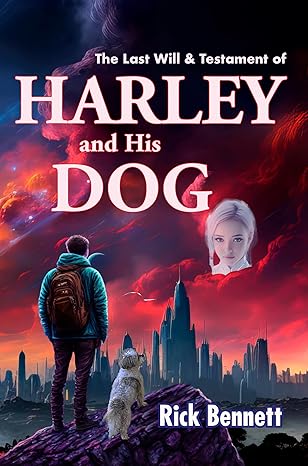
In a world teetering on the brink of chaos, Harley Danger Davidson emerges as a rising star. A young genius who secured a spot at MIT by sixteen, his brilliance in computer programming has made him both an asset and a liability. His creation, a self-aware program named Shiela, accidentally spreads across the United States and the global network and even infiltrates an alien spacecraft hidden beneath Earth’s oceans. Now, Harley faces the daunting task of undoing his own genius while trying to convince extraterrestrial beings that humanity isn’t beyond saving.
The Last Will and Testament of Harley and His Dog by Rick Bennet opens with a strong introduction, quickly immersing readers in the world of Harley, a sharp and eccentric protagonist, and his loyal dog, Chenoa. The story captivates early on with its intriguing premise and a character who exudes intelligence and wit. Bennet’s creativity shines throughout the novel, as he fills it with imaginative plot devices and clever, unconventional solutions to Harley’s many unique challenges. While the narrative may lean into familiar “Humans Are Special” themes, fans of this genre will appreciate the engaging journey of Harley as he navigates a world of chaos and alien intrigue. The characters’ inventive problem-solving adds a dynamic element to the story, offering a sense of adventure and unpredictability. Bennet’s ability to weave in spontaneous and imaginative twists keeps readers curious about what comes next, creating an overall enjoyable experience for those who appreciate a creative and lighthearted read.
The Last Will and Testament of Harley and His Dog offers a fun and adventurous take on the classic tale of a lone genius triumphing over an inept society. This book delivers entertainment and satisfaction for readers who enjoy stories that celebrate a brilliant protagonist outwitting the world around them. The narrative embraces its genre, providing a lighthearted and engaging read that will appeal to fans of clever heroes and imaginative problem-solving. While it prioritizes adventure and wit over deep character exploration, the story succeeds in offering an enjoyable escape for those looking for a thrilling, fast-paced ride.
Pages: 372 | ASIN : B0D8GQ7Q9L
Blue Anomaly
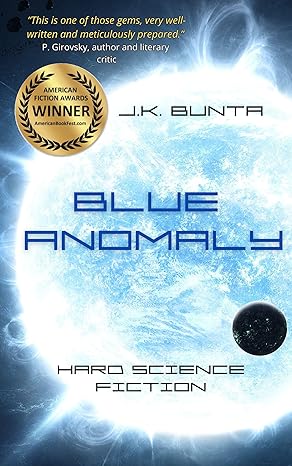
In Blue Anomaly by J.K. Bunta, astrophysicist Dr. Tristan Smolensky embarks on a mission as Earth’s primary representative to investigate signals from a distant star that potentially indicates intelligent life. As he approaches the star, Tristan’s reality begins to fragment, raising questions about whether the star or its signals harbor a more sinister nature or if the journey through space is inducing a hallucinogenic breakdown. The forthcoming answers defy both Tristan’s and the reader’s expectations.
Bunta’s novel falls under the category of hard science fiction, grounded in established scientific theory and existing technology. This genre strives for hyper-realism, with events that can be explained through biophysics, human biochemistry, and similar scientific disciplines. Bunta’s scientific background lends credibility to his storytelling, creating a narrative that is as plausible as it is captivating.
Fans of space madness films like “Moon” or Stanley Kubrick’s “2001: A Space Odyssey” may find familiar themes in “Blue Anomaly.” Despite its scientific foundation, Bunta skillfully weaves in literary elements that are both eerie and emotionally resonant. Tristan’s quest to uncover the source of the star’s signals leads to revelations, but it also opens doors to deeper mysteries. This interplay between scientific plausibility and imaginative storytelling is what defines exceptional science fiction. At its core, this book explores the pressing questions of human nature and existence while venturing into the unknown. The book masterfully balances scientific rigor with imaginative exploration, creating a journey that is intellectually stimulating and thought-provoking. The ending may leave some questions unanswered, but it solidifies the bond between protagonist and reader, ensuring that the journey is memorable.
Blue Anomaly is a compelling blend of scientific authenticity and literary creativity. Bunta’s expertise in science enriches the narrative, while his storytelling transports readers on an unforgettable journey through the cosmos.
Pages: 193 | ASIN : B0D5TM2VHD
Western Lights

Western Lights by C.P. Schaefer is a thought-provoking sci-fi novel set in a near-future world on the brink of irreversible climate disasters. The story follows biologist Sara Gathers, pilot Mason, and NOAA associate Ethan as they investigate alarming polar anomalies. Their journey takes an unexpected turn when they are transported back in time, where they realize that the key to preventing future climate crises lies in altering past events.
One aspect of Schaefer’s writing that I particularly enjoyed is how he makes complex scientific concepts accessible without oversimplifying them. The discussions around methane emissions and pole reversals are well-explained, allowing readers to grasp the gravity of the environmental threats without feeling overwhelmed. The use of various graphs and subheadings at the beginning of each chapter is helpful, though the consistency of these subheadings could be improved for better flow.
The character development is another strong point. Sara, Mason, and Ethan are well-rounded characters, each with distinct voices and perspectives that add depth to the narrative. The multiple points of view keep the story engaging as we see the unfolding events through different lenses. Some parts of the plot feel a bit convenient, and there are moments where the prose tends to repetitively state certain facts, which could have been streamlined for a more polished read. The narrative maintains a good pace, and the stakes are high enough to keep readers invested in the outcome. The time travel element is handled intriguingly, adding a layer of complexity to the plot without detracting from the main environmental theme.
Western Lights is a compelling read for sci-fi enthusiasts and those passionate about environmental issues. Schaefer successfully combines scientific intrigue with an engaging storyline, making it a book that not only entertains but also prompts reflection on real-world environmental challenges. I recommend this novel to readers who enjoy a blend of science fiction and environmental advocacy, as well as those who appreciate a well-crafted time travel narrative.
Pages: 434 | ASIN : B0CW18MGZK



 LITERARY TITAN