Blog Archives
Myth or Reality

Pope Joan follows a woman who defies all odds when she disguises herself as a man and rises through the ranks in the Catholic church and secures the position of Pope. Where did the idea for this novel come from?
I came across an article about the myth or reality of a female who became pope. Her real identity as a woman was revealed when her water broke in public, and she began to deliver a baby. According to the legend, she was stoned to death as she was about to enter one of the churches in Rome. I started to imagine how a woman back in those days, when a woman was heavily restricted, could climb the ladder through the church to become pope. What was her back story? My curiosity soon took over, and I did extensive research on the times in which she lived and the struggles she had to endure to succeed and become Pope Joan.
Can you share a little about the research that went into putting your book together?
The Internet offered a wide range of great resources to help me locate specific materials: timelines, biographies of people who lived during the age that I was interested in, places that housed certain religious orders, and the ongoing conflicts of the age. Generally speaking, I have had a fascination with the Middle Ages and now have a small reference library dedicated to the Crusades and the Reconquista.
What was your favorite moment in Joan’s story? Is there one scene that resonates with you?
I was most touched by Joan’s time in prison when she was awaiting execution. What was going through her mind? Surely, the uncertainty of being executed or not weighed heavily and gave her a feeling of dread. But also she thought about the safety and well-being of her child. No matter how old children are, their parents want to know they are safe.
Will your next book be historical fiction? What are you currently preparing for your fans?
I have written and my editor is currently finalizing my next historical fiction novel, Kitty Schmidt: My Life as a Prostitute. Kitty managed the Gestapo’s brothel during World War II. How did she find herself in this position? Did she have a family? What happened to her during the bombing of Berlin and the subsequent Russian invasion of the city? I wanted to explore all of these aspects of her life.
Author Links: GoodReads | Amazon
While Andrew pursues the world of numbers and accounting, Joan becomes an avid student, learning to love reading and acquiring knowledge, eventually – through a string of circumstances – propelling her to higher and higher offices within the church and finally becoming the first and only female pope.
How long does Pope Joan keep her gender a secret?
Pope Joan


Pope Joan, by Pablo Zaragoza, is a historical novel that tells the gripping story of a woman who defies societal norms and disguises herself as a man to rise through the ranks of the Church, ultimately becoming the Pope. Set in the brutal and unforgiving world of the ninth century, the book weaves history, myth, and speculation into a rich narrative about ambition, intelligence, and survival. Joan, born into a world that limits women to silence and servitude, refuses to accept her fate. She thirsts for knowledge, a rare and dangerous trait for a female, and her relentless pursuit of learning leads her on a path few could imagine. The book follows her struggles, victories, and the immense risks she takes to carve out a place in a world that would see her destroyed if the truth were known.
One of the things I loved about this book was how vivid and immersive the writing felt. The details of medieval life are gritty and raw. Joan’s intelligence shines through every page, and her thirst for knowledge is portrayed so powerfully that I felt her frustration every time someone tried to snuff it out. There’s a scene early on where her father, a rigid and cruel priest, beats her simply for being curious. That moment alone set the tone for the kind of world she was up against.
Another thing that stood out to me was how the novel balanced historical depth with emotional intensity. Sometimes, historical fiction can feel weighed down by facts, but this book never lets the history overpower the human heart of the story. Joan’s relationships—her forbidden love with Gerold, her conflicts with the men who underestimate her, and her silent struggle to remain hidden—kept me glued to the pages. The tension was constant. Every moment, I was bracing for the inevitable discovery of her secret, yet I couldn’t stop hoping she’d keep pulling off the impossible.
There are moments throughout the book that are very dramatic. Some of the characters, particularly the villains, left me wanting more depth to their character to understand their intensity. Joan’s father, for instance, was especially harsh, which emphasized the struggles she faced. While I understood that his role was to represent the oppressive forces of the time, I occasionally wished for a little more nuance in how those forces were portrayed. Still, the book remained engaging, and even in its most heightened moments, it never lost its emotional depth.
I’d recommend Pope Joan to anyone who loves historical fiction, particularly readers who enjoy stories of strong women defying the odds. If you’re looking for a novel that combines rich historical detail with a gripping, fast-paced story, this one is worth picking up. It’s intense. It’s emotional. And it’s the kind of book that stays with you long after the final chapter.
Pages: 179 | ASIN : B0CW1JH88C

The People of Schwarzenfeld

The Sower of Black Field follows an American priest in Nazi Germany as he defies oppression to protect his parish and wrestles with the moral challenges of faith in a time of unimaginable darkness. What was the inspiration for the setup of your story?
In 2004 (about 20 years ago), I discovered that Fr. Viktor Koch, C.P., my paternal great-granduncle, witnessed the rise and fall of Nazi Germany behind enemy lines. He was credited for saving Schwarzenfeld from Patton’s Third Army. This story was not passed down through the generations. In fact, Fr. Viktor visited the US only once after WWII, and he never revealed any of his wartime experiences to his family. We learned his story through a series of fateful coincidences.
To piece together fragments of Fr. Viktor’s story, I traveled to Schwarzenfeld in 2005 and spoke with eyewitnesses who remembered him. Some were the very people he saved. Once I realized the profound impact he had on the local population—both as an American and a Passionist—I knew this novel had to immerse readers in the experiences of German characters enduring oppression and hardship under their own government. In the narrative, they’ll witness how Fr. Viktor’s ministry and counsel insulated his followers from the predatory ideology of National Socialism. Only then is it clear why he risked everything to defend the people of Schwarzenfeld from his fellow Americans under the most harrowing circumstances.
How did you approach balancing historical accuracy with the fictional narrative?
Aside from being a novelist, I’m also an academic and an independent historian. From the start, I knew I was dealing with historical factors that were highly unlikely in the broader context of WWII history. I don’t think many novelists write peer-reviewed journal papers and present at history conferences to support their novels, but I do—and for good reason. This story contained so many controversial aspects that historians were bound to scrutinize it for perceived historical inaccuracies.
The facts themselves were extraordinary enough to make an emotive storyline. I injected fiction only to streamline the narrative (inventing characters who reenacted real-life stories and gave the novel a cohesive flow), fill holes where the facts were forever lost to history, and apply fictitious names to people who historically played a negative role. I was dealing with sensitive history on the German side, and it’s not my intention to impugn anyone or point out whose father did what in the war.
What were some themes that were important for you to explore in this book?
While researching and writing this story, I gained a nuanced perspective on what life was like for the Germans in Schwarzenfeld—and for anyone unfortunate enough to live under an authoritarian regime. Think of the five freedoms granted to American citizens in the First Amendment of the U.S. Constitution: press, petition, assembly, speech, and religion. Can you imagine living in a time and place where you had none of those? Even the smallest act of dissent or resistance could have devastating consequences. I wanted American readers to experience that oppression through the thoughts and senses of a character born on free soil, just as they are. In the process, I hope they will gain an appreciation for the courage of the Schwarzenfelders as they attempt to live a life of conscience and faith.
Clearly, faith was another vital theme in the story. The theology of Fr. Viktor’s order—the Passionists—served as my guiding light throughout the writing process. The Passionists believe that suffering is the great and terrible equalizer of humanity. In their words, “Christ is present in all who suffer.” This is a profound message—one that calls on us to perceive the divine in every living person, regardless of nation, race, or creed, and challenges us to see beyond divisions created by culture and society. In times of war and oppression, suffering is never far from one’s mind. Perhaps this is why his followers found solace and strength in his message.
What was the most challenging aspect of writing about faith in such a harrowing historical context?
When I began writing this story, I grappled with many of the questions that frequently arise when we contemplate the horrors of Nazi Germany. If there is a God, how can He permit such horrors? Why does He do nothing to intervene? In the novel, Fr. Viktor accepts that his presence in Schwarzenfeld is tantamount to a miracle—a higher power wanted an American there to prevent his fellow countrymen from committing an atrocity. If that is true, how could God intervene to save one small village in such an extraordinary way while millions perished in concentration camps?
As a writer, I’m aware that saints, theologians, and people of faith have contemplated questions like these for decades—even centuries. I don’t claim to be a theologian (and I’m certainly not a saint!) However, I did attempt to offer answers. I pored over Fr. Viktor’s historical letters in detail, trying to glean his insights on faith, good, evil, free will, and God’s will—and I did my best to integrate them into his dialogue. Regardless of whether readers accept the perspectives presented in the novel, I figured they would respect the work if I tackled these thorny questions head-on, and let the characters ponder and debate them. Based on reader comments and editorial reviews, many people turn the last page with plenty of food for thought.
Author Links: GoodReads | X (Twitter) | Facebook | Website | Viktor Koch | Dusquene University | YouTube | Amazon
Winner of 6 Major Awards for Religious and Historical Fiction!
Category Winner – 2025 Independent Press Awards
Gold Medal – 2024 Readers’ Favorite Awards
Category Winner – 2024 American Writing Awards
Moral Courage in the Shadow of the Third Reich.
In a Bavarian village gripped by Nazi tyranny, an American priest’s faith will be tested like never before.
Father Viktor Koch has spent the war quietly ministering to his parish, keeping their faith alive under the watchful eyes of Nazi authorities. But as Germany crumbles in 1945, a shocking discovery thrusts the village into a moral crisis.
A mass grave of concentration camp victims lies on the village’s border. When American liberators demand justice, the commander gives the villagers an impossible choice: unearth and bury the dead within 24 hours—or face mass execution.
With time running out, Father Viktor must summon extraordinary courage to protect his people. But can he convince the Americans of the villagers’ humanity, or will the legacy of Nazi atrocities condemn them all?
Truth is Fundamentally Important

A Remembrance of Death follows a young man navigating loss, physical limitations, and the British Empire’s complex legacy in the aftermath of WWI. What was the inspiration for the setup of your story?
I wanted to write a story where the main protagonist is not an obvious hero. He is kind, courteous, and principled; he will not lie and understands right and wrong. At the outset, he is an observer of the events around him. He watches as his friend is thrown into a river and is helpless as his marriage falls apart. At the lowest point in his life, he goes to Nuremberg rather than stay with his wife because this is required of him. After Nuremberg, he must make a choice between loyalty to his country or exposing the truth. My inspiration for this story came about because I believe there is a growing trend for our news and history to be manipulated and that the truth is fundamentally important, no matter how uncomfortable it may be.
How did your research into historical events like the Mau Mau uprising and the Nuremberg Trials shape the narrative?
The two events are closely linked for the purposes of the story. My main protagonist, Basil Drewe, is shocked when confronted with the horrors of Dacau and Nazi atrocities and helps with the prosecution of Nazi War Criminals. Nine years later he must look into the Mau Mau uprising, where he learns that the British have closed their eyes to the torture of detainees and that nearly a million natives of the Kikuyu tribe have been resettled forcibly. Until this point in the novel Basil has mainly been a passive observer and now must make a choice as to whether to tow the British establishment line or not. From this point in the narrative Basil changes as does his life, particularly the trajectory of his relationship with his wife.
Laxman Choudhury is a memorable character. What motivated you to include his perspective and cultural experiences?
I was motivated to include Laxman’s perspective and cultural experiences to give a different perspective to the novel. Throughout the novel, there are instances of how foreigners, who are culturally different, are treated. For example, the Chinese workmen who built the railway across America, ‘The Dunera’ boys who were transported to Australia, the Kikuyu who were forced into unsanitary villages, and the detention and killing of Jews during WWII. Laxman Choudhury’s experiences show what it is like to be a foreigner in a time when a country does not respect someone else’s culture. He then returns to India where the tensions between the Hindu and Muslim communities are at breaking point. While he sees the faults of the British, he struggles to see what it is like being a Muslim in a Hindu-dominated society.
If readers take away one lesson or emotion from A Remembrance of Death, what do you hope it will be?
To learn from your mistakes and not to repeat them.
Author Links: GoodReads | X (Twitter) | Facebook | Website | Amazon
As he arrives at Oxford in 1917, Basil Drewe is coming to terms with the recent death of his brother Adrian in the Great War. Meanwhile at Ojai in America, Celia Lutyens and her illegitimate son Robert struggle to find their place in a foreign country. On returning to England, Celia renews her acquaintance with Basil and finds she must deal with the mistakes of her past and the constraints placed upon her by society and its expectations. Their journey takes them to India, Vienna, London, Nuremberg and Kenya. Finally, they return to Castle Drogo, the place where they first met, however, the castle no longer represents the ideal it once did for Celia but is now a mausoleum.
A Remembrance of Death was short-listed for the Yeovil Literary Price and received a high commendation. It was described as, “prose with a classic sensibility … evoking a clear and present time and place, the characters lifting effortlessly from the page with authentic dialogue and engaging set pieces.”
What Once Was Promised
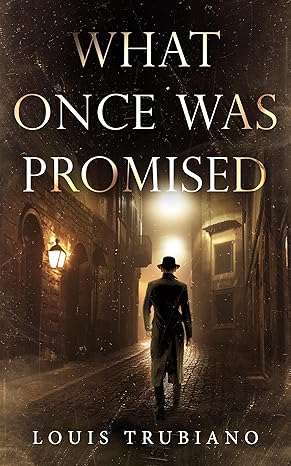

Set in 1914, What Once Was Promised by Louis Trubiano opens with sixteen-year-old Domenic Bassini, who boards the Cretic, bound for America and a future filled with unknowns. Leaving his family behind in Italy, Domenic’s journey across the Atlantic is one of hope and uncertainty. Aboard the ship, he meets Cologero and Francesca, a young married couple brimming with dreams of a new life, and Ermino, a stowaway searching desperately for his father. Together, they envision a land of promise and opportunity, unaware that the paths they embark on will twist and bind them together for decades in ways they could never have foreseen.
What Once Was Promised is a rich, multigenerational saga that vividly portrays the Italian immigrant experience in early 20th-century Boston. Trubiano masterfully blends themes of love, loss, family, and survival with the gritty realities of politics and organized crime. The setting bursts to life with meticulous detail, drawing readers deep into the vibrant world of Boston’s North End. Every corner of the city pulses with authenticity, from its cramped tenements to its bustling markets, without ever bogging down the narrative with overwrought descriptions. Instead, the immersion feels effortless, making you experience the hardships, the joys, and the perseverance of a community bound by heritage and resilience. What keeps this novel so captivating is the powerful sense of family that courses through its pages. The characters’ struggles against racism, punishing labor conditions, and the challenges of tenement life are rendered with empathy and depth. Trubiano weaves a story where survival isn’t just about overcoming obstacles but about the bonds that sustain and uplift. In a world battered by the flu epidemic, the Great Depression, and World War II, the lesson is clear: everything starts and ends with family, a timeless truth passed down through generations. The novel’s characters are unforgettable. Domenic, Ermino, Cologero, Francesca, and the many others who populate this story feel achingly real. Trubiano’s gift for character development ensures that each person leaves an indelible mark on the reader. Their choices shape their destinies in unexpected ways, and witnessing how their lives unfold is as rewarding as it is heart-wrenching.
The narrative evokes a spectrum of emotions, moments that made me laugh out loud, passages that brought tears, and scenes that left me gasping in shock. I found myself so engrossed in their world that I often paused to look up real events and figures from history, eager to know more. What Once Was Promised is a triumph of historical fiction that offers a deeply moving glimpse into the past. It’s a story of dreams, survival, and the enduring power of family, one that lingers long after the final page. Truly, I never wanted it to end.
Pages: 314 | ASIN : B0D57JJRJJ
THE SECRET DAUGHTER

The Secret Daughter is a riveting journey into the heart of historical secrets and personal discovery. Set against the atmospheric backdrop of Budapest’s enigmatic locales, Davis crafts a story that combines the mystique of an old library, mysterious letters possibly penned by Beethoven, and the protagonist, Marie’s, unfolding journey.
Davis writes with a style that breathes life into every scene. Her prose is vivid and laden with sensory details that pull you into the locales of Budapest. As a piano technician drawn into a centuries-old mystery, Marie is a compelling character whose passion for history and music drives the story forward. The narrative brilliantly captures her internal conflicts and the excitement of uncovering potentially earth-shattering historical evidence.
What stands out to me the most in Davis’s novel is the element of suspense woven through the fabric of historical exploration. The scenes in the Palace Library of Budapest, where Marie discovers the letters, are particularly gripping. Davis’s portrayal of the eerie, almost spectral atmosphere of the library gives the novel a thrilling edge that keeps you turning pages.
The subplot involving the theft and the subsequent danger Marie faces adds a layer of urgency to the narrative, too. Davis handles these scenes with a deft touch, maintaining tension without overshadowing the story’s historical and emotional core. The historical insights into Beethoven’s life and the descriptions of musical heritage enrich the story as well. This makes it a treat for classical music enthusiasts.
The Secret Daughter is a novel that will appeal to lovers of historical mysteries and strong, relatable protagonists. It’s perfect for readers who revel in the blend of history, mystery, and personal growth. Davis’s novel is a compelling invitation to explore the depths of history and the complexities of our past connections.
Pages: 208 | ASIN : B0DJFVCS3K
The Little Dutch Girls
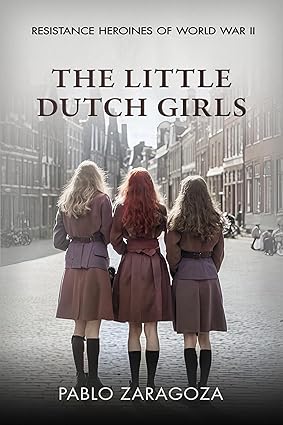
The Little Dutch Girls by Pablo Zaragoza offers a poignant and immersive exploration of the Dutch resistance during World War II, centering on the life of Freddie Oversteegen. Now 82 years old, Freddie, along with her sister Truus and their friend Hannie, has become a symbol of heroism for their courageous actions as teenagers during the war. Yet, despite the admiration that surrounds her, Freddie carries the weight of her past, often haunted by the memories of what she endured and the choices she made.
This historical fiction novel presents Freddie as a central figure, who is interviewed for a documentary about her wartime experiences. Through these interviews, readers are drawn into Freddie’s reflections, her encounters with the film crew, and her emotional journey as she revisits the traumas and triumphs of her youth. Zaragoza skillfully brings Freddie to life as a deeply human character—strong yet vulnerable, willing to share her feelings and inner struggles. This openness provides readers with a nuanced understanding of her emotional state, both during the war and in the present day. Freddie’s honesty about her wartime experiences, her lingering guilt, and the toll it has taken on her life makes her a relatable and compelling character. I found this vulnerability to be one of the most engaging aspects of her portrayal. It’s refreshing to see such raw honesty in a character, especially when discussing the personal impact of historical events. The novel also delves into her personal life, offering glimpses of her relationship with her late husband Jan and their shared journey of raising three children, which adds further depth to her character. Zaragoza’s attention to detail in depicting historical events makes this novel a standout for fans of historical fiction. Freddie’s story, while at the heart of the narrative, is enriched by the backstories of other key characters, even the minor ones, adding layers of realism and complexity to the overall plot. The blend of personal history with broader wartime events creates a well-rounded and vivid portrayal of life during the Dutch resistance.
For readers who enjoy richly detailed historical fiction, The Little Dutch Girls offers a moving, authentic portrayal of war, survival, and the long-lasting effects on those who lived through it. Freddie Oversteegen’s story is a testament to both the strength and fragility of the human spirit, making this novel a compelling and thought-provoking read.
Pages: 220 | ASIN : B0DDTS1SZF
The Secret Journey

The Secret Journey, co-authored by Brian Barnes and Judith Briles, delves into the tumultuous life of Lisa, the sole daughter of a port commander in Marseilles, France. This young adult historical fiction paints a vivid picture of Lisa’s complex familial dynamics, highlighting her estrangement from her mother and brother in contrast to the adoration of her father, Alexander. Alexander, recognizing Lisa’s acute understanding of human intentions, is a pillar of support in her life. However, the narrative takes a dark turn with his untimely death, attributed to poisoning by Lisa’s mother. In the wake of this tragedy, Lisa’s life undergoes a drastic transformation. She flees her opulent life, taking on the disguise of a teenage boy named Nichol, and sets out for Paris, pursued by unseen threats. This journey is a flight for survival and a quest for a greater purpose, shadowed by the need to address past injustices.
The narrative captivates from the start, with a rhythm that dynamically shifts to reflect the varying phases of Lisa’s journey. This variance in pacing adds a unique flavor to the story, especially in the rapid development of Lisa’s romance with Robert. This brisk unfolding introduces an element of surprise and spontaneity, which can be particularly appealing to readers who enjoy unexpected turns in a storyline. The dialogue and narrative structure are skillfully crafted, laying a solid foundation for the story. There’s an exciting opportunity here to deepen this already engaging narrative. By exploring the characters’ emotions and motivations in more detail, the authors have the potential to enrich the reader’s experience, making it even more immersive. This enhancement in character development promises to strengthen the reader’s connection with the characters, adding an extra layer of intimacy and engagement to an already captivating tale.
The Secret Journey is a commendable choice for those interested in a story featuring a strong female lead overcoming familial strife in a medieval setting. The novel’s exploration of resilience and self-discovery, set against a historical backdrop, makes it a noteworthy addition to the young adult historical fiction genre.
Pages: 478 | ASIN : B0BMM14LYK




 LITERARY TITAN