Blog Archives
Hope of Recovery
In Being Broken, you share the traumas of your childhood, heartbreaking losses, and how you were able to face the damage that shaped your life. Why was this an important book for you to write?
I had to understand how things could have gone so terribly wrong that my sister had to pay the ultimate price, with her life. I’m not a spiritual person, so I needed to believe that this was preventable; that there was a rational and reasonable explanation for this tragedy. Not only that, I needed to better understand my part and be able to forgive myself for either my inability to act in time, or if I had become apathetic to her plight from years of dealing with it. But the journey allowed me to view my own life from a better perspective. It allowed me to dig deep into the traumas of my past and move forward with forgiveness of myself and the fact that I was not responsible for what happened to either of us.
I appreciated the honesty and raw emotion throughout your memoir. What was the hardest thing for you to write about?
Top of that list is my sister’s death. I was so overcome with shame and guilt about not being able to save her, the only way to deal with it was to write about it. I was having a hard time articulating what I was going through, and to write it all out was relieving since the rumination during grief can be very overwhelming. However, equal to how difficult her death was, learning and writing about my sister’s rape was extremely difficult. As I wrote in the book, our parents downplayed my sister’s rape to the point where they were trying to convince me it didn’t happen. Because of their manipulation, I believed them, and the guilt and shame I felt when I read about it in her journals was heartbreaking. Knowing that I wasn’t there for her like I should have been while she was dealing with that trauma, alone, made me feel absolutely horrible. Understanding now it is not my fault, but the fault of my parents’ manipulation of me, that I wasn’t there for her during the most difficult time of her life allowed me to forgive myself.
What is one misconception you believe many people have about growing up in abusive homes?
That children, and even adults, can see and understand that they are being abused, and that escaping the situation is obvious. Many people in abusive relationships are unaware that they are experiencing abuse. I didn’t understand that my sister and I were being abused by our parents until after her death. The narcissistic front of family perfection that our parents projected out into the world made it very difficult for anyone to believe us when we talked about what was going on in that house. Further, the nature of the abuse caused us to live in fear of talking about it. To even consider sharing what was going on with us, we knew the consequences would be severe. And lastly, the amount of control my parents had over my sister’s life precluded any ability for her to escape. They had full control over everything in her life: her car, her lease/rental properties, her phone, money, even her son when she was deemed incapable of caring for him – and they constantly threatened to take it all away if she didn’t behave as they wanted. Truly understanding what was happening to us took a lot of study on my part; years of work through my sobriety, and then grief. By then, it was too late for her, but it continues to help me heal.
What is one thing you hope readers take away from your experiences?
That if you are experiencing the same type of abuse, or have in your past, that you are not alone and there is hope of recovery. The common statistic is that 1 in 4 children experiences a form of abuse. It doesn’t have to be physical or sexual abuse, the most horrific types; it could be any type of mental or emotional abuse. Everyone experiences trauma, even the same trauma, differently based on their formative childhood years. Studies show that a child who experiences repeated forms of abuse has a very altered brain than one who does not. However, through neuroplasticity, therapy, and work, we can manage the challenges of Complex Post-Traumatic Stress Disorder to rewire our brains to live healthy, improved lives and still accept and integrate what we faced as children.
Author Links: GoodReads | Bluesky | Facebook | Website | Amazon
The son, brother, stepson is the only one left to pick up the pieces. He begins a journey of the self and finds out the truth of his family. After going over letters, notes, emails, videos, and text messages, he uncovers a disturbing picture of the abuse his sister suffered at the hands of their parents. He also begins to better understand his own struggles with mental health and substance addiction because of the trauma and abuse he also suffered from their parents.
Follow the son as he looks through his family history to discover the generational abuse that trickled down through the years. Learn about how parents who suffer from narcissistic personality disorder emotionally abuse and manipulate their children. See how the abuse and trauma becomes mental illness in the abused, and how they fall into vicious traps of addiction, eating disorders, self-harm, and complex post-traumatic stress disorder. Witness the transformational change of the son as he works on the recovery of his inner child and tries to become the man he was meant to be.
Our Deepest Roots: Navigating Past Trauma to Build Healthier Queer Relationships
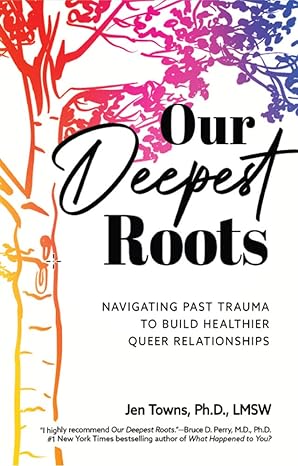

Our Deepest Roots is a brave and illuminating book about how trauma—especially the kind rooted in queerness and relational wounds—intertwines with the mess and beauty of love. Dr. Jen Towns doesn’t just discuss trauma in the abstract. She lays bare her own experiences, not as case studies or distant theory, but as raw, beating-heart truth. Through her lens as a queer trauma therapist and partner, she unpacks how our “parts” (the internal voices, reactions, and protections we develop) shape, distort, and sometimes save our relationships. She explores this through concepts like attachment theory, the Internal Family Systems (IFS) model, and a blend of hard-earned wisdom from both the therapy room and the kitchen table.
Reading this as a gay man who’s wrestled with his own ghosts, I felt seen in a way that knocked the wind out of me. The opening scene where Dr. Town’s wife (also a trauma survivor and therapist) writes about storming out of a fight, numb to her partner’s sobbing felt uncomfortably familiar. That terrifying push-pull of needing space but fearing abandonment? Yep. Lived it. And the self-loathing inner monologue she transcribes after the fallout was brutally spot on. It’s one thing to read about trauma reactions. It’s another thing entirely to read someone gently dissect their own and realize, oh god, that’s me too.
What sets this book apart is the refusal to shy away from the complicated, layered ways trauma shows up in queer love. Towns doesn’t romanticize healing, and she doesn’t offer cheap fixes. Instead, she walks us through her fights, her therapy, her missteps, and the hard-won tools she now teaches. When she talks about “fawning” in queer identity—where we perform caretaking to stay safe—it hit like a freight train. She describes fawning not as a flaw but as a strategy, born of survival.
Towns also brings a refreshingly down-to-earth voice. It’s not clinical or cold. It’s like a trusted friend walking with you, swearing a little, crying with you, laughing with you when you realize, yes, we’re all a little messed up but still deeply worthy of love. And her exercises, like the PEACE TALKS framework and the “Zhuzh” reminders, are actually doable—not just filler. She brings everything back to the body, the relationship, and the now. It’s healing work you can feel.
I recommend Our Deepest Roots wholeheartedly, especially to my fellow queer men who grew up believing we had to shrink to be loved, who still brace for rejection when things get close. This book isn’t just for therapists or couples in crisis—it’s for anyone tired of repeating old patterns and ready to face themselves with honesty and tenderness. It’s raw, smart, sometimes painful, and deeply human. And if you’re anything like me, you’ll find parts of yourself on every page.
Pages: 268 | ASIN : B0C6FRBKN2

Maximizing Making Meaning
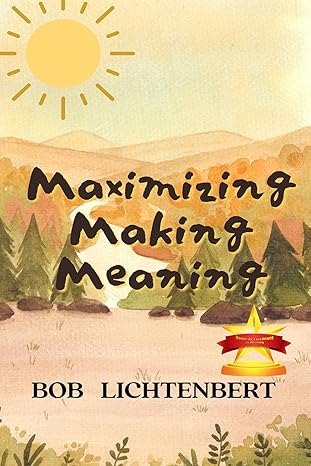
Bob Lichtenbert’s Maximizing Making Meaning tackles the profound question of what gives life significance, proposing a framework for making and understanding meaning. The book is structured around various “sources” of meaning, such as relationships, community, and even intangible concepts like justice or love. With a philosophical lens grounded in common sense, Lichtenbert argues for a life enriched by purposeful connection and reflection. His personal anecdotes and an overarching optimism tie it all together, making his exploration relatable.
What struck me first was the book’s approachable tone. Lichtenbert dives into weighty concepts but writes with the kind of clarity that makes abstract ideas surprisingly tangible. For instance, his exploration of “quality relationships” as a source of meaning highlights Martin Buber’s “thou” relationships—those sacred, intimate connections that transcend mere utility. The way he relates this to his own experiences, like reflecting on his struggles to find meaningful friendships outside his family, made the theory feel authentic. His vulnerability in sharing these moments added emotional depth to what could have been a dry philosophical discourse.
The call for re-establishing community through daily acts like picking up litter or starting local dialogues is heartwarming, but I couldn’t help thinking that this approach doesn’t fully account for the complexities of modern digital lives. Still, the author’s passion for reviving a shared sense of purpose came through, especially in his vivid description of feeding birds as a metaphorical act of communal care. It’s quirky, sure, but it left me thinking about the small ways I could make a difference too.
Another idea I liked was his emphasis on “intangibles” like justice, goodness, and beauty as key to meaning-making. These concepts could easily feel esoteric, but Lichtenbert grounds them with practical examples and even challenges materialism as a misguided source of fulfillment. I appreciated his argument that focusing on intangibles broadens the scope of what’s possible in a meaningful life. The section where he critiques “collections,” groups motivated purely by self-interest, hit close to home for me, especially in today’s hyper-individualistic world.
Maximizing Making Meaning is a refreshing blend of philosophy, self-help, and memoir. Lichtenbert’s personal insights add a relatable layer to his ideas. This isn’t light reading, but it rewards patient readers who are willing to engage deeply with its themes. I’d recommend this book to anyone interested in philosophy of life or to those feeling adrift and searching for a framework to anchor their purpose.
Pages: 261 | ASIN : B0BWBWCNGN

Universal Truths

Taming the Fetal Tyrant, and Its Ancestral Delusional Love Stories is an exploration of human nature, consciousness, and the cultural delusions that shape our beliefs and behaviors. What made you write a book about this topic? Anything pulled from your life experiences?
My interest began about 66 years ago but I had, upon reflection, an epigenetic experience at age 5. Of course, I had no idea what it was then. Today, with my observations and research I now know that ALL LIFE has such experiences and the importance of it needs to be known by all on this planet.
What were some ideas that were important for you to share in this book?
As a doctor I wanted to know the person behind the health history form they filled out. Specifically, I wanted to know how the thoughts of life became manifested as real biological molecules in people. When I combined the sciences of biology, chemistry, and physics and added a spell of my own making, that was in line with the three sciences, I had achieved a life’s goal and had to tell people how to use their minds in a modern way as opposed to the cave way that places us all 90 seconds from doom on the doomsday clock. No scat, lady, NONE. This vindicated me and I’m now ready to be pummeled mercilessly.
What is one thing that people point out after reading your book that surprises you?
Not many have read it but it has been professionally reviewed.
What is one thing that you hope readers take away from Taming the Fetal Tyrant, and Its Ancestral Delusional Love Stories?
To think in terms of universal truth and not to confuse it with personal truths I call opinion, bias, prejudice, and faith. We kill each other over the latter, never the former.
Author Links: Website | Book Review
Socrates: “Employ your time in improving yourself by other men’s writings, so that you shall gain easily what others have labored hard for.”
Taming The Fetal Tyrant And Its Ancestral Delusional Love Stories


Taming the Fetal Tyrant is an ambitious exploration of human nature, consciousness, and the cultural delusions that shape our beliefs and behaviors. It delves into the concept of megalomania starting in the womb, where author Steve Pasin posits that the fetus develops a tyrannical sense of self, believing it is in control of the entire world. This notion serves as a foundation for the book’s broader discussions, which blend epigenetics, human psychology, and culture. The book is a critique of how culture, religion, and societal structures nurture and perpetuate delusions, often in ways that undermine our health and well-being.
Reading this book is a wild ride. Pasin’s style is unapologetically direct and often combative, which makes it both challenging and refreshing. He doesn’t shy away from taking aim at cultural sacred cows, from religion to the human ego. One of the most striking parts of the book is his discussion on epigenetics and how our thoughts and beliefs, largely shaped by our environment, have tangible effects on our genes and health. This idea is explored in Chapter 6, where Pasin introduces stress and its role in shaping not just individual well-being but the health of future generations. While the writing is dense at times, the ideas are compelling, and Pasin’s passion for his subject shines through.
I particularly enjoyed the chapter on megalomania. It was eye-opening and unsettling to consider the idea that we’re all born with a megalomaniacal view of the world, only to have it stripped away by society. Pasin’s descriptions of how culture imposes itself on us, turning us into people obsessed with winning, control, and domination, hit hard. His examples of historical figures like Mother Teresa and Hitler having the same underlying human nature were provocative and, honestly, a bit hard to swallow at first, but it made sense in the context of his argument.
Taming the Fetal Tyrant, and Its Ancestral Delusional Love Stories is a book for thinkers, those who aren’t afraid to have their ideas about life, religion, and culture shaken up. I think it is best suited for readers with a deep interest in psychology, philosophy, and biology who want to challenge their worldview. If you’re looking for light reading or are easily offended by critiques of cultural norms, this might not be for you. But if you’re up for a mental workout and ready to question some deep-rooted beliefs, this book will have an impact.
Pages: 238 | ASIN : B0DJPQYMH8
Are There Really Plenty of Fish in The Sea?
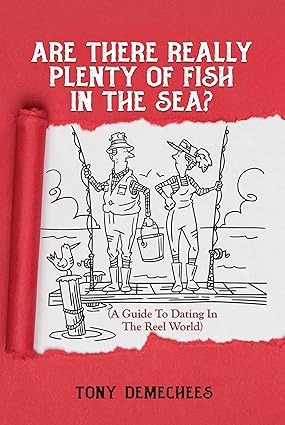
Tony Demechees’s book, Are There Really Plenty of Fish in the Sea? offers a compelling glimpse into the complexities of modern dating and the nuanced quest for a compatible life partner. Drawing from his personal insights and broad observations, Tony paints a vivid picture of the often disheartening realities faced by those navigating the modern dating scene. His exploration into how societal expectations and personal desires intersect in the pursuit of romance is both enlightening and sobering.
Central to Tony’s narrative is the inventive metaphor of a novice fisherman embarking on his first fishing trip—an analogy that he uses to parallel the often bewildering experience of dating. This metaphor not only captures the inherent challenges but also highlights the strategic disadvantage at which novices find themselves. Tony deftly argues that success in the dating world requires not just hope but also strategy and a clear understanding of one’s goals and desires. He further explores the impact of background, age, and social status on dating choices, offering a nuanced view of how these factors shape our relationship trajectories. Particularly poignant is his discussion on the shifting relationship standards over time, especially among women contending with societal pressures and biological timelines. While the book’s engaging cover initially caught my eye, it was the depth of Tony’s insights and the relatability of the fishing analogy that truly held my attention. I found the comparison not only clever but deeply resonant. The
Are There Really Plenty of Fish in the Sea? is a thought-provoking and accessible read that effectively mirrors the complexities of contemporary romance. It’s a must-read for anyone who appreciates a realistic look at the emotional landscape of dating today, enriched with personal anecdotes and a reflective, analytical approach.
Pages: 41 | ASIN : B0CW19WWT7
The Victorious Vagina – How To Beat A Player At His Game & Win At Self Love

Katie Slade’s The Victorious Vagina takes readers on a journey through the highs and lows of modern relationships. Framed as a series of poems preceded by narrative segments, this memoir delves into the emotional rollercoaster experienced by a woman navigating the complexities of love and intimacy in today’s dating landscape. Through her book, Slade underscores the importance of self-love and caution in romantic engagements, offering a candid exploration of her own vulnerabilities and triumphs.
Slade’s writing style is both raw and evocative, adeptly capturing the fervor and despair of her relationships. While the directness of Slade’s language and the rich detail of her personal anecdotes are vivid and engaging, they create an immersive reading experience that vividly brings her emotional journey to life, allowing readers to feel a deep connection with her. The integration of narrative with poetry enriched the text and allowed me to deeply connect with the emotional context behind each poem. The themes are universal, but the execution feels distinctly personal, sometimes bordering on a diary-like confessional.
The Victorious Vagina presents intriguing ideas about gender dynamics, emotional labor, and the societal pressures shaping romantic interactions. I think Slade challenges the reader to reconsider what it means to engage in modern love, pushing against the commodification of intimacy.
Katie Slade’s memoir is a passionate call for self-empowerment in the realm of dating and relationships. I recommend it to readers who appreciate a straightforward and heartfelt exploration of personal growth and resilience. Those who enjoy poetic narratives that are deeply personal and anyone navigating the intricate world of modern relationships will find this book particularly resonant.
Pages: 128 | ASIN : B0BQ1JXPVD
Do Not Settle

The Virtuous Vagina – How To Leave Lust In The Dust & Find Clarity Through Chastity shares with readers the importance of focusing on self-love and self-worth over finding the perfect partner in life by sharing your personal exsperances and your journey to self-empowerment. Why was this an important book for you to write?
This was an important book for me to write because I see so many women desperate to find a meaningful relationship and settling for the wrong guys.
What were some ideas that were important for you to share in this book?
It’s so vital that we take good care of ourselves spiritually, mentally & physically. I want to remind women to prioritize these aspects of living. As women we often put everyone & everything before ourselves.
I appreciated the candid nature with which you told your story. What was the hardest thing for you to write about?
At a young age, I made a decision that almost cost me my life. The poem that I wrote explains all that I went through, and because it is so personal, I wasn’t sure about including it in the book. In the end, I thought it was too perfect of an ending not to include it. None of my reviewers have commented on it, and I’ve been wondering if the message is getting through; I hope so.
What is one thing you hope readers take away from your story?
I want women to see the necessity of building oneself. Tapping into our creative abilities, our intellect & our spirituality can build an incredible personal foundation of happiness. Society has taught us to believe that we will meet a knight in shining armor, but even if we do, a princess still has to bring something to the table. So why not set a beautiful table and enjoy the bounty whether the prince shows up or not!
Beginning in the summer and ending by New Year’s, join Katie season after season as she navigates life as a New York entrepreuneur, full time employeee and a woman vetting the advances of these men. Grounded in her spirituality, Katie provides detailed insight to the significance of not letting our egos guide our decision making, but instead paying keen attention to the reasons why someone may not be the right partner. She gives her readers real life experiences in New York City, the need to take the high road when working with dysfunctional colleagues, and pointing out the need to truly understand and pour into ourselves as women to achieve what we desire out of life. This memoir encourages women not to wait for Mr. Right to fullfill our dreams, but to be Miss Right whether he shows up or not!



 LITERARY TITAN