Blog Archives
One Word: “Atomic”

The Fourth Courier follows an FBI agent investigating murders linked to radioactive material and a possible nuclear smuggling operation. What was the inspiration for the setup of your story?
I lived in Poland for 2.5 years precisely when Solidarity came to power, communism ended with the collapse of the Soviet Union, and the border with Russia became porous. Many things were being smuggled both ways, and there was a lot of fear that nuclear material, unsecured in Russia, might be included.
I was a consultant on a number of projects, one of which took me to Latvia, where I had a meeting with a decommissioned general who had been in charge of Russia’s nuclear arsenal in that small country. After a formal group meeting, he took me aside and said, “Let’s talk where no one can hear us.” We walked for ten minutes into a snowy forest when he stopped abruptly and said to me, “I can get you anything you want.” I replied, “I don’t know what you mean.” He responded with one word: “Atomic.” I realized he thought I was an American spy and was prepared to sell me nuclear material.
When I decided to write about how the fall of communism had affected the lives of ordinary Polish families, that incident came back to me and inspired my own fictional story of a Russian scientist who goes missing with a portable atomic bomb.
How did you balance historical realities with fictional suspense?
When I write, I first decide on a pressing issue of our times that I want to illuminate by showing how that issue affects the lives of ordinary people. In addition to Poland, I’ve written about human trafficking, the refugee crisis in Greece, and the Palestinian-Israeli conflict. (They are all places and issues that I know first-hand.)
In all my novels, I draw heavily on people I know, and that’s true in The Fourth Courier in terms of its central Polish family as well as policemen, investigators, and questionable government officials. All my settings are also real: the bleak subterranean corridors at the train station, the house (and attack dogs) on the Vistula River, the government guesthouses decorated like brothels, and the pervasive lack of basic food and decent housing.
What were the most challenging aspects of writing the murder investigation?
I knew nothing about Poland’s police procedures. So I met with cops and visited police stations and morgues. Also, I needed to know how to build a portable atomic bomb since locating that missing bomb was critical to the whole story. For that, I called the US Department of Energy, explained I was a writer who needed to know about making small atomic bombs, and astonishingly, two days later I was meeting with a DOE employee at a coffee shop in Washington, DC, who’d brought a whole portfolio of diagrams, plus told me precisely how much uranium versus plutonium I would need, how to safely handle each, etc. Since my main character is an FBI agent, I also interviewed agents at its headquarters in DC and was given a private tour of its training facilities in Quantico, MD.
None of that would be possible today.
What is the next book you are working on, and when will it be available?
My next book is my first historical novel. Set in ancient Greece, it’s a suspenseful verging-on- tragic love story that will hopefully be published in 2028. My protagonist is the winner of the 340 BC Olympics’ main event, the stadion – a sprint the length of Olympia’s stadium.
It’s often said that homosexuality was permitted in ancient Greece, and it was but with considerable constraints. For instance, two men were not permitted to live together for their whole life. At the same time, the Greek city states were constantly at war with each other over what kind of government they should have: a democracy or an oligarchy. So gay rights and the nature of government itself are the questions that are asked through my fictional characters; and of course, what’s amazing is that these are issues we still debate some 2400 years later!
Author Links: GoodReads | Facebook | Website | Amazon
Smith’s depiction of post-cold war Poland is gloomily atmospheric and murky in a world where nothing is quite as it seems. Suspenseful, thrilling, and smart, The Fourth Courier brings together a straight white FBI agent and gay black CIA officer as they team up to uncover a gruesome plot involving murder, radioactive contraband, narcissistic government leaders, and unconscionable greed.
The Fourth Courier


Timothy Jay Smith’s The Fourth Courier is a politically alert crime thriller set in Warsaw in 1992, as Poland negotiates the promises and disruptions of life after communism. FBI agent Jay Porter arrives to assist with a series of murders whose connection to radioactive material raises the possibility of nuclear smuggling. The investigation unfolds within a society where old allegiances retain their usefulness and new freedoms have created profitable openings for criminals. Smith establishes the atmosphere immediately: “A seagull fished the gunmetal river.” That opening image sets the temperature for a city of icy pavements, exhausted infrastructure, and guarded exchanges. The setting supplies both the practical obstacles of the investigation and the social pressures that make its dangers plausible.
The novel’s strongest writing often concerns the families living alongside its international intrigue. Through Lilka, an airport lounge employee, and her sister Alina’s household, Smith makes economic upheaval tangible in shared apartments, unreliable cars, rising food prices, and carefully rationed meals. These details give individual ambitions their urgency. America represents possibility, though family members differ sharply over what leaving Poland might cost them. Alina’s anxiety receives an especially precise formulation: “All her hopes, it seemed, were only her worries reversed.” Smith understands how closely anticipation and dread can coexist, particularly for parents trying to secure their children’s futures. Music, food, and affectionate teasing give these domestic scenes warmth, allowing the reader to understand what security means to people who’ve had so little of it.
Jay’s work with Polish detective Leszek Kulski provides a persuasive foundation for the procedural elements. Their conversations develop through professional curiosity, cultural misunderstandings, and a shared concern for their children. Kulski’s patience and decency give the novel an appealing moral presence, while Jay’s personal troubles complicate his confidence as an investigator. CIA operative Kurt Crawford introduces a more audacious style, bringing wit, sexual confidence, and an appetite for improvisation to the partnership. His presence also expands the book’s examination of secrecy: private desire and public authority repeatedly intersect. The treatment of sexual repression sometimes becomes schematic, however, and descriptions of bodies occasionally rely on racial and gender stereotypes. These choices can narrow characters whose conflicting loyalties and ambitions already offer substantial material.
Smith structures the suspense through shifting viewpoints, giving readers access to competing plans and the mistakes that threaten them. The effect is an accumulating sense of danger as personal appetites collide with institutional responsibilities. His descriptive prose is particularly effective when it connects physical surroundings to emotional conditions, and his dark humor finds fertile ground in bureaucracy, diplomatic vanity, and the uneven arrival of consumer culture. Some explanatory dialogue slows the movement, and repeated accounts of certain obsessions make their significance overly explicit. Still, the novel sustains interest through the interplay of its investigation, romance, and family relationships. The Fourth Courier offers an absorbing account of a precarious historical moment, with its most convincing insight residing in the distance between political liberation and the daily experience of feeling free.
Pages: 322 | ASIN : B07HY7S1FH

Imperfect Reflections of Reality

In Quant, a grieving son trying to face the realities of his mother’s dementia returns to her home and finds himself pulled into the case of a suspicious death and small-town secrets. What was the inspiration for the setup of your story?
In many ways, this is a very personal story for me. I grew up on a farm in Saskatchewan, Canada, near a small town very much like the one portrayed in the book. For several decades, a notable change has been occurring in Saskatchewan, particularly in farming communities. The province’s rural population has decreased significantly. Many young people migrate to larger cities seeking adventure and opportunities, and those who wish to stay find it increasingly challenging. Rising input costs and the corporatization of farming threaten to obliterate small family farm operations and their communities. I understand and accept changing times, modernization, and progress. Still, there is a cost, and a loss of a way of life. Nostalgia and blurry, sweet memories create a yearning and mourning within me and a desire to reflect that disappearing world in my work, and perhaps suggest a hopeful future.
The novel treats dementia with both realism and tenderness. How important was it to portray Kay as more than simply a tragic figure?
Like Russell’s mother, Kay, my own mother suffered from dementia in her final years. As anyone who has gone through it knows, it is a cruel disease, not only for the sufferer, but for the caretakers who share in what can be a long, drawn-out period of mounting loss. That being said, as with most things in life, dementia isn’t simply black or white, good or evil, ease or disease. There are spaces in between where resilience, strength, and familiarity exist. If you remain open to them, those moments can bring joy, hope, and comfort. With this book, I hope I’ve communicated some of that.
The novel explores how family secrets evolve over time rather than disappear. What fascinates you about buried histories?
I find history of any kind – whether it’s in a book or home movies – fascinating. They are honest, blemished, imperfect reflections of reality, and very important. I don’t know if history is so much buried as simply obscured by time. Often, all it takes is someone with keen interest and motivation to reveal it. Without that someone, history can become altered or fade away and remain unknown forever. Family secrets are different. You are correct. They don’t disappear, they evolve. Especially the kind that are truly and intentionally buried for one reason or another. These kinds of secrets rarely vanish forever. Sometimes they germinate like a seed, awaiting the right mixture of soil, water, and sun to reveal themselves. Other times (and considerably more interesting for mystery writers like me), they’re like a disease or bit of rot that festers and grows until they can’t remain hidden any longer. It just takes someone like Russell Quant to show everyone what was there all along.
Where will the next Russell Quant Mystery take readers?
I’ve been asked whether QUANT is a return to the series or a one-time reunion. My answer is that it is neither. I’m someone who never says never, but for now there is no immediate plan to have a follow-up 10th book. When I write a series, my goal is that every book in the series adds something to the collection, progresses the story, presents something new and interesting, and moves our characters along on their personal journeys. When I feel that is no longer the case, I end the series. It wasn’t until I came to realize it had been almost 15 years since we’d last visited the world of Russell Quant that I became excited about returning to the series. When we started the series, Russell was a young man in his thirties, struggling to open a PI agency in a small prairie city. Today, he’s a man in his fifties. I loved the idea of finding out who he is today. Where is he in his career, marriage, and relationships? Whereas QUANT is a reunion of Russell and his friends and family, is it a one-time reunion? Who knows? Wouldn’t it be interesting to revisit them in another 15 years, when Russell is a 70-year-old man? That’s the kind of thing I find fascinating. Throw in a good mystery, and hopefully it all makes for a rip-roaring good read.
Author Links: GoodReads | Amazon
The Sanctuary of Tomorrow

The Sanctuary of Tomorrow, by Lyntara Choi, drops readers into a 1930s London where secrecy is a daily muscle: Maxine Ocampo-Weber, chemist, part-time detective, keeps a careful household with her spouse Jodi and their two adopted children, until a hunted telepath, Martino Griffiths, collides with their lives and refuses to stay “someone else’s problem.” He’s been running since childhood, since the war years in Italy when telepathy turned from rarity to criminality, and his reappearance draws the same vindictive coppers who once tried to cage him. When those officers escalate to abducting Max’s daughter as leverage, the story pivots into a rescue that drags the family toward a notorious factory and, ultimately, toward the idea the title promises: a place where gifted people can exist without apology.
I admired how the novella treats “difference” as layered rather than ornamental. Martino’s telepathy isn’t just a cool trick; it’s a pressure chamber that has warped his sleep, his trust, and his sense of deserving anything tender. The domestic scenes matter because they aren’t mere breathing space; they’re proof of stakes. The Ocampo-Weber home feels authentic (art supplies, sibling squabbles, a dog with opinions), so when the outside world intrudes, it feels like a boot on the threshold, not a plot coupon. And I appreciated the quiet insistence that chosen family can be both sanctuary and risk: loving someone doesn’t stop the law from noticing, you just decide they’re worth being noticed for.
The book runs on momentum and moral clarity, which makes it exhilarating. Frank, especially, is a grim engine of obsession, effective, yes, though sometimes so single-minded he feels less like a person than a blunt instrument. Still, the payoff is emotionally satisfying because the “sanctuary” isn’t presented as a glittery utopia; it’s a practical refuge, hidden, imperfect, fiercely guarded, where Josephine can discover frightening new parts of herself (the first small levitations are written like a held breath finally released).
The Sanctuary of Tomorrow is for readers who like historical fantasy, paranormal suspense, found family, and queer historical fiction with a streak of ethical urgency, people who want their magic braided tightly with social peril, not floating above it. If you loved the warm-hearted refuge vibes (with teeth) of TJ Klune’s The House in the Cerulean Sea, this feels like its shadowed cousin: less seaside whimsy, more alleyway breath and improvised courage.
Pages: 82 | ISBN : 978-1300127765
Looking From Different Angles

Ischaemic follows a man blindsided by a DNA test revealing a twin brother he knew nothing about, who finds himself pulled into a dark web of identity, desire, and survival where the line between victim and monster blurs. What was the inspiration for the setup of your story?
My first book was a children’s book “The Visitors” with talking animals and aliens. It was fun to write, but I was also working on something much darker and more adult.
‘The Walking Wounded” is on a much grander scale and only recently released after 10 years. Ischaemic is middle ground and allowed me to try new ideas and concepts. Looking from different angles.
The novel explores queer identity in dark and complex ways. How did you balance representation with the story’s brutality?
As a queer writer I can use personal experiences and the stories of friends to balance things out, always remembering to draw the lines in the appropriate places.
Ischaemic explores identity, shame, and control. Which theme feels most central to you?
For Joshua, it is definitley about manipulation and control.
Do you plan to revisit this darker psychological territory in future work?
I have another book called “The Walking Wounded” that switches things up a notch. A second book with these characters is on the cards.
Author Links: Goodreads | X | Facebook | Website
As the narrative unfolds, sinister secrets emerge. A shocking revelation—Joshua’s twin, Antony Gordon—sets the stage for an intense psychological duel. The twins’ twisted connection spirals into obsession, culminating in Antony’s desperate struggle for survival. Layered with suspense and psychological complexity, the narrative builds toward a devastating climax, where identities blur and the darkest instincts are unleashed. This narrative promises a compelling exploration of trauma, sexuality, and the human capacity for both cruelty and survival.
Ischaemic
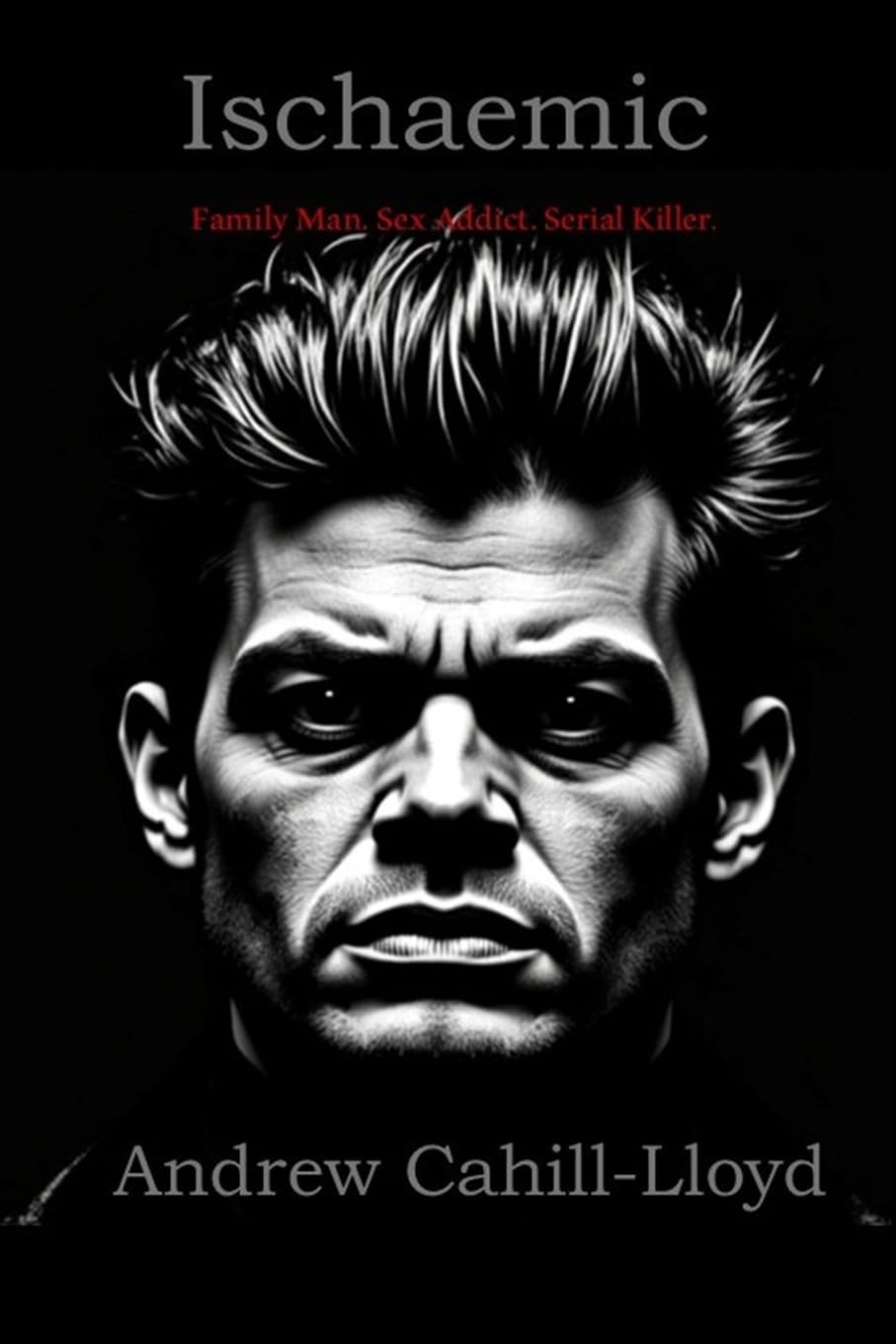

Ischaemic by Andrew Cahill-Lloyd is a dark, twisty thriller that jumps between a closeted truckie with a secret nightlife, a man blindsided by a DNA shock, and a homicide team chasing a string of killings. Joshua is introduced as a married interstate truck driver with “queer kink” and a taste for danger. Antony, meanwhile, gets DNA results that point to a same-age brother, and it flips his whole sense of self. As deaths stack up and detectives Webb and Tiernan work the case, pressure builds from every side. Then the personal hits the practical. Money goes missing through Antony’s own login, and later, he ends up donating a kidney to Joshua. The book barrels toward a final confrontation, a shooting, Joshua’s death, and Antony’s name being cleared.
The writing style is loud and visual. It often feels like a camera is parked in the corner of the room. I could see the lights, the sweat, the dread. I liked that pace. It kept me turning pages even when I wanted to mutter, “Mate, slow down.” The downside is that it can lean hard into big feelings and big setups. Sometimes it reads a bit stacked. One punch lands, then another, then another. Still, I respected the commitment. It swings for the fence. It does not do “subtle,” and that boldness can be a guilty pleasure.
What stuck with me was the mess of identity and control. Adoption. Shame. Desire. Family roles that rot from the inside. The kidney thread felt like the sharpest moral test in the whole book. Love versus obligation. Anger versus pity. It also goes into sexual harm and coercion, and that hit me in the gut. I had moments of real sympathy for characters, and then whiplash when the story shoved me somewhere darker. That push and pull felt intentional. It made the book feel mean at times, but also honest about how trauma can scramble people.
The wrap-up gives a sense of closure and a glimpse of healing later on, which I needed after all that intensity. I’d recommend this to readers who like gritty thrillers with family drama, queer themes, and a true-crime vibe. Bring a strong stomach. Expect explicit scenes and heavy topics. If you want a neat little mystery, nah. If you want a wild ride that punches hard and keeps punching, this one will do it.
Pages: 260 | ASIN : B0G94PTRGK

Hope of Survival

Blood on the Mountain centers on a young man navigating the expectations of his family and the pain of bullying while coming to terms with his own identity and sexuality. What was the idea, or spark, that first set off the need to write this book?
Having been raised in a religious family, unlike the main character’s experience in my book, I’ve faced my own share of bullies and name-calling. This led me to reach out to others who may be going through or have gone through a similar situation while growing up. Even though the story is fictional, I drew on research about other LGBTQ+ lives and their own battles. This was my inspiration for this.
What was one scene in the novel that you felt captured the morals and message you were trying to deliver to readers?
I would say it was the picnic scene. This scene took me a while to write. The message that I wanted to deliver was one of love, strength, and hope. Love between the two characters in the scene, the emotion and the strength of one character, experiencing the horror that was happening in front of him, the strength to fight and call for help, and the support and hope of survival.
What character did you enjoy writing for? Was there one that was more challenging to write for?
I enjoyed writing about Noah. I enjoyed writing about his challenges in his life, his survival, and finally seeing him embrace happiness with Joshua. The challenging character was Paul, his bully and tormentor. I spent hours researching the effects of someone abusing drugs and the consequences to his health.
What is the next book you are working on, and when will it be available?
I am working on a story that will continue over three books. Here is a synopsis of the story:
For most of his thirty-six years, Adam Keller has lived life like a shadow—quiet, invisible, and careful not to take up too much space. A gentle, gay bookstore clerk in a city that doesn’t always love people like him, Adam has spent his life surviving: his father’s rejection, a school history laced with cruelty, and a society that punished softness in boys. He doesn’t fight back. He just endures. Until the day he almost dies.
One morning walk in the park turns savage when a group of homophobic men ambush Adam and beat him within inches of his life. Left broken and bleeding, something inside him—something long buried and ancient—wakes up.
He survives. More than that…he changes.
The first book I am aiming for in Jan 2026.
Author Links: GoodReads | Facebook | Website | Amazon
Noah Bailey is suffocating in silence.
Trapped in an oppressive home ruled by religious dogma, he’s learned to hide who he is—and what he truly wants. But everything changes when he meets Joshua Taylor, a kind, fearless stranger who sees him for who he really is. For the first time, Noah dares to dream of freedom, love… and a future that’s finally his own.
But happiness doesn’t last.
A shocking betrayal from the past resurfaces just as Joshua is left fighting for his life. As Noah clings to hope, the ghosts of his school years begin to stir—bringing threats, secrets, and a trail of lies that refuse to stay buried.
With every revelation, Noah’s world fractures.
And the deeper he digs for the truth, the more he realizes someone is watching. Someone who wants the past to stay hidden—and who will do anything to keep it that way.
Love. Betrayal. Justice.
In this gripping story of survival and self-discovery, Noah must face his darkest fears and risk everything for the one person who gave him hope.
But when trust becomes a deadly gamble…
Can he confront the truth before it destroys them both?
Blood on the Mountain

Blood on the Mountain, by Kristian Daniels, is a deeply personal coming-of-age story set against the backdrop of family conflict, small-town traditions, and the slow unraveling of childhood innocence. The story follows Noah as he navigates a tangle of faith, family expectations, and the painful realities of growing up different. Through his eyes, we see the sting of bullying, the quiet terror of not fitting in, and the tentative steps toward self-discovery both in terms of identity and sexuality. The novel blends these intimate struggles with generational drama, love stories, and moments of hope, creating a portrait of adolescence that feels as raw as it does real.
The writing pulls you right into the emotional center of each scene. The author captures the ache of wanting to belong and the fear of being yourself, especially in a world that can be both judgmental and unkind. The depictions of bullying are tough to read but impossible to ignore. They’re sharp and often mirror the subtle cruelties that linger after the school bell rings. Against this backdrop, Noah’s quiet journey toward accepting his sexuality unfolds in small, tender moments that contrast beautifully with the hostility around him.
The ideas here resonate on multiple levels. This isn’t just a story about teenage hardship. I think it’s about the courage to live authentically in the face of fear. The book speaks to the LGBTQ experience without turning it into a cliché or a token subplot. Instead, it weaves identity and sexuality into the fabric of Noah’s growth. It also asks hard questions about family loyalty, faith, and the cost of speaking your truth in environments that demand silence. While I enjoyed the novel, I believe that some of the antagonists felt a bit too black-and-white, but the emotional honesty in Noah’s perspective more than balances that out.
I’d recommend Blood on the Mountain to readers who value heartfelt and character-driven stories. Especially those interested in LGBTQ narratives, anti-bullying themes, and the messy, beautiful process of self-discovery. It’s a moving, sometimes difficult, but ultimately hopeful read.
Pages: 393 | ASIN : B0FLVW2J1J