Blog Archives
The Original Human Beings: Sometimes, in the Darkest Moments, We Can See the Brightest Lights!
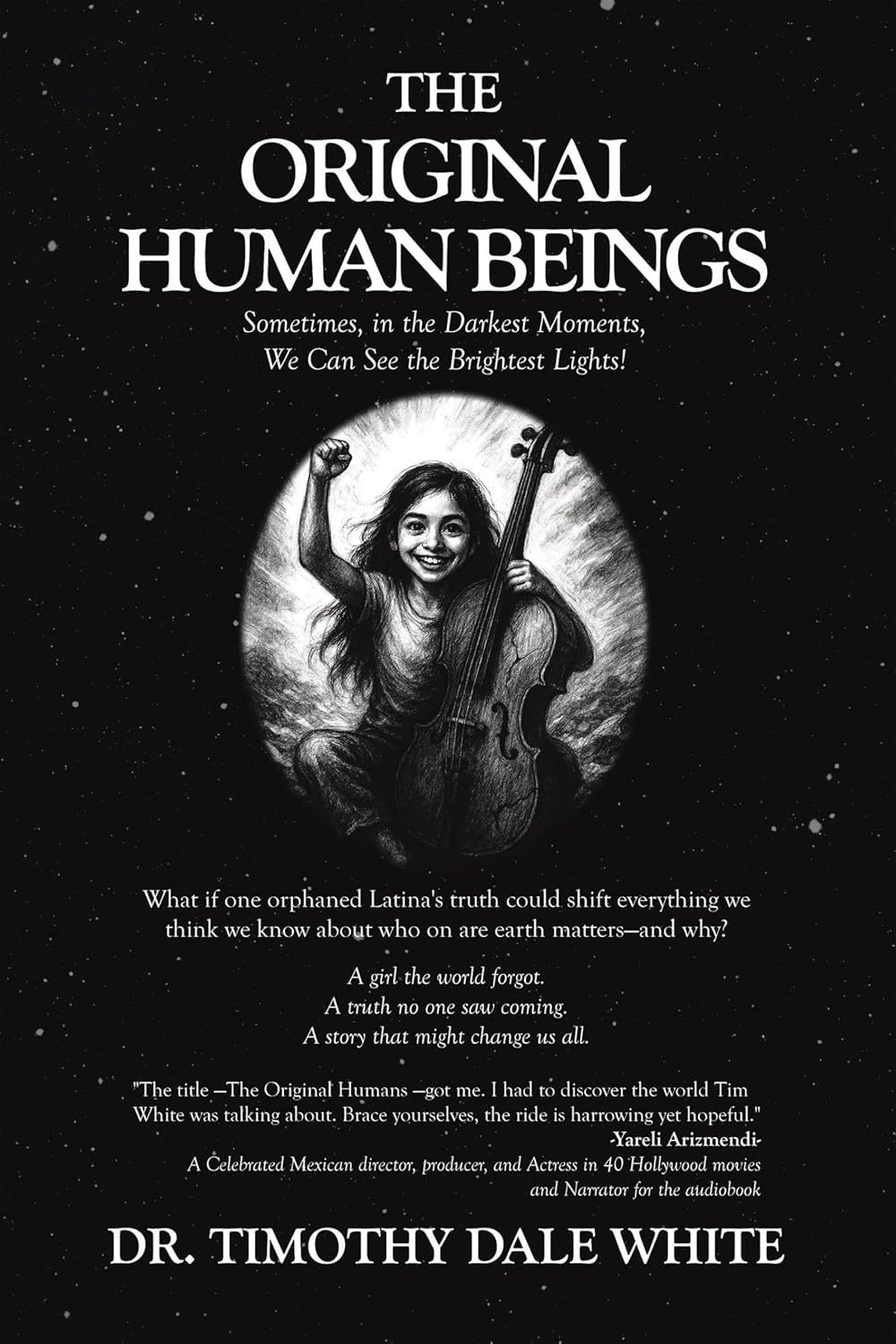

The Original Human Beings tells the life story of Never Morales, a Latina girl born in the Tegucigalpa garbage dump, who grows into a woman shaped by brutality, resilience, music, and a search for belonging. The novel follows her childhood in “Dante’s Inferno,” her encounters with dangerous men, her strange protector Loco Lucy, the death and revival prank of her mother, and the long journey that eventually leads her to the Nez Percé people and a deeper understanding of what it means to be human. Dr. Timothy Dale White blends raw memories with cultural history, weaving in philosophy and anthropology in a way that makes the story feel both personal and sweeping.
The writing swings between heartbreaking and strangely joyful, almost like the story breathes in pain and then exhales laughter. I kept feeling jolted by how quickly the author shifts from horror to humor. For example, the scene where Never’s mother fakes her own death to taunt her abuser left me shocked and then suddenly laughing through the tension. That moment hit me hard because it showed how joy can survive even when everything else is falling apart. The style feels bold, sometimes messy, sometimes poetic, but often intimate. I found myself pausing to absorb pieces of dialogue or reveling in small images.
I also felt a lot of admiration for how the book forces readers to sit with uncomfortable truths. The dump scenes are vivid and painful, and the children’s reality is harsh. Yet the story never sinks into hopelessness. Instead, it pushes toward questions about humanity, oppression, and identity. The inclusion of Indigenous philosophy and the Nez Percé worldview surprised me at first, yet it worked. It gave the story a bigger frame, like Never’s life was part of something older and wider. I appreciated that the book doesn’t pretend to have easy answers. It asks you to feel your way through the darkness instead and trust that something bright might show up.
I think this book would be perfect for readers who seek stories that blend emotional honesty with cultural depth. It suits people who want fiction that challenges them and surprises them, people who enjoy character-driven narratives, and anyone drawn to themes of survival, dignity, and identity. If you like stories that break your heart a little, this one is worth your time. Author Dr. Timothy Dale White has written a fierce and soulful novel that turns darkness into meaning.
Pages: 356 | ASIN : B0G42BPC2T

Inferno

Inferno, by Alan Cohen, is an ambitious piece of literary fiction that follows Nancey Reese, a young nurse in 1980s Holyoke, as she stumbles from innocence into something like self-awareness, all while a chatty, self-conscious narrator and his “Doctor” creator keep stepping in to talk about genes, consciousness, and what stories are for. We move between Nancey’s cramped apartment and chaotic hospital shifts, her friendships and near-relationships, and long reflective chapters on genetics and the mind that frame her life as one experiment among many. By the end, Nancey is left standing in an open future rather than wrapped up neatly, the “inferno” of experience still burning but no longer completely opaque.
On one level, there is this very grounded, almost stubbornly ordinary story of a plain young woman who smokes too much, works nights, and learns how to pay rent, navigate a toxic head nurse, cling to a glamorous friend like Susan, and decide what kind of intimacy she can stand. Those scenes feel relatable and authentic. On the other level, the narrator piques interest with intriguing ideas, talking about DNA as “snakes” inside us and consciousness as a new “light” that lets us see our own thoughts. Instead of feeling like a gimmick, it worked for me as a kind of echo chamber. Nancey’s small choices and the essayistic chapters keep reflecting each other, so her drifting, timid, half-woken life sits next to these big questions about how much freedom any of us really have.
What surprised me most was how much the book leans into self-awareness. The narrator reminds readers that he is a construct, trying to tell Nancey’s story under the Doctor’s rules. Then the Doctor himself appears as a character. It sounds clever, but I read it as someone worrying, out loud, about responsibility: to a character, to real patients, to family, to a life you could have lived but didn’t. There were times when the philosophical chapters stretched on, and I wanted to get back to Nancey and Susan or the drama at Mercy Hospital. But even there, I felt the pull of the ideas. The book keeps asking, in different ways, whether we are more than our genes, our conditioning, our old stories. It is curious, sometimes grand, and then suddenly very tender, like when the narrator pauses to wonder what kind of future Nancey should be allowed to have and admits he is still just curious, still compassionate, still vigorous, and cannot walk away from her fate.
By the time I reached the end, with Nancey facing the consequences of her choices and then offered back to the reader as a full-length portrait rather than a closed case, I felt oddly protective of her. It did not feel like a neat moral tale. It felt more like watching someone you know muddle through their twenties in slow motion. The genre is literary fiction, with a strong philosophical streak and a taste for metafiction, so it asks for patience and attention instead of dishing out quick thrills. I would recommend Inferno to readers who enjoy long, idea-driven novels, who are happy to sit with a flawed, sometimes frustrating protagonist, and who like their stories spliced with essays on science and consciousness. If you like the thought of George Eliot arguing with Oliver Sacks inside a hospital drama, you are the right audience.
Pages: 624 | ASIN : B0FTRPQ7NQ
Passages – A Voyage from War to Peace

Passages follows the life of Miko Papagiannis from his childhood in Greece to his adult years as a physician in the United States. The story opens with a vivid scene on the Aegean where young Miko watches a decommissioned naval ship being destroyed during a training exercise. The grim beauty of the sinking sparks questions about memory, violence, and the unseen weight carried by those shaped by war. From there, the novel moves through Miko’s family history, his father’s struggles as a fisherman, his grandfather’s unspoken wartime scars, and finally Miko’s own encounters with veterans in his medical training. By the time he meets AJ, a troubled veteran who enters his care, the threads of war’s lingering shadow across generations begin to weave into something larger.
This book pulled me in fast. The writing is plainspoken yet emotional in a way that sneaks up on you. Scenes rise and fall with a natural rhythm, and sometimes the simplest moments hit the hardest. Watching the ship sink through a child’s eyes made me feel a pinch in my chest. Later, hearing AJ wrestle with shame and loneliness felt even heavier because the earlier chapters had already planted the idea that war wounds rarely stay in the past. The prose can be earnest, but it never drifts into preachy territory. It just sits with the characters while they struggle to make sense of their own stories, and I found myself rooting for them almost without noticing.
My favorite parts were the conversations that seem small on the surface but crack open whole emotional worlds underneath. Miko talking with his mother about his grandfather lingered with me. It felt honest, almost raw, like things families say only after years of holding back. The book also surprised me with how gently it handled the mentoring relationship between Miko and AJ. Those scenes could have turned clinical or stiff, yet instead they felt human and a little messy in the best way. I liked how the story let silence do some of the work. People don’t always confess their pain neatly, and the author understands that. I wished the pacing between chapters jumped less sharply, but the emotional payoff made the jolts worth it.
Passages felt like a novel written for people who have lived close to hardship, or who have watched someone they love carry invisible weight. It also feels right for readers who enjoy stories about healing that don’t look dramatic but instead unfold in quiet rooms, awkward talks, and brave little choices. If you like reflective fiction rooted in real human experience, this book would be a meaningful read.
Pages: 234 | ASIN : B0FBS569TS
The Moments Between Choices

The Moments Between Choices tells the story of Omar Rashid, a man who drifts through life on autopilot until a sudden accident tears open the hidden cost of his choices. The book jumps between the present and his past. It shows the small moments where he hurt the people who loved him. It also shows the glimpses of kindness that hinted at the man he could have been. The final pages follow his quiet reckoning as his life slips out of his hands and into something stranger. The whole thing feels like watching a life replay in fast flashes that hit harder each time.
The language is simple, almost disarmingly so, and then a scene hits like a falling brick. Moments that seem harmless at first crack open into something sad. I kept thinking about the gap between intention and impact. The author doesn’t scream the message. He lets it sit there. The scenes with Omar ignoring his daughter or brushing off his wife felt too real. I felt annoyed with him at first. Then I felt uneasy. Then I felt guilty for how easy it is to slip into the same habits. The emotional rhythm jumps between warmth, frustration, and dread, and the shifts kept me on edge in a good way.
I also liked how the book handles memory. The childhood chapters were surprisingly vivid. The prank with the glue made me laugh. The pepper incident made me wince. The moment with the old janitor honestly touched me. These scenes felt like tiny snapshots that carried more weight than I expected. The book moves fast. I wanted more breathing room in a few spots, but the pace gave the story a kind of heartbeat. I never felt bored. I just sometimes felt shaken. And maybe that was the point. The structure carries this idea that life is stitched together through small choices. And those choices keep echoing, whether we like it or not.
By the time I reached the final chapter, I felt a mix of anger, pity, and something like hope. The ending left me quiet for a minute. It didn’t try to fix everything. It offered clarity. And I appreciated that. It made the story feel honest rather than preachy.
I’d recommend The Moments Between Choices to readers who enjoy emotional stories that keep you thinking about them. People who like character-driven arcs. People who reflect on their own habits and relationships. Anyone who wants a book that nudges them to sit and think about the tiny decisions they make every day. It’s not a light read, but it’s a meaningful one.
Pages: 116
The Fertile Crescent

Chadwick Wall’s The Fertile Crescent is a novel soaked in sweat, spice, and heartache. It follows Laurent Ladnier, a talented but haunted New Orleans chef struggling to balance art, ambition, and the weight of family obligation. Set in the aftermath of Hurricane Katrina, the book unfolds like a slow-cooked gumbo, layered, fragrant, and filled with unexpected heat. Through the kitchens and jazz bars of the Crescent City, Wall captures a man torn between loyalty and longing, between survival and the pursuit of greatness. The story is as much about the cuisine and culture as it is about identity, grief, and the ghosts that walk alongside us when we try to reinvent ourselves.
I found Wall’s writing raw and deeply felt. He paints New Orleans with love and precision, every block pulsing with music, memory, and danger. The prose hums, sometimes lush, sometimes stripped down to the bone, like a good blues riff. There’s real honesty in how Laurent’s life unravels, and the tension between his passion and exhaustion hit me hard. I could almost smell the roux burning and the whiskey sweating in his glass. At times, the pacing lingers long in description, but even then, I didn’t mind. The city feels alive, and Wall knows how to make every sensory detail work like a note in a long, mournful song.
This is an emotionally resonant novel. I felt the ache of Laurent’s ambition, that painful mix of pride and regret that comes with being both gifted and trapped. Wall doesn’t glamorize the creative life; he shows it for what it is, messy, lonely, full of stubborn hope. The dialogue between Laurent and his grandmother nearly broke me. It’s rare to find a story about food that also speaks so sharply about family wounds and self-forgiveness.
I’d recommend The Fertile Crescent to anyone who loves stories about people chasing art even when it costs them everything. Chefs, artists, dreamers, and anyone who’s ever felt stuck in the place they call home will find something true here. It’s a story that simmers slowly, but by the end, it fills you up completely.
Pages: 310 | ASIN : B0FJWJP1X8
This Time

This Time is a story that weaves together love, loss, and redemption in the small town of Tartan Springs, West Virginia. At its heart, it follows Ty Harrell, a Marine pilot, and Siena “Seeney” Tyson, a woman rebuilding her life after a messy divorce and betrayal. The story opens with their ten-year high school reunion, where old sparks rekindle and dormant feelings stir. Around them, the novel paints a vivid picture of small-town America, filled with complex relationships, community politics, and quiet battles for dignity and forgiveness. Beneath the romance lies a thread of corruption, environmental tension, and moral choice, giving the book more depth than a typical love story.
Coe’s writing is full of detail, almost cinematic, and that made it easy to slip into the world he built. I could smell the rain in the hills, hear the small-town chatter, and feel the awkward warmth between Ty and Siena as they stumbled through old emotions. Sometimes the dialogue felt a little too polished, but the emotional truth beneath it rang clear. I liked that the characters were flawed, real people who made mistakes and carried scars. Siena, especially, stood out, resilient, sharp, and unwilling to let the past define her. Ty’s decency and quiet loyalty balanced her strength perfectly.
What really got to me, though, was how the story handled forgiveness. It wasn’t wrapped in a neat bow. The pain from betrayal lingered, and love didn’t erase it. Coe didn’t shy away from showing the ugliness of pride, or the way people cling to control when their lives are falling apart. Yet, somehow, through the grit and sorrow, the book stayed hopeful. The scenes about military service, small-town politics, and even environmental issues added layers that gave it substance without slowing the pace too much.
I’d recommend This Time to readers who enjoy heartfelt fiction with real emotional weight. It’s perfect for anyone who loves stories about second chances, especially those set against the backdrop of small-town life where everyone knows your secrets. It’s not just a romance, it’s about rebuilding, forgiving, and learning when to fight and when to let go. This book pulled me in, and when I turned the last page, I just sat there for a minute, thinking about how some things are worth risking again.
Pages: 348 | ASIN : B0FST7LVL2
Childhood’s Hour: The Lost Desert
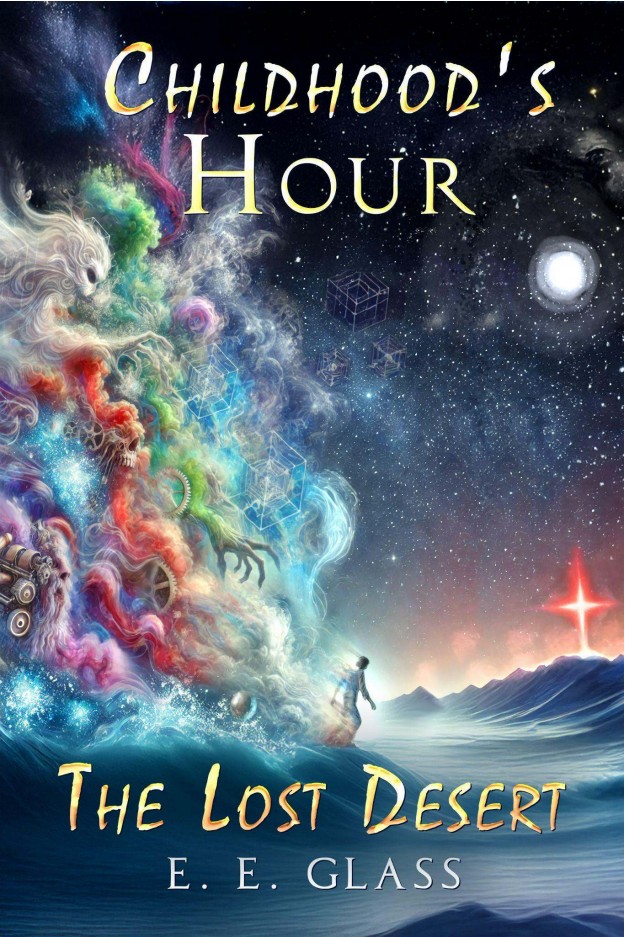
The Lost Desert unfolds like a fever dream. It tells the story of a man named Loste who escapes from a strange mist called the Fray and wanders into a dazzling desert of blue glass. He meets Nadhez, a wild, furred man who travels with a fierce, intelligent creature named Chihiti. The story drifts between hallucination and revelation, full of alien landscapes, glowing moons, and fragments of scripture that hint at a shattered world. Every page glimmers with dense imagery, where survival feels like both punishment and rebirth. It’s a story about memory, loneliness, and the fragile border between madness and faith.
I’ll be honest, this book messed with my head in a good way. Glass writes with the kind of poetic precision that makes you reread sentences just to taste them again. The prose is thick and alive, like breathing through incense smoke. At times I felt lost, much like Loste himself, drifting through scenes that seemed too vivid to be real. Yet, that confusion felt intentional. It put me right inside the character’s fractured mind. The dialogue between Loste and Nadhez was raw and strange but full of quiet heart. There’s something relatable in the way they stumble toward trust, both suspicious and starved for connection. And the imagery, my god, the imagery lingers. Every creature, every shimmer of sand feels carved from light and sorrow.
But this book isn’t easy. It asks patience. It doesn’t care if you understand everything. There were moments where I felt overwhelmed by the world-building, where the sacred words and mythic passages blurred into noise. Still, I never wanted to stop. The rhythm of the writing hooked me. It’s haunting and weirdly beautiful, like a dream you can’t shake off even when you wake. I felt equal parts awe and unease, that quiet tension between wonder and dread. It reminded me how fragile sanity can be when beauty becomes too much to bear.
I’d recommend The Lost Desert to readers who crave atmosphere more than clarity. If you like stories that make you feel rather than explain, that drown you in imagery and leave you gasping for air, this one’s for you. It’s not a comfort read. It’s a plunge into the surreal, but it rewards anyone willing to surrender to it. Lovers of dark fantasy, strange worlds, and lyrical writing will find something unforgettable here.
Pages: 550
The Admiral’s Gamble

The Admiral’s Gamble unfolds like a cinematic naval epic mixed with the intrigue of a sci-fi thriller. It follows Admiral James Harrington, a decorated officer at the end of his long career, who stumbles upon a mysterious device capable of altering time. The story begins at his retirement party and spirals into a tense, emotional journey through duty, destiny, and moral conflict. What starts as a quiet reflection on legacy turns into a race against fate, as Harrington must decide whether to sacrifice everything he knows to prevent a future catastrophe.
Reading this book felt like stepping into an old-school war movie that suddenly turns futuristic. The writing is vivid and grounded in military realism, yet it slides seamlessly into moments of eerie wonder. Author Nick Malara writes with a strong sense of rhythm; his scenes move with a cinematic flow that keeps the tension alive even in the quiet moments. A few pages linger long on scenery when the story’s emotional punch could have carried itself. But the heart of the book, the internal struggle of a man torn between heroism and self-preservation, shines bright and feels honest.
I found myself really drawn to Harrington as a character. He’s gruff, tired, and haunted by the weight of command. The dialogue feels old-school and clipped, full of restraint, like the man himself. Yet beneath that hardened shell is a depth of conscience that makes him compelling. The time-travel element, though wild, serves more as a mirror for his soul than a trick of plot. It forces him, and the reader, to ask: what’s the cost of doing the right thing when it erases the life you’ve built? There were moments that hit hard, moments that made me pause and think about sacrifice, legacy, and the strange way duty can both define and destroy a person.
I’d recommend The Admiral’s Gamble to readers who like military fiction with a twist of science fiction, or stories about aging heroes facing their past. It’s ideal for people who enjoy introspection mixed with high-stakes action. The story’s emotional weight and moral questions make it worth the ride. If you like tales that mix grit, heart, and a touch of the unknown, this one’s a good bet.
Pages: 178 | ASIN : B0FH77C97Z




 LITERARY TITAN