Blog Archives
Waiting For Someone To Be Utterly Outraged!

Harriet: A Jane Austen Variation follows three women that are all just trying to make a life for themselves in the Regency Era, some doing whatever it takes to advance in the ranks of society. What was the idea, or spark, that first set off the need to write Harriet?
I have long had Austen’s EMMA memorised. I can’t remember when it first occurred to me to wonder, “What if the pretty-but-dim Harriet was just pretending to be stupid, in order to better flatter Emma?” However, once I’d thought about it I couldn’t get the idea out of my head! So I dared to take sweet-but-slow Harriet and turn her into a very different kind of character… So far, people seem to like it, but I’m still waiting for someone to be utterly outraged!
There were many great scenes in this novel. What was your favorite scene in this story?
I like the plot twist with Mr Knightley, which was of course NOT in Austen’s masterpiece.
With the novel focusing on Harriet, Emma, and Jane how did you decide on the title of this novel?
Actually, Emma – ironically enough – is very downplayed here. But everyone wants to know why it’s not called JANE AND HARRIET… And, believe me, I thought about it. Two narrators. Two stories. BUT:
- I couldn’t find a portrait of the two that worked for the cover!
- My trademark is originality. I am NOT one of the Jane Austenesque writers writing PRIDE AND PREJUDICE over and over! My first book in the genre was an imaginative construction of what Austen’s LADY SUSAN (aged 35) might have been like, at just sixteen. NO one had ever thought to do that before – or to alter Harriet’s character, either. On the other hand, Jane Fairfax has been written about VERY often – even 100 years ago, writers were scribbling books about Jane Fairfax!!!… So, to be different, I chose HARRIET.
- The title would have been too long. HARRIET: A JANE AUSTEN VARIATION is long enough, without Jane!
What is the next book that you are working on and when will it be available?
Having cheerfully observed that I’m NOT into churning out seven P&P variations a month, I must admit that the next one really is based on Darcy! It should be published in November.
Author Links: Website | Facebook | Instagram | Twitter | Amazon UK | GoodReads | LinkedIn | Pinterest
Meanwhile, the brilliant, penniless Jane Fairfax consents to a clandestine engagement with Frank Churchill – though not daring to confess, even to him, that she is being relentlessly pursued by her best friend’s husband.
Harriet sidelines Emma herself in favour of the ingenious Harriet and the fascinating Jane Fairfax. It is Emma – but an Emma with a surprisingly believable twist in its tail.
No Names to Be Given
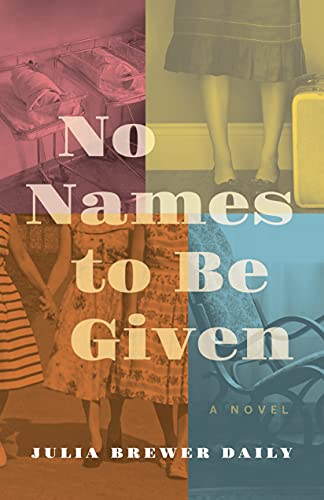

Spanning over fifty years, No Names To Be Given is a moving and heartbreaking historical novel about three different women from the 1960s who had to give up their children out of wedlock. Inspired by actual events, it takes the reader through the roller-coaster lives of Becca, Faith, and Sandy – from the day they met in the Magnolia Home Hospital to 25 years later, where their darkest secrets are threatened to be exposed.
This is author Julia Brewer Daily’s debut novel, but it feels like she’s been writing this story all her life. Perhaps that is the case, given that she was one of those babies adopted from a maternity home hospital during this period. While there were probably mountains of research to write this novel, it would be believable if Daily wrote this story purely from memory and family history.
Her tender prose shows that she’s writing from the heart. Despite that, she tells the story with some emotional distance. The journeys of the three women are told in alternating chapters that are so unflinching that the whole novel almost feels like a documentary. Additionally, this is based on very real traumas. Daily allows the story to shine on its own with the respect it deserves. She writes with an assured and confident voice and isn’t afraid to challenge the reader if it means telling the story the way it’s supposed to be.
It’s clear why Daily chose to alternate the story between chapters. It’s a complicated story, spanning generations, that would not have felt complete if done in a singular manner. The alternating chapters also emphasize the diversity of the characters’ situations. Becca falls in love with an African American man during the height of racism in America; Faith gets sexually assaulted by one of her father’s employees; Sandy becomes involved with a married mobster. If only one of these stories were told, it would not have done any justice for this disparaging historical truth.
No Names To Be Given is a through-provoking historical fiction novel. Readers will experience the heartbreak and fear these women live through, having their worst moments in life brought back to haunt them. A look into women’s history, adoption, and motherhood from the perspective of women in the 1960s.
Pages: 334 | ASIN : B09B157HLR

Helped Fuel My Ideas
DREAMer follows a young immigrant girl as she tries to find her family with the help of a kindhearted couple and a stack of postcards she has collected. What was the inspiration for the setup to your story?
I used to teach elementary school and had many immigrant children in my classes. Marisol was one such girl and although her past is not the story I wrote, she is who I had in mind when writing the book. I also have a friend who taught children stuck at the border in Tijuana and conversations with her also helped fuel my ideas.
How much research did you undertake for this book and how much time did it take to put it all together?
I already had some knowledge of the problems immigrants faced, but I did quite a bit of research on DREAMers and DACA. I also had to research the many California locations in the book.
Each book I write takes about a year between me starting it and publishing – about eight months of writing it and then my three editors read them and I make changes.
What were the morals you were trying to capture while creating your characters?
The morals I try to live by: compassion, respect, initiative, integrity, courage, trust, resourcefulness.
What is the next book that you are working on and when will it be available?
I have finished writing my next book with the temporary title, “Luther in Limbo” and am waiting for my editors to send it back for my changes. I assume it will be published this spring.
I have started writing the next one with the temporary title “Dutch’s Last Hurrah” while waiting for my editors.
Author Links: GoodReads | Twitter | Facebook | Website
A Champion For Justice

Goods & Effects follows a woman who sets out to sell her wares on the road and meets several people that change her perspective on life. What was the inspiration for the setup to your story?
As a child, I remember, once a month, a woman would stop by our house in her van-store. This woman did not live in the van, but I found it an intriguing way to make a living. Like Hannah, the protagonist in GOODS & EFFECTS, I was raised in a conservative Mennonite family. The novella is a work of fiction, but Hannah and I do share a similar spiritual journey. As I grew, gained an education and studied theatre in New York City, my desire to celebrate diversity and foster an atmosphere of inclusion grew. I wished to portray a woman who became sensitive to those outside her frame of reference and to be a champion for justice.
Your characters go on a deeply emotional and transformative journey in your novel. Is this intentional or incidental to the story you wanted to tell?
When writing the novella, I decided that in every scene/chapter Hannah must make a decision or have a change in attitude. So, I was very intentional in showing the change in Hannah’s religious beliefs, and to portray her unfolding journey where she embraced a humanistic vision.
What were some ideas that were important for you to include in this book?
I attempted to keep my story simple, but hopefully, not simplistic. I believe my strengths as a writer are crafting dialogue and implying subtext. I do not have a vast, complex vocabulary. As a writer, I think I focus more on plot and characterization than embellished, heightened language. I really think the reviewer from Literary Titan understood my style, my objectives, my sensibilities. For this, I am grateful.
What do you hope is one thing readers take away from your story?
I hope readers realize the world is not black and white, but a vast spectrum of grays. I hope readers identify with and cheer on Hannah. I hope readers see the novella in a sort of cinematic lens – that they can visualize it as a film.
Author Links: Amazon | GoodReads | Facebook | Website | Twitter | Instagram
Larry… Maddie … Tom… Molly. As time passes and Hannah’s relationships deepen, her faith diminishes but her vision of humanity expands. Hannah Mercer is a clever problem-solver, a shrewd schemer, a spinner of tender lies, an advocate for justice, and a dream weaver.
Tales from the Smoke House
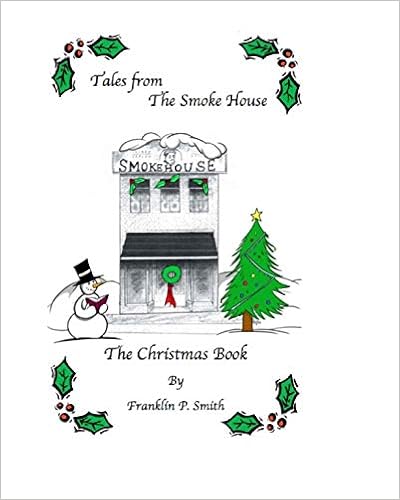

Traditions make the world go ‘round. From customary meals to reminiscing about days gone by, family and community traditions are everything when it comes to holidays. Christmas in the United States is certainly no exception. One of the most endearing aspects of Christmas is knowing there will always be a good story shared. Franklin P. Smith knows this all too well. He has taken a tradition cherished by families everywhere and tweaked it to make an incredible little fiction read that will touch hearts and bring warm smiles to its readers. There is an art to storytelling and Smith has mastered it.
Tales from the Smokehouse: The Christmas Book, by Franklin P. Smith, contains the tales spun by visitors to the Smoke House. Everyone who drops by promises to reveal a tale that everyone will find captivating. Smith has written his book in a unique style in which one plot exists but consists of several individual stories told by its characters. The first story shared is about an amazing cat with more than its share of lives. Smith chose a fantastic tale to begin his book.
Smith manages to incorporate life lessons in the stories his characters share. The meaning of Christmas is just one of those lessons and the reason this book makes an ideal holiday gift. This short read would be a perfect present for a host or hostess at a neighborhood holiday party. The stories and lessons within are timeless, relatable, and engaging. In all honesty, I can see Smith’s book as a wonderful read aloud. Sharing stories is one of the best ways to build relationships and draw people closer. Each one of the tales told by his characters in the Smoke House conjures a warm feeling and creates the most vivid imagery. It isn’t often you find stories that easily appeal to so many age groups and demographics.
Tales from the Smokehouse: The Christmas Book, by Franklin P. Smith has everything required to become a holiday bookshelf must-have. I highly recommend Smith’s work to anyone looking for a new and engaging read during the holiday season or to anyone wanting to gift a meaningful book to family, friends, or coworkers.
Pages: 56 | ISBN: 1535278056

The Struggle to Survive
A Sense of Purpose follows a kitten who’s abandoned on the streets and finds a sense of purpose among the various people and obstacles he encounters. What were some sources that formed this novel’s development?
“A Sense of Purpose” is a story about Chester who was an important character in my earlier novel, “Journey Home – A Cat’s Tale”. He was that down to earth, honest and helpful character that we all wish existed in our lives, always there to help, to be a friend, to be a positive influence. Because of those traits, I thought he deserved a story of his own. While I thought about writing a story based upon the character I had created, a lost and lonely cat exited the forest near our home, looking for food and shelter. For over six New England seasons this abandoned cat approached our home ever so cautiously as my wife called him from the forest and placed food outside on a daily basis. The character I had created actually became real; hence, we named our homeless friend, Chester.
While we fed Chester over several New England seasons and attempted to give him a permanent home, my wife also discovered a feral mother cat with her four kittens on another portion of our property. It was Chester who eventually brought her to our front door for us to feed. This feral mother cat with her four kittens and the dramatic incidents that revolved around Chester provided me with the consequential inspiration and resolve to create this story; a story that has relevance to everyone of us.
The struggle to survive, the determination to complete something meaningful, and the intertwining of Chester’s life with the lives of others make this story what it is. Chester’s life has relevance to tragedies and joys for all of us, and I hope this story will make people think about their own lives and how each life can be important to others in so many ways. Each of us affects one another at some point in our lives—to create a purposeful meaning. No matter what we do in our lives, we all have a sense of purpose—a message, I’m sure, Chester would want me to share.
Just so you know—on one early, cold October morning, Chester finally decided to step through our front door on his own volition. He now has a permanent home.
Chester is a stirring character that I enjoyed following. What were some ideas that guided his character development?
When Chester appeared at the edge of the forest near our home, my wife and I wondered where he came from and what his travels might have been like to get here. So I started his story as an orphaned kitten surviving in New York City and then traveling to a coastal town in the State of Maine. After finding a new home in a small town surrounded by forests, I introduced him to an abandoned kitten by the name of Patches, the main character in my previous novel “Journey Home – A Cat’s Tale. When Chester’s new friend disappears in a blizzard, I wondered about what lengths he would go through in order to find him. What might any of us do under unforeseen circumstances? It is during his search and his relationship with other characters involved with the obstacles he encounters that affect his character development throughout the story. The homeless people, the perils of a forest, a blizzard, the friendships, and the resolve to never give up on hope all add to an understanding of himself and what he must do to complete his quest to find his friend.
There were a lot of great scenes in the book. What scene was your favorite to write?
There were actually several descriptive scenes that were a favorite. It’s difficult to pick just one. Please bear with me. Here are six examples:
1) On the first day of being on his own in the city, Chester wandered into a bodega owned by a shopkeeper by the name of Mr. Pettigrew, searching for something to eat. That’s where a nine- year-old girl by the name of Helena first met Chester. The following excerpts are portions from that beginning:
—As I neared an aisle of baking goods, I noticed a young girl shopping with her mother. It didn’t take much time for the little girl to notice me. Perhaps it was the combined appearance of my white feet in addition to the reflection of the florescent light that intensified a bluish color to my eyes that caused me to be the object of her immediate attention. The little girl had curly brown hair, dark brown eyes, and a smile that seemed to make the world take notice, much like my distinctively white feet.
She stared at me for what seemed a very long time, beamed a big smile, then looked up at her mother, tugged on her mother’s coat sleeve, and said, “Mom, we don’t have any pets. You told me that when I got to be nine years old I could have a kitten. I’m nine. Can I have that one?”
“Helena, we’ve shopped in Mr. Pettigrew’s bodega now for many years. Today, we are just picking up some cut flowers and a few items for dinner, not a cat.”
“But Mom, you promised, and I like that one.”
“Well, I don’t think Mr. Pettigrew would like us absconding with one of his cats,” replied her mother as she bent over slightly to take a closer look—
—Pettigrew had overheard the conversation. Distracted from his task of shelving canned goods, he paused and turned to face Helena and her mother. While thoughtlessly snapping one of the red suspenders that stretched across his robust stomach with his one free hand, he quickly responded, “He’s not my cat. He just wandered in here a few minutes ago. Like all the others in the past, he’s looking for a hand out. I doubt if he even has a home. This morning is the first time I’ve ever seen that one,” he said as he lowered his head, peered over the top rim of his spectacles once again, and pointed at me.
Helena’s understanding mother took another look at what she considered to be a somewhat bedraggled kitten, then glanced back at her daughter and remarked, “Well, he looks like he could use a home, doesn’t he?” —
—Helena’s mother glanced at her daughter and paused as she deliberated on what to do. “He certainly is a pocket-sized bundle of fur,” said her mother. “I wonder if that tan and gray fur is color or just plain dirt,” she added. Then she nodded her head approvingly, and said, “Okay Helena. But you’re responsible for taking care of him.”
“I promise. I’ll take really good care of him.”
“We’ll have to take him to a veterinarian and get him checked for fleas, get him a rabies shot, and get him fixed,” said her mother.
“Is he broken, Mom?”
“No honey. I just mean that we should make sure he’s okay,” her mother added with a slight smirk on her face as she turned her attention to Mr. Pettigrew.
Surprisingly to Mr. Pettigrew and Helena’s mother, Helena needed no further affirmation and didn’t hesitate to act. She looked down at me, scooped me up with both hands, cradled me into the sleeves of her warm coat, and said, “I’m going to call you Chester.” —
2) When Chester stayed with Abram, a homeless man in New York City, during below zero degree, pitch-black winter nights, there were a few scenes when they huddled together to keep warm from the cold. Here is an excerpt from a portion of one scene:
—When a gust of wind invaded our space, he quietly looked down at me, while shivering, and apologized for not being able to do better. “We need to stay out of this wind,” he whispered repeatedly. “We could get hypothermia if we’re not careful.” I looked up at him, not understanding at the time what he meant. Then he continued to provide an explanation and tried to remain lucid in our frigid surroundings. “It’s a gradual type of trauma,” he said. “We don’t want to get soaked by this cold wet snow. If we’re not careful, we could get disoriented, tired, not realizing we’re freezing. You huddle in my coat. I’ll keep you warm.” He then removed one of the tattered mittens from his hand and stroked the top of my head with his chilblained fingers, even though they throbbed from the cold.
I stayed with Abram for almost one entire winter, until one early below-freezing morning I awoke to his breath hardly but a whisper. I’ll never forget that moment as long as I live. He stroked the side of my head with a gentle hand, looked down at me with pale blue eyes, half shut, and in a barely discernible voice said, “Storms will come. I’m sorry I can’t be there for you.” I sat there nestled in his arms as he held me close—
3) When Chester was trapped in the back of a moving van and transported to a small town in Maine, he was adopted by the family who moved there. This is an excerpt of his arrival:
—It was the screech of the metal door latch that woke me early the next morning. Both doors to the back of the truck opened wide, simultaneously. Sunlight streamed through the darkness, and the sight of Helena surprised and exhilarated me as she poked her head into the wide opening and peered into the van. But when I emerged from my sleepy stupor, I looked closely at the welcome intruder and realized that it was a girl who only resembled Helena. It wasn’t her. It was the dark brown curly hair both had in common that confused me for one brief, exciting moment. It’s difficult to explain how disappointed I was.
The girl immediately spotted me at the back of the moving van. “Daddy, look what came with our furniture,” she yelled excitedly.
After that excited response to my presence, another face peered through the opening, and an older man’s voice boomed, “How did a cat get in there?”
Quite simply, that’s how I got my second chance at finding a new home. A family of seven, moving from New York City to a small New England town on the coast of Maine, quickly and unanimously decided to adopt me as they carried both me and the couch into their new home. They figured if I had been a feral cat, I would have quickly cowered to the rear of the van or would have been aggressively defensive. Although fearful of what might happen, I decided to remain on the couch, and accepted the ride into the house. I never once thought about fleeing. I figured things couldn’t get much worse; only better. I guess the family figured that if the stray cat came with the furniture, he stayed with the furniture; that’s the way it was supposed to be. Fate had determined a new destiny for one homeless cat. Me. —
4) During the development of the story, there was a point in time when Chester visited a nearby forest, sensing he wasn’t alone. The following is an excerpt as he was leaving the forest late one afternoon:
—Even though it was getting dark, a bright moon lit my way as light glistened from the frosty snow-covered ground. Clouds swirled around a full moon and provided an eerie, otherworldly reflection over the landscape. Just before I exited the edge of the forest, however, I sensed a shadow in the distance, a rustling among the saplings—heard but not seen. The silhouette wasn’t caused by the moon’s reflection or by the stiff breeze that swayed branches through the snow-covered trees. Rather, the shapeless shadow lurked as something sinister, beyond comprehension. Something dark, moving through the snow-ridden undergrowth—quietly. I sensed a danger never before known, an instinct to run, but instead I turned to look in the direction of movement, yet found nothing there. The shadow lurched within the deep recesses of the forest, a silent movement, perhaps a ghost I thought. Fear engulfed my soul. The unknowing made me cower. The wind chattered through the trees and in the distance the cawing of crows diminished until I could only sense the beating of my heart and the freezing whiskers against my face. Snowflakes hushed over the forest till there was no sound except for my own rapid breathing, my chest pounding as if a hand had choked my very breath. I plunged headlong into the coastal driven wind that had changed direction, no longer at my back. Swirling snow from fierce winds punished the air and made it difficult to see any distance ahead. —
5) When Chester started to search for his friend after several days of blanketing snowstorms, he hurriedly headed for home as a new storm strengthened. This is a scene from that experience:
—The walk home was laborious. I sloshed my way along the empty streets while the freezing wind sought to steal my every breath. By the time I arrived home, darkness had swallowed the afternoon. The Anderson’s had been watching for my return and had left the outside lights on. I was glad they had because by the time I arrived I could barely see the house. I made my way up the snow-covered walkway and was happy to see the front door creak open just enough to let me inside. I heard Beth Anderson’s voice before I even got to the front stairs.
“It’s about time you got home. If we had known this storm was gonna turn into a blizzard, I never would have let you out this morning,” she said, talking to me as she would chastising a child. As I entered the house she added, “You look like a walking snowball.” —
6) At a later point in the story, Chester met Tate, a solitary man who kept mostly to himself and spent much of his time quietly walking about the neighborhood, as if he were in his own world. Unlike Abram, Tate didn’t talk to anyone he could find. He was usually quiet and only spoke to a select few. When he did speak, his voice was a low, barely audible mumble about his forecast of the weather. The following is an important excerpt from the story:
—When I proceeded down the granite steps onto the sidewalk, Tate was sitting on the bottom step mumbling one of his not so unusual incoherent rants; to no one. As I casually passed beside him on the last step, however, his left hand gently washed over the top of my head and onto my shoulders. He had never done that before; never had touched me, never had patted me, but this time he did. I stood there for a moment, feeling a calming connection between us; his hand gently rested on my shoulders. I looked up as he continued to mumble something about the cloud cover and saw him staring out across the street, as if he was looking at something. Then he suddenly stopped talking and slightly lifted his hand from me. He removed his baseball cap with his right hand and placed it on the stair beside him while he continued to stare directly ahead. Then, as if he had received some sort of message, he turned his gaze downward, catching my upward glance with his. In a low methodical, distinctively firm voice he warned, “A storm is coming.” It was the same announcement he had made just days before the blizzard in January. I had heard him utter those same four words several times before. This warning was vocalized as it had been previously, but this time it had a sympathetic sound to it. His words seemed apprehensive, yet the tone of his voice was soft and strangely empathetic.
It wasn’t just the tone of his voice, however, that was different. Tate never had much of any kind of facial expression when he spoke. I had never seen him smile, but he did on that day. Perhaps it wasn’t his intention, but there was a slight, asymmetric smile that expressed a deep sadness, as if what he said was somehow painful for him; a smile that turned up ever so slightly at the corners of his mouth and exhibited a kindness I had never witnessed before. He placed his left hand ever so gently on my shoulders once again and paused as if doubting what he knew and didn’t dare say. Then he stood and slowly pulled his hand away. I looked up at him and his eyes drifted downward once again, looking at me. He stared intently into my eyes in a way that made me think he could see into my very soul. That’s when I realized there was a real sadness in his look. Then he stepped down onto the sidewalk, leaving me on the last step, and walked away. He never looked back or spoke another word as the distance between us grew. I watched, sad to see him go from the moment; a simple exchange of emotion, an experience so intense, yet seldom shared. I didn’t know it then, but that was the last time I would ever see Tate. It was as if he had waited all those months I had known him in order to deliver a message that could no longer wait. I returned to the forest that day and thought about Tate’s implicit words. I wondered what he had meant. Winter was over. Even I knew that. —
What is the next book that you are working on and when will it be available?
My fourth novel, “The Path Before Me”, is a Middle Grade Young Reader version of my philosophical adult novel, “Journey Home – A Cat’s Tale”. It should be available in July 2021. I wrote it in hopes that such a story would provide a better understanding of compassion, empathy, and hope for a young reader; a good social aspect addition for schools systems and the in-home library. I am currently working on my fifth novel, a science fiction story about our Earth, our possible connection with other worlds, and the reason why other civilizations have not contacted us. I still have a bit of research yet to do while writing the manuscript. I would expect completion and publication sometime in 2022.
Author Links: GoodReads | Twitter | Facebook | LinkedIn | Website
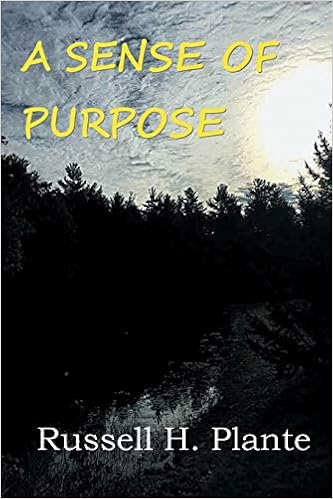
Orphaned as a kitten on the streets of Manhattan, Chester recounts his first home with Helena, a nine-year-old girl, then losing his home two years later. Living on the city streets, he befriends Abram, a homeless man, who warns him about an impending storm, then dies early the following morning after a bitter, cold night. Friendless once again, Chester becomes trapped inside a moving van and finds himself taken to a small town on the coast of Maine. There he meets an abandoned cat named Patches, a compassionate cat named Buster, and Tate, a peculiar homeless man who also warns Chester of an impending storm. Remembering his own past struggles, Chester helps Patches find food and shelter. Becoming friends, they explore an ancient graveyard one day in a nearby wetland forest where Patches tells Chester about his father entering the dark forest but never returning. When winter arrives, the worst blizzard in over a decade strikes the small coastal town and Patches disappears like his father had. Hoping Patches might have sought shelter from the storm in the nearby forest, Chester begins an arduous search into the forest for his friend. There he encounters a young woman in the old graveyard, drawing in her sketchbook, and ultimately learns the truth about the disappearance of Patches’ father. He also discovers a feral mother cat with her four kittens, struggling to survive, not knowing they would change his life forever. When terrifying events happen under the halo of a moonlit night, Chester realizes the warnings from Abram and Tate were about significant events that would occur in his life. His search not at an end, he comes to understand that every life affects another, and that no matter what we do in our lives, every living being has a sense of purpose.

The Commune

The Commune, by Erica Abeel, is about a commune in the Hamptons where newly liberated women come together to plan the seminal 1970 Women’s March for Equality. These women find that while they’re talking and planning, they are tugged between the ideals of the movement and the draw of the past they may not be ready to let go of.
Abeel started this book off with a good hook: Leora is at the beginning of the Women’s March for Equality, explaining what some signs say to her young son, and is wondering if they were going to get enough people to make the March mean anything. This scene ends with Leora’s happy surprise at all the women who are going to the March. After this, we are taken back in time four months. We learn how Leora came to be a part of the Women’s March for Equality and learn more about her past and the important women who planned the March.
Throughout this poignant book we’re taken to different times and locations, with thoughts and dialogue all flowing together. Sometimes it’s hard to separate the two. We freely float between characters, locations, and times, ensuring the story is always moving forward, always revealing something, and always reading some engaging piece of dialogue, but sometimes it was hard for me to understand who was talking.
The Commune is told from the perspective of multiple characters, but ultimately I felt like this was Leora’s story, as I connected with her more than the other characters we follow throughout the story. While I appreciated the intriguing detours the other characters takes us on, Leora steals the show because she is such a compelling character.
Author Erica Abeel has a strong command of language that she uses to construct some scenes that are firmly rooted in locations, with very little fluff, always focused on our emotive characters, and because of this story story is riveting.
The command of language, the sections of connection, and the good hook at the beginning is the best parts of the book. Also, the end brings this captivating historical fiction story to a nice close. The Commune provides a satirical but impassioned story on women’s suffrage that will appeal to anyone looking for a culturally impactful story.
Pages: 330 | ISBN: 1954351798
There Was Much More To Tell

Seeds in the Desert Wind is the final book in the trilogy of The Life and Stories of Jaime Cruz. Did Jamie’s story end the way you had imagined when you first started writing the trilogy or did it change while writing?
As I wrote chapter one of “Tumbleweed and Dreams” (book one), I knew that Jaime would by logical extension of the region have interactions with the ranching community. I had no notion that he would be taken in by the ranching family that “adopts” him. In fact, I recall early in the book after the Cardona’s explain who the rancher is that Jaime sees in the grocery store, Jaime writes that little did he know how intertwined their lives would become. When I wrote those words, the author also had no idea how the lives would be intertwined. Somehow, I just knew they would.
It wasn’t until near the end of book one that I knew I wanted to keep the story going—that there was much more to tell.
What were some things you learned as a writer after completing this trilogy?
I learned just how hard it is to work with a dialogue heavy story and keep it from being tedious as you work to keep track of who is speaking to whom. While I could have let Jaime tell more of the story, I felt to do so only robbed the characters of what made them endearing to me (and I hope my readers).
If you had to cast characters for a movie version of your novel, who would play the leads?
None come to mind though I can see Jane Lynch (coach on Glee) making a pretty convincing Sallie. I would hope for a very strong casting director who really “got” the book to find relative unknowns well-suited to the peculiarities of each character. Particularly, in the case of Sallie, Billy and Ernesto, the match of physique and personality is integral to defining their character as well as the musical talents needed for Jaime, Billy and Ernesto.
Do you have plans to continue this story in a different book or will you start a new book?
If I write more based on these characters, I’d like to do so from the perspective of Sallie’s memoirs where she takes us back to the early days of the ranch and how her parents shaped her life as well as bring the readers along up to the present.
If I live long enough, I’d love pick up the story with Noah as the narrator and lead us through his grandparents and great aunt’s death as well as putting up with the two old men, Billy and Jaime, that share the ranch life with him.
Regarding possible other works in other locales, I shall have to wait and see if inspiration comes.
Author Links: GoodReads | Website
Jaime’s life has taught him how the invasive seeds of estrangement slowly choke our lives. He reminds us that sowing seeds of compassion and forgiveness remains the work of us all. His story is a story of lives made whole. It is also one of stewardship and care.
In this final book in the trilogy of The Life and Stories of Jaime Cruz, we continue the journey with Jaime and with all those who are now so much a part of his life, as they take each day as it comes with gifts of humor, grace and dignity. If the heart is open, love finds a way in.



 LITERARY TITAN