Blog Archives
Cardinal or Crow


Cardinal or Crow by Molly Myriah is a short, intimate collection of prose poems and lyric fragments that circle around grief, faith, motherhood, trauma, and everyday wonder. The book moves through hospital rooms, kitchen floors, beaches, churches, and garden paths, and keeps returning to weather, trees, birds, tides, and small animals as anchors. It tracks a speaker who has lost her mother, survived betrayal and poverty, raised children, wrestled with God, and still finds reasons to laugh, plant flowers, and notice butterflies and hydrangeas. The pieces are brief, often only a page or two, and they gather into a loose story about being broken open and then learning to live with a tender, alert heart.
As a reader, I felt close to the voice on the page right away. The writing is simple on the surface, and that choice works. Short lines, plain words, small scenes. It feels like someone who has lived a lot is just talking to me across a table. I liked the steady mix of sharp one-liners and soft images. A poem will crack a joke about “be cool” and then turn and punch straight into the cost of pretending to be fine. The free verse feels loose, but the book has clear patterns. Nature shows up again and again. Trees that feed the weakest roots, yellow butterflies, hydrangeas that change color, the shore as medicine, the tide that covers and then pulls back. That repetition gives the book a spine. I also enjoyed the small structural tricks. Titles like “Maslow,” “Goliath,” or “Road to Emmaus” drop in big ideas, then the poem itself stays grounded in very human scenes. The tone stays conversational, but the images are often bright and odd in a good way, like a pink canoe across a golden grid or a leaf caught in a window screen.
Emotionally, the ideas in this collection really resonated with me. The book sits with grief without rushing to fix it. Death of a mother, the long ache after a breakup, the strange life of being a single parent, the weight of childhood trauma. All of that shows up, and it feels honest. I appreciated the way the speaker talked about faith, too. God is here, but not as a neat answer. The poems question, argue, and still lean toward hope. There is a lot of talk about free will, courage, and choosing to keep going when the tide of pain pulls you under. The collection also takes care with attention. It keeps saying, in different ways, that small acts matter. Picking up an earthworm, asking how someone really is, planting loud flowers for angels, noticing rain or a dog’s steady presence. I found that idea comforting and also a little challenging, since it asks me to wake up more in my own life. The mix of tenderness and hard truth felt believable. I never felt preached at. I felt invited.
Overall, I would recommend this book to readers who enjoy reflective, accessible poetry and who are open to spiritual language that lives beside real hurt. It will likely speak to people who have lost a parent, left a painful relationship, or carried old family wounds. It will also suit readers who love nature writing and small, daily moments more than big plot twists. If you want clean, spare lines that feel like a friend talking, and you do not mind sitting with heavy feelings along with little flashes of joy, this collection is a good fit.
Pages: 150 | ASIN : B0FJPPHMNN

Emotions as the Catalyst

Seasons of Life and Love takes readers on a journey through themes of loss, regret, longing, and joy in a collection of poems centered on the complexities of human emotion. Can you share a bit about your writing process?
I never force my thoughts or words. Something very simple may trigger a thought: a sunset, a breeze, a cloud, a flower. A single flash from a firefly at evening. Then I form an idea in my mind and begin a mental journey.
How do I feel when I look at that sunset? What has my day been like? Do I have any regrets? I put myself in the picture. I ask myself: What simple thought do I want to express? If I can answer that question, then I proceed slowly. I write from developing emotions and elaborate point by point and try end the final stanza with a powerful thought, to let it linger in the reader’s mind.
.
When I begin to write poetry, I have one rule in mind. Use simple words, paint clear mental pictures, and write so that the reader can easily grasp the message. If my words strike a common chord with the reader’s feelings, then he/she can figuratively “own” it and call it to mind at will. Powerful thoughts can be expressed with simple words. I want the poem to reflect upon the reader, not upon the poet. Words can last forever; poets do not.
Did you write these poems with a specific audience in mind, or was it a more personal endeavor?
It began as a personal experience. When I experienced personal tragedy, I went for long walks. I noticed that the weather resembled my life. It was sunny one day, stormy the next, life-threatening occasionally, and afterward, peacefully calm. I had no audience, I wasn’t writing a novel, I was describing my feelings as they related to the weather.
Sometimes I just wrote about the weather. Nature is a very moving experience if one stops to sense its changes. I wrote about losing love, and finding love; and the doubt that comes to mind, questioning the wisdom of signing up for more pain; and that overwhelming sense of euphoria one experiences when the universe aligns with your heart. But it can also be temporary, and when that came, I wrote about that, too. Not all poems were about me, though. Sometimes I would use a personal feeling and generalize a poem, using my emotions as the catalyst. For example, the poem “Jewels,” a romantic poem about a lover returning home in the early morning hours after visiting his love, was developed around the idea of a modern-day Romeo and Juliet.
I rarely write with a specific audience in mind. I write to express inner feelings. If they find an audience (and who hasn’t lost love?) then, that is my audience. I don’t want my poems to be or sound contrived. They must be genuine. If I sense I am slipping into contrivance, I stop and discard the poem. Do I know what I will write about next? No. I have no idea. If asked to write about a certain subject, I cannot. I can only describe what I feel.
Do you have a favorite poem in the book, and if so, why does it hold special meaning for you?
Do I have a favorite poem? I have many. They must all reach the same standard. “A Ray of Sun” – This was one of my first poems written after losing my family. I was walking a path that took me across a floating bridge over a stretch of water. The day had been cloudy, reflecting my disposition. Midway across the bridge, the sun broke through the cloud, low in the sky. The effect caused me to stop and feel better. It inspired hope. It was the first time I linked the weather to my emotions. Hence: “I knew if I could wait, if I could hang on long enough, I’d see the sun appear.”
“Everything is Beautiful” – this poem was inspired when I visited a retirement home. As I walked along the
hallway, I saw old men and women sitting alone in their rooms with the doors open, virtually abandoned
in a retirement home at the end of their lives. I asked myself: What do they feel inside, and what are their
dreams? I felt sad that someone should end their days like this.
“Hooked” – I love this poem because it is short and sweet and expresses in two stanzas how I felt when I fell in love.
“I Thought of You” – This poem describes perfectly how I felt when I had lost love. Because love lingers long after The Departed have departed.
“Jewels” – I have always loved this poem for the word pictures it elicits and the power of love to push one to great lengths and dangers to experience it.
“Love Whom You Wish” – This is a cautionary poem directed to the one who is leaving the relationship. I love the last stanza. It encapsulates the warning of the one abandoned.
“The Cost of Love” – This poem perfectly reflected my feelings when my relationship crumbled, and it juxtaposes the value each placed on the relationship.
“The Flood” – I wrote this poem with a smile on my face. I was reflecting upon the wonderful experience I had and the intensity of the relationship.
“The Fool” – I think this is one of my most lingering poems. How many have lost love, only to long for its return and be viewed as a fool for remembering it the rest of his/her life?
How has this poetry book changed you as a writer, or what did you learn about yourself through writing it?
I have hundreds of poems. This is my first published book of poetry. Most of my poems are written in the same style. I have been able to express more clearly my feelings of finding love, basking in love, and losing love. Those are experiences shared by many. I found I was able to describe succinctly my feelings without becoming philosophical. I have simply described human nature.
But life is more than just love. We can find delight in living a day, watching a sunset, experiencing a rainstorm, and seeing the seasons change. I think my poetry has made me more keenly aware of the simple things that life has to offer and that are occurring around us all the time. Often, we overlook them. Don’t. They have been here longer than we. They comfort us. Stop and take note of the emotional treasures they bestow.
Author Links: GoodReads | Amazon
A collection of poems about finding love, losing love, the change of seasons, and moments in the day. In short – it’s about life and love.
Seasons of Life and Love

Seasons of Life and Love is a wide-ranging collection of poems that moves through weather, memory, loss, longing, regret, and joy as if each emotion were its own season. The book ties nature to human feeling in simple, steady language. Storms mimic sorrow. Sunlight lifts the spirit. Quiet evenings bring reflection. The poet uses these images to guide the reader through moments of love, heartbreak, aging, family, and the slow unraveling and rebuilding that we all face. It is a gentle collection, and it lingers on the enduring hope that tomorrow may feel lighter than today.
I found myself pulled in by how honest the poems felt. The writing is plain and open. I kept thinking how the poet reaches for everyday scenes and somehow makes them feel personal. A shift in weather becomes a shift in the heart. A walk at dusk feels like a confession. Sometimes the rhymes tighten the lines in a way that made me smile. Other times they made the sadness feel sharper. I liked that the book never hid from pain. It met it head-on, almost with a kind of calm acceptance. I felt the weight of past loves, old mistakes, and long memories, and I found myself slowing down to take it in.
I also enjoyed the way the poet moves from the small to the big and back again. One poem sits quietly with a single moment. Another sweeps across years in only a few lines. The tone stays warm even when the subject turns dark. There were points where the sentiment leaned a bit heavy, but I could tell it came from a real place. The emotional sincerity is the glue of the book. I liked how the speaker often steps back to reflect on the choices they made. Those moments felt tender, sometimes even vulnerable. I could feel the author trying to make sense of life as it rushes by.
I feel that Seasons of Life and Love is written for readers who want poetry that speaks plainly yet feels deeply. It will appeal to anyone who loves nature imagery, reflections on love and time, or poems that read like diary entries set to rhythm. If you want something gentle, emotional, and rooted in real human experience, this poetry collection will be a good fit for you.
Pages: 126 | ASIN : B0DXR4YLLT
Write Fully and Freely
Purple Summer, Gray Fall is an eclectic blend of poems ranging from themes of warmth, youth, and desire to introspection, loss, and renewal. What inspired you to write this particular collection of poems?
Thank you! This book began as 1-2 poems and random thoughts I wrote during and after a particularly impactful romance. I didn’t plan for Purple Summer, Gray Fall to become a book, let alone a book that I would publish. Not long after this romance, I went through a huge emotional journey, including and most notably, the start of my writing career. I began writing and unpacking things, which led to more writing. Then, synchronistically, the title Purple Summer, Gray Fall came to me one day. That’s when I knew I had to create a book. This book allowed me to understand and process that time period, learn more about myself, and explore and expand creatively. I realized I had to publish this book because, as an artist, there is nothing more urgent than to share what moves you.
Were there any poets or other writers who influenced your work on this collection?
Absolutely. The late Nikki Giovanni is my favorite poet of all time. The late Toni Morrison is my favorite author, and I’m also a huge fan of poet Marie Howe. Collectively, they have inspired this book as their work is frank and sharp, full of imagery, emotion, connection, and courage. They are a source of strength and commitment for me to write fully and freely. I honestly can’t do justice to describe how influential these three women are to my work as a writer, but I’m glad I can pay homage to them here.
How do you approach writing about deeply personal or emotional topics?
It wasn’t easy initially, but it was much harder for me not to go deep with this book. Purple Summer, Gray Fall could have had a vastly different tone. I scrapped almost half of the original poems because they were ok and fit, but they didn’t feel authentic, and they didn’t make me proud. I made a choice and decided to write free of external pressure, and once I did, the rest of the book came together pretty quickly. It was very exciting. I knew the excitement and pride I felt from writing from a place of authenticity was and is the reason why I am a writer. I’m not aiming to be controversial or deeply personal, but I’m sticking to my decision to write for me and no one else, letting whatever needs to come out be free to do so.
Can we look forward to more work from you soon? What are you currently working on?
Absolutely. Poetry is my favorite genre, and I’m working on my 2nd book now, no title available! I’ll share that the collection will explore my past relationships. But I also plan to write fiction, plays, and screenplays as I have started drafting quite a few projects. Stay tuned for updates by following me on Instagram @writeaway_selena.
Author Links: GoodReads | Instagram | Amazon
The Savior and the Shadow Queen: A Fantastical Tale Told Through Sequential Poems

The Savior and the Shadow Queen is a story told through poetry, unfolding in layers that mix fantasy and raw human emotion. It begins as a mythic tale of Eselli and Nabseatsi, two friends who set out to defeat a terrible enemy called the Shadow Queen. Their world feels ancient and mystical, full of prophecies, weapons, and dark magic. But as the story progresses, that fantasy begins to fade, and the truth emerges. Eselli is Leslie, a young woman living in the real world, grappling with grief, guilt, and the haunting weight of loss. The Shadow Queen becomes something much deeper than an external enemy; she is the darkness inside us all, the reflection of our pain and self-hatred.
McAfee writes with such openness that it’s hard not to feel what Leslie feels. Her pain, her confusion, her desperate hope for healing, it all comes through in the rhythm of the poems. The fantasy world works beautifully as a metaphor for mental illness and self-discovery. I loved how the story shifts from myth to memory, from sword and prophecy to hospital rooms and recovery. That transition hit me hard. The writing itself is simple, almost deceptively so, but it carries deep emotion. It’s the kind of poetry that doesn’t need fancy words to make you feel something, it just does. The pacing feels natural, the imagery vivid, and the emotions raw enough to make you pause and sit with them.
I could feel the compassion in McAfee’s voice. The book doesn’t wallow in sadness, even though it’s born from it. It offers forgiveness, for oneself, for others, for the past. I appreciated that McAfee didn’t sugarcoat the pain, yet she gave it meaning. The real-world sections are written with quiet strength. There’s hope tucked between every line, and I found myself rooting for Leslie as if she were someone I knew. The author’s choice to end the book with a direct message to the reader was perfect. It felt intimate, like a friend reaching out to say, “You’re not alone.”
I’d recommend The Savior and the Shadow Queen to readers who loved The Alchemist by Paulo Coelho. Both books explore inner transformation through journeys that seem external at first but reveal themselves as deeply personal. Like Santiago’s search for his treasure, Leslie’s quest to defeat the Shadow Queen becomes a metaphor for finding meaning after loss. But where Coelho’s story leans on destiny and spiritual discovery, McAfee’s feels more grounded in real emotion like grief, guilt, and the slow rebuilding of self-worth.
Pages: 102 | ASIN : B0CH411ZSP

Purple Summer, Gray Fall
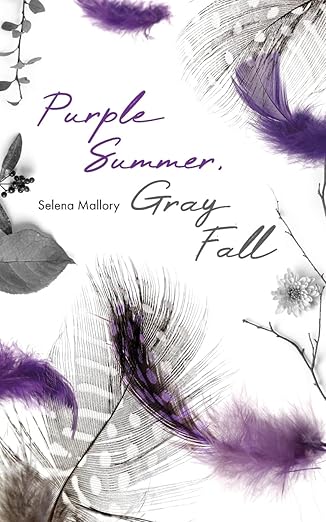
Selena Mallory’s Purple Summer, Gray Fall is a tender, raw, and often startling collection of poems that drifts between sunlight and shadow. The book is divided into two sections: “Purple Summer,” which hums with warmth, youth, and desire, and “Gray Fall,” which cools into introspection, loss, and renewal. Across both halves, Mallory writes with a confessional edge that feels both intimate and unguarded. Her voice slips easily between humor and ache, sensuality and solitude, all while painting vivid slices of womanhood, memory, and self-discovery. The poems read like diary entries whispered aloud on quiet evenings, revealing a life lived in color and reflection.
What I liked most about Mallory’s writing is its honesty. She doesn’t shy away from the awkward, the lustful, or the mundane. In one breath, she’s talking about shaving her legs for a Tinder date, and in the next, she’s describing grief, faith, or mental fatigue. That range feels human in a way poetry often forgets to be. Her language is unpretentious, even conversational at times, and that makes the emotional moments hit harder. The transitions from lighthearted pieces like “Shiny Hiney” to weightier ones such as “Sweat(H)er” are seamless, showing how closely joy and despair live beside each other. The humor never undercuts the pain; it just reminds you that both belong.
The collection’s imagery also carries a quiet rhythm. I loved how the “Purple Summer” poems glow with heat and motion, fields, sun, and laughter, while “Gray Fall” settles into stillness and introspection. There’s an arc of growing up here, or maybe just growing deeper into oneself. Mallory has a knack for turning everyday details into metaphors that linger, like the simple act of baking brownies or watching a storm. Her poems invite you to slow down and notice small, beautiful things, even when they hurt. Sometimes the structure feels loose, even meandering, but that looseness matches the emotional truth of the work. It’s messy, alive, and personal.
I’d recommend Purple Summer, Gray Fall to readers who love poetry that feels like conversation rather than performance. It’s perfect for anyone who’s ever laughed through heartbreak or found comfort in small, domestic rituals.
Pages: 56 | ISBN: 978-16629604444
Reflections: Earth, Heart, Light, Dark
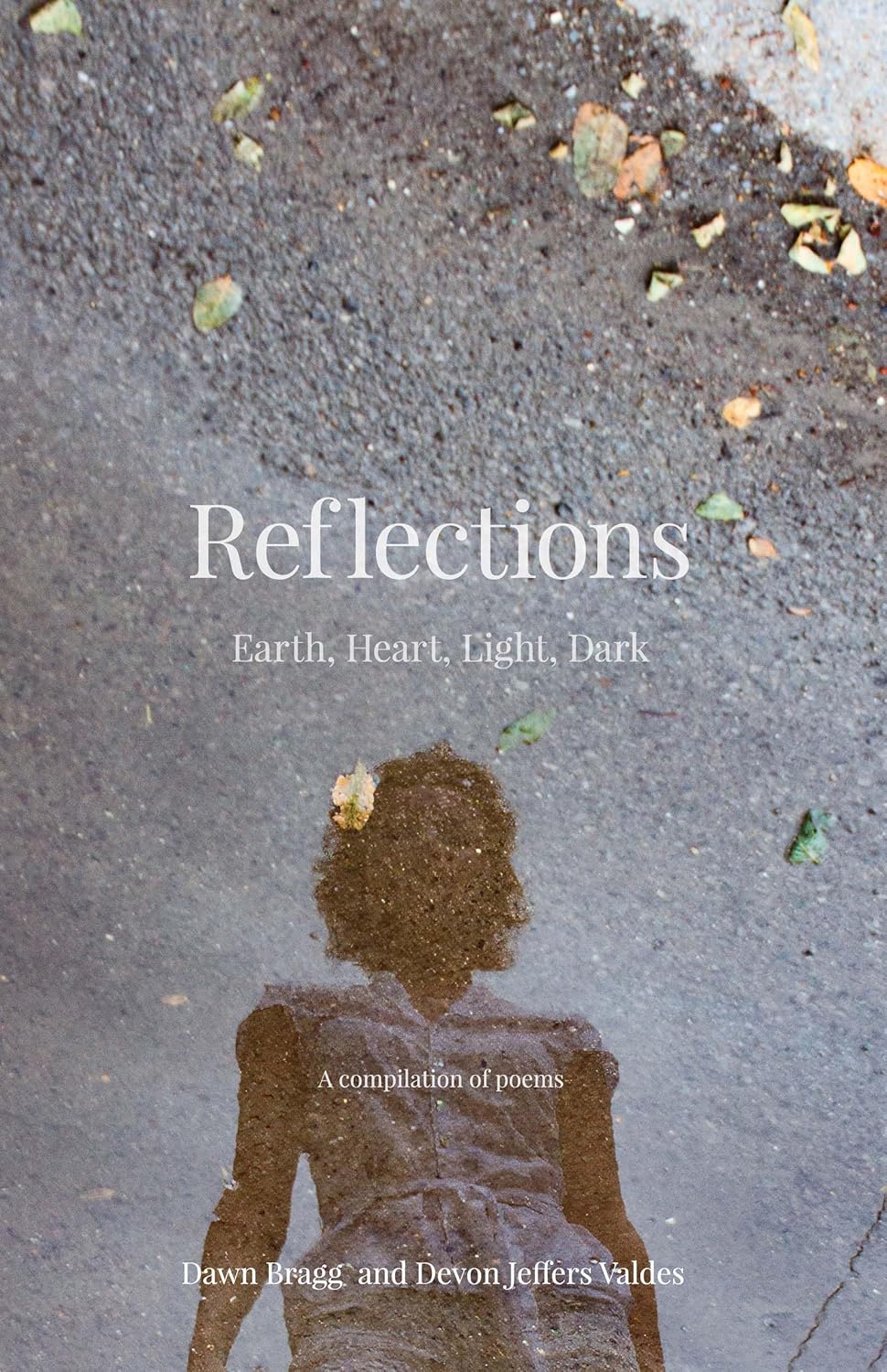
Reflections: Earth, Heart, Light, Dark is a mother-daughter collaboration that explores the intertwined themes of Earth, Heart, Light, and Dark through poetry. The book flows like a seasonal cycle, beginning with poems rooted in nature, moving through love and memory, then toward hope and illumination, and finally into grief, loss, and shadows. Each section feels distinct, yet they all circle back to a shared sense of searching for meaning in both beauty and pain.
Poems like Transition pulled me in with their intimacy, especially the image of a mother’s hands rebuilding a new world after a storm. It felt deeply personal but also universal, the kind of moment that made me stop and think about my own family. I’ll admit, Grandmama caught me off guard with its questions, “What thoughts did you have? Did you think them deserving?” and left me feeling both unsettled and comforted at the same time. That’s what I liked most, the poems didn’t tie everything up neatly. They lingered.
From Ash to Light carried a strong sense of resilience, and I couldn’t help but feel buoyed by its journey from despair to joy. It had this rhythm of stumbling and rising that felt human and raw. On the other hand, Dawn of Forty-Nine leaned more toward classic imagery, almost old-fashioned in its rhymes, which at first jarred me but eventually worked because it added texture to the collection. I found myself rereading those lines about waterfalls and winds, almost like I was letting the words wash over me instead of trying to decode them.
Then there’s the “Dark” section. This is where the book hit hardest for me. You Left Me was plainspoken, almost brutally so, and that stripped-down honesty made it sting. The Waves had this hypnotic pull with its repetition, “Rising above, wave after wave,” that felt like drowning in grief and memory. I could feel the authors letting themselves go to heavier places, and I appreciated that they didn’t shy away. It made the hopeful poems earlier in the book feel more earned, less naïve.
Reflections: Earth, Heart, Light, Dark is for readers who like their poetry to sit somewhere between personal diary and universal myth. It’s not heavy with academic wordplay, but it’s not fluff either. If you enjoy quiet evenings with a book that makes you pause, maybe even tear up, this one is a must-read. Personally, I closed it feeling like I had sat down with two voices who weren’t afraid to be vulnerable, and that’s something I’ll always admire in poetry.
Pages: 38 | ASIN : B0FFNGQ15P
Fists in the Eye that Blinks on a Pin

Dyson Russell’s Fists in the Eye that Blinks on a Pin is a collection of poetry that feels both raw and surreal, like wandering through a dream where images refuse to sit still. The book moves between moments of tenderness and moments of violence, never giving the reader a chance to feel completely safe. Themes of memory, loss, and fractured identity recur throughout, tied together by vivid and sometimes startling metaphors. It’s the kind of collection where one poem can feel like a quiet confession and the next like a scream across a darkened room.
I found myself both unsettled and deeply moved. Russell writes with a kind of reckless honesty that doesn’t apologize for being strange or uncomfortable. Sometimes the words tripped me up, and I had to pause and reread, but I didn’t mind. The language has teeth, and that’s part of its pull. What I admired most was the way the poems manage to be experimental without drifting into nonsense. Even in their most chaotic moments, they circle back to something recognizable and relatable, like grief that feels both personal and universal.
The repetition of despair, loss, and fractured imagery can weigh heavily after a while. Still, I can’t deny that the intensity is part of what makes this book what it is. Russell doesn’t water anything down, and that kind of boldness is rare. It felt like stepping into someone else’s storm and just staying there until the clouds passed.
I would recommend this book to readers who crave poetry that doesn’t play it safe. If you like writing that feels visceral, experimental, and emotionally unfiltered, this collection will stay with you long after you put it down. It’s not for someone looking for light verse or easy comfort, but if you want to wrestle with language and feel something real, Fists in the Eye that Blinks on a Pin is worth your time.
Pages: 110 | ISBN : 1763820602


