Blog Archives
Book Title Bible: How to Title Your Christian Book with Faith and Inspiration


Book Title Bible lays out a clear and practical roadmap for Christian authors who want to craft book titles that feel inspired, purposeful, and market-ready. The book walks through everything from keyword strategy to emotional language, from scriptural phrasing to series branding. It also weaves in stories, examples, and gentle nudges about the realities of publishing and discoverability in a crowded marketplace. The pages are packed with advice on how to balance faith and marketing in a way that respects Scripture and still works well on Amazon. The tone is earnest, direct, and full of encouragement, and it’s obvious the author wants readers to succeed in both ministry and sales.
As I moved through the chapters, I found myself genuinely impressed by how practical the book is. I kept thinking about how many times authors get stuck on a title and how this guide takes away so much of that pressure. The breakdown of keywords, especially the reminder that Amazon behaves like a search engine, was really helpful to me. It made the whole titling process feel less like guesswork and more like something I could actually navigate with confidence. I also appreciated the examples drawn from recognizable Christian titles. Seeing how other writers tapped into emotion or Scripture made the ideas feel real and doable. Part of me even got excited to try brainstorming titles, which is not a thing I normally enjoy.
The book offers a lot of guidance, and I was energized by the steady flow of ideas. The author shares a lot of tools and insights that I found to be very helpful. Rather than focusing on any single point, the book pushes ahead with momentum, giving me plenty to think about and explore. The enthusiasm behind the advice kept me reading. I liked the tone. It felt friendly. I also loved the strong emphasis on honoring Scripture and keeping titles true to the heart of Christian writing. It made the entire book feel grounded and sincere.
I think this book is a great fit for Christian authors who struggle with titling or for anyone preparing to publish for the first time and feeling unsure about the marketing side of things. It’s especially useful for writers who want solid, actionable steps without losing the spiritual heart of their work. If you want a guide that mixes faith with a clear publishing strategy and gives you lots of ideas to play with, this book will be perfect for you.
Pages: 74 | ASIN : B0G8RPPZ2R

Heart & Soul of Marketing

Heart & Soul of Marketing lays out a clear and practical roadmap for charities that want to strengthen their marketing efforts and understand their audiences more deeply. The book walks through a 10-part framework that starts with clarifying context, moves into idea generation, planning, testing, and evaluation, and eventually arrives at long term impact and integration. It blends real-world examples, simple tools, and reflective exercises to help charities link their marketing decisions to strategic goals. The tone is warm, supportive, and grounded in lived experience, with the author drawing on more than a decade of work across charities, foundations, and community groups to guide readers toward purposeful, confident communication.
I enjoyed how down-to-earth the writing felt. Nothing came across as academic or stiff. Instead, the author speaks with a kind of gentle honesty about the confusion charities often face and the sheer volume of noisy advice out there. The sections on context and audience were especially strong because they focus on real people and real conversations rather than abstract models. I liked how the author kept returning to the theme of clarity. It made me feel like he genuinely wanted readers to cut through the clutter and trust their own instincts rather than chase the latest marketing trend.
I also appreciated the book’s rhythm. It moves between practical worksheets, reflective prompts, personal stories, and examples from well-known charities in a way that kept me engaged. It felt personal and relatable. Some of the ideas were thought-provoking, especially the reminder that inspiration often shows up when you stop trying so hard to force it. The writing has a relaxed quality that makes you feel as if you’re talking with someone who has been in the trenches and simply wants to help you avoid the mistakes he’s already seen too many times. That sincerity gave the framework more emotional weight.
I’d recommend Heart & Soul of Marketing to charity leaders, small teams, volunteers, or anyone who feels overwhelmed by the idea of marketing but knows they can’t ignore it anymore. It’s approachable and forgiving, and it respects the challenges charities face. If you want a guide that’s practical without being pushy, structured without feeling rigid, this book will serve you well. It’s also a great fit for people who prefer advice that feels grounded in real experience rather than theory.
Pages: 256 | ISBN: 9781763680135
Limited Partnership Basics and More!
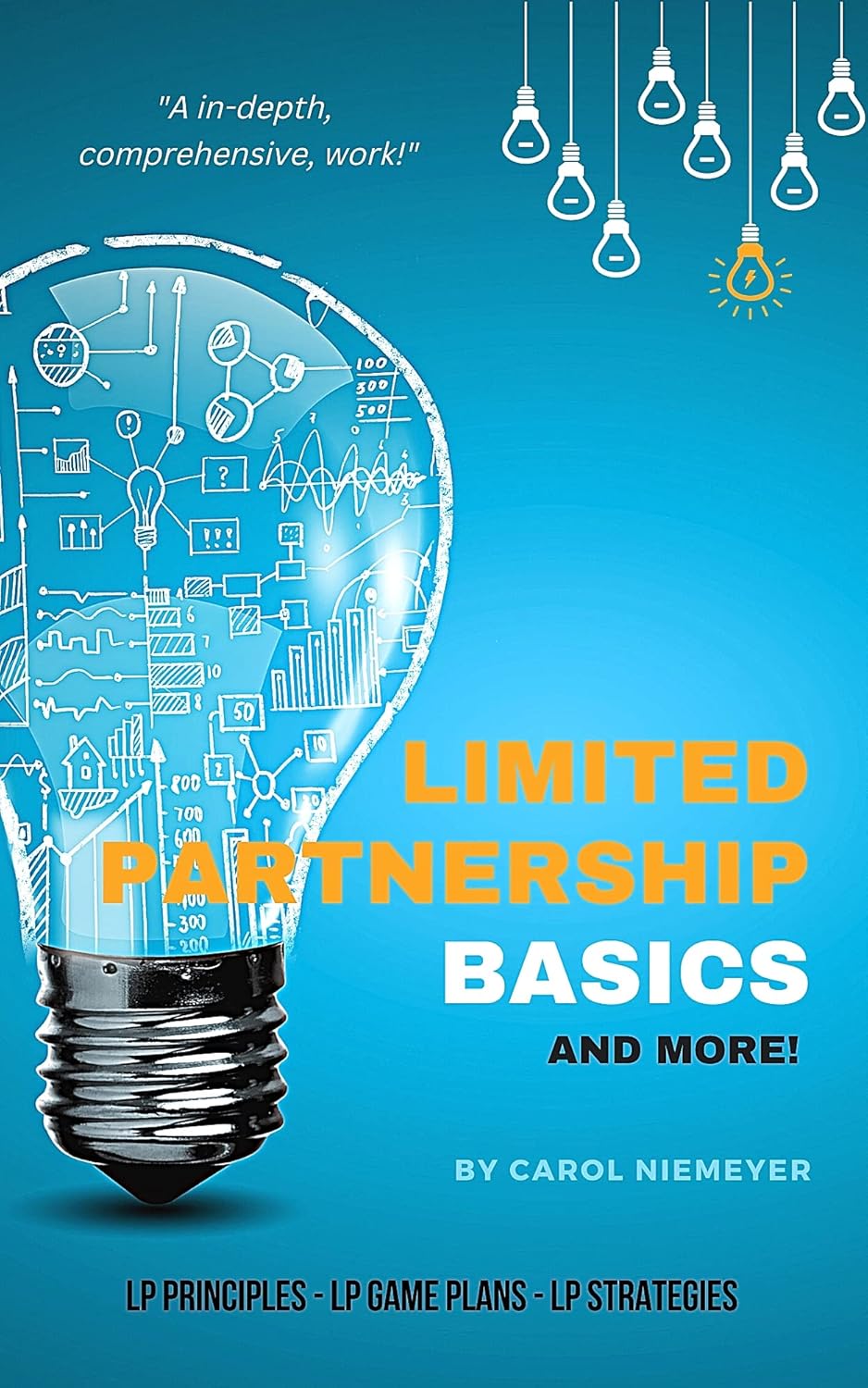

Limited Partnership Basics & More! is a practical, upbeat guide to understanding how limited partnerships work and why they matter. Author Carol Niemeyer breaks the topic down into clear parts: what LPs are, how general and limited partners function, how businesses raise money, how deals are structured, and why LPs can become long-term wealth generators. She mixes explanations with examples of apartments, sport facilities, retail strips, clubs, and even big names like major sports teams. The book sits squarely in the business and entrepreneurship genre, and it aims to show everyday people that investing in or building an LP is possible, even on a modest budget.
I felt like Carol Niemeyer genuinely wants readers to feel empowered. Her tone is enthusiastic, almost cheerleading at times, but that energy makes the material less intimidating. She doesn’t hide her belief that limited partnerships can be “little gold mines,” and she repeats that theme often. I liked how straightforward she made complicated things sound. The writing isn’t heavy. It’s more like someone at a coffee shop leaning in and saying, “Look, this is doable.” Some sections felt dense with numbers, but the charts and simple explanations helped balance things out.
What stood out most was how strongly she emphasizes community and teamwork. The “Friendship Formula,” the examples of friends pooling money, the idea of local athletes or students boosting visibility, it all paints LPs as something built on relationships. I appreciated the reminders about risk and due diligence, even if they’re brief. And while the optimism can feel a bit rosy, her message about people combining resources to build local assets feels grounded. I found myself imagining small towns where these projects really could reshape the local landscape. It made the ideas feel human, not just financial.
By the time I reached the end, I felt like I had been given both a pep talk and a starter toolkit. It’s a motivational, beginner-friendly look at LPs. It’s a book best suited for aspiring entrepreneurs, small-business dreamers, and investors who want a down-to-earth introduction to the structure. If you’re curious about the world of partnerships and want something clear, encouraging, and easy to follow, this book will fit you well.
Pages: 150 | ASIN : B0BS74L4QM

The Influence Mindset for Sales Acceleration: The 7 EQ Brain Hacks That Get People to Choose You

Christian Hansen’s The Influence Mindset for Sales Acceleration is a lively guide to bridging the gap between what we think we’re communicating and how others actually perceive us. He builds his case around the idea that success in sales, and really in most high-stakes interactions, is less about raw value and more about how that value lands in someone else’s mind. The book moves through personal stories, neuroscience tidbits, and a framework of seven “EQ brain hacks,” all designed to help the reader stand out as the obvious choice in a crowded field. It’s practical, but it never feels dry. Hansen writes in a way that makes brain science feel like kitchen-table advice.
I enjoyed how much personality was packed into these pages. The tortilla fiasco with his Danish in-laws had me laughing, but it also drove the point home better than a pile of charts ever could. I felt pulled into the message because the stories felt so human. Hansen often leans on tidy acronyms and clear formulas. Far from being overbearing, this structure actually made the concepts easy to follow and apply. The clarity gave me a sense of order in what could otherwise feel like a messy subject. And paired with Hansen’s warmth and confidence, it felt like he was handing me a ready-made toolkit I could start using right away, something I could test on Monday morning and expect to see working by Friday.
What I liked most was how he reframed things I’ve been guilty of myself. I’ve leaned too hard on proving my value, or I’ve tried to charm my way through, and both times I’ve missed the mark. Reading his breakdown of “competence without connection” being just noise hit uncomfortably close to home. I liked how he didn’t just call out the problem but showed how to balance both sides of the bridge. The mix of storytelling and science kept me hooked, even if I sometimes wished he’d dig deeper instead of keeping it all so polished.
This is a book for people who live in the push and pull of convincing others, like salespeople, but also entrepreneurs, job seekers, and even anyone pitching ideas inside a company. If you’ve ever felt like you’re spinning your wheels and not getting chosen, Hansen’s approach will feel like a reset button. I’d recommend it most to folks who are comfortable trying new ways of communicating and want something practical that doesn’t read like a textbook. It’s not a magic trick, but it gives you tools that make influence feel a little less mysterious and a lot more doable.
Pages: 290 | ASIN : B0FDH4LQ7Z
The Golden Age of Bull$hit

The book takes a swing at one of the most slippery forces in modern life: Bull$hit. It blends personal stories, cultural commentary, and sharp analysis to explore how nonsense, exaggeration, and spin shape everything from Wall Street memes to social media trends. The author pulls from history, psychology, and economics, showing that bull$hit isn’t just a nuisance but a defining feature of our world. It can destroy wealth, mislead millions, or, oddly enough, fuel innovation and creativity. The chapters flow from absurd examples of hype to serious warnings about herd mentality, and it all builds toward the paradox that bull$hit can be both poison and medicine, depending on how it’s used.
I loved the voice of the book. It’s bold, funny, and unafraid of calling things by their true name. The mix of stories, like the pantsless CEO during a livestream or the mother investing her savings into meme stocks, hit hard. They’re emotional, and they cut through statistics and theory. The point about FOMO and herd behavior comes up again and again. Still, the honesty of the tone made me forgive the loops. It feels less like a lecture and more like a late-night conversation with a friend who has lived through the same madness.
What struck me most was how the book balances cynicism with hope. The author doesn’t just rant about scams, media spin, and shallow marketing. He also shows how confidence, exaggeration, and even a little schmäh, as Arnold would call it, can drive people to reach higher. That tension between bull$hit as danger and bull$hit as spark makes the book stand out. I caught myself nodding, then laughing, then getting a little angry, all within a few pages.
I’d recommend The Golden Age of Bull$hit to anyone who feels overwhelmed by the noise of modern life. If you’ve ever looked at the news, social feeds, or markets and thought “this can’t be real,” this book will give you both a laugh and a guide to making sense of it. It’s not for someone who wants a dry academic study. It’s for people who like sharp stories, plain talk, and a little fire in the writing. I closed it feeling entertained, a bit more aware, and oddly comforted knowing that yes, we’re all swimming in the same ocean of nonsense.
Pages: 306 | ASIN : B0FJ6G3599
The Power of Digital Identity: Winning Customer Trust and Transforming Experience
The Power of Digital Identity explores the critical role of digital identity in shaping modern customer experiences, securing personal data, and meeting evolving global privacy regulations. Rakesh Soni, drawing from his experience building CIAM (Customer Identity and Access Management) systems, makes a case for how digital identity is no longer optional, it’s essential. The book starts with the evolution of identity, from tribal names to biometric authentication, and moves into the mechanics of CIAM, contrasting it with traditional IAM (Identity and Access Management). Soni explains how CIAM can unify customer experiences, reduce fraud, streamline compliance, and increase business revenue by building trust. He closes by outlining strategies to design and implement a CIAM system, with an eye on future trends in privacy, personalization, and digital innovation.
I found the book to be clear and convincing. Soni has a knack for making technical concepts feel personal and relevant. His examples, like the frustration of forgetting a password or the clunky experience of interacting with siloed systems, feel familiar. He doesn’t get bogged down in code or vendor specifics; instead, he speaks plainly and focuses on the “why” behind digital identity. I especially appreciated the chapter on consumer behavior. The way he ties trust to revenue, and privacy to user experience, made it click for me in a way other tech books rarely do. There’s a genuine sense of urgency in his writing, but it never feels preachy or abstract.
The book sometimes reiterates points. Some of the trends, like the rise of mobile-first experiences or the impact of regulations like GDPR, are well-known to anyone in tech or marketing. There are references to Fortune 5000 companies using CIAM, but I found myself wishing for a few more real-world success stories.
I’d recommend this book to product managers, tech leaders, and marketers who want to understand how digital identity ties into the bigger picture of customer experience. It’s a strong read for anyone trying to build trust with users online, or who is tired of trying to wrangle legacy systems and clunky login flows. It’s not overly technical, but it’s practical and well-grounded.
Pages: 223 | ASIN : B0FBQ7FT53
15 Steps to Starting Your Business

15 Steps to Starting Your Business is a straightforward, no-frills guide for anyone ready to take the leap into entrepreneurship. Written in a friendly, almost conversational tone, the book walks readers through every major step of starting a business from nurturing the right mindset to securing funding, managing growth, and planning for long-term success. It balances motivation with action, offering a mix of personal anecdotes, case studies like Pipcorn, practical worksheets, and tips on legal matters, branding, marketing, and even wellness. The structure is easy to follow and designed to chip away at information overload, making the overwhelming feel manageable.
I really appreciated how this book met me where I was, which was somewhere between inspiration and hesitation. It’s not full of buzzwords or vague advice. What it is, though, is grounded and honest. The author’s willingness to share their own fears, doubts, and early missteps made the book feel relatable. It was like getting guidance from someone who’s actually in the trenches, not yelling from the mountaintop. The advice on mental health, work-life balance, and mindset wasn’t fluff was the kind of stuff that sneaks up on you when you’re trying to launch something from scratch. I found myself nodding a lot, even when I didn’t want to admit how much it applied to me.
While I understand the emphasis on mindset and small, actionable steps, I think some sections could’ve been trimmed down. Still, I’d rather hear straight talk than slog through corporate speak. I also liked that it didn’t assume readers had thousands of dollars or fancy degrees. This book feels accessible, both in tone and in content.
I’d recommend 15 Steps to Starting Your Business to anyone who’s at the “I have an idea but don’t know where to start” phase. It’s especially helpful for folks starting later in life, side hustlers, or those burned out on traditional work. This book won’t do the work for you, but it’ll hand you a flashlight, a map, and maybe a pep talk when the path gets dark. If you’re serious about getting a business off the ground and want practical tools over hype, this one’s worth reading.
Pages: 216 | ASIN : B0DLCJ7KZJ
Brand Constellations: A Framework and Guide for Creating a Brand that Shines

Brand Constellations by Steven Silverman lays out a bold new map for branding, showing readers how brands are really complex networks of meanings, what he calls “constellations” in the minds of consumers. The book introduces eight key elements (like Product, Placement, Pricing, Promotion, Category, Competitors, Company, and Customer) that together form this mental constellation. It’s not just theory, though. Steven breaks it all down into a practical framework that includes strategy advice, real-world examples (Coca-Cola, Tesla, Patagonia, to name a few), and even a hands-on workbook to help you apply the lessons to your own brand.
I loved the way the book starts with the idea of a brand as a mental “object,” similar to how we recognize a mug or a constellation in the sky. It’s such a simple but powerful metaphor that makes branding feel more human and less like some cold corporate exercise. As I read, I found myself reflecting on how accurately this metaphor captures the way brands like Nike or Starbucks form lasting impressions. Silverman’s connection to neuroscience and Gestalt psychology adds depth and credibility to his argument without making it feel overly academic. His exploration of the emotional and largely unconscious ways we engage with brands made me significantly more interested in understanding what allows certain brands to truly embed themselves in consumers’ minds.
While the historical overview of branding, from ancient artisans to the digital revolution, covers an impressively broad scope, it occasionally felt more expansive than necessary given the book’s primary focus. That said, the context it provides enriches the reader’s understanding of how branding has evolved over time. Silverman’s real strength shines when he transitions to contemporary, practical examples, such as his analyses of Netflix and Starbucks. These modern case studies bring the framework vividly to life and make the core ideas feel especially relevant and actionable.
One of my favorite sections was on the “interconnectivity of the stars.” Steven points out how no part of a brand exists in isolation, how, say, your Pricing strategy needs to reflect your Product’s position and your Company’s values, and vice versa. This holistic view clicked for me. It’s easy to fall into the trap of thinking about each piece separately, product development over here, marketing over there, but Steven shows you why that’s a mistake. And I loved how he used examples like Apple’s sleek retail stores or Patagonia’s environmental activism to show what it looks like when everything is aligned. It honestly made me want to audit the brands I follow and see where they’re nailing it or missing the mark.
Brand Constellations is a thoughtful and practical guide well-suited for anyone engaged in building, managing, or studying brands. It is detailed without being overwhelming, optimistic without becoming superficial, and insightful without becoming overly theoretical. Whether you are a brand strategist, marketer, business owner, or student seeking a deeper understanding of contemporary branding, this book offers significant value. It left me feeling energized, challenged in the best possible way, and, most importantly, far more confident in approaching brands not simply as logos, but as dynamic, living narratives within the minds of consumers.
Pages: 345 | ASIN : B0DD7R7GG9



 LITERARY TITAN