Blog Archives
Rampant Spread of Misinformation

Toxic Minds is a high-stakes medical thriller that plunges a hospitalist into a deadly collision of grief, cultish ideology, and the seductive power of misinformation. What was the inspiration for the setup of your story?
My books in the Dr. Mark Lin Medical Thrillers series involve a new approach to the medical thriller genre, by exploring the intersection between the world of healthcare and society at large. I can imagine plenty of ways where villainous actions out in society result in unusual medical mysteries and crises, such that Dr. Mark Lin, who is disgusted with the worst of humanity, is motivated to go beyond the hospital and tackle the problem at its root. My previous novel, Doctor Lucifer, dealt with a computer hacker interfering with medicine. This time, my latest novel Toxic Minds takes on the issue of cults and disinformation disrupting healthcare.
The inspiration for Toxic Minds draws from my concern about the rampant spread of misinformation and disinformation, particularly in the last decade or so. Whether it involves medicine, science, news, or politics, and whether it’s spread through social media, podcasts, or other routes, misinformation and disinformation have been a serious concern. We have seen tragic deaths during the COVID-19 pandemic that could be attributed to false information about how to treat that disease. Outside of medicine, false information has caused massive divisions and bitter arguments related to major topics like climate change and elections. Then there are examples in which strong belief in ideas contrary to real-world evidence has led to threats of or actual attempts at violence.
As for the issue of cults, they’ve always been around and they still are. I especially remember the Heaven’s Gate cult in the late 1990s, where members had committed mass suicide out of the belief that they can be freed from their bodies and taken away by a comet passing by Earth. That was the first time in my life where I heard about a cult doing something extremely dangerous. It stuck with me for a while.
Altogether, my strong concerns about cults and disinformation led me to create a fictional cult that spreads medical disinformation. That, in turn, led to the writing of Toxic Minds.
The bombing scene is written with restraint but hits hard. What was your approach to writing trauma without relying on graphic imagery?
I’ve always appreciated the technique of hinting at a horror without being explicit about it. A classic example of this is the movie Jaws, where you know a big shark is coming even though you don’t actually see it during its approach. For this scene in Toxic Minds, having the protagonist witness the bombing audibly via a phone call is a perfect way to inflict trauma without imagery.
How did you research the blend of medical realism and conspiracy-driven ideology?
I did plenty of reading into cults in general, along with specific examples of cults like Heaven’s Gate, the Branch Davidians, and the Children of God. The big takeaway is that it doesn’t matter how absurd the cult’s beliefs are. As long as the human mind is susceptible to psychological manipulation, it is possible to get anyone to believe pretty much anything. This made it relatively easy to create the Path to Purity, the fictional cult in my novel. I did not have to follow rules about how cults work because there is no limit to how they function and what their beliefs are. I just created whatever I felt like. Once I did that, then it was a matter of figuring out what medical ailments would result from the Path to Purity. My previous background in medicine made that part easy.
What is the next book that you are working on, and when will it be available?
I have begun working on the third novel of the Dr. Mark Lin Medical Thrillers series. I do not wish to disclose the topic at this time, but let’s just say it’s one that plenty of past medical thrillers have tackled. Still, it will be my own unique take on it.
Author Links: GoodReads | Website | Amazon
For hospital physician Dr. Mark Lin, nothing is more gut-wrenching than saving a life only to see it taken by murder.
When one of his patients is killed by a suicide bomber blowing up a clinic, everyone points the finger at a group of anti-abortion extremists. Mark, however, knows the killer’s final words and has a different theory about the culprit: a secretive healing cult called the Path to Purity. It seems the only way to get answers and avenge his patient is to join the Path himself.
Juggling the dual roles of doctor and undercover cult follower, Mark treats patients for ill effects of the Path’s dangerous practices while also proving his worth and advancing along the Path’s ranks. He has only one goal: get close to the mysterious leader known as the Sun Priest and destroy the cult. But the deeper he goes, the deadlier things get. Mark will stop at nothing to uncover the truth, before getting trapped in a heinous plot that could spell devastation on a massive scale.
Toxic Minds is Anthony Lee’s medical thriller where healthcare collides with disinformation and a hateful mind losing touch with reality is the most dangerous of all.
Toxic Minds


Toxic Minds throws you into a whirlwind of hospital hallways, moral dilemmas, and absolute chaos. It’s a fast-paced medical thriller that starts with a fairly routine day for Dr. Mark Lin, a hospitalist, and spirals quickly into something much darker. After one of his patients is killed in a shocking suicide bombing at a nearby clinic, Mark is drawn into a tangled mess of grief, conspiracy, and unsettling truths about the people—and systems—around him. The story doesn’t just deal with medicine; it tackles cult-like ideology, mass manipulation, and the dangerous intersections of pseudoscience and fanaticism.
Lee does a great job writing in a conversational tone that makes you feel like you’re in the trenches with Mark—whether he’s joking with a colleague or stumbling through trauma. I felt the gut-punch during the phone call with Shannon, where she goes from joking about ham sandwiches to facing the terrifying possibility that her pregnancy is now high-risk because of warfarin. And just when you think it’s settled, boom—literally. The way Lee wrote the explosion through a phone call was brilliant. You don’t see the gore, but you feel the horror.
Lee also nails emotional pacing. After the bombing, there’s this wave of guilt, confusion, and dread that just keeps building. Mark’s phone call with Shannon’s husband, Craig, later on hit hard. The way Craig slowly unravels, grasping at hope, is heartbreaking. And Mark—he’s not a superhero. He’s overwhelmed, he blacks out, he doubts himself, but he keeps showing up. That kind of flawed strength makes him feel real. There’s a scene where Mark listens to ‘My Immortal’ by Evanescence while eating dinner, and it’s such a small moment, but it resonated with me. You get to sit in his grief, and it’s quiet and honest.
The plot does get a little ambitious. By the time we’re knee-deep in secret cults and anti-science ideologies disguised as wellness trends, the narrative risks tipping into melodrama. But it works because Lee ties it back to a real concern—the seductive pull of misinformation and how even smart people can fall for dangerous ideas. It’s chilling because it feels familiar. The quotes from Asimov and Voltaire at the start are no accident: belief, when twisted, can absolutely kill.
Toxic Minds is a solid ride. It’s part ER, part true-crime docuseries, and part psychological dive into how we handle (or don’t handle) loss and madness. If you like fast reads with dark turns and emotional depth, this one’s for you. Especially recommended for fans of Robin Cook or Michael Crichton, or anyone who enjoys thinking “well damn” after turning a page.
Pages: 435 | ASIN: B0DZ3JJV4H

Bad Pharma
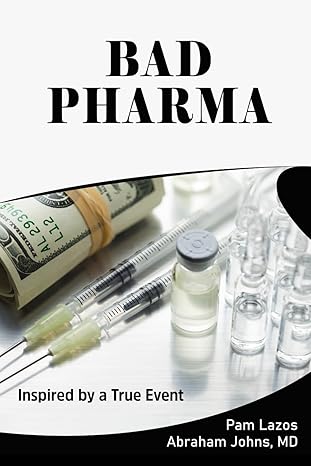

Bad Pharma is a medical thriller that dives into the murky waters of the pharmaceutical industry. It tells the story of Nora O’Connell, a savvy pharmaceutical professional, and Siddhartha Kumar, a meticulous medical monitor, as they navigate the ethical quagmire of Big Pharma’s relentless drive for profit. The story intertwines corporate ambition, personal stakes, and moral dilemmas, shedding light on the sometimes disastrous consequences of prioritizing business over patient safety.
One thing I loved about this book is its rich and complex characters. Nora’s razor-sharp wit and unrelenting ambition make her a captivating protagonist, but it’s her internal struggle with corporate ethics that truly resonates. Take her confrontation with Sid in Chapter 4—her fiery accusations and Sid’s calculated calmness highlight the human element in a soulless corporate environment. Sid, too, is a standout character. Haunted by the ghost of Bonifidia, a past pharmaceutical disaster, he’s the moral compass of the story. His dogged determination to analyze RSVIX data properly, despite mounting pressure, had me rooting for him even when his methods bordered on maddeningly slow.
The writing itself is vivid and engaging, but at times, it teeters on over-explaining. The passages detailing the clinical trial process, while necessary, occasionally bogged down the pace. That said, I appreciated the clarity in these sections, particularly when Sid outlines the risks associated with cutting corners in vaccine trials. The authors don’t just present the science—they make you feel the weight of the decisions being made. For instance, the description of Keturah’s hospitalization in Chapter 6 was gut-wrenching. It made the stakes of the BREATHE trial painfully real.
I also found the tension between Nora and Sid compelling. The workplace banter was a welcome reprieve from the darker themes, providing a balance that kept the narrative from feeling too heavy. The authors’ ability to blend sharp commentary on the pharmaceutical industry with human connection is a testament to their skill.
Bad Pharma is a moral inquiry wrapped in an engaging narrative. I would highly recommend it to anyone intrigued by the intersection of science, ethics, and corporate drama. Whether you’re a healthcare professional, a corporate worker, or simply a fan of thought-provoking conspiracy thrillers, this book will make you question how much we’re willing to compromise in the name of progress.
Pages: 365 | ASIN : B0DPSWQMXK
Doctor Lucifer

Doctor Lucifer by Anthony Lee is a compelling blend of medical drama and cyber warfare, delving into the sinister potential of our digital age. The story follows Dr. Mark Lin, a skilled yet skeptical internist at Ivory Memorial Hospital, who becomes ensnared in a deadly game with a malevolent hacker known as Doctor Lucifer. As medication errors orchestrated by the hacker lead to the deaths of three patients, Mark finds himself wrongly accused and must team up with the hospital’s IT team to unmask the real perpetrator. The stakes are high as he battles to clear his name and avert further tragedies.
Anthony Lee’s narrative shines in its portrayal of the complex intersection between modern technology and medicine. Themes such as technological vulnerability, professional integrity, and the personal toll of cybercrime are explored with depth and nuance. The novel’s strength lies in its ability to weave suspense with a dramatic portrayal of contemporary challenges in the medical field. The diverse supporting cast, particularly the hospital’s IT team and staff, enriches the story, creating a multifaceted world that adds layers to the main plot. The abundance of technical jargon related to cybersecurity may present a learning opportunity for readers new to these concepts. A more balanced integration of technical details could enhance the story’s accessibility, inviting a broader audience to appreciate its depth. Dr. Lin’s internal conflicts and introspections, essential for his character development, are richly portrayed; however, a more varied and succinct expression of his thoughts could refine the narrative’s pace, making it even more engaging.
Doctor Lucifer is a thought-provoking and exhilarating read that revitalizes the medical thriller genre. It promises a thrilling journey for fans of the Dr. Mark Lin Medical Thrillers series and leaves readers eager for more adventures.
Pages: 315 | ASIN : B0D1YTHPG1
The Desperation of Marla Adams

The Desperation of Marla Adams is a gripping medical thriller that propels the reader into a whirlwind of suspense, crime, and intricate plot twists. Author Patrick Hanford intertwines elements of stem cell research and law enforcement to create a narrative that is as educational as it is thrilling. The story follows Marla Adams, a formidable DEA agent whose relentless pursuit of a notorious criminal mastermind leads her through a maze of dangerous encounters and ethical dilemmas.
Hanford’s writing style is fluid and engaging, with a knack for creating vivid imagery and complex characters. His portrayal of Marla Adams as a multifaceted protagonist is one thing I particularly enjoyed. She is more than a law enforcement officer. She’s a woman who is battling her demons while striving for justice in a murky world. This depth of character adds a significant layer to the narrative, making the reader invested in her journey.
The incorporation of medical themes, particularly the controversial aspects of stem cell research, is handled with a balance of technical detail and accessibility. Hanford doesn’t shy away from the moral quandaries and the cutting-edge science that comes with this territory. This aspect adds a unique flavor to the book, which I think distinguishes it from conventional thrillers.
One scene that I think thriller fans will particularly enjoy is the intense confrontation near the end, where Marla and her partner, Quinton, confront a group of adversaries at an abandoned house. This scene masterfully combines high stakes, suspense, and action – key elements that I often want in my thriller novels.
The rapid succession of events and the introduction of numerous characters can be a lot to keep track of, which I feel might detract somewhat from the story’s overall coherence. But I think this adds to the sense of urgency and unpredictability to the story.
The Desperation of Marla Adams is a compelling read for fans of medical thrillers and crime novels. Its blend of scientific intrigue and fast-paced action makes it a standout in the genre. I would recommend this riveting book particularly to readers who enjoy strong female protagonists, intricate plots, and a good dose of ethical dilemmas.
Pages: 337 | ASIN: B0CDQXTG8N
A Simple Recipe

Teaching Machines how To Cry follows a woman with a bionic leg and a mysterious connection to a prototype AI unit, who returns to her childhood hometown and is reconnected with the AI, discovering secrets about her life. What was the inspiration for the setup of your story?
I have worked in the field of AI for the last eight years. I was responsible for managing the development, testing, and deployment of AI prototypes to advance the work of the United Nations and its partners to tackle issues such as poverty, climate change, and conflict around the world.
Every day I advocated for the ethical design and use of AI technology whether I was in the office or on the world stage.
A few months back, my son Alan asked me (as he does every other night) “Mommy, tell me a story.” As I told him the story of a child pirate who navigated the Caribbean Sea, something clicked inside me – why not share my thoughts and beliefs about AI and ethics by telling a story about it? The day after, I woke up before my alarm clock, and I wrote the first paragraphs of Teaching Machines How to Cry.
What kind of research did you do for this novel to ensure you captured the essence of the story’s theme?
Before I wrote my debut novel, Teaching Machines how to Cry, I authored many book chapters, blogs, and reports about the innovative and responsible ways to use AI technologies for sustainable development, humanitarian action, and peace.
What were some themes that were important for you to explore in this book?
My debut novel, Teaching Machines how To Cry, is made out of a few ingredients and it follows a simple recipe. The ingredients are: nine ounces of AI and ethics, nine ounces of raw emotions, nine ounces of machine learning and a pinch of Porto city. I mixed all the ingredients, then I wrapped the mixture in a veil of spirituality and added a generous sprinkle of humor.
What is the next book that you are working on, and when will it be available?
I am now working on translating my first novel into Spanish.
Author Links: GoodReads | Twitter | Website
But she feels empty. Something is missing and despite all she tries she can’t figure out what it is. The last time she remembers feeling fulfilled was as a child when her family hosted M, an AI-prototype, who became her companion. At the time she unexpectedly lost M her hollow feelings grew. She longs to find something she lost in her life and believes that M can help.
Briefly, a love affair with a fellow scientist fills her emotionally, but when tragedy strikes, she realises that she needs M more than ever. When M mysteriously returns to her, she discovers that everything she believed about her life has been wrong, and there is only one course of action to bring her back to wholeness. But she doesn’t know if it is too late.
Overturned

Annette Raynor’s Overturned presents a compelling and timely narrative that intersects remarkably with current events. Set in a fictional universe where the Supreme Court has nullified Roe v. Wade, leading to a nationwide abortion ban, the book introduces a unique FBI division dedicated to eliminating illegal abortions. This premise gains a chilling relevance in 2023, following the actual overturning of Roe v. Wade.
Raynor’s narrative strength lies in her portrayal of diverse characters caught in a myriad of complex, often heart-wrenching circumstances surrounding abortion. Her approach to storytelling transcends the typical bounds of fiction, offering an immersive, experiential journey that, while not always comfortable, is undeniably impactful. The narrative is reminiscent of the raw, unsettling honesty found in an executioner’s autobiography, underscoring the gravity and contemporary significance of the subject matter.
The story unfolds through the perspective of Gina Vincent, an agent in the anti-abortion FBI unit. Her encounters and the emotional depth of her experiences culminate in a conclusion that, though not uplifting, is profoundly satisfying and thought-provoking. The book, with its dystopian elements, effectively explores a worst-case scenario, granting readers a speculative yet resonant look at a contentious issue. Its dystopian nature allows some leeway in diverging from current real-world developments, focusing instead on a speculative, heightened state of affairs. Overturned has reinforced my understanding of the complexities surrounding abortion access. Raynor’s fictional world vividly illustrates that restricting legal avenues may inadvertently promote unsafe alternatives. The novel underscores the necessity of preserving legal and safe abortion access, addressing a myriad of scenarios where it may be essential.
While the developments in Raynor’s fictional novel Overturned are more drastic than those currently unfolding, her novel serves as a poignant reminder of the importance of ongoing advocacy for accessible and safe reproductive rights.
Pages: 297 | ASIN : B0B71FN855


