Blog Archives
The Doc’s Christmas Miracle


S.A. Stolin’s The Doc’s Christmas Miracle is a heartfelt romance set in a snowy mountain town, centering on Dr. Mark Moore, a disgraced Alzheimer’s researcher seeking redemption, and Dr. Susan Pace, a guarded psychiatrist fiercely devoted to her holistic treatment methods. Mark brings with him a controversial memory-repair machine, hoping to prove its worth at the Sam Heard Clinic. What follows is a tender, often tense story of healing, trust, second chances, and the unspoken grief both doctors carry, all under the soft glow of Christmas lights.
What I liked most about the writing was its emotional depth. The author doesn’t rush the romance, which I appreciated. Mark and Susan’s push-pull dynamic felt believable. Their baggage isn’t treated like plot filler; it actually shapes who they are and how they relate to each other. The story touches on serious themes like Alzheimer’s, professional betrayal, and grief, yet never lets the weight of those topics overshadow the spark of hope running through it. The dialogue, while occasionally dramatic, felt natural and kept me emotionally invested. The snowy setting, the warmth of the townsfolk, and the spark between the leads all came together beautifully. I could practically hear the fire crackling in Mark’s cabin and smell the spaghetti sauce in Susan’s kitchen.
I do feel that some of the early exposition took a bit of time to settle into, especially the technical descriptions of Mark’s memory machine. While clearly important to the story, those sections felt slightly more clinical than the emotional tone elsewhere. Susan’s initial aloofness also came across a touch stronger than expected, though it made her gradual softening all the more satisfying. And Dr. King, while serving his role well, occasionally edged close to a familiar “corporate antagonist” mold. These were small moments in an otherwise well-paced, heartfelt narrative that gave its characters room to breathe and grow.
The Doc’s Christmas Miracle is a lovely and warm story with a genuine heart. If you enjoy clean, character-driven romances with medical backdrops and small-town charm, you’ll want to curl up with this one on a snowy night. It’s for readers who believe in second chances, both in love and in life.
Pages: 194
A Diagnosis Doesn’t Define

Johnny and Type 1 is a heartfelt and empowering children’s book that follows a young boy’s journey from confusion to confidence after being diagnosed with Type 1 diabetes. What was the inspiration for the setup of your story?
Johnny and Type 1 is deeply personal—it was inspired by my son Azariah, who was diagnosed with Type 1 diabetes at just 2 years old. Watching him navigate the early days of his diagnosis—filled with confusion, discomfort, and questions—moved me profoundly. I wanted to create something that would help him, and others like him, feel seen and empowered. I co-wrote the book with my eldest son, Isaiah, making it not just a story about our family, but a story from our family.
What message did you most hope children living with chronic conditions would take away from Johnny’s story?
The core message I want children to take away is that with the right mindset and a strong support system, they can live boldly and joyfully even with a chronic condition. A diagnosis doesn’t define them. What defines them is their courage, their resilience, and the love surrounding them. Johnny’s story is a reminder that they are not alone, and that strength comes in many forms even the quiet, everyday kind.
How did you collaborate on the storytelling and illustrations to ensure Johnny’s emotions felt authentic and relatable?
Working with Scott, our illustrator, was a great experience. He has a unique ability to bring emotion to life through art. From the beginning, he took the time to deeply understand our story and connect with the character.
What is the next book that you are working on, and when will it be available?
At the moment, I don’t have another book in the works. My first book, Adventures of the Negassi Brothers, was written for my boys, and Johnny and Type 1 was written about my son’s journey. I tend to write when I’m deeply inspired, when a story feels meaningful and worth sharing. My goal is always to encourage others through authentic, heartfelt storytelling. So while I can’t say exactly what’s next, I know that when the time comes, the next story will find its way to me.
Author Links: GoodReads | Amazon
With this fun and educative rhyming story, young readers will learn all about living with type 1 diabetes. Whether it’s them, or a loved one, who is diagnosed with the condition, they will know that it’s not a burden, but a superpower.
Metabolic Reboot: From Crisis to Cure with The Power of Food
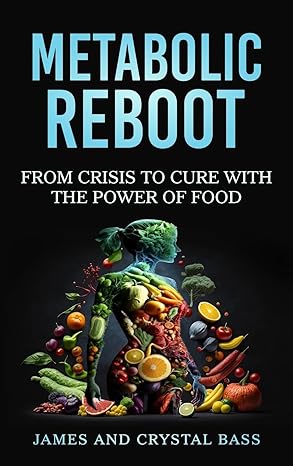

In Metabolic Reboot, James and Crystal Bass share an unflinchingly honest journey from the shock of a devastating diagnosis to a powerful transformation grounded in whole-food nutrition, faith, and intentional living. The book begins with Crystal’s painful diagnosis of Paget’s Disease—a chronic and degenerative bone condition—and blossoms into a practical and emotionally rich guide to reclaiming health through diet, low-impact exercise, fasting, and holistic supplements. With detailed explanations of bodily systems, a wealth of nutritional guidance, and heartfelt testimony, the Basses aim to educate, inspire, and offer a path forward for those battling chronic illness.
What struck me most was the raw sincerity of the storytelling. The opening chapters are heavy with emotion—there’s fear, grief, and a sense of helplessness that’s almost tangible. But woven through that vulnerability is this strong, unwavering love between James and Crystal. They don’t pretend to have all the answers, and that humility makes their advice land with more weight. When they talk about organic food, supplements, and lifestyle shifts, it doesn’t feel preachy—it feels like a hand extended to help you up.
It is worth noting that parts of the book felt a bit encyclopedic. The lists of nutrients and supplements were informative and broke up the emotional rhythm of the narrative. I appreciated the clarity and practicality. There’s no fluff. No empty promises. Just a real couple navigating pain, offering what worked for them. I found myself dog-earing pages and writing notes for my own pantry overhaul. It’s clear they’ve done their homework—and lived it.
Metabolic Reboot isn’t just a wellness book. It’s a love story. It’s a faith journey. It’s a wake-up call. If you’re someone who’s hit a wall with conventional treatments, or if you’re just looking to live with more intention, this book is worth your time. It’s especially helpful for those dealing with chronic illnesses or seeking gentle, sustainable health practices.
Pages: 96 | ISBN : 978-1963737936

Health Literacy

Nurse Florence®, What Are Platelets? follows a school nurse as she answers three students’ questions about platelets, explaining what they are, where they come from, what they do, and how we keep them healthy. How do you approach writing about medical topics to make the topic interesting for children?
I trust in my belief that kids can learn complicated things as long as we explain them thoroughly.
How did you develop the personalities for Jean, Condi, and Sonia, who are prominent characters throughout the series?
My niece, Sandra Islas, you illustrated the first book was the one who came up with the three characters. I loved the diversity of a Caucasian, Hispanic, and African American who were all friends so I just continued it with all the other books. It shows the collaboration I do with my illustrators that give them some guidelines and they create their own Nurse Florence® universe.
What do the words “literary success” mean to you? How do you picture it?
With all the great book reviews and many book awards the series has won, I do believe Nurse Florence® is already a literary success. I wish the series to become a global phenomenon so that health literacy levels around the world are drastically improved.
Tell us something about yourself that we likely don’t know? The more obscure the better.
I write the Nurse Florence® series at my kitchen table surrounded by many depictions of the Florence Nightingale Pledge. She was an amazing woman, and I truly hope my series honors her.
Author Links: GoodReads | Facebook | Website | LinkedIn | YouTube | Amazon
Empowering Kids
Nurse Florence®, Why Do I Need to Have Iron in My Diet? follows a group of students who ask the school nurse about iron, and she explains its importance to the body and the dietary sources where it can be found.What made you write a story about this topic?
Kids should feel empowered with the books they read to live more fulfilling lives. Eating healthy is important and now there is a book to easily explain why a person needs to eat iron and where to get iron in their diet.
Did you find anything in your research of this story that surprised you?
A menstruating or pregnant woman needs a lot more iron compared to an average adult male. Males need only about 8 mg per day, a menstruating woman about 18 mg per day, and a pregnant woman around 27 mg per day.
What is a common misconception you feel people have about the importance of iron?
I don’t think it could be regarded as a misconception, but iron is needed for red blood cells to deliver oxygen to all the cells in our body and the immune system to fight infections.
What experience in your life has had the biggest impact on your writing?
Writing poetry in high school helped develop some of my creativity.
Author Links: GoodReads | Facebook | Website | LinkedIn | YouTube Interview
Nurse Florence®, Why Do I Need to Have Iron in My Diet?

Nurse Florence®, Why Do I Need to Have Iron in My Diet? is a kid-friendly dive into the importance of iron in the human body, told through a lunchtime conversation between three curious girls and a knowledgeable nurse. Nurse Florence breaks down what iron is, why our bodies need it, how it helps us function, and where we can find it in our diet, all in simple language supported by illustrations and some surprisingly detailed explanations for a children’s book.
I found this book genuinely engaging. It respects its young audience by presenting accurate information in a clear, approachable format without oversimplifying or speaking down to them. Instead, it delivers meaningful content in manageable, well-structured segments. For example, when Nurse Florence shows a hemoglobin molecule and explains how iron helps red blood cells carry oxygen, that’s the kind of detail most kids’ books would skip. But here, it’s handled in a way that doesn’t feel overwhelming. The way the characters ask honest, relatable questions like, “Can we get iron from fruits?” helps keep things natural and engaging. That moment made me smile because Condi’s curiosity is contagious.
Some sections of the book delve more deeply into scientific detail, such as the explanations of iron’s role within cells and the immune system. While these concepts may be advanced for some younger readers, this depth adds educational value and creates opportunities for meaningful conversations between children and adults. The inclusion of a glossary and a thoughtful note to parents about the use of complex terminology further demonstrates that the book is intentionally designed to promote learning, curiosity, and shared discussion rather than just passive reading.
The art supports the story without distracting from it, and it was sweet seeing the three girls so excited to learn. The friendly tone of Nurse Florence made the info feel less like a science lesson and more like a chat with a favorite aunt who happens to know a lot about health. And little bits like Jean saying she’ll never eat oysters made it feel grounded and funny in a very real way.
Nurse Florence®, Why Do I Need to Have Iron in My Diet? is a great book for kids around 7 to 11, especially if they’re the type who ask a ton of questions or have even a hint of curiosity about how the body works. It’s perfect for parents or teachers who want to introduce science early in a no-pressure, conversation-style way. Honestly, even as an adult, I learned a few things. So if you’re raising a little scientist or just want your kid to understand why spinach matters, this one’s a winner.
Pages: 70 | ISBN : 1304665607
Nurse Florence®, What is Progressive Supranuclear Palsy?

This book is part of the Nurse Florence® series and follows a young girl, Sonia, who visits her school nurse to learn more about her great granddad’s diagnosis of Progressive Supranuclear Palsy (PSP). Through a friendly, accessible conversation with Nurse Florence, the reader gets a simple breakdown of what PSP is, how it affects the brain, the symptoms, how it’s diagnosed, and what treatments or lifestyle changes might help. It’s written like a picture book but aimed at educating kids with accuracy and care.
I was impressed by how effectively this book presents such a complex and often intimidating neurological condition. Progressive Supranuclear Palsy is not an easy topic, yet the author manages to make it both accessible and engaging. Nurse Florence’s tone throughout her conversation with Sonia is warm and reassuring. She communicates the seriousness of the condition without making it frightening. One moment that stood out to me was when she explained how PSP can cause people to fall backwards and have difficulty moving their eyes to look downward. It’s a detail that might seem small, but it highlights how much we take certain basic movements for granted. The writing strikes a thoughtful balance that is clear and informative without ever feeling oversimplified.
What really stuck with me was how the book gently leans into the emotional side of things. When Sonia asks if she might get the disease too, Nurse Florence says, “It is not inherited… you may not get this even though your great granddad has this.” It shows how worried kids can be and how important it is to explain things in a calm, caring way. I also appreciated the real talk about depression and mood changes. It’s not just about brain science; it’s about how this disease changes a person’s whole life.
The book also stands out for its practical guidance, offering straightforward tips without sounding preachy. While some suggestions, like installing grab bars in the bathroom or removing rugs, may seem obvious, they can be easily overlooked in the midst of managing a serious illness. Having someone explicitly state them can be both helpful and reassuring. The book covers a wide range of topics, including therapy, vision aids, feeding tubes, and even Botox, yet it maintains a balanced and approachable tone. The information is presented in a straightforward manner.
Nurse Florence®, What is Progressive Supranuclear Palsy? surprised me with how useful and comforting it is. It’s perfect for kids who have a family member with PSP or anyone trying to understand this rare disease without digging through dense medical articles. If you’re a parent, a teacher, or just someone with a curious kid in your life, this is a great tool to have. This book makes hard things feel manageable, and that’s kind of the magic.
Pages: 130 | ISBN : 1304589587
Nurse Florence®, Why Do I Need My Wisdom Teeth Removed?

Nurse Florence®, Why Do I Need My Wisdom Teeth Removed? is a cheerful, educational picture book that uses a friendly lunchtime chat between three girls and a school nurse to explain what wisdom teeth are, why they might need to be removed, and what the removal process involves. Written by Michael Dow and beautifully illustrated by Yiheng Fang. Aimed at children, it introduces real medical terms in a simple way, encouraging curiosity and building early science literacy.
What struck me first was how calm and approachable the tone is throughout. There’s no rush, no panic. Nurse Florence takes her time explaining everything, from why wisdom teeth might grow in crooked to how anesthesia works. It’s all delivered through conversation, which gives the book a cozy, trustworthy vibe. I especially liked the part where she talks about anxiety before surgery and how listening to music or thinking about happy places can help. That advice isn’t just for kids, and it reminded me to slow down and breathe next time I’m nervous, too.
One thing I really appreciated was the honesty. The book doesn’t sugarcoat the procedure. It says clearly that people may have swollen faces, stitches, and need to be careful about infection. But it’s done in such a matter-of-fact, caring way that it doesn’t feel scary. It’s empowering. I also liked the glossary and journal pages in the back of the book, as it’s a nice nudge for kids to reflect and ask their own questions. The book teaches facts, yes, but it also teaches curiosity and self-awareness, which I think is rare and valuable in a book like this.
What makes this book shine is how grounded and purposeful it is. It’s not flashy. It’s not trying to be silly or overly clever. It knows what it’s doing: giving kids (and maybe even adults) a solid, confident understanding of a common medical procedure. The illustrations are soft and expressive, and the layout keeps things moving while offering enough detail for kids who like to linger on each page. I even found myself smiling when the girls all responded, “You too!” in unison.
Nurse Florence®, Why Do I Need My Wisdom Teeth Removed? is perfect for elementary school kids, especially those who are starting to hear big, scary-sounding words like “surgery” and “anesthesia” and need someone to break it all down for them in a gentle, respectful way. It would be great for parents to read with their kids before a dental visit, or even just as a way to boost science confidence. I came away impressed and a little more relaxed about my own dentist anxieties, too.
Pages: 97 | ISBN : 1304783669


