Blog Archives
My Own Weaknesses
Searching for Serotonin is a profound memoir chronicling your life and the adversity that you faced while growing up. Why was this an important book for you to write?
It’s not often I see mental illness written from a perspective from a minority like myself. I’ve seen a few, but up until the impact COVID, the topic of mental illness and childhood adversity weren’t exactly topics I saw brought up in mainstream conversation. I know that everyone in life experiences difficulties, so I knew that I wasn’t writing something no one had ever heard about, but I believed my perspective and the way I could word my memories and experiences were unique in style. The works I had read up until I wrote mine were from the perspectives of those in the psychiatry field and these were helpful, but mostly sympathetic and I craved empathy. I wanted to hear stories from people who knew the feeling of walking through hell and back, and just trying to figure out everything as a human being. I didn’t want theories; I wanted practice. I needed to see students of mental illness in action, not just the teachers of the subject.
I appreciated the candid nature with which you told your story. What was the hardest thing for you to write about?
Thanks, the hardest part to write was about my own weaknesses and screw ups. I think in any story, especially in our personal lives, alot of people want to be a hero, the good person, the innocent, the one who overcomes the fires of life and comes out unscathed, but that is not reality, and that doesn’t make us inherently terrible. We are human, wonderfully and frustratingly complex. People have their ups and downs and if someone is really going to heal from a traumatic past like myself, we have to learn to embrace both strengths and weaknesses, virtues and vices and understand that we each have been hero & villain, winner & loser in our walks of life. The vulnerability in my book was the hardest to write about because who naturally wants to display their cringy flaws for the opinionated world to see and criticize? Very few. Because of that and the way I grew up with stuffing my most honest feelings and mental illness issues down behind a mask of achievements and accolades, the only way to reach people on sensitive topics like this, is to be the first at the pain, and become an ant, standing out in the scorching sun holding my own proverbial magnifying glass above me.
What do you feel is a common misconception people have about suicide?
Good question. When I had a career in analyzing suicides and homicides, I had to hop into the minds of the deceased and read over their case files and medical histories. Because of this perspective and my own battle with it, I have varied ideas, but if there is a concept that’s been irking me recently is that concept of others assuming a certain type of person won’t or has no reason to think about suicide. Maybe we think they are too rich, too famous, too smart, too talented, too beautiful, too young, too ‘blessed’, WHATEVER, to have something so dark cross their minds, but it’s a shameful generalization of a life we assume we fully know based external or material circumstances and superficial understandings. In my book, I talk about how another psych ward patient didn’t think that I looked “like someone who wanted to commit suicide.” I wasn’t upset with them, but it did get me thinking as far as trying to figure out who actually might look that way in their eyes. That’s a major problem to an already devastatingly silent illness. Like, what does that even mean? There is no such thing–to me–as a surefire type or outward visual of a person who’s bound to take their own life. If that were true, I’d argue we could reduce suicides significantly, but it’s not, is it? We tend to generalize other people too much and put them in boxes and are shocked when they don’t fit where we’ve placed them. Because of that box, I was actually initially afraid to share with anyone that I wrestled with suicide concept too, multiple times. My own family expressed their doubts when I opened up to them about it and my depression as they said things like: “you shouldn’t feel that way,” or “you are too young for something like that. What do you possibly have to worry about?”
Insensitivities like these, no matter the intent, need to be carefully reviewed before spoken toward anyone trying to confess their struggle as that may be the last time they ever open up. We don’t often take the time to hear someone else’s story or struggle without filtering it through our biases or personal perspective on life. If we really want to try and tackle mental illness and suicide, we can’t afford to further invest in the generalized boxes or unfiltered expectations we have for people we don’t know personally anymore.
What do you hope is one thing readers take away from your book?
I hope they look at my piece and realize the valuable reality of healing and overcoming trauma. These can’t be Hollywood-ized. The process isn’t filled with sunshine and rainbows, but that doesn’t make the thunderstorms less beautiful. I want them to see the human side of having a mental illness and that although not all of us have an ideal upbringing or life experience, that doesn’t mean we are powerless to move forward in the ways that we reasonably can. I don’t want my book to show a false idea of a “fixed” broken person, because I’m not. I’ll never be “fixed,” but I can still be “full.” Fill my life with better memories, better relationships and a better version of myself for as long as I’m alive.
Author Links: GoodReads | Facebook | Website
———–
Double Award Winner in the Spring 2023 Bookfest Award: 3rd Place in Book Cover – Illustration & 3rd Place in Nonfiction for Self-Help & Transformation
5 Star Readers’ Favorite Review
Literary Titan Book Award
2023 Finalist Page Turner Award
Searching for Serotonin: When Hardship Makes Happiness Hard to Find


Searching for Serotonin by Mali Millie is a poignant narrative that has left an indelible mark on my literary sensibilities. It is important to note that this book delves into the sensitive subject of suicidal awareness, which may prove challenging for certain readers. Mali’s journey commences with a startling admission within the confines of a hospital room, where she finds herself under suicide watch. The rawness of her words reverberates as she unveils the harrowing reality that bedding, ordinarily deemed comforting, often assumes a sinister significance for patients contemplating self-harm.
The author, with unwavering courage, invites us into the recesses of her childhood, where the tragedy of her mother’s untimely passing transpired. Mali and her siblings thrust into the role of first responders to their mother’s unconscious form, experienced a trauma that would forever shape their lives. Throughout the narrative, Mali grapples with her complex relationship with her father, who, mired in grief and haunted by the memory of his wife, seeks solace in alcohol, inadvertently distancing himself from his children.
With unflinching honesty, Mali recounts the chilling episode of witnessing her brother’s attempted suicide. At the time, the gravity of the moment eluded her, but through therapy, she unlocks this buried memory, unveiling the depths of her anguish. The bonds between Mali and her siblings are painted in shades of estrangement, as the absence of a nurturing parental figure plunges Gideon, Kaven, May, and Miles into a maelstrom of alcoholism, bullying, poverty, incarceration, and an innate struggle to forge meaningful connections with others.
As Mali finds solace in her occupation analyzing data on suicides and homicides, the relentless triggers pose a formidable challenge to her fragile mental health. Compounded by the disillusionment she encounters when seeking support from individuals who are ill-equipped to handle her “damaged” psyche, she endeavors to establish boundaries and limit access to those privy to her vulnerabilities. Her path to recovery is arduous, riddled with obstacles, yet she steadfastly persists on this transformative journey.
One aspect that particularly resonated with me in this remarkable work is the inclusion of poignant poems that artfully articulate the profound anguish Mali endures. Her candid and matter-of-fact narrative style captivates, while the poems elicit a kaleidoscope of emotions, imbuing the book with an ineffable sense of heartfelt authenticity.
Pages: 97 | ASIN: B0BW3HQZCQ

We Need Change

Brainwashed: A True Story of Psychological Domestic Abuse And The PTSD Aftermath shares your story, scientific evidence on the impact of abuse, and the importance of breaking the cycles. Why was this an important book for you to write?
Issues such as Childhood Psychological Abuse and how that can affect someone’s later life and acceptance of domestic violence, and then PTSD (Post Traumatic Stress Disorder) are all currently such important issues yet so very poorly understood. It’s my hope that Brainwashed will help to change that situation.
I appreciated the candid nature with which you told your story. What was the hardest thing for you to write about?
Initially, I published the book in 2014, but then almost immediately withdrew it from publication because I did not want to be publicly reminded of my early life. But living through the most bizarre string of distressing experiences in 2022, that I talk about in Chapter 27, I knew I had to re-structure and republish the book, which I did in 2023. And so the hardest part was having to re-live all those horrific life experiences once again, that I’d previously written about.
What were some ideas that were important for you to share in this book?
Interestingly, when I first published the book the most important ideas to get out were to do with childhood psychological abuse and psychological domestic violence and the reason why people, especially women, remain in abusive relationships. But after this past horrific year, which is still playing out, suddenly, the most important part was to let the world know MUCH more about PTSD. PTSD, is now one of the leading mental health issues in most countries around the world. BUT very few people realise that it is NOT just a MENTAL health issue, but can also result in physical brain damage, and that a trauma can be locked in your brain for life, waiting to escape at any time, as it did for me in 2022. So now the most important chapters are those on PTSD—Chapters 23 to 27.
What is a common misconception you feel people have about psychological abuse?
Sadly, even today in 2023, those people lucky enough to have avoided a mental health issue, or who don’t have the courage to admit to having a mental health issue, still have a very denigrating attitude to anyone who is a mental health sufferer. You can have a broken leg and everyone will support you and totally accept it as tough luck. But have any sort of “broken” brain and all too often you’ll be treated like a second-class citizen, or worse. This must change.
Author Links: Website
Psychological Domestic Abuse, experienced as a child, a teen, or an adult in an intimate relationship, can have life-long effects, including the making of disastrous decisions, and on to PTSD, unless it’s understood and the victim/survivor is helped to summon the courage to do what it takes to heal.
After thirty odd years of relentless searching, at the age of sixty-three, Kashonia finally discovered that her greatest enemy was her psychologically abusive childhood. Before that, she’d always thought she’d had a relatively good childhood. Why? Because she hadn’t been physically or sexually abused as a child.
But the subtle psychological abuse she received as a child through until she was twenty was what predisposed her to accept, as “normal”, a very psychologically, and sometimes physically, abusive marriage.
Yet, no matter who read about Kashonia’s event-filled life, the only thing they recognized were the handful of physically violent experiences. They completely dismissed the far more insidious on-going psychological abuse.
It was clear that the only way to help people understand society’s monstrous, hidden epidemic of psychological abuse was to overtly explain it as she told her story. And this is what Kashonia has inspirationally done in Brainwashed.
In Brainwashed, Kashonia’s wry sense of humor occasionally appears as she uses forty years of Behavioral Science, Neuroscience, and Neurolinguistics research to overtly explain her extraordinary life of psychological abuse, its devastating PTSD aftermath, and why people stay in abusive relationships.
Courageously, she shares the serendipitous source of her most significant transformation which gave her the strength to escape her abusive marriage. This was also the mostly unlikely source of her spiritual journey, which has kept her going through the really tough times ever since.
Kashonia’s story is true for more people than we realize. Sadly, all too often the victim/survivors of psychological abuse don’t even realize they’ve been abused.
So her story and her greatest enemy could well be your story and your greatest enemy too.
Today, Kashonia is a Moral Philosopher with a PhD in the Ethics of Conscious Change and author of the Multi-Award-Winning Conscious Change Series of books. It was her life, as documented in Brainwashed that led her to research and write the Conscious Change Series.
In 2023, with a growing concern about mental health and PTSD in non-combatants, Brainwashed is extremely timely for a number of reasons.Brainwashed will be of comfort to other victim/survivors of psychological abuse, in helping them understand at a deeper psychological level, why they do/did make the decisions that they did.
It will also give those very lucky people, who’ve not endured what we victim/survivors have experienced, a greater appreciation of the complexities of psychological abuse, where the scars are all on the inside.
Brainwashed also highlights the life-long psychological damage that negative childhood conditioning can have.
It’s a reminder to psychologists, that even if their client insists they’ve had a good childhood, it must still be explored.
And with the growing community concern about mental health and the area of PTSD, Brainwashed will shed a vital light on what that can be like, and how Kashonia was able to heal.
Order your copy of Brainwashed now—available in Kindle/e-book, paperback, and hardback formats and soon as an audiobook.
It’s All About You: A Guide to Good Mental Health and Wellness
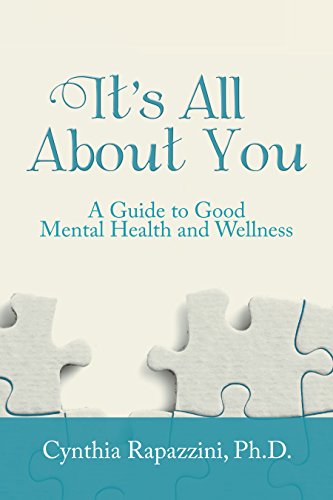
When the discourse veers towards mental health, there seems to be a binary reaction: either a welcoming embrace of the therapeutic landscape or, unfortunately, a prevailing dismissal of the mere prospect of seeking therapy. The latter reaction, all too common, often stems from societal stigma, ingrained behavioral patterns, or the simple fear of the unknown.
In her compelling book, Cynthia Rapazzini deftly navigates the intricate maze of mental health, drawing upon her extensive professional experience and individual encounters with clients. The book delves deep into not just the surface-level issues but also addresses more profound questions concerning mental health, gradually unfurling the author’s insightful perspective in every chapter.
Rapazzini first assists readers in comprehending the complexities of mental illness, debunking myths that persist around this topic, and candidly sharing her personal journey. Then, she talked about a pivotal moment in her life when her son’s illness made her realize that seeking professional help was not a sign of weakness but rather a courageous step toward self-improvement.
The author further explores the many reasons why individuals may shun therapy, such as ignorance, societal prejudices, and fear of judgment from their social circles. She posits that we’ve created a societal image that erroneously suggests that seeking professional help equates to inviting judgment.
Rapazzini doesn’t shy away from addressing the misconceptions she has encountered in her practice, particularly those about therapists or psychologists being unable to comprehend or assist their clients. In this vein, she provides the reader with valuable insights for choosing the right therapist.
She underscores the multifaceted impacts of mental illness, not only on the individuals grappling with it but also on their immediate environment. She elucidates how societal stigma can affect employers’ attitudes, leading to a vicious cycle where those suffering from mental illness resist seeking help for fear of job loss.
Additionally, Rapazzini’s book thoughtfully details the most prevalent mental illnesses, their symptoms, and guidelines for handling a child’s mental disorder.
The book’s conclusion particularly resonated with me, which emphasizes balanced well-being and includes a reflective worksheet with numerous self-care questions. This gesture further solidifies Rapazzini’s holistic approach toward mental health.
Cynthia Rapazzini’s compelling narrative confronts the challenging themes of mental health and mental illness, offering invaluable insights from a seasoned professional’s perspective. It’s All About You is an absolute must-read; it answers numerous mental health queries and initiates an open conversation about mental wellness. It’s a valuable addition to any reader’s library and a crucial step towards de-stigmatizing mental health.
Pages: 110 | ASIN : B0794TYY6B
Raven and the Hummingbird: A Healing Path to Recovery from Multiple Personality Disorder
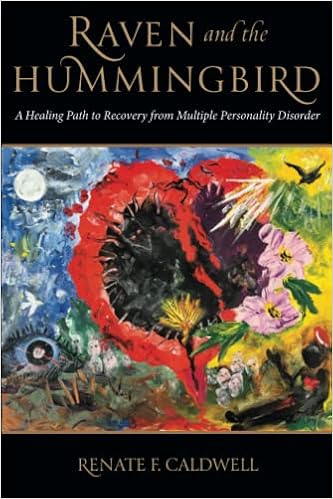
Raven and the Hummingbird: A Healing Path to Recovery from Multiple Personality Disorder by Renate F. Caldwell is an insightful exploration into the complex world of Dissociative Identity Disorder (DID), formerly known as Multiple Personality Disorder (MPD). This book brings to life the experience of Joan, a 44-year-old woman living with 52 distinct personalities, a coping mechanism her mind created in response to the severe sexual abuse she endured as a child.
This story is rooted in a chance encounter in 2003, where Caldwell, serving as a substitute therapist at a church group, met a group of women who were seeking solace by sharing their burdens with one another. Among them was Joan, a silent figure sitting alone, whose tear-stained note led to a transformative five-year recovery journey.
What sets Raven and the Hummingbird apart is its authenticity. This is not a book steeped in theoretical frameworks or rooted in empirical research. Instead, it provides readers an intimate, unfiltered look at a challenging therapeutic journey. It invites readers to step into Caldwell’s shoes and witness the rollercoaster of Joan’s recovery, experiencing every triumph and setback along the way.
As a psychology student, I found the portrayal of Joan’s numerous personalities, particularly Beth, a seven-year-old alter, profoundly touching. Caldwell’s narrative gives readers a vivid, tangible understanding of DID, allowing us to witness the transitions from Joan to Beth and back and observe their unique characteristics and interactions. This stark portrayal of DID, coupled with Joan’s journey to recovery, offers a profound educational opportunity for both students and practitioners in the field of psychology and psychiatry.
In addition to presenting a profoundly human story of resilience and healing, Caldwell accomplishes two significant feats with this work. First, she aids Joan in overcoming her DID through dedication, diligence, and empathy. Second, she masterfully translates their shared experience into a raw, honest, and richly layered narrative. As a result, this book doesn’t merely inform; it changes its readers, offering a deeply empathetic understanding of DID.
However, it is essential to note that certain sections of the book include detailed accounts of child sexual abuse, which may be triggering for some readers. Please consider this before committing to this emotionally intense journey.
Describing the impact of this book is a challenging task. Reading it felt akin to sharing a coffee with a dear friend, intimately privy to their experiences, which is a compelling way to approach such a subject. I extend my heartfelt congratulations to Caldwell and Joan for their success in both the journey to recovery and crafting a book that succeeds in demystifying DID.
I highly recommend Raven and the Hummingbird to students of psychiatry and psychology, who will find invaluable insights not readily available in standard academic literature. Additionally, anyone interested in an intimate exploration of human resilience or seeking to understand DID will find this book both enlightening and profoundly moving.
Pages: 669 | ASIN : B0BHBFS4S1
A Gift Of Evolution

What was the idea, or spark, that first set off the need to write Hidden Within Us: A Radical New Understanding of the Mind-Body Connection?
Startling observations from conversations with patients that indicated that they were unaware of emotions related to prior severe stress or trauma, and noticing rapid resolution of medical conditions among those patients who gained awareness of long-repressed emotions.
How much research did you undertake for this book and how much time did it take to put it all together?
Research over many years of clinical practice. About 4 years to write the book in my spare time.
Did you find anything in your research of this book that surprised you?
I did not put fully coalesced thoughts into the book. It was the process of writing the book that helped coalesce the thoughts.
What is one thing you hope readers take away from your book?
That they will understand the concept of repression of emotion, understand it as a gift of evolution, and trust that they can tolerate emotions that their unconscious allows to come up, and heal.
Author Links: Facebook | Website
Nearly all mind-body research and publications focus on the emotional distress we consciously experience, with limited results in terms of understanding and treating medical illnesses. Hidden Within Us brings attention instead to the burden of emotions kept from our conscious awareness by repression.
Case histories and published evidence will convey to readers the rarely recognized value, and harm, of repression: Its value as an overlooked cornerstone of emotional resilience in many of us. Its harm in the unrecognized impact of repressed, unfelt emotions on our health, with relevance to many highly prevalent yet still inadequately explained and treated medical conditions.
Our ability to repress emotions is a vital gift of evolution, but, silently, the emotions we’ve repressed do persist and can affect our health. This recognition can lead to new pathways to understanding, treatment, and healing.
Hidden Within Us; A Radical New Understanding of the Mind-Body Connection
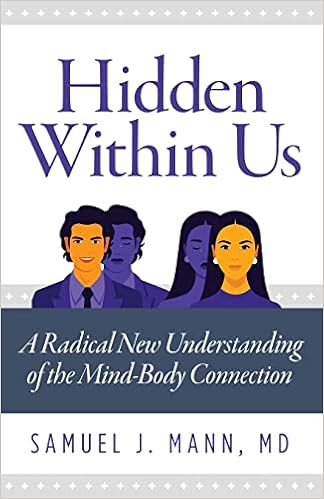
In Hidden Within Us Samuel J. Mann, MD, offers a groundbreaking exploration of the mind-body connection, shedding new light on the concept of repression. Far from being a disease, Dr. Mann argues that repression serves as a powerful tool for coping with traumatic experiences. Drawing from extensive research and years of experience, he presents a compelling theory on the impact of repressed emotions on physical health, suggesting that long-buried feelings can contribute to a range of medical conditions.
Dr. Mann’s revolutionary approach in the medical field opens up new avenues for treatment and discovery. He supports his claims with captivating case studies and insightful patient interviews, providing readers with a valuable understanding of this complex subject matter.
Written in an accessible and elegant style, Hidden Within Us avoids confusing medical jargon and adopts a nurturing, insightful tone that resonates with readers. Dr. Mann’s empathetic approach to his patients’ coping mechanisms enables him to delve deep into the mind-body connection.
One of the most progressive aspects of this book is Dr. Mann’s perspective on hypertension. He posits that repression can be harnessed as a gift, sharing powerful stories of patients whose uncontrolled hypertension was ultimately triggered by repressed emotions. In doing so, he challenges conventional notions of repression as a pathological condition, presenting his insights and observations without undermining existing studies.
From unraveling the enigma of paroxysmal hypertension to examining repressed emotions in other contexts, Hidden Within Us serves as an essential guide for healthcare professionals and anyone interested in the interplay between emotional and physical health. Dr. Mann has masterfully articulated his ideas in a way that is both comprehensive and accessible, making this work an enlightening read regardless of one’s medical background.
Pages: 203 | ASIN : B09YZ4CYVC



 LITERARY TITAN