Blog Archives
Glass Flower


Glass Flower, authored by David Procaccino, is an intricate fusion of thriller, family drama, and historical fiction centered around the aftermath of the Vietnam War. The narrative begins in July 1972, introducing Jim Malory, a veteran and psychiatrist based in Philadelphia. Struggling to piece together his life post-war, Malory faces challenges both in his professional realm and within his family. His wife, Maria, pregnant and concerned, doubts his mental stability, while their daughter, Ruthie, is caught in a downward spiral of seeking connection at any cost.
The story’s core revolves around Malory’s encounter with a fellow Vietnam veteran and his patients, propelling him into a deeper exploration of his psyche. This journey of self-discovery is intertwined with his efforts to repair familial ties and confront his fragmented mind. Despite strides towards recovery, Malory is continuously haunted by his past, a reminder that the vestiges of his wartime experiences are not easily left behind.
Procaccino’s Glass Flower excels in its character-driven narrative, marked by tension and family complexities. The theme of forgiveness emerges as a central motif, offering a potential escape from the unyielding grasp of trauma. The author skillfully navigates the interplay between Malory’s past and present adversities, employing a subtle approach that enhances the story’s emotional depth.
The novel’s strengths lie in its brisk pacing, compelling dialogue, and vivid, atmospheric descriptions that draw readers into a world rich in psychological and relational dynamics. Procaccino adeptly intertwines the concept of forgiveness into the plot, illustrating its vital role in healing and moving beyond trauma. Glass Flower is a poignant reminder of the enduring impact of past wounds on individuals and those around them.
In his portrayal of complex characters and psychological undercurrents, Procaccino’s writing is both evocative and nuanced, offering readers an insightful, thought-provoking experience.
Pages: 397 | ASIN : B0CMKF7LG9

The Prisoner of Secrets

In The Prisoner of Secrets, author John Lockton crafts a narrative that delves deep into the complexities of adolescence, familial strife, and the darker facets of history. The protagonist, Justin, experiences his time at Pomford boarding school as a stifling confinement, echoing his troubled family life. His father, seeking to accommodate his new partner, dispatches Justin to Pomford, a decision that stirs resentment and a sense of abandonment in Justin. This emotional turmoil is compounded when Justin uncovers his mother’s diary, revealing a harrowing history of abuse and a sinister plot by his father and his mistress to remove her from their lives.
The oppressive environment at Pomford, characterized by stringent rules and limited freedom, mirrors Justin’s inner turmoil. His inability to prove the allegations against his father regarding his mother’s mistreatment adds to his sense of powerlessness. This personal narrative intersects with the story of Dr. Benson, whose tragic past and involvement with the Holocaust and the eugenics movement present a stark contrast to Justin’s struggles. Lockton’s narrative is adept at intertwining these individual stories with broader historical themes, particularly the rise of the eugenics movement. The book skillfully balances elements of suspense, humor, and intrigue, offering a multidimensional reading experience. As a character, Justin is particularly noteworthy for his resilience, empathy, and commitment to justice, making him a compelling figure in the story.
The Prisoner of Secrets captivates and stimulates thought, intriguingly leaving readers eager to learn more about the fates of its well-crafted characters. The exploration of complex themes like eugenics and personal trauma adds depth to the narrative, making it a significant contribution to the genre. Its blend of historical context and personal drama makes it a recommended read for those interested in fiction that doesn’t shy away from exploring challenging themes.
Pages: 323 | ASIN : B0CH2F2M4M

The Hawk Enigma
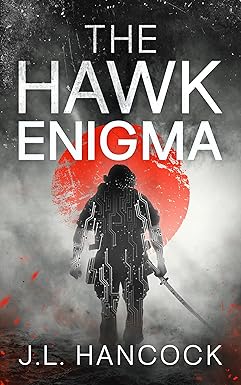

The Hawk Enigma, by J.L. Hancock, offers a thought-provoking journey into the world of artificial intelligence, seen through the eyes of Dr. Hawkins, a scientist with an exceptional memory. The story unfolds around her experiences and the disappearance of her colleague, Dr. Kenzo Ichikawa, hinting at a looming conflict in the realm of AI. This novel seamlessly integrates elements of advanced technology and human intuition, posing compelling questions about the future of AI and its impact on society.
Readers with an interest in science fiction and technology will find themselves deeply engaged with the narrative. The book delves into intricate scientific topics like optogenetics and machine learning, while also incorporating vivid action sequences. These elements cater to a wide range of interests, from those fascinated by technological advancements to action enthusiasts.
The character development in The Hawk Enigma is another standout feature, with a diverse cast that brings the story to life. Characters like Voodoo, who deals with loss and PTSD, add a human touch to the high-tech world Hancock creates. The inclusion of Japanese cultural elements further enriches the narrative, offering insights into different aspects of the country’s history and society.
While I enjoyed the book, I think the detailed scientific discussions and the large number of characters can occasionally slow the story’s pace and might overwhelm readers not well-versed in advanced scientific concepts. I feel this complexity, while intellectually stimulating, might be challenging for those new to such topics.
The Hawk Enigma is a richly layered story that balances the exhilaration of an AI arms race with the sobering realities of war. Hancock skillfully weaves a tale that is both engaging and emotionally resonant, making it a compelling read for those interested in the intersection of technology and human experience.
Pages: 415 | ASIN: B0B25KLNSD
Crossed Lines

Crossed Lines, by Colin Danks, presents an engaging tale of resilience and intrigue as we follow the journey of Zak Taylor. Battling against the odds of divorce and a financial conspiracy, Zak’s life takes an unexpected turn when he becomes embroiled in a drug smuggling operation. This rollercoaster of events sends his world into a whirlwind of chaos, and it’s a testament to the author’s storytelling prowess that we are compelled to keep turning the pages.
Set against the breathtaking backdrop of Cornwall, the novel vividly portrays this picturesque region, creating an evocative atmosphere that enhances the unfolding drama. From the coastal landscapes to the tempestuous sea, the setting comes to life and adds depth to the narrative. The story boasts an intriguing plot with various subplots interwoven, creating a complex tapestry of events. While some readers may have hoped for more substantial development of the main plot, the initial premise is undeniably captivating. It’s clear that there’s potential for a potent and gripping story here. Throughout the narrative, moments of tension and suspense keep readers on the edge of their seats. The unexpected alliances, secrets, and treacherous waters make for a thrilling journey.
While I enjoyed the story, I think it would make it more enjoyable if the story delved a bit deeper into its narrative, but fans of intriguing and multi-dimensional characters will enjoy it. It would also be more enjoyable if the character development consistently complimented the progression of the plot, but I think fans of intricate plots will appreciate the narrative’s focus.
Crossed Lines, by Colin Danks, is an intriguing story with a narrative that remains thoroughly captivating and consistently entertaining. It’s a journey worth taking, filled with suspense and unexpected twists, and offers a unique blend of smuggling, conspiracy, and the quest for redemption set against the captivating backdrop of Cornwall.
Pages: 300 | ASIN : B0C5JTNSK2
Shadow Dance
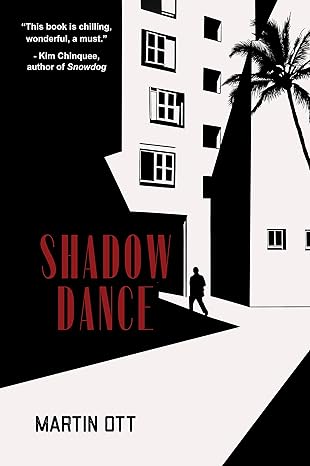
In Martin Ott’s Shadow Dance, West finds himself in a state of confusion as he tries to figure out his next move in life. After returning from multiple tours in Afghanistan as a POW prison guard, he struggles to find peace and make solid connections with those around him. As he contemplates his past and the sophisticated layers of his relationships, he finds himself drawn to a shadowy curse that seems to follow him everywhere he goes. In his journey through Los Angeles, he reflects on a psychic’s prophecy and the concept of a “dead zone” surrounding him as he discovers things are not always as they seem in the dark corners of Los Angeles.
Shadow Dance is the story of one man’s quest for meaning in a complex life filled with mysteries, curses, and questionable intentions. Martin’s first-person narrative is centered on an engaging protagonist, whose surprise-filled journey and introspective nature quickly immerses readers in the plot. Also, his past and the present are cleverly intertwined to create a broad, all-encompassing view of his character. As he grapples with his experience in Afghanistan and his tumultuous childhood, he endeavors to make the right choice regarding his new and rekindled relationships.
The vivid descriptions of places and characters, from the sun-drenched streets of Los Angeles to the colorful clubs and their wild inhabitants, create an unforgettable reading experience. I love that the physical themes and descriptions of the Los Angeles environments create an atmosphere that allows for understanding the protagonist’s search for identity and relationships. Readers who have experienced a sense of disconnection will find the story highly relatable.
Woven within the tapestry of the narrative, the author touches upon a myriad of themes, ensuring a rich and diverse reading experience. Although certain themes occasionally seem to stand alone, creating a sense of fleeting familiarity, it provides an opportunity to delve deeper and connect the dots as an engaged reader. While elements like curses or past losses occasionally transition swiftly to other subjects, readers of multifaceted storytelling will find it adds to the layered complexity of the tale. This book certainly stands out in the genre of war fiction and offers readers a unique journey.
For those who appreciate stories that artistically portray urban life, Shadow Dance, by Martin Ott is worth exploring. It delves into a compelling mix of internal conflicts and intricate relationships, offering an immersive reading experience. Ott’s writing feels so real that readers will find themselves absorbed in West’s tale.
Pages: 202 | ASIN : B0BP9VLPZ8
Four Minutes to Zero

Former SAS Sergeant Rick Fernscale is shown in the opening pages of Four Minutes to Zero enjoying a luxurious life and expecting a child with his beautiful wife years after the events of 24 Hours to Doomsday. Unfortunately, his wife is abducted by terrorists, who tell him that he must fulfill a perilous assignment or risk losing her. When he discovers that the terrorists’ main goal is to drastically reduce the world’s population, he is forced to choose between saving the rest of the world and saving his wife. Four Minutes to Zero by Colin M Barron follows Rick in his action-packed, fast-paced race to save his wife and the world from the nefarious machinations of the rich and powerful.
Like Mission: Impossible and the Jason Bourne film series, Four Minutes to Zero keeps its audience on the edge of their seats with its high-risk missions and highly competent and trained protagonist. It was interesting to see Rick attempting to infiltrate a foreign nation with a strong military and surveillance system. Fans of espionage stories will like the scenes in which he attempts to blend in and hopes that the foreign soldiers do not discover his actual identity.
Colin’s tale is certainly complicated and exhaustive since it offers specific information about the firearms and other instruments used in the characters’ attacks. However, I appreciated learning that the Milan, a guided anti-tank missile, was utilized in both the Falklands War and the first Gulf War. Furthermore, the protagonist’s intricate, game-like attack strategies are clearly spelled out for readers, making the missions highly intriguing and exciting.
Four Minutes to Zero is a complete, dexterous combination of heart-pounding action and suspense, complex international missions and attack plans, extremely high stakes involving the most cutting-edge weapons, extremely powerful villains who want to rule the world, and well-developed characters with engrossing backstories. It’s the kind of book that makes you remember why you initially fell in love with action novels.
Pages: 266 | ASIN : B0BQMRNBK8
A New Novel, Coming To Life

The Shadow of The Mole follows the intertwining stories of a man who believes himself dead, who is writing a story he claims is being recited to him, and the doctor caring for him during WWI. What was the inspiration for the setup of your story?
From 1990 to 2003, I was a freelance travel writer in conflict zones worldwide: Somalia, Liberia, Bosnia, Serbia, Sudan, Gaza, Iran, Iraq, Mozambique, Kosovo, and Burma(Myanmar)… to name but a few. I stopped when I was fifty and began to suffer from strange psychic symptoms. I struggled with the impression that something invisible followed me like a shadow. A leering, threatening presence mocked me, whispering that I wasn’t an actual human, just a walking mummy and that a terrible death would be my fate. So, of course, I sought professional help and soon learned that long periods of stress can produce all kinds of unusual mental phenomena. Intrigued, I began researching Post Traumatic Stress Disorder (PTSD). I learned that PTSD, even in Roman Times, was documented and that, in WW1, soldiers who showed signs of PTSD usually ended up in front of the firing squad as cowardly deserters who pretended to be lunatics.
And then, I stumbled across Cotard’s Syndrome, sometimes also called “walking corpse syndrome.” When I began to read about it, it was as if a cold finger prodded me in my neck, and I smelled the energy – still far away – of a new novel, coming to life.
In 1880, the French neurologist and psychiatrist Jules Cotard was the first to describe and analyze the psychiatric syndrome he called Le délire des negations (The delirium of negation). I read about different symptoms and cases, but the ones that I found highly fascinating were patients who were convinced that they were dead. One of them was a young man who told everyone that he was a corpse and that his ‘self’ (sometimes, he said ‘soul’) was standing behind his right shoulder.
That night, I had a nightmare in which a ‘gypsy’ played a frightening role. That made me think about thirty years ago when I published ‘Feria,’ (Funfair), my third book, a short story collection about the Romani – gypsies – a people of wanderers with a unique culture and myths of gods and demons that I found fascinating.
Subsequently, by chance, I read stories about soldiers in WW1 trenches who reported about ‘presences,’ benevolent or malicious, materializing during intense fighting. New trends in psychiatry and psychoanalysis didn’t limit these symptoms to stress or cowardice but, hesitantly, began to search for malfunctions in the brain and childhood traumas in Freud’s psychoanalysis, often of sexual nature.
Thus, puzzle after puzzle, the hidden entry in my subconsciousness opened itself slowly and gave me access to writing “The Shadow Of The Mole.” The road to completion took me three years, sometimes stumbling over wondrous details, sometimes following dead-end forks in the journey before I once again found the “silver thread beneath my feet” (Hermann Hesse: Steppenwolf). Buffeted by doubt, despair, illumination, wonder, and hope, I wrote like a mole, rooting deeper into my story…
When you first sat down to write this story, did you know where you were going, or did the twists come as you were writing?
Being a full-time author for over 30 years, I have published ( traditionally) more than forty books in Holland and Belgium, and each novel started with only a hunch, a flash of intuition, and a first sentence. Each time a first sentence of a book came to me, I knew that I was on my way and that I more than possibly would finish the novel, trusting the inspirations that would materialize when the story developed itself. Often, I felt a pass-through for insights given to me.
This ‘method’ was not always foolproof: sometimes, I made useless detours, or, on other occasions, I resisted an inducement because I was afraid of the artistic, commercial, or personal consequences. When this happened, I noticed that the story fell flat or just plain stopped, so I had to give in and sought for a style and an element of mysterious opaqueness to incorporate the inducement in my story. For instance, there is a family secret of sexual nature in “The Shadow Of The Mole” that plays a big part in the story, but I didn’t want it to be in the readers’ faces, so dispersed in the novel, you can find allusions, hints, metaphors. This mysterious atmosphere plays an essential part in this novel.
What were some themes that were important for you to explore in this book?
During my years as a travel writer, I noticed how war and violence could turn humans into terrible creatures committing horrible atrocities. Why and how does conflict trigger such savagery in us? And why don’t we learn from warfare in the past? For instance, in the nineties, I witnessed the Bosnian war’s ruthlessness, and now, thirty years later, I see the same horror in the Ukrainian conflict. Nothing has changed…Correction, something has changed: the weapons used on the battlefield have become even more sophisticated, deadly, and destructive.
Must we conclude that war alters something in the chemistry of our brain, or do we have to turn back to the old belief that humans can be possessed by demons who thrive on endless suffering? Hidden in “The Shadow Of The Mole” lies a possible and chilling answer.
What is the next book you are working on, and when will it be available?
I’ve chosen the working title “The Firehand File” for my next novel. Again, it’s a historical novel, this time situated in 1921 Berlin, the European “capital of sin.” In Flanders, critics described “The Firehand File” as a “worthy successor to “Baudelaire’s Revenge,” my first novel in English translation (2014), which won the Hercule Poirot Prize for best suspense novel of the year in Belgium, and the USA Best Book Award 2014 in the category “mystery/suspense. “Baudelaire’s Revenge” has been translated into English, French, and Russian. The novel centers around the poetic oeuvre of Charles Baudelaire, one of the greatest nineteenth-century French poets.
Likewise, the plot of “The Firehand Files” has a lot to do with the poetry of the Flemish Dada poet Paul Van Ostaijen who lived for a while in Berlin. Once again, it is a complex, thrilling, historical novel noir.
Maybe, it’s better that I disclose the first draft of a blurb. It will give readers a condensed picture of the novel’s soul.
Berlin is a city of extremes. Political violence plagues the streets during the day. A serial killer whom the media call “The Skinner” roams the streets at night. He is suspected to be a rabid World War I veteran, but he remains untraceable.
In this human pressure cooker, the relationship between Paul Van Ostaijen and his impetuous girlfriend, Emma Clément, is on edge. Like hundreds of thousands of others in Berlin, they live in poverty. They are addicted to cocaine and other drugs, while Van Ostaijen is convinced that the artistic Dada movement, rejecting the logic, reason, and aestheticism of modern capitalist society, instead expressing nonsense, irrationality, and anti-bourgeois protest, would change the world.
On a drug-induced whim, Van Ostaijen steals a document titled “The Firehand File” in the apartment of the spy Elise Kraiser. He finds the title “dramatically poetical.” Who could foresee that the poet, doing so, would set in motion a series of dramatic events that shed surprising light on a politician who is rapidly gaining influence?
His name is Herr Adolf Hitler.
The Firehand Files was one of the five finalists of the 2018 Hercule Poirot Prize in Belgium. I hope to see the translation finished this year and that Next Chapter, my publisher, will find it a worthwhile novel.
I sense that “The Firehand File” will be my last novel. I turn seventy this year, and my health is waning, so I’m preparing myself for the most fantastic adventure of all: death and the afterlife.
Author Links: GoodReads | Website
The Shadow Of The Mole is the Gold Category Winner for “Historical Literary” in the 2022 Historical Fiction Company Book Of The Year Contest
1916, Bois de Bolante, France. The battles in the trenches are raging fiercer than ever. In a deserted mineshaft, French sappers discover an unconscious man and nickname him The Mole.
Claiming he has lost his memory, The Mole is convinced that he’s dead and that an Other has taken his place. The military brass considers him a deserter, but front physician and psychiatrist-in-training Michel Denis suspects that his patient’s odd behavior is stemming from shellshock, and tries to save him from the firing squad.
The mystery deepens when The Mole begins to write a story in écriture automatique that takes place in Vienna, with Dr. Josef Breuer, Freud’s teacher, in the leading role. Traumatized by the recent loss of an arm, Denis becomes obsessed with him and is prepared to do everything he can to unravel the patient’s secret.
Set against the staggering backdrop of the First World War, The Shadow Of The Mole is a thrilling tableau of loss, frustration, anger, madness, secrets and budding love. The most urgent question in this extraordinary story is: when, how, and why reality shifts into delusion?
The Shadow Of The Mole
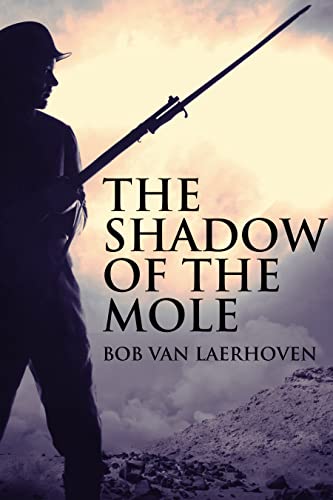
Bob Van Laerhoven’s The Shadow of the Mole is an intriguing and compelling historical thriller that has left readers both baffled and in awe. This beautifully written, thought-provoking story deals with the complex themes of loss, suffering, and the psychological traumas of war. The author also includes the challenges of a complicated, budding love affair in the difficult times of war. The novel employs symbolism heavily and also explores themes of the supernatural along with sexual themes. Set against the staggering backdrop of the First World War, the story is initially set in 1916, Bois de Bolante France but wanders into earlier times as the novel proceeds.
The novel is made up of different perspectives and shifting timelines. Still, the story primarily follows Michel Denis, a front-line physician, and psychiatrist-in-training, who is in his own mental and physical turmoil after losing an arm in battle. He takes a peculiar interest in ‘The Mole,’ a man who was found in a deserted mineshaft by the French troops. The Mole has amnesia and firmly believes that he is dead and an ‘Other’ has taken control of his body. Denis is compelled to open a psychiatric investigation to uncover the mystery of this man’s past and the events that led him to hold such a belief. What is even more fascinating is that this novel contains a story within a story: Denis’ story is interspersed with The Mole’s writings of Alain Mangin, a story he begins writing in écriture automatique. He insists that he is just writing down what is being recited to him by ‘another.’
Throughout the course of this extraordinary story, deception and reality go hand in hand, and people’s minds are tested to their limits right to the end. The most pressing question raised is, “when, how, and why does reality shift into delusion?” The story’s climax is equally dramatic: a truly cinematic experience that thoroughly engages the reader until the very last page, leaving them questioning what they believe to be true. I recommend this book to those who enjoy historical fiction and thrillers, for I can assure you that this novel will be unlike any other you have read!
Pages: 430 | ASIN : B09RTTK28K



 LITERARY TITAN