Blog Archives
Let Them

Until I Come Back for You follows a young girl, the youngest of five siblings, as her family escapes the dangers of Detroit and tries to build a new life in the countryside, only to encounter a menacing and violent new neighbor. What was the inspiration for the setup of your story?
That’s easy – my real life! My family really did leave Detroit in the early 70s, and my city-slicker parents really did buy a small farm on a dirt road in rural Michigan. The bad guy is fictionalized, but the setting and family characters are all real.
What was your approach to writing the interactions between characters?
For me, the key to dialogue is to let it come quickly, naturally, and not overthink it. Don’t argue with your characters – let them speak. Let them stutter. Let them mispronounce words. Because that is how humans talk. Dialogue should “play” in the readers’ heads as if they can hear it, and so it has to “sound” authentic. If a writer edits dialogue the same way she edits the narrative, you lose that authenticity.
How do you balance story development with shocking plot twists? Or can they be the same thing?
For story development, I’m an avid plotter. I map out the big parts of the story, the bones. For this story, I focused on “the event” and worked backwards to include everything that had to come before it. Then worked forward, writing all the consequences and fallout.
The plot twist(s) were afterthoughts that organically stemmed from the story. There is a writing rule: “Get your protagonist in trouble. Then get them in more trouble and more trouble.” When I did that, she really surprised me, and it was just my job to capture that.
What is the next book that you’re working on, and when can your fans expect it out?
For right now, I’m having so much fun with this book, I can’t even think about another. This was a bucket list goal for me, so I’m just allowing myself to revel in this moment.
Author Links: GoodReads | Facebook | Website | Instagram | Amazon
Right where she left it.
UNTIL I COME BACK FOR YOU invites you to wallow in the comforting nostalgia of the 1970s, a simpler time when there were only three TV channels, two colas, and one phone in the house. Smell the honeysuckle of lazy summer days; listen to sisters sharing whispers in bunk beds before drifting to sleep. Just when you get comfortable, you’ll find yourself stranded in a tree, dragged across a field, held down on a cold examination table. Taste the blood in your mouth from a lost tooth. Feel the breath of a predator on your neck. Hear the death rattle of a lost soul.
Follow one family’s history woven into the tattered fabric of the Midwest and witness one girl tear at the seams of girlhood, suspended between the generations of women who reinvented womanhood.
Suspense on Every Page

Choice of Evils centers around a former district attorney now working to defend a millionaire accused of killing his best friend on a rock-climbing excursion. Where did the idea for this novel come from?
Colorado really does have a “Choice of Evils” statute in its criminal code. It’s the actual name of the statutory defense. The phrase is in the jury instruction, too. It provided the inspiration for my legal thriller.
The “choice of evils” defense applies when the tragedy the defendant prevented by his act would have been worse than the crime he committed. A textbook example is a runaway train heading for a trestle. Five people, unable to escape, are on the trestle. They are going to die. The defendant flips a switch and causes the train to take a different trestle, where only one person is killed. One died, rather than five. It was a choice of evils, and if the facts are proven, it is a defense to the homicide of the one person.
Most states give the defense the boring name “justification. You’ve gotta admire the creativity of the Colorado legislature.
In most jurisdictions, it cannot apply to murder; in Colorado, it can.
The title of the statute gave me the idea for the book. The title came first, then I needed a plot! But how can “choice of evils” apply to murder? What could be worse than murder? I sought out examples in the Model Penal Code. Sure enough, one provided my overall story. Two men are rock climbing. The survivor claims they slipped, and he had to cut the rope to save himself; otherwise, two would have died, rather than one.
Throw in a couple of complications: (1) the man who fell to his death was having an affair with the wife of the man who cut the rope, and (2) they were business partners with a key man life insurance policy that paid two million dollars to the survivor should one die.
The prosecutor filed the charge. Wyatt Blake, former prosecutor, now criminal defense lawyer, defends it as his first murder case from the dark side, pitted against the current district attorney, who had beaten Wyatt in the election.
So, with Choice of Evils, the title came first.
Where do you find the inspiration for your characters’ traits and dialogue?
I was a prosecutor for over 30 years, so Wyatt Blake has a lot of me in him. His voice is pretty easy for me to use, as is the humor. When writing dialogue, I often cut and shorten it during the editing process.
Ryker Brando, the autistic criminal defendant, was fun to create. I have a cousin who is autistic. Several of his mannerisms were fodder for this character. I pored over books on the topic of how autism can apply to criminal defendants and used that material.
I read a couple of books about how a person can make money by setting up an Only Fans account when creating my fictional Intimate Fans account used by Chloe Brando. I, ahem, subscribed to one Only Fans account as part of the research. It was educational and informative! Alas, I no longer need it so I unsubscribed.
The courtroom scenes are informed by the 178 jury trials (111 homicide cases) I have tried in real life as a prosecutor and criminal defense lawyer.
What is the most challenging part of writing a thriller?
The most challenging parts of writing a thriller are the same things a novelist faces when writing any book: you need to put suspense on every page, to keep the reader interested and turning pages. Furthermore, you need to make the reader care about your main character, so he or she is invested in the outcome. Care must be taken not to make your protagonist too perfect, or your villain too purely evil.
Can we get a glimpse inside the next book in this trilogy? Where will it take readers?
Make My Day picks up the week after Choice of Evils ends. Wyatt Blake gets his second murder case, this time featuring another Colorado defense–the “make my day law.” Under this statute, you can shoot a person who breaks into your home without waiting for them to attack you. Wyatt’s client is a former state senator, who has shot a man he claims he mistook for a burglar. The man happened to be a movie star who date-raped his daughter. Meanwhile, Wyatt’s love life has become complicated. Harper Easton’s former fiance is back in the picture, and another potential love interest is throwing herself at Wyatt. As always, ethical issues abound!
Author Links: GoodReads | Website | Facebook | Amazon
Choice of Evils


Choice of Evils, by Morley Swingle, is a sharp, twist-filled legal thriller that follows Wyatt Blake, a former district attorney turned defense lawyer, defending a millionaire accused of murdering his best friend during a rock-climbing trip. Set in the snow-draped peaks of Colorado, the story weaves courtroom drama, moral gray areas, and emotional backstories into a compelling tale of justice, loss, and the fine line between right and wrong.
What really pulled me in wasn’t just the whodunit mystery; it was Wyatt himself. He’s a flawed, smart, funny, sad guy who’s trying to stitch his life back together after losing his wife in a freak skiing accident. His inner thoughts are dry and biting, like when he watches a potential client chew his nails and thinks he hasn’t “encountered scissors in months.” That kind of dark humor is sprinkled throughout the book and made me both laugh and wince. I felt his grief when he hides the photo of his daughter before meeting the accused murderer, Ryker Brando. Swingle writes pain without melodrama.
Ryker Brando is a chilling character; detached, calculating, and unnervingly composed. He openly admits to cutting the rope that led to his best friend’s death, yet displays no visible remorse or emotional turmoil. Instead, he presents his actions with stark, matter-of-fact reasoning. This emotional flatness makes him difficult to read, let alone sympathize with, yet it’s precisely this ambiguity that gives his character such power. Swingle resists the urge to paint Ryker as a clear-cut villain; instead, he challenges the reader to grapple with the unsettling logic behind Ryker’s choice. “Two people die, or just one,” Ryker says, and you’re left genuinely unsure of what you might have done in his place. The novel’s treatment of the “choice of evils” defense is not only compelling but also intellectually provocative, presenting legal nuance in a way that’s accessible without ever oversimplifying.
The courtroom scenes are particularly well-executed. Unlike many legal thrillers that get bogged down in tedious procedural detail, Swingle’s narrative moves with precision and energy. His legal expertise is evident, but what stands out even more is his ability to translate that knowledge into sharp, engaging drama. The pacing is brisk, the dialogue crisp, and the legal sparring, especially between Wyatt Blake and his successor, Chad Coburn, is both intense and layered. Coburn, a former NFL linebacker turned district attorney, brings an aggressive, politically charged edge to the proceedings, making their confrontations not just legal battles, but deeply personal and ideological clashes.
The supporting characters are also given room to shine. Nikki, Wyatt’s resourceful and sharp-tongued secretary, adds both levity and depth, underscoring Swingle’s talent for creating memorable, multidimensional personalities. By the final chapters, I found myself fully invested, not just in the outcome of the case, but in the broader questions the book raises. The narrative explores themes of guilt, justice, and moral ambiguity with both intelligence and emotional resonance. Whether or not Ryker is truly guilty almost becomes secondary to the exploration of what guilt really means. Swingle delivers this with wit, emotional insight, and a firm grasp of human complexity.
Choice of Evils will appeal to readers who appreciate legal thrillers that delve into moral ambiguity and psychological depth. With its layered characters, ethically charged dilemmas, and compelling courtroom drama, the novel offers both intellectual engagement and emotional impact. For those who enjoy thoughtful, well-paced narratives grounded in legal realism, this is a standout choice.
Pages: 731 | ASIN : B0F6M1YJHL

Moonrise


Moonrise is a dark, winding tale that starts off as a corporate retreat and spirals into a visceral horror-thriller packed with strange rituals, power games, and a literal beast lurking in the woods. At its center is Anthony Montgomery, a weary mid-level employee who’s forced to navigate a world where loyalty tests involve taxidermied wolf paws and a monstrous creature might just be real. The book straddles the line between corporate satire and supernatural horror, and the way it flips from mundane work-life nonsense to full-on blood and snow makes for one thrilling ride.
Claiborne starts things off slow, with Anthony being the perfect jaded everyman, reluctantly sipping wine at an awkward office retreat. Then suddenly, we’re howling under the moon with a taxidermy paw full of wine and being told to drink up like it’s a frat party hosted by Satan. The scene with Mr. Morgan and the “Omega” ritual was unhinged. And I loved it. The writing here is sharp and cinematic, capturing that uneasy tension between corporate absurdity and primal chaos. It’s weird, but in the best way.
But it’s not just the gore and weirdness that kept me hooked. The characters—especially Anthony—are written with surprising depth. His interactions with Luna, his sense of duty to his girlfriend Sidney, and that internal battle between temptation and loyalty felt real. And then that scene in the woods? Where Anthony sees the creature for the first time? Pure horror movie magic. The tension was unbearable, and I was genuinely sweating. Claiborne describes the creature in such vivid detail. Anthony’s injury, the adrenaline, the decision to play dead—all of it was so well done.
There were a few moments that felt a bit over the top. Some of the hospital scenes ran a little long, and a few of the jokes didn’t quite match the tone of the rest of the book. There’s also a lot of internal monologue—some lines hit just right while other didn’t. But honestly, that added to the charm in a weird way. It gave Anthony this raw, messy humanity. He’s not a hero. He’s just a dude trying not to die and maybe score a promotion, which somehow makes him more relatable. I won’t spoil the ending, but let’s just say it leaves enough questions dangling to make me suspicious of every CEO with a vineyard.
Moonrise is for fans of offbeat horror, black comedy, and corporate satire. If you like your monsters bloody and your protagonists flawed, this book is for you. It’s not for the faint of heart or anyone looking for a polished, buttoned-up read. But if you’re in the mood for something different—something wild, creepy, and a little unhinged—pick this up.
Pages: 267 | ASIN: B0CLYXKZGZ
Unanswered Questions

CONVOLUTED: The 1972 Durham Family Triple Homicide takes readers through the fifty-year-long investigation of the murders of Bryce, Virginia, and Bobby, exploring the multiple leads, theories, motives, and suspects that have been put forth in the case. What inspired you to write this book and tell their story?
These murders took place in my hometown when I was not quite seven years old and only two miles from my family’s home, so I grew up with knowledge about the case. It held my attention throughout the decades because of how heinous it was and because it continued to be unsolved. I had periodically considered writing about the case, and I ultimately decided to do so when, fifty years after the murders, authorities announced that the killers had been identified. This surprising development and the questions it generated were the catalysts for me finally deciding to move ahead with a book about the murders.
One thing that stands out in your book is the depth of your research. What was the process like to collect all of this information, and how long did it take to put it together?
I worked on the book for a solid two years. Initally, I was not convinced I had enough material to warrant a book, but after I delved into a plethora of news articles, ordered court documents, gained access to investigative files and audio recordings, and conducted my own interviews, I ended up with more than enough. In fact, it was so much material that I had to decide what to leave out without compromising the story as well as take the remainder and figure out how to present it in such a way that would both engage and make sense to the reader. Some of the materials – particularly the taped interviews with one of the alleged perpetrators and the son of another – were especially difficult to acquire, and it took many months of begging for them before I was ultimately granted access.
Did you find anything in your research of this book that surprised you?
Throughout the history of this case, most people have agreed in their suspicion of the son-in-law’s involvement, but there was never enough concrete evidence to link him to the murders. When it was announced that four members of Georgia’s Dixie Mafia had killed the Durhams, the remaining and unanswered questions were who instigated the murders, and if these four Georgia men really were the killers, who arranged to bring them to North Carolina? With suspicion of the son-in-law in mind, I hoped to find links between him and the Dixie Mafia. I did find it curious that he eventually moved to Georgia and became an attorney, establishing his law practice only about thirty minutes from the alleged killers’ home base. It was also very odd that his second wife was the step-daughter of an attorney, who not only defended one of the alleged killers in another murder case that would eventually be compared to the Durham case but also married into a family that this same alleged killer’s wife was also connected to. While these things may have been purely coincidental, I find them odd and was quite surprised by them.
What is the next book that you are writing, and when will it be published?
Prior to this book, I was already working on another book detailing the history of crime in my home county in North Carolina, in which the Durham case was going to be discussed among many others. When the 2022 developments occurred in the Durham Case, I decided to put that book on hold and write a stand alone book on this case. Although I am not sure when it will be ready for publication, my plan is to return to working on the original book as well as write some short stories or something along the line of blog posts on my author’s website. I also have other book ideas in mind, mostly dealing with local history and family stories, and hopefully those will be realized in the years ahead.
Author Links: GoodReads | Facebook | Website | Amazon
CONVOLUTED: The 1972 Durham Family Triple Homicide

Terry L. Harmon’s Convoluted takes a deep dive into one of North Carolina’s most baffling cold cases the 1972 triple homicide of Bryce, Virginia, and Bobby Durham in Boone, NC. The book is as much an investigative journey as it is a historical recounting, spanning fifty years of theories, suspects, and tangled clues. It follows the twists and turns of the case, the relentless pursuit of justice, and the frustrating dead ends that kept this brutal crime unsolved for decades. Harmon’s meticulous research shines through, presenting a labyrinth of evidence, speculation, and personal stories, all leading to the ultimate closure of the case in 2022.
Harmon’s writing is incredibly detailed, bringing the case to life with a level of depth that true crime enthusiasts will appreciate. His thorough research ensures that no stone is left unturned, immersing the reader in the investigation’s many layers. While the book covers an extensive historical backdrop and a wide cast of characters, each element adds richness to the story, making it a truly comprehensive account. The opening chapters are particularly gripping, vividly setting the scene of the crime without resorting to sensationalism. The image of the Durham family in their final moments is haunting yet powerfully written, immediately drawing the reader into the gravity of the case. Harmon’s ability to balance stark reality with respectful storytelling is one of the book’s greatest strengths.
One of the book’s strongest elements is its exploration of the investigation itself the sheer frustration of law enforcement, the wild theories (some credible, some downright absurd), and the eerie involvement of psychics, informants, and supposed hitmen. Chapter 9, Every Theory Known to Mankind, is particularly fascinating. It lays out the many possible explanations, from organized crime connections to local disputes that have gone terribly wrong. Harmon doesn’t just present these theories; he dismantles them piece by piece, showing which hold weight and which are nothing more than desperate grasps at the truth.
Harmon personalizes the victims, especially Bobby Durham. The book’s preface describes how Harmon, after looking at post-mortem photos of Bobby, felt a deep connection to the young man who seemed to have been caught in a nightmare he never saw coming. This personal touch makes the book more than just a recounting of a crime, it becomes a plea for justice, a tribute to lives lost, and a reflection on the chilling reality that some crimes take lifetimes to solve.
Convoluted is the perfect read for true crime lovers who appreciate meticulous research and aren’t afraid to get deep into the weeds of an investigation. It’s a rich and immersive read, filled with valuable information that brings the case to life. For those who enjoy diving deep into the details, it offers a fascinating and rewarding exploration of a crime that profoundly impacted a community. If you enjoy books that challenge you to think critically, question every lead, and wrestle with the frustration of an unsolved mystery, this one’s for you.
Pages: 1007 | ASIN : B0DLLK9RQY
The Lost Boy

Callum “Cal” Nowak fled the confines of foster care and his small-town upbringing in the Catskill Mountains when he turned eighteen. In New York City, he joined the police force, determined to escape the shadows of his traumatic past and carve out a new life. Fourteen years later, after being placed on administrative leave, Cal reluctantly returns to his hometown, where every street and memory resurrects the pain of his mother’s murder. When the husband of his ex-girlfriend dies in his arms, Cal finds himself thrust into a gripping investigation. Convinced of her innocence, he’s determined to uncover the truth and expose the real killer before she’s wrongfully imprisoned.
How do we confront the weight of our past while forging a path forward? The Lost Boy: A Small Town Murder Mystery Gay Cop Romance by S. F. Williams explores this question poignantly. This enthralling series opener pulls readers in from the first page, weaving a narrative that balances the unraveling of Cal’s childhood trauma with the suspense of a high-stakes murder mystery. It’s a compelling, emotional, and unforgettable read.
What truly stands out is the nuanced portrayal of Cal. Through his perspective, readers are invited to reflect on their own struggles and resilience. Williams writes with a compassion that makes Cal not a perfect hero, but an authentic, flawed, and deeply human character. His journey is raw, relatable, and profoundly moving.
I do feel the storyline occasionally feels a little weighted with unnecessary details. Within the narrative, there seems to be a blending of genres which I believe can sometimes detract from the central storyline. Even so, these moments do not overshadow the book’s many strengths.
The Lost Boy‘s approach to representation is significant. The story offers a refreshing perspective, a gay protagonist whose challenges stem more from his personal history than his sexuality. This kind of storytelling is vital and refreshing, delivering both inclusivity and depth without resorting to clichés.
In the end, The Lost Boy, by S. F. Williams, is a beautifully written and emotionally resonant tale that combines mystery, introspection, and heart. It’s a story that stays with you and one that leaves readers eager for the next installment in the series. A truly remarkable debut.
Pages: 285 | ASIN : B0DK41MW5J

Jake Fox: Ties That Blind
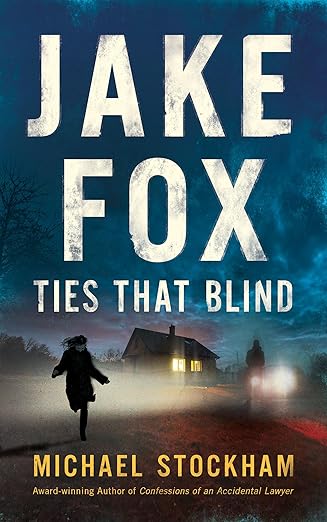
Michael Stockham’s Ties That Blind is a gripping blend of suspense, drama, and raw human emotion. The story weaves through the lives of Jake Fox, a lawyer haunted by the loss of his daughter, and Rose Tucker, a teenage girl thrust into a whirlwind of tragedy and danger after her father’s murder. Set in the tight-knit, secret-laden town of Haven, Texas, the novel is a journey through grief, redemption, and the pursuit of justice. It’s a layered narrative, unflinchingly raw yet deeply human.
Stockham does not shy away from heart-wrenching tragedy. The first chapter vividly describes Jake discovering his daughter Lucy’s suicide. It’s haunting, visceral, and almost too real. The palpable grief that drives Jake’s character gives the story its beating heart. Yet, there’s a thread of hope, too. Jake’s visions of Lucy anchor him, a tender, otherworldly reminder that even in despair, there’s something to hold onto. Stockham’s portrayal of trauma feels authentic, unafraid to explore the quiet moments of despair, like Jake’s late-night struggle with a gun and his ultimate decision to keep going. These moments linger long after reading. Rose Tucker, however, steals the spotlight with her resilience. Her storyline of fleeing into the night, grappling with her father’s brutal murder, and navigating her newfound orphaned existence is both heart-wrenching and electrifying. The well-crafted tension in scenes like Rose’s escape to the storm shelter had my pulse racing. You feel her fear, uncertainty, and growing determination to uncover the truth. Her relationship with Margie, a steadfast maternal figure, adds warmth to the story’s darker themes. Margie’s down-home wisdom and kindness give Rose a sanctuary in a world turned upside down. Stockham masterfully builds a world where secrets lurk behind every picket fence and corruption festers in shadows.
Ties That Blind is a story of hope amid darkness, courage amid fear, and the ties, both broken and unbreakable, that define us. Stockham’s prose is evocative and approachable, making the characters’ struggles feel intensely personal. I’d recommend this book to fans of suspenseful thrillers with strong emotional undertones. It’s perfect for readers who appreciate layered mysteries and heartfelt stories of redemption. Whether you’re in it for the twists, the legal drama, or the poignant character arcs, this book delivers.
Pages: 398 | ASIN : B0CQQFZVJJ


