Blog Archives
Deliberate Parallelism

Death in the Manor centers around a detective investigating a suspicious death, but soon finds the case is more about money, family legacy, and civic rot. What was the inspiration for the setup of your story?
The setup for Death in the Manor grew from a desire to explore how a person trying to flee their past can be inexorably drawn back into the very world they left behind. My protagonist, Dante Villehart, arrives in Edenvale seeking asylum from his failures as an investigative journalist. However, the murder of someone from his past, Lila Summers, forces his hand. This catalyst triggers a perfect storm of events: a sudden inheritance roots him to the town, while his sharp methods catch the attention of Marissa Cole, founder of Enigma Solutions Services. Dante’s transition into corporate and criminal investigations sets the stage for the novel’s broader themes of wealth and systemic corruption. His first major case—the highly suspicious death of Roland Astor—serves as the magnifying glass for the story. I wanted to show how a single high-society death could unravel an entire community. As Dante digs beneath the surface of the Astor family legacy, the narrative spirals from a traditional whodunit into a dark exploration of institutional rot. He uncovers a toxic web of embezzlement, a predatory pyramid scheme, and complicit government officials. The inspiration was to build a high-stakes ecosystem where the pursuit of truth becomes a lethal endeavor, forcing Dante to confront the reality that powerful entities will readily kill to protect their empires.
Were there classic mystery or noir influences that shaped the atmosphere of the book?
Absolutely. The atmosphere of Death in the Manor is deeply indebted to both the Gothic suspense of Daphne du Maurier’s Rebecca and the cynical, hard-boiled world of Raymond Chandler’s The Big Sleep. What fascinated me most about both masterpieces is how they utilize wealth and architecture; the grand mansions in those stories cease to be mere backdrops and instead become living, breathing characters dripping with secrets.
From du Maurier, I drew inspiration for the haunting weight of legacy and the oppressive, psychological atmosphere that a grand estate can inflict on its inhabitants. From Chandler, I adopted the gritty noir sensibility where a detective must navigate a labyrinth of upper-class decadence and institutional corruption. By blending Rebecca’s atmospheric dread with The Big Sleep’s sharp-edged cynicism, I aimed to create a setting where the grandeur of the manor serves as a beautiful facade hiding a deeply decayed moral core.
Astor Manor feels almost alive — full of secrets, old wounds, and performances. How did you approach building the setting?
I approached Astor Manor not as a static backdrop, but as an active antagonist in the narrative. For a mystery driven by a death this suspicious, it was vital that the architecture itself echo the deception of its inhabitants. I wanted the manor to possess its own agency, slowly revealing its secrets to Dante in a calculated, piecemeal fashion. To achieve this, the physical space shifts conceptually throughout the investigation; even when Dante revisits a room, the atmosphere feels entirely different based on what he has just uncovered.
There is a deliberate parallelism between the mansion and the family. The wealthy family members wear masks and perform for society, hiding their rot behind closed doors. Similarly, the manor hides its history behind physical illusions—secret rooms, forgotten corridors, and hidden spaces. By designing the setting this way, uncovering the architectural secrets of the manor becomes just as vital to solving the mystery as unraveling the family’s lies. The building and the bloodline are bound together, both refusing to give up their ghosts without a fight.
Can you give us a glimpse inside the next installment of The Dante Villehart Redemption Series? Where will it take readers?
The final installment of the trilogy, titled Knight in Gale: Vengeance, plunges Dante into his most personal and psychologically grueling case yet. The plot centers on a ruthless serial killer whose calling card is leaving a dead nightingale at every crime scene, accompanied by a twisted variation of a quote from John Keats’ Ode to a Nightingale. This case forces Dante to confront his past failures: years ago, he botched an investigation with this exact signature, resulting in the wrongful accusation of an innocent person. Though his core intuition wasn’t entirely wrong, the real killer—or killers—are now back. They are actively taunting Dante, deliberately targeting the people closest to him to exploit his vulnerabilities.
This book serves as the emotional crucible of the trilogy. To survive, Dante must undergo a massive internal shift, allowing himself to be vulnerable and finally letting others in—a stark contrast to his past habit of isolating himself under the guise of “protecting” those he loves.
While Knight in Gale: Vengeance beautifully concludes the Dante Villehart Redemption arc, it is definitely not the end of his journey. Dante’s investigative career continues in a new spin-off series, The Dante Villehart Files. I am thrilled to share that the first three books of this new series are already fully written: Ties That Bind, The Last Session of Dr. Jillian Bruce, and Vanished in the Labyrinth. Readers can look forward to much more noir suspense on the horizon.
Author Links: GoodReads | X (Twitter) | Facebook | Amazon
The truth is buried inside the manor.
When private investigator Dante Villehart is hired to uncover the truth behind Roland Astor’s mysterious death, the case seems straightforward—until he steps inside the Astor estate.
Because nothing about the manor is simple.
Behind its grand walls lies a legacy of lies, betrayal, and buried trauma. The Astor siblings share a past they’d rather forget—and a truth someone is determined to keep hidden.
But the deeper Dante digs…
the more the case begins to shift.
Clues don’t add up.
Stories don’t align.
And someone inside the manor is quietly manipulating every move he makes.
This isn’t just an investigation.
It’s a game.
As cryptic messages surface and the line between truth and deception blurs, Dante finds himself pulled into a psychological trap where every answer leads to more questions—and every step forward brings him closer to something far more dangerous than he expected.
With the help of Detective Ingrid Carlisle, Dante must uncover the truth before the manor’s secrets consume him.
Because in a house built on lies…
The truth comes at a price.
A psychological mystery thriller of secrets, lies, and deadly manipulation—perfect for fans of dark, twist-filled suspense.
Fatal Consequences
Deadly Dial follows a radio host who takes a chilling late-night call that opens the door to a civic nightmare. What was the inspiration for the setup of your story?
When I began developing the novel, the country was on the verge of another government shutdown. Approximately 1.4 million people (670,000 federal employees and another 730,000—including personnel from the TSA, NASA, OSHA, and the EPA) were forced to work without immediate pay. With roughly $14 billion in wages temporarily withheld, localized consumer spending collapsed. The politicians orchestrating this crisis appeared entirely insulated from its fallout, detached from the reality of citizens struggling to afford basic necessities.
Simultaneously, public discourse was fracturing; people grew increasingly brazen, invoking their First Amendment rights while remaining blind to the consequences of their words. While no single event inspired this book, the collective anxiety and social friction of that era heavily shaped the narrative. This atmospheric tension is also why I chose to leave the setting unnamed—I wanted to capture a universal cultural climate rather than anchor the story to a specific location or headline.
Were there particular crime novels, political scandals, or media events that influenced the book?
Although I intentionally steered clear of writing the story based on direct current events, reality had a way of bleeding into the pages. A mere week into writing the manuscript, a well-known conservative commentator was assassinated during a Q&A session on a university campus as he fielded questions about violence. Ironically, he was a man of faith who prided himself on unfiltered speech, and his sudden death served as a chilling, real-time validation of what I was exploring in my fiction. It proved, in the most tragic way possible, that our current culture of reckless speech carries heavy, sometimes fatal, consequences.
Did you want readers to fear the Prophet as a person, or as a symptom of something larger within the city?
I wanted readers to fear the Prophet as a symptom of a much larger, systemic issue within society. On a personal level, the Prophet simply mirrors the dark realities we see every day: politicians driven by corruption, self-interest, and a complete disregard for the “ordinary person.” The true horror stems from the reality that, in our world, these figures rarely face consequences for the devastation they cause. In my novel, however, that immunity is stripped away. While I am certainly not advocating for real-world assassination, within the heightened dramatic stakes of the book, these corrupt actors are finally exposed and forced to face the ultimate reckoning for their actions.
What is the next book you are working on, and when will it be available?
Writing has truly become something I simply cannot put down; creating these worlds and sharing them with readers is incredibly therapeutic and fulfilling. Right now, I am juggling several exciting projects. I am currently finishing a medical-dental suspense thriller titled A Deadly Extraction. Additionally, I have three completed, fully edited novels ready to go for The Dante Villehart Files series, along with a few standalone projects. My main focus right now is deciding whether to continue down the self-publishing route or pursue traditional publishing for these next releases. Either way, there is a wealth of new material coming very soon!
Author Links: GoodReads | X (Twitter) | Facebook | Amazon
In a world where words can wield deadly power, talk show host Riley Anderson finds herself at the epicenter of a possible political storm. When an anonymous caller, later dubbed “The Prophet”, rants about government corruption, his chilling threats suddenly turn into reality as the politicians he names, along with some of their associates, begin to turn up dead.
As fear grips the city, Riley struggles with the weight of her role in amplifying the chaos. Teaming up with seasoned detective Alex Thompson and tech whiz Eleanor “Ellie” Mitchell, Riley embarks on a harrowing quest to uncover the truth behind the calls. But when they discover that the number used by the caller belongs to a man who has been presumed dead for years, the lines between reality and conspiracy blur.
With each shocking revelation, Riley must confront the haunting legacy of a man driven by vengeance and the dark secrets that could change everything. As the clock ticks down to the next assassination, Riley and the team must race against time to unravel a deadly game that could cost her–and everyone in the city–everything.
Perfect for fans of political thrillers, murder mysteries, and fast-paced suspense, Deadly Dial delivers a pulse-pounding ride where the truth is the deadliest weapon of all.
My Two Passions

The Winter Verdict follows a lawyer and dedicated skier who decides to take an early morning run, and gets brutally attacked on the mountain, finding himself and his family at the center of a conspiracy that stretches across the world. What was the inspiration for the setup of your story?
I began working on the storyline for The Winter Verdict in late fall when my thoughts always turn to skiing. My family and I are avid skiers, and we spend most weekends during the winter in Windham, New York, which has become our second home. Windham is a beautiful small ski town with wonderful people and gorgeous views. It quickly became the inspiration for the fictional town of Castle Ridge. I also thought it would be fun to set a legal thriller in a small ski town instead of a big city metropolis, like I did with my first book, The Manipulator. So, I decided to marry my two passions: skiing and writing legal thrillers, and the result is The Winter Verdict.
How important was it to ground the story in family stakes rather than just plot escalation?
It was the main focus of my story. First and foremost, Tom Berte is a husband and a father, and family means everything to him. His day job happens to be working as a top-flight litigator, which gets him into all sorts of legal entanglements, corporate espionage, and international conspiracies with potentially deadly consequences. At the heart of The Winter Verdict lies not only the quest for justice, but Tom also battles to protect his family and the lives of millions of innocent victims.
How did you approach blending courtroom instincts with high-stakes action?
Being a successful trial lawyer involves good storytelling. And the stories I like to write about involve family relationships, lots of dramatic scenes, and literally life and death stakes. I can create all of that by using legal maneuverings for dramatic effect and to add a layer of complexity and heighten the tension. I don’t intend for the legal wranglings to take center stage or dominate the storyline; instead, I use the law as a backdrop for the high-stakes pursuit of justice and the battles Tom faces in combating terrorists intent on committing unspeakable atrocities.
What will the next book in that series be about, and when will it be published?
The third book in the Tom Berte Legal Thriller Series is System of Justice. A shocking murder strikes the Supreme Court, killing Tom’s former mentor. A young law clerk is accused of committing the murder, and when she reaches out to Tom, he can’t ignore her desperate pleas for help. Reluctantly stepping into criminal defense for the first time, Tom swiftly finds himself maneuvering through Washington’s hidden corridors of power. But he soon uncovers a dark secret that could mean the difference between the law clerk’s guilt and innocence. The only problem is that Tom can’t reveal the secret. The case becomes a game of life and death, where proving the law clerk’s innocence might cost Tom his life.
System of Justice will be released later in 2026.
Author Links: GoodReads | BlueSky | Facebook | Website | Amazon
Tom Berte, a former Department of Justice lawyer, thought he’d left his past behind when he moved to Castle Ridge with his family. But when a brutal attack leaves him fighting for his life, Tom and his family find themselves at the epicenter of an unfolding conspiracy that stretches from the local ski resort to a desert compound on the other side of the world.
At the heart of the mystery is Phoenix Holdings Group, a shadowy international conglomerate with its sights set on Castle Ridge Ski Resort. When a catastrophic “accident” at the resort claims dozens of lives, Tom uncovers a chilling connection to his own assault and a ruthless plot that could endanger millions.
With his wife and daughter’s lives hanging in the balance, Tom must navigate a treacherous path of legal intrigue, corporate espionage, and looming revenge.
For fans of John Grisham and Michael Connelly, strap in for a heart-pounding legal thriller with The Winter Verdict—where the pursuit of justice is as precarious as a black diamond run.
Murder on the Set: An Amanda Pennyworth Mystery


James Gilbert’s Murder on the Set drops Amanda Pennyworth, American consul, amateur sleuth, and increasingly conflicted woman, into a Puerto Vallarta movie production that begins as a logistical nuisance and turns into a double-murder investigation. A Hollywood crew arrives to film a glossy romance on location, Amanda is pulled in to smooth relations between studio egos and local authorities, and the novel steadily tightens from social comedy into a mystery about performance, authorship, and the things people will do to protect an invented version of themselves. The setup is clever on its face, but what gave it lift for me was the way the book makes the film set feel both seductive and faintly toxic, all bright surfaces and hairline cracks.
What I liked most was the book’s sense of place. Puerto Vallarta is not a pasted-on backdrop here; it has weather, texture, sidewalks, petty irritations, good coffee, bureaucracy, sea air, gossip, and the faint shimmer of a life Amanda may not want to leave. That local fullness gives the novel ballast. I also liked Amanda herself. She is observant without turning brittle, competent without becoming superhuman, and her interior conflict about duty, desire, and departure gives the mystery a second pulse. The book is at its best when it lets the investigation move through social nuance, class signals, artistic vanity, diplomatic tact, and expat performance. There is a pleasingly old-fashioned intelligence to that.
The novel unfolds with a deliberate, almost courtly pace that lets the tension gather naturally, and I found that measured rhythm one of its strengths. Rather than chasing constant shocks, it rewards patience with richer atmosphere, sharper character work, and a deeper satisfaction as the story gradually comes into focus. Gilbert writes in a way that is more measured than trendy, and the book’s pleasures come from the sharpened dialogue, the sly observations, the metafictional wrinkle in the case itself, and the growing realization that this is a murder story about fabrication in more than one sense. By the end, I felt the book had earned its composure.
I’d hand this to readers of traditional mystery, cozy-adjacent mystery, international mystery, and murder mystery with literary elements, especially anyone who enjoys sleuthing mixed with atmosphere and character rather than nonstop mayhem. It reminded me a little of Donna Leon, if she wandered onto a film set in coastal Mexico, and readers who like Louise Penny’s interest in psychology over pyrotechnics may also find something to admire. This is a polished, sea-breezed mystery that knows glamour is just another kind of disguise.
Pages: 272 | ASIN : B0G87FDWB6

Organized Crime Stories

Lords of Sixty-Third Street follows a Chicago reporter who is investigating his friend’s brutal murder, leading him deep into mob deals, street gangs, and political corruption. What was the inspiration for the setup of your story?
I wanted to write a story that corresponded with all of the gang violence headlines in the Chicagoland area. It seems that every time we watch the news, there is gang-style violence, and innocent people are always getting killed. Also, I liked the ‘Bugsy Siegel’ story and wanted to mix that in with this storyline.
The story jumps between the investigation, mob crews, and gang life without feeling scattered. How did you manage that balance?
I wrote the storyline as though I were watching the movie…different scenes, different characters, different plot structures.
An intriguing aspect of your story is the contrast between the Outfit’s old rules and the chaos of younger street gangs. What interested you about that generational divide?
Like the current organized crime stories, there seems to always be conflict between the ‘old guard wise guys’ and the young, violent gang members who run the Chicago streets without any rules, morality, or scruples.
What is the next book that you are working on, and when can your fans expect it to be out?
Russo’s Revenge, coming out in March, is about a Chicago Cop who is wrongly accused of selling drugs and weapons on the Chicago streets, and looks to pursue redemption and clear his name. The next book, hopefully this summer, is When A Thief Comes To Rome, about a Chicago ex-convict who is hired by the Sicilian Mafia to steal a rare, valuable artifact from a Roman Catholic church in Trastevere, Rome.
Author Links: GoodReads | Facebook | Website | Amazon
McKay becomes entangled with both the Outfit and the street gangs, even taking in a young member of the O-Block gang, DeMarco Stevens. McKay attempts to save this young teenager from the city’s cycle of violence. But there is betrayal and violence at every level. The Sixty-Third Street crew is already skimming cash from its investors before the casino opens its doors.
With mob boss Little Tony DiMatteo’s blessing, everyone is getting a piece of the action, even though some are not willing to pay for it, including Chicago’s corrupt mayor, Bradley Jefferson. Giannini is under pressure to ensure all the investors are playing by the rules while trying to cover up the embezzlement by his Sixty-Third Street crew.
As Giannini’s Windy City Casino is about to have its grand opening, the Outfit’s Bugsy Siegel is going to realize his magnificent dream. But with all of the city’s bloody violence and corruption, is everyone willing to pay the ultimate price?
The Kirkwood Killer


Justin Foster’s The Kirkwood Killer is a brutal, fast-moving horror-crime novel that follows Brandon Walls, a man shaped by violence from childhood and unleashed into a quiet golf-club community where his killing spirals into something almost mythic. The story moves from one shocking act to the next, weaving in twisted alliances, bizarre loyalty, and a growing sense that no one in this place realizes the monster living among them. It’s a grisly, relentless ride, and it never pretends to be anything else.
The writing is blunt and unfiltered, almost like someone telling you a wild story they shouldn’t be telling. At first, I wondered if the simplicity was intentional, but the more I read, the more it felt like the right fit for this kind of horror. The murders are vivid and disturbing, not in an artistic way but in an uncomfortably direct way, which honestly makes them land harder. The book doesn’t linger on psychological depth; instead, it barrels forward with raw energy, like the narrative is sprinting to keep up with Brandon’s impulses. It’s not graceful, but it is gripping in that “I shouldn’t look, but I can’t look away” kind of way.
What surprised me most was how strange and darkly fascinating the world around Brandon becomes. This isn’t just one man doing horrible things. The people around him, especially the cart-girl twins and later even the chef, get pulled into his orbit in ways that are unsettling and weirdly believable in the logic of this book. There’s a twisted humor to some scenes, the kind that makes you question whether you should be laughing. And while the plot is outrageous, it’s paced in a way that kept me turning the pages because I truly didn’t know what boundary the story would cross next. Sometimes it felt like watching a late-night slasher film with a friend where you keep elbowing each other with “Are you seeing this?” energy.
The Kirkwood Killer is not subtle. It’s pure horror with a crime-thriller backbone, told in a voice that’s bold enough to commit fully to its own chaos. If you’re someone who loves slasher stories, extreme horror, or villains who are monsters without apology, you’ll probably have a wild time with this. It’s definitely for fans of gritty, bloody, over-the-top horror.
Pages: 130 | ASIN : B0F9ZZCZ4K
Comfort and Risk

In Dead Reckoning, a group of detectives and their families find themselves embroiled in a mystery complete with missing passengers and eerie mysteries on what should have been a relaxing Mediterranean cruise. Where did the inspiration for this mystery come from?
I’ve always been interested in how a normal setting can suddenly turn dangerous. Cruises are supposed to be fun and relaxing, but they’re also closed‑off worlds where people can’t just walk away. That mix of comfort and risk gave me the idea for Dead Reckoning.
How do you balance story development with shocking plot twists? Or can they be the same thing?
For me, they go hand in hand. A twist works best when it grows naturally out of the story. I like to drop little clues along the way so readers feel surprised but also realize the twist makes sense.
What do you find to be the most challenging aspect of writing a trilogy? What is the most rewarding?
The hardest part is keeping everything consistent from book to book — characters, details, timelines. The best part is being able to spend more time with the world and the people I’ve created. It lets me go deeper and give readers more to enjoy.
Can fans of The Stanton Falls Mysteries look forward to more work from you soon? What are you currently working on?
Yes! Dead Reckoning is a stand‑alone mystery, separate from the Stanton Falls trilogy. I wanted to give readers a fresh story with new characters and a different setting. At the same time, I am continuing to develop future projects — including more mysteries — so fans of Stanton Falls can look forward to new work from me soon.
Last of the Autumn Rain
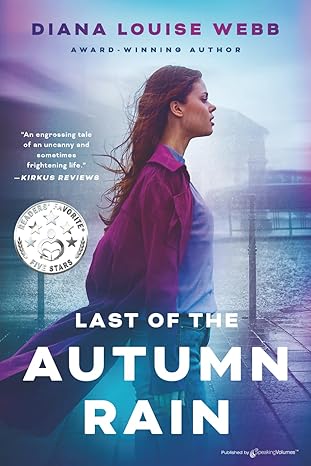
Diana Louise Webb’s Last of the Autumn Rain is an emotionally charged novel that weaves together trauma, tragedy, and mental health through the voice of a haunted narrator named Julie. The story opens with a deadly accident at a nightclub that kills Julie’s best friend and spirals into a psychological journey touching on abuse, betrayal, obsession, and revenge. As Julie revisits past experiences from her childhood in New Jersey to a near-fatal spring break trip to Mexico, she reflects on the forces that shape identity, morality, and the thin line between sanity and madness. With fictionalized events that feel brutally real, Webb holds nothing back in her mission to spotlight the stigma and neglect surrounding mental health.
The writing is sharp, vivid, and unsparing. Webb’s prose can be poetic in one moment and violently raw in the next. Her scenes of abuse and trauma are gut-wrenching without being gratuitous. I often found myself re-reading lines, not just for their emotional weight but because they caught me off guard in how directly they confronted the reader. There’s a beautiful messiness in the storytelling. Fractured timelines, flashbacks, inner monologues, and haunting hallucinations that all blend into Julie’s spiraling mental state. At times, the chaos felt overwhelming, but it always felt deliberate. It’s like the author doesn’t want you to read this passively, she wants you to feel every drop of blood, guilt, and silence.
I found myself torn over the narrator. Julie is not a reliable or particularly likable character. She is violent, self-serving, and damaged. But that’s kind of the point. I couldn’t shake the feeling that Webb was daring me to judge her. One moment, Julie is saving someone from abuse; the next, she’s casually describing a childhood act of horror with a twisted sense of pride. I didn’t always agree with the choices she made. The novel sometimes seemed to blur the line between victim and perpetrator, and I admired Webb’s courage in forcing us to sit with those contradictions. It’s rare to see a female protagonist written with this much moral ambiguity and rage. And it’s even rarer for a book to make me feel that conflicted and still want to keep reading.
Last of the Autumn Rain is not a light or easy read. It’s intense, messy, and emotionally exhausting, but in the best way. This book is for readers who crave raw truth over tidy resolution. It’s for those who have battled demons or known someone who has. I would especially recommend it to fans of Gillian Flynn or Alice Sebold, readers who don’t mind going into the darker corners of the human mind. Webb has something important to say about pain, silence, and survival, and she says it with brutal, unforgettable honesty.
Pages: 235 | ASIN : B0FGQMMC27


