Blog Archives
Talthybius

Talthybius is a haunting and visceral reimagining of the Trojan aftermath. Told through the weary eyes of a messenger caught between glory and guilt, the story dives deep into the moral wreckage that follows victory. The book begins with the fall of Troy and never looks away from the ruin. Each chapter walks through ash and blood, following the Greek soldiers who linger among the dead and enslaved, unraveling their sanity as they prepare to sail home. The prose is poetic yet brutal, a steady rhythm of horror and reflection. It feels like a lament for everything war strips away, honor, innocence, and the very idea of home.
There’s no clean hero here, just men rotting in their own triumph. I liked that honesty. The dialogue is sharp but weary, like every word costs something. The authors paint the world not with beauty but with a kind of grim elegance, and I couldn’t stop reading. What struck me most was how small everything feels. Even the mighty Odysseus seems shrunken, his cunning dulled by time and grief. The narrator’s voice trembles between obedience and revulsion, and I found myself rooting for his silence to break. The violence is constant, but it’s never mindless, it feels like a slow confession.
The writing is so rich and dense that sometimes I had to stop to take it all in. It’s emotional as well. The scenes of cruelty are written with precision, and that makes them harder to stomach. Yet I admired that courage, to write without flinching. The book feels ancient and modern all at once. It asks what it means to be human when the gods have left, and the answer isn’t comforting. By the end, I felt like I had watched something sacred decay. And somehow, I couldn’t look away.
I’d recommend Talthybius to readers who want to feel something raw. If you love stories that peel back myth and stare straight at the people underneath, this is for you. The book belongs to those who appreciate tragedy not as spectacle, but as truth. Reading Talthybius felt a lot like stepping into the moral shadow of The Iliad, but with the raw intimacy and emotional weight of The Song of Achilles stripped of romance and steeped instead in regret and blood.
Pages: 273
Golem Mine
Golem Mine is a story that blends sensuality, faith, myth, and madness into a haunting exploration of creation and obsession. It follows Rachel Rabinowitz, a passionate film student whose fascination with cinema, particularly early horror and the Frankenstein myth, draws her into a spiritual and psychological descent. Through her study of Mary Shelley and Jewish mysticism, Rachel becomes obsessed with the idea of the Golem, the legendary creature made of clay and breath. Her journey from curiosity to conviction takes her from classrooms to synagogues to the quiet heartland of America, searching for the knowledge to create life and, maybe, to understand her own.
Author Donald Schwartz writes with a lyrical, fevered energy, almost like he’s channeling the story rather than crafting it. At times, the prose is hypnotic, sentences twist and roll like the waves of Rachel’s inner turmoil. I loved the audacity of it, how the story dared to tangle faith with lust, myth with modernity. Rachel’s voice lingers with you, raw and unpredictable, torn between intellect and impulse. I found myself alternately enchanted and disturbed, which I suspect was exactly the author’s intent.
This is a dense read. The language can feel heavy with philosophical weight. But there’s rhythm in it, a strange music that rewards patience. I admired how Schwartz stitched together cinematic history, Jewish lore, and feminist thought into something that defies genre. It’s erotic and sacred, tragic and funny in small flashes. Some moments made me squirm, others made me grin, and a few stopped me cold. Beneath the shock and sensuality, there’s a deep sadness in Rachel’s need to create, to be seen, to make sense of her own divinity.
When I closed the book, I felt a mix of exhaustion and awe. Golem Mine is not a casual read. It’s an experience. I’d recommend it to readers who crave something daring and layered, who don’t mind wrestling with big questions about creation, God, and the dangerous hunger for meaning. It’s for those who like their stories wild, intimate, and just a little unhinged.
Pages: 135
Reputation Is Paramount

Gods of Glenhaven follows a middle-aged couple and their teen daughter trying to navigate a failing marriage and broken family dynamic in a talkative small town. What was the inspiration for the setup of your story?
I love suburbia for many reasons. What fascinates me most about it is that it seems like the goal is to eliminate as many of the hardships and vicissitudes of life as possible. In the suburbs, you try to capture and keep the good things, while either ignoring or reframing the bad things you can’t manage to avoid. And reputation is paramount — you don’t want to become known as anything other than an upstanding person who loves their job, their children, and their community.
Do you have a favorite scene in this story? One that was especially enjoyable to craft?
I especially enjoyed writing the scene in the Home Depot, which takes place the morning after the Rites of Initiation at the high school. There are seventy naked people slumbering amidst the lumber and wheelbarrows, and a stunned police sergeant has to sort it all out.
What were some themes that were important for you to explore in this book?
The value of the social contract is the big theme. This is why I needed Gods (who don’t play by the rules) and the potential for humans to have unusual power, which might encourage them to break the terms of the social contract.
Can fans expect to see more releases from you soon? What are you currently working on?
I like to write short comedy pieces — my work has been published in McSweeney’s, Points in Case, Weekly Humorist, and other magazines. I’m doing a lot of that kind of writing while also beginning work on a second novel, entitled Little Dan.
Author Links: GoodReads | Facebook | Website | Amazon
When Greek gods sweep into the quaint suburban town of Glenhaven to untangle their messy love lives, the helpless mortals don’t stand a chance.
Christian Orr, struggling with work and erectile dysfunction after discovering his wife’s infidelity, has just moved into what his daughter Francesca calls the Divorced Dads Apartment Complex. His high-powered attorney ex, Sloan, is jaded and restless, leaving precocious Francesca caught in the crosscurrents of change.
Enter Dionysus-“Dee”-the god of wine, sex, and questionable decisions, who shows up searching for his estranged wife Ari and their teenage son Maron. After three thousand years of Dee’s antics, Ari has had enough. She’s struck a deal with Zeus to start fresh-as a mortal suburban mom. And what’s more normal than falling for a regular guy like Christian? If only Dee would stop tearing through Glenhaven in his quest to win her back.
Drunk on Dee’s wine, the residents of Glenhaven form chanting covens in the woods, participate in ecstatic rituals, and experience divine revelations-all while Led Zeppelin’s “Whole Lotta Love” loops faintly in the background of their lives.
Gods of Glenhaven is a hilarious, poignant, and confronting novel about the universal fears and follies of the human condition, and the joy and freedom we can experience by letting go.
Gods of Glenhaven
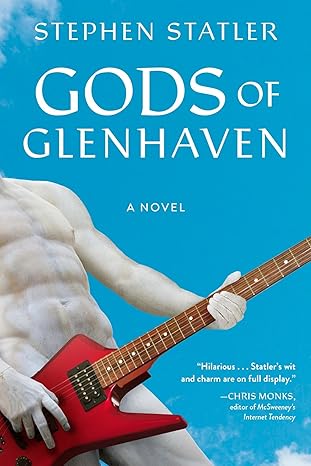

Gods of Glenhaven is a raw, darkly funny, and deeply human story about people falling apart and trying to stitch themselves back together. It follows Christian Orr, a man sliding into middle age with a broken marriage, sexual dysfunction, and a pile of humiliations that somehow keep getting worse. His wife, Sloan, is a driven attorney who mistakes dominance for control until her life unravels, too. Their teenage daughter Francesca floats between them, trying to make sense of the wreckage. Around these three, the town of Glenhaven buzzes with gossip, longing, and absurdity. It’s a small world full of big emotions, where humor and despair share the same seat.
I found Statler’s writing disarmingly sharp. Every line feels alive with awkward truth. He doesn’t flinch from embarrassment or pain, and he writes humiliation with the kind of precision that made me both laugh and squirm. The dialogue is quick and biting, but the silences hit harder. Christian’s spiraling self-awareness feels almost too real at times; I could feel the claustrophobia of his failures and the absurd hope that something, anything, might still redeem him. Sloan, on the other hand, made me furious and fascinated in equal measure. She’s brittle, proud, often terrible, but undeniably human. The novel moves like a tragic comedy that keeps threatening to tip either way.
What really struck me was how the book keeps shifting tones without losing its rhythm. One page had me laughing at Christian’s disastrous attempts at self-improvement, and the next left me staring, a little shaken, at how much loneliness the humor covered up. Statler writes like someone who has seen both the joke and the wound and refuses to pick one. The story feels like real life that’s been turned just slightly toward the absurd, so everything painful also glows with a weird kind of beauty. It’s messy, brave, and very alive.
Gods of Glenhaven is a brutal but compassionate look at failure and forgiveness. I’d recommend it to readers who love flawed people written with empathy. Fans of writers like Richard Russo or Jonathan Franzen will probably feel at home here. If you’ve ever felt lost, humiliated, or ridiculous and still had to get up the next morning, this book might hit uncomfortably close to the truth.
Pages: 378 | ASIN : B0F8KPGH67

Fairy Lights: Bed Time Poems & Gallery of Fairytale Art from Yesteryear

Fairy Lights is a wonderful collection of bedtime poems interwoven with fairy lore, myth, and timeless art. Moving through the seasons of the year, the book gathers stories of spirits, shape-shifters, ocean dwellers, elven royalty, and everyday enchantments. It draws from Irish, Nordic, Greek, and New World traditions, blending them into verses that feel both ancient and freshly spoken. Each section carries its own mood, from the playful revels of spring to the melancholy mysteries of autumn and the haunting stillness of winter. Alongside the words, the author curates a gallery of fairytale art from past centuries, which adds a lovely echo of history to the poetry.
What struck me most was the way the poems refused to be pinned down. They could be lyrical and delicate in one breath, then strange, even eerie, in the next. A piece like A Piece of Amber felt tender and tragic, like a whispered legend by firelight, while something like The Baallad of Blaackie Coal made me grin with its folkloric humor and Scots cadence. I loved how the writing carried me away from reason into a place where fairies still dance, seashells sing, and even the smallest bird is mourned with reverence. The language is musical and sometimes unpredictable. At times, I found myself rereading lines not because I needed to but because I wanted to savor the rhythm.
The author clearly delights in layering metaphor upon metaphor, which creates a rich tapestry. This very quality also gives the book its dreamlike atmosphere. It reminded me of wandering through a forest at dusk, you don’t always know what you’re seeing, but the mystery is the point. I also appreciated how personal some of the poems felt. Knowing that pieces like To Wee Russet Tuft came from real experiences gave the collection an intimacy that balanced out the more mythic material.
Fairy Lights feels like a gift for anyone who still listens for magic in the quiet hours. I would recommend it to readers who love fairytales, folklore, or poetry that doesn’t mind breaking free from neat structure. It’s especially suited for those who want to share stories aloud, whether with children at bedtime or with the inner child who still believes in hidden worlds.
Pages: 181 | ISBN : 0473742454

Psychoactive-Aided Divination
Darkness and Blight follows a shaman as she claws for survival in a collapsing world of carrion ghouls, fractured tribes, and cruel magic, where every act of endurance blurs the line between humanity and despair. What was the inspiration for the setup of your story?
Defying Expectations and Dragon Pedicures
My goal as a writer is to subvert expectations, a role I may sometimes take too much to heart, occasionally progressing even to the sentence level. Like many readers of fantasy, I grew tired of the medieval European settings, omnipotent gods, brave knights, and damsels in distress. Lydarc may be in almost constant distress, but she’s no damsel, not by a long bow shot, mister!
I also wanted to set the story in my own backyard, the forests of the Siletz Valley, where I hunt and explore. The Valley of the Giants, a real old-growth preserve, formed the idea for the blastforms. Valsetz, at the end of the book, is a real abandoned town in this rugged coastal forest.
But from there reality takes a severe hit. I always wanted to incorporate shamanism in a story. The spirit journey, spirit animals, and psychoactive-aided divination are all a very real part of that ethos. What seems like a crazy dream to us is the natural state in a shamanic worldview. Who’s to say that our reality is the most correct version?
Lydarc’s voice is so distinct. How did you develop her perspective without softening the harshness of her world?
To me, Lydarc epitomizes the human experience. Through the endless pain and struggle, all she really desires is someone who cares about her, a home, and maybe a tiny measure of peace in the end. It’s no grand victory. Life is not guaranteed to be easy or even rewarding. It just is. Deal with it.
What were some themes that were important for you to explore in this book?
Strength through adversity and over time. The incredible—and sometimes neglected—value of found family. The evolution of romantic love into something even truer. The deep-seated desire for dragons everywhere to just make it to their pedicures on time.
What is the next book that you are working on, and when will it be available?
Originally, I intended for Darkness and Blight to be a standalone novel. How can anyone write fifteen sequels? Then a thought kept nagging at me: what if Achus, the head witch from hell, actually survived and followed Lydarc and her companions back to the human realm? The second book—the working title is The Drunken Corpse—is currently writing itself and should be available in early 2026.
Author Links: Goodreads | X (Twitter) | Facebook | Instagram | Website | Amazon
In the broken wastes of post-apocalyptic Oregon, reality has split into three realms: the scarred human world, the damned underlands, and the Overs—godlike beings hungry to invade.
Lydarc, pierced with a cursed shard of an Over, suffers endless pain, berserker rages, and visions of a blood-soaked future. When her tribe is slaughtered and their souls trapped in the underlands, she leads a desperate band into hell itself—through battles with mythical monsters, betrayal, and a hellgate that demands death as the price of entry.
Among her allies are a cryptic mentor, a spirit-bound apprentice, a dragon who hoards books instead of gold, and an ex-lover begging her to save his lost daughter. But one of them hides a devastating lie. And awakening the shamanic power inside her could destroy what’s left of humanity.
Darkness and Blight is a brutal grimdark fantasy odyssey where myth collides with quantum horror, and one fractured soul must face traitors, monsters, and her own guilt to save her people—or shatter the last remnants of reality.
The Beauty of Life
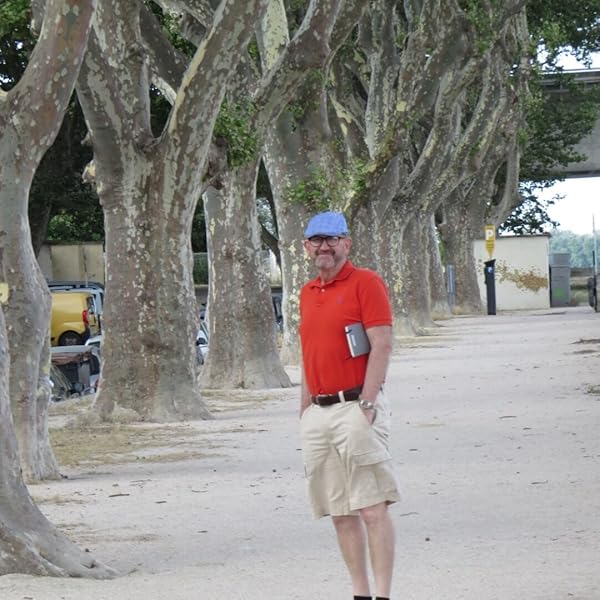
A Sea Tail follows a retired dentist who is shown a dead fish with scales and skin, leading him to embark on an adventure to determine if mermaids exist. What was the inspiration for the setup of your story?
I started working on A Sea Tail on a week-long vacation to Topsail Island, North Carolina. I had recently finished my first book, Shall Die by the Sword, and had gotten bogged down in the sequel. So, I was in a space where I was not writing anything major at the time. Being the father of two daughters, however, I was always trying to write books that appealed to them. And nothing appeals to a preteen girl like a mermaid. Furthermore, since I was a child, I have always been interested in fantasy and folklore. The final stimulus was a small sequence in one of the Pirates of the Caribbean movies that had a side story about a mermaid. That got me writing. And as for Venice, it is the most beautiful city in the world, and what a place to merge water, fantasy, and story.
What was your inspiration for Dr. Manque’s character, and how did you craft his outlook on life?
For the lead character I wanted someone with some quirks, and in contrast to my first book, I wanted to write the main character as a little older. Also, I wanted to paint him as someone who could be stone deaf to the beauty of Venice.
What were some themes that were important for you to explore in this book?
That’s a good question. There are a lot of things I could talk about: how our modern age can be so sterile for one, and how we have distanced ourselves from our past for another, but maybe the theme I was most interested in was beauty, and by that I don’t mean physical beauty, although the mermaid is portrayed as staggeringly beautiful, what I was exploring was the beauty of life, and becoming aware of how a beautiful life is one connected to others. And how discovering that someone needs us is just about the most beautiful thing in the world.
What is the next book that you’re working on, and when can your fans expect it out?
Thank you for asking. My next book is The Ordinary Adventures of Somerset Soames von Hesse. This is a coming-of-age novel about a young boy growing up in a missionary family in Egypt, Lebanon, and the coming back to the states in the 60’s. The story centers around the fourth child, Somerset, and his quirks, and his fascinations. It also deals with the tension because he likes the Beatles and fiction, and both of those are highly discouraged in his faith group. The book will be out in paperback within the next couple of weeks.
Beyond that, I will be working on Volume 2 of my epic fantasy series.
Author Links: GoodReads | Facebook | Amazon
Audible version coming soon!
My Land, My Nile
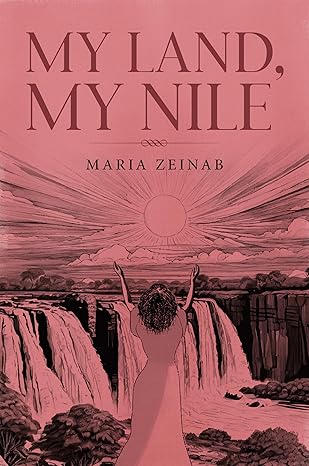
My Land, My Nile, by Maria Zeinab, is a sweeping and multi-generational tale that threads together history, myth, and personal memory along the Nile’s banks, from the Abyssinian Highlands to the Nubian Valley. It blends the oral traditions of Nubian culture with vivid depictions of displacement, political tension, and familial bonds. Through interwoven narratives, crocodiles as sacred guardians, the fall of the legendary Yahodi Nog, and the odyssey of Nabra-Isat Soliman returning to her ancestral land, Zeinab paints a textured portrait of a people’s resilience against the tides of time, politics, and water. The novel drifts between the past and present, memory and vision, often blurring the lines between the real and the mystical.
Reading this book felt like stepping into an old Nubian home where the walls are lined with family photographs, some faded, some vivid, each whispering a story. Zeinab’s writing is drenched in sensory detail like the smell of sandalwood, the glint of green crocodile eyes, the oppressive hush of a summer noon, and that attention to the tangible pulls readers deep into the narrative. Her characters are layered, never reduced to tropes, and their conversations carry the weight of centuries. That said, the lyrical style can be somewhat demanding. The shifts between timelines and voices require patience, but for me, that challenge was part of the reward. The story never panders. It trusts the reader to wander, to get a little lost, and to return richer.
What moved me most was how the novel treats loss, not just the loss of people, but the erasure of land, language, and ways of life. Zeinab doesn’t rush to offer hope. Instead, she lets grief sit in the room, lets it breathe beside the characters, until its edges soften into something like acceptance. I felt my chest tighten during the moments of cultural theft, like when Nubian names are stripped from official documents, because it’s not just fiction; it mirrors real wounds that history keeps opening. Yet even in the heaviest passages, the story never forgets the beauty of what it’s trying to preserve. It’s a rare balance of lament and love.
I would recommend My Land, My Nile to readers who appreciate historical fiction that leans into poetry and myth, and to anyone who has a soft spot for intergenerational sagas rooted in place. For those who have ever felt the pull of an ancestral home, whether visited or only imagined, this book will feel like a homecoming, with all the joy, ache, and ghosts that it entails.
Pages: 352 | ASIN : B0FH2Q9KQT


 LITERARY TITAN