Blog Archives
The Mantle of the Past
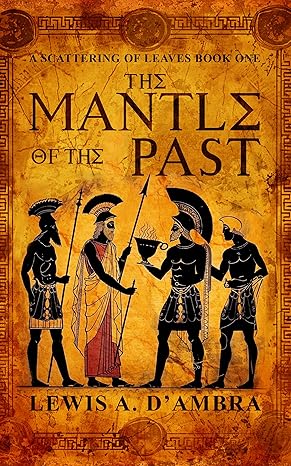

The Mantle of the Past by Lewis A. D’Ambra transports readers into the richly woven world of Kolgennon, a realm brimming with historical depth and mythological intrigue. This first book in the A Scattering of Leaves series captures the essence of epic storytelling through a tapestry of interconnected characters and events that shape the fate of their world. The narrative follows multiple protagonists, each struggling with their destinies against the backdrop of a tumultuous era marked by divine interventions and mortal ambitions.
D’Ambra’s writing is nothing short of captivating. His ability to craft detailed settings and intricate character arcs is reminiscent of classic historical epics. The world-building is particularly impressive; D’Ambra meticulously constructs Kolgennon with its diverse cultures, political intrigues, and mythological history. One of my favorite sections describes the construction of Tekolgertep and the vision of King Tekolger, which provides a vivid illustration of how the city’s grandeur came to be through sheer determination and visionary planning. The book’s strength lies in its complex characters and their evolving relationships. D’Ambra deftly explores themes of power, loyalty, and identity. The character of Kalu, for instance, provides a compelling study of leadership and the burdens it carries. His journey from a student of philosophy to a key player in the political machinations of the realm is both engaging and thought-provoking. Similarly, Sanae’s trials and her quest for identity amidst divine and mortal expectations add a layer of emotional depth to the narrative. The plethora of characters and overlapping timelines may initially overwhelm some readers. Keeping track of the intricate plots and numerous characters requires careful attention. Still, for those willing to immerse themselves fully, the payoff is substantial as the storylines converge and reveal the grand tapestry of D’Ambra’s world.
The Mantle of the Past is a remarkable work of historical fantasy that will appeal to fans of epic sagas and richly detailed worlds. D’Ambra’s meticulous world-building and deep character explorations create a compelling narrative that rewards attentive readers. This book is perfect for those who appreciate complex histories, mythological elements, and character-driven plots. If you’re ready to dive into a world where every character’s fate is intricately tied to the past and the divine, this book is a must-read.
Pages: 769 | ASIN : B0D5TX635R

Animal Court

Animal Court by Pablo Omar Zaragoza and Susan Giffin is a modern fable set in an African jungle where animals reign supreme. They convene a trial for humans, focusing on a man whose group has caused extensive environmental damage. The wildlife—including insects, marine life, and plants—serve as witnesses and jury, deliberating over the appropriate justice for humanity’s transgressions against nature. The story delves into themes of environmental protection, justice, and compassion, culminating in a surprising yet thoughtful sentence that underscores a nuanced approach to punishment.
This compelling and imaginative tale masterfully combines entertainment with a potent environmental message. The portrayal of animals adds depth and relatability, allowing readers to empathize with their plight. The author’s skill in weaving contemporary environmental issues into the narrative is commendable, effectively raising awareness in an engaging manner. One of the book’s notable strengths is its unique premise—animals holding humans accountable for ecological destruction. This inventive approach prompts readers to reflect on humanity’s impact on the natural world.
The courtroom drama is exceptionally well-crafted, with testimonies from various creatures that are both touching and thought-provoking. However, the book does have its drawbacks. At times, the animals’ governance feels somewhat contrived, and the narrative can occasionally seem moralistic. Some readers might find the message overly direct, preferring a subtler delivery.
Animal Court is a heartwarming and enlightening story that encourages readers to think critically about the importance of environmental stewardship. Its appeal spans both young and adult audiences, making it an excellent choice for family reading. This modern fable not only entertains but also inspires a deeper appreciation for the natural world and our responsibility to protect it.
Pages: 160 | ASIN : B07Z45Z223
Lycan: Solomon’s Odyssey: Chapter 1

In Lycan: Solomon’s Odyssey, Chapter 1, Hive Head Studios introduces us to an intriguing tale penned by Dennis Robinson. Set in 8000 BC in what is now Saudi Arabia, this comic book narrative embarks on the legendary origin story of the first werewolf, woven into the fabric of early human civilization. The central character, Solomon, is a young villager poised to inherit the mantle of leadership and protection for his community. Amidst the burgeoning sense of societal order, Solomon’s journey is not without its perils. The narrative does an exceptional job of portraying a palpable sense of looming threats, ranging from malevolent entities to the natural dangers of the era, all of which encroach upon the tranquility of Solomon’s village.
Robinson’s storytelling is complemented by captivating illustrations, striking a harmonious balance that breathes life into each character and the world they inhabit. The vibrant community and its multifaceted challenges are rendered with vivid clarity from the outset. Particularly noteworthy is Solomon’s character development, whose wit and humor endear him to readers and infuse the narrative with a lighter tone amidst darker themes. The comic excels in maintaining a dynamic pace, skillfully interweaving moments of tension with lighter, humorous interactions. This juxtaposition highlights Solomon’s unique personality and approach to leadership, marked by resilience and a capacity for joy even in the face of adversity. As the story progresses, Solomon’s character is tested through a series of trials that deftly blend suspense and surprise, leaving readers anticipating the subsequent development. The plot’s narrative depth and thoughtful construction raise compelling questions about courage, loyalty, and the struggle against formidable foes.
Lycan: Solomon’s Odyssey, Chapter 1, is more than a mere adventure tale; it is a story of courage, camaraderie, and the complexities of familial bonds set against the backdrop of a burgeoning civilization and an enigmatic, powerful force. It’s a compelling read that quickly captures the imagination, promising an absorbing journey for those who delve into its pages. The initial chapter sets a high bar for the series, leaving readers eagerly awaiting what comes next in Solomon’s Odyssey.
Pages: 78 | ASIN : B0B5RXNY99

Community Among Women

Reflections: A Mythology in Poetry & Prose is a collection of poetry and prose related to your own coming-of-age period through classic literature and mythology female figures. What inspired this collection of poetry?
I began Reflections as a means of examining life experiences that shaped me, a sort of writing exercise that I never expected to come together as it did. The use of myth and character helped me to reflect on my own experiences with a degree of removal that I hope make them relatable to my readers.
What were some ideas that were important for you to share in this book?
The theme of community among women was one that kept jumping out at me while I wrote. As I was working towards healing myself, it was the company of the women in my life – my chorus, if you will – that helped me to lick my wounds and find my inner strength. I hope that these poems and stories help us all to stop competing and work towards building strong relationships.
What is one thing that people point out after reading your book that surprises you?
The universal nature of love, heartbreak, and healing. I have received so many messages from readers, men and women alike, who have shared their own experiences with me and the way my words helped to give them voice. This exercise in self discovery has built so many beautiful connections that I never could have expected.
What is the next book that you are working on, and when can your fans expect it to be out?
I’m bouncing around between a couple of ideas currently! I have a novel in the works, an examination of the guilt that comes from writing about the people in your life, and I’m very excited for that. It’s still in the early stages, but I’m hoping to start querying it by the end of the year.
Author Links: GoodReads | Instagram | Facebook
Reflections offers readers snapshots of the author’s own coming-of-age contextualized within the works of Homer, Shakespeare, Sappho, and even King James. Superimposing their stories on her own, Hall invites the reader to join the likes of Aphrodite, Lilith, Eve, and more as they wade through the beautiful, and often treacherous, waters of womanhood. Find yourself within the threads of a universal story, surrounded by a chorus of characters who have walked the same road.
With lyrical language and heartbreaking vulnerability, Reflections blurs the line between allegory and reimagining to create something wholly its own.
We Walk On Ash


We Walk on Ash by Pablo Zaragoza intricately weaves a tapestry of folklore and fantasy within the somber backdrop of post-Hiroshima Japan. This Historical fantasy novel delves into the poignant journey of a grief-stricken father, transformed into a samurai by the deity Suijin, as he navigates through the remnants of a world engulfed in flames. His quest is one of redemption, driven by the need to save Japan from the wrath of Kagutsuchi, the fire deity, and to protect what remains of his family.
The narrative elegantly explores themes of grief, redemption, and faith, as Akimitsu, the protagonist, seeks solace and meaning amid the devastation. His resilience and determination shine as beacons of hope in a landscape marred by loss. His relationship with his daughter, a central pillar of the story, evolves into a deeper bond as they collectively confront and overcome their grief. Akimitsu’s journey is symbolic of a larger quest for redemption, not only for himself but for his nation. The novel deftly handles the themes of sacrifice and rebuilding, painting a vivid picture of the struggles and fortitude required to piece together a life—and a country—from the ashes of destruction. While the book offers an enlightening glimpse into Japanese history and culture, some readers might find the narrative’s structure and the use of Japanese terminology challenging. This aspect, however, does not detract from the book’s overall impact. Instead, it adds a layer of authenticity to the story, immersing the reader in the complexities of its setting. The recurring motif of resilience, a cornerstone of the narrative, is a powerful reminder of the human spirit’s capacity to endure and overcome even the most harrowing circumstances.
Pablo Zaragoza masterfully combines elements of folklore, fantasy, and historical drama to create a narrative that is as educational as it is emotionally resonant. While it presents challenges in its complexity and cultural specificity, the novel ultimately succeeds in drawing the reader into a deeply immersive world. It serves as a testament to the enduring themes of resilience, hope, and the unbreakable bonds of family. For those seeking a meaningful and thought-provoking read, We Walk on Ash offers a unique perspective on overcoming adversity and finding redemption amidst chaos.
Pages: 177 | ASIN : B0CN5TGL2X
Reflections: A Mythology in Poetry & Prose

Reflections: A Mythology in Poetry & Prose by Azure Hall is an enthralling anthology of stories and poems that delve into the lives of mythological feminine figures reimagined through a contemporary lens. Hall masterfully weaves historical narratives with her unique perspective, offering a fresh take on influential mythological tales. The piece “Homemaking in Wartime” illustrates the disruption of daily life by “Trojan Horse houseguests,” while “Odysseus” captures Penelope’s longing for her absent lover. “Salt” poignantly depicts the internal conflict of a woman haunted by a past love. This collection stands out as a profound exploration of femininity, love, and the enduring power of mythology.
Hall’s innovative approach breathes new life into these ancient stories. Her depiction of Aphrodite as a modern seventh-grader grappling with societal expectations regarding femininity illuminates the timelessness of these narratives. This modern-day Aphrodite becomes a symbol of resistance against prescribed norms, mirroring the struggles of young women today. The book’s lyrical prose and evocative metaphors, such as “With each strike, the pointed chisel went deeper, unleashing you like a lily leaning towards spring,” showcase Hall’s skillful blend of artistic expression and natural imagery. The concise, engaging titles further enhance the collection, inviting readers into each new story with curiosity and anticipation. The first-person narratives, brimming with palpable emotions, establish a deep connection between the reader and the characters.
Reflections is a testament to the complexity of human emotions and societal roles, offering insightful commentary on heartbreak, desire, growth, and the constraints imposed by society. It’s a must-read for those who appreciate the intricate interplay between mythology, poetry, and the exploration of authentic feminine voices. Each piece not only enthralls but also leaves a resonating impact, making Reflections a memorable journey into the depths of myth and emotion.
Pages: 108 | ASIN : B0CM9QW8WC
Connecting to My Roots

Third Moon Passing follows two Korean girls from different families whose lives are intertwined and thrust into the world of the gods who walk the earth. What was the inspiration for the setup of your story?
Inspiration for the basic narrative came from the different folktales I listened to as a child, as well as the ones I discovered in Internet searches when I became increasingly interested in my heritage. As a zainichi Korean, I spent my childhood largely disconnected from my Korean roots and heritage, and as I approached high school I became very curious as to what life must have been like for my ancestors (hence my efforts to realistically portray life in a seaside village during the Joseon dynasty, instead of remaining strictly in the realm of the deities). In addition, it was around this time that I, looking to connect with my roots, discovered an article about the 1871 American Expedition to Joseon Korea. While it took some time, this tidbit of history eventually began to dominate my imagination and nag at me to write about it. I couldn’t shut it off—the history, the setting, the plot, and the characters were all there begging for attention. This was when the story began to construct itself in my head: the historical tensions and battle would serve as the backdrop for the book, while Korean folklore and shamanism would propel the narrative forward.
As for the structural setup and the placement of each character in the story, I was against putting one main character in the midst of all the turmoil. There had to be two—that was a rule that I created for this book long before I realized it. This way, they would be able to bring out the distinct qualities in each other that would help them take on this quest. I realize now that I could have easily written Third Moon Passing from the perspective of one of these girls in the first person, or entirely in third person, or even alternated between the two throughout the narrative, but after some reflection I truly think that telling it from the POV of Chansol was best. By telling Third Moon Passing from the perspective of a god, I was able to explore this character from the first-person POV, as well as achieve the fly-on-the-wall perspective that I dabbled in throughout the narrative. It also made including scenes of the American soldiers and war planning a much easier task.
The writing in your story is very artful and creative. Was it a conscious effort to create a story in this fashion or is this style of writing reflective of your writing style in general?
I can’t recall forcing myself to take on a certain voice—my characters simply told me a story, and I listened and wrote everything down. The majority of Third Moon Passing is the writing style that I’m comfortable with, but in every writing project that I take on—be it a novel, short story, poem, etc.—I’m always open to experimenting with different voices and styles. Third Moon Passing was an experiment in the use of a first-person point-of-view but from a goddess’s point of view, which meant that I could alter between the first-person and a fly-on-the-wall perspective. This made it easier for me to create a balance between folklore and history, as well as to keep—at the very least—a version of my own writing style throughout the work.
What were some themes that were important for you to explore in this book?
With the inclusion of gods and divine intervention, the theme of fate and the power of individual choices began to emerge. The idea of fate and the fine line between what-must-happen vs. what-could-happen, whether or not fate itself exists, and how much control one can exert over a situation before it grows too big for a single individual to handle were themes that I found myself toying with. Defying social hierarchies was also something that wound up in Third Moon Passing: none of the main characters want to take on the responsibilities that are given to them by birthrights and strict social customs, and this goes back to the idea of the impact individual choices can have. Family and the relationships between generations have always been important to me, and such themes also found their way into the book.
Is this the first book in the series? If so, when is the next book coming out and what can your fans expect in the next story?
Third Moon Passing is the first book of the Haedong Chronicles, a planned four-book series through which I intend to explore the four invasions of Korea during this time period: first by the French, then the Americans, the Japanese, and lastly the British. I’m currently polishing my final draft of Book Two, The Water Stricken, a prequel that revolves around the murder of a nobleman’s concubine amidst the French Invasion of Ganghwa-do in 1866. In it, I try to explore the choice that many Korean Catholics were forced to make at this point in time: your country or your faith. The main characters will all be different, but I’m excited to say that there will be some cameo appearances made by the characters in Third Moon Passing! I hope to have it done by the end of 2023, and out sometime next year—I can’t wait to share it with everybody!
Author Links: GoodReads | Website
Five years ago, the mountain god’s daughter and the dragon of the Han River caused a terrible accident. Now, they decide to set things straight—by calling on two human girls that are somehow at the heart of it all. As a result, the shaman’s rebellious daughter Daseul, along with the scholar’s tomboy Wolhwa, are both thrust from their lives in Haedong Village and into the realm of the gods. But with an ominous curse, hidden enemies, and the rapid approach of aggressive Western forces, will the girls—and the gods—be able to discover the secrets of their entangled past before it’s too late?
In Third Moon Passing, Rina Olsen presents a world where ancient folk tales become a reality, where gods and humans alike walk the earth, and where history can change its course with the flick of a dragon’s tail.



 LITERARY TITAN