Blog Archives
Every Journey is Valid
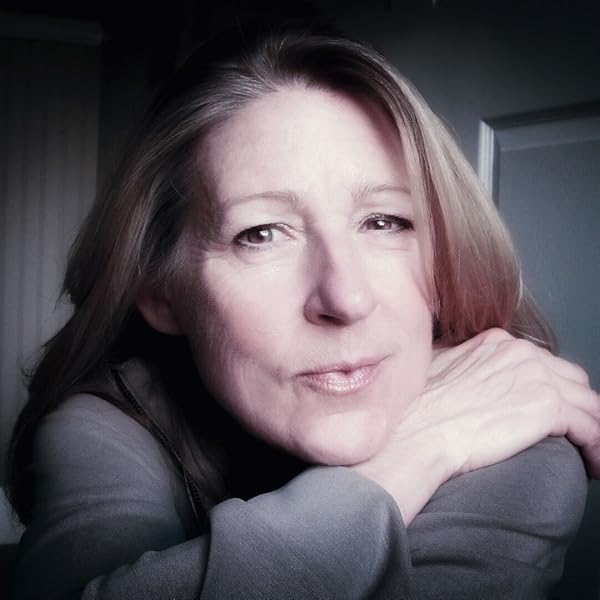
In Barely Visible, you share the heartbreaking loss of your daughter and the challenges and victories that come with raising a son with autism. Why was this an important book for you to write?
I was 5 1/2 months pregnant with our daughter when it was discovered that something was seriously wrong. Dozens of tests revealed a very rare duplication of chromosome 9p. We were told that if she survived, she would have no quality of life—yet she would look normal. That struck me hard.
At seven months, we faced the devastating decision to end the pregnancy. I truly believe we were never meant to walk down that path. Even if her physical features appeared normal, our daughter’s disability would have been readily apparent. People would have looked upon us sympathetically. They would have granted us accommodations and leeway because they would have been able to see that it was an unworkable situation. Her behaviors would have been accepted without explanation.
Instead, we were destined to face the challenge of parenting a child whose disability is not readily visible. On the surface, my son looks like every other kid out there, but he interprets and reacts to the world in ways that most people don’t understand. It’s as if he’s trying to navigate an unfamiliar landscape with a map written in a language he doesn’t speak.
As a parent, you want to protect your child—you want to shield them from criticism and discomfort, and for others to see them in a good light. Learning when to step in and advocate for your child, versus stepping back and allowing situations to fall apart so they can learn to navigate on their own, demands tremendous foresight and strength. Watching them be bullied because they are a bit “different” is heartbreaking. Seeing them miss out on opportunities because they “don’t quite measure up” is discouraging. Knowing that it is all beyond their control is devastating.
It was important for me to share it all because living with—and parenting—an invisible disability is often a lonely and misunderstood journey. The world isn’t always kind to those who “look fine” but struggle in ways that aren’t immediately apparent. I wanted people to understand that just because a challenge isn’t visible doesn’t mean it isn’t real, or worthy of empathy, support, and compassion.
Writing Barely Visible allowed me to process my own grief, frustration, and ultimately, pride. It gave me space to honor both of my children, while having the chance to connect with other parents and individuals who are walking similar paths, often in silence. It’s a reminder that every journey is valid—whether it’s clearly marked or barely visible.
I appreciated the candid nature with which you told your family’s story. What was the hardest thing for you to write about?
The failures! There were so many along the way, it seems—a first baby with a severe chromosomal disorder, a second child with a disability, a failed marriage, a decision to ignore our son’s diagnosis, not taking the time to understand the cause of his behaviors once we did accept it, the countless missteps we made because we never educated ourselves—and so on. Granted, not all those circumstances were within our control, but they still felt like failures nonetheless. It’s difficult to acknowledge, not only to yourself, but to the world, that you buried your head in the sand, made poor choices, put your own needs first at times, and stumbled. But to admit anything less wouldn’t help anyone.
Writing about my failures forced me to confront the version of myself I’d rather forget—the scared, overwhelmed, sometimes selfish and stubborn version—the one who made decisions I regret. The minute you relive all those low moments on the page, in full view of others, they become real again in a much greater way. Suddenly, they’re exposed and permanent—and the only thing to do is own them.
Growth doesn’t come from pretending we got it all right. It comes from being willing to look back, acknowledge the hard truths, and do better moving forward. I’ve learned that it’s okay to get it wrong, as long as you keep showing up and you’re willing to learn.
What is one misconception you think many people may have about children with autism?
Because the spectrum is so broad, I can’t speak about misconceptions concerning all children with autism, but I can share from my experience as the parent of a high-functioning son and how that label creates unrealistic expectations—mainly, an assumption of success. People believe that because a child is “high-functioning,” they’ll be just fine, that they’ll somehow grow out of their limitations or eventually learn to manage them.
On the surface, my son looks like every other young adult beginning his journey in the real world. He has a college degree and a job; he drives a car, plays sports, and is even pursuing a modeling career. It gives the appearance that “he’s got this.” But the truth is far more complicated.
The moment he reacts to a situation in a way that falls outside the norm—in a way that isn’t considered socially acceptable—he’s suddenly judged differently. He’s viewed as being rude, poorly disciplined, or lacking self-control. The strengths that make him appear just fine on the surface mask the challenges he faces every day.
High-functioning doesn’t mean he doesn’t struggle and need support. It doesn’t automatically equate to maturity, independence, or the ability to think critically in every situation. What it means is that his difficulties are simply less visible, and people don’t take the time to understand him or make space for him. It’s easier to say, “He’ll be fine,” than it is to recognize the effort it takes for him to get through each day and do the hard work of accepting, understanding, and supporting him. As a result, he ends up vulnerable to judgment and isolation.
What is one thing you hope readers take away from your experiences?
None of us is perfect, and parenting is hard, period. But when you’re raising a child who isn’t neurotypical, the challenges multiply. It’s okay to struggle. It’s okay to feel overwhelmed, frustrated, and exhausted. That doesn’t make you a bad parent; it makes you human.
What I hope readers take away is this: even when you feel like you’re failing, even when you’re taking three steps back, you are still moving forward. You’re still by your child’s side, day after day, doing your best and loving them. That’s what matters most. I want parents, especially those raising high-functioning autistic children, to know that it’s never too late to do better. Get vocal—not just with the world, but with your child. Talk to them. Teach them who they are. Help them understand how their brain works. Instill confidence and empower them to self-advocate. I wish I had done that sooner. I didn’t—and I’m making up for it every day.
Author Links: GoodReads | Facebook | Website | Instagram | Amazon
When your child is diagnosed with autism, a million questions come to the surface and fear sets in. The discovery that they are high functioning comes as a relief—it may enable them to disguise their shortcomings. Or it may create additional problems.
Barely Visible is not a heroic tale of a champion parent. It’s a candid memoir of one mother’s struggle with the gray space between her son appearing one way on the surface, yet being quite different beneath it. Walking that fine line between when to say something and when to bite your tongue, hoping your child can handle life on his own, requires tremendous foresight and energy. How do you convince others to “cut your child some slack” when the kid they see looks like every other kid they know? How do you explain away behavior that, at face value, looks like the result of bad parenting? And how do you prevent others from discriminating against your child once you do disclose their disability?
Chronicling a journey spanning twenty-three years, Barely Visible is a mother’s admission of guilt for choosing to ignore her son’s diagnosis initially; acceptance of defeat, for rarely knowing the right thing to do; and an acknowledgment of love—not only for her son, but also for herself.
Barely Visible: Mothering a Son Through His Misunderstood Autism


Kathleen Somers’ Barely Visible is a raw and often gut-wrenching memoir that tells the story of her journey as a mother navigating the heartbreaking loss of a daughter and the challenging road of raising a son with autism. The book begins with a detailed account of the late-term abortion she and her husband chose after discovering a severe chromosomal disorder in their unborn child. What follows is the story of their second chance at parenthood, a son, Jack, whose development is anything but typical, and whose autism remains invisible to many who interact with him. With honesty and grit, Somers invites readers into the daily struggles, small wins, crushing doubts, and fierce love that shape her life as a mother.
The writing is plainspoken and real, never dressing up the pain or dressing down the joy. Somers doesn’t flinch when describing her darkest moments and emotions like grief, rage, and guilt, but she also doesn’t wallow. Her voice is steady and direct. What I liked was her description of being caught in a kind of no-man’s-land with Jack: not disabled “enough” for sympathy, not neurotypical enough to be understood. That tension runs through the whole book, and it’s heartbreaking. She captures the loneliness of parenting a child who doesn’t fit the mold and the silent battles she fights in parking lots, classrooms, and her own mind.
What I appreciated most was that this isn’t a story wrapped up with a bow. Somers doesn’t pretend to have all the answers. She admits to losing her temper, to doubting her decisions, to questioning herself constantly. But she also shows up for her son, over and over again, even when it’s hard, even when it’s thankless. There’s a quiet bravery in that. And her reflections on how people perceive disability, how a child’s challenges are judged based on how visible they are, stayed with me. She writes with a dry wit at times that cuts through the heaviness, which I found refreshing and relatable.
I would recommend Barely Visible to any parent, especially those who feel like they’re walking a path they didn’t expect. If you’ve ever struggled to make sense of a diagnosis, to advocate for a child who’s misunderstood, or to stay afloat when life doesn’t look the way you thought it would, this book will speak to you. It’s not just about autism or motherhood or grief. It’s about resilience and love and the messy, beautiful, brutal work of showing up.
Pages: 312 | ISBN : 978-1647428822

Love and Connect

In Watching Sarah Rise, you share with readers your experiences parenting a daughter with special needs and the way your family embraced a child-centered approach to autism therapy. Why was this an important book for you to write?
I wanted to share my experience with the Son-Rise Program so that more parents could know about it and how transformational it can be for all involved. I also wanted to help other people (parents and non-parents) know that any and all of their feelings are ok, even the ones they might judge as being too terrible to admit to. I often receive feedback that my honesty about my experiences and feelings that I write about in my blog is helpful for others, so I’m hoping that the book is helpful in the same way and can reach a bigger audience than my blog has so far.
I appreciated the candid nature with which you told your story. What was the hardest thing for you to write about?
The hardest thing was figuring out how to share the story in a way that would make sense for others because I felt like I could write chronologically or focus around different topics. I wanted to do both at the same time, and I think I sort of managed to do so, but that was difficult and took the help of my editor and husband to make it all work. Writing about difficult experiences and my feelings wasn’t difficult. That part comes easily for me and helps me accept and understand myself and Sarah more. Every time I reread the book, I learn things from my past self about how to really love and connect well with Sarah.
What is one misconception you think many people have about parenting a child with autism?
The idea that kids with autism have trouble recognizing the emotions of others. Sarah has a keen sense of how others are feeling. She definitely knows when I am stressed or sad, or upset about anything. She will either ask me why I’m sad, listen attentively and wipe my tears away, or feed off of my stress if I’m feeling anxious. That makes for two anxious and upset people so I’m really working on how I can keep myself on more of an even keel.
What is one thing you hope readers take away from your family’s experiences?
You don’t have to know all of the answers or be a perfect parent to make a world of difference for your child.
Author Links: GoodReads | Facebook | Website | Amazon
Families who have supported a child with special needs will connect with this memoir about Sarah, a feisty girl with autism and a unique genetic blueprint. Her mom, Jenny, is equally feisty and determined, which leads her to make a commitment that dramatically changes her and Sarah’s lives—as well as those of many others.
Sarah’s early years are filled with challenges, and Jenny and her husband, Carl, try various therapies in an effort to help her. At four years old, Sarah is still nonverbal, still doesn’t use the potty, and still struggles with eating. Jenny knows she must do more. She has heard of a method developed by the Autism Treatment Center of America called The Son-Rise Program, which, through loving, supportive interaction, aims to foster social connection in people with autism. It is a huge undertaking, requiring hours of one-on-one therapeutic playtime, which means Jenny needs to find and train volunteers to make it possible. Though Jenny isn’t sure she can do it, she decides to try. She calls her program Sarah-Rise.
Accompany Jenny as Sarah’s language explodes, her eye contact intensifies, and she plays games, plays imaginatively, uses the potty, eats healthily, reads, and writes. Have your heart warmed and your socks knocked off by this momentous journey.
Watching Sarah Rise: a Journey of Thriving With Autism
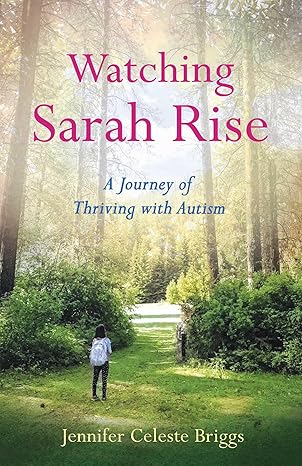
Jennifer Celeste Briggs’s memoir, Watching Sarah Rise, is a deeply personal and unflinchingly honest account of her journey in parenting a daughter with special needs. At its heart, it’s the story of a mother’s fierce love, persistent hope, and tireless effort to help her daughter Sarah grow, connect, and thrive in a world that often sees difference as deficiency. The book chronicles their family’s embrace of The Son-Rise Program, a child-centered approach to autism therapy, and how it transformed their lives. Blending storytelling with reflection, Briggs invites readers into her daily struggles and hard-won triumphs, painting a full and textured picture of both the heartbreak and the joy of parenting outside the norm.
I was moved from the very first pages. There’s a raw, grounding honesty in the way Briggs writes. She never pretends to have it all figured out. She’s vulnerable, tired, sometimes angry, sometimes thrilled, and always full of love. The writing doesn’t hide behind big words or try to be poetic; it’s just real. That’s what hit me hardest. She describes small moments with her daughter, spelling out “milkshake,” playing with candles between their toes, as if they were miracles. And you know what? They are. You start to see what she sees. Sarah’s progress becomes your progress, too. I also appreciated that Briggs doesn’t sugarcoat the toll, emotional, physical, and mental, that caregiving takes. She talks about the crying in the kitchen, the fights, the loneliness. But there’s always a thread of grit and warmth that carries you through.
What surprised me most was how inspiring the ideas in this book are, not just for parenting, but for life. The Son-Rise Program is about joining someone in their world, instead of pulling them into yours. That hit me like a brick. What if we all tried that more often, with everyone we love? I kept thinking about how much better the world would be if more of us acted with that kind of patience and respect. And it’s not just philosophy, Briggs shows how it plays out in real, messy, funny, frustrating, beautiful ways. It made me reflect on my own beliefs, my own judgments, and even how I show up for the people around me. That’s the mark of a good book: it changes how you see.
If you’re a parent, especially one raising a child with special needs, this book will speak to you like a friend who really gets it. If you’re a teacher, therapist, or anyone working with kids, it’s a reminder to lead with heart. And if you’re just someone who wants to understand more about love and growth and resilience, this book has a lot to teach. Watching Sarah Rise is not just about autism. It’s about listening. It’s about choosing to believe in possibility, even when everyone else says don’t bother. And it’s about rising, not just Sarah, but all of us.
Pages : 320 | ISBN : 978-1647428242
Neuroaffirming Support

In Nurturing Neurodivergence, you provide neurodivergent individuals with practical advice and guidance for navigating a neurotypical world. Why was this an important book for you to write?
Nurturing Neurodivergence is actually birthed from a group therapy program that I wrote not long before deciding to publish it in book form. That was a big step for me, but I wanted to do my part in making neuroaffirming support more accessible. In my years working with neurodivergent people (both as a teacher previously and now a psychologist), I find that one of the biggest challenges is to explain some ultimately abstract concepts that are essential for building healthy relationships (e.g., emotional accountability, healthy boundaries, even emotions in itself) in very concrete ways. To do that, I always try my best to ground any new learning that I’m presenting someone in everyday things or events that are already very familiar and relatable for that person. And it’s not that this need for making connections between old and new knowledge in learning is exclusive for neurodivergent people – rather, it’s a shared humanity, really. But I do think that this need is taken up a few notches for many neurodivergent people. Growing up, most kids somehow seemed to simply understand new concepts taught just by listening to the teacher reading from the textbook. I’d be as lost as Alice, but if someone were to whip out everyday objects – oranges, apples, toy figures… – and explain it to me again using those things, often, I’d get it.
Every neurodivergent person is different, but many of us are concrete thinkers. It’s a myth that all of us aren’t capable of understanding metaphors or analogies. We know from developmental psychology that the concrete learning phase needs to happen before abstract thinking can develop, which is why almost every child goes through a phase where they have and need much more certainty in what’s good and bad, right and wrong. As we grow, it’s not that we completely ‘graduate’ from concrete thinking altogether, but that we generally start requiring less of it and become more accustomed to moving onto more abstract thinking at a much quicker rate.
The way I see it, neurodivergent people are the same, but we just have a higher need to stay grounded in the concrete before we can incorporate the abstract. So, to explain to my clients why our attempts to ‘control’ our undesired emotions could instead magnify the very same emotion, for example, I might do a psychodrama experiment with them where I wear a tag that says “big anxiety” around my neck, and ask them to do their best to “get me out of the room” while listening to a played recording that is supposedly their loved one confiding in them about something important, before discussing their experience of whether they really were engaging with their “here and now” during the experiment, or with me, aka their anxiety.
I’d argue that learning life skills, including how to build healthy relationships, is just as important as learning fundamental literacy and numeracy skills, but there is never a school for it. And perhaps some folks who manage to learn things without explicit teaching could pick them up as they go and apply them in their lives to build healthy relationships, but the rest of us would be as lost as I was in classes where teachers read from the textbooks (except in this case, it’s more like teachers who told you to figure it out yourself without providing anything). This is why it’s so important for me to write this book.
Neurodivergence has so many facets. Did you find anything in your research for this book that surprised you?
Neurodivergence is incredibly multi-faceted, indeed. My lived experience and years of clinical experience are the main reasons why I’d be surprised if I found anything from my research for the book that still surprises me because neurodivergence research has always been quite a few steps behind what we encounter in practice (talk about being thrown in the deep end). So, in answer to your question, no, unfortunately, I didn’t, but rather, it was what I did not find that surprised me. Before writing Nurturing Neurodivergence, I had not done research to this breadth and depth since leaving the university, and I suppose I was expecting to see more new additions to the research literature on different aspects of neurodivergence, especially around alexithymia, for instance, than what I’d found. Then again, in the very beginning, I was trying to read more laypeople articles, instead of just academic journals, in hopes that it’ll help me with writing in layperson’s terms, which is what’s intended, but was rather surprised to find the amount of misinformation on neurodivergence that’s being floated around on the Internet and social media. Many seemed to quote random (legit academic journal) articles, but completely distort findings, or add in their own claims that are nowhere to be found on the cited source. I could see the potential of some of those misinformed claims doing significant harm. So, with the exception of referencing a few high-quality blog articles written by people with lived experience, I returned to scientific sources and allowed myself to write a thesis (I mean, that’s how we were trained to write) before rephrasing everything.
What is one thing you would like readers to take away from Nurturing Neurodivergence?
That a healthy relationship with ourselves as a full package, complete with parts we like and don’t like, is just as important as, if not more than, our relationships with the rest of the world around us.
What is the next book you are working, on and when will it be available?
To be honest, I don’t know what I was thinking – continuing my usual clinical and supervisory work and writing a book simultaneously. I’ve learnt my lesson that doing so doesn’t exactly leave much room for me to have a healthy relationship with myself, and did make my close circle promise to shake some sense into me, shall I ever feel tempted to do it again. So, I don’t know if there’ll be a next book for me. But IF (a big ‘if’) there should be one, I’ll probably dive into another aspect of healthy relationships with the self that I’ve only skimmed over in Nurturing Neurodivergence.
Author Links: GoodReads | Facebook | Website | Jasmine Loo Psyschology | Amazon
In it, you’ll find thought-provoking questions or activities for guided reflections, engaging infographics (in FULL COLOUR!) unpacking key concepts in accessible ways, as well as practical strategies to support you with navigating the day-to-day of a late-identified adult. Drawing on a range of evidence-based psychotherapy models, including Acceptance & Commitment Therapy (ACT) and Cognitive Behavioural Therapy (CBT), it is a fantastic resource for mental health practitioners. With a fierce commitment to helping late-identified adults avoid neurodivergent burnout and develop a sustainable way of living, Nurturing Neurodivergence gifts readers with the essential tools for building healthy self-view and relationships in their lives.
Nurturing Neurodivergence: The Late-Identified Adults’ Guide to Building Healthy Relationships with Self and Others
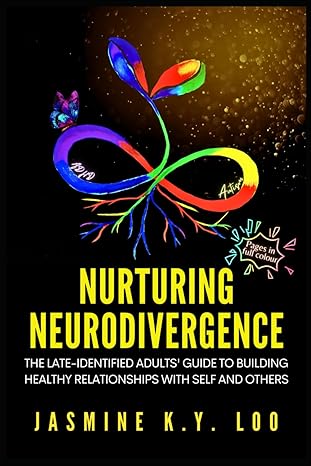
Nurturing Neurodivergence: The Late-Identified Adults’ Guide to Building Healthy Relationships with Self and Others, by Jasmine K. Y. Loo, serves as a practical and insightful guide for neurodivergent individuals, particularly those with Autism and ADHD, navigating a world predominantly designed for neurotypical individuals. Loo addresses the notable gap in literature for adults who discover their neurodivergence later in life. Through a blend of personal anecdotes and experiences from her professional interactions, the author provides a roadmap to help these individuals transition from unawareness of their neurodivergence to understanding and navigating life with this new self-knowledge.
The book is enriched with introspective questions and guided exercises, which are thoughtfully integrated either for in-book reflection or use in a personal journal. This approach not only deepens the reader’s comprehension of the topics discussed but also facilitates a more personalized journey of self-discovery and understanding.
An especially commendable feature of Loo’s work is the organization of the chapters. The book begins with an overarching introduction before delving into specific discussions on Autism and ADHD. Each section thoughtfully examines the emotional, executive functioning, and sensory processing challenges associated with each condition, along with other unique characteristics. This book is a significant resource for those interested in psychology as it highlights the reality that awareness and understanding of neurodivergence in adulthood are still emerging concepts. This realization, combined with a lack of adequate professional guidance and existing stigmas, underscores the importance of Loo’s work.
Nurturing Neurodivergence stands out for its accessibility, empathy, and the careful balance it strikes between being comprehensive and personalizable through the included exercises and queries. The book resonates as a voice for many undergoing similar experiences, offering valuable insights for neurodivergent individuals, mental health professionals, and those seeking to broaden their understanding of neurodiversity.
In essence, Jasmine K. Y. Loo’s book is a significant contribution to the field of neurodiversity and mental health. Its practical guidance and empathetic tone make it a valuable resource for a wide audience, fostering greater understanding and support for neurodivergent adults.
Pages: 148 | ISBN : 978-0645896084



 LITERARY TITAN