Blog Archives
Armando and Maisie


Armando and Maisie is a tender collection of poems that tells the story of a man who lives mostly in the woods of Central Park and the dog who adores him. The book moves through small encounters between the narrator, his dog Maisie, and Armando. Each poem gives another glimpse of Armando’s gentle philosophy, his odd wit, his hardships, and his unwavering affection for animals. The story grows quietly and steadily. It becomes a portrait of friendship, aging, loss, and the strange joy of showing up for another creature again and again.
As I read the book, I kept stopping to feel the weight of its simple lines. The poet uses plain talk, almost casual, yet the emotion sneaks up on you. I felt pulled in by the mix of sweetness and ache. The writing is warm and steady. It never tries to impress. It just speaks. I liked that. I liked how the poems let small moments breathe. A dog leaning her weight on a man. A red cap in the rain. A squirrel sitting like a regular at a bar. These little things hit harder than I expected. They felt honest and felt close to life.
Armando’s thoughts on time, change, or space might sound whimsical at first, but they left me thinking long after. I could feel the poet wrestling with affection for a man who is both joyful and worn down. I could feel his fear as Maisie ages. I could feel that sinking sense when someone doesn’t show up to their usual bench. The poems made me laugh at one moment and swallow hard the next. That swing in feeling gave the book a raw, authentic quality.
By the end, I cared about these two figures in the woods. I cared about the man who feeds the birds and the dog who looks for him, whether he’s there or not. I’d recommend this book to readers who like quiet stories with a lot of heart. Dog lovers will melt. City walkers will recognize the strange intimacy of passing friendships. Anyone who has lost someone, waited for someone, or loved someone in a simple daily way will find something here that settles in and stays awhile.
Pages: 67 | ASIN : B0FPDP4PKL

SACRED SEXUALITY: Grace and Truth Revealed in a Culture of Confusion
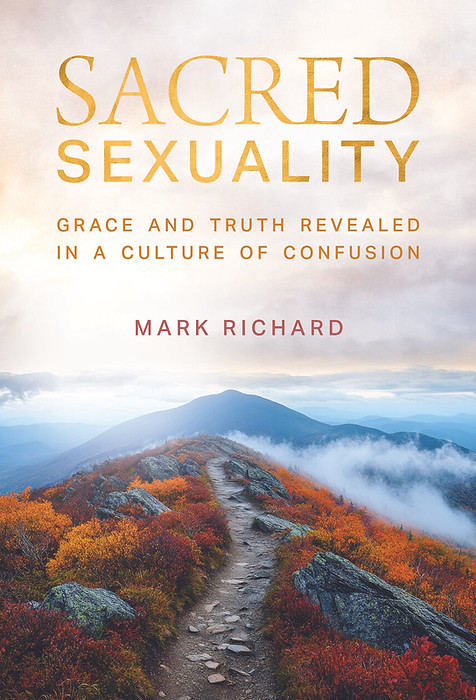

Sacred Sexuality is a straightforward and deeply personal exploration of biblical sexuality told through the lens of Mark Richard’s own journey out of what he describes as deception, confusion, and sexual brokenness. The book blends teaching and testimony, moving from his years in a same sex relationship to his eventual break with that life as he embraced what he believes is God’s design for sexuality. Throughout the chapters, he lays out a consistent argument: Scripture is the unchanging authority on sexuality, culture has drifted far from it, and believers must return to a life shaped by holiness, repentance, and obedience. The book weaves his story with biblical passages, devotional sections, and practical steps meant to guide readers toward what he calls sacred sexuality.
The sincerity of the author is undeniable. His emotional honesty, especially in the preface and his retelling of leaving behind a relationship of many years, comes through with force. There were certain moments that were thoughtful and moving, like when he described falling to his knees with Scripture open, wondering what it must have felt like to have your whole sense of self cracked open by a single passage. The writing carries an intensity that sometimes made me feel like I was sitting across from someone who desperately wants you to grasp what he grasped. That passion can be stirring. His voice is pastoral, urgent, and deeply convicted. Whether one agrees with every interpretation or not, it is clear he has lived every word he wrote, and that kind of vulnerability will resonate with readers.
The book leans on long blocks of Scripture and strong declarations about sin, judgment, and identity. There were moments when I wanted more nuance, especially when he addressed topics like same sex relationships, temptation, or modern cultural norms. His certainty is absolute, which can feel steadying for some. I would have liked more stories from people he has ministered to. The book’s frame of reference is clear, sharp, and unwavering, which offers readers clarity.
The book has a solid sense of purpose, and it delivers exactly what it promises. Readers who long for strong biblical arguments about sexuality, or who want a testimony of radical life change, will likely find this both challenging and encouraging. Pastors, parents, and believers who feel lost in cultural debates might also appreciate the book’s firm convictions and practical steps. If someone is already inclined toward a traditional Christian sexual ethic, this book will feel like a roadmap and maybe even a lifeline. If someone is questioning, searching, or carrying pain around sexuality, they may find honest reflection and heartfelt hope.
I would recommend Sacred Sexuality to readers who want a bold, earnest, Scripture-centered approach to sexuality and identity. It is best suited for those who appreciate direct teaching and personal testimony woven together. The emotion in these pages is raw, and the message is clear, and for the right audience, it could be deeply impactful.
Pages: 120 | ISBN 13: 979-8-89804-030-7
ENTWINE

ENTWINE sweeps through forests, brooks, moonlit branches, and wingbeats, all woven with a steady pulse of wonder. The book moves through poems and meditations that circle hummingbirds, birches, hawks, seeds, storms, memory, and grief, and it builds a picture of the Hudson Highlands as a living, breathing companion. It feels like a record of attention, a long look at the more-than-human world, and a quiet insistence that our lives thread through soil and water, whether we notice or not. The poems shift between close observation and big feeling, and the book holds everything from scientific detail to spiritual yearning in one continuous braid.
Author Mary Newell writes with this mix of tenderness and excitement that made me lean in and then lean back as if I needed more room to breathe. Some poems rush with energy like the hummingbirds she studies, while others settle into slow, grounded rhythms. I loved that variation. It kept me off balance in a good way. I was wrapped up in her affection for trees and birds and rocks, and then suddenly swept into her grief for lost species or her worry that the land is shifting faster than we can keep up. That emotional jumpiness felt real to me. Life is like that. Beauty and ache and humor all at once. The writing invites that kind of response.
I also found myself reacting strongly to the way she folds her own life into the landscape. Her stories of drought, gardening, watching hawks, losing her mother, or waiting for a familiar hummingbird all cracked open something soft in me. None of it felt forced. I could sense how hard she listens to the world around her and how much she wants to meet it with honesty. Sometimes the imagery felt wild and tangled. Sometimes it hit with a clarity that made me stop reading for a moment so I could feel the point land. I appreciated the intimacy of that.
ENTWINE is perfect for readers who love nature writing that feels alive, for people who enjoy poetry that is tender. If you like work that blends science with feeling or work that welcomes you into the woods and asks you to stay awhile, ENTWINE will be a good companion.
Pages: 94 | ISBN : 1609644921
Labor of Love

Surviving Cancer: Poetry and Prose is a blend of poems, short reflections, and spiritual notes that trace your journey through cancer, aging, gratitude, and faith. Your poetry shares a deeply personal experience and changes in your worldview. How hard was it to put this collection out in the world for people to read?
It was NOT difficult at all to write this book because it came from my heart, my experiences, and my mission or purpose to help others. Practically most or all of my writings are to create for good cause. Writing Surviving Cancer was really a “labor of love.” Upon publishing the book, many people were interested in reading it because they survived cancer, knew someone dear to them who had been diagnosed with cancer and either survived or died.
Do you have a favorite poem in the book, and if so, why does it hold special meaning for you?
The following poem from my book is my favorite and is meaningful for me because it explains my sweet-and-sour experience of cancer treatment in order that readers may understand and appreciate the cancer experience:
CANCER: A SWEET-AND-SOUR EXPERIENCE
In July 2020, I was diagnosed with cancer as a doctor said;
Without my earthly and heavenly guardian angels and good healthcare,
I certainly could be dead;
I suspected such diagnosis and thus had no fear;
Neither did I breathe deeply or shed a tear;
I told a few among family and friends soon after one day,
Because cancer is not something that I’m ashamed to say;
Yes, through the pain from surgery and chemo, I never lost sight—
Of the joy and appreciation of my kind and competent healthcare
workers both day and night;
Loving family and friends were there by my side,
While impostors found a way to dodge and hide;
And, of course, I prayed for God to allow me to live to do His will—
And not let microscopic cancer cells find a way to kill;
And now I’m cured and cancer-free;
I’m ready to continue God’s work as usual and as you can now see.
Note. This poem was written during December, 2020 soon after my chemo treatment and cancer-free diagnosis.
How has this poetry book changed you as a writer, or what did you learn about yourself through writing it?
I never thought that I would die from cancer; however, I learned to be even more appreciative of my life and purpose after surviving and still remaining here among the living on Earth. Even more, I learned who among my friends and family, whom I told, were supportive and there for me during my treatment. My diagnosis and successful treatment of cancer convinced me more than ever that my life has been guided and protected by God and my ancestors. The writing of this book changed me by enhancing my humility and increasing my mission of helping others.
What do you hope is one thing readers take away from Surviving Cancer: Poetry and Prose?
I contracted cancer of the colon because I refused to submit to a colonoscopy until symptoms suggested that I needed to see a gastroenterologist—symptoms that included significant loss of weight, loss of appetite, and iron-deficient anemia. I was blessed to survive cancer; therefore, I urge readers of my book to get a colonoscopy or screening for other types of cancers before it is possibly too late. Many cancers are preventable if diagnosed and treated in their early stages.
Author Website
A Comitragedy In Five Cantos

Theoryland: A Tragedy In Five Cantos follows an ambitious academic who dives headfirst into the world of highbrow theory only to have his arrogance grow, leading to his collapse into disillusionment. What inspired you to write this very unusual poem?
The date was roughly 1999. I was studying the falderal (H. L. Mencken’s word) in our public schools. I learned about flashy Academic trends such as Post Structuralism. My alumni magazine rejected an article on sophistry. A winter of discontent. I was broke. The more I read about the theories rampant at our universities, the less impressed I was. I always admired honesty and brevity as opposed to the strutting of pretenders.
I thought some of our professors ripe for mockery. You can see Theoryland start as a straight takeoff of T. S. Eliot, then you see it shift gears. Why? I was worried it would get stuck in a narrow rut so I jumped into a new car. A new ride, you might say.
In the rooms the critics come and go
sneering at the status quo.
On the dry grass, in a dry wind,
students throw a frisbee, joking.
I didn’t want to be predictable or pinned down by any particular tone. I wanted to surprise myself. The poem erupted. Abruptly, the janitor laughs, smoking. The subtext was always madness. I didn’t want to lose that at any point.
How long did it take to write?
I finished this wild thing in two or three weeks. I didn’t know what to make of it. Where do you place a very long poem? I put it on the shelf for almost 10 years! Then, one fine spring day, I took it out in the backyard and plunged in. To my surprise, I laughed and cried at all the same places. I decided this may be strange but it’s good.
Conventionally, many long poems obey traditional schemes and rules, so they are safe but also boring. Isn’t that the challenge? I took lots of chances. I had a lot of Eliot in my brain and careened from one souvenir to another. Maybe, I hoped, I could entertain people who normally don’t read poetry. This has enough story to be a play or a small arty movie. I think it would be so much fun to watch.
Were there any poets or other writers who influenced your work on this collection?
Early on my favorite poets were Walt Whitman. e e cummings. A Roman named Catullus. Ezra Pound. Lawrence Ferlinghetti. Walt Whitman coined the phrase “my barbaric yawp.” I think Theoryland is “my very own barbaric yawp.”
Eliot created the hero’s personality. J. Alfred Prufrock is a passionate but timid man. And we have all been there. Prufrock remains the same throughout his poem, but the narrator of Theoryland knows conquest and as well defeat.
What was one of the hardest parts in Theoryland for you to write?
To a great degree, it wrote itself. I worried about getting in my own way. Let it go, I kept telling myself. Take chances. What’s the most interesting thing that could happen now??? I’ve read this poem almost 50 times and every time was fun.
What is the next book that you are working on, and when can your fans expect it to be out?
I have two novels out now that were inspired by AI: Frankie and The Boy Who Saves The World.
I think they’re both excellent for telling people what scary things could happen.
In 2026 I hope to release Art and Beauty, detective mystery, and Carla –Manhattan Love Story.
At the Foot of the Mountain

At the Foot of the Mountain is a poetry collection that moves through memory, place, and the hard work of healing. The book shifts between nature scenes, family wounds, cultural identity, and quiet moments of reflection. Every poem feels like a step on a long trail where grief rises, settles, and rises again. Some pieces glow with the warmth of sunlight after rain. Others sit heavy, shaped by loss, longing, and the effort to understand where a person truly comes from. What ties it all together is a steady pulse of hope, small but stubborn, that shows up in forests, mountains, and even the kitchen.
Reading these poems, I found myself pulled in by how raw and tender the writing is. The language is simple on the surface, yet it carries so much under it. I felt a real ache in pieces about mothers, heritage, and complicated love. Some poems made me pause just to picture the scene, like the quiet watchfulness of a deer or the weight of snow on a birch leaf. The book mixes softness with sharp edges, and I liked that contrast. The emotional rhythm jumps aroun,d and I enjoyed never knowing if the next poem would sting or soothe.
I also appreciated how the natural world is used to talk through emotional pain. It is dirt, wind, and cold water. It is trees that fall and birds that migrate, and a trail that forces you to keep walking even when you would rather curl inward. The writing is unpretentious and heartfelt and sometimes unpredictable, which makes it feel alive. Now and then, the imagery overwhelmed me a little, but even that felt like part of the experience. Healing is messy. Memory is messy. The poems let that mess show.
In the end, I walked away feeling moved. I would recommend this book to readers who enjoy intimate poetry rooted in nature and personal history. It is a good fit for anyone drawn to stories of recovery told in small, vivid fragments.
Pages: 98 | ISBN : 198911945X

Literary Titan Book Award: Poetry

The Literary Titan Book Award recognizes poets who demonstrate exceptional artistry and proficiency and push the boundaries of language and expression. The recipients are poets who excel in their technical skills and evoke deep emotional responses, challenge thoughts, and illuminate new perspectives through their work. The award honors those who contribute to the literary landscape with their unique voices and powerful words.
Award Recipients



Visit the Literary Titan Book Awards page to see award information.
Surviving Cancer: Poetry and Prose

Surviving Cancer is a blend of poems, short reflections, and spiritual notes that trace Frederick Douglas Harper’s journey through cancer, aging, gratitude, and faith. It moves from personal stories about illness and recovery to broader meditations on history, injustice, friendship, love, and the fragile beauty of life. Many pieces are short and direct. Others feel like private conversations caught on the page. Across the book, Harper circles back to survival, divine protection, and a deep belief that life still has purpose for him after cancer, a theme he states openly in his introduction and early poems such as “Cancer: A Sweet-and-Sour Experience” and “God Had My Back.”
Reading this book felt a little like sitting with someone who has lived many lives and refuses to hide what any of them meant. I found myself pulled in by the plainness of the writing. It surprised me how steady and open his voice stayed, even when he talked about pain or fear. I felt that steadiness most in the pieces about his surgery and chemo, where he shares his relief, his gratitude, and even his frustration in simple, almost conversational lines. There was something honest in how he chose clarity over polish. It made me slow down and listen.
What moved me most was how wide he cast his net of concern. On one page, he reflects on his own scars. Next, he is calling America to stand up to injustice, to mourn the Trail of Tears, or to speak softly to someone who feels broken. I felt warmth rising off these pages. I also felt a kind of stubborn hope. There were moments when I wanted the book to push deeper into the contradictions of survival, but even when it didn’t, I could feel Harper’s heart working hard to stay open. That sincerity hit me harder than I expected. It reminded me that writing can be a kind of prayer or maybe a hand held out to strangers.
I would recommend this book to readers who enjoy reflective writing, people who are healing from illness, anyone who leans toward spiritual or faith-colored poetry, and anyone who wants a book that speaks plainly about gratitude and survival without pretending life is perfect. It drifts and circles back, yet that wandering shape fits a man who has lived through fear and come out wanting to share whatever wisdom he has gathered. I felt comforted, and I felt nudged to think more tenderly about my own life.
Pages: 175 | ASIN : B09RSVZ32H



 LITERARY TITAN