Blog Archives
Raw and Meaningful

From the Shallow End to the Deep End is a rich and personal collection of 95 sonnets that moves through childhood memories, family histories, heartbreaks, faith, despair, and redemption. What inspired you to write this particular collection of poems?
I have written poetry as a hobby and emotional release for my entire adult life, but very little of it has ever been shared with anyone. After fifteen years of marriage, I was informed I would be getting a divorce and needed to move out of our house, We were able to quickly enter into a shared custody agreement for our children, but the divorce itself was not as smooth and my new “environment” consisted of a small empty house, a bed, a computer, and the clothes on my back. This, of course, was underscored by the absences of my children from my life for days at a time. So I started writing poetry like never before. I wrote about my most vivid memories that brought me to the unexpected life circumstances that had just been thrust upon me. Eventually, as I wrote the poems, I realized this time the story needs to be told, and the poems would be published in a book (my first). When my daughter, a young student studying art, learned of my endeavor, she asked to do the book’s cover and illustrations for me. This collaboration was instrumental in allowing my daughter and me to stay connected and engaged during my divorce from her mother. Finally, as we talked together about the evolution of our book, we agreed that we wanted to do something “different” that avoids mainstream contemporary poetry while simultaneously presenting an artistic challenge for both of us. As a result, we decided to follow the strict format of the Shakespearean sonnet in the poetry, but apply this rigid structure to raw and meaningful material in a manner that remains simple to read. My daughter crafted the book’s cover and illustrations accordingly.
Were there any poems that were particularly difficult to write? If so, why?
The poems about my relationship with my father are troublesome to me. I wish I could remember him differently, but he was a difficult person to love. I also struggled portraying my relationships with my brothers. They left home when I was very young, and I never really knew them growing up, and I blamed them for not being around when I could have used their guidance.
On a separate note, I felt that I should include a tribute to Shakespeare if I am to write a book of poems following the format he championed over 400 years ago. Sonnet No. 51, entitled “My No. 18,” is my attempt to pay him the honor and respect he deserves by providing a modern rendition and twist on one of his most famous sonnets. It is one of the poems that I spent the most time writing and attempting to perfect. I’m not sure it reaches its intended mark, but I tried.
Finally, in direct answer to your question, Sonnet No 75, entitled “Darkest Times,” is the one poem I still cannot read aloud today. It reveals a part of me that I didn’t think existed, took me to a place I never thought I would go, and the mere thought of that poem smacks me in the face and takes me right back to it all. Even now, in writing this response, I grow teary-eyed thinking about it.
Did you write these poems with a specific audience in mind, or was it a more personal endeavor?
Both. The book was highly therapeutic for me as an emotional release during my divorce, and the collaboration with my daughter certainly enhanced the experience. Beyond that, however, the book is also biographical in nature. Someday, hopefully, I will have grandchildren and great-grandchildren who want to know who I was as a person. Hopefully, a good read through this book can answer a lot of questions they might have.
How has this poetry book changed you as a writer, or what did you learn about yourself through writing it?
Anyone who writes a book should feel a sense of victory and satisfaction. I am no different. The change is that now I feel a calling. I am already working on my next three books!
Borders and Blessings
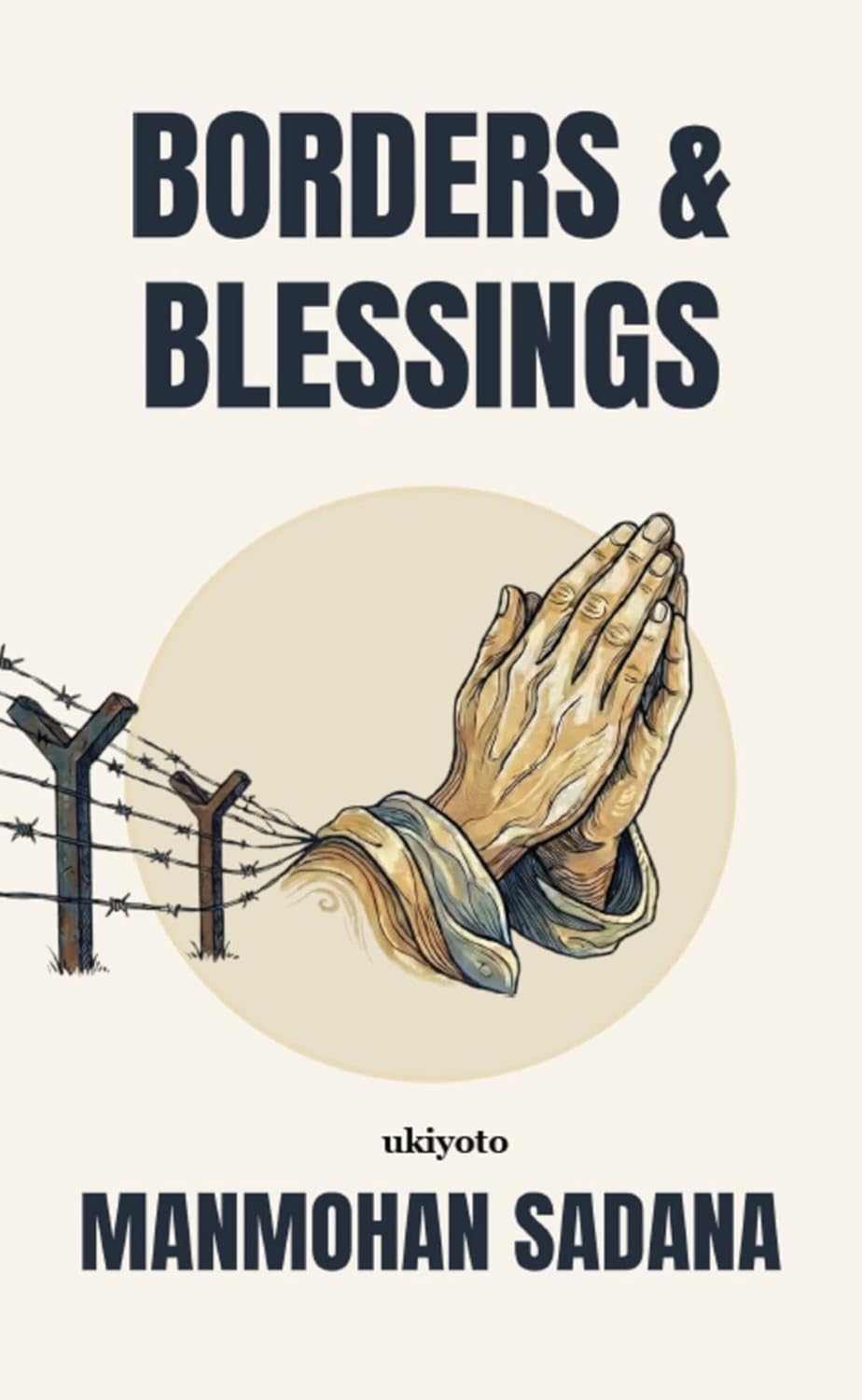

Borders and Blessings is a full collection of short stories, poems, and reflective essays that circle around one big idea: how fragile human life feels at the “borders” of countries, families, generations, and faith, and how much grace still hides there in everyday “blessings.” We move from a boy in Meerut who naïvely reports corruption to the Prime Minister, to the wry “Autobiography of a Punjabi Lungi,” to meditations on Sikh history, to a soldier’s split-second act of mercy, to intimate tributes to teachers, fathers, and grandchildren. The book reads like a life’s worth of experiences laid out in different forms, all pointing back to love, conscience, and quiet courage.
I enjoyed the writing most when it stayed simple and direct yet carried an emotional punch that arrived a few beats late. The language slides easily between English and Hindi or Urdu, and that blend feels natural, not forced. Stories like “Aum’s Awakening” and “Embers of Tenderness” kept me hooked because the sentences are clean, the scenes are clear, and the emotional stakes come through without too much decoration. The personified lungi is playful and cinematic, while pieces like “Letter to my Grandson” feel like someone speaking right across the table, with quotes from poets woven in like old friends. Overall, the voice stays warm, unpretentious, and very human. I never felt talked down to, which matters a lot to me in this kind of reflective writing.
The book leans into kindness, spiritual depth, and the value of everyday decency, and that worked for me more often than not. I liked how the same values show up in very different settings: a Hindi teacher who treats every child like her own, a soldier who chooses restraint at the border, a grandson being gently nudged toward nature and poetry, historical figures like Baba Buddha and Bhai Mardana framed not as distant saints but as living examples of service and humility. The through line is clear: power and noise fade, small acts of love do not. Some pieces resolve in a neat way that real life rarely offers, but the sincerity behind the work is so strong that I found myself accepting the idealism instead of resisting it. The book feels less like an argument and more like an invitation to soften, which I appreciated.
I would recommend Borders and Blessings to readers who enjoy heartfelt, spiritually tinged literature rooted in contemporary Indian life, and who do not mind moving between fiction, poetry, and memoir in one volume. If you are a teacher, a parent, someone interested in Sikh history, or simply a person who likes stories that affirm goodness without ignoring pain, this will speak to you. If you want a collection that sits with you quietly, stirs up old memories, and leaves you a little more tender than before, this book is a good fit.
Pages: 248 | ISBN : 9353535166

Cardinal or Crow


Cardinal or Crow by Molly Myriah is a short, intimate collection of prose poems and lyric fragments that circle around grief, faith, motherhood, trauma, and everyday wonder. The book moves through hospital rooms, kitchen floors, beaches, churches, and garden paths, and keeps returning to weather, trees, birds, tides, and small animals as anchors. It tracks a speaker who has lost her mother, survived betrayal and poverty, raised children, wrestled with God, and still finds reasons to laugh, plant flowers, and notice butterflies and hydrangeas. The pieces are brief, often only a page or two, and they gather into a loose story about being broken open and then learning to live with a tender, alert heart.
As a reader, I felt close to the voice on the page right away. The writing is simple on the surface, and that choice works. Short lines, plain words, small scenes. It feels like someone who has lived a lot is just talking to me across a table. I liked the steady mix of sharp one-liners and soft images. A poem will crack a joke about “be cool” and then turn and punch straight into the cost of pretending to be fine. The free verse feels loose, but the book has clear patterns. Nature shows up again and again. Trees that feed the weakest roots, yellow butterflies, hydrangeas that change color, the shore as medicine, the tide that covers and then pulls back. That repetition gives the book a spine. I also enjoyed the small structural tricks. Titles like “Maslow,” “Goliath,” or “Road to Emmaus” drop in big ideas, then the poem itself stays grounded in very human scenes. The tone stays conversational, but the images are often bright and odd in a good way, like a pink canoe across a golden grid or a leaf caught in a window screen.
Emotionally, the ideas in this collection really resonated with me. The book sits with grief without rushing to fix it. Death of a mother, the long ache after a breakup, the strange life of being a single parent, the weight of childhood trauma. All of that shows up, and it feels honest. I appreciated the way the speaker talked about faith, too. God is here, but not as a neat answer. The poems question, argue, and still lean toward hope. There is a lot of talk about free will, courage, and choosing to keep going when the tide of pain pulls you under. The collection also takes care with attention. It keeps saying, in different ways, that small acts matter. Picking up an earthworm, asking how someone really is, planting loud flowers for angels, noticing rain or a dog’s steady presence. I found that idea comforting and also a little challenging, since it asks me to wake up more in my own life. The mix of tenderness and hard truth felt believable. I never felt preached at. I felt invited.
Overall, I would recommend this book to readers who enjoy reflective, accessible poetry and who are open to spiritual language that lives beside real hurt. It will likely speak to people who have lost a parent, left a painful relationship, or carried old family wounds. It will also suit readers who love nature writing and small, daily moments more than big plot twists. If you want clean, spare lines that feel like a friend talking, and you do not mind sitting with heavy feelings along with little flashes of joy, this collection is a good fit.
Pages: 150 | ASIN : B0FJPPHMNN
Strength and Vulnerability

Watery Eyes is a collection of poems centered around womanhood, love, loss, and devotion. What inspired you to write this particular collection of poems?
I’ve enjoyed writing poetry for decades. It is how I best express myself. I believe what comes from the heart reaches the heart. I hope my writing resonates with people. I want to connect with my readers to spread faith, hope, and love.
Do you have a favorite poem in the book, and if so, why does it hold special meaning for you?
My favorite poem is “Teach me to love,” because it describes my belonging to Ethiopia, as a woman in the diaspora. I sprinkle Amharic words throughout the poem to give it a little flavor. It speaks to my soul! I carry my identity with me, as an Ethiopian-American, wherever I go. I sincerely convey the admiration I feel for being part of the Ethiopian community within an American context. I write from a youthful perspective, never losing touch with genuine idealism.
Are there any recurring symbols or images in your poems that hold special significance?
I talk a lot about themes being unique and universal. Through the specific, we access the spiritual. Often, what I experience is common to all. Love and loss are situations most everyone has found themselves in. I write to embrace subtle ways of feeling more human and more alive. I share my strength and vulnerability with diverse audiences in an effort to connect with my readers.
How has this poetry book changed you as a writer, or what did you learn about yourself through writing it?
I learned that it’s important to tackle big ideas. I did my best to portray life in a way that was romantic and realistic. I am grateful when people engage with my writing. It’s an honor and a privilege for my work to be welcomed in different homes. Through writing, all things are possible. Unity. Beauty. Purpose. Significance.
I learned to trust myself and stretch my capacity. Writing this book increased my confidence in sharing my truth. It gave me the grace to demonstrate true courage. I am grateful for the opportunity to explore the depths and heights of human emotion with like-minded individuals. It taught me to dig a little deeper and bare my soul.
Author Links: GoodReads | Website | Amazon
Sensory-Driven Experiences

Dissociative Effect is a visceral and introspective poetic journey through trauma, embodiment, and healing, revealing how returning to the body becomes an act of truth and transformation. What inspires you to write poetry?
It is said that there is almost nowhere on earth where you can stand more than six feet away from a spider. Poems too can also be found everywhere if they’re looked for – addressing every realm of what in our lives can feel broken: injuries of the heart, in love, in friendship, in family, grief, fear, anger, injustice, powerlessness, loneliness, and so many other places. Bringing words together in lyrical form helps us deal with some of the emotional intensity of living.
Amidst the trauma and the suffering of our lives, most of us can appreciate that powerlessness and invisibility are not minimal things. Poetry is the language that bridges our interior and exterior worlds. A person who asks words to do things with their feelings and emotions is not powerless. A person who makes phrases that connect people, that tell the truth, and expand reality is countering despair and depression. Anyone who has written a poem has felt this. I think this is the healing alchemy of poetry.
How did your work in medicine shape the way you approached writing about trauma and the body?
Practicing medicine for nearly two decades has taught me about the link between our personal stories and the universal or collective human narrative. Stories of health, trauma, and the body often rely on specific, intimate, and sensory-driven experiences which reflect broader shared human truths. I don’t want to minimize the personal effects of trauma, but to acknowledge that we are not alone in our experiences and our search for meaning.
The book moves from pathology to reclamation across its three sections. Did you always envision this structure, or did it emerge as you wrote?
I can’t speak to the process for all poets, but when I started writing poetry, I had no expectation that I would ever publish a book. I wrote poetry because I wanted to, because I needed to. After a couple of years, I realized that I had written several hundred poems. When I looked for themes in the content, I could see that there was a trajectory, a healing arc, which I had been living and writing about. As a physician, we are trained to see problems with a lens that matches the three sections of this book; namely, disease (pathos), diagnosis (diagnoses), and treatment (ad sanadum).
You write about dissociation with such clarity. What helped you reconnect with your own body enough to translate that experience into language?
In the process of writing the book, I was engaging regularly with several embodied or somatic practices (yoga, meditation, sauna with cold water immersion), which helped me to reflect on the ways in which we are present and not present in our lives. Sometimes, disembodiment involves distraction or a lack of mindful attention as we are going about our lives. Sometimes, disembodiment and dissociation are more than that when they serve as elaborate protective mechanisms against trauma, which might otherwise be unbearable in a moment.
I had mostly finished the book and chosen the title, Dissociative Effect, when ketamine became widely available as a mental health treatment. Before writing the intro and publishing the book, I researched therapeutic ketamine in an effort to understand if and how this might help my patients. Along the way, I received a ketamine treatment and experienced “the dissociative effect.” Through my own journey, I understood more deeply how dissociation can shift perspective, just as narrative voice shifts perspective in writing and storytelling. Therein lies our capacity for healing.
Author Links: GoodReads | Amazon
Watery Eyes: Reflections of a Muslim Woman

Watery Eyes: Reflections of a Muslim Woman, by Yerusalem Work, is a wide-ranging collection of poems that moves through faith, womanhood, identity, memory, grief, and tenderness. It blends personal history with spiritual reflection and cultural pride. The book shifts from intimate whispers to big declarations, sometimes soft as prayer and sometimes sharp as truth. The themes that repeat across its many pages feel like a heartbeat. Love. Loss. Devotion. A soul trying to stay steady in a world that keeps testing it.
As I read, I felt pulled into the author’s inner world. Her writing is warm and direct, and I found myself pausing often just to sit with an image or a line. She talks about faith in a way that feels lived rather than taught, and that honesty hit me hard. I kept feeling this mix of ache and comfort. Some poems feel like opening a window after a long night. Others feel like stepping into a memory that isn’t mine, yet somehow rings familiar. Her voice rises and sinks, and I liked that the rhythm never stays still. It mirrors real emotion. Messy, surprising, sometimes contradictory. The work feels confident and vulnerable at the same time.
There were moments when the ideas felt bigger than the poem holding them, but I didn’t mind. I actually liked the looseness. It gave the book a raw edge. I loved how she writes about Ethiopia and womanhood and faith as if they’re woven into the same cloth, each thread tugging on the next until the whole thing glows. Some pieces felt playful, some mournful, and others almost like confessions. The writing invited me to consider my own ideas of belonging and purpose.
I would recommend Watery Eyes to readers who enjoy poetry that comes straight from the heart. It’s a good fit for people who like reflective writing, spiritual searching, and stories rooted in identity and culture. It would also speak to anyone who has ever carried love and loss in the same breath. This is a book for readers who want to feel close to another person’s inner life and who appreciate writing that is sincere, emotional, and alive.
Pages: 167 | ASIN : B0G6WHMTZ8
Emotions as the Catalyst
Seasons of Life and Love takes readers on a journey through themes of loss, regret, longing, and joy in a collection of poems centered on the complexities of human emotion. Can you share a bit about your writing process?
I never force my thoughts or words. Something very simple may trigger a thought: a sunset, a breeze, a cloud, a flower. A single flash from a firefly at evening. Then I form an idea in my mind and begin a mental journey.
How do I feel when I look at that sunset? What has my day been like? Do I have any regrets? I put myself in the picture. I ask myself: What simple thought do I want to express? If I can answer that question, then I proceed slowly. I write from developing emotions and elaborate point by point and try end the final stanza with a powerful thought, to let it linger in the reader’s mind.
.
When I begin to write poetry, I have one rule in mind. Use simple words, paint clear mental pictures, and write so that the reader can easily grasp the message. If my words strike a common chord with the reader’s feelings, then he/she can figuratively “own” it and call it to mind at will. Powerful thoughts can be expressed with simple words. I want the poem to reflect upon the reader, not upon the poet. Words can last forever; poets do not.
Did you write these poems with a specific audience in mind, or was it a more personal endeavor?
It began as a personal experience. When I experienced personal tragedy, I went for long walks. I noticed that the weather resembled my life. It was sunny one day, stormy the next, life-threatening occasionally, and afterward, peacefully calm. I had no audience, I wasn’t writing a novel, I was describing my feelings as they related to the weather.
Sometimes I just wrote about the weather. Nature is a very moving experience if one stops to sense its changes. I wrote about losing love, and finding love; and the doubt that comes to mind, questioning the wisdom of signing up for more pain; and that overwhelming sense of euphoria one experiences when the universe aligns with your heart. But it can also be temporary, and when that came, I wrote about that, too. Not all poems were about me, though. Sometimes I would use a personal feeling and generalize a poem, using my emotions as the catalyst. For example, the poem “Jewels,” a romantic poem about a lover returning home in the early morning hours after visiting his love, was developed around the idea of a modern-day Romeo and Juliet.
I rarely write with a specific audience in mind. I write to express inner feelings. If they find an audience (and who hasn’t lost love?) then, that is my audience. I don’t want my poems to be or sound contrived. They must be genuine. If I sense I am slipping into contrivance, I stop and discard the poem. Do I know what I will write about next? No. I have no idea. If asked to write about a certain subject, I cannot. I can only describe what I feel.
Do you have a favorite poem in the book, and if so, why does it hold special meaning for you?
Do I have a favorite poem? I have many. They must all reach the same standard. “A Ray of Sun” – This was one of my first poems written after losing my family. I was walking a path that took me across a floating bridge over a stretch of water. The day had been cloudy, reflecting my disposition. Midway across the bridge, the sun broke through the cloud, low in the sky. The effect caused me to stop and feel better. It inspired hope. It was the first time I linked the weather to my emotions. Hence: “I knew if I could wait, if I could hang on long enough, I’d see the sun appear.”
“Everything is Beautiful” – this poem was inspired when I visited a retirement home. As I walked along the
hallway, I saw old men and women sitting alone in their rooms with the doors open, virtually abandoned
in a retirement home at the end of their lives. I asked myself: What do they feel inside, and what are their
dreams? I felt sad that someone should end their days like this.
“Hooked” – I love this poem because it is short and sweet and expresses in two stanzas how I felt when I fell in love.
“I Thought of You” – This poem describes perfectly how I felt when I had lost love. Because love lingers long after The Departed have departed.
“Jewels” – I have always loved this poem for the word pictures it elicits and the power of love to push one to great lengths and dangers to experience it.
“Love Whom You Wish” – This is a cautionary poem directed to the one who is leaving the relationship. I love the last stanza. It encapsulates the warning of the one abandoned.
“The Cost of Love” – This poem perfectly reflected my feelings when my relationship crumbled, and it juxtaposes the value each placed on the relationship.
“The Flood” – I wrote this poem with a smile on my face. I was reflecting upon the wonderful experience I had and the intensity of the relationship.
“The Fool” – I think this is one of my most lingering poems. How many have lost love, only to long for its return and be viewed as a fool for remembering it the rest of his/her life?
How has this poetry book changed you as a writer, or what did you learn about yourself through writing it?
I have hundreds of poems. This is my first published book of poetry. Most of my poems are written in the same style. I have been able to express more clearly my feelings of finding love, basking in love, and losing love. Those are experiences shared by many. I found I was able to describe succinctly my feelings without becoming philosophical. I have simply described human nature.
But life is more than just love. We can find delight in living a day, watching a sunset, experiencing a rainstorm, and seeing the seasons change. I think my poetry has made me more keenly aware of the simple things that life has to offer and that are occurring around us all the time. Often, we overlook them. Don’t. They have been here longer than we. They comfort us. Stop and take note of the emotional treasures they bestow.
Author Links: GoodReads | Amazon
A collection of poems about finding love, losing love, the change of seasons, and moments in the day. In short – it’s about life and love.
Emotional Truth

Dirty South Haiku sketches a childhood and young life shaped by family legends, Southern landscapes, and the mix of sweetness and grit that sits in so many memories. What inspired you to write this particular collection of poems?
Growing up in the South, I was surrounded by family stories that were passed down almost like folklore, along with landscapes that left a lasting impression. I wanted to capture the sweetness and grit that often sit side by side in Southern life without overexplaining them. These haiku became a way to sketch moments from childhood and young adulthood in brief, distilled scenes. In many ways, the collection serves as a prelude to my upcoming Southern short story collection, where those same themes will be explored in longer narrative form.
What is it about the format of haiku poetry that you enjoy, and why did you choose to tell your story in this format?
A visit to Japan deepened my appreciation for haiku. The form encourages attention—to language, to silence, and to what can be suggested. That approach felt well-suited to memory, which often arrives in flashes rather than complete stories.
How much do real-life events and personal experiences influence your writing?
My writing is strongly influenced by personal experience, but I’m more interested in emotional truth. Real people, places, and moments often serve as a starting point, then evolve through reflection and imagination.
What was the biggest challenge you faced in putting together this poetry collection?
The biggest challenge was learning to sit with restraint. I had to accept that some moments would remain unresolved on the page, much like they do in real life. Allowing the haiku to stay open was a challenge, but it felt true to the nature of both the form and the memories themselves.
Author Links: GoodReads | Instagram | Website | Amazon


