Blog Archives
Exoskeleton


Exoskeleton is a military techno-thriller with strong sci-fi elements, and it reads like a prequel that’s eager to light the fuse. The story follows Alec Byrnes, a former Air Force special operations lieutenant who’s now a bitter paraplegic drinking himself into a corner, pushed hard by his powerful senator father to “play the cards” he’s been dealt. When a secret program offers him a shot at walking again through an experimental exoskeleton suit, Alec throws himself into the work, joins a tight, high-risk unit, and ends up in a widening conspiracy tied to LEGION and a ruthless inner-circle betrayal that turns the mission personal.
The book opens in an emotional place, with Alec’s anger and humiliation sitting right on the surface, and the writing leans into that heat. There’s a lot of close-in sensory detail, the kind that makes you feel the stale breath of last night’s booze and the claustrophobia of being “trapped inside” your own life. It’s not subtle, but it is effective. The author makes a clear choice to keep Alec prickly, sarcastic, and sometimes simply hard to like early on, and I appreciated that commitment. You don’t get a polished hero. You get a guy who’s bleeding on the page and daring you to look away.
Once the story pivots into the program itself, the book becomes more about systems and stakes. There are big chunks where the author explains how the suit works and why it fails, and it’s surprisingly readable because it’s framed as problem-solving and ego, not a lecture. And when the action comes, it does so with zeal. The Alaska sequence, the hostage trap, the close-quarters fight with Amy, it’s nasty and fast and has that cold feel of a nightmare you cannot wake up from. I also liked the underlying idea that “power” is never just hardware. The suit can make a body move, sure, but it doesn’t automatically fix the damage inside the person wearing it. The book keeps exploring that truth even while it’s throwing punches.
By the end, I felt like I’d finished the first part of a bigger story, not a neat standalone novel. The closing pages push the threat outward and set up the next stage of the conflict in a way that’s pretty blunt about what’s coming. I’d recommend this book to readers who like high-energy military thrillers, special-ops team dynamics, and near-future tech that feels just plausible enough to be unsettling. If you enjoy the Tom Clancy energy but you also want exosuits, AI, and conspiracy creep, this will hit the spot. For everyone else, especially fans of action-forward sci-fi thrillers that don’t pretend trauma is tidy, it’s a compelling ride.
Pages: 329 | ASIN : B0GFXXZW3G

A Real Collusion

A Real Collusion is a political thriller told through the eyes of Skip Winters, a mid-level ad guy who looks back on his friendship with John Campbell and the wild rise and fall of a grassroots movement. It starts small, with a silly local fight over cigar smoke at a community board meeting in the Bowery, where John’s angry “I object” moment and a quick handshake outside the gym turn into a tabloid photo and a cable-news booking. From there, Skip helps John ride a wave of viral attention into the creation of the American Coalition, a scrappy effort to break the two-party lock, curb big money, and push more honest voting in Congress. As donors, TV producers, and dark-money groups close in, the story widens from New York to Washington and Philadelphia, where the movement crashes into a secretive business council and a lurking gunman in the crowd, leaving John’s legacy split between real reform and a sense that the system still has its hands on the wheel.
Skip sounds like that smart, slightly bitter friend who tells a story over a drink and keeps circling back to the parts that really hurt. The early chapters are vivid and weirdly fun: folding chairs tipping over in a hot school gym, cops’ lights splashing off old brick, a stunned ride on the F train with the Post open to a photo of your buddy on the front page. The scenes in the bar, the cramped apartment, the ad agency office feel specific and lived in, and the jokes land with a light touch instead of feeling like “political satire.” The author knows how to tighten the screws; the book shifts from goofy excitement to real tension smoothly, and by the time CNN calls and big donors sniff around, the momentum feels natural, not like the plot is dragging the characters along.
I did feel the “novel and exposé” label in the writing. When Skip and John hammer out the American Coalition platform and talk through campaign finance, independent candidates, and the way corporations game the rules, the book turns into a kind of civics lesson. I did not mind that most of the time, because Skip is honest about his own ego and fear, and that keeps the big ideas grounded in one guy’s midlife crisis and his hunger to matter. Still, a few speeches run long, and some side characters can drift toward types more than people. The scenes that follow the BCL and the man in the crowd with a gun, though, hit hard. They show how a hopeful movement can be bent or broken by a handful of people with money and no shame, and they made me uncomfortable in a way that felt earned rather than melodramatic.
The book made me angry, sad, and weirdly hopeful all at once. The introduction lays out a blunt case that the real threat to American democracy comes from inside, from quiet collusion between parties and donors who let inequality balloon while the middle class slides, and the plot keeps circling that point without ever feeling like a pure lecture. I liked how the story shows the media as both amplifier and filter, how a tossed-off joke about both parties “sucking” becomes a brand, how consultants and billionaires talk about “fixing the system” while protecting their own slice. The ending, with John gone and a handful of independents in Congress, hit me hardest; change happens, but not cleanly, and the people who lit the fire do not always get to see the house rebuilt. That left me thinking less about whether the plot was “realistic” in a narrow sense and more about how much of it already feels true.
I would recommend A Real Collusion to readers who enjoy political stories with heart, anyone who follows American politics and feels worn down but not completely checked out, and folks who like character-driven fiction about friendship, compromise, and the cost of sticking your neck out. If you are okay sitting with some ambiguity, some righteous anger, and a stubborn streak of hope, you’ll enjoy this novel.
Pages: 286 | ASIN : B0G5K3BJ1K

The Sinister Nature of Power

The Bent Nail follows a man born into filth and neglect who becomes both a victim and an instrument of a shadowy organization bent on reshaping the world through brutality. What was the inspiration for the setup of your story?
The inspiration for The Bent Nail, or its predecessor, Nails, came from a sole source. The initial story structure stemmed from a challenge made by a close friend to see if I could develop multiple, separate plot lines and weave them together into a single, coherent, exciting story line. Challenge accepted.
What came from that challenge was the original Nails, a story that introduced the reader to three truly flawed individuals: Tau, Gideon, and Simon; three individuals who erroneously thought they were the uncontested wielders of power in their respective worlds. In effect, they thought they were the hammers of society; individuals who could pound on others and rule with impunity, only to discover their power was an illusion. They were merely nails just like anyone else.
The inspiration for the main character, Tau, is personal experience. I had the opportunity to work closely with an organization whose cause was helping the hopeless. That effort brought me elbow to elbow with people society had cast out into the streets because that was easier than looking for productive alternatives. These people were the products of an unforgiving world, chemical abuse, mental instability, or just bad luck. That was where Tau came from. Tau represents those in our society who are forgotten, lost, and disposed of, but he refuses to be dismissed. He resorts to violence because it’s the advantage he possesses. We fear him because he has nothing to lose. His character hits us hard, not just because he’s a repugnant and vicious individual, but also because he’s so damaged and we see his potential for good.
The story is motivated by what we experience contemporarily. We are bombarded by streams of questionable, repetitive soundbites intended to manipulate, separate, and control. What we end up with is a powerless people subjugated to the will of others. I wanted to portray the sinister nature of power and those individuals who use this to their advantage. Some readers consider The Bent Nail as a warning of the future, others, a reflection of today.
The violence in the book is raw and sometimes difficult to endure. What role does discomfort play in your storytelling?
I wrestled with this. You use the term raw, and it is. And that is very intentional. The violence was necessary to drive home the idea that the world we know is not the comfortable place we believe it to be. A veil of civility might cover up the violent, self-serving nature of man, but that rawness still exists. We see violence, greed, and the desire to control in almost all aspects of society when we look close enough. The Bent Nail challenges us to check ourselves so as not to be seduced by power and wealth.
For me, storytelling requires emotional engagement. Comfort rarely seems to fit with that concept. That’s not to say that my stories are all violent or even troubling. I would suspect many would suggest my Countenance of Man, a touching story of man rediscovering his father through the eyes of others, is emotionally wrenching, but hardly troublesome. The Bent Nail deals with power and corruption; it would be unfair to treat this kindly.
The book challenges the idea of freedom itself. Do you believe freedom is real, conditional, or illusory?
Superb question. Certainly, The Bent Nail would suggest that freedom is illusory, something we think we possess even when the evidence would suggest otherwise. Do I believe that? Not really. In our western society, freedom is absolutely real, not just an abstract concept; however, it is continuously under attack. The struggle is that freedom is not an immutable idea. We have become too comfortable with the notion that freedom never changes, something that once we have it, it will always be there. It’s not. The Bent Nail throws that reality in our face. It challenges us to continuously fight for it even when the consequences might be frightening. In this story, I hope the reader grasps that however frightening it might be to stand up for one’s rights, the alternative is far worse. If not, The Bent Nail becomes something more than a novel; it becomes prophecy.
To quote Benjamin Franklin, “Those who can give up essential liberty to obtain a little temporary safety, deserve neither liberty nor safety.
If The Bent Nail leaves readers unsettled long after they close it, what do you hope they do with that feeling?
I hope it leaves the reader unsettled. We live in an unsettled world filled with warring factions fighting for power. The Bent Nail surfaces that and it should bother us all. It illustrates how easy it is for those in authority to manipulate us, be it through engendering class envy, spoon feeding us with blatant misinformation, seducing us with the promise of power, or imposing their will through coercion. Our challenge is to understand who is behind the manipulation and to stand up to them.
The second point I want to leave with the reader is the need to be objective in assessing the world. Not everything is as it seems; adopting the beliefs of friends and neighbors merely because it seems easy and comfortable is dangerous. Of course, if one desires to be nothing but a nail, hammered into acquiescence, in a world similar to one I’ve invented, just keep capitulating to those who desire to control us through power.
Lastly, speaking of power, it is insanely seductive – for all of us. It can overwhelm the desire to do what we know to be right. People might look at these comments in light of what is going on in our society today and assume that The Bent Nail is either right wing or left wing. That’s a perspective thing and would be a tremendous mistake. Neither political side has a monopoly on being correct. Don’t let others tell you what to believe.
M.D. reintroduces the three flawed characters you hated in Nails: Simon, a journalist without a conscience; Gedeon, a murderer without a heart; and Tau, a man without hope. In this masterful sequel, their lives collide as they each struggle to avoid becoming nothing more than hammered nails underpinning a centuries-old, secretive family committed to world dominance. Through deceit, mass murder and economic control the Family seeks to establish a new and lasting world order under their direct and unquestioned authority. Corruption and the seductive nature of power provide the backdrop as Tau, Simon, and Gedeon wrestle with their personal demons as they seek to survive.
Although The Bent Nail is a story that will disturb and frighten even the boldest of readers, it is one that will pull you in and capture you from the first page, a story you won’t be able to put down… and one that you will remember forever.
Dollartorium


Ralph earns his living in a modest Kansas shop, frying corndogs that are undeniably good and reliably popular. The work keeps him afloat for a while. It offers routine, modest comfort, and a sense of pride. Eventually, though, the numbers stop working. Sales stall. Bills pile up. Stability slips away.
At that moment of strain, Ralph’s wife introduces him to “Dollartorium,” a tantalizing promise discovered through an infomercial. The course offers bold ideas and glossy solutions. At first, it feels like salvation. New business concepts suggest a way out, maybe even a breakthrough. Then the foundation collapses. What seemed like an opportunity quickly unravels, leaving Ralph to reckon with the fallout. With the help of his daughter, Stella, he is forced to retrace his steps and search for a more realistic way forward for his family.
Dollartorium, by Ron Pullins, is a work of fiction that probes capitalism, hustle culture, and the pressures these forces place on families. Humor runs throughout the novel, but it never fully softens the sharper insights beneath the surface. The comedy entertains; the implications linger.
Pullins shows a clear awareness of how precarious financial life has become for many people. Ralph’s anxiety feels earned. His frustration resonates. The sense that the system is tilted against ordinary workers gives the story its urgency. The Dollartorium scheme itself feels uncomfortably familiar, echoing countless real-world programs marketed to those already struggling. These promises prey on desperation, and Pullins does not shy away from exposing their ethical rot.
Stella emerges as the novel’s moral and intellectual anchor. She tempers Ralph’s desperation with reason and clarity. Her perspective restores balance and nudges the story toward resolution. Yet even as the family regains its footing, the larger problem remains unresolved. The system that cornered them still stands. Pullins underscores this truth with restraint, allowing the message to land without sermonizing.
The novel closes on a note that is satisfying, though far from idyllic. That choice feels intentional. Pullins has more to say than a neat ending would allow. Through his characters, he gives voice to frustrations that have become commonplace, about inequality, exploitation, and the illusion of easy fixes. The odds remain stacked against the little guy, and the allure of grand, risky schemes proves hard to resist. Dollartorium captures that tension with clarity, humor, and an undercurrent of quiet anger that makes it linger after the final page.
The Bent Nail

M.D. Nuth’s The Bent Nail is a dark, unflinching exploration of power, corruption, and the human cost of control. It begins in the chaos of a Delhi marketplace and spirals into a global web of political manipulation, personal ruin, and moral decay. At its center is Tau, a man born into filth and neglect who becomes both a victim and an instrument of a shadowy organization bent on reshaping the world through brutality. From street-level despair to the high offices of government, the novel draws a line between the powerless and the powerful, showing how desperation and authority twist into something monstrous.
Reading this book felt like riding a rollercoaster. Nuth’s writing hits hard. The language is raw and often brutal, but it feels right for the world he’s built. I could almost smell the filth of the streets and feel the emptiness in Tau’s heart. The dialogue is jagged, messy, and alive. It sounds like people breaking apart, trying to make sense of what’s left of their lives. The pacing is relentless. There were moments I had to pause just to breathe, especially in scenes that blended violence with eerie calm. It’s not an easy read, but it’s gripping.
What surprised me most was how much I cared for characters who probably didn’t deserve it. Tau, especially, is a walking wound, and even as he kills, I felt something like pity. Nuth doesn’t excuse evil, he shows how it’s born. The story’s ideas about government control, manipulation, and the illusion of freedom hit close to home. It’s a political thriller, yes, but it also feels like a prophecy, a mirror held up to our worst tendencies as people.
I’d recommend The Bent Nail to readers who like their fiction sharp, ugly, and honest. It’s perfect for those who aren’t afraid of dark themes or moral gray areas. If you want a story that challenges you, unsettles you, and makes you question the world you live in, this one’s worth every page.
Pages: 294 | ISBN : 1681607840
Intention and Action
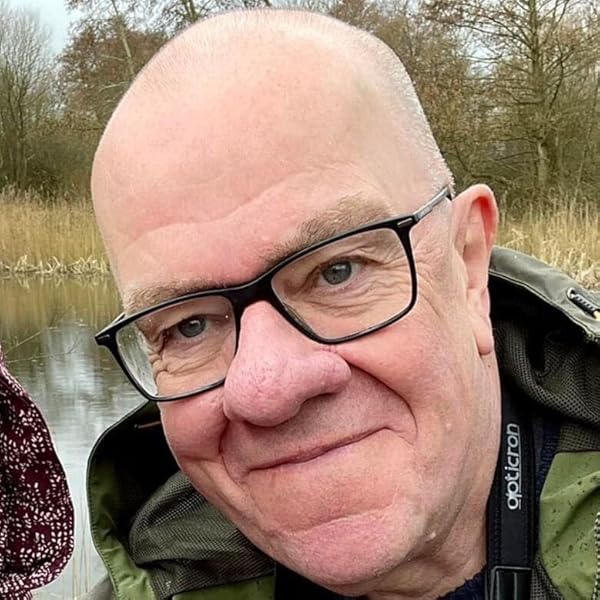
Where The Winds Blow follows the rise of Path Finder, a grassroots movement born from grief and idealism, while powerful governments, criminal networks, and ordinary people collide around it. What was the inspiration for the original and fascinating idea at the center of the book?
The inspiration for Path Finder came during the COVID crisis, while I was cleaning out my garage for the third time in a week. I suddenly imagined finding the UK’s prime minister hiding in there – someone who’d simply decided he couldn’t cope any more. That image stuck, and I started writing, using it as a focal point.
It led to a simple but unsettling thought: for all their bombast and posturing, governments have only limited control over what actually happens within their own borders. The responses to the 2008 crash, COVID, and countless regional crises revealed not grand strategists, but leaders who were overwhelmed, reactive, and often out of their depth.
Lies, distraction, and obfuscation disguise their weakness and uncertainty – skills that modern power structures have perfected. Meanwhile, real influence increasingly sits with billionaires, technocrats, and the vague, unaccountable entity we call “the markets,” all of whom operate with little responsibility to the societies they shape.
Across much of the world, there’s a simmering resentment paired with helplessness – a frustration that’s often misdirected toward convenient scapegoats rather than those truly responsible. What feels missing is a spark: something that turns anger and despair into constructive action rooted in honesty, humanity, and hope.
I don’t pretend to know how that spark might happen in real life, although I believe it will. In the Path Finder series, I’ve created a world only inches removed from our own, where readers can enjoy the humour and drama in the story, recognise familiar institutions and personalities, and perhaps imagine a different future – for themselves as much as for society as a whole.
History is full of ordinary people doing extraordinary things, often accidentally or without understanding where their choices might lead. This series begins with one man deciding he’s had enough of pretending to be something he isn’t and disappearing. Three books in, even I’m not entirely sure where that decision will ultimately take him or Path Finder. I just know it’ll be fun finding out!
What are some things that you find interesting about the human condition that you think make for great fiction?
What fascinates me most about the human condition is the gap between who we think we are and how we actually behave when things stop going to plan. We like to believe we’re rational, principled, and in control, but pressure, fear, love, grief, and ambition have a habit of knocking those ideas sideways. That gap – between intention and action, certainty and doubt – is where great fiction lives.
I’m also interested in how ordinary people respond when they’re swept up in events far bigger than themselves. Most of us don’t set out to change the world, break systems, or become symbols of anything. We’re just trying to get through the day, protect the people we care about, and make sense of the noise. Yet history shows that it’s often these accidental participants – people acting from love, stubbornness, guilt, or hope – who trigger the biggest consequences. That tension between small, human decisions and vast, unpredictable outcomes runs through the Path Finder series.
Finally, there’s the absurdity of it all. Humans are capable of extraordinary kindness, bravery, and resilience, but we’re also unwittingly brilliant at self-delusion, tribalism, and panic. Put those traits under stress – mix them with power, money, ideology, or blind faith – and you get situations that are by turns terrifying, ridiculous, and darkly funny. Satire lets me explore those contradictions honestly, without pretending we’re either heroes or villains. We’re usually just flawed, emotional creatures doing our best… sometimes making an almighty mess of it… occasionally doing something amazing.
What is one thing that you hope readers take away from Where The Winds Blow?
More than anything, I hope readers come away feeling that the time they spent with Where The Winds Blow was time well spent. I want them to have been entertained – laughing at the absurdity, caught up in the momentum, and maybe a little breathless at times – but also quietly validated in the way they see the world.
If there’s a deeper takeaway, it’s the reassurance that confusion, doubt, and frustration aren’t personal failings; they’re rational responses to a chaotic system. The characters in the book don’t have grand plans or neat answers – most of them are muddling through, reacting, improvising, and occasionally getting things spectacularly wrong. And yet, meaning still emerges from those imperfect choices.
I also hope the book leaves readers with a sense that individual actions matter, even when they seem small, accidental, or misdirected. Change doesn’t always come from heroes or leaders; it often starts with ordinary people deciding to stop pretending, to care a little more honestly, or to take one step they didn’t think they were capable of taking.
If readers finish the book feeling entertained, understood, and perhaps a little more open to the idea that hope can exist without certainty, then I’ve done my job.
I hope the series continues in other books. If so, where will the story take readers?
The series will continue. As for where the story will take the reader, who knows?! I’m currently writing shorter pieces for my Path Finder newsletter subscribers that fill in some of the character back stories. One of those pieces became a major plot line in Where The Winds Blow, and I have no doubt that one or two of my current works in progress will do the same in the fourth novel.
Author Links: GoodReads | Threads | Facebook | Website | Amazon
The Path Finder movement has gone global. Millions of followers. Endless headlines. Oceans of cash.
Only one tiny snag: the founders still have no idea what the movement actually is. Now the powerful want answers – and they’ll do anything to keep control.
Meanwhile, an ex-soldier from Afghanistan crosses continents and the Mexico-US border, desperate to reach his family before the authorities catch him or local vigilantes do even worse.
Elsewhere, Simon and Pippa Pope are chasing storms, blissfully unaware that their late wedding gift could unleash consequences for humanity, the planet, and a whisky-soaked Scotsman on a collision course with destiny.
Fast, funny, and ferociously sharp, Where The Winds Blow skewers the powerful and the absurd in equal measure.
It’s the third and wildest instalment in The Path Finder Series, following Paths Not Yet Taken and Good for the Soul. Each offers satire with bite, stories with heart, and storms of every kind.
The Romanov Legacy: Ahead of the Storm

The Romanov Legacy II: Ahead of the Storm by Fred G. Baker is a sweeping work of historical fiction that imagines the escape of two Romanov children in the final days of Imperial Russia. The story follows Alexei and Anastasia after their flight from captivity near Yekaterinburg, guided by loyalists of the White Army as civil war erupts around them. Baker blends real events with imagined rescue efforts, focusing on danger, secrecy, and survival during the collapse of the old order. The book moves through military action, quiet hiding, and emotional aftermath as the children face loss, fear, and an uncertain future.
I enjoyed the pacing and clarity of the writing. Baker writes in a clean, steady style that keeps things moving without confusion. I never felt lost in the geography or the politics. The scenes feel grounded and physical. Cold barns. Dark rivers. Mud, hunger, and fear. I felt the tension early. Some descriptions were a bit longer than needed, but I did not mind. They helped me settle into the world. The dialogue feels natural most of the time, and the emotional beats land with honesty. I felt real dread during the execution revelations and real relief during moments of safety.
I liked the ideas behind the story even more than the action. This book is clearly about loyalty, moral duty, and the cost of history on children who never chose their fate. I felt angry reading parts of it. I also felt grief. Baker does not soften the cruelty of the era, but he does offer a sense of human decency through characters like Tupolev and Anna. I appreciated that balance. The book does not feel preachy. It feels mournful and stubborn and hopeful all at once. I liked that the Romanovs are treated as people first and symbols second.
I found this book to be emotional and thoughtful. I would recommend it to readers who enjoy historical fiction with emotional weight and alternative history angles. It is a good fit for anyone interested in the Russian Revolution, lost possibilities, or stories about protecting the vulnerable during chaos. When I think about this book next to other popular Romanov novels, it feels more grounded and more urgent. Books like I Was Anastasia or The Lost Roses spend more time on mystery, romance, and shifting timelines, while this one stays locked on danger and survival. It reminds me more of a wartime escape story than a court drama. The scope is narrower, but the tension is stronger. I felt closer to the characters here than I often do in historical epics, and that made the story hit harder for me.
Pages: 292 | ASIN : B0G1JDFZ7B
They Could Be Saviors
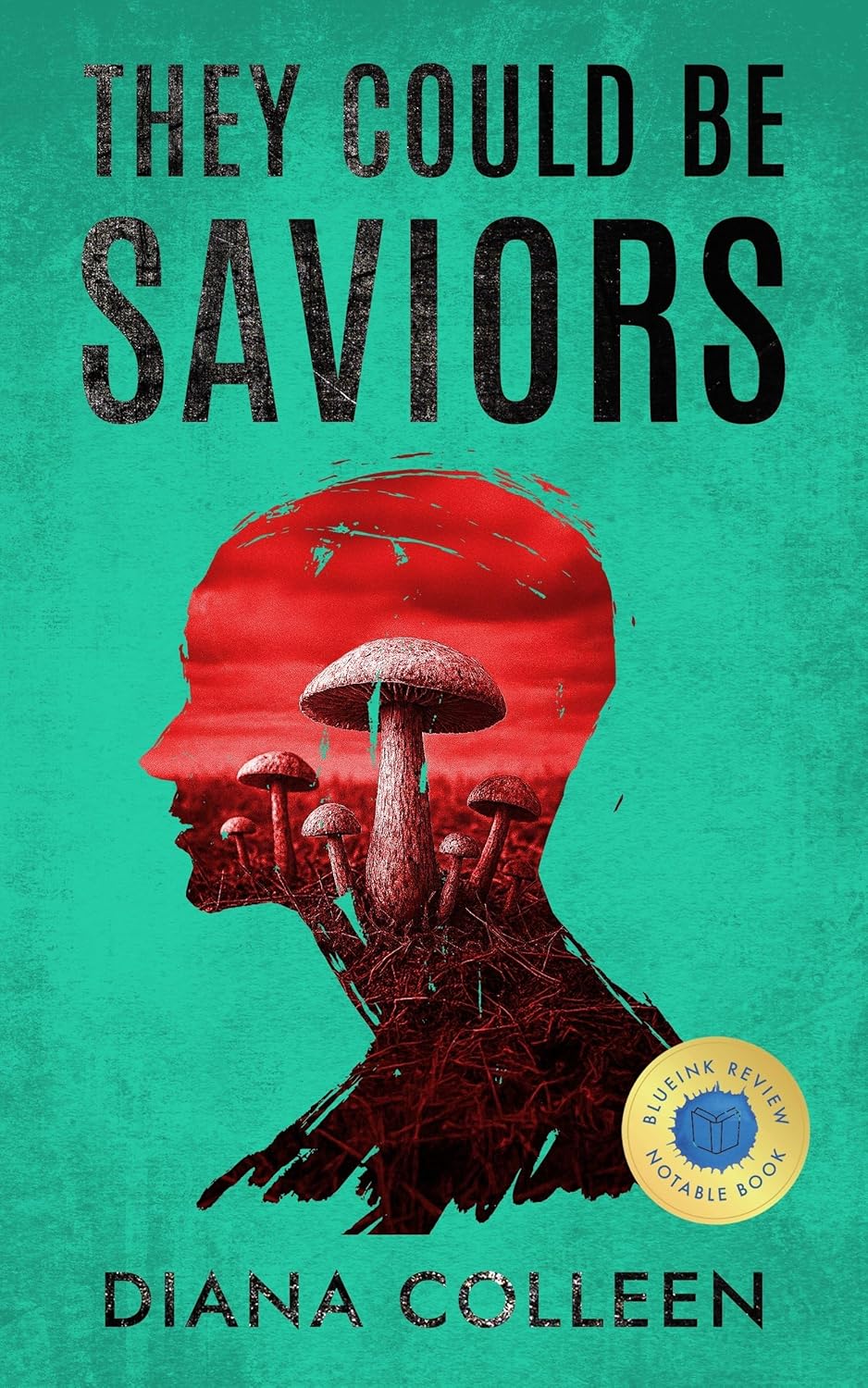
They Could Be Saviors is a wild and thought-provoking novel that blends psychological suspense with biting social critique. The story follows a group of billionaires kidnapped by a secret network of women, psychedelic therapists who believe the only way to save the world is to dismantle the egos of the men destroying it. As the captives awaken inside a high-tech facility designed for “healing,” the line between therapy and punishment blurs. It’s a heady mix of moral reckoning, hallucinatory experience, and social rebellion wrapped inside an eerie psychological thriller.
The premise sounds almost absurd at first, but author Diana Colleen sells it with conviction. Her prose crackles with sharp edges, alternating between satire and sincerity. The early chapters, especially those inside Josh Latham’s ruthless corporate mind, feel uncomfortably real. There’s a cold humor in watching a man who’s weaponized “sustainability” for profit wake up in a place that forces him to face himself. The writing feels cinematic yet claustrophobic, like being locked inside someone’s fever dream. At times, I felt disturbed, at others, unexpectedly moved. The story doesn’t let you sit comfortably, it pokes, prods, and dares you to care about people you’d rather despise.
What really grabbed me were the emotional undercurrents beneath all the sci-fi and social commentary. Mel, the therapist leading the operation, is a fascinating mess of empathy and control. Her struggle with addiction, grief, and idealism feels painfully human. I found myself torn between admiring her conviction and fearing her delusion. The women’s mission, noble on paper, curdles into something obsessive. Still, I couldn’t look away. The book doesn’t spoon-feed morals. It leaves you wrestling with big, ugly questions about power, redemption, and what “saving” the world might actually cost. The language swings from lyrical to brutal, sometimes in the same paragraph, which made it both exhausting and exhilarating to read.
If you like your fiction clean and uplifting, this one might rattle you. But if you’re ready for a raw, provocative trip into the psyche of our times, this book is worth every page. I’d recommend They Could Be Saviors to readers who crave stories that take risks and don’t shy away from moral gray zones. Fans of Black Mirror, Margaret Atwood, or Chuck Palahniuk will probably devour it.
Pages: 349 | ASIN : B0FP5X958N


