Blog Archives
The Biology of Trauma: How the Body Holds Fear, Pain, and Overwhelm, and How to Heal It


Dr. Aimie Apigian’s The Biology of Trauma is a deep and accessible exploration of how the human body carries and expresses trauma. Drawing from neuroscience, cellular biology, and her personal story, Dr. Apigian maps out how overwhelming experiences don’t just live in memory; they settle into our tissues, our immune system, and even our metabolism. The book blends science with narrative as it explains how trauma develops, how it hides in plain sight, and how we can repair the body’s systems to return to health. Structured around three parts, how the body experiences trauma, how it holds it, and how it heals, it moves from hard science to compassionate, practical guidance.
Reading this book felt like walking with someone who understands both the science and the human cost of trauma. I found Dr. Apigian’s honesty refreshing; she doesn’t write from a place of distance. Her story about parenting her adopted son, Miguel, and discovering her own buried trauma brings warmth and credibility to the science. The writing is clear and often tender. She explains complex topics like the freeze response or mitochondrial dysfunction in a way that feels personal, not clinical. At times, I could feel the ache behind her words, the exhaustion, the compassion, the desire to make sense of why our bodies sometimes betray us. That emotional current kept me turning pages, even when the material was heavy.
The sheer amount of biology might overwhelm readers who expect a lighter self-help tone. Yet I admired how Dr. Apigian stayed grounded. She doesn’t chase quick fixes or spiritual clichés. Her approach to healing, starting with safety, then rebuilding physiological regulation, feels practical and deeply humane. The book made me notice my own reactions, my patterns of shutdown or tension, and see them not as flaws but as biological strategies. That realization was oddly comforting.
I’d recommend The Biology of Trauma to readers who want more than inspiration; they want understanding. It’s perfect for therapists, healthcare workers, and anyone who senses their body has been carrying a story their mind can’t name. It’s not a breezy read, but it’s worth the time. Dr. Apigian gives us science wrapped in empathy and reminds us that healing isn’t just possible, it’s biological.
Pages: 320 | ASIN : B0D1S92WXY

Self-Care for the Creative: A Survival Guide for Creatives, Empaths and Highly Sensitive People
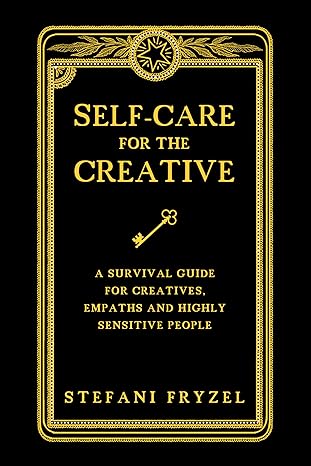
Self-Care for the Creative is part memoir, part survival manual, and part pep talk for empaths, highly sensitive people, and artists who are burning themselves out in pursuit of their craft. Fryzel draws on her own life of gritty lows, career highs, and all the messy middle, to explain how sensitivity and creativity often walk hand in hand, and why that combination demands intentional care. The book blends personal stories, practical tips, and a hefty dose of humor to guide readers through setting boundaries, managing overwhelm, and building a self-care toolkit that actually works in the unpredictable life of a creative.
Fryzel writes with a voice that is equal parts tender and unapologetic. She’s funny without being flippant, and her swearing isn’t there for shock value; it’s exactly how a real conversation with her would sound. I appreciated that she never veered into airy, vague “just love yourself” territory. Instead, she gave concrete, actionable steps, all while weaving in stories that made me laugh, wince, and occasionally nod in recognition. That mix of vulnerability and authority made me trust her completely.
What I liked most was how well she captures the emotional reality of being both highly creative and highly sensitive. She doesn’t romanticize the struggle or paint it as a necessary price for great art. She calls out toxic patterns, talks openly about depression and burnout, and reminds the reader that martyrdom isn’t a badge of honor. At the same time, she treats sensitivity as a superpower worth protecting. Her framing felt liberating, especially for those of us who have been told our feelings are “too much” for as long as we can remember. The book also gave me a few new self-care strategies that I immediately wanted to try.
I’d recommend this book to any creative who feels overwhelmed, stuck, or simply too drained to make their best work. It’s especially powerful for empaths and highly sensitive people who haven’t yet learned how to protect their energy without shutting down their gifts. If you’ve ever felt like your art is costing you more than it’s giving back, Fryzel’s words might just be the reminder you need to step back, take a breath, and start taking care of the most important tool you have… yourself.
Pages: 369 | ASIN : B0CLK5HRQ8
I Wasn’t Alone
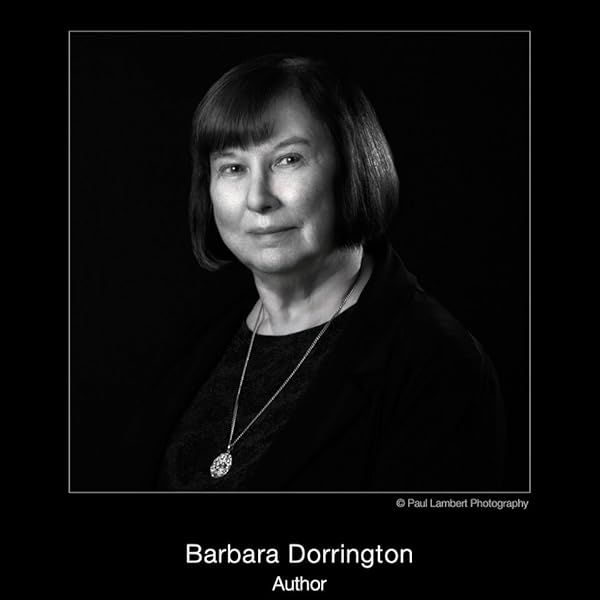
The Trauma Monster shares your story of looking into the unsolved murder of your childhood friend, and through the investigation and with the knowledge you gained as a trauma therapist, helped your community heal. Why was this an important book for you to write?
The Trauma Monster was never just about writing a book. I was not a writer by profession but I decided to learn to write so I could help others deal with longstanding trauma. It was also about breaking a silence that’s hung over my community, and over my own life, for decades. I grew up with unanswered questions, carrying the weight of childhood loss, violence, and unresolved grief. When someone you cared about is murdered, as my first crush, Scott Leishman, was, and the case goes unsolved, the trauma doesn’t end. It lingers, it shapes one, and it shapes the town around each of us that was affected.
This book was my way of finally giving voice to the pain that was hidden for too long. But it’s also a book about hope. It is about how, even after decades, people can come together to seek truth, to heal, and to demand answers. Writing The Trauma Monster allowed me to honour the victims, amplify the voices of those who were silenced, and show others that healing is possible, even when justice feels out of reach.
What were some ideas that were important for you to share in this book?
There are three important ideas that I hoped my book described. First, I wanted people to understand that trauma doesn’t just belong to the families of victims, it eventually ripples through entire communities. When a murder goes unsolved, it leaves behind more than grief. It leaves fear, silence, and shame. I saw that in London, Ontario, and I carried it personally with me for decades.
Sometimes, families didn’t want the investigation stirred up again. They were grieving in their own way, or protecting themselves from more pain, which is their right. But that silence didn’t stop the hurt, it just pushed it underground for everyone else. Friends, classmates, shopkeepers, neighbours and others, we all were left with unanswered questions, and nowhere to put their pain.
Second, I wanted to show that unsolved murders aren’t just cold files, but actual human stories. The victims weren’t statistics; they were kids I went to school with, the boy I once had a crush on. They had dreams, fears, favourite songs. Their stories deserved to be told, and with dignity, with truth.
Third, I wanted people to know that healing is possible, but it starts with facing the past. It starts with stories being told, even the uncomfortable ones. Even when justice feels impossible, we can still reclaim our voices. Silence may have protected some, but it also trapped many others. It’s time for the silence to end.
What was the most challenging part of writing your book, and what was the most rewarding?
The most challenging part of writing The Trauma Monster was carrying other people’s pain, and recognizing my own pain, at the same time. I spent years listening to stories that were buried for decades, including stories of violence, fear, and loss. Some of those were my own stories too. There were moments I’d sit at my writing desk and think, I can’t do this because it’s too heavy, too heartbreaking. But I also knew that staying silent wasn’t an option anymore, not for me, and not for the community.
Another challenge was navigating the delicate reality that not everyone wanted these stories reopened. Some families, understandably, wanted the past to stay buried. I had to find a way to respect that, while still standing up for the friends, classmates, neighbours, meaning the rest of us who’d been living with unanswered questions and hidden trauma all this time.
The most rewarding part, without question, was seeing what happens when people finally feel heard. I’ve had survivors, classmates, even complete strangers tell me that reading The Trauma Monster made them feel less alone. For the first time, their fear, their grief, even their anger, was seen, validated and understood. That’s why I wrote it. Not to stir up pain for the sake of it, but to remind people that silence doesn’t heal, but truth, connection, and shared stories can.
How has writing this book impacted or changed your life?
Writing The Trauma Monster changed my life in ways I didn’t expect. It gave me back my voice and not just as an author. It gave me a way to tell my own story as someone who grew up carrying unanswered questions and unspoken grief. For decades, I thought I had to live with the silence. I thought that’s just how it was because people didn’t talk about these murders, and the pain stayed tucked away in the corners of our lives.
But the more I researched, the more I listened to other people’s stories, the more I realized how many of us had been carrying the same weight. Writing this book showed me that I wasn’t alone. More importantly, I didn’t have to be quiet anymore.
It also connected me with people I never would have met otherwise, including other survivors, families, citizen sleuths, even people from my own past I lost touch with. Some of them shared their memories for the first time in 50 years. That’s powerful.
Most of all, it reminded me that healing doesn’t come from pretending nothing happened. It comes from telling the truth, even when it’s messy, even when it’s hard. Writing this book helped me face my own trauma, honour the people we lost, and finally believe that it’s not too late for change or for answers, or for a community to begin healing together.
Author Links: GoodReads | X | Facebook | Website
The Trauma Monster: A Healing Journey through the Untold Cold Case Stories Of One Ontario Community

The Trauma Monster is a gut-wrenching yet hopeful book that weaves together personal memoir, true crime investigation, and trauma therapy insights. Set in Ontario during the 1960s and ’70s, the book begins with the unsolved murder of the author’s childhood crush, Scott Leishman. That loss becomes the starting point for a wider exploration into a series of cold cases that haunted the community and left lingering emotional scars. Through firsthand accounts, interviews, and years of therapeutic work, Dorrington tells the stories of survivors, people who were children during those years and never had a chance to speak. At its heart, the book is about the long reach of trauma, the silence it breeds, and the healing that comes when people feel safe enough to speak.
There’s a raw honesty to Dorrington’s voice that pulled me right in. She doesn’t write from a distance. She’s not an outsider poking around in someone else’s pain. This was her town. These were her friends. She opens herself up on every page, and that openness gives the book its power. The writing is simple, which works here. No need for flowery prose or academic terms. At times, the book left me breathless. She paints the ’60s in vivid detail. The crime scenes aren’t sensationalized, but they do haunt. I kept thinking about the kids who didn’t come home. The way Dorrington connects personal grief with collective trauma is what makes this more than a true crime book.
What surprised me most was how tender it is. For a book about murder and silence and shame, there’s so much care here. Dorrington is a trained trauma therapist, and it shows, not in technical talk, but in how she handles each story with compassion. She gives voice to people who were never asked to speak. Her inclusion of art, storytelling, and even a workbook makes the book not just a record but a tool for healing. I found myself thinking about my own losses, my own unspoken stories. That’s the kind of impact this book has. And still, she doesn’t tie anything up neatly. She’s not pretending these wounds close easily. The monster, as she calls it, never disappears. But it can shrink. It can be drawn, faced, and named.
This book is not just about old murders or sad memories. It’s about witnessing. About telling stories that were hidden too long. I’d recommend The Trauma Monster to anyone who’s been through something hard and is still trying to name it. It’s not an easy read, but it’s a comforting one. If you like true crime with heart, if you’ve felt unseen or unheard, or if you’re trying to heal, then this book is for you.
Pages: 297 | ASIN : B0F7D6SCL8

An Apparently Normal Person: From Medical Mystery to Dissociative Superpower

An Apparently Normal Person by Bonnie R. Armstrong is a strikingly candid and powerful memoir, delving deep into the author’s journey through medical mystery and personal discovery. This exploration begins as Armstrong, a career-focused child advocate, faces a series of baffling physical ailments. Her quest for answers uncovers a shocking childhood trauma, revealing the roots of her dissociative disorder. This disorder, initially a protective mechanism, eventually manifests as overwhelming mental and physical symptoms that challenge her.
Armstrong’s narrative is nothing short of compelling. Her unflinching honesty in recounting her experiences brings to life both the pain and the strength that is inherent in her story. Her writing style is vulnerable and insightful, making it a gripping read. The book’s portrayal of dissociative disorders stands out for its depth and clarity. It invites readers into a world often misunderstood. I found Armstrong’s journey through self-discovery, acceptance, and eventually empowerment to be moving as well as inspiring.
The exploration of mental health stigma and the power of the human spirit to overcome adversity are notable themes. The memoir offers a deep understanding of how trauma impacts the mind and body and the role of dissociation as a coping mechanism. It’s a testament to resilience, shedding light on the importance of mental health awareness and compassion.
An Apparently Normal Person is a must-read for anyone interested in psychological memoirs, particularly those related to trauma and recovery. It’s an educational and empathetic journey suitable for mental health professionals, trauma survivors, and readers looking for a story of triumph over adversity. Armstrong’s courage in sharing her story provides valuable insights and hope to others facing similar struggles.
Pages: 340 | ASIN : B0CVJVB5PY
Neuroaffirming Support

In Nurturing Neurodivergence, you provide neurodivergent individuals with practical advice and guidance for navigating a neurotypical world. Why was this an important book for you to write?
Nurturing Neurodivergence is actually birthed from a group therapy program that I wrote not long before deciding to publish it in book form. That was a big step for me, but I wanted to do my part in making neuroaffirming support more accessible. In my years working with neurodivergent people (both as a teacher previously and now a psychologist), I find that one of the biggest challenges is to explain some ultimately abstract concepts that are essential for building healthy relationships (e.g., emotional accountability, healthy boundaries, even emotions in itself) in very concrete ways. To do that, I always try my best to ground any new learning that I’m presenting someone in everyday things or events that are already very familiar and relatable for that person. And it’s not that this need for making connections between old and new knowledge in learning is exclusive for neurodivergent people – rather, it’s a shared humanity, really. But I do think that this need is taken up a few notches for many neurodivergent people. Growing up, most kids somehow seemed to simply understand new concepts taught just by listening to the teacher reading from the textbook. I’d be as lost as Alice, but if someone were to whip out everyday objects – oranges, apples, toy figures… – and explain it to me again using those things, often, I’d get it.
Every neurodivergent person is different, but many of us are concrete thinkers. It’s a myth that all of us aren’t capable of understanding metaphors or analogies. We know from developmental psychology that the concrete learning phase needs to happen before abstract thinking can develop, which is why almost every child goes through a phase where they have and need much more certainty in what’s good and bad, right and wrong. As we grow, it’s not that we completely ‘graduate’ from concrete thinking altogether, but that we generally start requiring less of it and become more accustomed to moving onto more abstract thinking at a much quicker rate.
The way I see it, neurodivergent people are the same, but we just have a higher need to stay grounded in the concrete before we can incorporate the abstract. So, to explain to my clients why our attempts to ‘control’ our undesired emotions could instead magnify the very same emotion, for example, I might do a psychodrama experiment with them where I wear a tag that says “big anxiety” around my neck, and ask them to do their best to “get me out of the room” while listening to a played recording that is supposedly their loved one confiding in them about something important, before discussing their experience of whether they really were engaging with their “here and now” during the experiment, or with me, aka their anxiety.
I’d argue that learning life skills, including how to build healthy relationships, is just as important as learning fundamental literacy and numeracy skills, but there is never a school for it. And perhaps some folks who manage to learn things without explicit teaching could pick them up as they go and apply them in their lives to build healthy relationships, but the rest of us would be as lost as I was in classes where teachers read from the textbooks (except in this case, it’s more like teachers who told you to figure it out yourself without providing anything). This is why it’s so important for me to write this book.
Neurodivergence has so many facets. Did you find anything in your research for this book that surprised you?
Neurodivergence is incredibly multi-faceted, indeed. My lived experience and years of clinical experience are the main reasons why I’d be surprised if I found anything from my research for the book that still surprises me because neurodivergence research has always been quite a few steps behind what we encounter in practice (talk about being thrown in the deep end). So, in answer to your question, no, unfortunately, I didn’t, but rather, it was what I did not find that surprised me. Before writing Nurturing Neurodivergence, I had not done research to this breadth and depth since leaving the university, and I suppose I was expecting to see more new additions to the research literature on different aspects of neurodivergence, especially around alexithymia, for instance, than what I’d found. Then again, in the very beginning, I was trying to read more laypeople articles, instead of just academic journals, in hopes that it’ll help me with writing in layperson’s terms, which is what’s intended, but was rather surprised to find the amount of misinformation on neurodivergence that’s being floated around on the Internet and social media. Many seemed to quote random (legit academic journal) articles, but completely distort findings, or add in their own claims that are nowhere to be found on the cited source. I could see the potential of some of those misinformed claims doing significant harm. So, with the exception of referencing a few high-quality blog articles written by people with lived experience, I returned to scientific sources and allowed myself to write a thesis (I mean, that’s how we were trained to write) before rephrasing everything.
What is one thing you would like readers to take away from Nurturing Neurodivergence?
That a healthy relationship with ourselves as a full package, complete with parts we like and don’t like, is just as important as, if not more than, our relationships with the rest of the world around us.
What is the next book you are working, on and when will it be available?
To be honest, I don’t know what I was thinking – continuing my usual clinical and supervisory work and writing a book simultaneously. I’ve learnt my lesson that doing so doesn’t exactly leave much room for me to have a healthy relationship with myself, and did make my close circle promise to shake some sense into me, shall I ever feel tempted to do it again. So, I don’t know if there’ll be a next book for me. But IF (a big ‘if’) there should be one, I’ll probably dive into another aspect of healthy relationships with the self that I’ve only skimmed over in Nurturing Neurodivergence.
Author Links: GoodReads | Facebook | Website | Jasmine Loo Psyschology | Amazon
In it, you’ll find thought-provoking questions or activities for guided reflections, engaging infographics (in FULL COLOUR!) unpacking key concepts in accessible ways, as well as practical strategies to support you with navigating the day-to-day of a late-identified adult. Drawing on a range of evidence-based psychotherapy models, including Acceptance & Commitment Therapy (ACT) and Cognitive Behavioural Therapy (CBT), it is a fantastic resource for mental health practitioners. With a fierce commitment to helping late-identified adults avoid neurodivergent burnout and develop a sustainable way of living, Nurturing Neurodivergence gifts readers with the essential tools for building healthy self-view and relationships in their lives.
A Painstaking Process
Deprogramming Victims of Brainwashing and Cult-Like Mind Control provides a deep look into the world of cults and psychological manipulation and techniques that victims can use to start healing. Why was this an important book for you to write?
A person very dear to me came under the control of a manipulator. I sought
deprogramming help, but there was none anywhere. Armed with my knowledge of psychology and sociology, I was determined to undertake the deprogramming of my friend myself. But I had help. I received invaluable assistance from a fellow associate at NSA offices who had even more experience in this area and who offered his assistance. I wanted other people to have this know-how, knowing how helpless one can feel.
What is a common misconception you feel people have about brainwashing?
Most people do not differentiate between brainwashing and hypnosis. The 2 actions are totally different in function. Generally, hypnosis is the first simple step that prepares a mind to be brought under control. Brainwashing is the next step and is a much more intense, detailed, and highly physical act of taking charge of the victim.
What were some ideas that were important for you to share in this book?
Do not immediately blame the victim of brainwashing for his or her condition. Maybe he or she should not have gotten involved in the situation, but no one has the right to take control of another’s mind. Also, be aware that the act of brainwashing is not a mysterious power known only by those with a special, secret knowledge, but it is a process that can be and is learned like anything else. Most brainwashers are simple con men who spent years learning this “trade.” Beware of the first signs of potential brainwashing – singular interest given to one topic to the exclusion of everything else in life. This is the doorway to mind control.
What is one thing that you hope readers take away from your book?
Deprogramming is a process that can be learned. A person of basic intelligence can successfully apply the methods used in deprogramming if these are closely and assiduously followed. It may take a long time to deprogram someone, depending on the stage of indoctrination in which he or she is in when you begin the process. But it can definitely be successfully performed by pretty much anyone with the desire and will to do so. But it is a painstaking process.
Author Links: Goodreads | Amazon
THIS BOOK IS NOT ABOUT THEORY OR SPECULATION. IT SHOWS HOW IT IS DONE.
THIS COPY IS THE BASIC MANUAL. AN EXPANDED EDITION IS ALSO AVAILABLE.
Nurturing Neurodivergence: The Late-Identified Adults’ Guide to Building Healthy Relationships with Self and Others
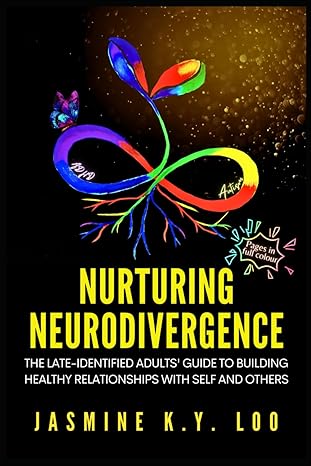
Nurturing Neurodivergence: The Late-Identified Adults’ Guide to Building Healthy Relationships with Self and Others, by Jasmine K. Y. Loo, serves as a practical and insightful guide for neurodivergent individuals, particularly those with Autism and ADHD, navigating a world predominantly designed for neurotypical individuals. Loo addresses the notable gap in literature for adults who discover their neurodivergence later in life. Through a blend of personal anecdotes and experiences from her professional interactions, the author provides a roadmap to help these individuals transition from unawareness of their neurodivergence to understanding and navigating life with this new self-knowledge.
The book is enriched with introspective questions and guided exercises, which are thoughtfully integrated either for in-book reflection or use in a personal journal. This approach not only deepens the reader’s comprehension of the topics discussed but also facilitates a more personalized journey of self-discovery and understanding.
An especially commendable feature of Loo’s work is the organization of the chapters. The book begins with an overarching introduction before delving into specific discussions on Autism and ADHD. Each section thoughtfully examines the emotional, executive functioning, and sensory processing challenges associated with each condition, along with other unique characteristics. This book is a significant resource for those interested in psychology as it highlights the reality that awareness and understanding of neurodivergence in adulthood are still emerging concepts. This realization, combined with a lack of adequate professional guidance and existing stigmas, underscores the importance of Loo’s work.
Nurturing Neurodivergence stands out for its accessibility, empathy, and the careful balance it strikes between being comprehensive and personalizable through the included exercises and queries. The book resonates as a voice for many undergoing similar experiences, offering valuable insights for neurodivergent individuals, mental health professionals, and those seeking to broaden their understanding of neurodiversity.
In essence, Jasmine K. Y. Loo’s book is a significant contribution to the field of neurodiversity and mental health. Its practical guidance and empathetic tone make it a valuable resource for a wide audience, fostering greater understanding and support for neurodivergent adults.
Pages: 148 | ISBN : 978-0645896084



 LITERARY TITAN