Blog Archives
Dementia Man


Dementia Man tells the story of Sam Simon as he moves from early memory lapses to a diagnosis of Mild Cognitive Impairment and then early-stage Alzheimer’s. He shares vivid scenes from his life. He brings the reader into the raw moments of confusion, fear, stubborn hope, and even humor as he and his wife, Susan, navigate a medical system that often leaves people like him stranded. The book blends memoir, social critique, and a call for change. It follows Sam’s love story, his activist past, his moments inside what he calls The Nothingness Place, and his determination to choose life for as long as he can.
This is an emotional memoir. The writing feels close to the skin, almost like Sam is talking straight at me from across a kitchen table. His descriptions are sharp and strange at the same time. I kept pausing because the images stayed with me. His voice has this mix of clarity and fog that mirrors the disease he is trying to explain. Some passages made me laugh because he can be blunt and warm in the same breath. He shows how lonely and scary cognitive decline can be when the world does not know how to help. What struck me most was how he refused to let fear become the whole story.
He questions the medical system in a way that feels earned, not angry for the sake of it. He wants navigators for people with cognitive disorders. He wants society to change the way we talk about brain diseases. He wants families to have real support. His push for dignity feels bold and simple at the same time. The honesty about his own confusion and frustration gave the book a heartbeat. It is not a tidy narrative, and that is exactly what makes it feel real.
I would recommend this book to caregivers, medical professionals, families who are beginning this journey, and anyone who wants to understand what cognitive decline feels like from the inside. It is also a strong read for advocates and students in health fields who need to hear a patient’s voice in full color. Above all, it is for readers who want a story about choosing life even when life gets hard.
Pages: 209 | ASIN : B0G1TZRVXL

It Became Much Darker

Dark Threads tells three haunting dark-fantasy stories where desperate survivors endure brutal magic and impossible choices in worlds crumbling under their own shadows. What sparked the initial idea for Dark Threads, and did one story come first?
The Breath Borrower was the first dark-fantasy story I’d ever written. I wrote it specifically for the Writers of the Future contest about five years ago. When I first had the idea, I don’t think it was dark, per se, but as the story developed, the weight of it grew, and it became much darker.
It received a Silver Honorable Mention in the contest, and I really loved the story, but after trying for a few years to get it published—and receiving a few quite nice rejection letters—I decided to share it with readers on my own. The other two stories in this volume had also received HM’s in the contest, and since they were also rather grim and dark, I thought they’d work well together.
I plan to continue the series, since I enjoy dwelling dark occasionally, but their release may be erratic since I write across multiple genres, and these types of stories can be emotionally intense to create.
The magic systems are uniquely brutal. How did you approach designing magic that feels both inventive and emotionally costly?
I think because of the depth of magic involved in these stories, the giving or receiving of something from inside the characters themselves, it made the cost automatically become greater and more intimate. Very personal. And because of that, it became a choice for each character. Risking their own life for others. Even in the case of Vapors of Misuse, the twins are seeking revenge, but also an end to the misery their lives are a part of, either for each other, or for the community after they’re gone.
Your characters often operate in moral gray zones. How do you balance empathy with their harsher decisions?
Once I started coming up with the ideas, the characters themselves took over. That often happens in my writing. They flesh themselves out. They become very real, and real people often have far more gray in them than edging toward black or white. And the gray is interesting to explore.
It goes back to the choice thing. Under “normal” circumstances, the main characters would be ordinary people, but I’ve thrown them into some type of chaos, and they have to react while trying to still keep part of themselves…well, themselves.
The endings are powerful but intentionally not tidy. How do you know when a story with this much darkness has reached its conclusion?
Life isn’t very tidy. A lot of my short stories feel like vignettes of the character’s life to me. You know things were happening before this moment, which are sometimes alluded to, giving the reader more background, but you also get the feeling something else will probably come after the story, though perhaps not with the central character.
The vignette ends at a pause, like the end of an exhale. The flow of that particular moment narrows until you break away. It’s not always a clean break. Something might not be fully resolved. It’s a bit like ending on a discordant note in music. It might leave you feeling a little disturbed, but glad it’s fading away at the same time.
Author Links: GoodReads | Facebook | Website | Instagram
In this collection of haunting dark fantasy tales, mortals and spirits alike wrestle with destiny, sacrifice, and the cost of power.
In The Breath Borrower, a sacred thief of breath must choose between duty and mercy in a city where life and death hang on a whisper.
The Withering follows a lone scholar through the dream-infested Underland, seeking a cure for a dying world—even as her own body fades.
And in Vapors of Misuse, a cursed twin races against time to use forbidden magic against a ruthless tyrant—before he is consumed by the very power he wields.
These are not stories of easy victories or neat endings. They are stories of survival, of sacrifice, and of what lingers when hope is gone.
Crossfire


Crossfire follows Moirin Garrett, a high-powered executive juggling corporate pressure, family expectations, and the uneasy beginnings of an environmental partnership that forces her into the political, personal, and ethical “crossfire” she’s spent a career avoiding. From the first chapters, the story grounds us in her world of boardrooms, complicated family brunches, and the shimmering social circles where everyone wants something from her. As the plot widens, the book becomes a layered look at ambition, reinvention, and the messy overlaps between public responsibility and private longing.
Reading this in first person, I found myself rooting for Moirin even when she frustrated me. She’s sharp, driven, polished on the outside, and quietly unraveling beneath the surface. The writing makes room for that contradiction. The scenes move with a steady rhythm, sometimes clipped and tense, sometimes opening up into softer, more reflective moments that show how lonely success can feel. I liked how Herman lets small details do the emotional lifting: the staleness of office coffee, the weight of a family legacy, the flicker of discomfort when Moirin realizes she’s being sized up not just as an executive but as a woman in a room full of men with agendas.
What stood out most was the author’s choice to frame the story’s tension around both career stakes and personal awakening. The environmental study storyline sets up a believable moral tangle, especially as shady players circle around Moirin’s work. At the same time, the book gives her space to question what she actually wants beyond the next professional milestone. Moments with her friends feel warm and real, and her slow steps toward vulnerability make the corporate drama feel more human, not just high-stakes business maneuvering. The writing stays simple, grounded, and clear, letting the emotional beats land without theatrics.
The book feels like a story about a woman stepping out of a life she mastered and into one she’s still learning how to want. It’s women’s fiction with corporate intrigue woven in, built for readers who enjoy character-driven arcs, workplace complexity, and the slow burn of personal transformation. If you like stories about strong women navigating reinvention in midlife, or if you enjoy fiction set at the intersection of power, family, and identity, Crossfire will hit the mark.
Pages: 365 | ASIN : B0FTDX5MML
Reservations: A Samantha Wright Crime Series
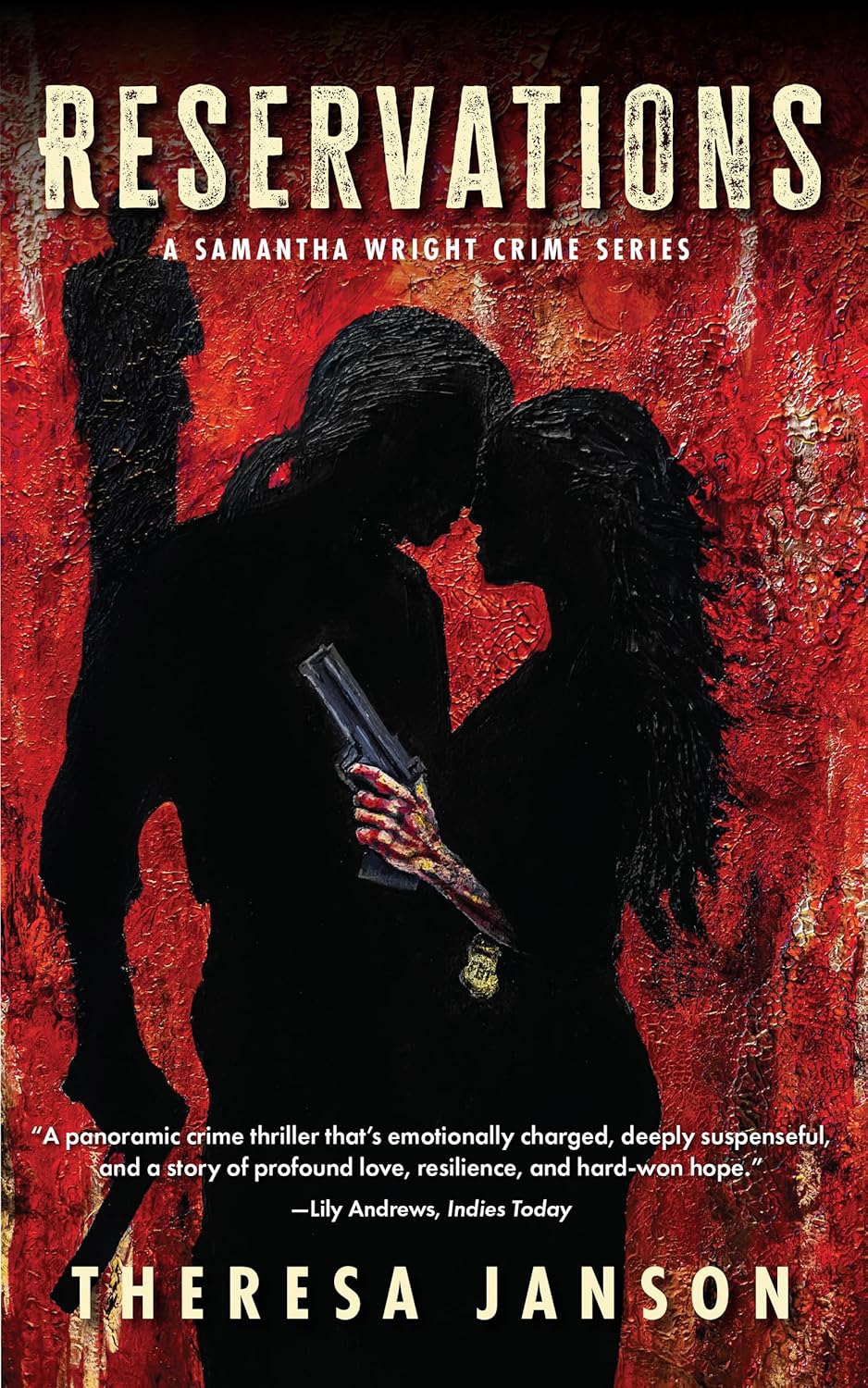
Reservations follows FBI profiler Samantha Wright as she’s pushed back into the hunt for a serial killer after the sudden death of her mentor and closest friend, Dr. Edmond Sampson. The story opens with grief, then moves fast into danger as Sam takes over the RESERVATIONS case, a string of murders involving young boys on reservations across the American West. Her past traumas, messy romantic entanglement with Special Agent Charlie Falken, and deep loyalty to Dr. Sampson color every choice she makes. The book blends crime, trauma, culture, and romance in a way that feels raw and intimate, almost like sitting beside Sam as she thinks her way through every dark corner of the investigation.
I liked how emotional the writing feels. The author doesn’t rush through Sam’s pain. She lets it sit there, real and jagged. Sam grieves her mentor with this quiet, private sorrow that feels heavy and familiar. At the same time, the pacing snaps between slow internal moments and sudden shocks. The memories of the BAKER’S DOZEN case are especially rough. The writing keeps things personal. It doesn’t pretend Sam is made of steel. She’s brilliant, but she’s tired, haunted, and sometimes unsure, and I liked her more because of that.
The mix of genres also surprised me in a good way. The romantic scenes with Charlie are blunt, sweaty, flawed, and full of emotional landmines. They’re not polished or dreamy. They feel like two people clinging to each other because they don’t know what else to do with their hurt. Then the story swings into investigative mode with sharp detail and a steady buildup of dread. The casework feels grounded and tense, especially when Sam revisits crime scenes or pieces together old trauma with new evidence. The writing is vivid.
I’d recommend Reservations to readers who enjoy crime fiction with strong emotional depth and a protagonist who feels human in all the best and hardest ways. It’s especially fitting for people who like stories that dive into trauma, culture, identity, and the complicated ties we form with the people who shape us. If you want a thriller with heart and heat, something that grips you and makes you feel a little raw by the end, this book will get you there.
Pages: 332 | ASIN : B0FHYLFVBZ
Desperate Souls

Desperate Souls follows several lives caught in moments of fear, loss, and fragile hope. The story opens with young Joseph watching his world collapse in a violent attack on his family’s mission, then shifts to Grace, a talented ballet instructor whose body begins to betray her just as her future seems set, and to Nathan, a new father fighting to keep his wife alive. Each thread builds toward a picture of people pushed to the edge of what they can endure and reaching for faith, purpose, or simple survival. The writing leans heavily into emotion, and the pacing keeps the reader on alert as tragedies unfold without warning.
This book pulled me in fast. The emotional punches land hard, and I found myself bracing during several scenes. The details of Joseph’s escape, Grace’s slow unraveling, and Nathan’s desperation created a steady tension that made me keep turning pages. The writing is clear and direct, and it leaves room for the reader to feel the weight of each character’s fear. At times, I wanted a moment to breathe, yet the speed of the story felt true to what these characters were living through. Their worlds were breaking apart.
I also enjoyed how the story handles faith and suffering. It does not drift into heavy explanations, and it avoids preaching. Instead, it shows characters trying to cling to what they believe while everything they trust falls away. Some moments really resonated with me. Grace trying to keep her life together while hiding her symptoms felt painfully real. Nathan stumbling through fear with a baby in his arms made me tense in my seat. I felt frustrated with these characters sometimes, and I felt protective of them too. That mix made the story stick with me.
Desperate Souls will appeal to readers who enjoy character-driven drama with high emotional stakes. It is well-suited for people who like stories about ordinary lives facing sudden upheaval and who appreciate a blend of suspense, faith, and personal struggle. If you want a book that makes you feel something deep and keeps you thinking after you close it, this one will do exactly that.
Pages: 414 | ASIN : B0FHQKDM88
the quiet calendar
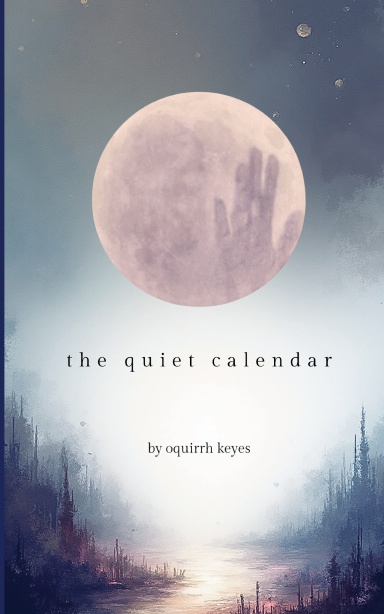
The Quiet Calendar feels like a month of someone’s inner world laid bare. It traces day by day how a woman crawls out of a long, damaging entanglement and slowly learns to hear her own voice again. The book moves through grief, shock, anger, clarity, and finally something like peace. Each poem marks a moment in time. Some are sharp. Others feel like exhaling after holding your breath. The drawings scattered through the book soften the blows a bit. They echo the mood of the poems and give everything a floating, ghostly feel. The whole collection reads like a journal.
As I moved through the pages, I felt myself pulled into her emotional rhythm. The writing is simple on the surface, but it hits hard because of that simplicity. Some lines shocked me with how plainly they revealed the manipulation she endured. Other lines made me root for her like a friend who keeps getting stronger each day without realizing it. The pacing is tight. The shift from longing to clarity feels natural. It never rushes.
I also loved the way the book explores self-return. Many poems break open the idea that healing is not one big moment. It is a series of tiny decisions that build you back up. I felt myself smiling at her small victories. A cup of coffee alone. A morning without checking the phone. A song that once hurt now simply playing in the background. These little moments felt huge and real and made me weirdly proud of her. The writing carries a lot of tenderness, even when it stings, and I kept thinking about how many people will see bits of their own story in hers. The art deepened that feeling. The cracked hourglass. The key with wings. The feather.
The book is honest about the messy parts of leaving someone who should never have been held so tightly. It is gentle about the slow return to a life that was waiting the whole time. I would recommend The Quiet Calendar to anyone who is coming out of a breakup that left them confused, guilty, or hollow. It is soft, real, and full of small truths.
Pages: 112 | ISBN: 9798218838591

Burned Butter Island

Burned Butter Island follows a lonely boy who lives with his father, a grey cat, and a white duck on a small Baltic island where the lighthouse stands watch over wind and sea. The boy, still grieving his mother, wanders through forests filled with foxes and white deer, bakes blackberry tarts, reads old books, listens to storms, and discovers the strange magic of a narwhal’s tusk. When a violent storm pulls him into the ocean, a real narwhal saves him, guiding him back to shore and back to hope. The book blends poetry, fable, memory, and gentle magic into a tale about loss, wonder, and the courage to live again.
The language is simple, yet it carries an emotional weight that sneaks up on you. Scenes drift from soft domestic moments to wild visions of storms and enchanted creatures. I found myself slowing down because the rhythm feels like someone humming by the fire. I loved the poems sprinkled throughout. They felt warm, handmade, and a little fragile. Sometimes the narrative jumps between moments and I had to catch up. It felt like listening to someone who speaks from the heart and lets the story wander where it wants to go.
What I liked most was how honestly the book speaks about sadness. The boy’s grief shows up in tiny gestures, in memories of his mother’s lullabies, in the way he stares at the tusk as if it holds the answer to something he cannot name. I felt a lump in my throat when he read the message on the rocking horse. The moment he sees that love does not vanish, and that sadness does not have to swallow him whole, felt tender and real. The author writes about loneliness without heavy words and lets magic offer comfort instead of escape. I liked that a lot.
I would recommend this book to readers who enjoy gentle stories that glow from the inside. It is perfect for people who love fairy tales, lyrical writing, and small moments that carry big feelings. It would also comfort anyone who has walked through grief and wants a reminder that joy can return in unexpected ways.
Pages: 20 | ASIN : B0FXHLFGS8
Payback

Payback by Molly D. Shepard and Peter J. Dean is a workplace thriller that follows Samantha, a high-performing banker who spends years navigating a toxic, sexist culture and the predatory attention of an executive named Archer Dunne. The story moves between Samantha’s point of view, Archer’s warped inner monologue, and the perspectives of allies and bystanders as the bank’s abuses pile up, push her out, and eventually circle back when Archer, now ill and diabetic, is admitted to the upscale nursing home Samantha runs. There, she seriously considers killing him by quietly increasing his insulin, only for fate to intervene when he dies after a fall, leaving her to grapple with what justice really looks like and how to live with a rage that never fully disappears.
The opening prologue drops you right into Samantha’s mind as she calmly admits she is planning “the perfect murder,” and it is both chilling and deeply believable once you see what she has survived. The early scenes at the bank feel painfully real: the drunken company party, the alleyway assault where she escapes only to realize the attacker is her own Executive Vice President, Archer. The authors lean into clarity more than subtlety, and sometimes the villains are almost grotesquely obvious, but in a workplace thriller like this, that bluntness works. It feels less like a puzzle and more like a long, angry debrief of “this is exactly how they get away with it,” which I found strangely cathartic.
What stayed with me most was how much of the book is about the slow grind rather than just the headline traumas. Samantha’s first boss Margie, who bullies her daily for minor mistakes until she quits, the constant body shaming from her parents, the impostor syndrome that keeps replaying in her head even as she racks up wins at the bank. Her friendships with Inga and Josephine become the emotional center of the story. Inga is a top pharma rep whose numbers are excellent but who keeps getting passed over because she is out of sight, out of mind in the Midwest, and Josephine is a Black consultant who writes speeches for her CEO yet cannot break past a certain rank because of bias in her firm. Their late night strategy sessions at the Barrister Bar feel like war councils and group therapy at the same time, and the book keeps circling back to how women have to quietly train each other to survive systems that were not built for them. That coaching tone does poke through sometimes, and a few passages read like a leadership manual folded into a novel, but I did not mind it. It gave the story a grounded, “here is what actually happens in these rooms” quality.
I also appreciated the choices the authors made around Archer and the men who are not monsters. Seeing scenes from his perspective is uncomfortable in the best way. You watch him stalk Samantha in that alley, brag to his young male “minions” about using women for sex while blocking their promotions, and later seek out the nursing home she runs because he wants one last chance to torment her and even ogle her teenage daughter. When he exposes himself to a vulnerable resident at The Fairfield and Samantha finally has the power to kick him out, her fury practically hums off the page. At the same time, the book gives us Lance, the new CEO who discovers Samantha’s detailed notes about the bank’s abuses and decides to tear out the culture by the roots, and Todd, the thoughtful carpenter who becomes her husband and steady base. That balance keeps the story from sliding into pure despair.
I see Payback as a feminist workplace thriller that also works as social commentary about harassment, bullying, and the cost of keeping quiet. It is not subtle, and it does not try to be. The language is clear, the emotions are right on the surface, and the plot keeps you turning pages to see whether Samantha will cross that final line. If you have lived through a toxic office, care about gender equity at work, or just want a tense, emotionally honest story about a woman who refuses to stay a victim, I think this novel will hit hard in a good way.
Pages: 240 | ASIN : B0FX3FV52H


 LITERARY TITAN