Blog Archives
The Cost of Remembering

The Symbol: Awakening follows a fierce prosecutor dedicated to combating violence against women who, along with her allies, fights to dismantle systemic oppression and bring justice to survivors. What was the inspiration for the setup of your story?
The Symbol: Awakening was born from real-life pain. As a Brazilian attorney, I worked for years supporting women who survived gender-based violence. I carried their stories with me, their silenced voices, their broken systems, and their quiet resilience. Eventually, those truths demanded a fictional home. The futuristic Council is a metaphor for the institutions that failed them. Louise is a mirror: she’s a prosecutor trying to do the right thing in a world that punishes those who dare to speak.
It’s not just a dystopia. It’s a cry for justice.
What were some of the trials that you felt were important to highlight Louise’s development and shape her into the woman she is now?
Louise’s development is rooted in trauma and contradiction. I wanted to show a woman who fights for justice but is also broken by the system she serves.
She loses her mother to domestic violence. She carries a symbol of resistance (the button) since childhood. She trusts the law, then watches it collapse under silence and control. Her most important trials are emotional: learning to trust again, to remember who she is, and to embrace her voice even if it puts her in danger.
Her strength is not in being fearless. It’s in being terrified and still choosing to act.
What were some themes that were important for you to explore in this book?
There are many layers, but five themes are central:
• Systemic violence against women
• Institutional silence and complicity
• The cost of remembering (trauma)
• The complexity of justice
• Hope as resistance
The book also explores power through language, memory, and surveillance. Who gets to tell the truth? Who gets believed? What happens when silence becomes law?
I wanted to write about pain, but more than that, about transformation through pain.
Where does the story go in the next book, and where do you see it going in the future?
In Book II, Louise will no longer work within the system; she will rise against it. She becomes the public voice of a growing rebellion, but that comes with consequences. Enemies will rise from both sides. The movement she inspired begins to fracture.
The second book is about navigating power without becoming what you fought against.
Author Links: GoodReads | Website | Instagram | Amazon
Since childhood, Louise has carried a button inherited from her mother, a silent symbol of resistance against tyranny and violence against women. The book follows her journey through pain, discovery, and courage as she investigates crimes, exposes the Council’s lies, and confronts deep human dilemmas. Alongside allies like Emma, Joe, and Sam — the latter a mysterious man torn between his past and a chance for redemption — Louise finds herself at the center of a plot involving conspiracies, assassinations, and the darkest secrets of power.
Space to Heal

That Kind of Girl follows an anxious and overwhelmed physician who meets a stripper-slash-therapist whose fearless confidence leaves her to question if having it all is worth the price of losing herself in the process. What was the inspiration for the setup of your story?
The inspiration for That Kind of Girl came from seeing the women around me trying to balance the chaos of demanding careers and motherhood. I started writing the book when I was a new mother trying to weave parenting into my life as a physician. I wanted to explore what it truly means to “have it all” and the toll it can take on a woman’s sense of self. The dynamic between the anxious physician and the fearless stripper-therapist is a way to highlight different approaches to confidence and self-acceptance. Ultimately, my hope is to inspire women to find something they love—something that grounds them and brings joy—amidst the overwhelming demands of their lives. It’s about rediscovering yourself when the world expects you to be everything to everyone.
Opal’s struggles with balancing a career, marriage, and family are relatable to many women today. Are there any emotions or memories from your own life that you put into your character’s life?
Absolutely. I often pull emotions from real life into my writing. I want the reader to experience the wide range of emotions they find on the page, often messy, but most of all the joy and levity that comes with not having to do this alone. One memory from my own life that made it into the book was writing a text message filled with four-letter words about my boss and accidentally sending it to my boss instead of my husband.
What were some themes that were important for you to explore in this book?
One of the core themes I wanted to explore in That Kind of Girl is that a person is never just the sum of their past mistakes. We all carry regrets and moments we wish we could change, but those don’t define us. Redemption, I believe, truly begins with forgiving yourself—allowing space to heal and grow beyond what’s happened. Through the characters’ journeys, I wanted to highlight that self-forgiveness isn’t easy, but it’s essential for reclaiming your sense of worth and moving forward with courage and hope.
What is the next book that you are working on, and when can your fans expect it to be out?
Turbulent Skies is about a woman days away from her wedding when her fiancé has an accident that leaves him on life support. Things go from bad to worse when his ex shows up and reveals they never legally divorced, she has medical decision-making power, and she wants to pull the plug. The book is expected to hit shelves in 2026.
Author Links: GoodReads | X (Twitter) | Facebook | Instagram | Website | Amazon
Will she sacrifice herself to keep everyone she loves happy?
Doctor Opal Collins is anxious and overwhelmed. So when her husband threatens to leave her
unless she finds the time to add a baby to the chaos, she digs deep to impress her boss and earn a
sanity-saving promotion. And though she’s excited by the spark between them, she knows she
should be offended when her boss suggests she trade her body for the job.
Thrilled when she earns the coveted position after setting boundaries in their scandalous affair,
Opal’s complicated dual relationships have her humming with tension. But with the tangled web
of deceit and affection already woven, she fears there’s no way out without betraying her vow to
do no harm.
Has her people-pleasing persona destroyed her dreams, or can she cling to a vestige of self?
That Kind of Girl is a wickedly witty work of women’s fiction. If you like emotional tension,
laugh-out-loud humor, and beautifully crafted prose, then you’ll adore Jacey Bici’s unexpectedly
sweet journey.
Out of the Crash
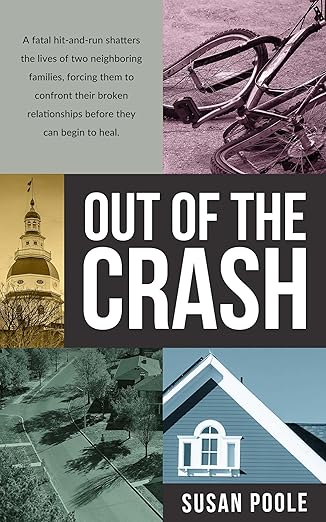

Susan Poole’s Out of the Crash is a riveting novel that begins with a sudden tragedy and spirals into an emotional reckoning for two families in the small town of Shawnee Springs. Caroline Beasley, a breast cancer survivor and bestselling author, returns from a motivational speaking event only to find her son Kyle in a tailspin. At the same time, Ethan Shawver, a high school senior, learns that his beloved mother, Amy, has been fatally struck by a car while biking, a car driven by Kyle. The book follows the emotional fallout, not just from the accident itself, but from the long shadows of grief, guilt, and family strain that it casts. Told through alternating perspectives, it weaves a tense and heartfelt portrait of trauma and how lives can fall apart and rebuild after a single moment.
I was completely pulled in by Poole’s style. Her writing has a natural rhythm, unforced and full of small, familiar details that make the characters feel like people I know. The dialogue felt real, awkward, warm, and messy, and the use of social media and group texts to open the story made it like something from the present day. Caroline’s complicated: resilient but vulnerable, confident but riddled with guilt. Watching her struggle with motherhood, ambition, and marriage felt all too real. Ethan’s side of the story was just as gripping. His pain was raw, unfiltered. The scene when he finds out about his mother’s death actually made me tear up. There’s something honest in how Poole handles grief. Not in a grand way, but in the everyday chaos it causes.
The middle dipped slightly as characters circled the same emotions, and I found myself wanting more movement in the plot. But then again, real grief doesn’t follow a tight arc, and maybe that’s the point. The book is strongest when it focuses on the interior lives of its characters. It doesn’t rely on big twists. It leans into emotional honesty, which is brave and a little brutal. There are moments when I didn’t like the characters much, Kyle’s denial, Jordan’s detachment, Caroline’s self-righteousness, but I never stopped caring about them. That’s the magic. Poole makes it hard to look away even when things get uncomfortable.
I’d recommend Out of the Crash to readers who appreciate layered family stories that don’t shy away from hard truths. If you liked Little Fires Everywhere or Ask Again, Yes, this one will be right up your alley. It’s a book for people who aren’t afraid to sit in the middle of the storm and wait for the quiet to come. And if you’ve ever been a parent, a child, or someone trying to hold it together when your world is falling apart, this story will resonate with you.
Pages: 291 | ASIN : B0F89DSZHM

Paraclete Hills Vacation Bible Camp: Prayers, Praise and Perfect Pranks
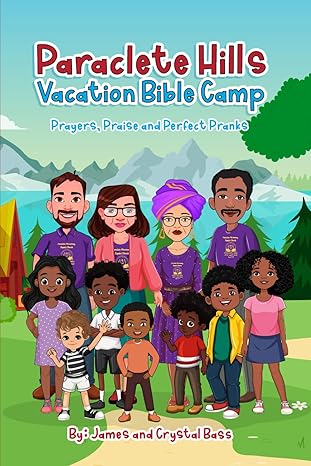

Paraclete Hills Vacation Bible Camp, by James and Crystal Bass, is a sun-drenched, laughter-laced ride through summer camp. It follows six lively kids—Annabelle, Ariel, Zion, Bo, and twins Big Jay and Little Jay—on their hilariously mischievous, often heartwarming journey of faith, friendship, and epic pranks. Through silly escapades like fart-sounding balloons in Bible class and googly eyes on school supplies, they explore what it means to grow, learn, and bond in ways that go beyond marshmallow roasts and canoe races.
I loved how genuine this story felt. The kids aren’t perfect. They make a mess, push boundaries, and pull off pranks that would give any camp counselor pause. But they’re never cruel. Their balloon prank during Pastor Coleman’s Bible lesson had me laughing. But even better was how the adults handled it—with humor, a touch of wisdom, and a good-natured lecture that turned the chaos into a lesson about kindness. That balance—fun without meanness, correction without scolding—made this more than just a goofy camp story. It felt real. Like a place I wish I’d gone to as a kid.
Then there was the moment Micah the Menace arrived. A toddler armed with the appetite of a vacuum and the tantrum power of a hurricane? Genius. But it wasn’t just for laughs. The counselors flipped the script on the pranksters. Watching the kids learn humility through a pint-sized storm named Micah was both hilarious and surprisingly touching.
As the story moved into the later chapters, especially “The Apology and Making Amends” and “A New Kind of Fun,” it honestly got me a little misty-eyed. The kids’ decision to write apology letters and then organize a camp-wide talent show? That hit home for me. It reminded me of how we grow up in spurts—first we laugh, then we reflect. That campfire scene, with everyone clapping and singing, wrapped the whole thing up in the best way possible—warm, sincere, and full of love.
If you’re a parent, a youth group leader, or anyone looking for a story that teaches lessons without preaching, Paraclete Hills Vacation Bible Camp is a treasure. It’s especially perfect for middle-grade readers who want humor with heart. Think Diary of a Wimpy Kid meets Sunday school. This book made me laugh, smile, and think, and I’d happily recommend it to anyone who believes that joy, mischief, and growth can all live in the same chapter.
Pages: 58 | ISBN : 978-1963737837
Sifting Through Memories

A Pleasant Fiction follows a middle-aged man as he prepares his parents’ home for sale after their deaths, navigating the rooms of his childhood one last time and unearthing long-buried memories. What was the inspiration for the setup of your story?
The setup came from a very real place. After my own father passed away last year, I found myself in the exact position Calvin is in—sorting through the physical and emotional remnants of a life once shared. It’s a process that’s equal parts grief, memory, and reckoning. The house in A Pleasant Fiction becomes a kind of emotional topography. Each room holds its own ghosts, each item its own story, and the act of cleaning it out becomes a meditation on meaning, family, and what we carry forward.
One of the hardest parts was letting go of the things—not just because they had sentimental value, but because they felt like all that was left. Giving or throwing them away felt like saying goodbye again, and maybe for the last time. But eventually, out of necessity if nothing else, you realize you can’t keep 80 years of someone else’s life in boxes. And when you accept that, something shifts. You begin to understand that what remains isn’t the stuff—just as the people you loved weren’t only their physical bodies—it’s the memories attached to them and the impact they had on you. You can let go of the things without letting go of the person. The love, the lessons, the echoes—that’s what endures. So the house and the process of letting go becomes a metaphor for that deeper truth. It’s not about holding on to what was, but learning to carry forward what still matters.
It seemed like you took your time in building the characters and the story to great emotional effect. How did you manage the pacing of the story while keeping readers engaged?
The pacing was deliberate—almost musical. I wasn’t writing toward a traditional climax so much as riding waves of emotion, like experiencing the movements of a symphony. There are motifs that return, refrains that echo. The structure is non-linear because grief isn’t linear. It loops, it lingers, it ambushes you. You think you’ve moved past one feeling, and then it washes over you again in a different key.
And while the book is ultimately structured around the five stages of grief, I didn’t outline it that way ahead of time. If I had started with that framework, I think it would have felt artificial—too linear and orderly for something as inherently chaotic as real grief. Instead, I focused on the emotions I went through while settling my own parents’ estates and let the story tell itself. And in that process, the five stages revealed themselves organically—in all their messiness and overlap.
There’s also a kind of chain reaction that happens when you’re sifting through memories like this. One object sparks a memory, which sets off another, and then another. It’s not just nostalgia—it’s more like activating a neural network. Each association sparks the next, building its own momentum, and you find yourself pulled deeper and deeper into a sequence of emotional discoveries. That dynamic shaped the book’s rhythm. It’s why the story doesn’t move in a straight line but follows the emotional logic of memory itself.
What keeps readers engaged, I think, is that Calvin isn’t just telling a story—he’s actively processing it, in real-time, with the reader. There’s vulnerability in that. And maybe, if it’s working, there’s catharsis too.
I find that, while writing, you sometimes ask questions and have the characters answer them. Do you find that to be true? What questions did you ask yourself while writing this story?
Absolutely. Writing for me is a form of philosophical inquiry. I’m less interested in delivering answers and more concerned with framing the right questions—questions that keep echoing long after the book ends.
In A Pleasant Fiction, one of the core questions Calvin keeps circling back to is: Did they know how much I loved them? It’s heartbreaking because in some cases the answer is clearly no—and not just among the dead. That realization carries its own kind of grief, but also a kind of salvation. Because for the people still here, you still have a chance. You can say the thing. You can show the love.
There are theological questions too—ones Calvin doesn’t always like the answers to: Is this really the best an omnipotent and omnibenevolent being can do? What is the point of all this suffering? But also more human-scale ones: Are we better off when we don’t get the thing we want? And if so, were we wrong to want it? What is the cost of noble self-sacrifice to those who rely on your presence? Is the best we can do ever really enough when facing a no-win situation?
There’s also a quieter question that haunts the edges of the narrative: Who am I to grieve for someone I barely knew? That might mean a Facebook friend—someone whose life ended up touching yours in ways it never did when you were physically in the same place. There’s an irony in feeling closer to someone through written posts and late-night messages than you ever did sitting across from them in a classroom. But it’s not about the medium—it’s about the substance of the interaction. You can sit in front of someone and still not see them. And sometimes, through the filter of distance or time or reflection, something more real emerges.
Or it might mean an unborn child—someone you never met, but whose absence still lingers. Grief doesn’t always follow logic. Sometimes it reveals what mattered to us more than we understood in the moment.
Some of these questions Calvin voices directly. Others are embedded in his contradictions—how he says one thing but shows another. That tension is intentional. Even when we think we’re being honest, we’re still performing a version of ourselves. Calvin often presents possible answers, but the reader doesn’t have to agree with them. They’re not conclusions—they’re invitations. Sometimes Calvin’s answer is literally, “I don’t know.” The book isn’t trying to resolve these questions so much as asking the reader to sit with them, to feel them, and maybe to bring their own answers to the table.
What is the next book that you are working on, and when can your fans expect it to be out?
Right now, I’m putting the finishing touches on Coming of Age, Coming to Terms, a companion volume for readers who want to dig deeper into the themes, characters, and questions raised in The Wake of Expectations and A Pleasant Fiction. It’s over 300 pages and really exposes the underlying emotional architecture of the series. It will be available as a free ebook for readers who join the email list and should be released around the same time A Pleasant Fiction comes out—early July.
I’m also releasing a serialized version of The Wake of Expectations—starting with Becoming Calvin—as a more accessible entry point for new readers who might be intimidated by the full novel. And I’m planning to release the first audiobook this fall, most likely beginning with Becoming Calvin as well.
As for what’s next, I’m working on a new novel, tentatively titled Last Summer. It’s still in the early stages, but tonally, you might think of it as The Sopranos meets The Goonies—a 1980s coming-of-age story featuring some familiar faces. It’s sort of a YA novel with dark humor. I’m aiming for a 2026 release.
Author Links: Goodreads | X (Twitter) | Facebook | Website | Amazon
Calvin McShane has lost everyone who made him who he is. As he prepares his parents’ home for sale after their deaths, he navigates the rooms of his childhood one last time—sorting through his family’s belongings, unearthing long-buried memories, and reckoning with the weight of what was said, what was left unsaid, and what was never truly heard.
Set in the quiet spaces between loss and remembrance, A Pleasant Fiction is an immersive and unflinchingly honest novelistic memoir, blending lived experience with literary storytelling. With raw vulnerability and emotional depth, Calvin revisits his past—his complicated family, his long-abandoned musical ambitions, and the friendships that shaped him—searching for meaning in what remains.
A deeply personal and profoundly emotional meditation on grief, love, loss, and identity, A Pleasant Fiction explores the bittersweet reality of memory and the struggle to move forward without leaving the past behind.
The follow-up to De Lucia’s debut novel, The Wake of Expectations, A Pleasant Fiction revisits its central characters a quarter-century later, revealing how time, loss, and perspective can reshape even our most intimate truths.
Blue Jeans and Lavender Gowns
Blue Jeans and Lavender Gowns, by A.W. Anthony, is a gentle and heartfelt coming-of-age romance set in the Midwest during the 1970s. Told through the perspective of Terry Deitz, a small-town high schooler, the novel follows his winding, often awkward journey toward love, manhood, and faith. At the center of this story is Debbie Douglas, the girl who catches Terry’s eye and, in time, his heart. Through football games, study hall antics, and tender moments of doubt and hope, the story paints a nostalgic picture of adolescence flavored with Christian values and clean romance.
Reading this book felt like riding in an old pickup on a country road—bumpy, charming, and unexpectedly meaningful. The writing is earnest and full of heart. It leans into its strengths: relatable characters, small-town dynamics, and the quiet courage of first love. I appreciated that the story was never rushed. The slow pace mirrors real life, especially in rural America, where relationships unfold over seasons, not chapters. Anthony’s choice to write from the boy’s point of view adds a fresh and grounded feel that sidesteps cliché. And while not every conversation crackles, many are brimming with sincerity and teenage honesty. I smiled a lot. Sometimes I winced. But I always believed them.
I do feel there are moments where the moral undertones get a bit heavy, and a few plot beats feel like they were written with a wink to Hallmark. But maybe that’s part of the charm. This book isn’t trying to be edgy or clever. It’s kind, and that’s rare these days. The moments that truly shine feel pulled straight from real life— tender, simple, and real—the kind of moment that doesn’t need big drama to feel big.
Blue Jeans and Lavender Gowns is more than a simple love story; it’s a tribute to decency, patience, and young hearts figuring it out. I’d recommend it to anyone who craves clean romance, Christian values, and a walk through simpler times. It’s especially great for teenagers and their parents, or anyone who wants to remember what it felt like to fall in love for the first time—with a girl, with life, or even just with the idea that something good might be waiting around the corner.
A Life-Changing Injury
Only One Foot to the East follows a vibrant young woman who, after a motorcycle crash, is left severely injured, ultimately losing a leg and living with a colostomy, and her refusal to let this disability define her. What was the inspiration for the setup of your story?
As outlined in the introduction, there were three elements I wanted to explore:
Firstly, the physical and psychological impact of a life-changing injury on a young and otherwise healthy and attractive woman and her subsequent journey of healing, acceptance, and growing as a person through the challenges this imposed;
Secondly, the phenomenon of fascination with and attraction to amputees, particularly by men towards amputee women, encompassing both positive and negative aspects of this – for both the amputees who are the recipients of this attraction and for those who, for whatever reasons, have this fascination or attraction (often unbidden, and frequently unfulfilled except through fantasy); and
Thirdly an exploration of the hippy era, which, although it had earlier roots, kicked off with the “Summer of Love” in Haight Ashbury in San Francisco in 1967 and emerged as a counter-culture by many in the baby boom generation, rejecting the values and attitudes of older generations, embracing psychedelic drugs (especially cannabis and LSD, but also including mescalin, magic mushrooms, and – to a lesser extent – “harder” drugs such as heroin, cocaine, etc., leading on in later times to ecstasy, and the plethora of drugs now available, the fashions of the time – flairs, kaftans, beads, Afghan goatskin coats, long hair for both sexes, an era of pop music – principally rock and roll – and of an interest in Hindu and Buddhist religion and philosophy. All of this, of course, resulted in the “Hippy Trail” in which many young people travelled overland from Britain and Western Europe to India, Nepal, and – in some cases – subsequently to East Asia and even Australia.
My interest in these three aspects derives from (a) the fact that I am married to an amputee, (b) I have known other people who have gone through life-changing illnesses and injuries resulting in disabilities, and (c) in my younger days I knew and was friends with several hippies, and although not participating myself in any drugs scene I was aware of it, knew several people who were part of it, heard many stories including those of people who had gone to India and took an active interest in the philosophies and practices of those it inspired.
By the way, please note that, in the book, Lucy’s colostomy is only temporary. I know there are many people who live with permanent colostomies or ileostomies, but these are usually the result of disease of the intestinal tract (colon cancer, Crohn’s disease, ulcerative colitis, or very severe IBS), much less frequently from trauma.
I found Lucy to be a very well-written and in-depth character. What was your inspiration for her and her emotional turmoil through the story?
Lucy is based on aspects of many people, no one of whom encompasses all of her. Influences have included my wife, other people I have known, the online blogs, YouTube videos, Instagram and Facebook accounts of many, characters in other books, and a lot of research!
What is the next book that you are writing, and when will that be published?
I have written a few short stories, and plan on writing more – and maybe at some point another novel. However, as yet I don’t have any plans for publishing anything.
Author Links: GoodReads | Facebook | Amazon
After a devastating motorcycle accident leaves her with one leg, Lucy is determined not to be defined by her disability. She joins her free-spirited boyfriend on the iconic “Hippy Trail” to India, seeking freedom, healing, and meaning. Along the way, she encounters a whirlwind of experiences—from ancient mysticism and spiritual awakenings to the harsh realities of addiction, grief, and betrayal.
As Lucy navigates continents and cultures—from Europe through the Middle East to India and on to Australia—she also journeys inward, confronting hidden fears, a haunting secret, and a world that doesn’t always understand her. Alongside her travels, she meets Brian Patterson, a quiet, kind-hearted doctor wrestling with his own deeply personal truth. Their bond grows as each of them searches for belonging, self-acceptance, and love.
Spanning Ireland, England, India, and Australia, One Foot to the East is a powerful and deeply human story of transformation, resilience, and the enduring spirit of a woman determined to live life on her own terms.
Omega I – The Creation

Omega I: The Creation, by David J. Story, is a gritty, emotionally charged vigilante thriller that throws readers headfirst into the horrors of child trafficking and the failures of the justice system. It follows a group of ordinary citizens, survivors, the broken, and the angry, as they unite to form “Omega,” a clandestine team that takes justice into their own hands when the courts fail. Beginning with a mistrial that lets a known pedophile walk free, the story quickly escalates into street-level retribution, covert operations, and deeply personal reckonings, all woven together with high-octane drama and moral ambiguity.
David J. Story does not hold back. From the opening chapter, the emotional weight is immediate and intense. The section titled The Macon Trial is especially powerful, an unflinching depiction of courtroom failure that had me tense with frustration. The dismissal of crucial evidence on a technicality, allowing a known predator to go free, felt disturbingly plausible. That sense of injustice is palpable, and it’s clear the author intended to provoke exactly that response. Story captures the deep, familiar outrage that comes when the system fails the vulnerable. The prose is blunt and unpolished at times, yet that roughness complements the story’s urgency. Even when the writing strays into uneven territory, the emotion behind it remains unmistakably authentic.
The characters, particularly Jack and Shay, are compelling not because they embody heroism but because they feel authentically human. Shay’s trauma and Jack’s own concealed past unfold gradually, revealed through moments of vulnerability and stark, difficult conversations. One especially powerful scene takes place when Jack and Shay sit in a diner reflecting on their experiences with abuse and vengeance. The moment is emotionally jarring. The writing may not be refined or lyrical, but its honesty is undeniable. It strikes with blunt force. Jack’s revelation about his past is both unexpected and deeply affecting. This is a novel that holds profound pain at its core, yet there is a persistent, somber sense of justice that lingers long after the scene ends.
What truly carried the story was its heart. This isn’t a book about flawless prose; it’s about people reaching their breaking point and choosing to act when no one else will. When the Omega team commits fully to their brand of vigilante justice, I couldn’t help but root for them, even when it made me question my own sense of right and wrong. That’s the power of this story: it doesn’t offer easy answers. It wrestles with justice and vengeance, law and healing, and it does so with an honesty that’s raw and compelling.
If you prefer stories with clean resolutions and neatly tied endings, this may not be the book for you. But for those who have ever felt a surge of frustration at injustice, whether watching the news or sitting helplessly in a courtroom, Omega I resonates deeply. It speaks to the angered, the grieving, and those who still hold onto the conviction that action matters, even when the system fails. Unflinching and emotionally charged, this novel is both powerful and provocative.
Pages: 297 | ASIN : B0C2L9KH94



 LITERARY TITAN