Blog Archives
Introduction to Offshore Wind Industry


Paul Gorman’s Introduction to Offshore Wind Industry is a comprehensive and practical guide to the nuts and bolts of offshore wind energy development. It covers everything from foundation types, turbine components, cable installations, and vessel logistics to floating wind technology and maintenance. With a step-by-step, almost manual-like approach, alongside photos, Gorman walks the reader through the industry’s terminology, technical processes, and evolving technologies. The book contains a lot of pictures, diagrams, and real-world examples, clearly aimed at readers entering or working within the sector.
Reading this book felt like being given a private tour by a seasoned field engineer who’s seen it all. There’s a rugged, no-frills honesty to the writing that I appreciated. The explanations are straightforward and unpolished, which makes them easy to follow even when the subject matter gets complex. What stood out most to me was how grounded and realistic the content is—Gorman doesn’t sugarcoat the risks, delays, or technical issues that come with offshore wind. It feels like it was written by someone who actually installs turbines, not someone just writing about them.
The book is loaded with facts, and sometimes reads more like a training manual than a narrative. For what it is—a ground-level, nuts-and-bolts overview—it’s hard to beat. It serves a specific purpose very well: educating and preparing workers and professionals for the gritty, hands-on reality of the offshore wind sector.
If you’re brand new to offshore wind or switching over from oil and gas, this book is gold. It’s perfect for technicians, project managers, logistics planners, or anyone who’s found themselves asking, “Wait, how does this actually work?” This book’s not here to preach, it’s here to get the job done. And for that, I’d say it nails it.
Pages: 71
A Society Divided By Technology

Christine Z. Miller Author Interview
Tools, Totems, and Totalities is a striking and expansive critique of modern technology and its pervasive role in shaping culture, institutions, and identities. Why was this an important book for you to write?
To bring together a society that has been divided by technology.
What is a common misconception you feel people have about how technologies impact culture and individuals’ identities?
We feel that we are the masters of the technology, when in fact we are enslaved by it.
What were some ideas that were important for you to share in this book?
First, that “technology” is not a human universal, but rather is a specific creation of the industrial revolution, and second that “technology,” like industrialization generally, has its pluses and minuses.
What is one thing that you hope readers take away from Tools, Totems, and Totalities?
That we collectively should be thinking about a world beyond technology, a world in which human connections and conviviality are more important than the tools we use.
Author links: GoodReads | Website
Tools, Totems, and Totalities: The Modern Construction of Hegemonic Technology, the 2024th Edition

Tools, Totems, and Totalities is a striking and expansive critique of modern technology and its pervasive role in shaping culture, institutions, and identities. Allen Batteau and Christine Z. Miller craft an ethnographic and philosophical journey through the social ecosystems technology inhabits, evolves within, and often dominates. Rather than viewing technology as a neutral tool, the authors challenge us to see it as a deeply embedded hegemonic force—one that organizes power, redefines human interaction, and reshapes meaning in the modern world. The book blends anthropology, design theory, engineering insight, and cultural criticism to show how tools become totems, and how both can culminate in totalizing systems of control.
What grabbed me right away was the authors’ raw honesty in grappling with our blind trust in “progress.” The opening chapter sets the tone, arguing that our imagination of technology—our deep faith in it—is more fantasy than fact. We treat smartphones, space probes, and electric grids as if they magically better our lives, when in truth, many of these devices mask deeper social problems or even create them. The idea that technology acts as a form of modern magic, filling the spiritual and communal voids of contemporary life really resonated with me. We reach for the newest device like it’s a talisman against chaos, and in doing so, we lose sight of the human behind the machine. That sense of disillusionment is something I’ve felt before, but the book gave me the language and history to make sense of it.
But it’s not all doom and gloom. I found myself surprisingly moved by Chapter 6, where the authors introduce “convivial technology.” Here, they offer a hopeful, even beautiful vision of tools designed to enhance human relationships and community life, not just productivity. It was a breath of fresh air. They celebrate thinkers like Ivan Illich and Victor Papanek, who envisioned technology that’s adaptable, human-centered, and a little slower. Their critique of modern design culture—its obsession with speed, efficiency, and control—felt deeply personal. As someone who’s worked in tech, it made me pause. Maybe the point of innovation isn’t always to push forward, but to step back and ask, “Who is this really serving?”
Tools, Totems, and Totalities is a mirror held up to our techno-utopian fantasies. It doesn’t offer easy answers, but it does offer clarity. The writing is at times dense but always thoughtful, weaving scholarly insight with a conversational rhythm that kept me engaged. The authors don’t pretend to speak with a single voice—they embrace their differences, and it works. The book doesn’t preach. It pokes, it nudges, and sometimes it throws cold water on our comfort zones. But I appreciated that. I finished the final chapter with a weird mix of dread and inspiration. I wanted to change something. Or at least think differently.
This book is for people who aren’t satisfied with buzzwords. If you’re curious about the social and cultural consequences of technology—and especially if you’ve ever felt unsettled by your own reliance on it—this book will challenge and reward you. Scholars, designers, engineers, sociologists, and everyday readers who are just plain tired of the hype will find something meaningful here.
Pages: 231 | ISBN : 9819787076

Focusing on the Photos
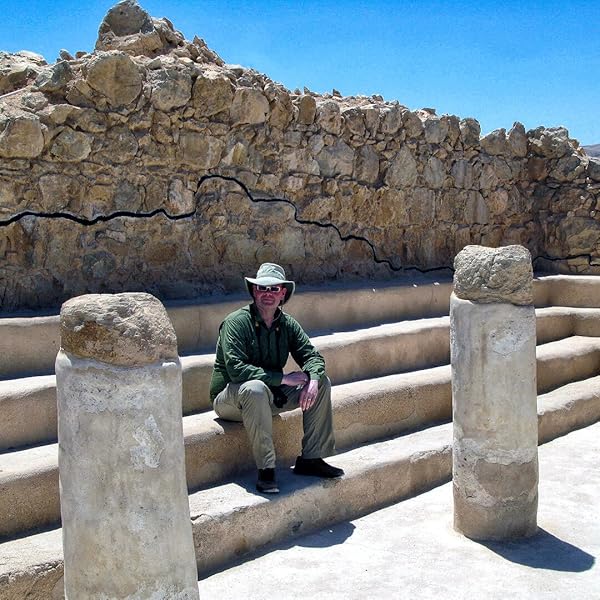
Around the World in Eighty Photos is more than just a photography book; it’s a visual adventure that takes readers across the globe to view the often-overlooked corners of the world through the lens of an experienced traveler. What inspired you to create this pictorial travel book?
My previous book, On to Plan C: A Return to Travel, which documented my return to travel after the pandemic, was the first to include my photography. I really enjoyed the experience of putting it together, even though it required editing both the text and photos. For this book, I knew I wanted to include photography again, but this time make the photos the focus.
There are many books out there showing you photos of famous places around the world, but I wanted to steer the reader toward lesser known locations and give them some insight into how each photo was created—what caught my eye, what challenges I faced, how I dealt with less than ideal lighting in some situations, and so on.
I also wanted to include background information on each location for those less interested in the photography. For those interested, I disclose the settings I used for each photo along with a glossary of photographic terms at the end. So, it can be used as a guide to lesser known locations and/or as a guide to creating better travel photos.
What photo in this collection do you feel has the best “story” surrounding it?
The photo created inside Iglesia El Rosario in San Salvador, El Salvador. From the outside, the church looks like a concrete bunker. In fact, I wasn’t sure it was not abandoned and walked past it without much thought while exploring the area. When our local guide started eventually heading toward it, I was a little unsure of why he was taking my wife and I there.
Turns out, its nondescript concrete exterior conceals an arched roof that sheds a rainbow of natural light that spreads across the altar and bounces off the metal and rock inside. Designed by sculptor Ruben Martinez and completed in 1971, Iglesia El Rosario is radically beautiful and one of the finest churches I have ever visited.
As I don’t travel with a tripod, and it being a church with occasional visitors, made this a very challenging photo to create. I chose settings I felt would let in a good amount of light and used a shutter speed that wouldn’t cause blur being handheld. Situations like this I tend to hold my breath for steadiness and hope for the best.
What advice do you have for aspiring travel photographers?
Study the fundamentals and know your camera well so that you don’t have to hesitate when changing a setting. I have my camera setup so that I can change things like aperture or the type of focusing very quickly. Things can happen fast while on the road and you don’t want to miss them while fiddling around trying to change something.
I’m also a big believer in previsualization. This allows me to determine the lens and general settings before I even start to take photos. For instance, if a situation calls for street photography, then I’m going to use a lens in the 35mm to 50mm range with an aperture around f/8 to keep everything in focus and a minimum shutter speed of 1/250 to of a second to stop motion. This was, I can concentrate more on composition and less on adjusting settings.
What is one thing you hope readers take away from Around the World in Eighty Photos?
There are so many more places in the world than the handful that always seem to be promoted. Yes, Venice is a stunning location filled with canals, but so is Bruges in Belgium or Wuzhen in China. The world is full of surprises. For instance, the Salt Cathedral of Zipaquirá is a remarkable underground cathedral built within the tunnels of a salt mine just north of Bogotá. I hope this book inspires readers to seek out such places and take more inspired photos while there.
Author links: GoodReads | Instagram | Website
This captivating visual odyssey takes readers to the farthest corners of the earth, from bustling cities to serene landscapes, offering a window into the world’s most awe-inspiring sights. Each carefully curated photograph is paired with a short reflection or story, capturing the essence of diverse cultures, iconic landmarks, and hidden gems.
Whether you’re an armchair traveler or a seasoned explorer, Around the World in Eighty Photos is your passport to adventure, offering a unique perspective on the beauty and wonder that unite us all. Prepare to be inspired by the world’s splendor, one photo at a time.
Around the World in Eighty Photos
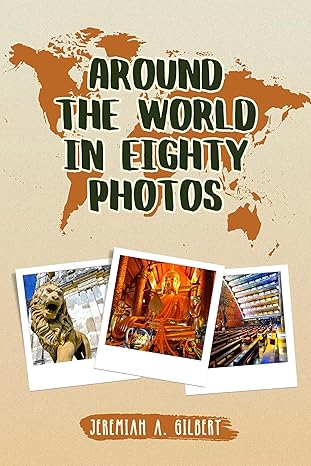
Jeremiah A. Gilbert’s Around the World in Eighty Photos is more than just a photography book; it’s a visual adventure that takes you across the globe through the lens of an experienced traveler. Instead of sticking to well-known landmarks, Gilbert hones in on the often-overlooked corners of the world, giving them the spotlight they deserve. Each photograph is accompanied by a story—sometimes historical, sometimes personal, always engaging. He also shares the technical details behind each shot, making it both an inspiring and educational experience for photographers and travel enthusiasts alike.
As a photographer, I appreciate that Gilbert doesn’t just show beautiful places—he invites us into his thought process. His image of Rano Raraku on Easter Island struck me the most. He describes setting up his shot without people, then serendipitously capturing two figures stepping into the frame, perfectly enhancing the composition. That’s what photography is about—being prepared, yet open to unexpected moments. The book is filled with these little surprises, making it feel like you’re traveling right along with him.
Another highlight is the way Gilbert balances storytelling with technical insight. In his photo of Mexico City’s Basilica de Guadalupe, he explains how he had to ride the moving walkway twice to figure out the best composition. The first trip was for analysis, the second for execution. That’s dedication. And in his shot of Iguazu Falls, he makes a conscious decision to use a fast shutter speed to capture the violent, thundering energy of the water, rather than the dreamy, silky look so many photographers go for. His approach reminds me that technical choices should serve the emotion of the image, not just the aesthetics.
This book is a must for photographers who love to travel, travelers who love photography, and anyone who dreams of seeing the world through fresh eyes. If you want a collection of images that tell stories, that teach you something new, and that make you want to grab your camera and book a flight, Around the World in Eighty Photos is an absolute treat.
Pages: 268 | ASIN : B0DY46TYP3
Grasp the “Soul” of a Language

Vademecum of English is a meticulously crafted handbook designed as a reference tool for English teachers and advanced learners that condenses linguistic knowledge into charts covering phonetics, grammar, vocabulary, and etymology. Why was this an important book for you to write?
Actually, I didn’t intend to write a book at all, I started gathering the information I needed for my classes —I have taught English for more than 40 years—, looking for logical explanations for the tricky aspects of the English language, such as irregular verbs, the “chaotic” spelling, and so on. I checked on several grammar books, dictionaries and the like and usually found 10-12 pages devoted to a single issue, sometimes with contradictory information. So I summarized the main features and rules in convenient diagrams to keep it handy. As I was solving different issues, I started organizing them in single-themed charts. At some point, I realized that all this information could be helpful for many other teachers facing the same problems. So I decided that it was time to share.
How much research did you undertake for this book, and how much time did it take to put it all together?
Gathering the information has been a lifetime endeavor and I have been shaping it for many years, trying to be exhaustive and considering every aspect of the language. Once I decided to publish it as a book, it was a matter of organizing all the material, and that took me about a year.
What were some ideas that were important for you to share in this book?
Few people pay attention to phonetics and phonology when learning (or teaching) a new language. Learning the correct sounds is crucial and should be the first step in the learning process. For example, a few charts show the different pronunciation options of the English letters, pointing out the patterns that native speakers follow.
Regarding vocabulary, we selected the basic and most frequently used words and organized them in thematic families. The grammar part deals with the combinatory structures that shape the language and highlights many hidden rules that even native speakers are unaware of, such as the patterns of irregular verbs.
From my own experience, in order to master a language, you must try to grasp its “soul” and make it yours. You can only achieve that if you really understand where words come from, what are the small pieces (roots and affixes) that shape them, and how they are built. For this, you need to explore the etymology of the words which is also very helpful when learning other related languages like Spanish, French, Italian, German, etc. That is the largest part of the book, 54 out of 120 charts are devoted to this aspect.
What is one thing you hope readers take away from Vademecum of English?
It is not meant to be read cover to cover but used as a companion and reference guide for anyone interested in understanding the features, mechanisms and idiosyncrasies of the English language. Languages are systems and systems follow a logic that is not always clear. I have tried to untangle the historical threads of the language to show such logic. I hope readers enjoy discovering the secrets of English through the pages of this book.
Author Links: GoodReads | X | Facebook | Website | LinkedIn – author | LinkedIn Lexiway

An Ancient Worship Movement
Greg Gordon’s An Ancient Worship Movement thoughtfully explores Christian theology, delving deeply into the multifaceted nature of worship. From actions and evangelism to prayer and communion, the book illuminates how worship was understood and practiced in the early church.
Gordon’s intent is evident from the outset: to guide readers toward emulating the authentic roots of the Christian faith. The opening prayer in the introduction immediately sets the tone, drawing attention to Christ rather than the author. This framing underscores his desire to prioritize spiritual reflection over personal interpretation. Throughout the book, Gordon critiques how the modern church has drifted from its original focus, yet his approach remains analytical and constructive rather than harsh or judgmental. This balanced critique enriches the reading experience and invites thoughtful engagement.
One standout section of the book examines worship through communion. Gordon provides fascinating insights into what a church service might have looked like over 2,000 years ago, highlighting the centrality of communion in early Christian gatherings. He also explores how the early church approached this sacred practice, challenging readers to reflect on their own perspectives and practices regarding the holy sacrament.
The section on prayer, however, left the strongest impression. Gordon emphasizes the critical role of prayer in the early church and offers practical guidance for readers looking to deepen their spiritual lives. This portion of the book includes a selection of prayers, which readers can incorporate into their daily routines, adding a hands-on element to the theological discussions.
An Ancient Worship Movement strikes a compelling balance between depth and accessibility. The writing avoids over-explaining, maintaining a pace that keeps the reader engaged. For anyone interested in Christian theology or eager to learn about the early church’s practices, this book is a valuable and inspiring resource.
Pages: 183 | ASIN : B0CXYQ5241
Vademecum of English: A Complete Reference Guide for Teachers and Learners

Vademecum of English, by Ana Maria López Jimeno, is a meticulously crafted handbook designed as a reference tool for English teachers and advanced learners. The book condenses a wealth of linguistic knowledge into charts covering phonetics, grammar, vocabulary, and etymology. With its focus on accessibility and clarity, it aims to demystify complex aspects of the English language, such as irregular verbs and the peculiarities of spelling, while offering insights into word origins and thematic vocabulary.
One of the strongest aspects of the book is its structure. López Jimeno organizes this guide in a way that makes learning intuitive. The phonetics section explains the production of English sounds while comparing them to Spanish, which is brilliant for bilingual learners or teachers working in Spanish-speaking environments. The attention to tricky sounds, such as differentiating /θ/ from /ð/, demonstrates that the author knows exactly where learners struggle. Reading this book is like having a teacher by your side.
That being said, the sheer density of the material can feel overwhelming at times. In the grammar section, the breakdowns of sentence structures and transformations are useful but can read more like a textbook. I feel that a more conversational tone might have made it less intimidating for casual readers.
What I found fascinating was the etymology section. It’s about where words come from and understanding the “soul” of the language. Learning that roots and affixes can open the door to hundreds of related words is a game-changer for anyone who is serious about expanding their vocabulary. This section feels like a treasure hunt, with every prefix and suffix uncovering a new linguistic gem.
Vademecum of English, by Ana Maria López Jimeno, is a powerful tool for those willing to take a deep dive into the intricacies of the language. It’s best suited for English teachers, linguists, and advanced students who thrive on detail and structure. If you’re someone who enjoys learning through charts and logical categorization, this is your book. It’s an impressive piece of work that reflects the author’s extensive experience and passion for teaching.
Pages: 152 | ISBN : 978-84-129623-0-7



 LITERARY TITAN