Blog Archives
Heart Horse: Soulful Stories of Equine Healing, Grace & Companionship


Heart Horse is a moving anthology that weaves together twenty deeply personal stories about the bond between humans and horses. Each chapter opens a window into a different life, people from all walks of experience who have found meaning, recovery, or transformation through their connection with these gentle, powerful beings. From stories of illness and survival to redemption and rediscovery, the book explores the spiritual and emotional resonance that horses bring to human lives. It’s not a how-to manual about horsemanship. It’s about how horses become mirrors for our hearts, showing us what we hide, helping us heal, and calling us to live more honestly.
The writing, contributed by a mix of scholars, healers, riders, and ordinary horse lovers, is heartfelt and honest. Some stories are written with elegance and restraint, others with raw emotion that catches you off guard. The tone shifts from tender to fierce to reflective. I found myself slowing down to reread sentences that hit deep. The horses in these pages are not props or metaphors; they are partners, teachers, even saviors. The language is simple but carries weight. There’s something about the way these writers describe touch, breath, and stillness that pulls you right into the moment.
What I liked most was the humility threaded through the stories. The humans come to the horses broken, unsure, seeking something they can’t name. The horses meet them without judgment, offering lessons about patience, presence, and love that asks for nothing back. At times, I found myself tearing up, not out of sadness, but because the honesty felt so pure. There were passages that made me smile, too, small, funny details about stubborn horses or awkward first rides that reminded me how life’s lessons rarely arrive gracefully. Editor Allison Brown curates these voices with care. Her introduction adds warmth and context, explaining how this collection came to be, and why horses, with all their mystery and grace, continue to reach into our souls.
I’d recommend Heart Horse to anyone who’s ever loved an animal deeply, whether or not they’ve ever ridden one. It’s for readers who crave real stories about growth, grief, and gratitude. If you’ve ever felt lost, lonely, or uncertain of your own footing, this book will meet you there.
Pages: 256 | ASIN : B0FLQFB8F5

Soul Reclaimed: Transforming Trauma into Triumph (Classic Paperback Edition) (The Road to Transcendence)
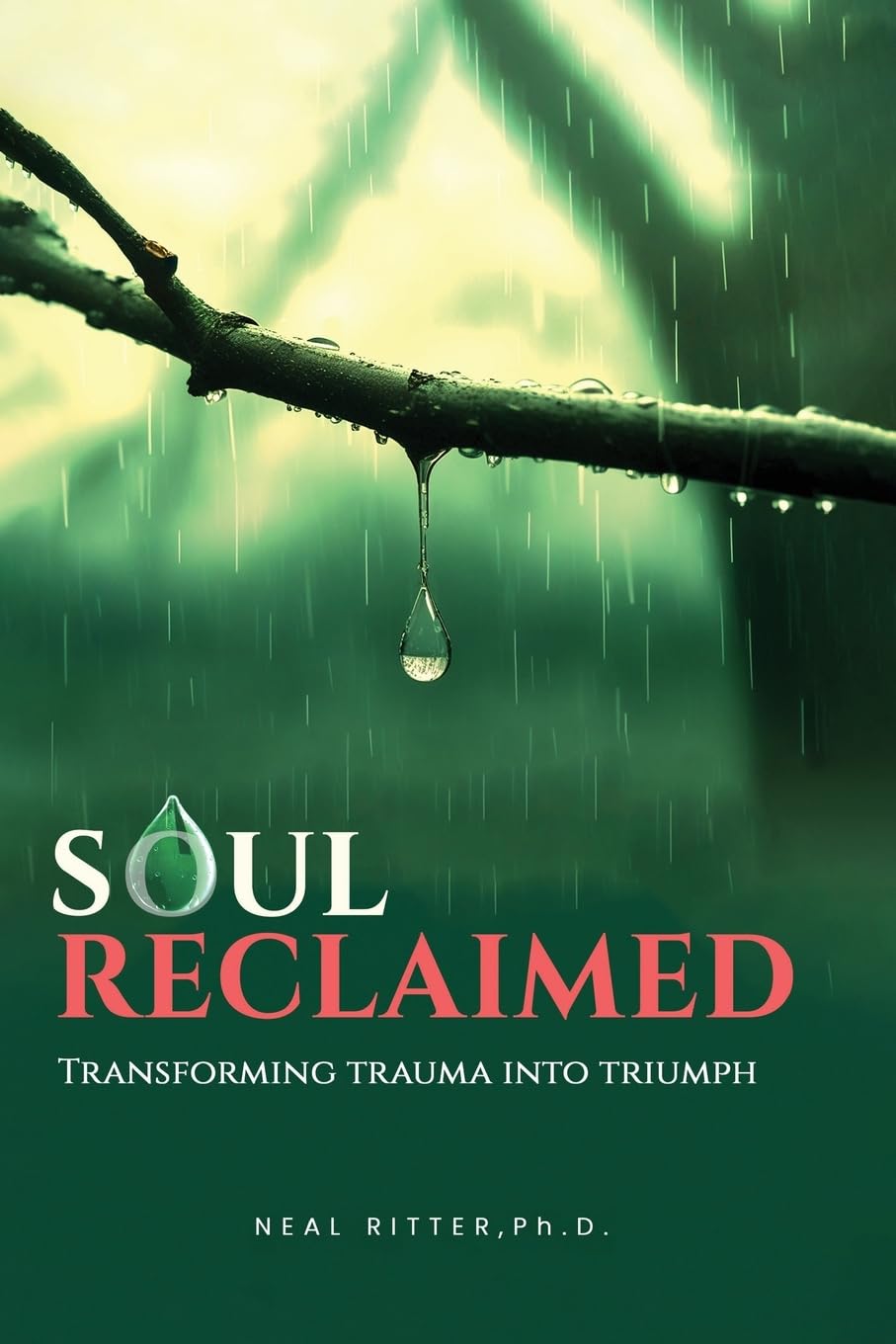
Soul Reclaimed tells the story of pain, healing, and rediscovery. It follows Julie, a young woman whose life is shattered by a violent assault, and Linda, a woman in midlife struggling with emptiness and disillusionment. Through the guidance of a psychologist named Bill, their separate paths converge into one that explores transformation, consciousness, and the reclamation of self. What begins as trauma and despair unfolds into a journey toward awakening. Author Neal Ritter weaves psychology, spirituality, and raw human emotion into a tapestry of stories that ultimately ask what it means to heal, not just survive.
Reading this book stirred something in me. It’s not a light read, not by a long shot. The first chapters, especially Julie’s harrowing experience, left me shaken. The writing doesn’t flinch, and that honesty made me both uncomfortable and grateful. Ritter doesn’t dress pain up; he presents it as it is, ugly, confusing, and real. But beneath the darkness, there’s this persistent flicker of hope. The therapy scenes between Linda, Bill, and later Julie hit close to home. The dialogue feels lived-in, almost like you’re eavesdropping on real sessions. I could feel Ritter’s experience as a clinician in every line. At times, I wished the philosophical passages had breathed a little more, but even when they grew dense, the sincerity kept me turning pages.
I also found myself wrestling with the mix of psychology and mysticism that runs through the book. One moment, we’re deep in clinical supervision; the next, we’re talking about ego dissolution and soul transformation. But it works. The blend feels honest to the messiness of healing, part science, part spirit, all human. The emotional through-line never wavers. I found myself caring about these people, especially Linda and Julie, whose parallel journeys felt like reflections of different stages of one woman’s soul.
Soul Reclaimed isn’t just a story about trauma. It’s about the stubborn light that refuses to go out. I walked away from it feeling unsettled, inspired, and comforted. I’d recommend it to readers who crave depth and don’t shy away from emotional intensity. Therapists, survivors, seekers, and anyone standing on the edge of change will find something here worth holding onto.
Pages: 294 | ASIN : B0FBGMY329
MY SEXUAL AWAKENING AT 70


My Sexual Awakening at 70 is a raw and daring memoir about rediscovery. Author Lynn Brown Rosenberg lays her life bare, tracing the path from a childhood steeped in repression and control to a late-in-life explosion of freedom, sensuality, and truth. The book moves between her past, domineering parents, a complicated marriage, and years of self-doubt, and her present, where she embarks on an unapologetic journey of sexual and emotional awakening. Through online encounters, erotica, and unfiltered introspection, Rosenberg chronicles not just the story of an older woman reclaiming pleasure, but of a human being learning to stop asking for permission to exist.
I found myself amazed by the honesty. It’s fearless. The writing feels like someone thinking out loud, recalling memories, laughing at herself, and still managing to hit deep emotional truths. There’s something disarming about how Rosenberg admits her confusion and her cravings in the same breath. I admired her courage. At times I cringed, sometimes I smiled, and more than once I felt protective of her. The story doesn’t hide behind metaphor or decorum. It’s blunt, messy, and completely alive.
The tone swings from tender reflection to explicit sexual detail abruptly. The writing isn’t polished in a literary sense, but it’s authentic. I could feel the author working through her shame, sentence by sentence. And that, more than perfect phrasing, makes the book resonate. It’s not erotica for titillation. It’s confession. It’s a woman wrestling with the ghosts of her upbringing and winning, one awkward online chat and vibrator purchase at a time. The humor, the pain, the wonder, they all spill out in a way that feels real.
I’d recommend this memoir to anyone who’s ever felt cut off from their desires or silenced by expectation. It’s not a book for the faint of heart; its sexual content is frank and unfiltered, but beneath the surface, it’s relatable. It’s about reclaiming voice, body, and agency, no matter how late in life that happens. It’s also a reminder that it’s never too late to grow, to take risks, and to feel alive again. I think people who appreciate honest, self-examining memoirs like Eat, Pray, Love or The Sexual Life of Catherine M. will find this deeply resonant.
Pages: 318 | ASIN : B00OH0HUHK
Being Broken: Tales and Essays of Survival and Death from Narcissistic Parental Abuse
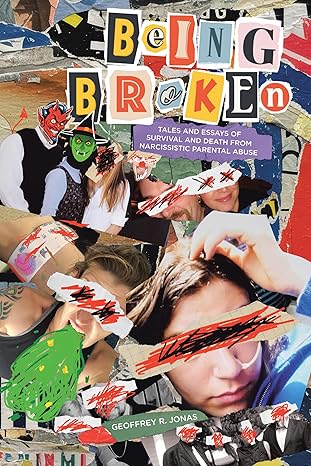
Being Broken, by Geoffrey R. Jonas, is a brutally honest memoir about trauma, addiction, and survival. It follows Jonas through a childhood steeped in neglect and narcissistic abuse, into years of substance dependence, and finally toward healing and self-understanding. He recounts the deaths of his sister, father, and mother, all in a single year, and how those losses forced him to face the damage that shaped his life. The book mixes memoir with insight–part psychology, part confession, and all heart.
Right from the start, Jonas pulls no punches. In the foreword, he admits, “I am spewing my head out onto these pages,” and that’s exactly how it reads, raw, direct, and strangely freeing. The prologue on narcissistic parental abuse hooked me. He doesn’t just define the concept; he exposes how it poisoned his family dynamic and left scars that followed him into adulthood. The mix of personal detail and clinical explanation makes it both heartbreaking and fascinating.
What I love most about this book is its honesty. Jonas never paints himself as a victim. He admits to his own part in the chaos, lying, manipulating, and self-destructing. There’s something refreshing about how he refuses to hide the ugly parts. When he writes about his sister’s overdose or his parents’ emotional absence, he doesn’t look for pity. He looks for truth. The section “Fault vs. Responsibility and Blame” really stuck with me. His idea that “it’s not their fault, but they are responsible” reframes forgiveness in a way that feels mature and real.
Jonas’ writing hits hard because it’s unfiltered but thoughtful. The poem “Broken,” written for his sister, might be the emotional heart of the book. It’s tender and painful, a mix of love, guilt, and memory. And by the end, when he says, “Here I am. A survivor,” it doesn’t sound like a line from a movie. It feels earned.
Being Broken isn’t a light read, but it’s a powerful one. It’s for people who’ve faced trauma, addiction, or toxic family systems, and for anyone curious about how self-awareness can lead to recovery. Jonas writes like a man who’s been through hell and decided to document the landscape. It’s dark, hopeful, and deeply human.
Pages: 274 | ASIN : B0DZPGY1BZ

Suicide: Hope Beyond the Darkness
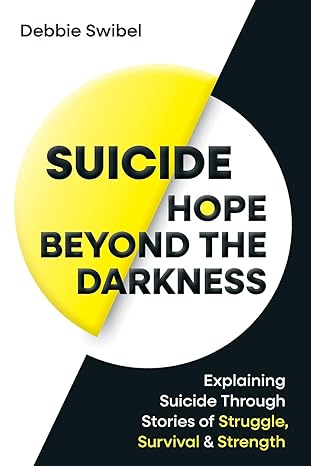
Debbie Swibel’s Suicide: Hope Beyond the Darkness is both heartbreaking and deeply hopeful. The book explores suicide through stories of people who have lived it, those who have tried to take their own lives, those who have lost loved ones, and those who’ve dedicated their lives to understanding and healing the pain behind it. It’s structured in four parts, blending firsthand accounts with Swibel’s professional insight as a suicidologist. The result is a raw, honest, and compassionate work that turns statistics and theory into human experience. Every story feels alive, sometimes painfully so, yet always threaded with the quiet pulse of hope that gives the book its title.
Reading this book was an emotional experience. I felt gutted at times, especially hearing the voices of people whose pain seemed bottomless, but I also found comfort in how Swibel handled each story. She doesn’t sensationalize suffering or rush toward neat conclusions. Instead, she lets silence and reflection do their work. I admired that restraint. The writing is simple but carries real weight. You can feel her empathy in the space she gives each voice. Swibel finds light in the small, steady acts of survival, therapy, friendship, words shared between strangers, that prove connection is often the thing that saves us.
What moved me most was Swibel’s balance between knowledge and humanity. She weaves psychology, cultural insight, and research into the stories, but she never loses sight of the people. Her explanations are clear and down to earth, and her belief in the power of storytelling feels genuine. The way she speaks about stigma, misunderstanding, and silence hit home. I found myself thinking about my own conversations, about how often we look away from pain because we don’t know what to say. This book reminds you that sometimes you just have to show up, to listen, to hold space.
I would recommend Suicide: Hope Beyond the Darkness to anyone who has been touched by suicide, whether personally or professionally. It’s for parents, friends, counselors, teachers, and anyone trying to understand what it means to live through pain.
Pages: 388 | ISBN : 978-0648758082
From Pain to Reflection to Action

No Filter: From Skateboard Kid to Entrepreneur shares your story about growing up in an abusive home, joining the Army at 19, and after living through combat, trauma, and broken relationships, before turning your pain into purpose. Why was this an important book for you to write?
No Filter was the book I couldn’t keep inside any longer. For decades I carried pain — from an abusive childhood, from what I saw and did in combat, from the way I failed as a husband and father — and it was eating me alive.
This wasn’t just a “next book project.” This was my line in the sand. When I came back from Phoenix, Arizona, after attending a book award event where I felt invisible and out of place, I had an awakening. I realized I could either keep playing nice and hiding behind polite words, or I could tear the mask off and tell the truth, even if it made people uncomfortable.
That’s why No Filter is written the way it is — blunt, messy, unpolished. Thomas Anderson said in his review that it feels “alive and immediate,” like I’m sitting across from the reader, telling it straight. That was intentional. I wanted people to feel like they’re in the room with me, hearing my story unfiltered, hearing the pain in my voice, and watching me fight my way through it.
I didn’t write No Filter to be liked — I wrote it to be heard. Because survival means nothing if you stay silent about what almost killed you.
What were some ideas that were important for you to share in this book?
This book was built on three core pillars: truth, accountability, and hope.
Truth was the foundation. The world is flooded with filters and fake perfection — I wanted the opposite. That’s why No Filter is unapologetically raw. As Thomas Anderson wrote in his review, the “short bursts of thought, the blunt admissions, the cursing when softer words won’t do” make the story feel alive and immediate. I wanted readers to feel like I was sitting across from them, looking them in the eye, telling them what really happened.
Accountability was the second pillar. I’m not just telling my story as a victim — I’m standing trial in front of every reader. I’ve hurt people I loved, including my daughter, and by letting her write the first entry, I opened this memoir by facing my own guilt and her forgiveness head-on.
And finally, hope is what carries the book through the darkness. The stories are painful, yes, but I wanted readers to see the redemption too. I wanted them to feel that even if they’ve been broken, they can still rebuild.
No Filter was never about telling a pretty story — it was about building a platform readers can stand on when life knocks them down. These three pillars hold that platform up.
What was the most challenging part of writing your memoir, and what was the most rewarding?
The most challenging part wasn’t the writing — it was tearing open wounds I’d tried to keep buried for decades. No Filter forced me to relive nights I tried to drink myself numb, the deployments that left ghosts in my head, the years I watched my daughter grow up from a distance because I was too broken to be there.
But it was also physically challenging. I live with severe tremors in my left hand, a lasting effect from years of medication prescribed through the VA. I can’t sit at a keyboard and type like most writers. I don’t use AI, and I don’t hire ghostwriters. Every single word of this memoir came from my own raw voice — recorded into my phone, turned into notes, and shaped into this book. That’s why, as Thomas Anderson wrote in his review, it feels “alive and immediate.” It literally is me, speaking directly to the reader.
The most rewarding part was turning that pain into something that could help someone else survive. When a reader tells me my words made them put the gun down, pour out the bottle, or call their kid after years of silence — that’s when I know No Filter has done its job.
I fought my past, my trauma, and even my own body to get these words out — and if they give just one person the strength to stay alive one more day, then every second of that fight was worth it.
What do you hope is one thing readers take away from your story?
I want readers to finish No Filter with one truth burning in their chest: you are not alone — but you can’t keep hiding from yourself.
That’s why the cover is black and white. It’s not an accident — it’s a statement. That cover is the darkness I was in. It shows me slouched, looking like the weight of the world is crushing me. Then you turn to the back and see the only color image in the entire book — a hint that there’s light on the other side if you’re willing to walk through the darkness.
When readers turn that last page, I don’t just want them to close the book. I want them to put it down, stand up, walk into their bathroom or bedroom, and stare into their own mirror. I want them to ask themselves: “Have I been living as the real me? Or have I been hiding this whole time?”
Because that’s what No Filter is — a confrontation. It’s not just my story. It’s an invitation for readers to strip away their own filters and face the person staring back at them.
And when they scan the QR code on the back cover, I want them to realize this book is just one piece of a bigger mission — The Mirror, The Broken Mirror, and now No Filter. It’s a trilogy designed to move readers from pain to reflection to action.
If just one reader closes No Filter, looks in the mirror, and says, “I’ve been hiding long enough — it’s time to face my life head-on,” then I’ve done what I came here to do. This book isn’t just a memoir — it’s a mirror, and it dares you to look.
What happens when the kid on the skateboard grows up, trades wheels for boots, and finds himself on the frontlines of war, fatherhood, and mental health?
William A. Stephens Jr. takes you on a no-holds-barred journey through the highs and lows of a life lived at full throttle.
This book doesn’t ask for sympathy — it demands honesty. No Filter is the third installment in William’s powerful trilogy that began with The Mirror and The Broken Mirror.
Here, he dives even deeper, peeling back the final layers to reveal a man who has been broken, rebuilt, and refuses to stay silent.
It’s about facing the demons that haunted him after the battlefield. It’s about the toll of PTSD, the pain of fractured relationships, and the unrelenting fight to keep going — not just for himself, but for the ones he loves and the community he serves.
If you’ve ever wondered what resilience really looks like, this book is your answer.
🔥 What You’ll Discover Inside:
• 🛹 Childhood on the Edge – From the streets to the skate park, where rebellion and resilience were born.
• 🎖 Life in Uniform – A front-row seat to deployments, leadership, and the toll that service takes on the soul.
• 💔 The Breaking Point – PTSD, loss, and family struggles laid bare with brutal honesty.
• 🧠 Mental Health Uncensored – No sugarcoating. Just real talk about trauma, therapy, and survival.
• 💼 Entrepreneurship with Purpose – How 1821 Productions became a platform to give “Voice to the Voiceless.”
• 🎃 The Final Chapter – Why No Filter is dropping on Halloween 2025, and what it means to confront your demons.
💡 Why This Book Matters:
• ✅ Perfect for readers who crave real, unfiltered storytelling.
• ✅ A lifeline for veterans, survivors, and anyone navigating their own mental health battle.
• ✅ Proof that you can lose it all, fight back, and still build something bigger than yourself.
⭐ Reader Takeaways:
• 🌌 Hope in the darkness.
• 💥 Courage to speak your truth.
• 🔑 Permission to build your own legacy.
🎯 Ideal For:
• 📚 Fans of military memoirs & survivor stories
• 🎙 Advocates of mental health & PTSD awareness
• 🚀 Dreamers & doers chasing purpose
Leadership Is a Holistic Endeavor

Seven Core Values To Become An Impactful Leader shows how Integrity, Learning, Excellence, Accountability, Determination, Empathy, and Respect form the foundation of authentic leadership. What inspired you to frame leadership around the acronym I-L.E.A.D.E.R.?
The acronym I-L.E.A.D.E.R. (Integrity, Learning, Excellence, Accountability, Determination, Empathy, and Respect) emerged from a deep desire to provide a memorable and actionable framework for aspiring and current leaders. My personal journey and extensive professional background revealed that these seven values are not merely abstract concepts but are foundational to sustained impact and thriving organizational cultures. I wanted to create a tool that leaders could easily internalize and apply daily, transforming their intentions into tangible actions that resonate deeply within their teams and communities. This framework serves as a constant reminder that leadership is a holistic endeavor, demanding both competence and compassion. It encapsulates the essence of what it means to truly guide and uplift others, offering a beacon for ethical and effective leadership. Embracing I-L.E.A.D.E.R. empowers you to lead with purpose, fostering environments where everyone can thrive.
How did your military background shape your perspective on softer values like empathy and respect, which many leaders overlook?
My military background has profoundly shaped my understanding of values like empathy and respect, demonstrating their critical role even in the most demanding situations. In high-stress scenarios, effective leadership requires not only command but also a genuine understanding of individual struggles and the fostering of cohesion. I learned that authentic leadership builds trust and resilience, transforming challenges into opportunities for growth and shared success. These “softer values” are not weaknesses; they are powerful catalysts for unity and collective achievement, essential for inspiring unwavering commitment and cultivating a truly impactful team. Experiencing the consequences of their absence firsthand solidified my conviction that empathy and respect are indispensable for genuine leadership, creating a powerful bond that transcends rank and ensures mission success. It is through these values that we unlock the full potential of every individual, fostering an environment where collaboration flourishes and spirits soar.
In your experience, which of the seven values do leaders struggle with most and why?
Leaders most frequently struggle with empathy among the seven core values because it demands vulnerability and a willingness to transcend one’s own perspective. Many leaders prioritize task accomplishment and measurable outcomes, inadvertently overlooking the importance of the human element. Developing empathy requires active listening, understanding diverse perspectives, and genuinely connecting with team members on an emotional level, which can feel challenging and time-consuming in fast-paced environments. However, neglecting empathy creates a disconnect, hindering psychological safety and ultimately stifling innovation and engagement within the team. Genuine empathy requires a conscious effort to step into another’s shoes, which, while challenging, unlocks unparalleled loyalty and commitment. It is the bridge that connects hearts and minds, forging a team that is not only productive but also deeply unified and resilient.
If someone only remembers one takeaway from Seven Core Values To Become An Impactful Leader, what do you hope it is?
If someone remembers only one takeaway from “Seven Core Values to Become an Impactful Leader,” I hope it is this: “Leadership is an act of service, rooted in consistently living your values.” It transcends titles and positions; it is about inspiring others, fostering growth, and creating a positive ripple effect through your actions and character. Your commitment to these core values defines your legacy and truly elevates your ability to make a meaningful difference in the lives of those you lead. This single realization empowers individuals to become beacons of positive influence, transforming every interaction into an opportunity for growth and inspiration. Embracing this principle means leading from the heart, knowing that genuine impact stems from a place of integrity and a selfless dedication to others’ success. This truth will guide you through any challenge, ensuring your leadership leaves an indelible mark of positive change.
Author Links: Facebook | Website | Instagram | LinkedIn
Dr. Gomez, a scholar-practitioner with a doctorate and multiple master’s degrees, meticulously outlines how these values translate into tangible leadership competencies. Each chapter offers practical strategies and real-world examples, enabling readers to internalize and apply these principles for immediate impact. This book serves as an indispensable compass, guiding aspiring and seasoned leaders toward a purposeful and impactful leadership journey, ultimately shaping a new generation of value-based practitioners.
The Infinity Within

The Infinity Within tells the story of Gabe, a man haunted by strange, otherworldly experiences from childhood through early adulthood. Floating toy trains, impossible escapes from car accidents, and flashes of cosmic memory pull him into a journey of self-discovery. Along the way, he meets a guide named Elias, who helps him see that what he thought were random anomalies were actually glimpses of something greater. The central theme is clear: illusions and fear cloud our lives, while faith and trust in our inner power dissolve those illusions. Through orchard experiments, brushes with death, and lessons from both spiritual figures and modern visionaries, Gabe comes to realize that we all carry infinity within us, and our choices shape the reality we walk through.
I found myself both inspired and challenged by this book. The writing is at once poetic and raw. It drifts into mystical language, but always circles back to lived experience, which grounds it in something tangible. At times, I caught myself leaning in, pulled by the honesty of the storytelling. The author doesn’t preach, he invites, and that softened my skepticism. There’s a vulnerability in admitting confusion, fear, and doubt, and I respected that. Gabe isn’t written as a flawless mystic but as a regular person stumbling toward something bigger. That made me feel like maybe I could stumble too, and still be on the right track.
I was intrigued by the way spiritual giants like Jesus and Buddha were set beside Elon Musk, and I found the comparison surprisingly refreshing. That mix of sacred and everyday fit the book’s message: that the infinite can be glimpsed anywhere, whether in meditation or rocket launches. My reactions swung between awe, doubt, and wonder. I liked that it stirred me up rather than letting me drift along passively.
I’d recommend The Infinity Within to seekers who crave something beyond surface-level self-help. It’s not a quick-fix manual or a tidy list of steps. It’s more like sitting with a friend who has lived through strange and unexplainable events and is willing to share the details. If you’re someone who has had odd glimpses of the unexplainable, or if you’ve ever felt the gnawing sense that there must be more to life than work and routine, this book could resonate deeply. It’s best for readers who don’t mind wandering through mystery and who are comfortable sitting with questions instead of chasing neat answers.
Pages: 388 | ASIN : B0FH4CC13K


 LITERARY TITAN